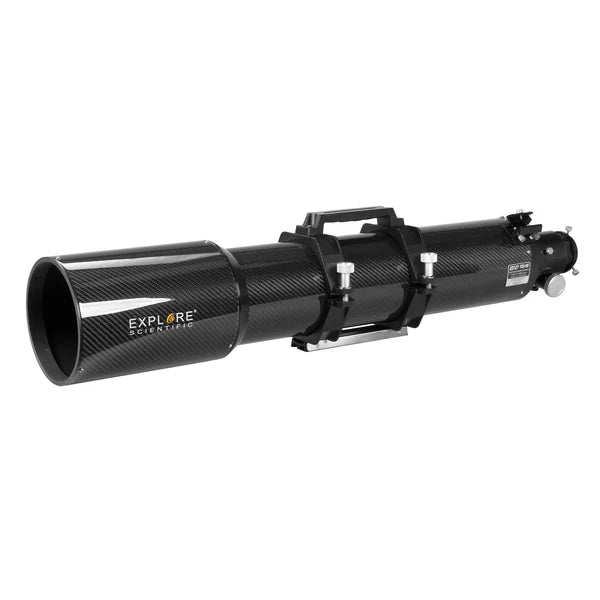
Product Overview
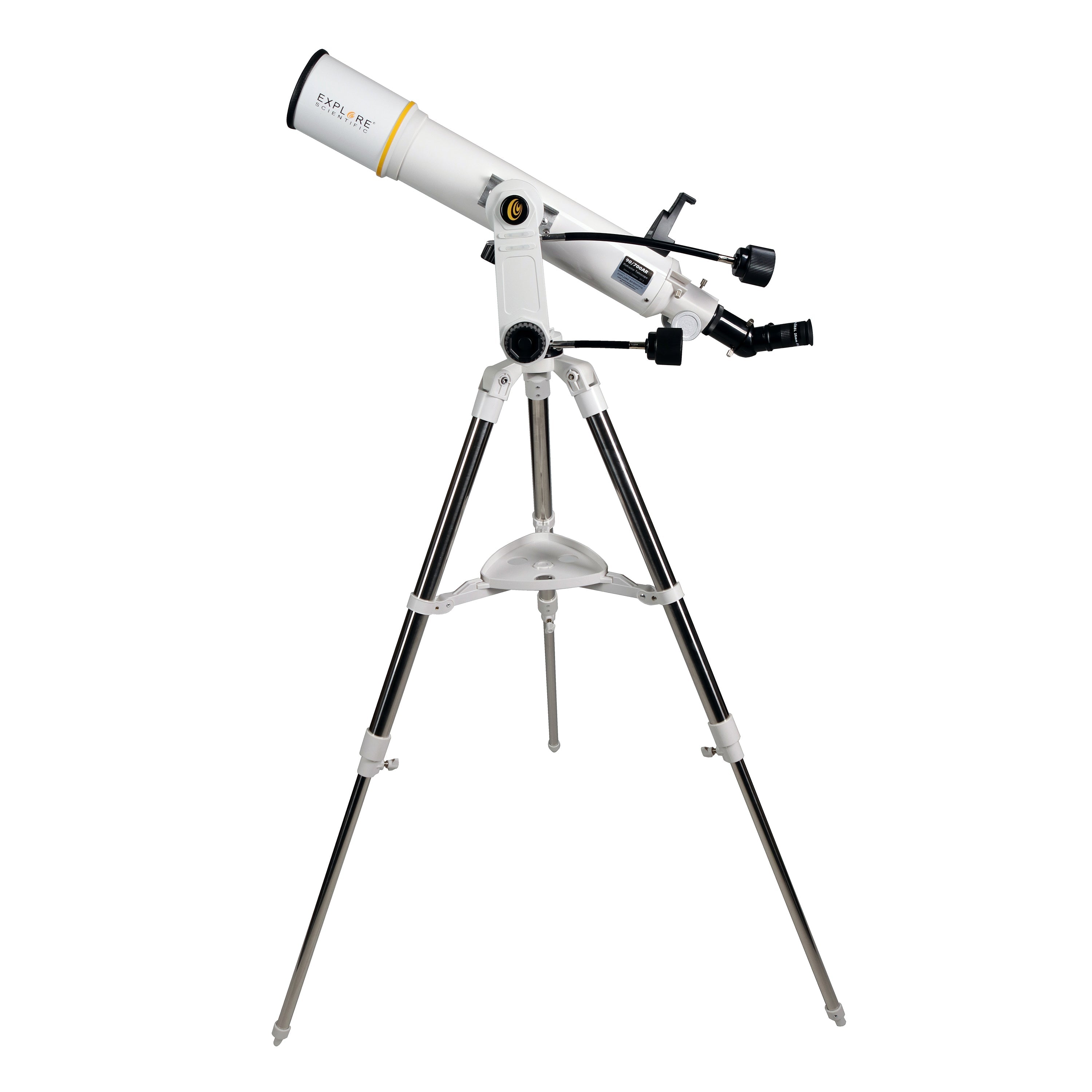
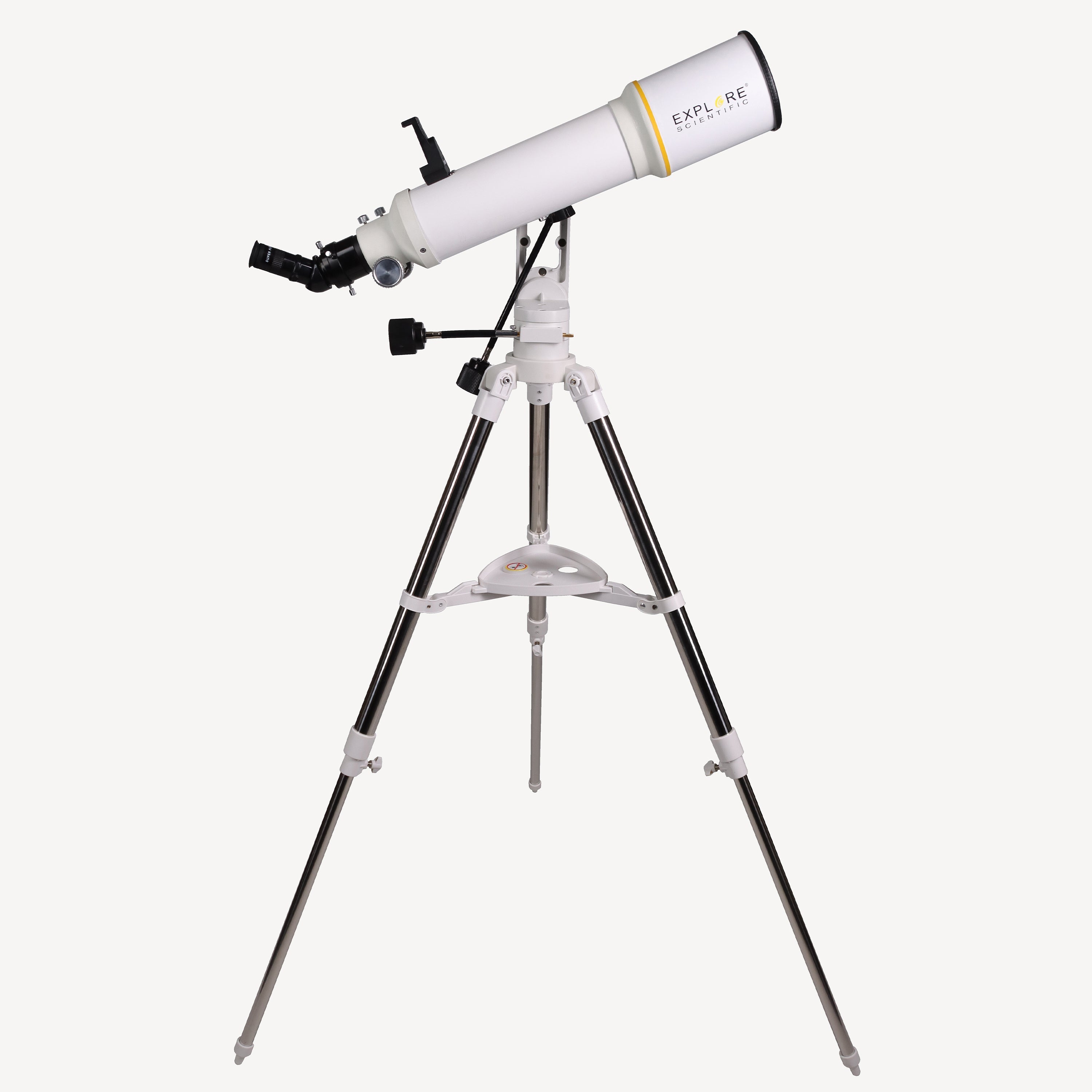
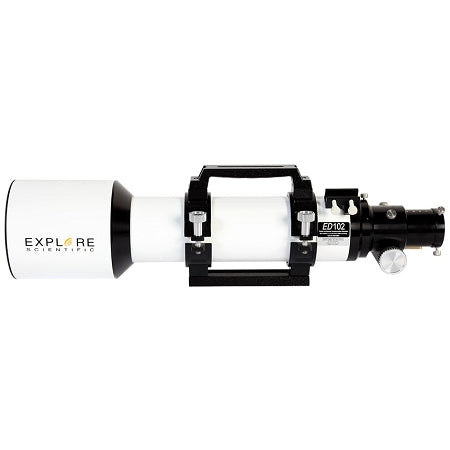
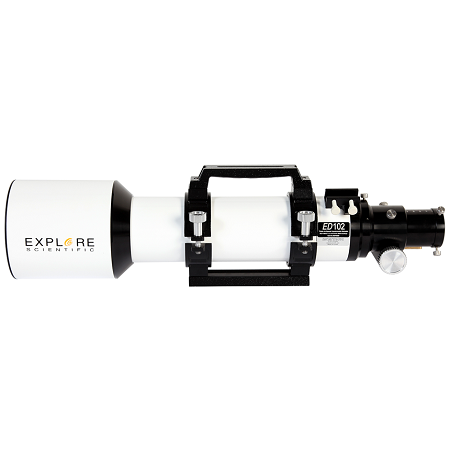
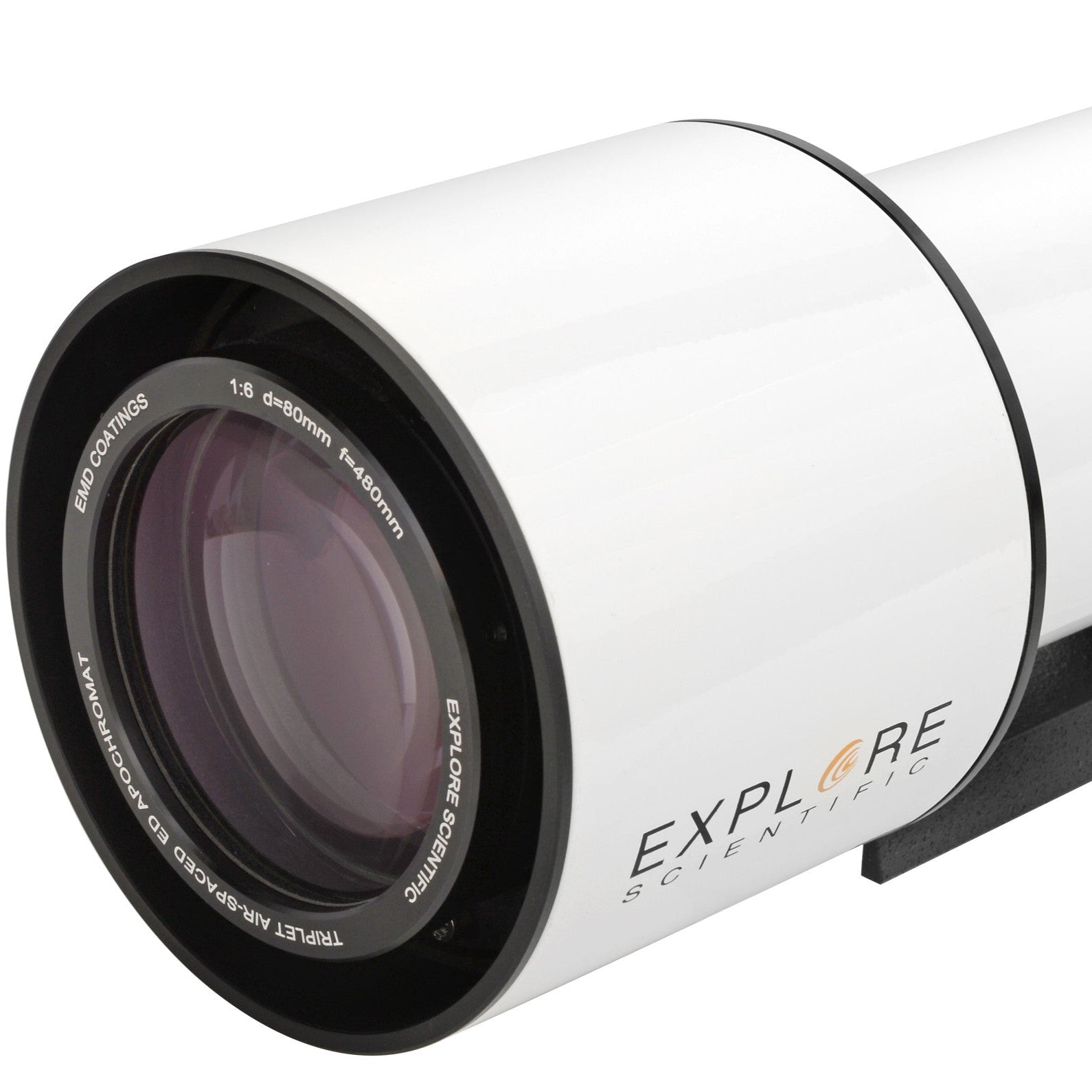
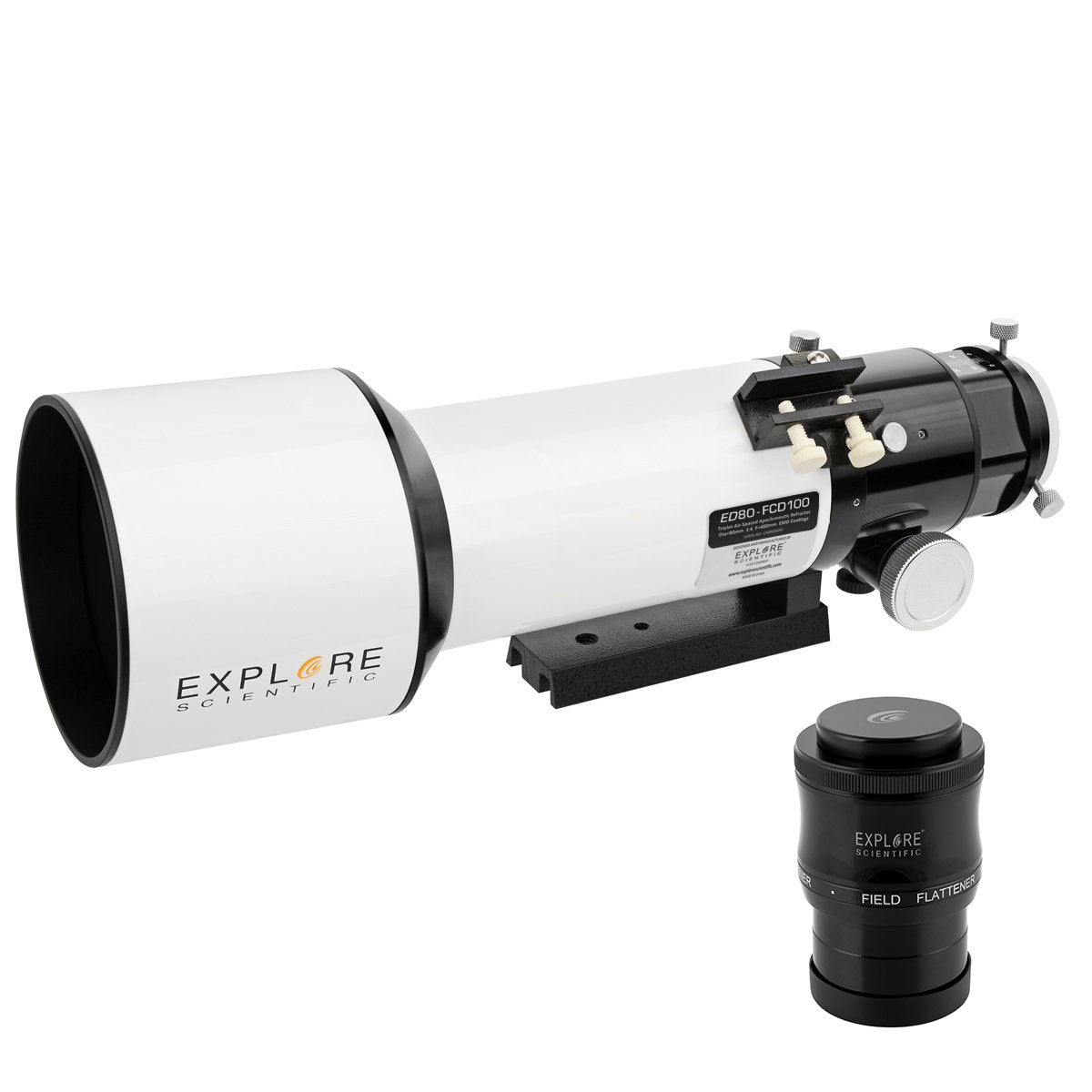
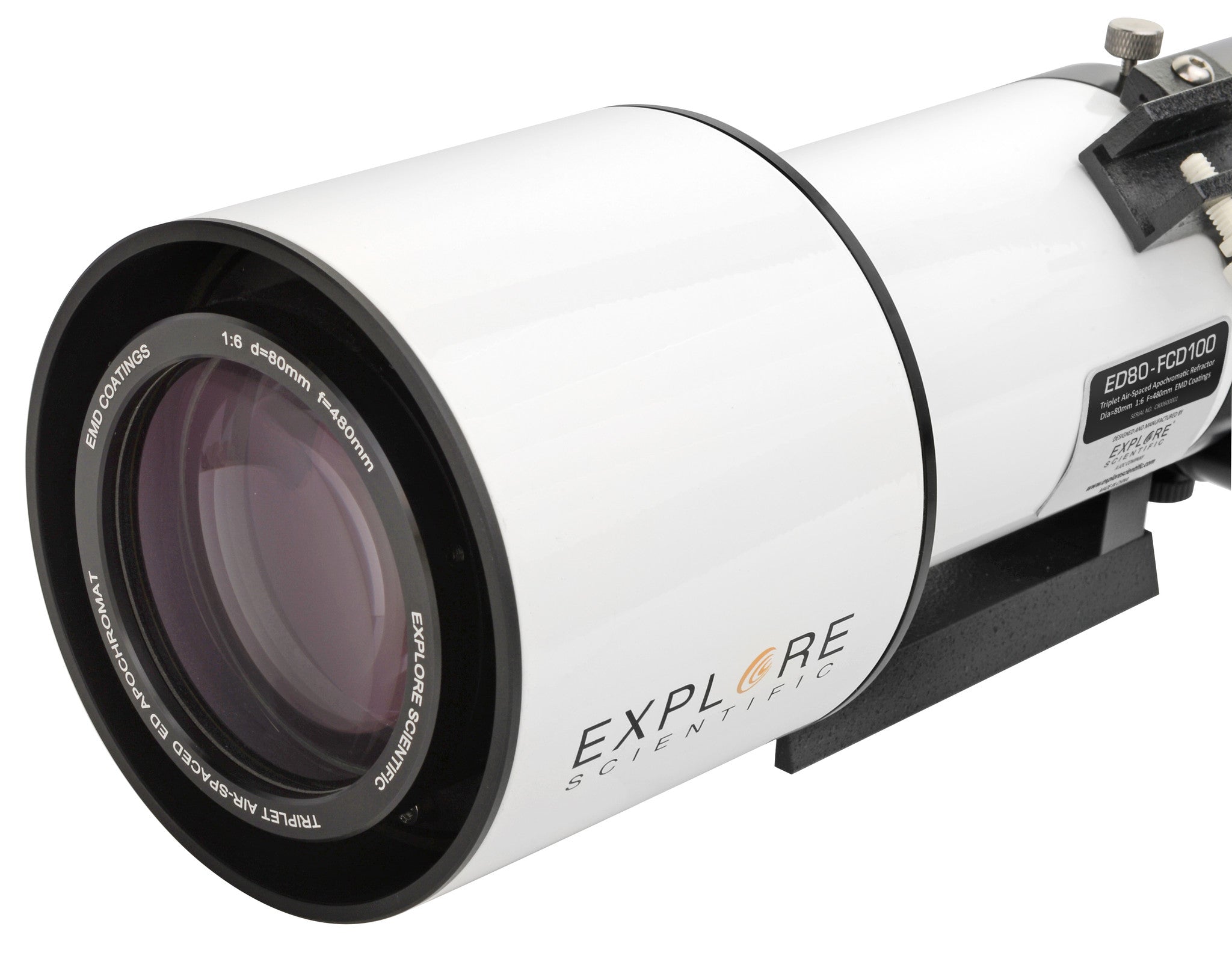
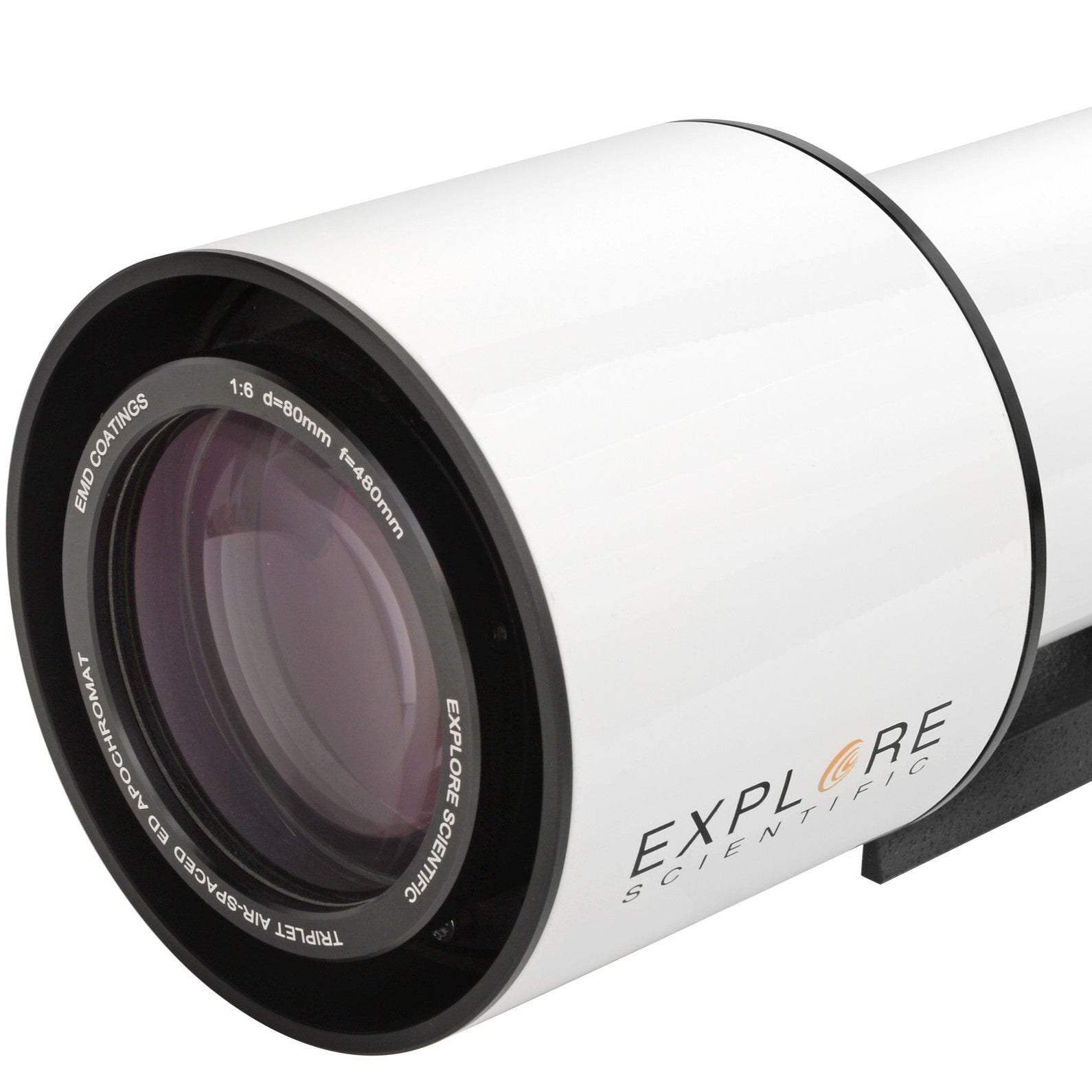
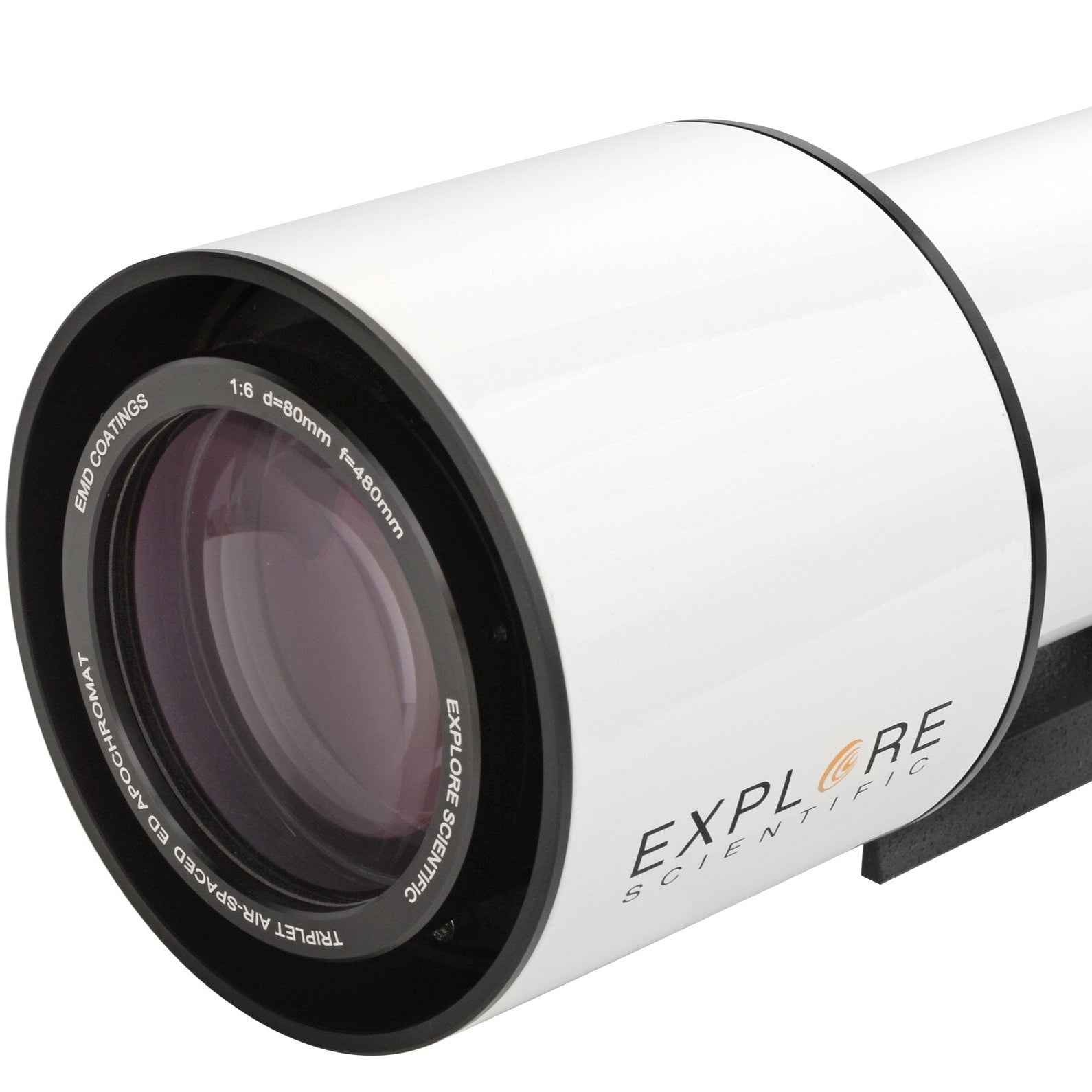
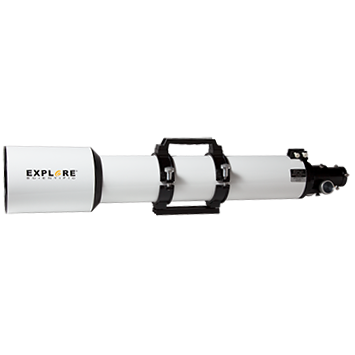
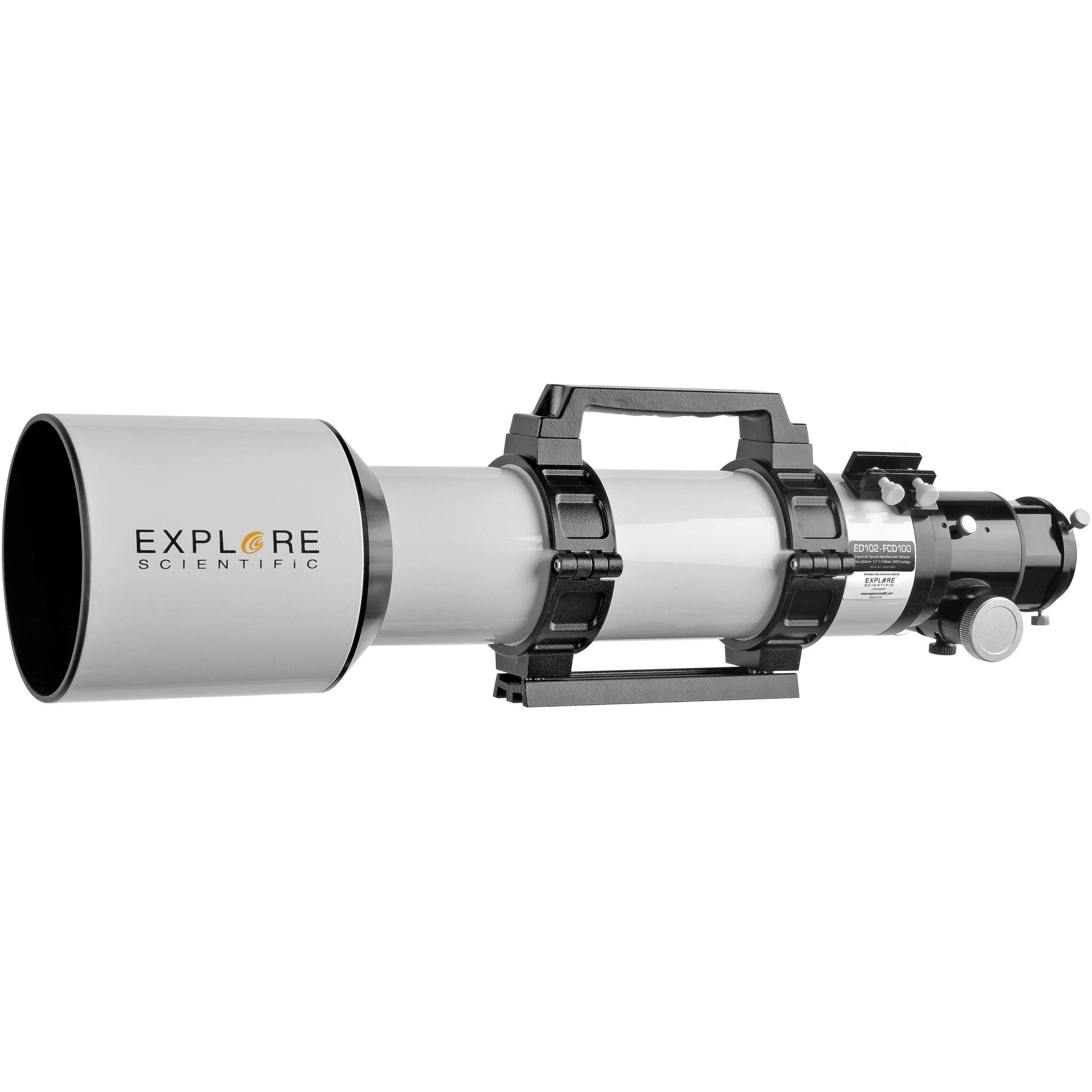
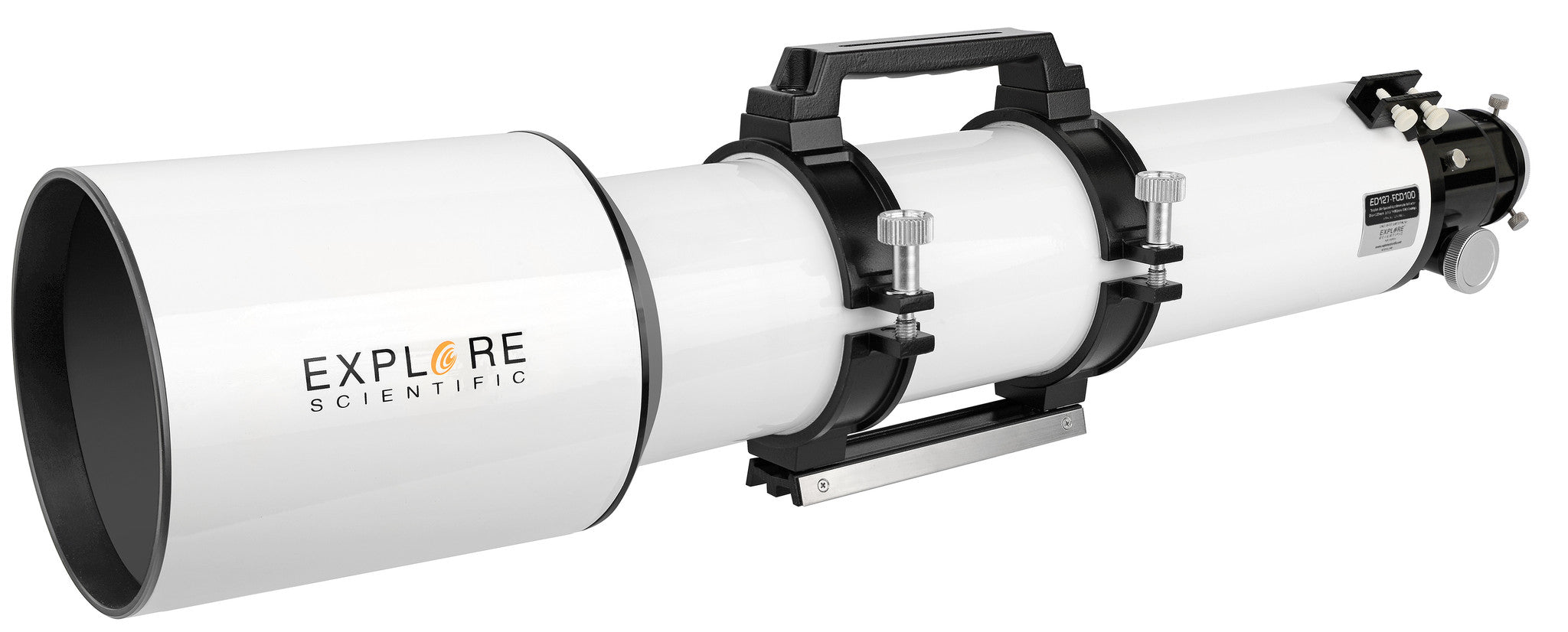
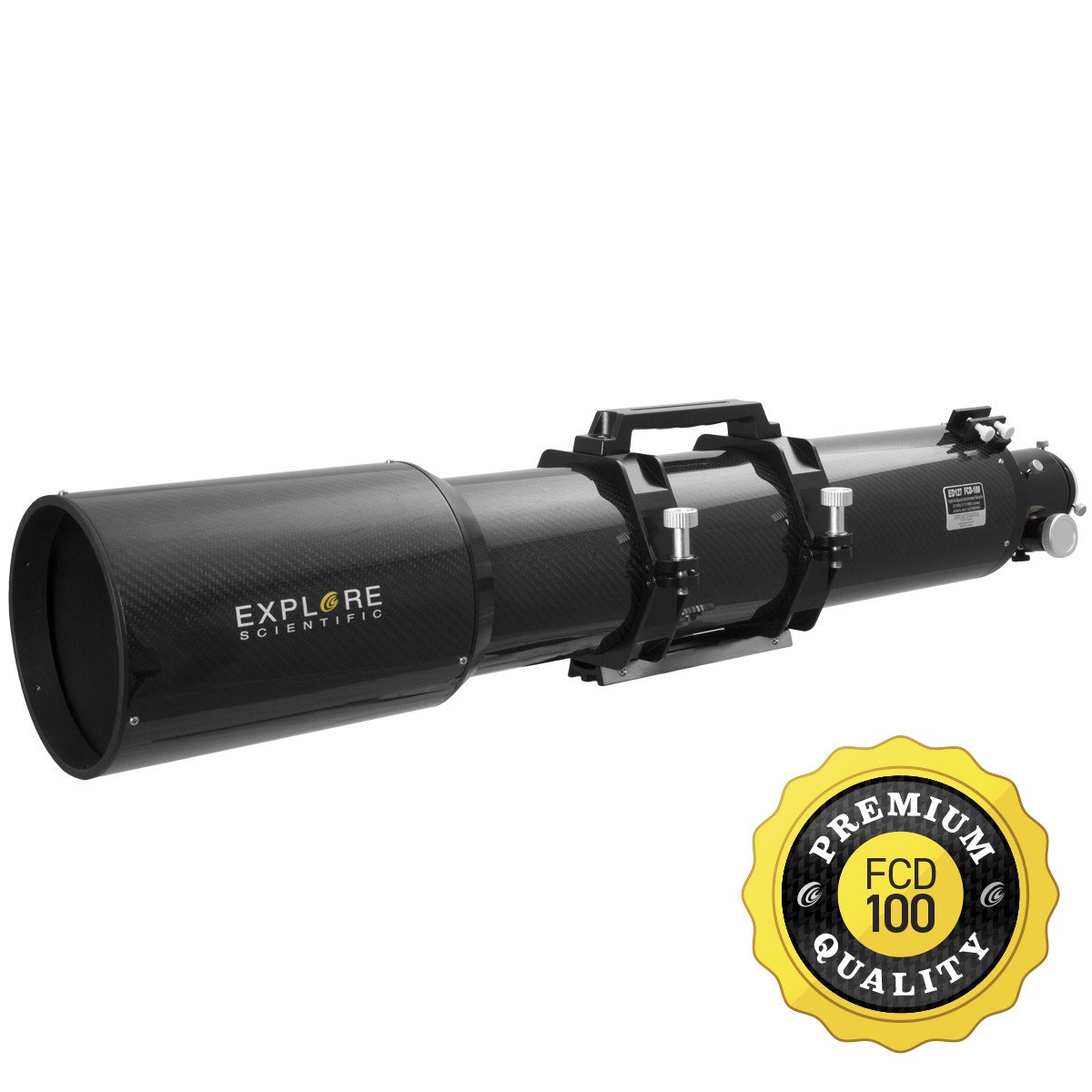
The Explore Scientific ED102 FCD-100 Series is a 102mm air-spaced triplet apochromatic refractor with a focal length of 714mm working at f/7. The centre element is HOYA FCD100 extra-low-dispersion glass, and every air-to-glass surface carries Explore Scientific's EMD (Enhanced Multi-Layer Deposition) coating. For this aperture Explore Scientific publishes a limiting magnitude of 12.5 and a resolution of 1.14 arcsec.
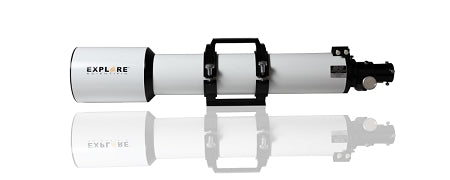
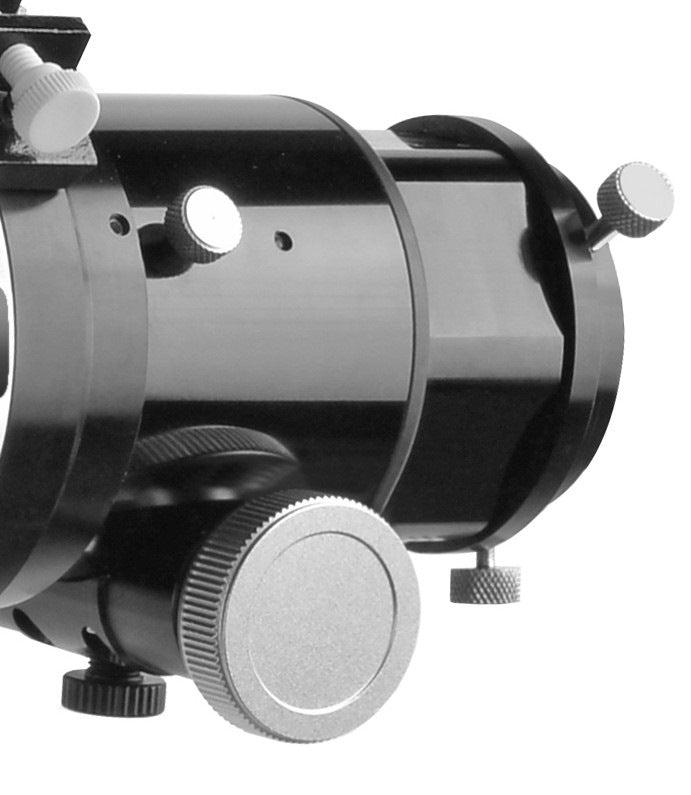
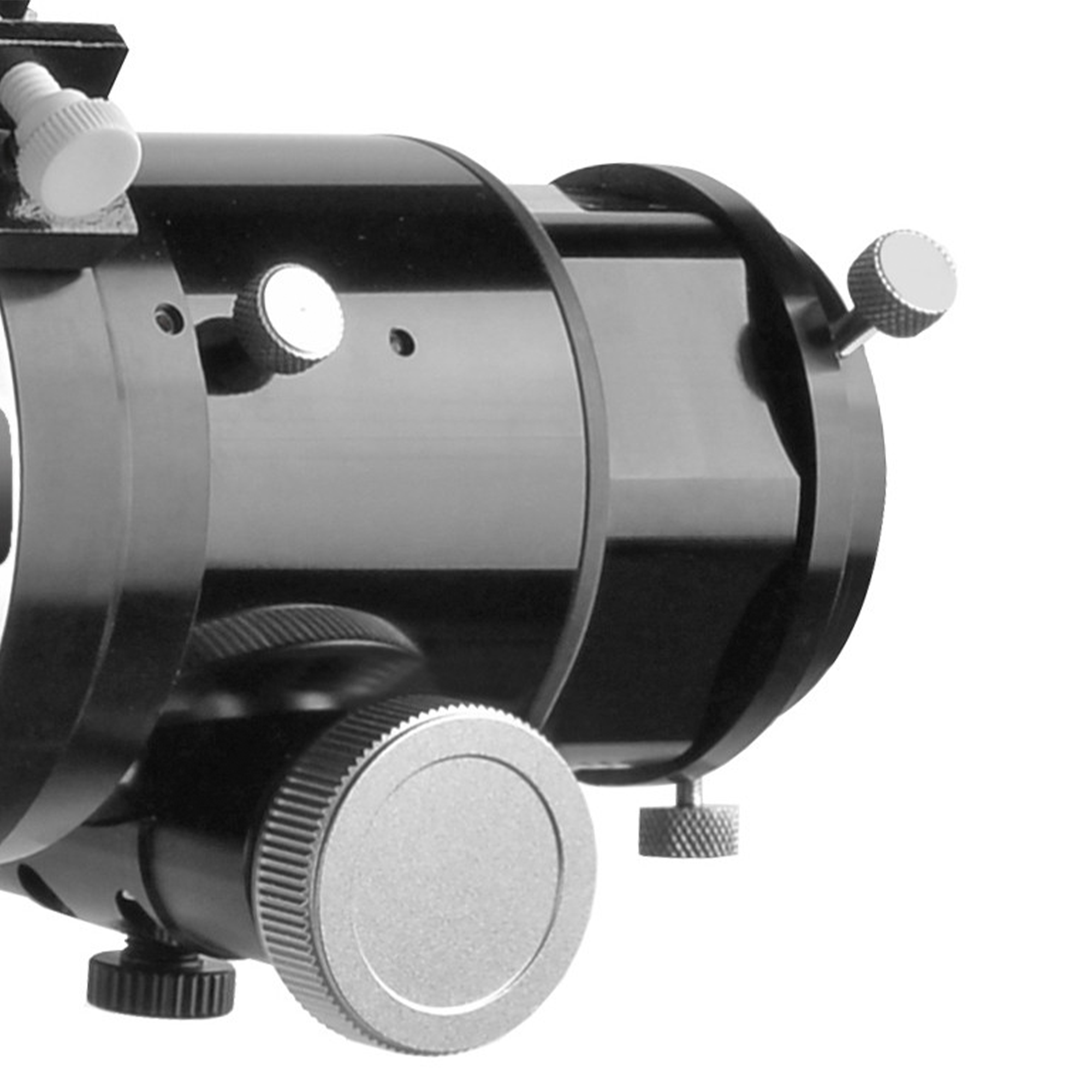
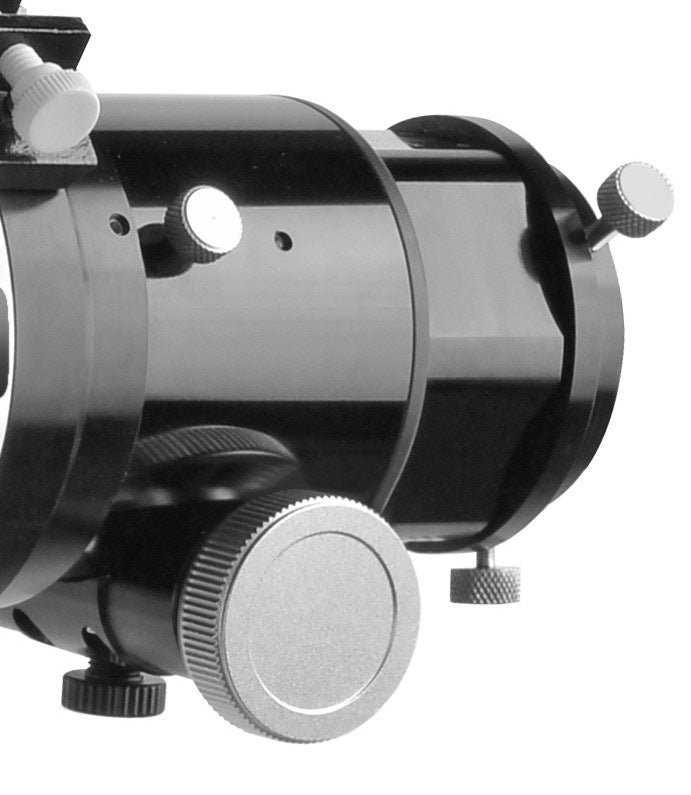
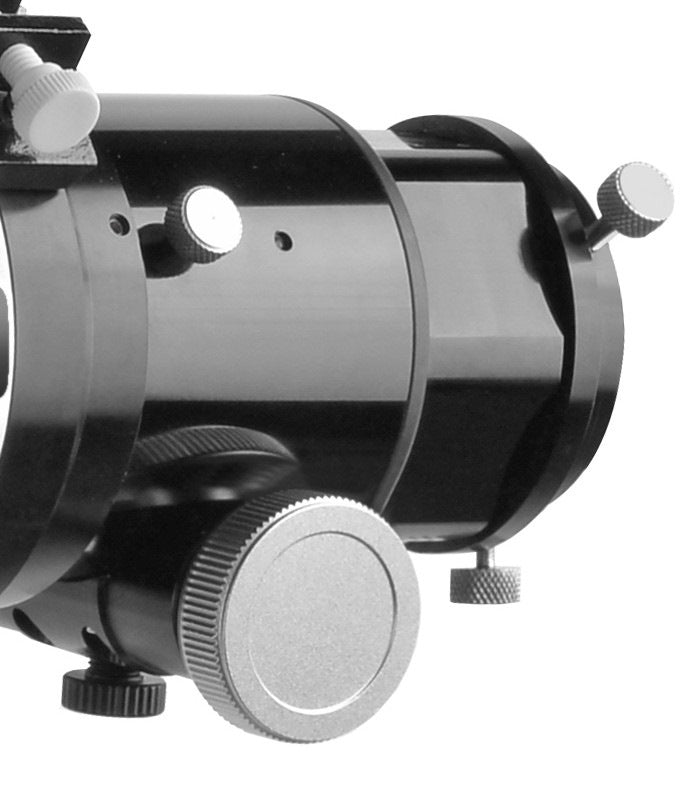
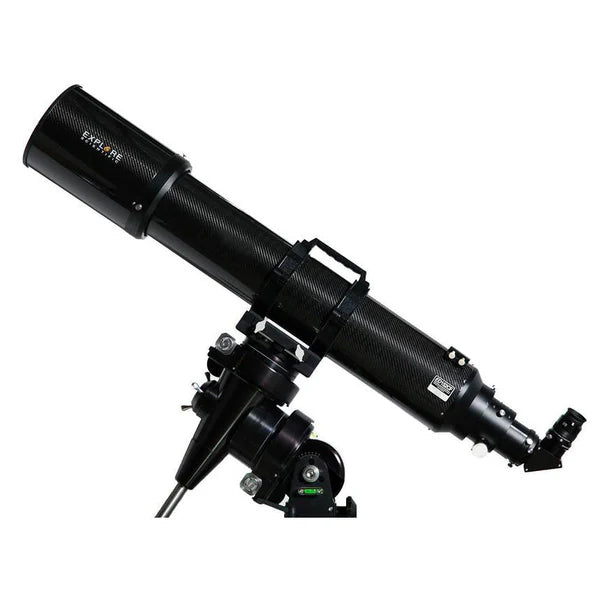
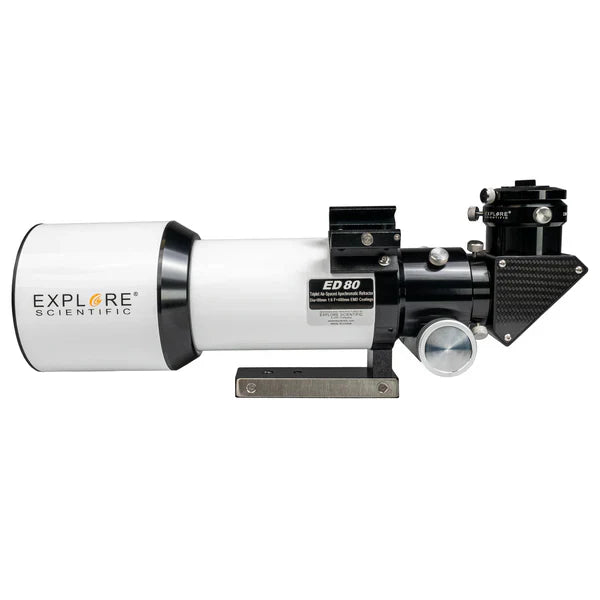
The tube measures 30.5″ (774mm) with the dew shield extended and 23.75″ (603mm) with it retracted, over a 119mm outside diameter, at a published weight of 10.9 lb (4.94 kg). It carries a 2.5-inch focuser rated by Explore Scientific for imaging loads to 10 lb, and rides on a 45mm wide V-block dovetail of the Vixen pattern.
Who It's For
-
Wide-field imagers: 714mm at f/7 puts the larger emission nebulae, the Andromeda core and the bigger open clusters inside a single APS-C frame, and the triplet holds star colour to the corners of the illuminated field.
-
Visual observers who want colour-free high power: 1.14 arcsec of published resolution is enough for the Cassini division, the Jovian festoons and tight double pairs, with none of the violet halo an achromat shows on those targets.
-
Travelling observers: a 23.75-inch retracted tube at 10.9 lb fits luggage and small cases in a way a six-inch instrument does not.
-
Observers building a second imaging rig: this is a good match if you already own a mount rated comfortably above 11 lb and want a refractor that can front an imaging train today and guide a larger scope later.
Key Features & Design
-
102mm air-spaced triplet: three elements in a single cell with air gaps rather than cement, built around a HOYA FCD100 extra-low-dispersion centre element.
-
714mm focal length at f/7: short enough for wide-field framing, long enough that eyepieces in the 5mm to 9mm range reach usable planetary powers.
-
EMD enhanced multi-layer coatings on the air-to-glass surfaces, which is where transmission and stray-light control are won or lost in a three-element objective.
-
2.5-inch focuser rated to 10 lb: Explore Scientific specifies the load capacity, which is the figure that matters once a camera, filter wheel and off-axis guider are hanging off the back.
-
Retracting dew shield: 30.5″ (774mm) extended, 23.75″ (603mm) retracted, so the transport length is nearly seven inches shorter than the working length.
-
119mm tube diameter with a 45mm wide V-block dovetail similar to the Vixen standard.
Optical Design
A triplet apochromat uses three elements to bring three wavelengths to a common focus, where a doublet manages two. The practical result is that the secondary spectrum — the residual colour error left over after the primary correction — drops to a level where it stops being visible on bright stars and stops bloating blue channels in a stacked image. The FCD100 glass in the centre element is a fluoro-crown type with very low dispersion, which is what makes that three-wavelength correction achievable in a cell only 102mm across.
Air spacing rather than cementing gives the designer additional surfaces to work with and removes the cement layer as a thermal variable. It also means the objective cools as three separate pieces of glass, so a triplet takes longer to reach thermal equilibrium than a doublet of the same aperture. In practice that is twenty to forty minutes outside before the highest powers settle, which is worth knowing when planning a session.
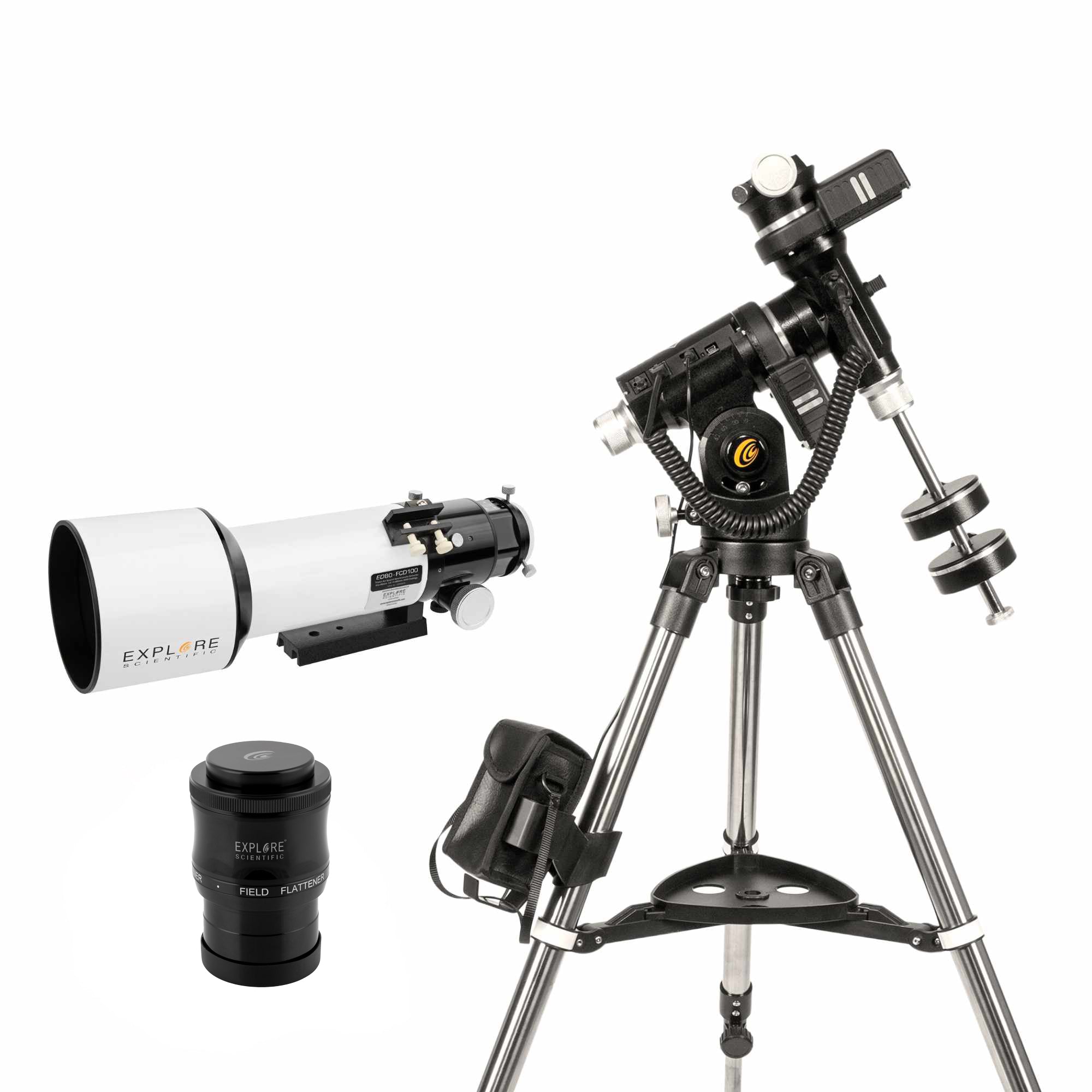
At f/7 the native field is not flat. Refractor objectives produce a curved focal surface, and across a large sensor that shows as stars stretching at the corners while the centre is sharp. A dedicated field flattener corrects it. Explore Scientific does not publish a corrected image circle or a backfocus figure for this tube, so no number is quoted here — we can work out the spacing with you against the camera and flattener you have in mind.
Recommended Uses
- Wide-field deep-sky imaging of nebulae, large clusters and the brighter galaxies at 714mm.
- High-power visual work on the Moon, planets and double stars, where the 1.14 arcsec resolution figure governs.
- Lunar and solar-system imaging with a focal extender to raise the effective focal length.
- Travel and dark-site trips where the 23.75-inch retracted length matters.
Compatibility and Accessory Notes
-
Mount: not part of the published package. At 10.9 lb bare, a mount rated at 25 lb or more gives the margin imaging wants once a camera and accessories are added.
-
Dovetail: the 45mm wide V-block seats in Vixen-style saddles, including dual-fit saddles that take both Vixen and Losmandy plates.
-
Eyepieces: at 714mm, a 30mm eyepiece gives 24x, a 20mm gives 36x, a 9mm gives 79x and a 5mm gives 143x.
-
Focal extenders: a 2x extender takes the system to 1428mm at f/14 for lunar and planetary imaging.
-
Imaging train: the 2.5-inch focuser is specified to 10 lb, which accommodates most cooled CMOS cameras with a filter wheel and off-axis guider.
-
Field flattener: needed for a flat field across an APS-C or larger sensor. Send us the camera and we will work through the spacing with you.
Good to Know Before You Order
-
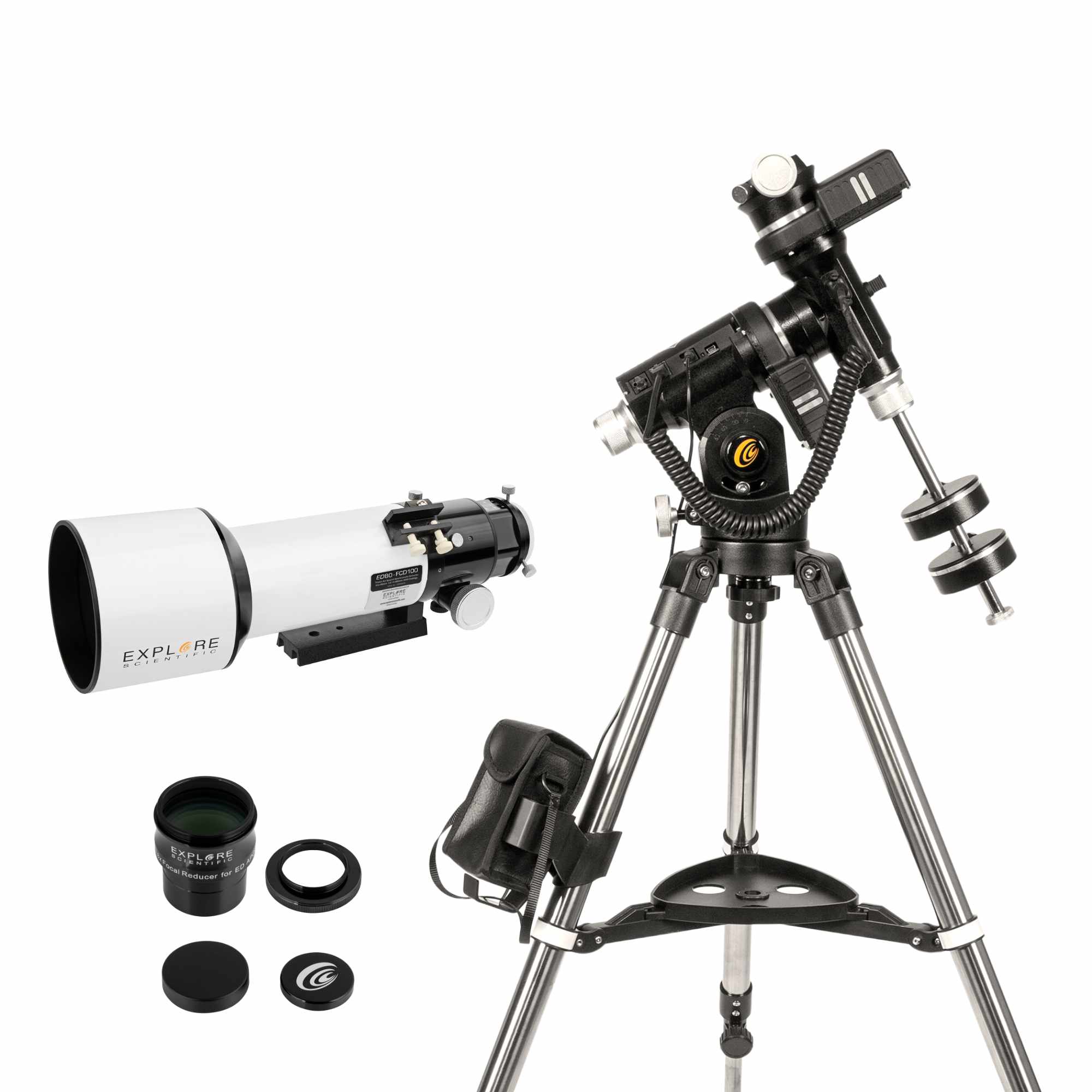
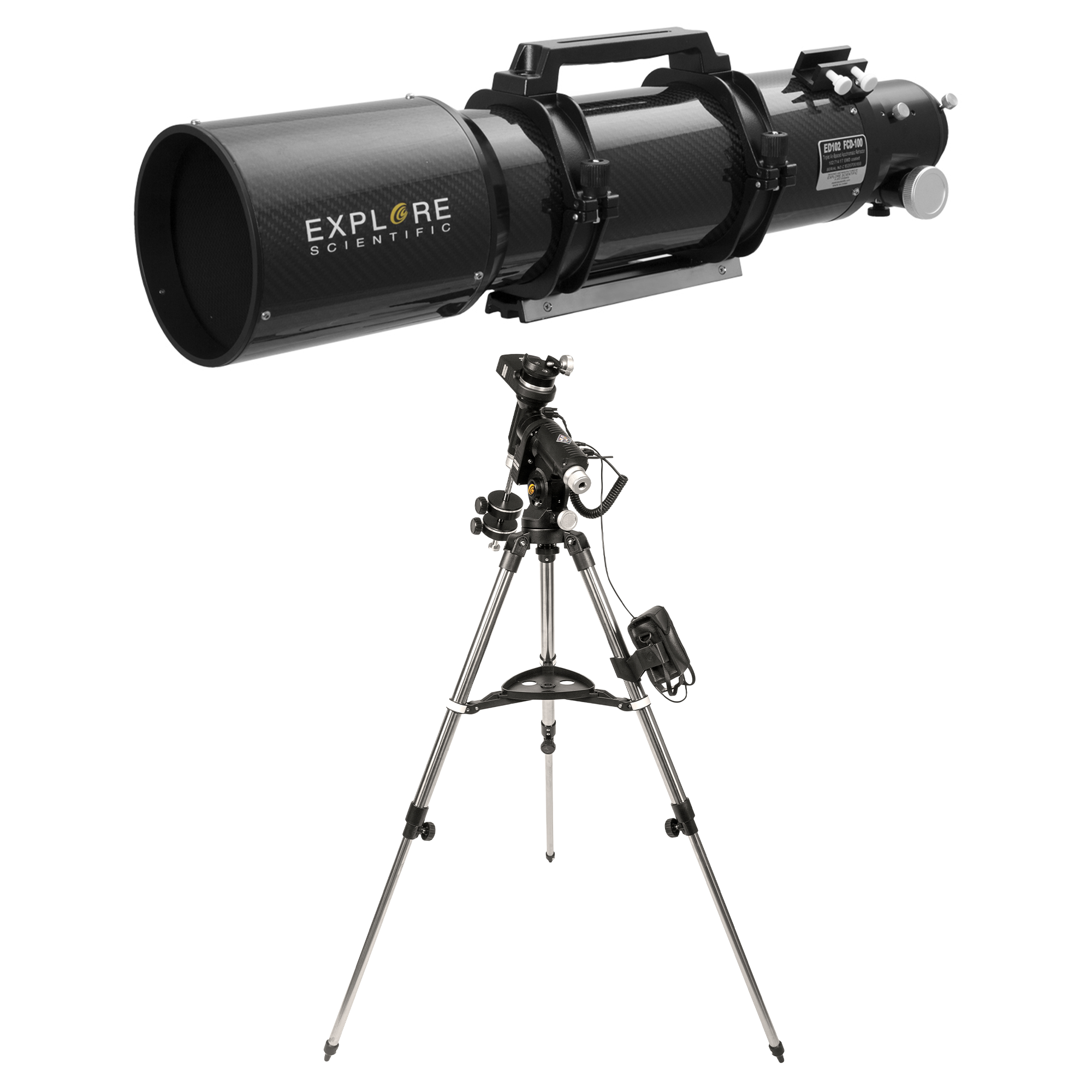
This is an optical tube assembly. A mount, tripod and at least one eyepiece are separate items, and Explore Scientific does not publish an itemised box-contents list for this tube. We can check what is in the carton with our rep before you order, and put a package together if that is simpler.
-
Explore Scientific publishes two weight figures for this model. The current spec sheet for item FCD100-10207-02 lists 10.9 lb (4.94 kg); an earlier sheet for the aluminium FCD100-10207-01 listed 12 lb (5.4 kg). Both are shown here as published rather than averaged.
-
A triplet needs cooling time. Three separate elements reach ambient temperature more slowly than two, so the sharpest high-power views arrive some time after the tube goes outside rather than immediately.
-
No corrected image circle or backfocus figure is published for this tube, so those rows are absent from the specifications rather than estimated. If you are planning an imaging train, tell us the camera and flattener and we will map the spacing out with you.
Frequently Asked Questions
Is it difficult to set up?
The optics need nothing — a refractor holds its collimation, so there is no alignment step before observing. The work is mounting it: 10.9 lb onto a levelled saddle, dovetail clamped, dew shield pulled out, and then a cooling period before the highest powers look their best.
What mount does it want?
Something rated well above 10.9 lb once a diagonal, finder and eyepiece or an imaging train are added. For visual work a 20 lb mount is comfortable; for imaging, 25 lb or more gives the settling margin that guiding depends on. Tell us what you have and we will give you a straight answer on the fit.
What does FCD100 glass actually do?
It is a low-dispersion fluoro-crown glass that spreads wavelengths less than ordinary optical glass. Used as the centre element of a triplet, it allows three wavelengths to be brought to a common focus, which is what removes the violet halo an achromatic doublet shows on Venus, Sirius and the lunar limb.
Will it show colour fringing?
An apochromatic triplet is designed to bring that below the visible threshold. On the very brightest targets at very high power a trace of residual colour is inherent to any refracting design, but it is a different order of magnitude from what a two-element achromat produces.
Bottom Line
In short: a 102mm f/7 air-spaced triplet on HOYA FCD100 glass, 714mm focal length, 10.9 lb, with a 2.5-inch focuser rated to 10 lb and a Vixen-pattern dovetail — a four-inch apochromat short enough to travel and capable enough to image with. If you are matching it to a mount or an existing camera, send us the details and we will work out the fit with you before you order.