



- Description
- Specifications
Product Overview
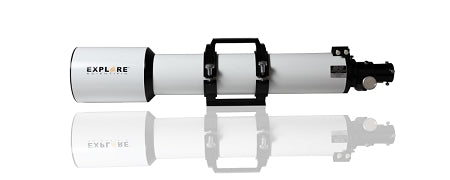
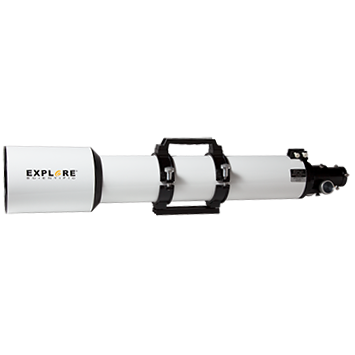
The Explore Scientific ED127 Essential Series is a 127mm air-spaced triplet apochromatic refractor with a focal length of 952mm at f/7.5. The objective uses genuine HOYA FCD1 extra-low-dispersion glass with EMD enhanced multi-layer coatings on every optical surface. Explore Scientific publishes a limiting magnitude of 13 and a resolution of 0.9 arcsec — five inches of well-corrected aperture, which is where a refractor starts to hold its own against much larger reflectors on planetary and double-star work.
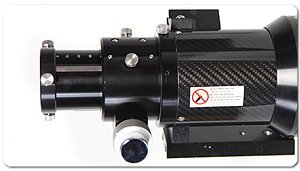
This is the fourth-generation tube, and the changes are worth knowing about. The front cell is a precision design with push-pull tilt and centering adjustment, so the objective can be collimated rather than simply trusted. The focuser is a 2-inch two-speed rack-and-pinion with heavy-duty locks and rotation adjustment. The dew shield retracts, which takes the tube from 41.75″ (1060mm) extended down to 33.25″ (849mm) for transport. Cradle rings with a carry handle, a Vixen-style dovetail, a 2-inch 99% dielectric star diagonal and the Explore Scientific 2N1 finder base all come in the box. The tube alone is 18 lb (8.16 kg); with the rings and diagonal fitted the assembly is closer to 22 lb.
Who It's For
- Astrophotographers who have outgrown a small refractor: 952mm at f/7.5 frames galaxies, globulars and planetary nebulae at a scale an 80mm tube cannot reach, while staying short enough to guide without drama.
- Planetary and lunar observers: 127mm of unobstructed aperture at 0.9 arcsec resolution delivers the high-contrast, colour-free view that is the reason people buy apochromats in the first place.
- Double-star observers, working close to the published 0.9 arcsec figure with no diffraction spikes and no central obstruction to fill in the gaps.
- Observers who want one telescope to do everything well: this is a good match if you would rather own a single instrument that images deep-sky, splits doubles and shows the Moon properly than three that each do one job.
- Anyone who has been frustrated by a fixed front cell: the push-pull collimation on this generation means star shape is something you can correct rather than live with.
Key Features & Design
- 127mm air-spaced triplet objective: three elements separated by air rather than cement, in an apochromatic configuration.
- Genuine HOYA FCD1 ED glass: Explore Scientific specifies the actual FCD1 type rather than an unnamed equivalent.
- EMD enhanced multi-layer coatings on all optical surfaces, applied to hold transmission high across the visual band.
- Precision front cell with push-pull adjustment for tilt and centering — the objective can be collimated for the tightest possible stars.
- 2-inch two-speed rack-and-pinion focuser with heavy-duty locks and rotation adjustment, so a camera train can be squared up and then held there.
- Retractable dew shield: 41.75″ (1060mm) extended, 33.25″ (849mm) retracted.
- Cradle rings with a slotted carry handle, tapped 1/4″-20 for piggybacking a DSLR, on a Vixen-style dovetail plate.
- 2-inch 99% dielectric star diagonal included, along with the 2N1 finder scope base (finder scope sold separately).
- Published performance: limiting magnitude 13, resolution 0.9 arcsec, tube diameter 130mm, tube weight 18 lb (8.16 kg).
Optical Design
An achromatic doublet brings two wavelengths to a common focus and leaves a residual — the secondary spectrum — that shows as violet fringing around bright objects. A triplet apochromat adds a third element so that three widely separated wavelengths converge together, and with one element made from extra-low-dispersion glass the residual drops below what the eye registers in normal use. At 127mm this matters more than it does at 80mm: the brighter the image and the higher the usable magnification, the more obvious an uncorrected secondary spectrum becomes. HOYA FCD1 is the ED type used here, and air spacing gives the designer six air-glass surfaces to shape rather than four, while removing a cement layer as a variable during cool-down.
At f/7.5 the light cone is moderate rather than fast. For imaging that means field curvature and off-axis aberration are easier to correct than in a fast astrograph, and focus tolerance is looser — which makes an unattended night of subframes considerably less fragile. It also means longer exposures than an f/5 or f/6 instrument would need for the same signal, which is the trade you make for the extra focal length and resolution.
The two-speed rack-and-pinion focuser is the mechanical half of the story. A rack-and-pinion drive resists slipping under a heavy imaging train in a way a lightly tensioned Crayford does not, and that matters when a camera, filter wheel and flattener hang off the drawtube pointed near the zenith. The 10:1 fine adjustment is what makes critical focus at 952mm a matter of a small deliberate movement rather than a hunt.
Explore Scientific does not publish a corrected image circle or a backfocus distance for this tube, so we quote neither rather than estimate. Tell us which camera and flattener you are planning around and we will work the spacing through with you before anything ships.
Recommended Uses
- Deep-sky astrophotography at 952mm — galaxies, globular clusters and planetary nebulae — on a tracking equatorial mount with a flattener matched to the sensor.
- High-power visual observing of the Moon, planets and double stars, where colour correction and unobstructed aperture set the ceiling.
- Deep-sky visual work on clusters, nebulae and brighter galaxies.
- Solar observing with an appropriate front-mounted filter, and outreach sessions where a refractor's zero-maintenance optics matter.
Compatibility and Accessory Notes
- Mount: not included, and this is the part to plan carefully. The tube is 18 lb bare and roughly 22 lb with rings and diagonal, before a finder, eyepiece or camera. At 952mm the mount also has to track well, not just carry the load — for imaging we would want meaningful headroom over the loaded weight. Tell us what you own or are considering and we will give you a straight assessment.
- Dovetail: Vixen-style plate on the cradle rings, seating in any Vixen saddle or dual-format saddle. On a heavier mount, a Losmandy-style plate is a common upgrade for the extra rigidity.
- Focuser: 2-inch two-speed rack and pinion, taking 2-inch accessories directly and 1.25-inch ones with an adapter.
- Diagonal: a 2-inch 99% dielectric star diagonal is included, so the tube is ready for visual use as soon as you add an eyepiece.
- Eyepieces: not included. At 952mm, a 30mm eyepiece gives 32x, a 20mm gives 48x, a 12mm gives 79x and a 6mm gives 159x — we can put together a set that covers the range.
- Finder: the 2N1 base is pre-installed and accepts both common finder shoe patterns; the finder scope itself is a separate purchase.
- Field flattener: a separate item for deep-sky imaging, as it is with any refractor. Since no corrected image circle is published, we will confirm the flattener match against your camera rather than quote a figure.
- Focal extenders: a 2x or 3x extender on 952mm brings lunar and planetary work into a genuinely useful magnification range for a 127mm aperture.
Good to Know Before You Order
- This is an optical tube assembly, not a complete telescope. A mount, a tripod and at least one eyepiece are separate. We assemble packages around this tube regularly — tell us how you intend to use it and we will price the whole setup.
- The mount is the real decision here. An 18 lb tube at 952mm asks more of a mount than the raw weight suggests, particularly for imaging. This is the single most common place people underspend, and we would rather talk it through with you first.
- The 41.75″ length is with the dew shield extended. Retracted it is 33.25″, which is the figure to measure a case or a vehicle against.
- A five-inch triplet takes real time to reach ambient temperature. More glass means a longer cool-down than a doublet or a smaller triplet — setting the tube outside well ahead of the session is what lets the optics settle before high-power observing begins.
- No corrected image circle or backfocus figure is published for this tube, so we quote neither. Send us your imaging train and we will work out what we can establish about the spacing.
Frequently Asked Questions
Is it difficult to set up?
The optics need nothing routine — a refractor holds its collimation through normal use, and the push-pull front cell is there for correction rather than regular adjustment. At 18 lb the tube is a manageable one-person lift, and the carry handle on the rings is genuinely useful for that. Level the mount and position the counterweights first, then the dovetail slides into the saddle and locks. The diagonal and eyepiece go straight into the focuser.
What mount does it need?
For visual use, a mount comfortably above the roughly 22 lb loaded weight of tube, rings and diagonal. For deep-sky imaging at 952mm, more margin again — tracking accuracy falls away well before a mount reaches its rated capacity. Tell us the model you have in mind and we will tell you honestly whether it is enough.
Does it come with a diagonal or eyepieces?
A 2-inch 99% dielectric star diagonal is included, along with the cradle rings, dew shield, Vixen dovetail and 2N1 finder base. Eyepieces and the finder scope itself are separate, and we can supply a set that suits how you plan to use it.
Will I see false colour?
An air-spaced triplet on genuine HOYA FCD1 ED glass is built to remove it. On Venus, Sirius and the lunar limb at high power the image stays neutral where a two-element achromat of this aperture would show obvious violet.
Can I collimate it myself?
Yes — that is what the push-pull front cell on this generation is for. It is not something the telescope should need often, but if star shape drifts after travel, the adjustment is there rather than requiring a trip back to the manufacturer. Ask us before you start if you have not done it before.
How does it compare to the ED102 Essential?
The ED102 is 102mm at 714mm and f/7, 12 lb, with a single-speed 2-inch rack-and-pinion. The ED127 is 127mm at 952mm and f/7.5, 18 lb, with a two-speed focuser, push-pull front cell and a diagonal included. The ED127 gathers roughly 55% more light and resolves finer detail; the ED102 is lighter, shorter, asks less of a mount and gives a wider field per eyepiece.
Bottom Line
In short: a 127mm f/7.5 air-spaced triplet apochromat on genuine HOYA FCD1 ED glass, 952mm focal length, 18 lb, with a precision push-pull front cell, a 2-inch two-speed rack-and-pinion focuser, a retracting dew shield, cradle rings with a piggyback handle, a Vixen dovetail and a 2-inch dielectric diagonal in the box — a five-inch apochromat that images deep-sky properly and shows the Moon and planets the way an unobstructed aperture should. The mount underneath it is the decision that matters most; send us the details and we will work through the fit with you.
You may also like
Recently viewed
Recent Blog Posts
View all
Your Guide Graph Is Lying to You
Read More
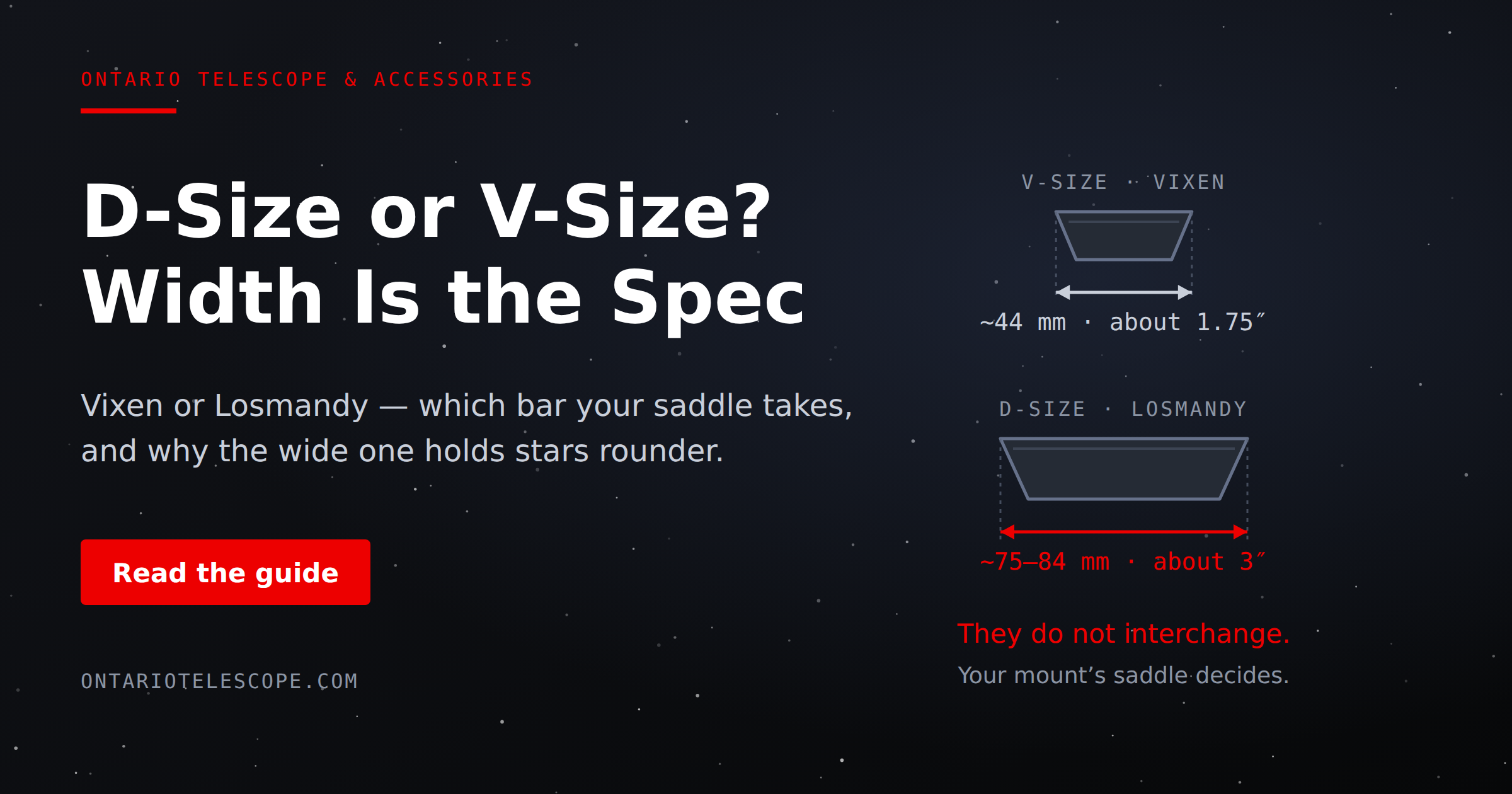
D-Size vs V-Size: A Complete Guide to Telescope Dovetail Systems
Read More
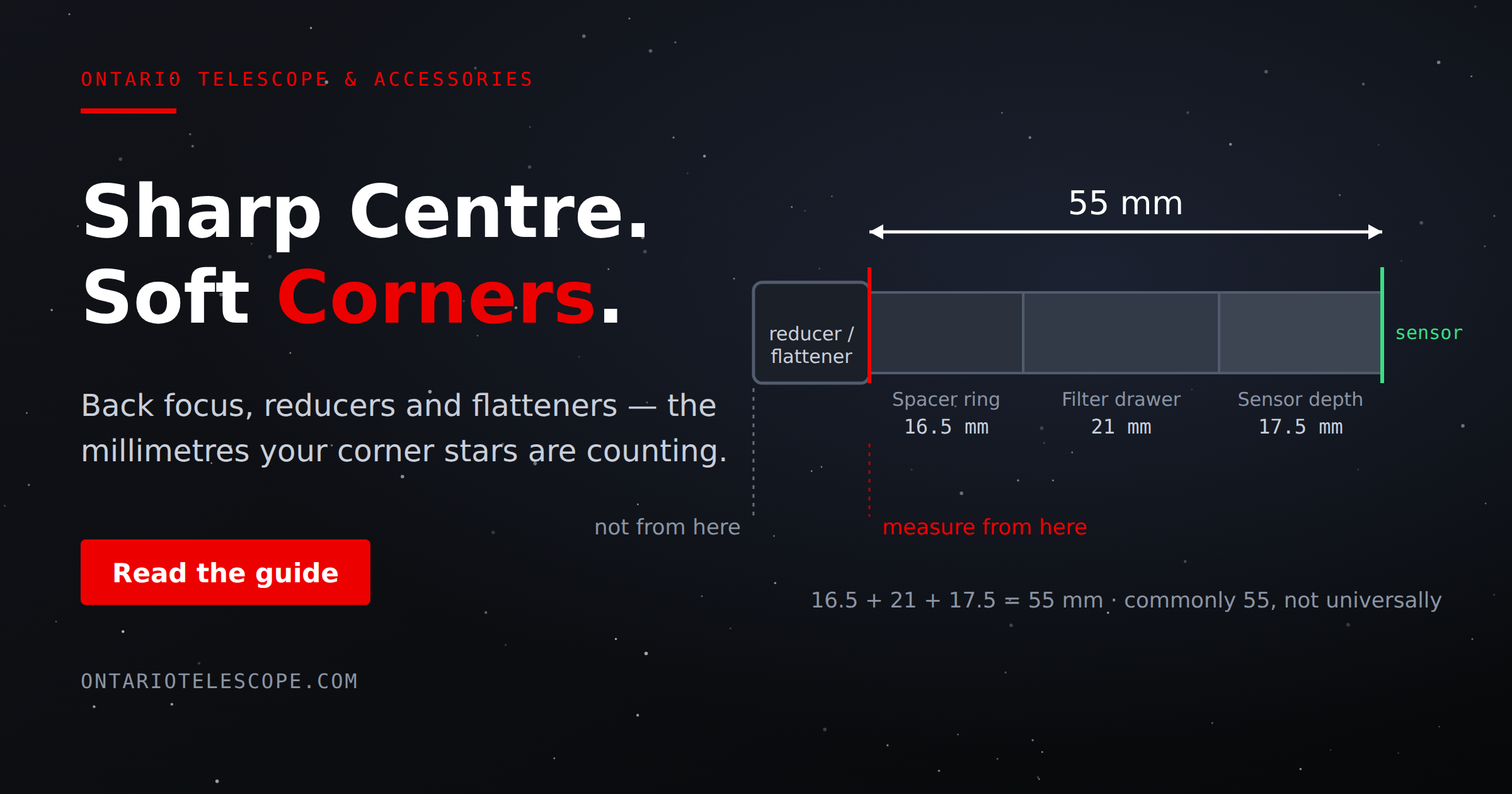
What Is Back Focus in Astrophotography? Telescope Reducers, Flatteners, and Spacing Explained
Read More