
Start here
Your first astrophotos, and what they'll really take
Photographing the sky is a different hobby from looking at it - easier than it looks in one way, harder in another. Here is how it actually works, and nine honest routes in.
Three ideas, and the rest is detail
Why a camera sees what your eye can't
Astrophotography isn't looking through a telescope and pressing a button. It's a different activity — and these three things are most of the battle.
A sensor accumulates. Your eye doesn't.
Your eye refreshes about twenty times a second, so a faint nebula never gets brighter no matter how long you stare. A camera sensor keeps collecting photons — thirty seconds, five minutes, ten hours across a week — and faint colour builds up out of nothing. That's the whole trick.
The Earth is turning, so you need tracking
Stars drift about 15 arcseconds every second. Untracked, they smear into streaks within a few seconds at any real focal length. A tracking mount turns at exactly the opposite rate — which is why the mount, not the telescope, decides whether you can image at all.
Many short frames beat one long one
Nobody takes a single two-hour exposure. You take sixty two-minute frames and stack them. Random noise averages out as frames are added, real signal doesn't — and when a plane or a gust ruins one frame you lose two minutes instead of the night.
The one bit of maths worth knowing
Image quality improves with the square root of total exposure time. Four hours is twice as smooth as one hour, not four times. That's why serious images are built across several nights on one target — and why your first hour will look noisier than the pictures that got you into this. It isn't your gear.
Filters, and what they can and can't rescue
A dual-band or narrowband filter blocks nearly everything except the wavelengths nebulae glow at — hydrogen at 656 nm and oxygen at 500 nm. Streetlight glow gets rejected, nebula light gets through, and a suburban backyard suddenly works. But it only helps emission nebulae. Galaxies and star clusters shine across all wavelengths, so narrowband throws away most of their light too. For those you still need a dark sky. Every colour kit below offers one as an option, in a drawer ahead of the camera so you can pull it out for broadband targets.
Colour or mono, and why you should start with colour
A one-shot colour camera has a colour filter array bonded to the sensor, so every frame is already a colour picture. A mono camera has a bare sensor and you shoot each channel separately through a filter wheel, then combine them. Mono resolves finer detail and does narrowband properly — but it costs a wheel and a filter set on top of the camera, and it takes three or four times the exposure for the same target. Start with colour. The two largest kits below offer mono if you already know you want it.
The question everyone asks second
Will my target actually fit in the frame?
Focal length and sensor size together decide how much sky you capture. This is where most beginners go wrong — they buy far more focal length than they need, then find the famous targets don't fit. Andromeda is six times wider than the full Moon. The Orion Nebula is three times wider. You need less telescope than you think.
Where a telescope has a matched reducer, both the native and the reduced focal length are listed — a reducer widens the field and speeds the optic up, so it genuinely changes what fits.
The actual decision
Two roads, and they really are different
There's no gentle ladder between these. A smart telescope is a finished appliance; a modular rig is a hobby you assemble. Both produce good images. They ask completely different things of you.
| Smart telescope | Modular rig | |
|---|---|---|
| Cost to start | $680 – $1,300 | $5,000 and up with a camera |
| First image | The night it arrives, in about ten minutes | Realistically your second or third clear night |
| Setup time | Under a minute. Put it down, tap a target. | Fifteen to thirty minutes until you have the routine |
| What you learn | Framing, processing, patience | Polar alignment, back focus, guiding, calibration — all of it |
| Image quality | Genuinely good, and the ceiling is lower | Higher ceiling, and you keep raising it for years |
| Upgrade path | Sell it and start again | Every piece swaps independently; the mount lasts decades |
| Best for | Anyone unsure they'll stick with it, or short on time | People who enjoy the tinkering as much as the pictures |
Our honest advice: if you aren't certain this will become a hobby, start with a smart telescope. It costs a fraction as much, it produces images you'll be proud of, and the resale market is strong. Nobody has ever regretted starting small here. Plenty of people have a $5,000 rig in a closet.
Already own a camera and a set of lenses? A star tracker is the cheapest way in of all - it uses the glass you have rather than replacing it. Ready for the other end of the range instead? The advanced imaging packages pick up where this page stops — Takahashi and Askar systems with mono, filters and back focus all worked out.
What we'd actually sell you
Nine ways in, from $680 to a rig you'll keep for a decade
Kits are priced as a whole with the camera left as your choice. Pick a camera and the guiding and controller options adjust to match it - the Air bodies have both built in, everything else offers them as ticks you can take off if you already own them. Colour cameras can add a dual-band filter and the drawer that holds it. The total and the cart update as you go.
Road one — one box, pictures tonight
Telescope, camera, mount and computer in a single unit. Tap a target in an app and watch a colour image build on your phone. No laptop, no cables, no alignment.
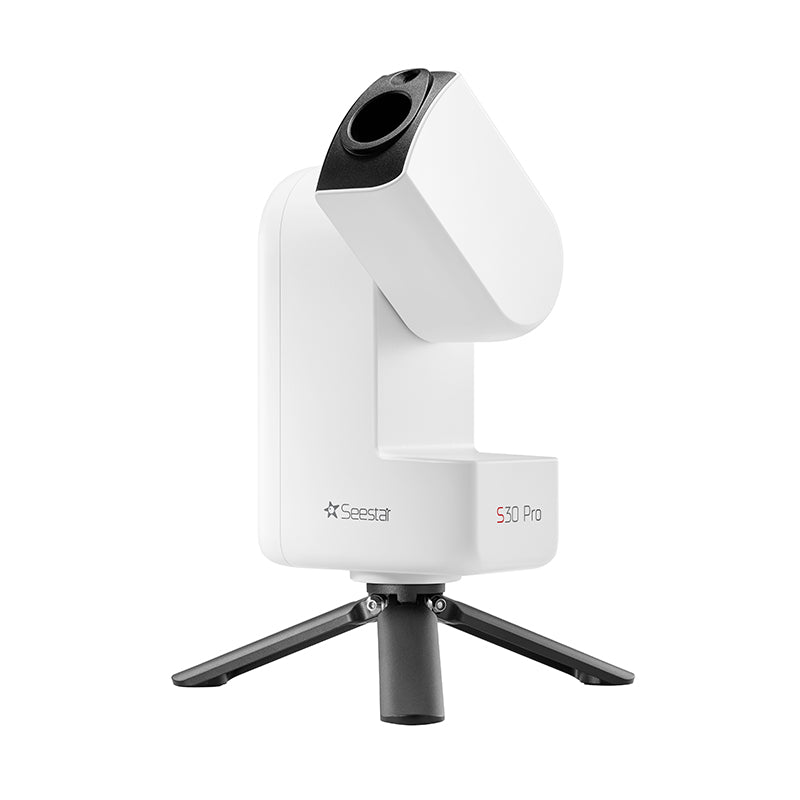
ZWO Seestar S30 Pro — All-In-One Smart Telescope
Telescope, camera, mount, focuser and filters in one 1.65 kg body. Tap a target and a colour image builds on your phone over a few minutes. The dual 4K lens system also gives you wide-field and landscape astro from the same box.
Colour deep-sky images from a city backyard, on your first night, with no experience. Fits in a shoulder bag.
A 30 mm lens is small - planets stay tiny, and you never look through an eyepiece.
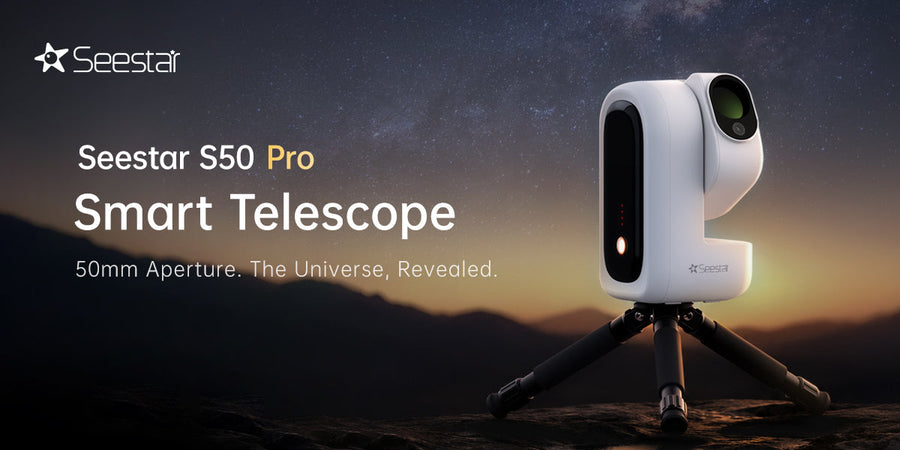
ZWO Seestar S50 Pro Smart Telescope
The bigger sibling. Nearly three times the light-gathering area of the S30 and a longer focal length, so smaller galaxies and nebulae fill the frame rather than sitting in the middle of it.
Noticeably more detail on smaller targets while staying a one-box appliance you can hand to a beginner.
Heavier and pricier, and the narrower field means the very largest targets no longer fit whole.
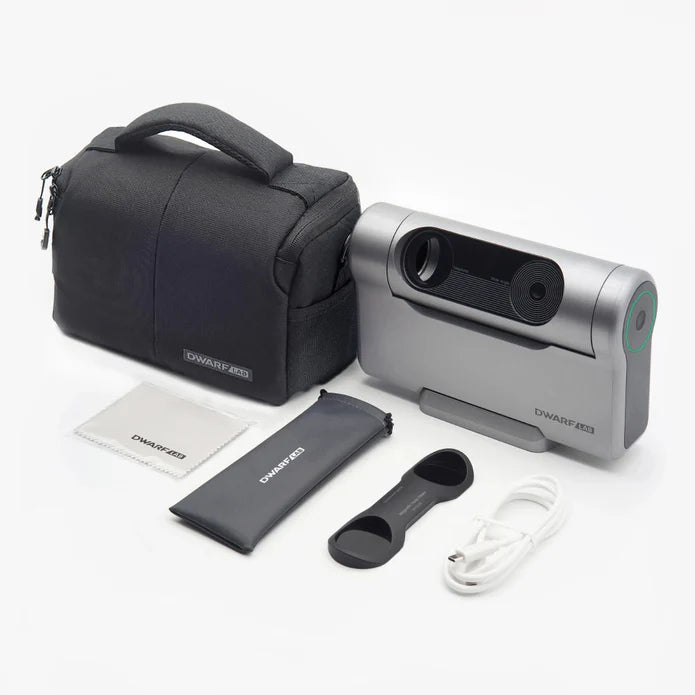
DWARF 3 Smart Telescope
Dwarf Labs' answer to the Seestar, and the cheapest genuine route into astrophotography we stock. Dual wide and telephoto lenses, equatorial mode for longer exposures, and a properly capable app.
The lowest price of entry by some margin, and small enough to travel in hand luggage.
A smaller accessory ecosystem than ZWO's. Currently on order.
Road two — a rig you'll grow into
Complete kits with the camera left as your choice, because that's the decision worth thinking about. Pick a camera and the guiding and controller options adjust to suit it — and both come off with a tick if you already own them. Colour cameras can add a dual-band filter for bright skies; the two largest kits also offer mono with a wheel and filters. Prices update as you choose.
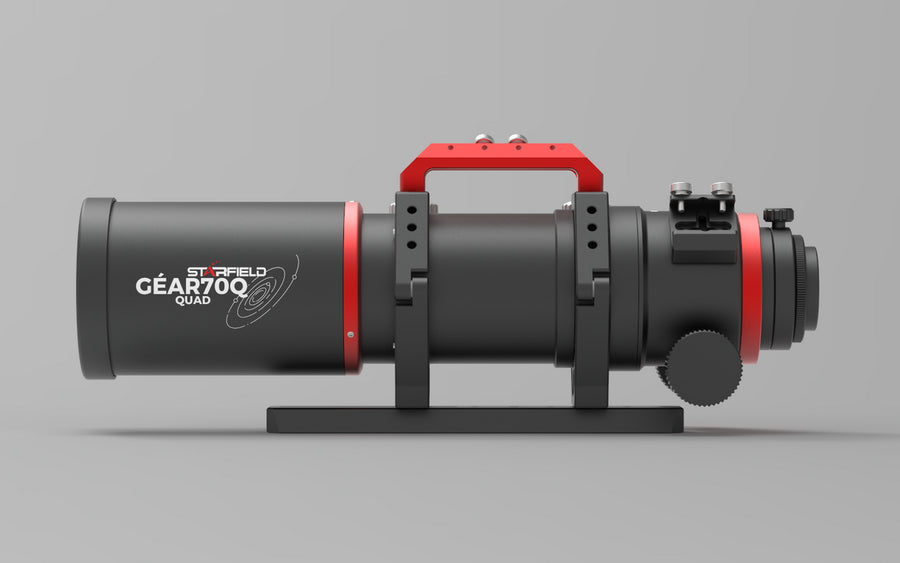 Complete kit
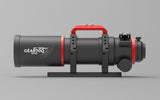
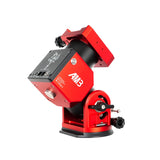
Starfield Gear70Q on a ZWO AM3N
A 70 mm quadruplet Petzval at 350 mm on ZWO's lightest harmonic mount. Short enough to be forgiving of tracking error, fully corrected so there is no back-focus arithmetic, and light enough that you will actually carry it outside on a Tuesday.
Wide, flat fields that frame the big showpiece nebulae, on a mount you will still be using in ten years.
70 mm is not much aperture - small galaxies stay small. This is a wide-field rig, deliberately.
In the kit
- Starfield Optics Gear70Q 70mm f/5 Quad Petzval Astrograph$1,999.99
- AM3N Harmonic Equatorial Mount$2,099
- Starfield DH-4 4" Dew heater$89.99
How do you want to shoot it?
Choose your camera
The mono imaging train
We include Antlia's LRGB-V Pro for broadband and the Antlia 4.5nm EDGE set for narrowband - the pairing we would buy ourselves. Swap either and the difference shows against the total.
Cutting through a bright sky
Autoguiding
At 350 mm the 32 mm guide scope is plenty - an off-axis guider is overkill here unless you already own one.
Guiding is built into this camera. The guide sensor sits alongside the main chip in the same body, so there is no guide scope to flex and no off-axis guider to align. Nothing to add.
The controller is built in too. This body has ASIAIR on board, so there is no separate controller to buy and nothing else to power or cable up.
Sized to cover the front of the telescope. 100 mm is the smallest Wanderer make and it comfortably covers a 70 mm tube.
 Complete kit
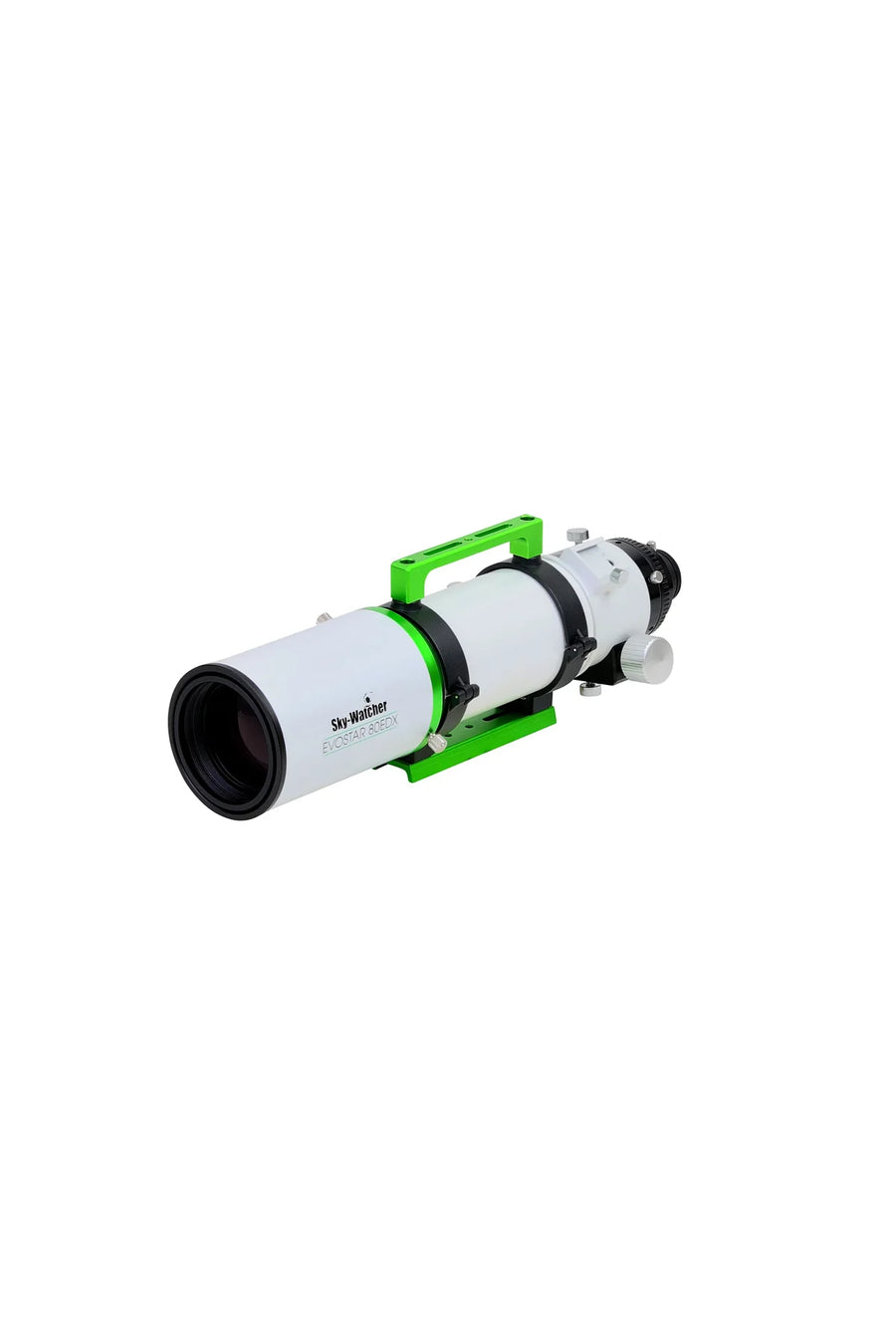
EvoStar 80EDX on a Wave 100i
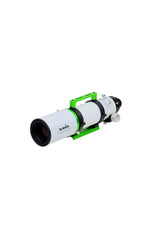
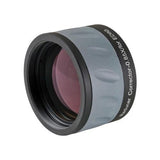
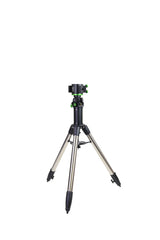
Sky-Watcher's 80 mm ED doublet with its matched 0.85x reducer/corrector, on the Wave 100i sold as a complete mount kit - head, steel tripod and extension tube in one part number rather than three. The reducer flattens the field for imaging and brings the telescope to roughly 425 mm at f/5.3 - wide enough for the big nebulae, and fast enough that short autumn nights still produce something.
A complete, corrected imaging system with nothing left to work out - the reducer is in the box, so there is no back-focus puzzle and no shopping list afterwards. The Wave 100i kit arrives with the extension tube already included, so the tube clears the tripod legs on a meridian flip, and it carries far more than this scope needs.
An ED doublet is not a triplet. On the very brightest stars you may catch a faint violet halo that a Petzval like the SQA or Gear series would not show. On everything else the difference is invisible - and you are saving well over a thousand dollars.
In the kit
- Sky-Watcher Evostar 80EDX APO Doublet Refractor$1,040
- Skywatcher Reducer/Corrector (.85x) for ProED / Evostar 80$510
- Wave 100i with Steel Tripod & Extension Tube Kit$3,050
- Starfield DH-4 4" Dew heater$89.99
How do you want to shoot it?
Choose your camera
The mono imaging train
We include Antlia's LRGB-V Pro for broadband and the Antlia 4.5nm EDGE set for narrowband - the pairing we would buy ourselves. Swap either and the difference shows against the total.
Cutting through a bright sky
Autoguiding
With the reducer fitted this is a 425 mm rig, so a 32 mm guide scope is ample. An OAG is the tidier answer if you would rather not balance a second tube.
Guiding is built into this camera. The guide sensor sits alongside the main chip in the same body, so there is no guide scope to flex and no off-axis guider to align. Nothing to add.
The controller is built in too. This body has ASIAIR on board, so there is no separate controller to buy and nothing else to power or cable up.
100 mm is the right panel for an 80 mm tube.
 Complete kit
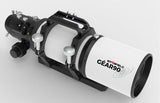
Starfield Gear90 EDT on a ZWO AM3N
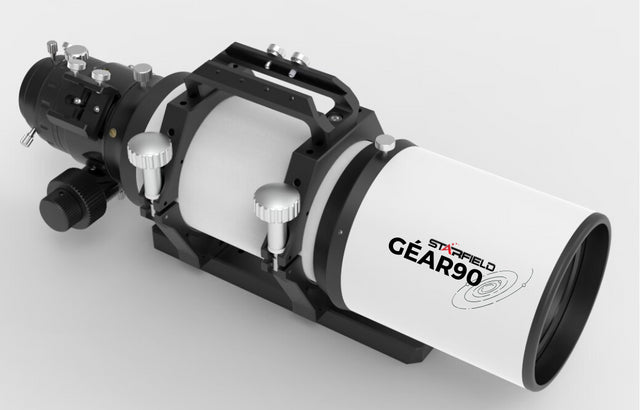
540 mm of ED triplet on the AM3N. This is where the frame starts to suit galaxies and the smaller nebulae while still being wide enough for Orion and Andromeda's core. The AM3N carries it comfortably and still folds into a bag.
A genuinely versatile focal length on a mount light enough for a road trip to a dark site.
At 540 mm you will want guiding sooner rather than later, and polar alignment starts to matter.
In the kit
- Starfield Optics Gear Series 90MM EDT F/6$2,270
- AM3N Harmonic Equatorial Mount$2,099
- Starfield DH-5 5" Dew heater$94.99
How do you want to shoot it?
Choose your camera
The mono imaging train
We include Antlia's LRGB-V Pro for broadband and the Antlia 4.5nm EDGE set for narrowband - the pairing we would buy ourselves. Swap either and the difference shows against the total.
Cutting through a bright sky
Autoguiding
A 32 mm guide scope suits everything up to about 600 mm.
Guiding is built into this camera. The guide sensor sits alongside the main chip in the same body, so there is no guide scope to flex and no off-axis guider to align. Nothing to add.
The controller is built in too. This body has ASIAIR on board, so there is no separate controller to buy and nothing else to power or cable up.
100 mm covers a 90 mm tube; go to 150 mm if you plan to grow into a bigger scope.
 Complete kit
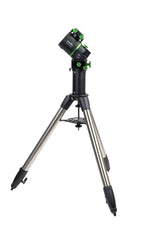
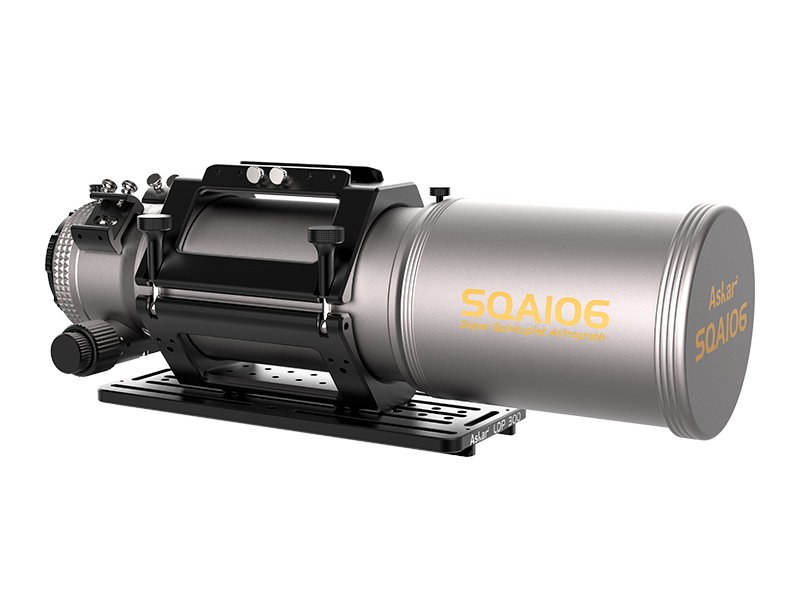
Askar SQA106 on a Wave 150i Pro kit
A 106 mm quintuplet Petzval on Sky-Watcher's 15 kg strainwave mount, bought as the Wave 150i Pro kit - head, steel tripod and extension tube in one part number. The corrector is built into the telescope, so there is no back-focus arithmetic and stars stay pinpoint into the corners of a full-frame sensor.
Full-frame-corrected wide field with no flattener puzzle, on a mount that needs no counterweights and arrives complete with its tripod and extension tube. This is also the first kit here where mono is a sensible option rather than an expensive detour.
The Wave 150i is a Sky-Watcher mount, so you are outside the ZWO ecosystem for accessories. Both main parts are on order.
In the kit
- Askar SQA106 Quintuplet Petzval Astrograph 106mm f/4.8$4,753
- Sky-Watcher Wave 150i Pro Strain Wave Mount Kit with Steel Tripod and Extension Tube$3,890
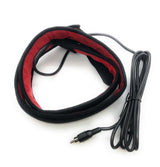
- Starfield DH-6 6" Dew heater$99.99
How do you want to shoot it?
Choose your camera — 2600 series only at this aperture
The mono imaging train
We include Antlia's LRGB-V Pro for broadband and the Antlia 4.5nm EDGE set for narrowband - the pairing we would buy ourselves. Swap either and the difference shows against the total.
Cutting through a bright sky
Autoguiding
At this focal length the 50 mm guide scope is the right size - the 32 mm does not give enough guide stars.
Guiding is built into this camera. The guide sensor sits alongside the main chip in the same body, so there is no guide scope to flex and no off-axis guider to align. Nothing to add.
The controller is built in too. This body has ASIAIR on board, so there is no separate controller to buy and nothing else to power or cable up.
150 mm is the right panel for a 106 mm tube with a dew shield extended.
 Complete kit
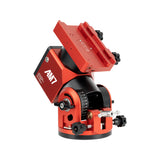
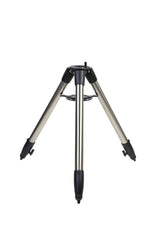
Askar SQA130 on a ZWO AM7
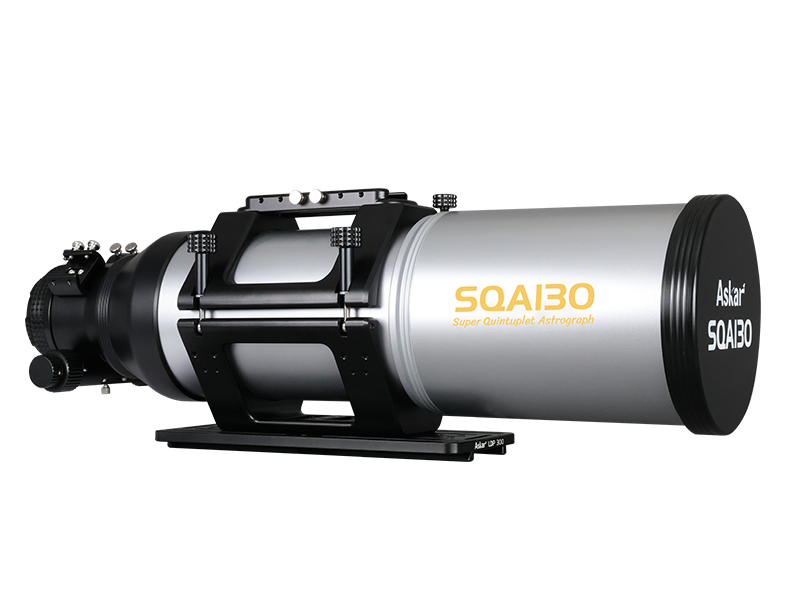
A 130 mm quintuplet Petzval at f/4.8 - fast, fully corrected, and short enough at 624 mm to stay forgiving. On ZWO's largest harmonic mount with the PE200 pier extension, so the tube swings clear of the tripod legs at any angle.
Fast optics mean shorter nights for the same result, and the built-in corrector removes spacing headaches entirely. At f/4.8 it is also the best telescope here for mono narrowband - fast optics and narrow filters are a strong pairing.
A serious investment, and a 130 mm tube is not a grab-and-go. The AM7 is currently on order.
In the kit
- Askar SQA130 Quintuplet Petzval Astrograph 130mm f/4.8$6,719
- ZWO AM7 Harmonic Mount$3,499
- ZWO PE200 Pier Extension$279
- Skywatcher EQ6 to Wave Steel Tripod$330
- Starfield DH-6 6" Dew heater$99.99
How do you want to shoot it?
Choose your camera — 2600 series only at this aperture
The mono imaging train
We include Antlia's LRGB-V Pro for broadband and the Antlia 4.5nm EDGE set for narrowband - the pairing we would buy ourselves. Swap either and the difference shows against the total.
Cutting through a bright sky
Autoguiding
50 mm is the right guide scope from about 600 mm upward.
Guiding is built into this camera. The guide sensor sits alongside the main chip in the same body, so there is no guide scope to flex and no off-axis guider to align. Nothing to add.
The controller is built in too. This body has ASIAIR on board, so there is no separate controller to buy and nothing else to power or cable up.
150 mm covers a 130 mm tube; step up to 190 mm if your dew shield stays extended.
 Complete kit
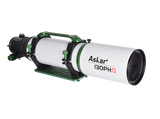
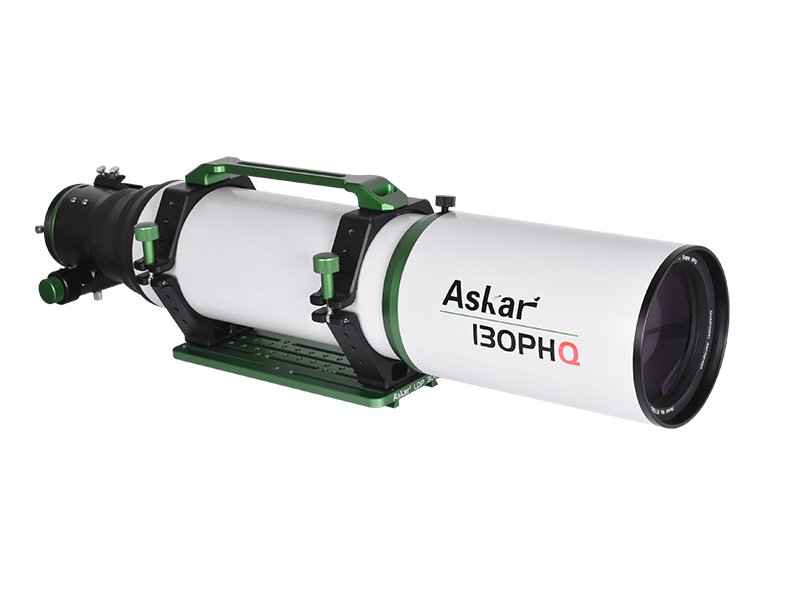
Askar 130PHQ on a ZWO AM7
1000 mm of flat-field quadruplet on ZWO's largest harmonic mount, lifted on the EQ6 steel tripod with a PE200 pier extension so the tube clears the legs at any angle. This is a rig you grow into for years, not months.
Resolution to make galaxies look like galaxies, on a mount with enough payload headroom that a long tube never feels marginal.
At 1000 mm you need accurate polar alignment, autoguiding and steady air. This is where you arrive, not where you start.
In the kit
- Askar 130PHQ$5,074
- ZWO AM7 Harmonic Mount$3,499
- ZWO PE200 Pier Extension$279
- Skywatcher EQ6 to Wave Steel Tripod$330
- Starfield DH-6 6" Dew heater$99.99
How do you want to shoot it?
Choose your camera
The mono imaging train
We include Antlia's LRGB-V Pro for broadband and the Antlia 4.5nm EDGE set for narrowband - the pairing we would buy ourselves. Swap either and the difference shows against the total.
Cutting through a bright sky
Autoguiding
At 1000 mm we would push you toward the off-axis guider - it takes its star through the main optic, so flexure between two tubes cannot creep in.
Guiding is built into this camera. The guide sensor sits alongside the main chip in the same body, so there is no guide scope to flex and no off-axis guider to align. Nothing to add.
The controller is built in too. This body has ASIAIR on board, so there is no separate controller to buy and nothing else to power or cable up.
150 mm fits the 130PHQ; 190 mm if you want one panel that also covers a future bigger scope.
None of the above
Or let us build it around you
Every kit here is a starting point, not a fixed package. Tell us what you want to photograph and we will spec the rig for it - free, and we will happily tell you to spend less.
- Tell us your sky — city, suburb or dark site
- Tell us your targets — nebulae, galaxies or planets
- Tell us your budget, honestly
- We'll spec it, and we'll say if you should spend less
Don't forget these
Dew heaters are sized to the outside of the tube, not the aperture — the size in each kit above is the one that fits that telescope.
Fits 70-80 mm refractors. Dew heaters are sized to the outside of the tube, not the aperture - measure before you order, or ask us.
$89.99Fits 106-130 mm refractors. Wraps the objective end and keeps the front element a degree or two above the dew point.
$99.99
Four channels, four ports - runs the objective strap, the guide scope and the camera window from one box, each at its own power level.
$169.99
The guide scope for anything from 600 mm upward. Pair it with an ASI120MM Mini and your exposures stop being limited by tracking.
$200
The standard guide camera. Small, sensitive and it plugs straight into an ASIAIR - this is the one that goes on a guide scope.
$279
The filter that rescues a suburban sky on a colour camera. Passes the nebula wavelengths, rejects streetlight glow. Every colour kit above offers this and the L-Extreme as a tick, with the drawer that holds it.
$260
What a 2 inch filter sits in on a colour camera. Slide the filter out for galaxies and clusters without pulling the imaging train apart or changing back focus.
$111
Electric flat panel, 150 mm. Makes flat frames a two-minute job instead of a chore - which is why people who own one actually shoot them.
$499.99
Runs mount, camera, focuser and guiding from one app - only needed if your camera does not already have it built in, which the Air bodies do.
$559Honest expectations
What your first year actually looks like
The images that got you into this represent tens of hours of exposure and years of practice. Here's the real curve — and it's more fun than it sounds.
One sharp, tracked frame
That's the whole goal. Round stars, correct focus, target in the frame. It will look grey and empty on screen — that's normal, the picture is in there.
Your first real picture
An hour or two of stacked frames on Orion or Andromeda, processed badly, and you'll still be delighted. This is where most people get hooked — and where you learn processing is half the hobby.
Images you'd print
Several nights on one target, a filter for the streetlights, calibration frames that work. The gear stops being the limit and your processing takes over.
Dew ends more sessions than cloud
A heater strap sized to your tube is the cheapest accessory that saves whole nights from October onward in Ontario. Buy it before you buy a second filter.
Back focus will bite you
Cameras must sit a precise distance from the flattener or reducer — usually 55 mm. A few millimetres out and corner stars go egg-shaped. Petzval astrographs like the SQA and Gear series have the corrector built in, which removes the problem. A filter drawer adds its own thickness, so count it in.
Power everything from one battery
Mount, camera cooling and dew heaters all want 12 V. One decent power bank beats three extension cords across wet grass.
Guide scope, off-axis guider, or neither
A guide scope is simpler and cheaper. An off-axis guider takes its star through the main telescope, so flexure between two tubes can't creep in — worth it above about 800 mm. And a camera with a guide sensor in the body, like the Air and Duo models, needs neither.
Shoot calibration frames
Darks and flats remove sensor noise and dust shadows. An electric flat panel makes flats a two-minute job instead of a chore, which is why people actually shoot them.
Learn processing before buying more gear
A well-processed hour from a Seestar beats a badly-processed six hours from a $6,000 rig. Our workshops cover exactly this — the cheapest upgrade you can buy.
Send us your setup and we'll tell you what's missing.
Email a photo of your gear, or a frame you're unhappy with, and we'll tell you what to fix. Quite often the answer is to buy nothing at all.