


- Description
- Specifications
Product Overview
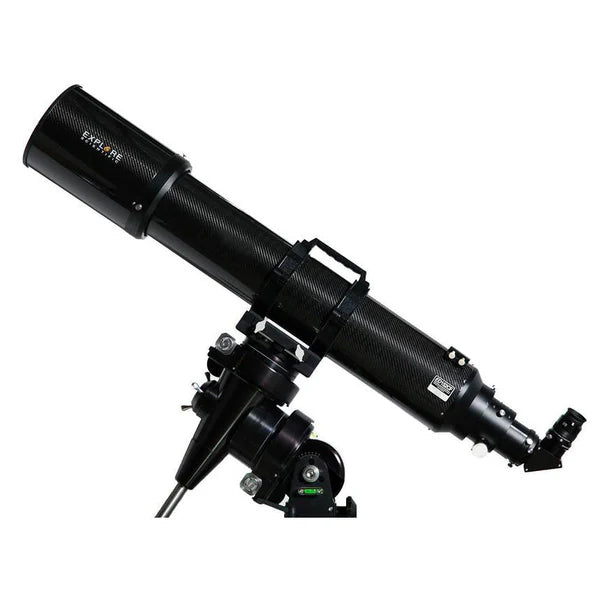
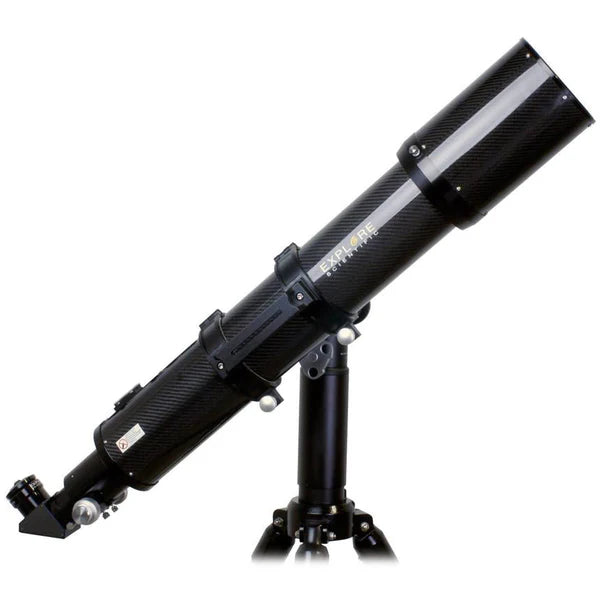
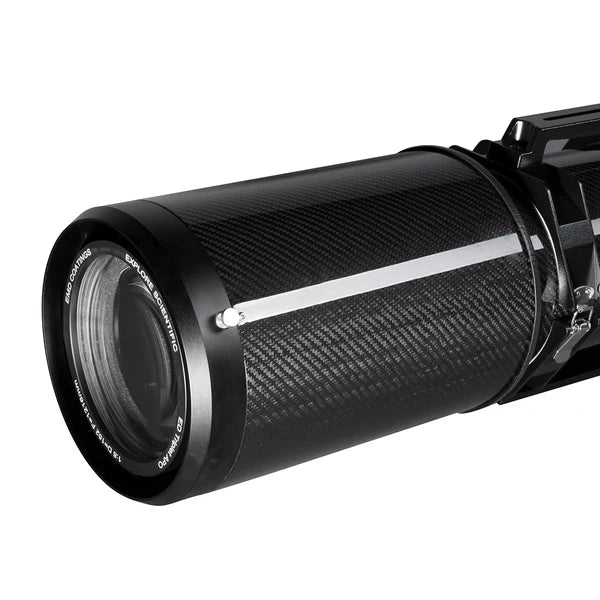
The Explore Scientific ED152 Carbon Fiber is a 152mm air-spaced apochromatic triplet refractor with a focal length of 1216mm at f/8, built around HOYA FCD1 extra-low dispersion glass in a carbon fibre tube. Explore Scientific publishes a limiting magnitude of 13 and a resolution of .75 arcsec for the optic, with a stated tube weight of 20.5lb; 9.3kg.
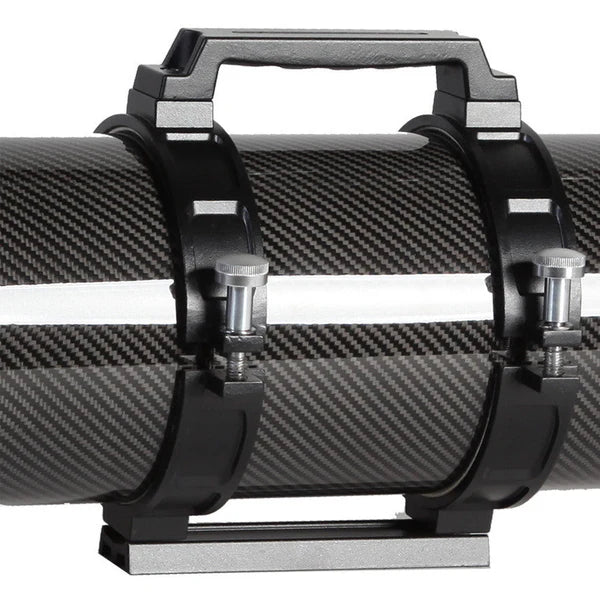
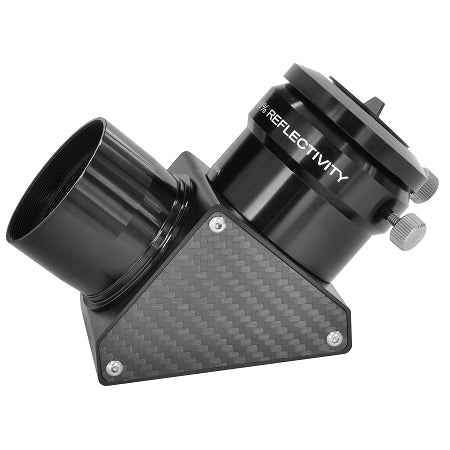
The tube measures 41″ (1041mm) with the dew shield retracted and 52″ (1320mm) extended. It is supplied as an optical tube assembly with a 2.5-inch hexagonal HEX focuser, cradle rings, a finder base and a 99% reflective 2-inch diagonal. A mount and eyepieces are chosen separately.
Unusually, Explore Scientific publishes a complete set of image circle figures for this tube — 50.8mm natively, 76mm with the 3-inch adapter, and separate full-illumination and distortion-free numbers for the flat field adapter and the 0.7 focal reducer. Those figures are reproduced verbatim in the specifications below.
Who It's For
- Deep-sky imagers working at medium focal length: 1216mm with a 50.8mm total image circle, rising to 76mm with the 3-inch adapter, covers sensor formats up to and past full frame — the full-frame diagonal is 43.3mm.
- Imagers who want a shorter focal length on the same optic: the 0.7 focal reducer takes 1216mm to 851.2mm at f/5.6.
- High-resolution visual observers: .75 arcsec of stated resolution at f/8 suits lunar, planetary and double-star work as much as imaging.
- Observers carrying gear to dark sites: the carbon fibre tube is what holds a six-inch triplet to a published 20.5lb; 9.3kg.
- This is a good match if you already own an equatorial mount with real capacity in reserve and a Losmandy-pattern saddle.
Key Features & Design
- 152mm air-spaced apochromatic triplet: three elements with air gaps between them, using HOYA FCD1 extra-low dispersion glass.
- 1216mm focal length at f/8: a long-focus ratio for an apochromat, which eases correction across the field and raises image scale.
- Carbon fibre tube: carbon has a very low coefficient of thermal expansion along the fibre direction, so focus position drifts less across a night than it does in an aluminium tube of the same length.
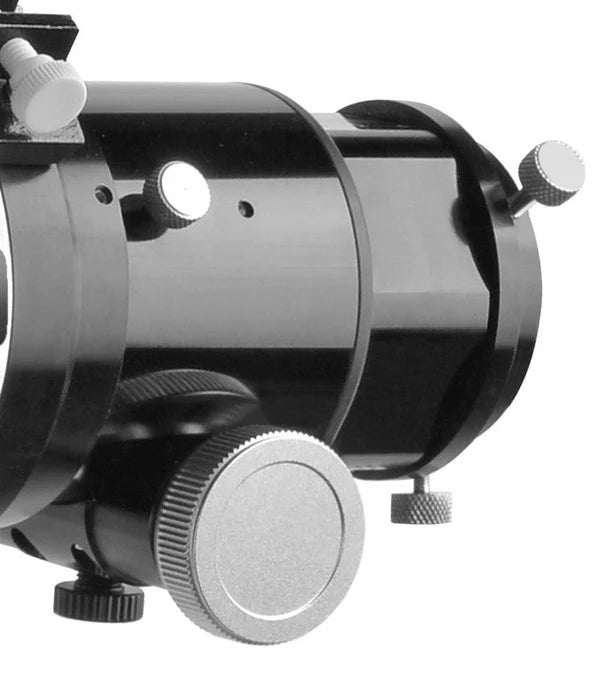
- 2.5-inch HEX focuser: the hexagonal drawtube resists rotation and flexure that a round drawtube resists only through its pinion and bearings — which matters when a heavy camera train hangs off the back.
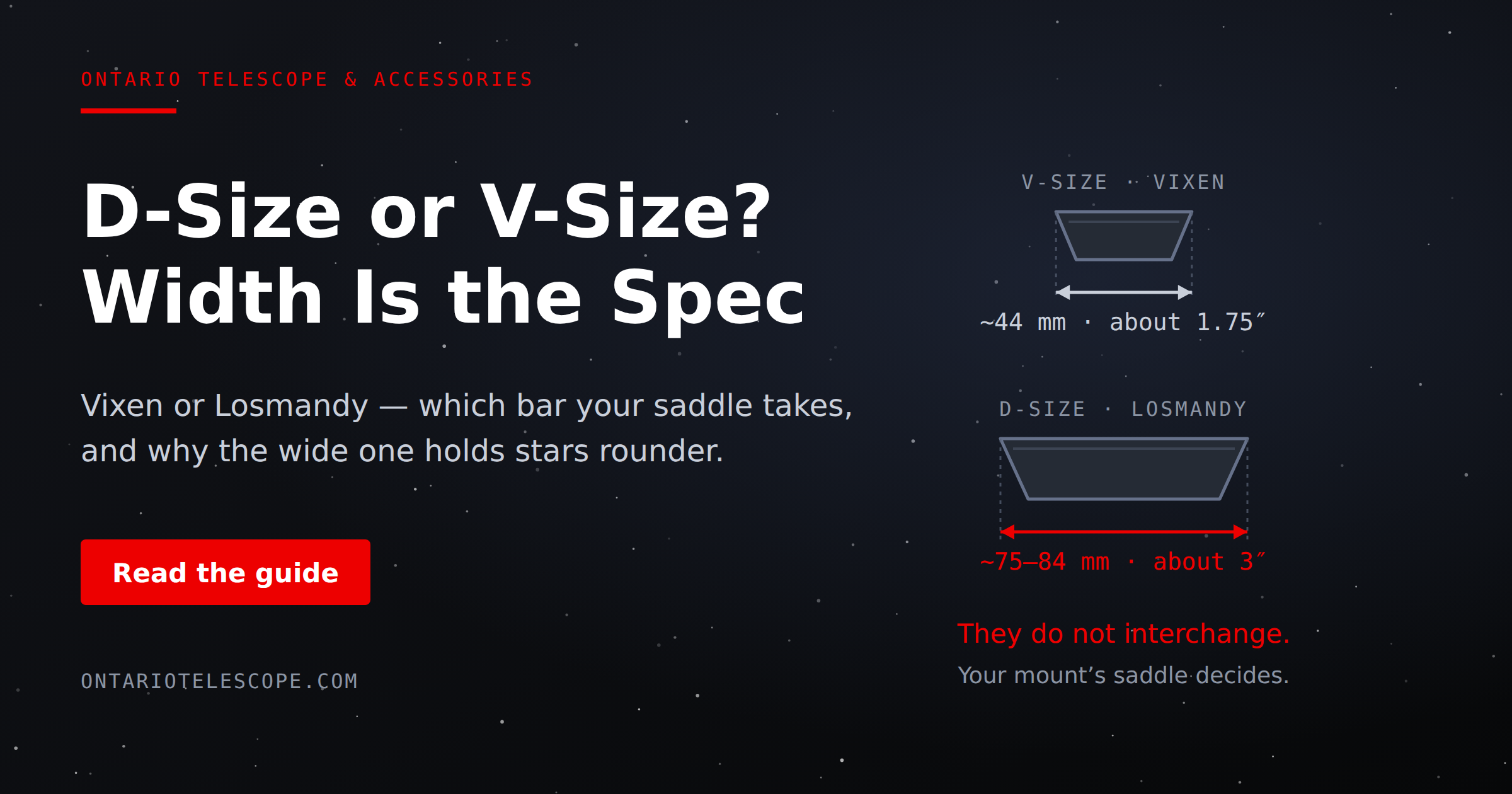
- Losmandy dovetail: the wide D-plate pattern, spreading a 20.5lb tube across a long saddle contact.
- 52″ (1320mm) extended, 41″ (1041mm) retracted: the dew shield accounts for 11 inches of the overall length, and published limiting magnitude is 13 with .75 arcsec of resolution.
- Supplied accessories: cradle rings, a finder base and a 99% reflective 2-inch diagonal.
Optical Design
An apochromatic triplet brings three wavelengths to a common focus rather than the two an achromatic doublet manages. The extra element, and the extra-low dispersion glass in the stack, is what removes the violet halo a two-element crown-and-flint design leaves around Venus, Sirius and the lunar limb. In imaging terms, red, green and blue channels focus at very nearly the same point, so stars stay tight in all three rather than bloating in one. Air spacing gives the designer six optical surfaces to shape instead of the four a cemented pair offers, and removes the cement layer as a thermal variable in a 152mm lens.
The published image circle figures describe what the optic delivers to a sensor. The 50.8mm total image circle is the illuminated field the native 2.5-inch train passes, rising to 76mm with the 3-inch adapter. Explore Scientific separates that from the fully illuminated field (36mm with the flat field adapter) and the distortion-free field (40.4mm with the same adapter). With the 0.7 reducer, full illumination is 20.9mm through the 2-inch version and 30.3mm through the 3-inch, with a 46.4mm distortion-free circle either way — so the choice between reducer paths is a question of sensor size. At f/8 exposures run longer than on a fast astrograph; what the focal ratio buys back is the image scale 1216mm gives.
Recommended Uses
- Long-exposure deep-sky imaging of galaxies, globular clusters and compact nebulae at 1216mm, or 851.2mm with the 0.7 reducer.
- High-resolution lunar and planetary imaging, where .75 arcsec of stated resolution sets the ceiling.
- Visual double-star and planetary observing — a 9mm eyepiece gives 135x, a 5mm gives 243x, a 30mm yields 40.5x for low-power sweeping.
- Narrowband imaging from suburban skies, where a long focal ratio and a well corrected field work together.
Compatibility and Accessory Notes
- Mount: not included. The tube alone is 20.5lb; 9.3kg before rings, diagonal, finder, camera and filter wheel, so a German equatorial with substantial rated capacity above that is the sensible starting point for imaging.
- Dovetail: Losmandy pattern. Saddles that accept both Losmandy and Vixen plates will take it directly; a Vixen-only saddle needs a plate change.
- Imaging train: the flat field adapter and the 0.7 focal reducer each have their own published circles, listed in the specifications. Sensor diagonal is the number to compare them against.
- Eyepieces and finder: none supplied, though the 99% reflective 2-inch diagonal and a finder base are. The diagonal takes 2-inch eyepieces directly and 1.25-inch eyepieces through an adapter, and accepts 2-inch threaded filters for visual work.
Good to Know Before You Order
- This is an optical tube assembly. A mount, a tripod or pier, and eyepieces or a camera complete it. We put packages together regularly — tell us what you already own and we will fill in the gaps.
- It is a 52-inch tube with the dew shield out, and 41″ retracted. That governs case choice, vehicle space and clearance past the tripod legs. The 20.5lb; 9.3kg figure is the bare tube, so mount capacity is best judged against the loaded weight rather than the published one.
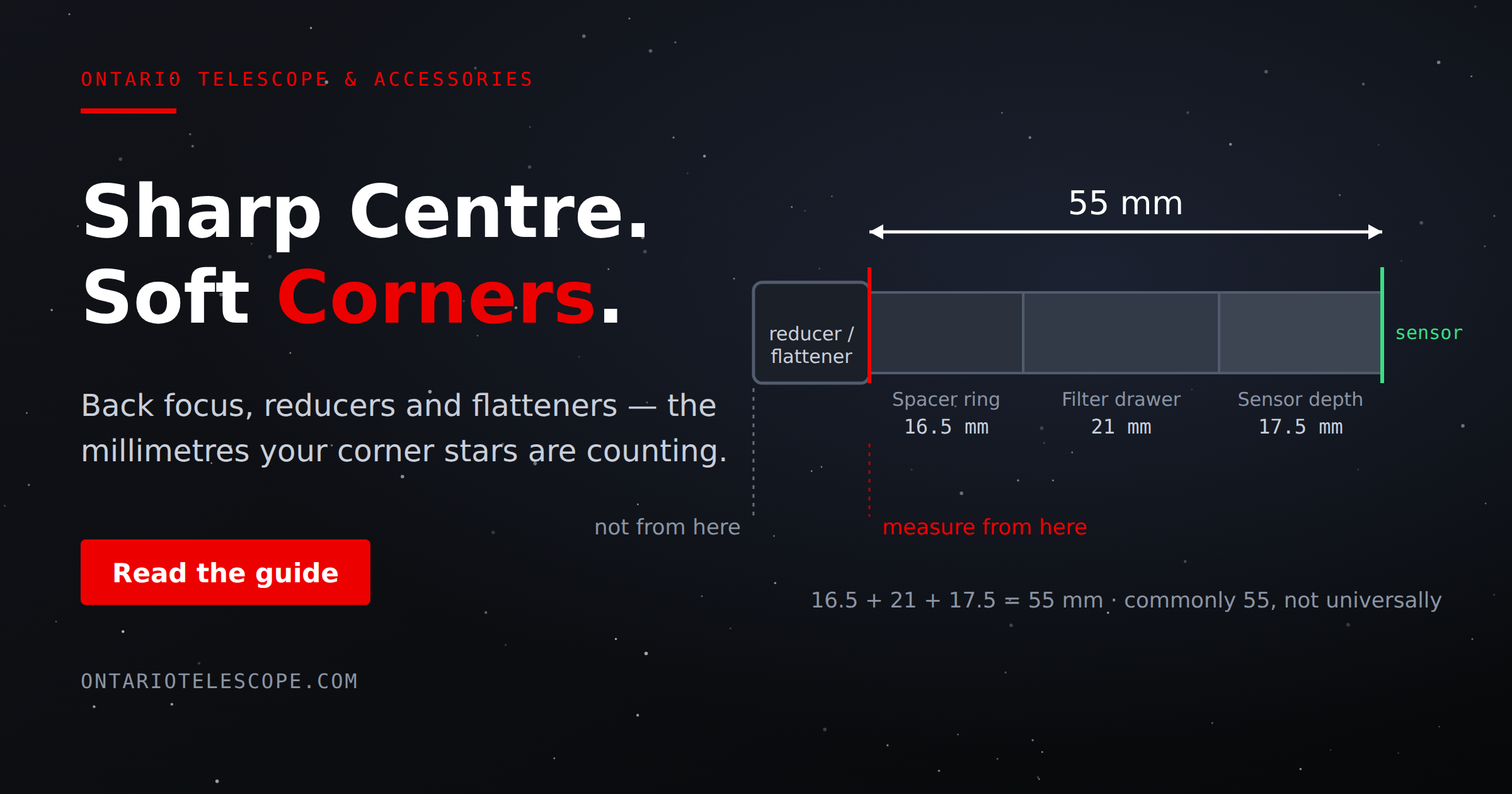
- Explore Scientific does not publish a backfocus distance for this focuser, so that row is absent from the specifications rather than estimated. Send us the camera, filter wheel and adapters you plan to use and we will work the spacing out with you.
- Cool-down is real on a 152mm triplet. A large glass stack takes time to reach ambient temperature, and images taken during that period will not show what the optic can do. This is normal for the aperture rather than a fault, and it is the reason many owners set up early.
- The 0.7 reducer and flat field adapter are separate items, with their published image circles listed below. We stock the adapters and can advise which path suits your sensor.
Frequently Asked Questions
Is it difficult to set up?
The optics need no collimation and no maintenance, so the telescope side is simple. The work is mechanical: lifting a 20.5lb, 41-inch tube onto a saddle is a two-hands job, and it goes more easily with the mount levelled and the counterweights already on the shaft.
What sensor size will it cover?
Explore Scientific publishes 50.8mm of total image circle natively and 76mm with the 3-inch adapter, with 36mm of full illumination through the flat field adapter. A full-frame sensor has a 43.3mm diagonal, so the numbers to compare are in the table.
What does the 0.7 focal reducer change?
It takes 1216mm to 851.2mm and f/8 to f/5.6, which shortens exposures and widens the field. Full illumination is 20.9mm through the 2-inch version and 30.3mm through the 3-inch, with a 46.4mm distortion-free circle either way.
What mount does it want?
One rated comfortably above the loaded weight, with a Losmandy-compatible saddle. Tell us what you own and we will give you a straight answer about whether it will carry this tube for imaging as well as for visual use.
Bottom Line
In short: a 152mm f/8 air-spaced triplet apochromat in carbon fibre, 1216mm focal length, .75 arcsec resolution, 20.5lb, on a Losmandy dovetail with a 2.5-inch HEX focuser, and with a 99% reflective 2-inch diagonal, cradle rings and a finder base included. If you would like us to map an imaging train onto your camera before you order, send us the camera and any adapters you already have and we will work the numbers with you.
| Item Number | TED15208CF-HEX33 |
|---|---|
| Optical Design | Air-spaced apochromatic triplet, HOYA FCD1 extra-low dispersion glass |
| Diameter | 152mm |
| Focal Length | 1216mm |
| Focal Ratio | f/8 |
| Limiting Magnitude | 13 |
| Resolution | .75 arcsec |
| Tube Length w/ Dew Shield | 52"; 1320mm |
| Tube Length w/out Dew Shield | 41"; 1041mm |
| Tube Material | Carbon fiber |
| Focuser | 2.5-inch hexagonal (HEX) |
| Weight | 20.5lb; 9.3kg |
| Dovetail | Losmandy |
| Total image circle | 50.8mm |
| Total image circle with 3" adapter | 76mm |
| Full illumination image circle with flat field adapter | 36mm |
| Full illumination image circle with 0.7 focal reducer (2") | 20.9mm |
| Full illumination image circle with 0.7 focal reducer (3") | 30.3mm |
| Image circle without distortion with flat field adapter | 40.4mm |
| Image circle without distortion with 0.7 focal reducer (2") | 46.4mm |
| Image circle without distortion with 0.7 focal reducer (3") | 46.4mm |
| Included | Cradle rings, finder base, 99% reflective 2-inch diagonal |
| Mount | Not included |
| Backfocus | Not published by vendor |
You may also like
Recently viewed
Recent Blog Posts
View all
Your Guide Graph Is Lying to You
Read More
D-Size vs V-Size: A Complete Guide to Telescope Dovetail Systems
Read More
What Is Back Focus in Astrophotography? Telescope Reducers, Flatteners, and Spacing Explained
Read More