


- Description
- Specifications
Product Overview
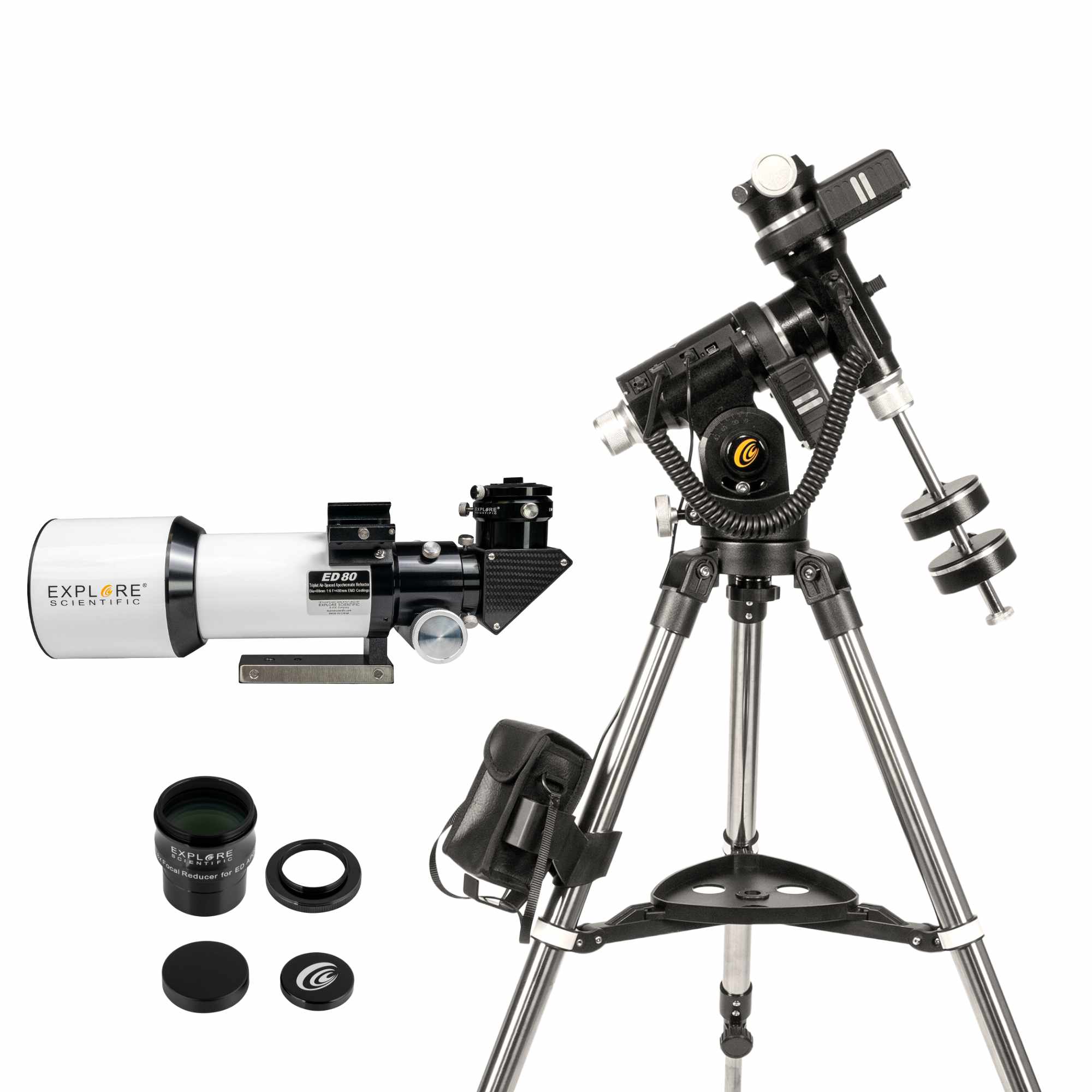
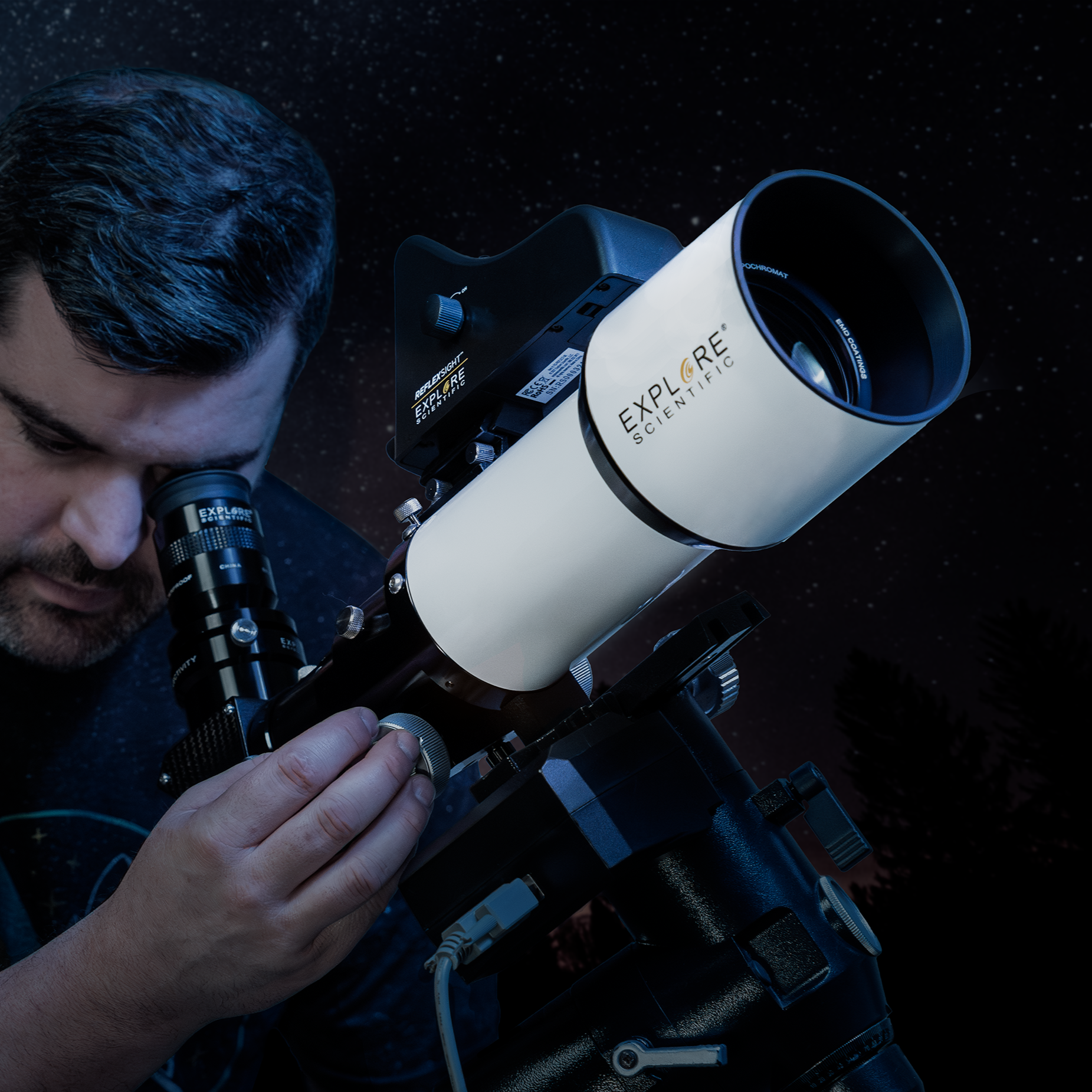
This package pairs the Explore Scientific ED80 Essential Series 80 mm f/6 air-spaced triplet refractor with the 0.8x focal reducer and the iEXOS-100-2 PMC-Eight equatorial tracker system. It arrives as a complete imaging setup: apochromatic optics corrected to f/4.8 by the reducer, on a computerised GoTo mount with WiFi and Bluetooth control, with tripod and counterweights included.
Who It's For
This is for someone assembling a first complete astrophotography rig, or an experienced observer who wants a light, portable second setup that tracks. Buying the telescope, corrector, and mount together removes the compatibility guesswork — the dovetail, the saddle, and the payload rating are already matched.
Key Features & Design
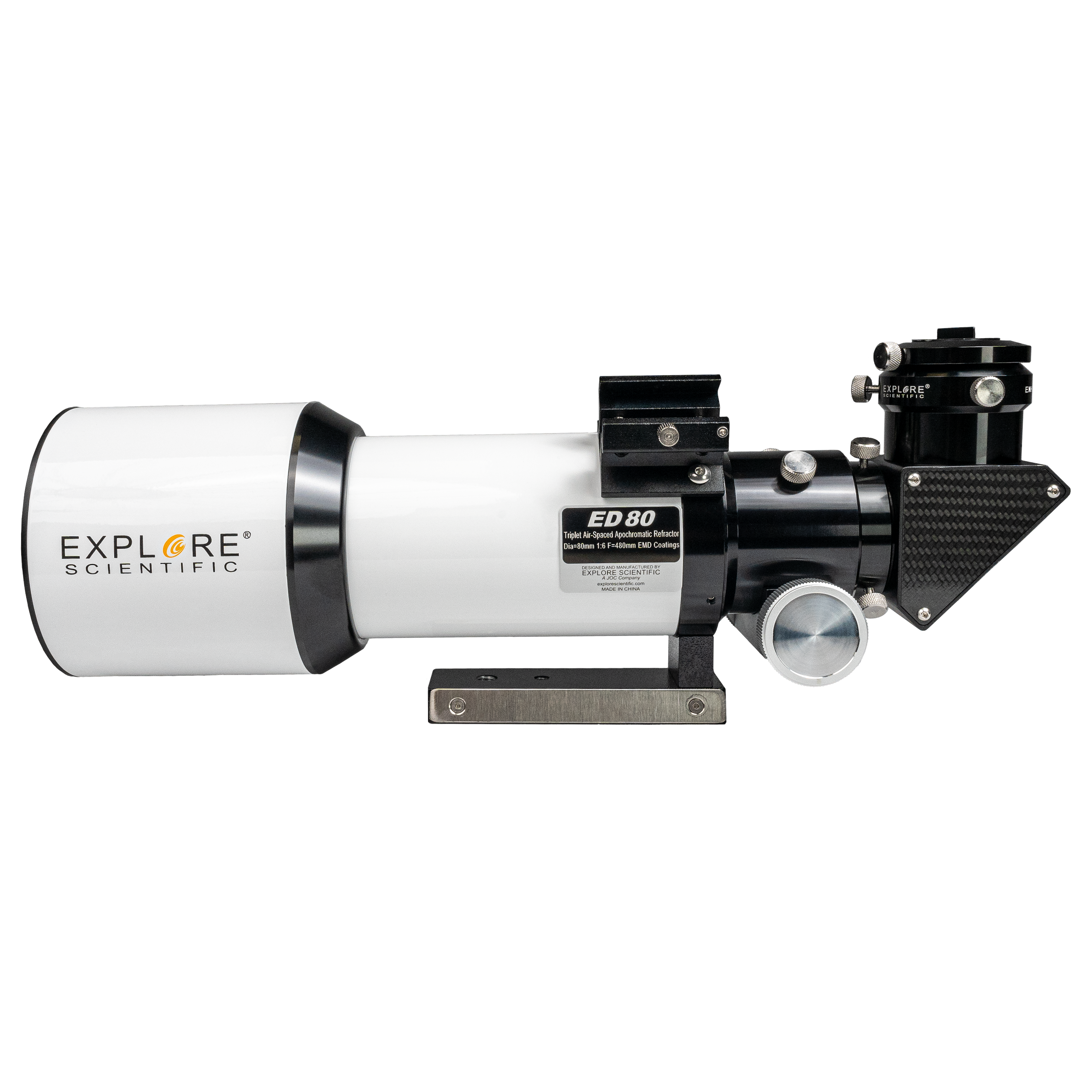
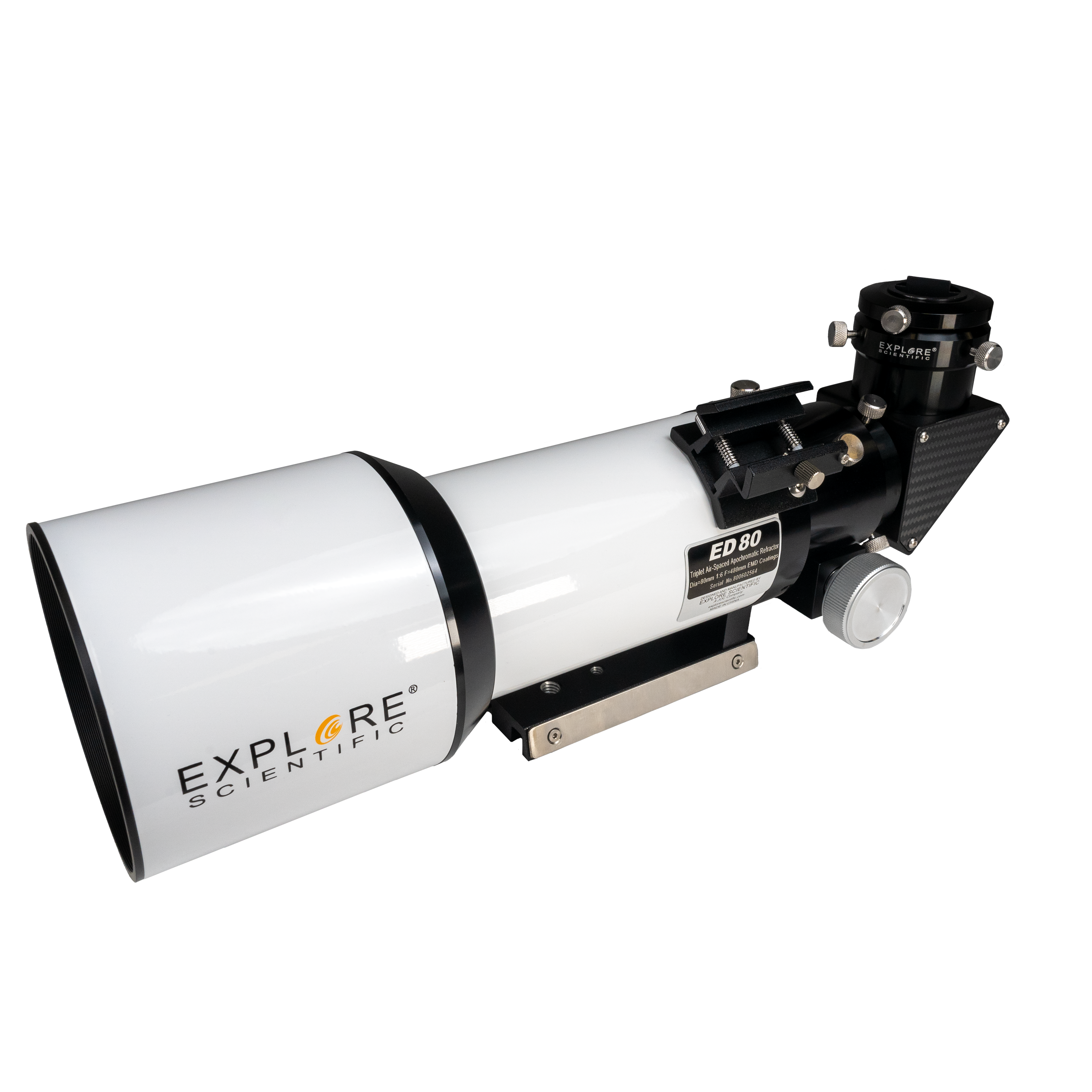
- ED80 Essential Series 80 mm f/6 air-spaced triplet with HOYA FCD-1 ED glass, 480 mm focal length
- 0.8x focal reducer bringing the system to f/4.8 for wide-field imaging
- iEXOS-100-2 PMC-Eight GoTo equatorial tracker with built-in WiFi and Bluetooth
- PMC-Eight motion control uses an eight-core microcontroller, with CPUs assigned to separate tasks for smoother tracking
- Free ExploreStars app for Windows, Android, Amazon Fire, and Apple tablets, plus an ASCOM driver for third-party software
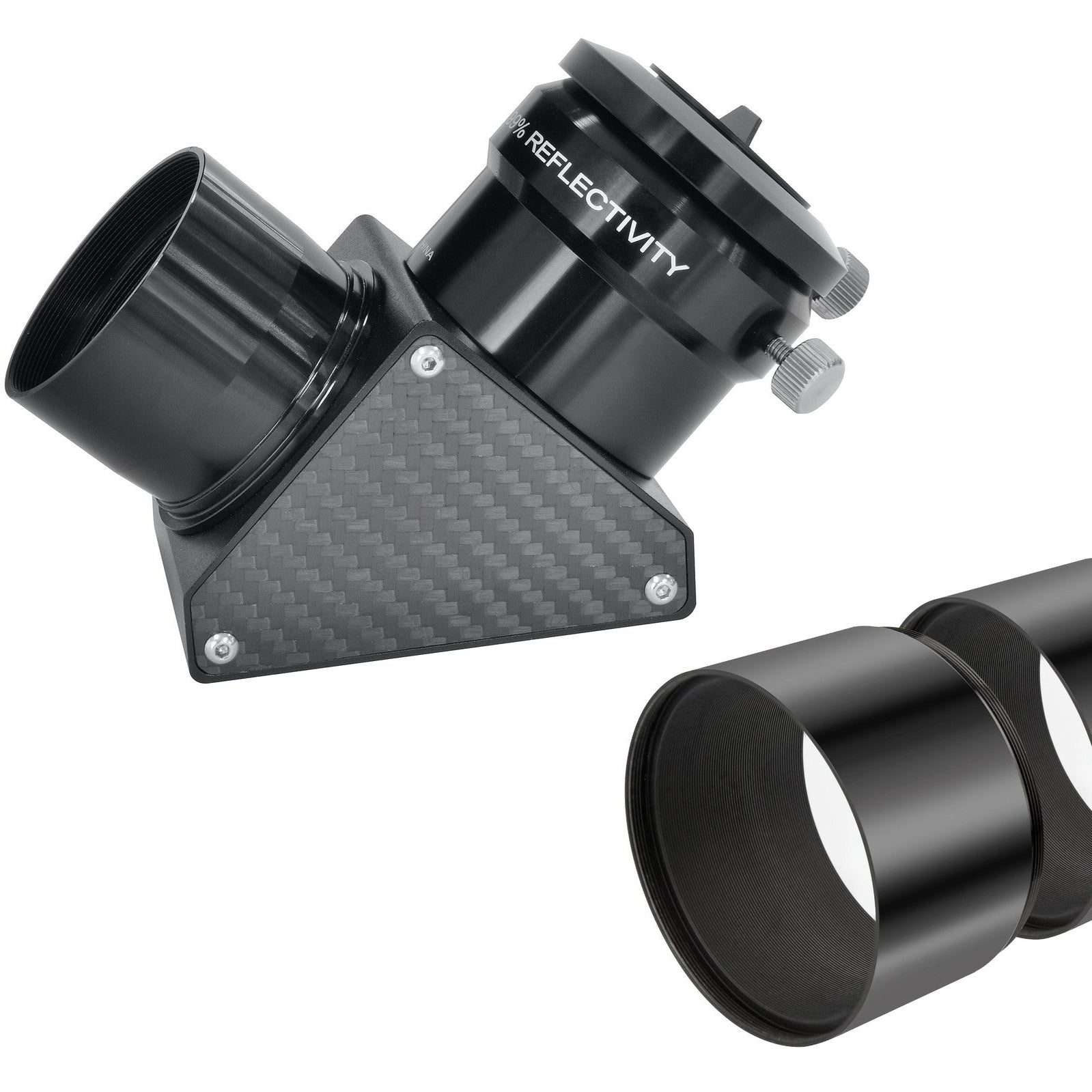
- 2.5-inch hexadecimal focuser rated to 10 lb, 99% reflective 2-inch diagonal, two extension tubes, and counterweights included
Optical and Mechanical Design
The triplet objective uses an ED element to suppress the colour fringing a doublet leaves on bright stars, giving 1.45 arcsecond resolution and a limiting magnitude of 12. The mount is a German equatorial design: the head weighs 9.45 lb and the tripod 5.35 lb, with counterweights of 1 kg each. Explore Scientific rates capacity at approximately 9 lb of equipment alone, 15 lb photographic and 19 lb visual once counterweights are counted — comfortable margin over the 5.95 lb tube. The tripod stands 25.5 inches collapsed and reaches 45 inches at full extension with the head fitted.
Recommended Uses
- Wide-field deep-sky astrophotography at f/4.8 with tracked exposures
- Visual observing with GoTo object location, using the included 2-inch diagonal
- Travel to dark sites, where the whole package packs down small
- Learning the sky, with the ExploreStars database driving the mount to targets
Compatibility and Accessory Notes
The telescope's Vixen-style dovetail seats directly in the mount's saddle. The reducer presents a 42 mm T2 thread on the camera side, so add the T2 camera ring matching your body; its barrel also takes standard 2-inch filters. The mount runs from the PMC-Eight system over WiFi, Bluetooth, or wired serial, and works with any ASCOM-compatible planetarium software. A tablet or computer is not included. The Hybrid 2N1 finder base is fitted; a finder scope is separate.
Good to Know Before You Order
No eyepieces are included, so budget at least one for visual use, and a tablet or laptop is needed to drive the GoTo system. Power for the PMC-Eight comes from a battery pack or a 12 V DC supply, which we stock separately. On weight: Explore Scientific publishes 5.95 lb for the tube, 9.45 lb for the mount head, 5.35 lb for the tripod, and 1 kg per counterweight; they publish no figure for the reducer. The shipping weight shown at checkout is the sum of the published component weights rounded up to the next whole pound, and does not replace the individual specifications above.
Frequently Asked Questions
Is it difficult to set up? The mechanical side is quick — spread the tripod, drop the head on, seat the dovetail, fit the counterweights. The part that takes a first evening is polar alignment and the app's star alignment routine, and Explore Scientific publishes a guide for both. Call us and we will walk you through the first night.
Do I need a computer to use it? Yes, for GoTo. A tablet running the free ExploreStars app is the usual choice; a laptop with ASCOM software also works.
Can I use it visually as well? Yes. Fit the included 2-inch diagonal and an eyepiece, and let the GoTo find targets for you.
Will the mount handle a heavier telescope later? It is rated to roughly 9 lb of equipment, so it will take a modestly larger tube, but it is sized for instruments of about this class.
Bottom Line
A matched telescope, corrector, and tracking mount in one box, ready to image at f/4.8. Everything mechanical fits together as supplied, so the only decisions left are your camera and an eyepiece. Our team in Bolton can spec both.
| Item numbers | ES-ED0806-02, ES-FR0.8x, ES-iEXOS-100-02, 2 × CW22-00 |
|---|---|
| Optical design | Air-spaced apochromatic triplet with HOYA FCD-1 ED element |
| Aperture | 80 mm |
| Focal length | 480 mm |
| Focal ratio | f/6 |
| Focal ratio with 0.8x focal reducer | f/4.8 |
| Limiting magnitude | 12 |
| Resolution | 1.45 arcsec |
| Tube length with dew shield | 18.5″ (475 mm) |
| Tube diameter | 85 mm |
| Tube weight | 5.95 lb (2.7 kg) |
| Dovetail | Vixen style |
| Focuser | 2.5″ hexagonal rack and pinion, 10 lb capacity |
| Mount | iEXOS-100-2 PMC-Eight GoTo equatorial tracker, WiFi and Bluetooth |
| Mount head weight | 9.45 lb |
| Tripod weight | 5.35 lb |
| Counterweights | 2 × 1 kg |
| Mount capacity | Approx. 9 lb equipment only; 15 lb photographic; 19 lb visual |
| Tripod height | 25.5″ collapsed; 45″ fully extended with head |
| Control | ExploreStars app (Windows, Android, Amazon, Apple) or ASCOM driver |
| Diagonal included | 99% reflective 2″ |
| Eyepieces included | None |
| Tablet or computer included | None |
You may also like
Recently viewed
Recent Blog Posts
View all
Your Guide Graph Is Lying to You
Read More

D-Size vs V-Size: A Complete Guide to Telescope Dovetail Systems
Read More

What Is Back Focus in Astrophotography? Telescope Reducers, Flatteners, and Spacing Explained
Read More