


- Description
- Specifications
Product Overview
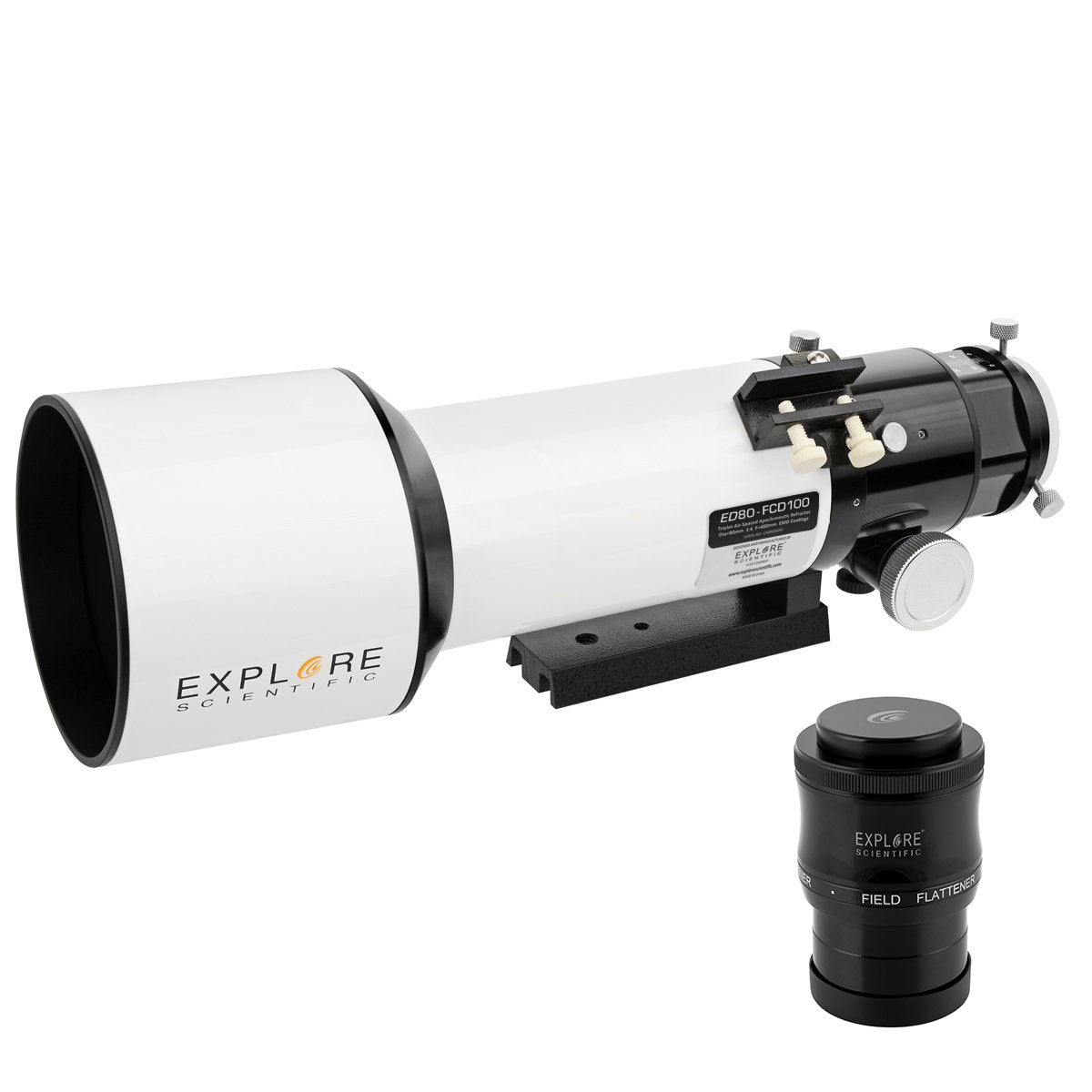
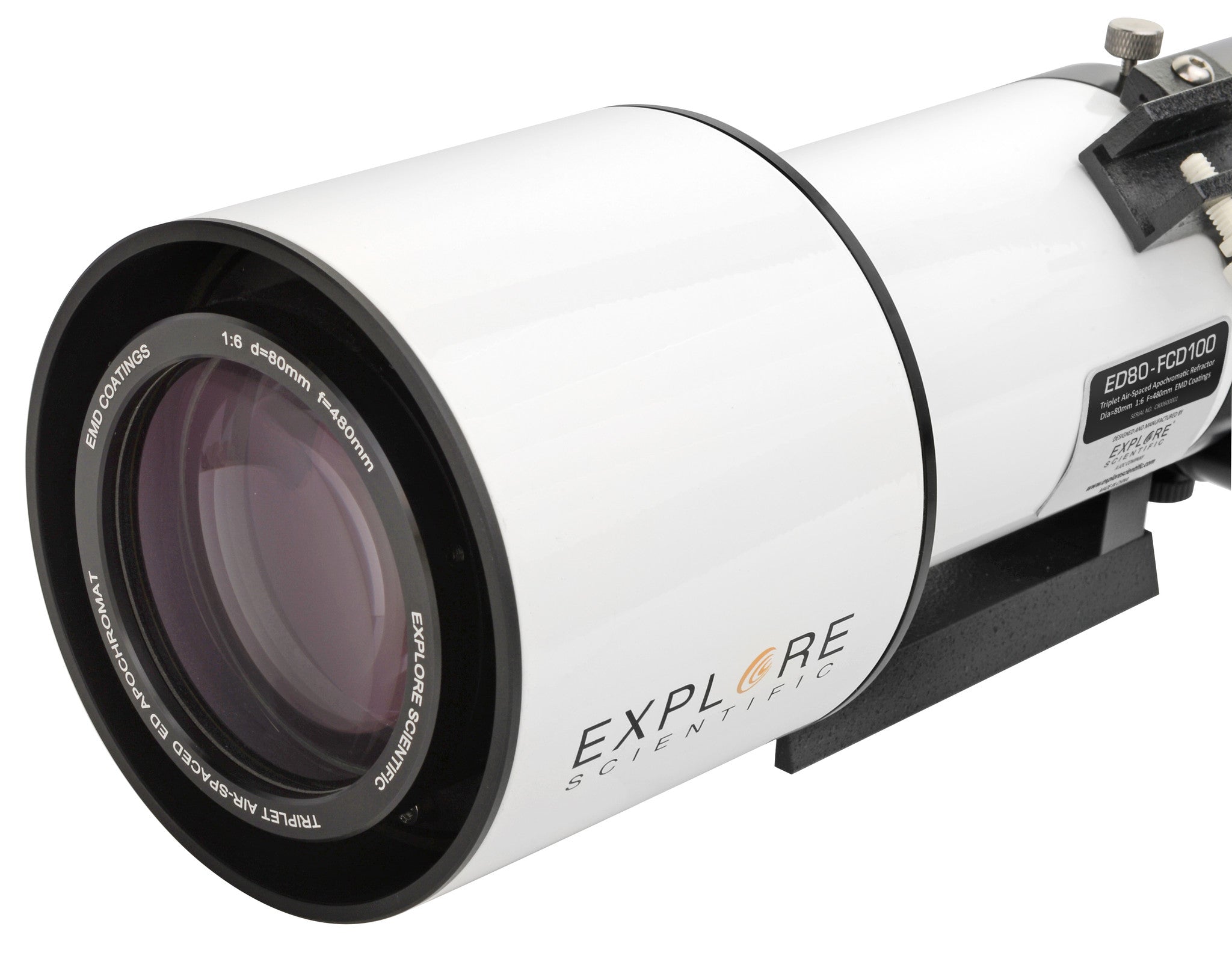
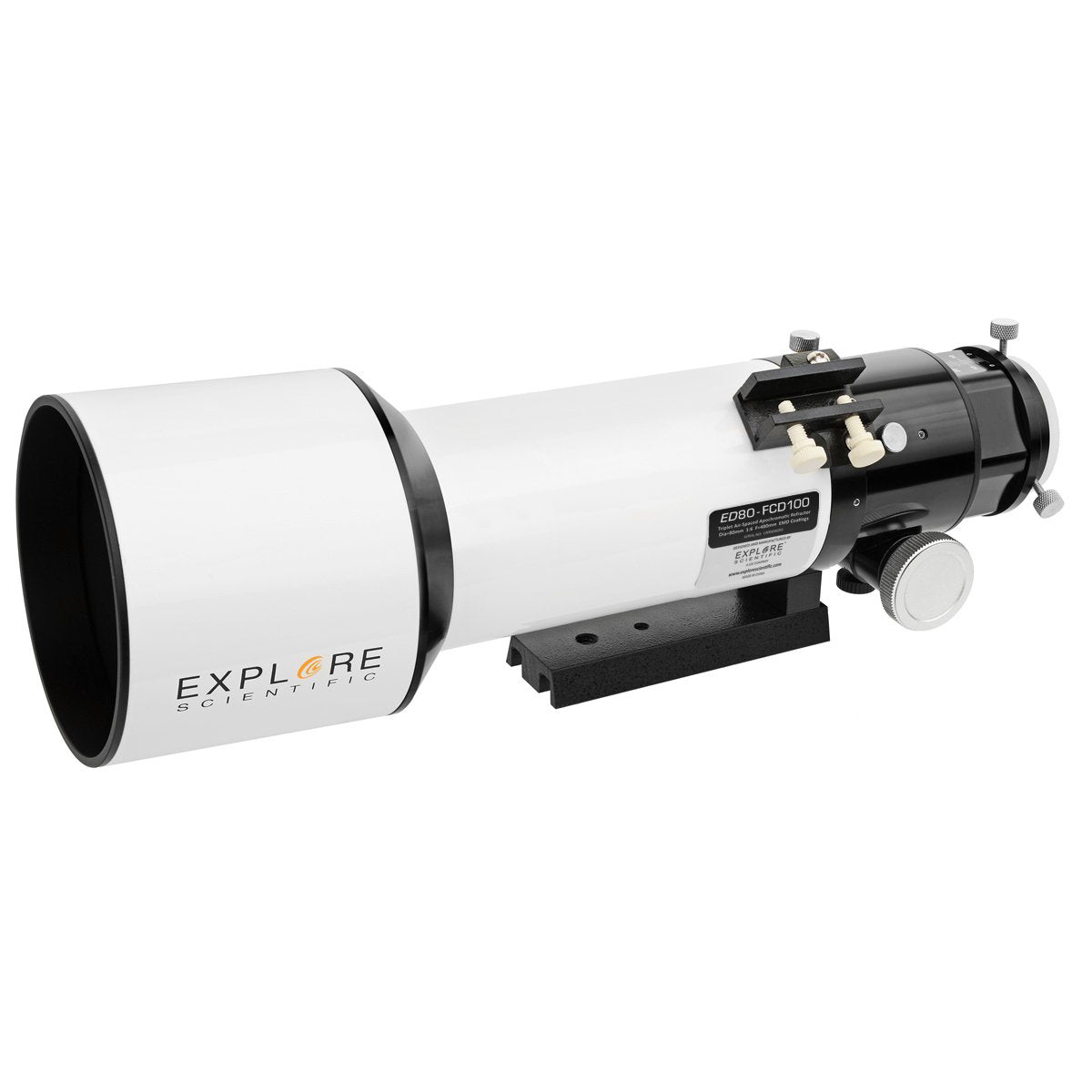
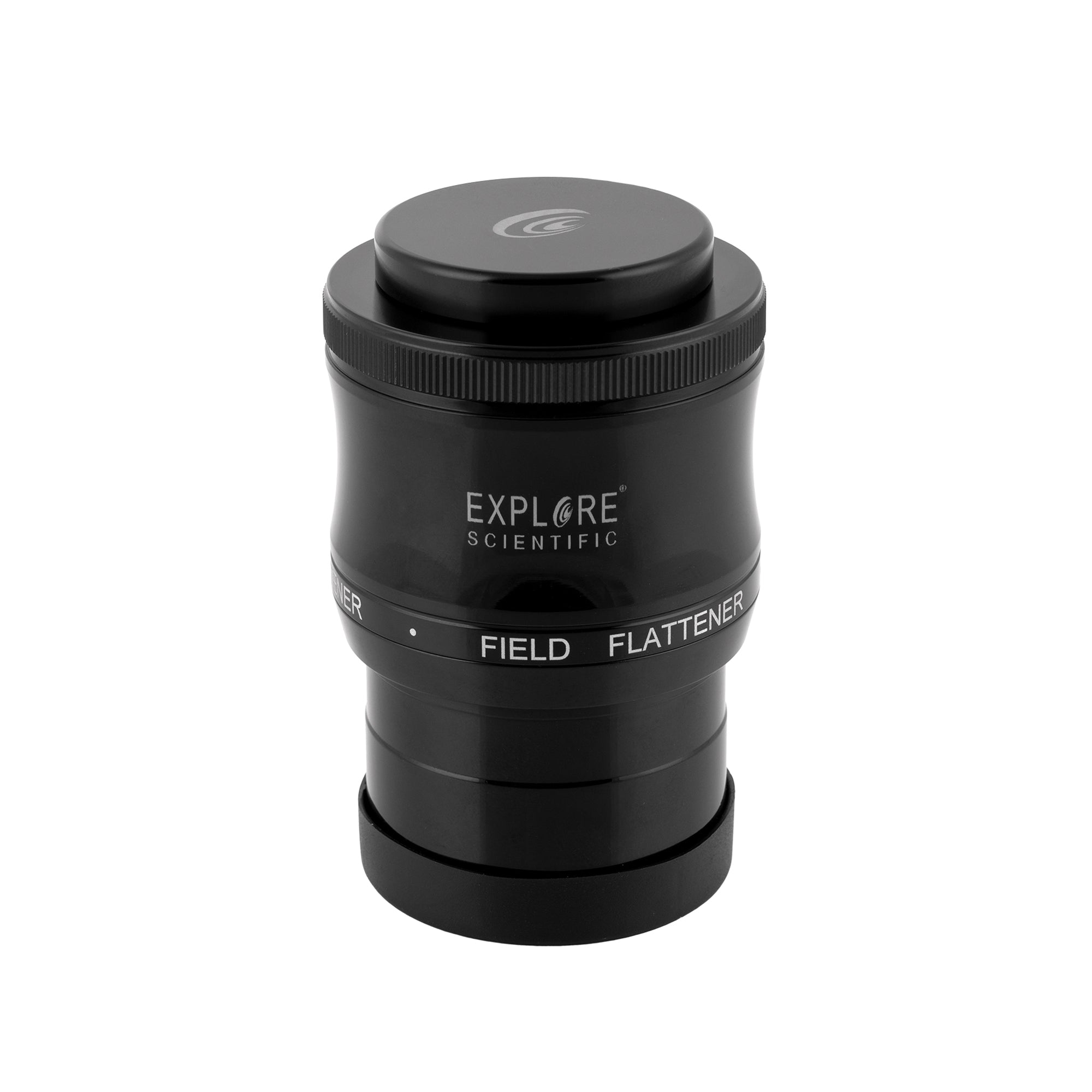
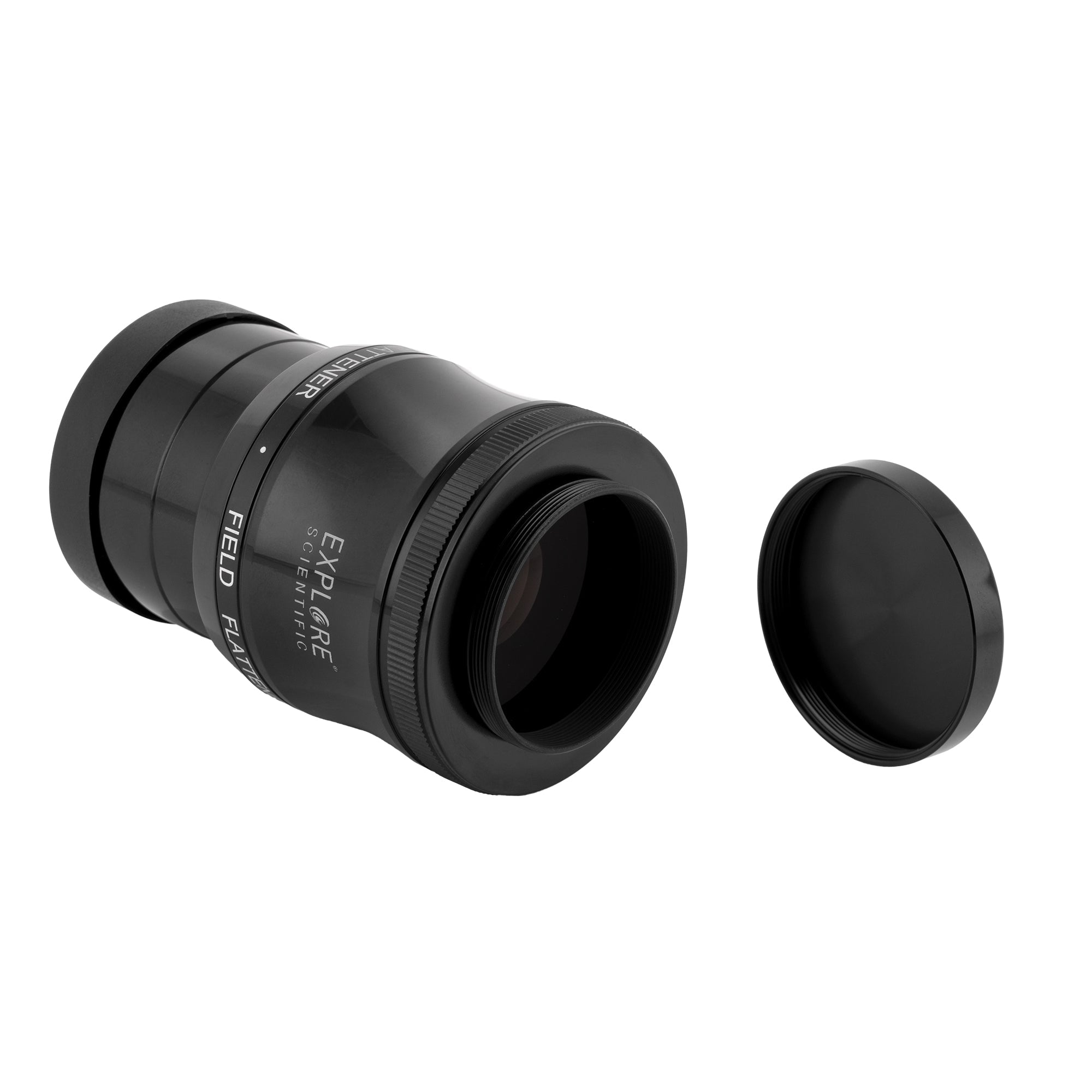
The Explore Scientific ED80-FCD100 is an 80 mm f/6 air-spaced apochromatic triplet refractor built with HOYA FCD-100 extra-low-dispersion glass. Focal length is 480 mm and the tube assembly weighs 7.5 lb. This configuration pairs the telescope with the Explore Scientific Field Flattener for f/5 to f/7 refractors, which corrects the field curvature that otherwise smears stars toward the corners of a long exposure.
Who It's For
This is aimed at the imager who wants flat, round stars across the whole frame at the telescope's native f/6 rather than a faster reduced focal ratio. Where the 0.8x reducer version trades focal length for speed, this configuration keeps all 480 mm and spends the correction on field flatness — the better choice for larger camera sensors and for anyone who prefers native framing.
Key Features & Design
- HOYA FCD-100 ED glass in an air-spaced triplet objective
- Included field flattener matched to f/5 through f/7 refractors for edge-to-edge star sharpness
- 2.5-inch hexagonal rack-and-pinion focuser rated for 10 lb of imaging equipment
- 99% reflective 2-inch dielectric diagonal included for visual observing
- Two focuser extension tubes for reaching focus across different trains
- Retractable dew shield and Vixen-style dovetail
Optical and Mechanical Design
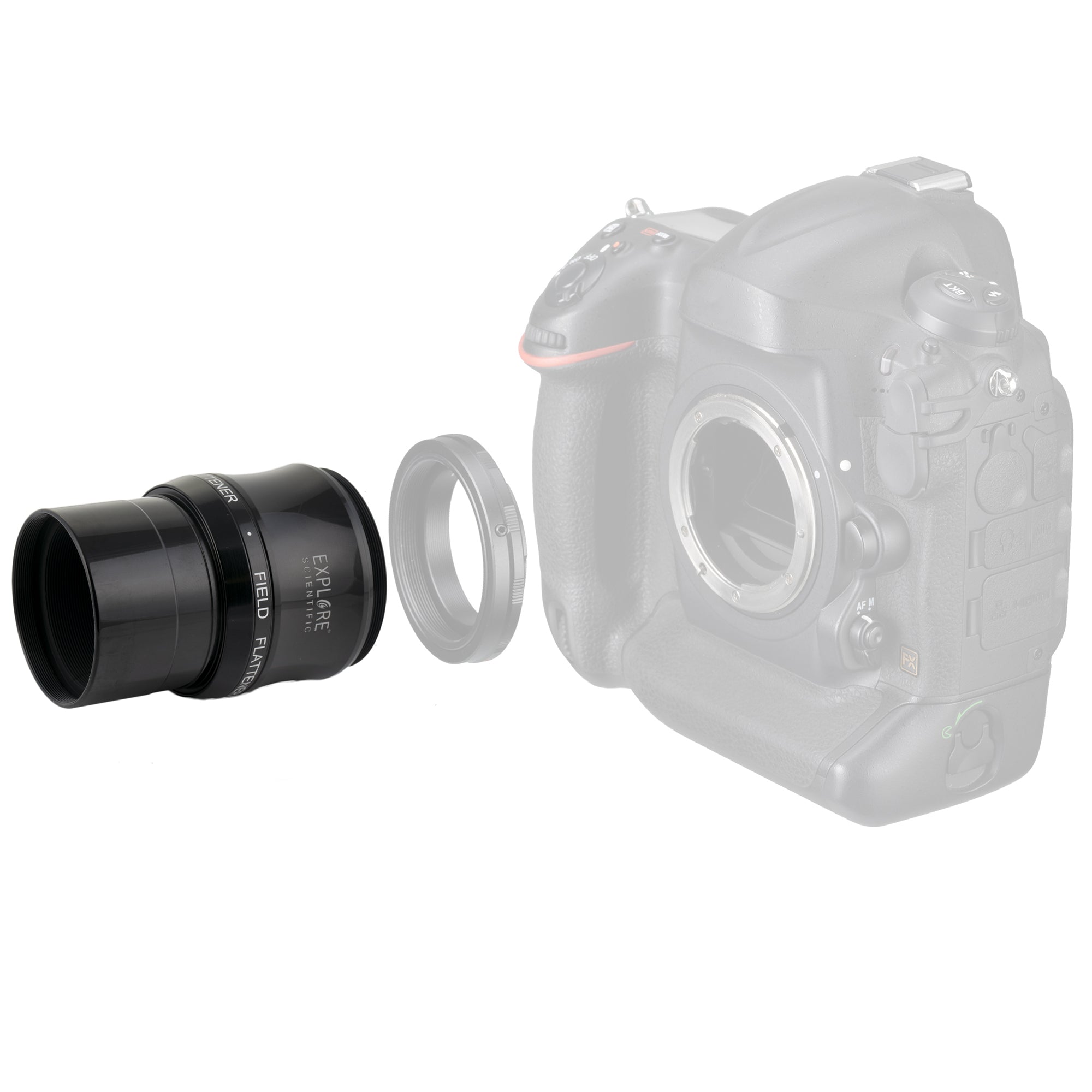
Field curvature grows worse as focal ratio gets faster and as sensors get larger; uncorrected, stars near the frame edge stretch radially into small comet shapes. The field flattener sits in the imaging train ahead of the camera and returns the focal plane to flat, so stars at the corners focus at the same point as those at centre. Resolution is 1.45 arcseconds, limiting magnitude 12. The tube runs 18.5 inches with the dew shield extended, 15 inches retracted, 85 mm in diameter.
Recommended Uses
- Deep-sky imaging at native f/6 with round stars to the frame corners
- Imaging with APS-C and larger sensors, where field curvature shows most
- Visual observing of the Moon, planets, and double stars with the included diagonal
- Mosaic and multi-panel projects that need consistent star shapes across panels
Compatibility and Accessory Notes
The flattener is specified for refractors between f/5 and f/7, which covers this telescope at f/6. The Vixen-style dovetail fits standard Vixen saddles including the iEXOS-100-2 and EXOS-2GT. Reaching correct spacing between flattener and sensor is what determines corner performance, so plan on the T-thread adapters and spacers that match your camera; our team can work out the stack for your body. A finder scope is not included.
Good to Know Before You Order
Mount, tripod, eyepieces, camera adapters, and finder scope are separate purchases. Explore Scientific does not publish a "what's in the box" list for this configuration, so the included-items detail above reflects the tube and flattener specifications they do publish; contact us if you need the packing list confirmed before ordering. Published tube weight is 7.5 lb, and the shipping weight at checkout is rounded up to the next whole pound.
Frequently Asked Questions
Is it difficult to set up? The telescope itself is simple — dovetail into the saddle, dew shield out by hand. The one job that rewards care is setting flattener-to-sensor spacing, and we can specify the adapters for your camera so it is right the first time.
Flattener or 0.8x reducer — which should I choose? The flattener keeps 480 mm at f/6 and flattens the field. The reducer shortens to 384 mm at f/4.8 for shorter exposures and wider framing. Larger sensors and native framing favour the flattener.
Can I observe visually with it? Yes. Fit the included 2-inch diagonal and an eyepiece.
Will it work on a small mount? It needs a mount rated comfortably past 7.5 lb plus camera and accessories. The iEXOS-100-2 is a common pairing.
Bottom Line
An 80 mm FCD-100 apochromat supplied with the matching field flattener, for imagers who want native focal length and clean stars in the corners. Get in touch and we will spec the spacing for your camera.
| Item number | FCD100-0806-02 with ES-FF2F5/F7 |
|---|---|
| Optical design | Air-spaced apochromatic triplet with HOYA FCD-100 ED element |
| Aperture | 80 mm |
| Focal length | 480 mm |
| Focal ratio | f/6 |
| Limiting magnitude | 12 |
| Resolution | 1.45 arcsec |
| Tube length with dew shield | 18.5″ (475 mm) |
| Tube length without dew shield | 15″ (381 mm) |
| Tube diameter | 85 mm |
| Weight | 7.5 lb (3.4 kg) |
| Dovetail | Vixen style |
| Focuser | 2.5″ hexagonal rack and pinion, 10 lb capacity |
| Diagonal included | 99% reflective 2″ |
| Field flattener | Explore Scientific field flattener for f/5 to f/7 refractors |
| Finder included | None |
| Eyepieces included | None |
| Mount included | None |
You may also like
Recently viewed
Recent Blog Posts
View all
Your Guide Graph Is Lying to You
Read More

D-Size vs V-Size: A Complete Guide to Telescope Dovetail Systems
Read More

What Is Back Focus in Astrophotography? Telescope Reducers, Flatteners, and Spacing Explained
Read More