



- Description
- Specifications
Product Overview
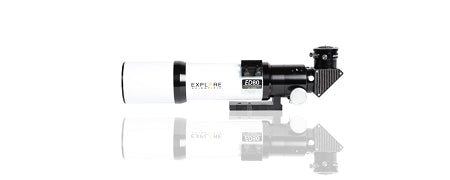
The Explore Scientific ED80 Essential Series is an 80mm air-spaced triplet apochromatic refractor with a focal length of 480mm at f/6. The objective uses HOYA FCD1 extra-low-dispersion glass with EMD multi-layer coatings. Explore Scientific publishes a limiting magnitude of 12 and a resolution of 1.45 arcsec for it, over an 85mm tube diameter, at 5.95 lb (2.7 kg) — a genuinely portable weight for a triplet apochromat.
The tube measures 18.5″ (475mm) with the dew shield extended and 15″ (381mm) with it retracted, which puts it comfortably inside a carry-on-sized case. It comes with a 2-inch rack-and-pinion focuser with extension tubes, a pre-installed Hybrid Finder Scope Base and a Vixen-style dovetail, so the tube is ready to mount and use without further hardware.
Who It's For
- Wide-field deep-sky imagers: 480mm at f/6 frames large nebulae, the Andromeda region and big open clusters as whole objects, and a fast focal ratio keeps exposures short.
- Travellers and observers short on space: 5.95 lb and a 15-inch retracted tube go in hand luggage, in a backpack or on a small mount without argument.
- Imagers running a larger main telescope who want a well-corrected secondary or guide instrument that also works as a standalone scope.
- Visual observers who value grab-and-go: this is a good match if the telescope you actually use is the one that gets outside in five minutes rather than the one that needs a plan.
Key Features & Design
- 80mm air-spaced triplet objective: three elements with air gaps rather than cement, in an apochromatic configuration.
- HOYA FCD1 extra-low-dispersion glass: the low-dispersion element that pulls the design's colour correction into apochromatic territory.
- 480mm focal length at f/6: fast enough for wide-field imaging and short enough to keep the tube compact.
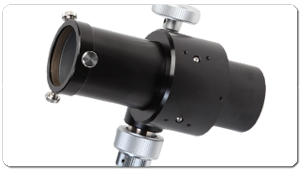
- 2-inch rack-and-pinion focuser with extension tubes: a positive, direct-drive focuser mechanism, with the extension tubes needed to reach focus with a diagonal or a camera.
- Hybrid Finder Scope Base pre-installed: accepts finder shoes of both common patterns without changing the base.
- Vixen-style dovetail for mounting on any Vixen saddle or dual-format saddle.
Optical Design
An achromatic doublet brings two wavelengths to a common focus and leaves a residual — the secondary spectrum — visible as colour around bright objects. An apochromatic triplet adds a third element, and with one of the three made from extra-low-dispersion glass, the designer can bring three widely separated wavelengths to essentially the same plane. What that means at the eyepiece is that violet and deep red land close enough to the visual focus that colour fringing stops being a feature of the view, and at the sensor it means bright stars record as points rather than as blue-haloed blobs.
HOYA FCD1 is the ED glass in this objective. Its role is dispersion control: it separates the wavelengths less than ordinary crown or flint glass does, leaving the mating elements a smaller residual to correct. Air spacing rather than cementing gives the design six air-glass surfaces to shape instead of four, and removes a cement layer as a thermal variable during cool-down.
At f/6 the light cone is fast, which is what makes this a short-exposure instrument for imaging. It also means the field curvature inherent to a refractor objective shows up sooner across a large sensor, which is why wide-field imagers pair a scope like this with a field flattener — and why many use a reducer-flattener to go faster still. Explore Scientific does not publish a corrected image circle or a backfocus distance for this tube, so those rows are absent below rather than estimated. Tell us which camera and flattener you are planning around and we will work the spacing through with you.
Recommended Uses
- Wide-field deep-sky astrophotography on a tracking equatorial mount, with a flattener matched to the sensor.
- Grab-and-go visual observing — open clusters, large nebulae, the Milky Way, comets and the Moon.
- Travel astronomy, where 5.95 lb and a 15-inch retracted tube fit the luggage allowance.
Compatibility and Accessory Notes
- Mount: not included. At 5.95 lb bare, this tube sits within the capacity of most small equatorial and alt-azimuth mounts — though for imaging, tracking accuracy rather than raw capacity is what governs the choice. Tell us how you plan to use it and we will suggest something appropriate.
- Dovetail: the Vixen-style plate seats in any Vixen saddle, and in the dual-format saddles that accept both Vixen and Losmandy plates.
- Focuser: 2-inch rack and pinion with extension tubes supplied, so it takes 2-inch accessories directly and 1.25-inch ones with an adapter.
- Eyepieces and diagonal: not listed in the published package. At 480mm, a 30mm eyepiece gives 16x, a 20mm gives 24x, and a 9mm gives 53x — we can put together a set that covers the range.
- Field flattener: a separate purchase, as it is with any fast refractor used for wide-field imaging. We stock flatteners and reducer-flatteners and can match one to your camera.
Good to Know Before You Order
- This is an optical tube assembly, not a complete telescope. A mount, tripod, diagonal and at least one eyepiece are separate. We assemble packages around this tube regularly — tell us how you intend to use it and we will price the whole setup.
- Eighty millimetres is eighty millimetres. The published 1.45 arcsec resolution and magnitude 12 limit are what the aperture supports. This telescope excels at wide, well-corrected fields rather than at maximum-power planetary detail, and that is what the f/6 design is built around.
- A field flattener is a separate item for wide-field imaging. Without one, stars toward the corners of a large sensor will show the field curvature every refractor objective produces. We can match a flattener to your camera's sensor size.
- No corrected image circle or backfocus figure is published for this tube, so we quote neither. Send us your imaging train and we will work out what we can establish about the spacing.
Frequently Asked Questions
Is it difficult to set up?
Very little to it. A refractor needs no collimation, so the optics are ready as soon as the tube is on the mount, and at 5.95 lb it is a comfortable one-handed lift. The dovetail slides into a Vixen saddle and locks, the finder goes on the pre-installed base, and the focuser takes the diagonal and eyepiece directly. Most people are observing within a few minutes of carrying it outside.
What mount does it need?
For visual use, most small equatorial and alt-azimuth mounts will carry 5.95 lb comfortably. For deep-sky imaging the requirement is tracking accuracy rather than capacity, so a tracking equatorial mount is the starting point. Tell us what you have or what you are considering and we will give you an honest assessment.
Does it come with eyepieces or a diagonal?
Neither is listed in the published package. The tube arrives with its 2-inch rack-and-pinion focuser, extension tubes, pre-installed Hybrid Finder Scope Base and Vixen dovetail. We can supply a diagonal and a starting eyepiece set alongside it.
Will I see false colour?
An air-spaced triplet on FCD1 ED glass is built to remove it. On the very brightest targets at high power, some residual is inherent to every refracting design, but it is not the limiting factor in this telescope the way it would be in an achromat.
Bottom Line
In short: an 80mm f/6 air-spaced triplet apochromat on HOYA FCD1 ED glass, 480mm focal length, 5.95 lb, with a 2-inch rack-and-pinion focuser, extension tubes, a pre-installed Hybrid finder base and a Vixen dovetail — a wide-field imaging and grab-and-go visual instrument that travels easily and needs nothing from you between sessions. If you are matching it to a mount or planning a flattener and camera behind it, send us the details and we will work through the fit with you.
| Description | ED80 Essential Series Air-Spaced Triplet Refractor Telescope |
|---|---|
| Item Number | ES-ED0806-02 |
| Aperture | 80mm |
| Focal Length | 480mm |
| Focal Ratio | f/6 |
| Limiting Magnitude | 12 |
| Resolution | 1.45 arcsec |
| Tube Length w/ Dew Shield | 18.5"; 475mm |
| Tube Length w/o Dew Shield | 15"; 381mm |
| Diameter | 85mm |
| Weight | 5.95 lb; 2.7 kg |
| Dovetail | Vixen |
| Focuser | 2-inch rack-and-pinion with extension tubes |
| Finder Base | Hybrid Finder Scope Base, pre-installed |
| Corrected Image Circle | Not published by vendor |
| Backfocus | Not published by vendor |
You may also like
Recently viewed
Recent Blog Posts
View all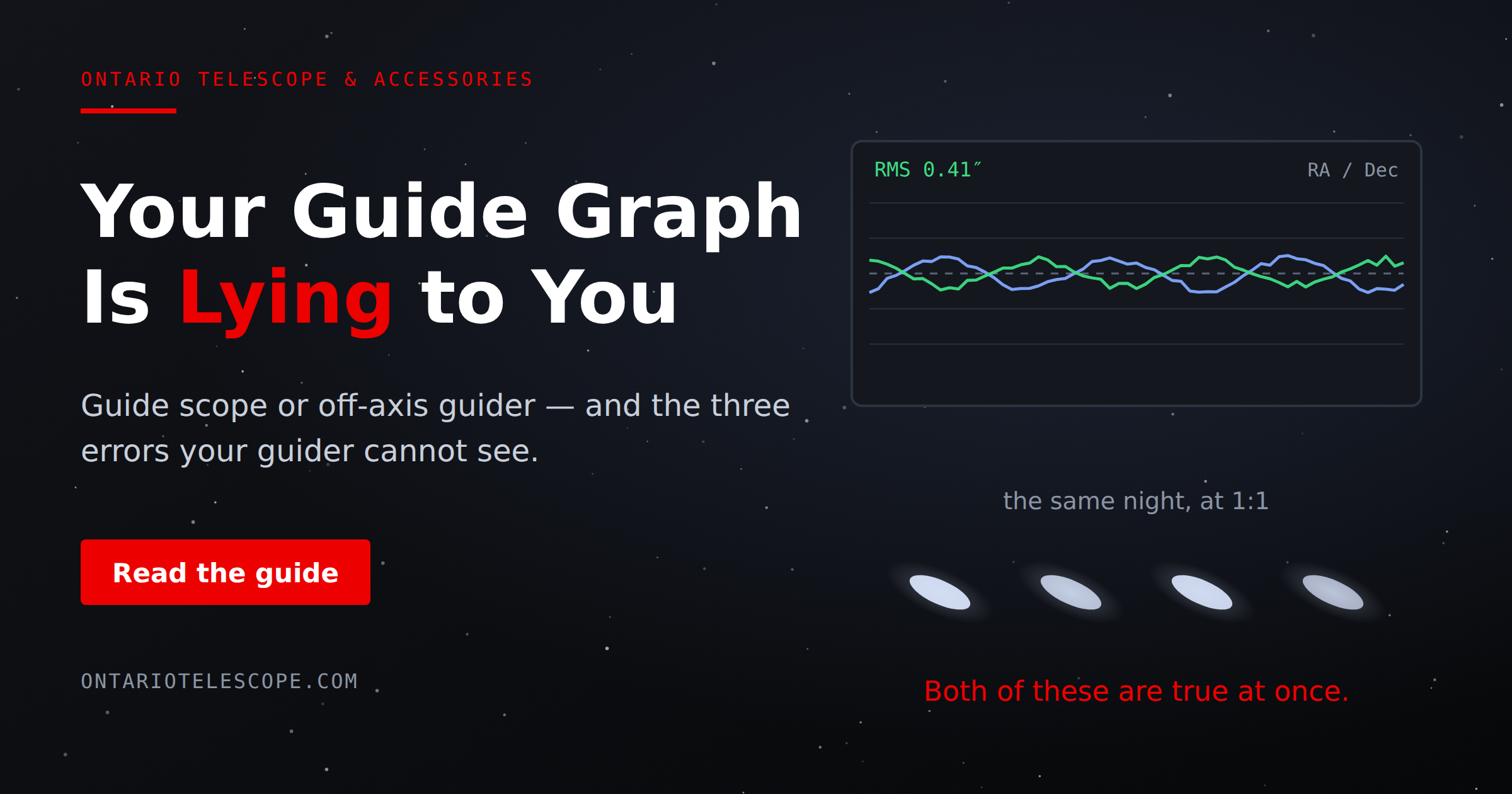
Your Guide Graph Is Lying to You
Read More
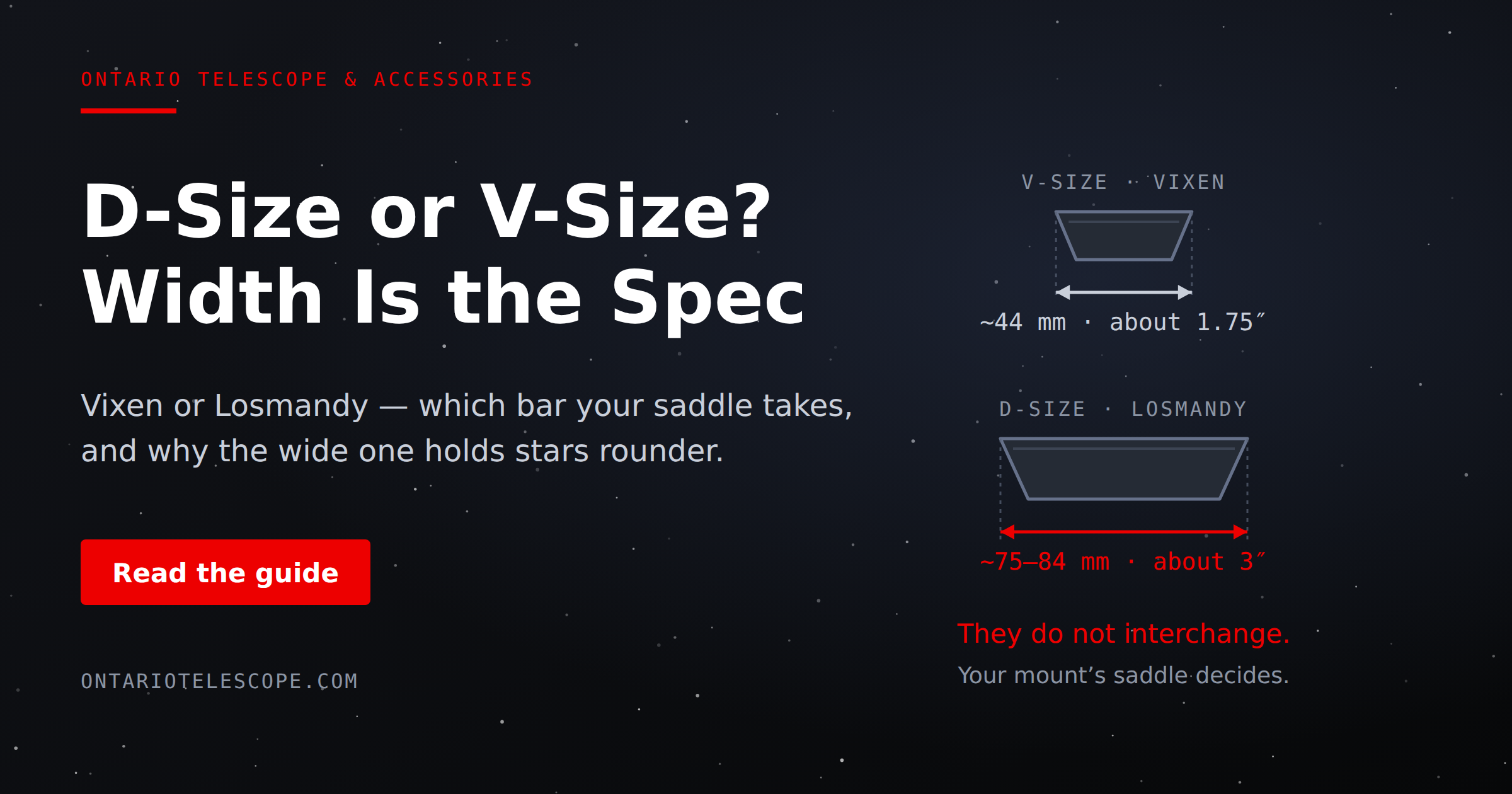
D-Size vs V-Size: A Complete Guide to Telescope Dovetail Systems
Read More
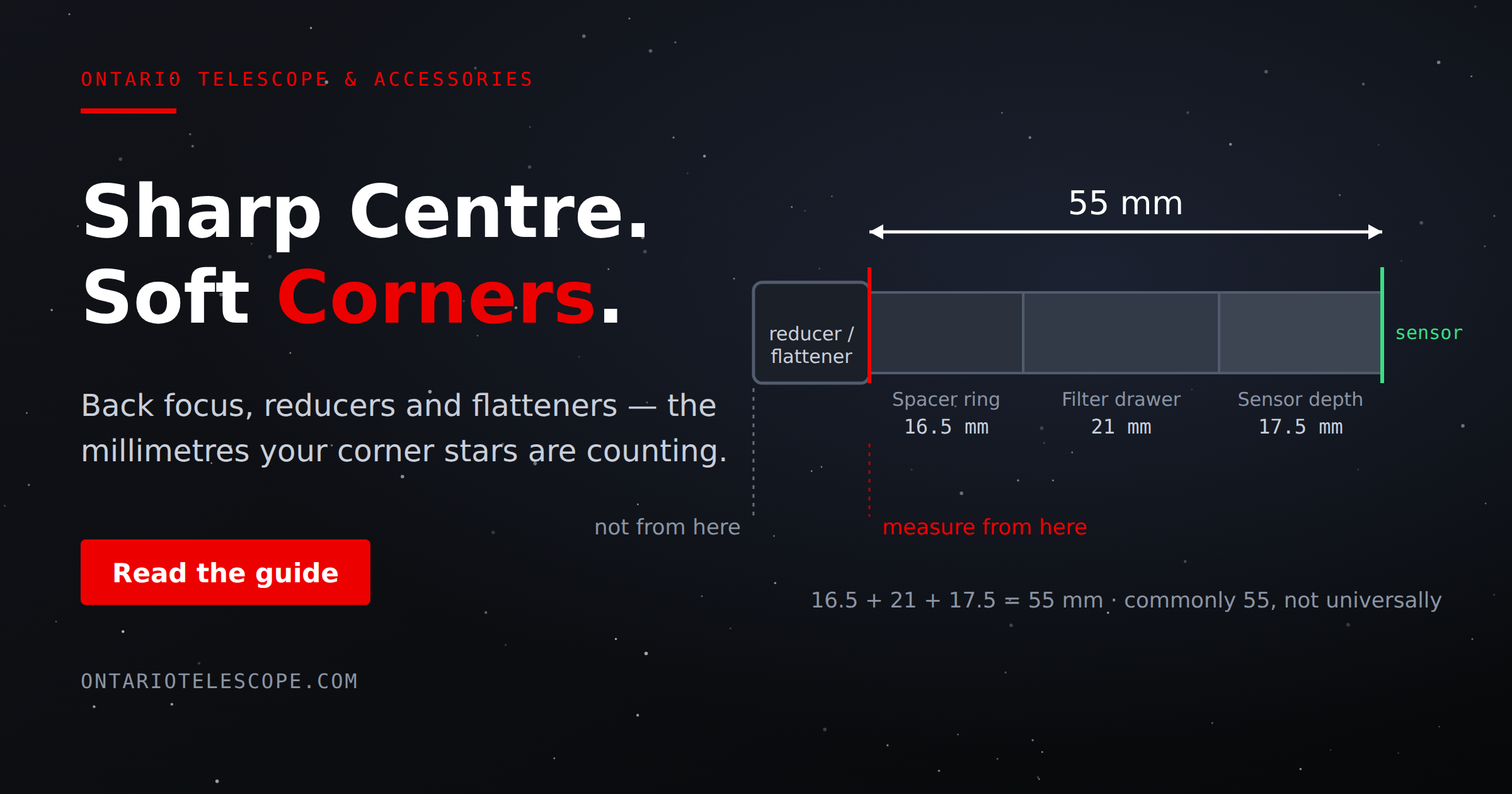
What Is Back Focus in Astrophotography? Telescope Reducers, Flatteners, and Spacing Explained
Read More