


- Description
- Specifications
Product Overview
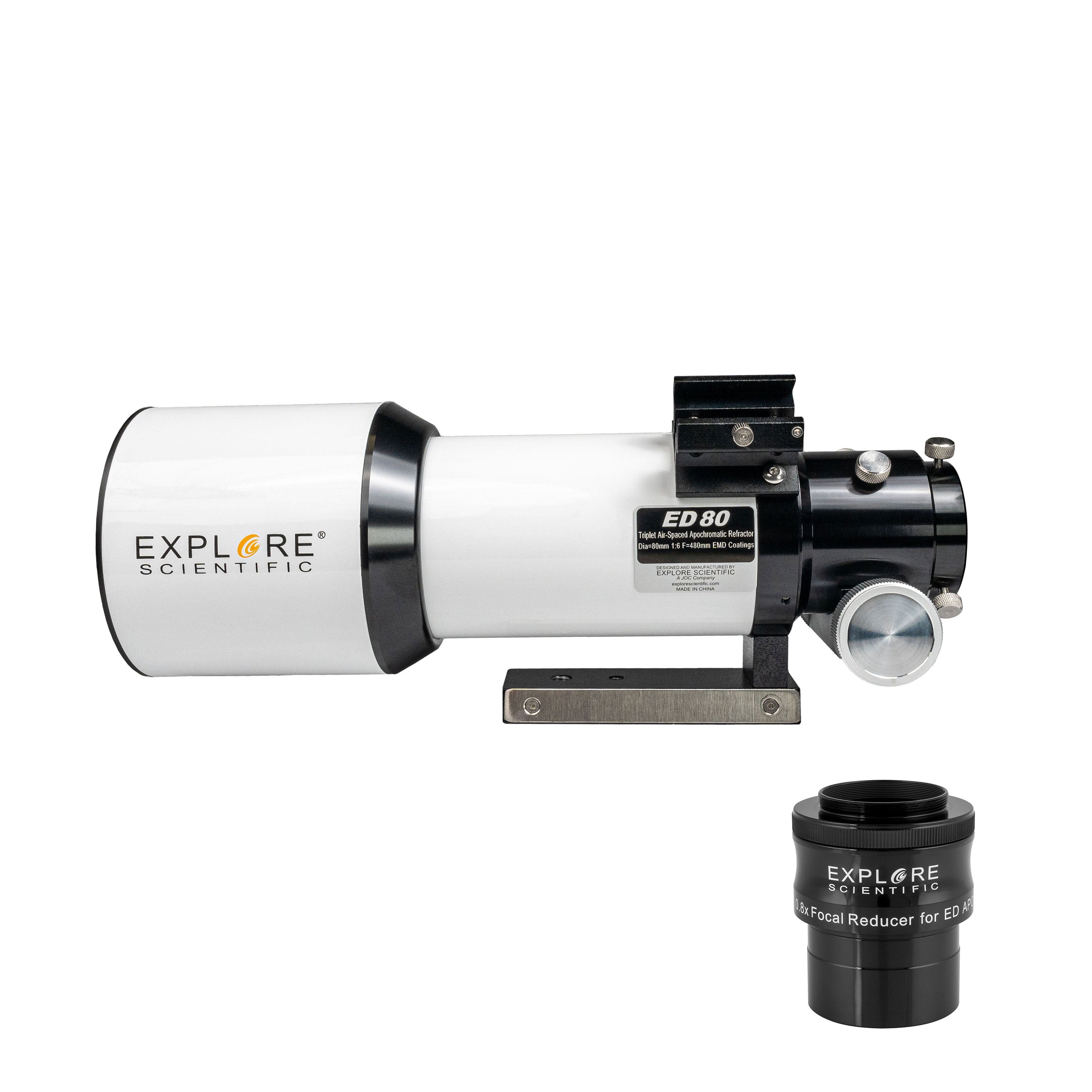
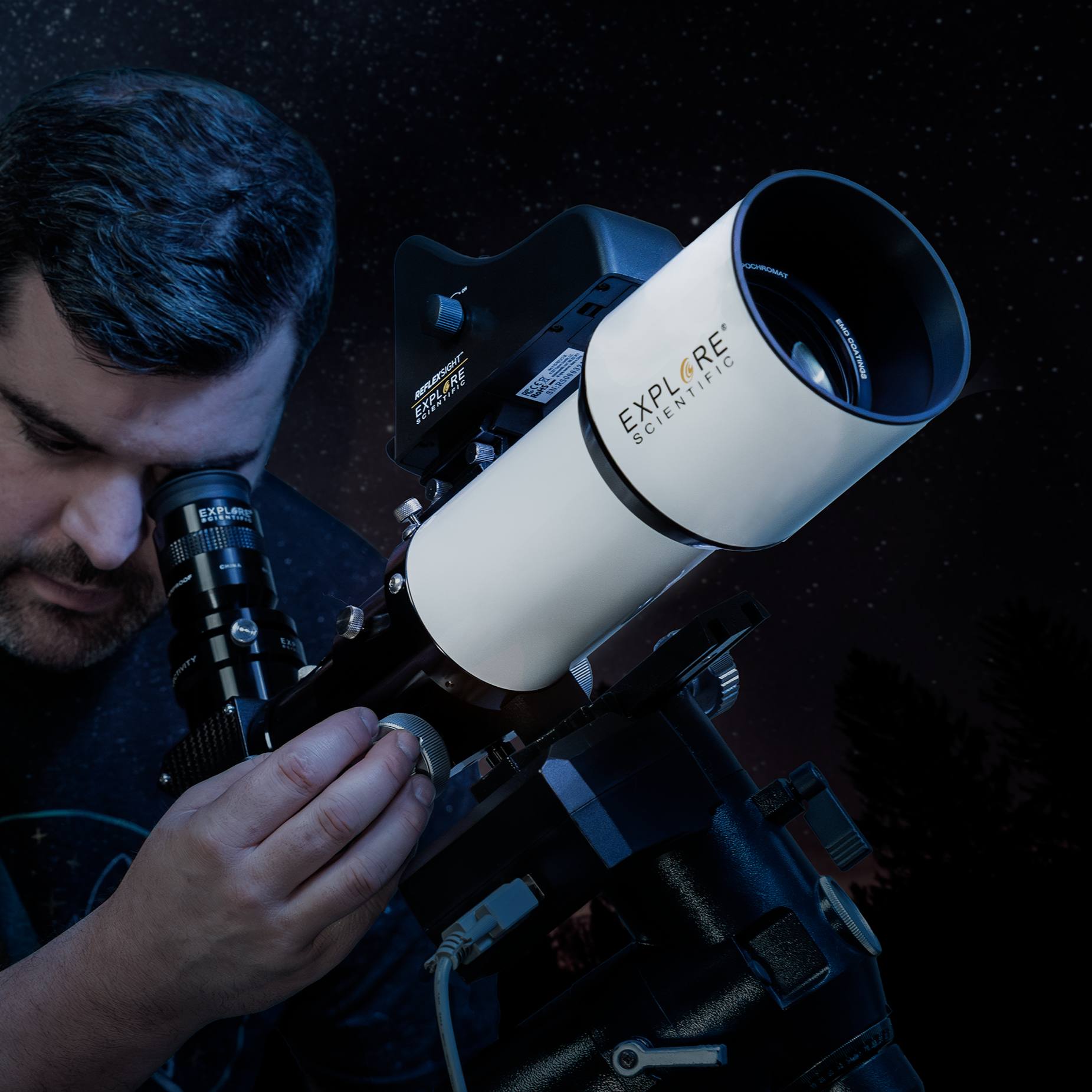
The Explore Scientific ED80 Essential Series is an 80 mm f/6 air-spaced apochromatic triplet refractor built around a HOYA FCD-1 extra-low-dispersion element. At 480 mm of focal length and 5.95 lb for the tube assembly, it is a short, portable instrument that works equally well as a visual grab-and-go scope and as an imaging telescope. This configuration ships with the Explore Scientific 0.8x focal reducer, which shortens the system to 384 mm at f/4.8 for wide-field astrophotography.
Who It's For
This is a good fit for an observer who wants apochromatic colour correction without a large tube to carry, and for imagers working with wide targets — large emission nebulae, open clusters, and the Milky Way star fields — where a fast focal ratio matters more than raw aperture. It suits a first dedicated astrophotography telescope, and it remains useful as a guide scope or travel scope after a larger instrument arrives.
Key Features & Design
- HOYA FCD-1 ED glass in a true air-spaced triplet objective for colour-accurate, high-contrast images
- Included 0.8x focal reducer produces an f/4.8 system for fast wide-field imaging
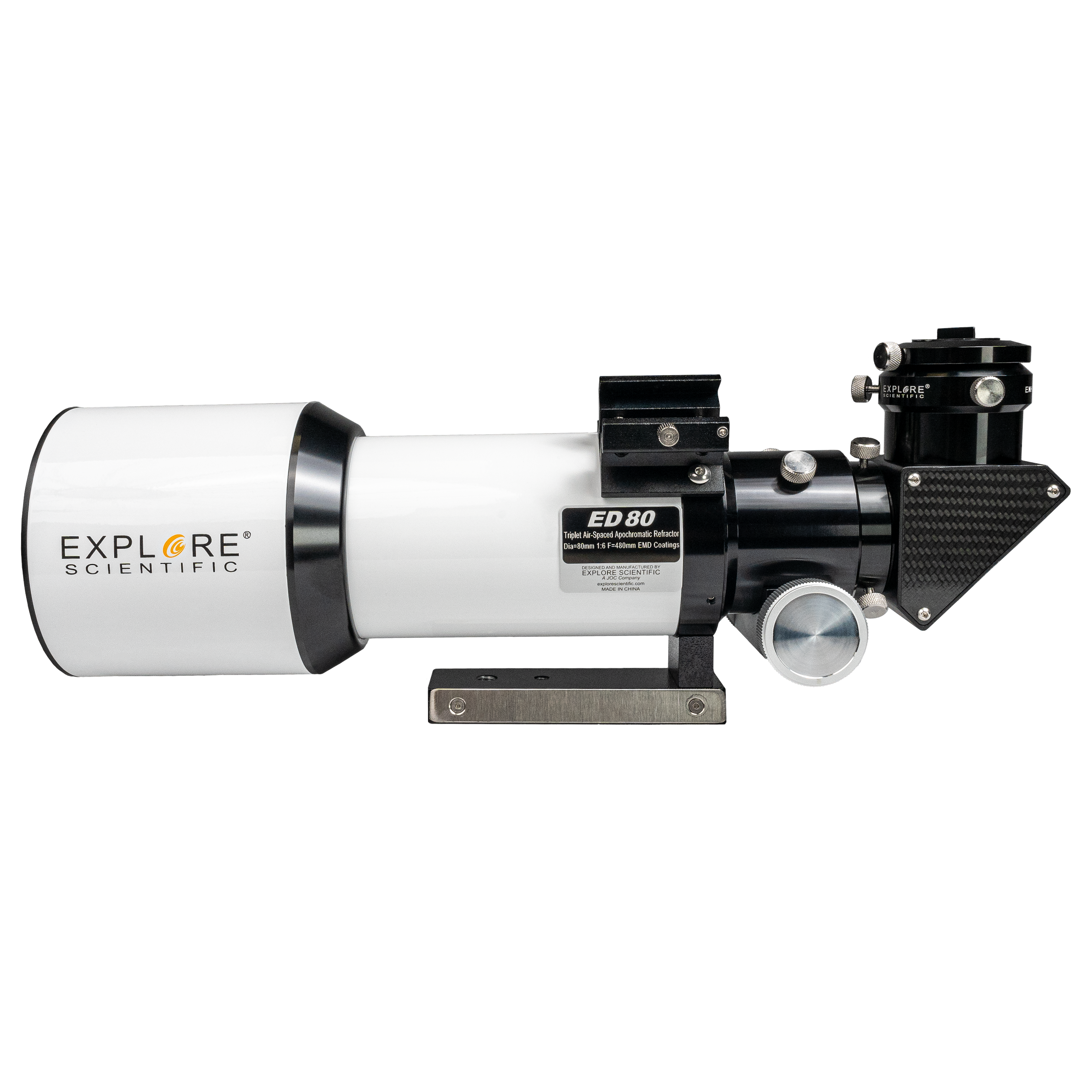
- 2.5-inch hexagonal rack-and-pinion focuser rated to carry 10 lb of imaging equipment
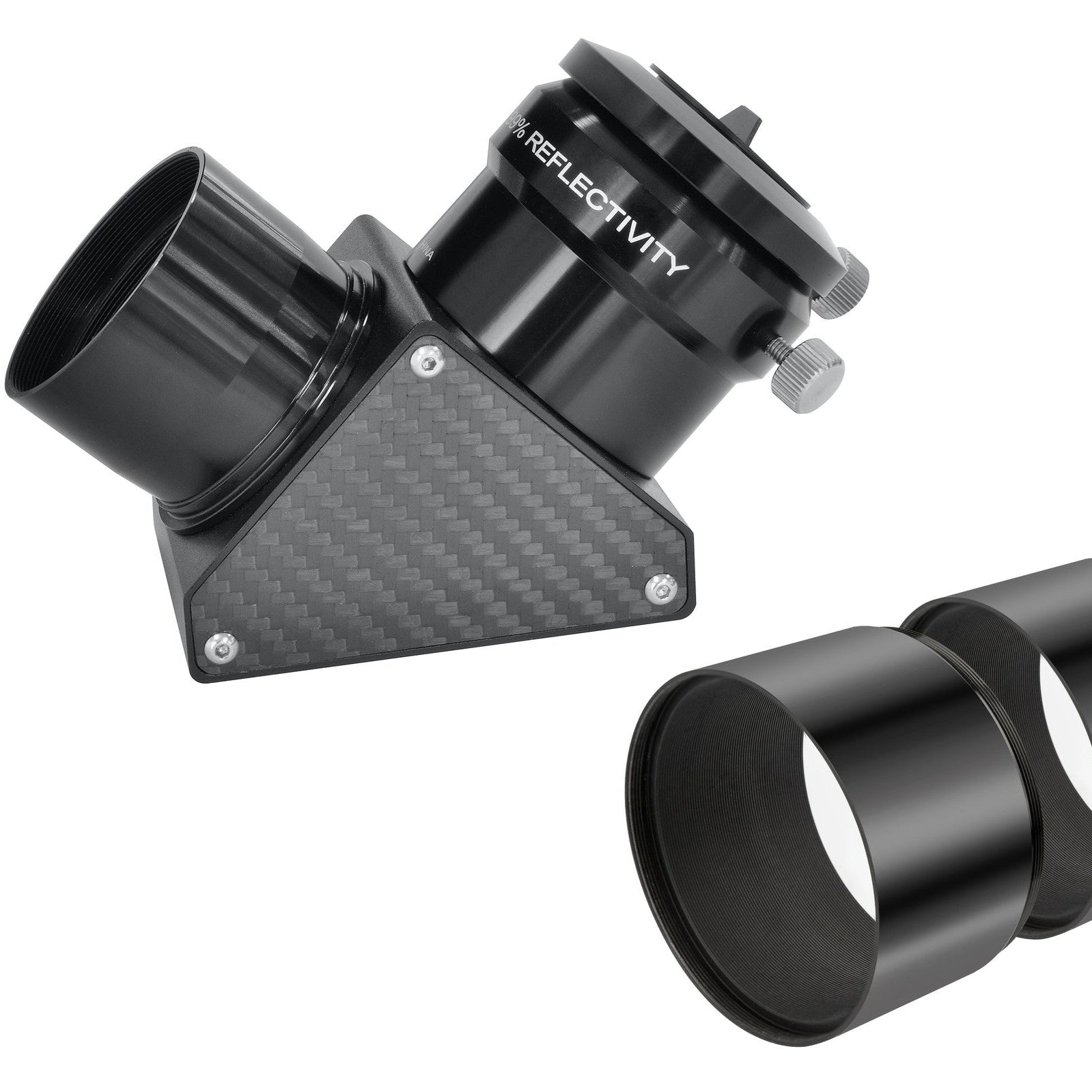
- 99% reflective 2-inch dielectric diagonal included for visual use
- Two focuser extension tubes for reaching focus across a range of eyepiece and camera combinations
- Built-in retractable dew shield and Hybrid 2N1 finder base installed on the tube
Optical and Mechanical Design
The objective is a three-element air-spaced design; the ED element suppresses the residual violet and blue halo that a doublet leaves around bright stars, which is what makes the difference visible on the Moon, on planets, and at the edges of a long exposure. Resolution is 1.45 arcseconds and limiting magnitude is 12. The tube measures 18.5 inches with the dew shield extended and 15 inches retracted, with an 85 mm outer diameter, and rides on a Vixen-style dovetail.
Recommended Uses
- Wide-field deep-sky astrophotography at f/4.8 with the reducer fitted
- Visual observing of the Moon, planets, double stars, and bright deep-sky objects with the 2-inch diagonal fitted
- Travel and dark-site trips where tube weight and length are the limiting factor
- Solar imaging with an appropriate full-aperture solar filter, sold separately
Compatibility and Accessory Notes
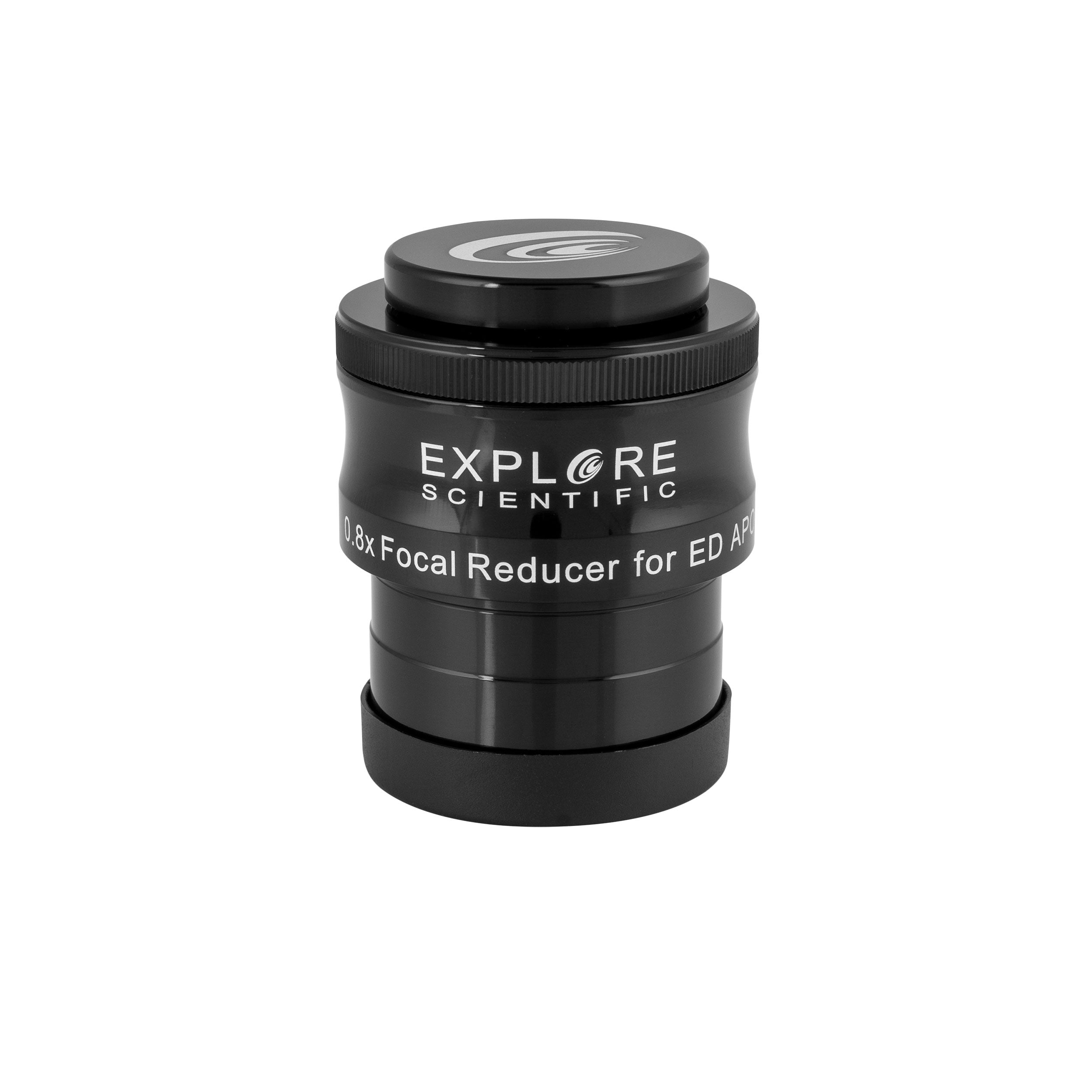
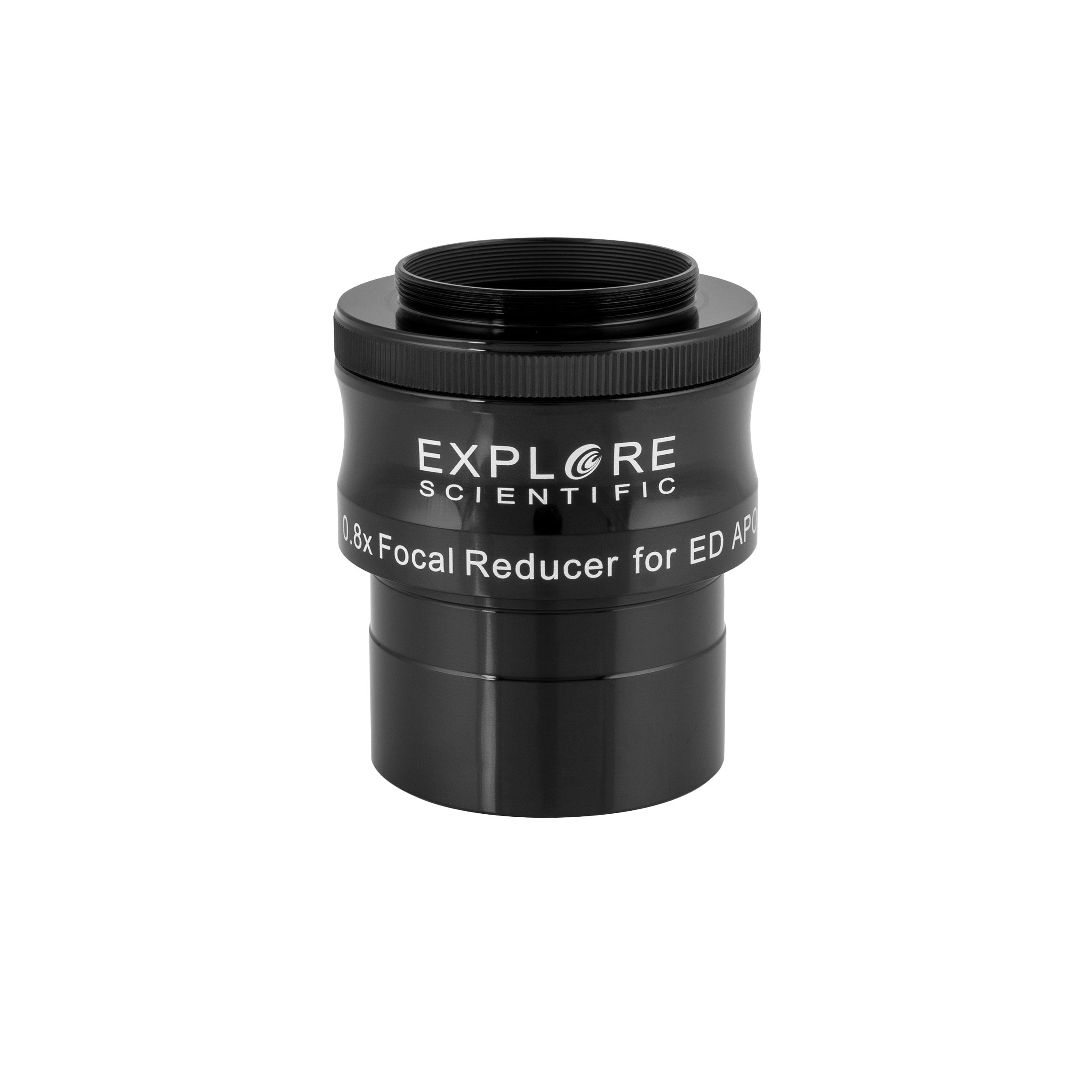
The Vixen-style dovetail fits the great majority of equatorial and alt-azimuth mounts we carry, including the Explore Scientific iEXOS-100-2 and EXOS-2GT. The reducer's camera-side adapter plate carries a 42 mm T2 thread, so a T2-mount camera ring for your camera body completes the imaging train; the reducer barrel is also threaded for standard 2-inch filters. The Hybrid 2N1 base is installed and ready for a finder scope, which is not included.
Good to Know Before You Order
This is an optical tube assembly with a corrector — a mount and tripod are needed and are sold separately. No eyepieces or finder scope are included, so plan on at least one eyepiece for visual use. Explore Scientific publishes a tube weight of 5.95 lb; the shipping weight shown at checkout is rounded up to the next whole pound, and does not change the specification above.
Frequently Asked Questions
Is it difficult to set up? No. The dovetail drops straight into a standard Vixen saddle, the dew shield slides out by hand, and the reducer threads on with the supplied adapter. There are no collimation adjustments to make.
Can I use it visually as well as for imaging? Yes. Fit the included 2-inch diagonal and an eyepiece for visual work, or remove the diagonal and thread on the reducer for imaging.
What mount does it need? Any mount rated comfortably above the tube's 5.95 lb plus your camera or diagonal and eyepiece. The iEXOS-100-2 is a common pairing.
What is the difference between this and the FCD-100 version? The FCD-100 uses a higher-grade HOYA ED glass and a heavier tube at 7.5 lb. Both are 80 mm f/6 triplets; the FCD-100 offers a further reduction in residual colour.
Bottom Line
An 80 mm apochromatic triplet with the reducer already in the box, light enough for a small mount and corrected well enough for long exposures. If you want one telescope that images wide fields at f/4.8 and still gives clean high-power views, this is a straightforward choice. Our team in Bolton is happy to help match it to a mount.
| Item number | ES-ED0806-02 with ES-FR0.8x |
|---|---|
| Optical design | Air-spaced apochromatic triplet with HOYA FCD-1 ED element |
| Aperture | 80 mm |
| Focal length | 480 mm |
| Focal ratio | f/6 |
| Focal ratio with 0.8x focal reducer | f/4.8 |
| Limiting magnitude | 12 |
| Resolution | 1.45 arcsec |
| Tube length with dew shield | 18.5″ (475 mm) |
| Tube length without dew shield | 15″ (381 mm) |
| Tube diameter | 85 mm |
| Weight | 5.95 lb (2.7 kg) |
| Dovetail | Vixen style |
| Focuser | 2.5″ hexagonal rack and pinion, 10 lb capacity |
| Diagonal included | 99% reflective 2″ |
| Focal reducer | ES-FR0.8x, 2 elements, 2″ barrel, 0.8x reduction |
| Reducer camera adapter plate | 42 mm thread for T2 ring |
| Reducer filter thread | Standard 2″ filter thread |
| Finder included | None; Hybrid 2N1 finder base installed |
| Eyepieces included | None |
| Mount included | None |
You may also like
Recently viewed
Recent Blog Posts
View all
Your Guide Graph Is Lying to You
Read More
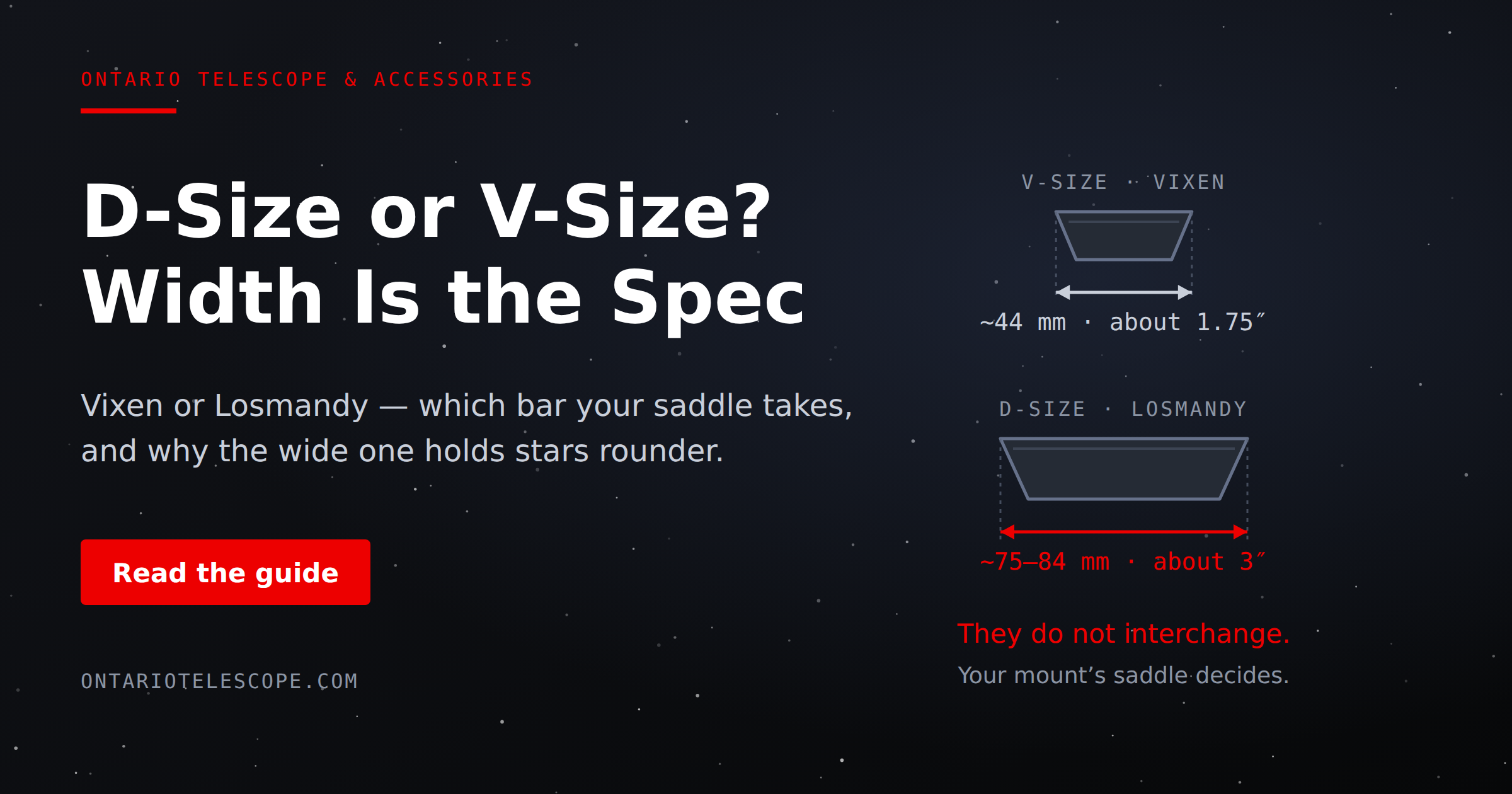
D-Size vs V-Size: A Complete Guide to Telescope Dovetail Systems
Read More
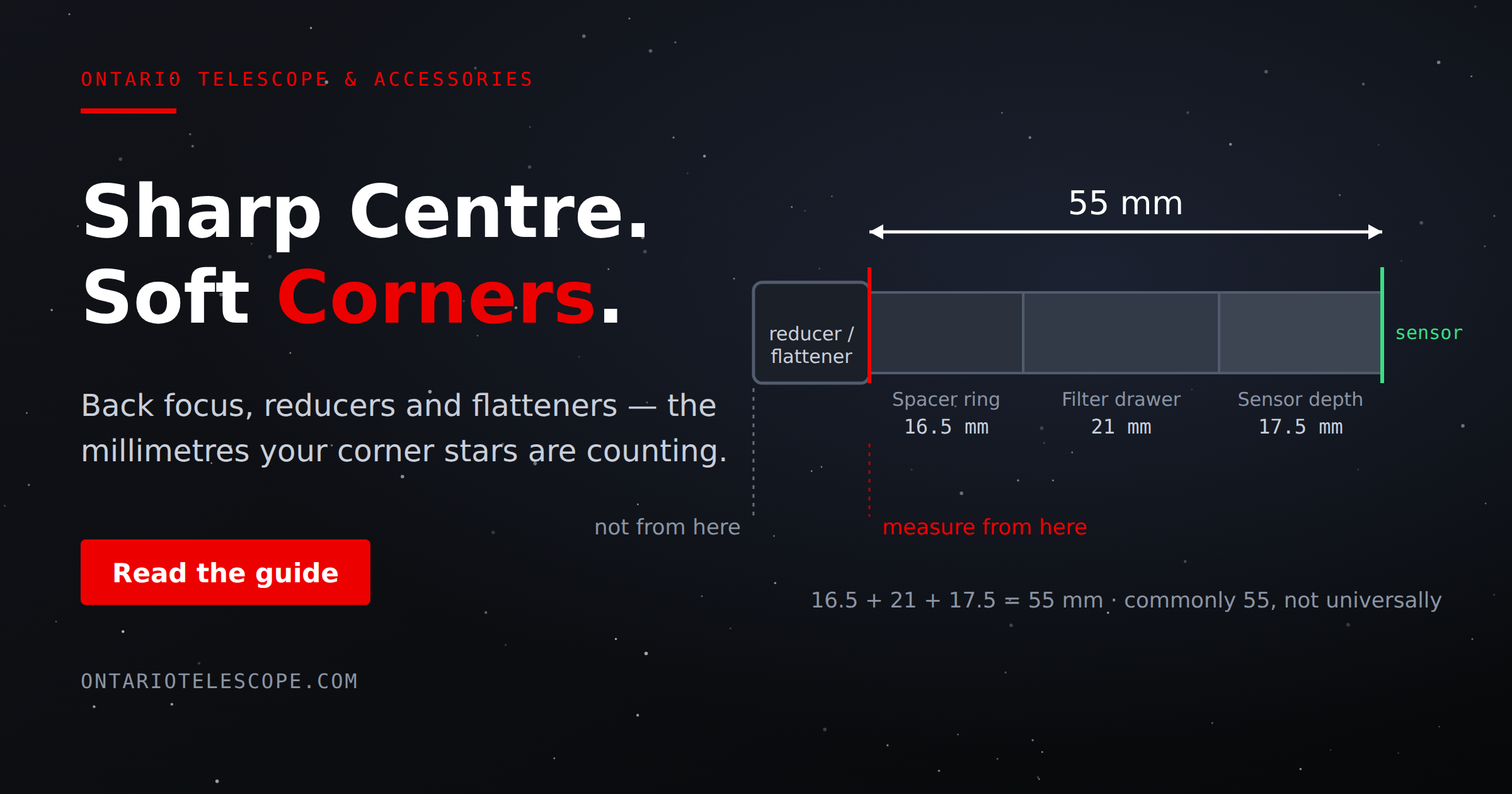
What Is Back Focus in Astrophotography? Telescope Reducers, Flatteners, and Spacing Explained
Read More