


- Description
- Specifications
Product Overview
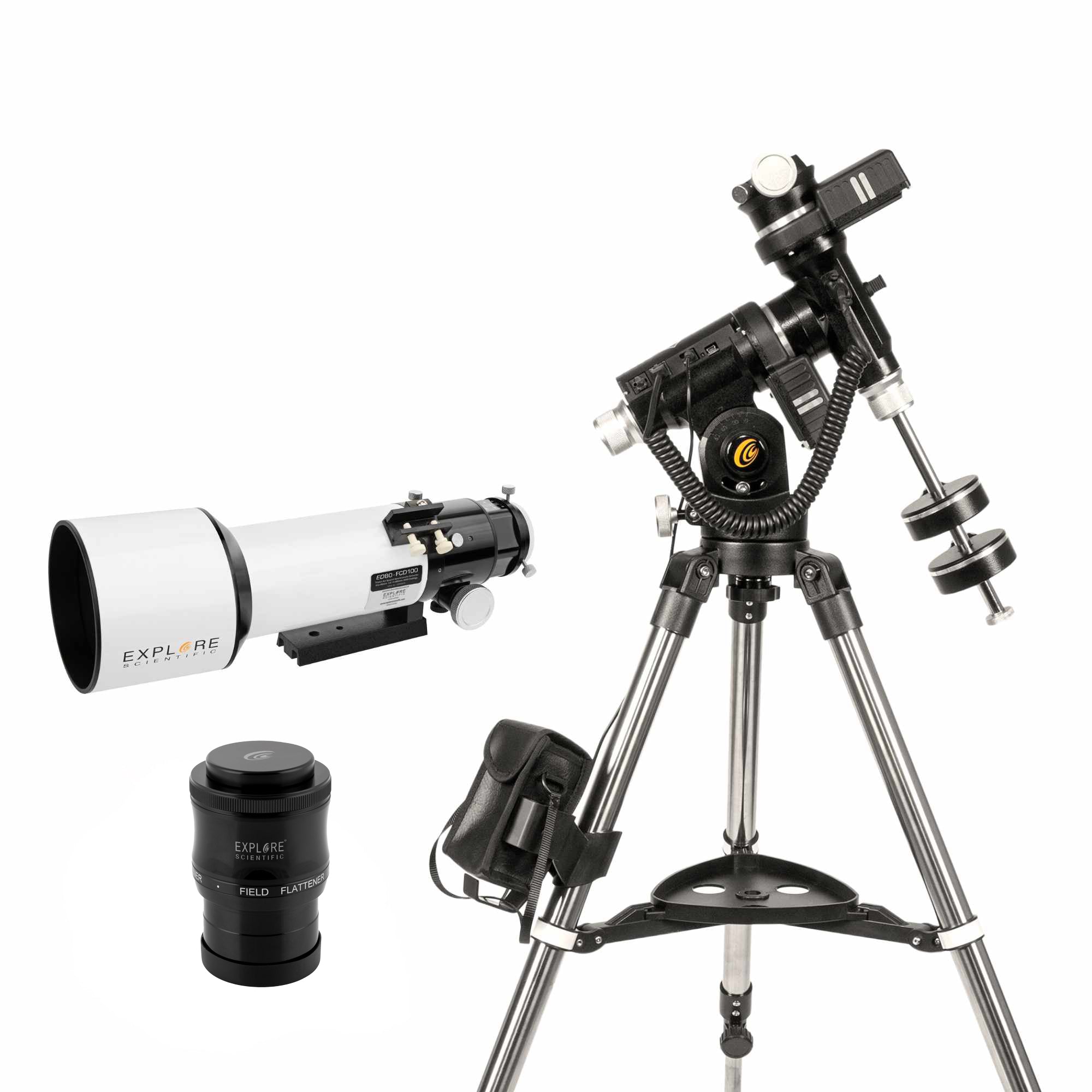
This package pairs the Explore Scientific ED80-FCD100 80 mm f/6 air-spaced triplet refractor with the field flattener for f/5 to f/7 refractors and the iEXOS-100-2 PMC-Eight equatorial tracker system. It is a complete imaging setup that works at the telescope's native 480 mm focal length, with the corrector spent on field flatness rather than speed, on a computerised GoTo mount with tripod and counterweights included.
Who It's For
This suits an imager using an APS-C or larger sensor, where field curvature shows most plainly, and anyone who prefers native framing to the wider, faster field a reducer gives. It is also a straightforward first complete rig: telescope, corrector, and mount are matched at purchase, so the dovetail, saddle, and payload rating all line up.
Key Features & Design
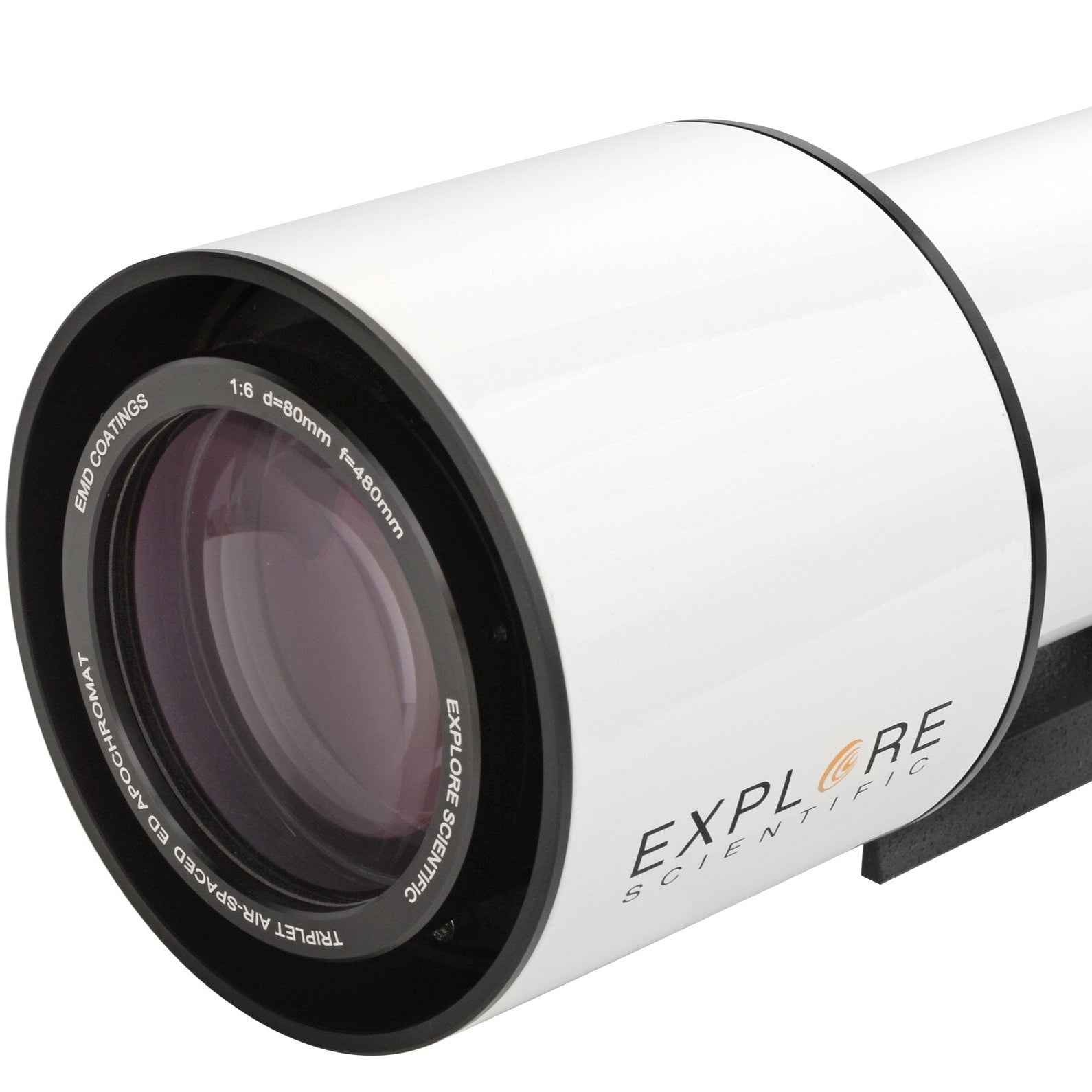
- ED80-FCD100 80 mm f/6 air-spaced triplet, HOYA FCD-100 ED glass, 480 mm focal length
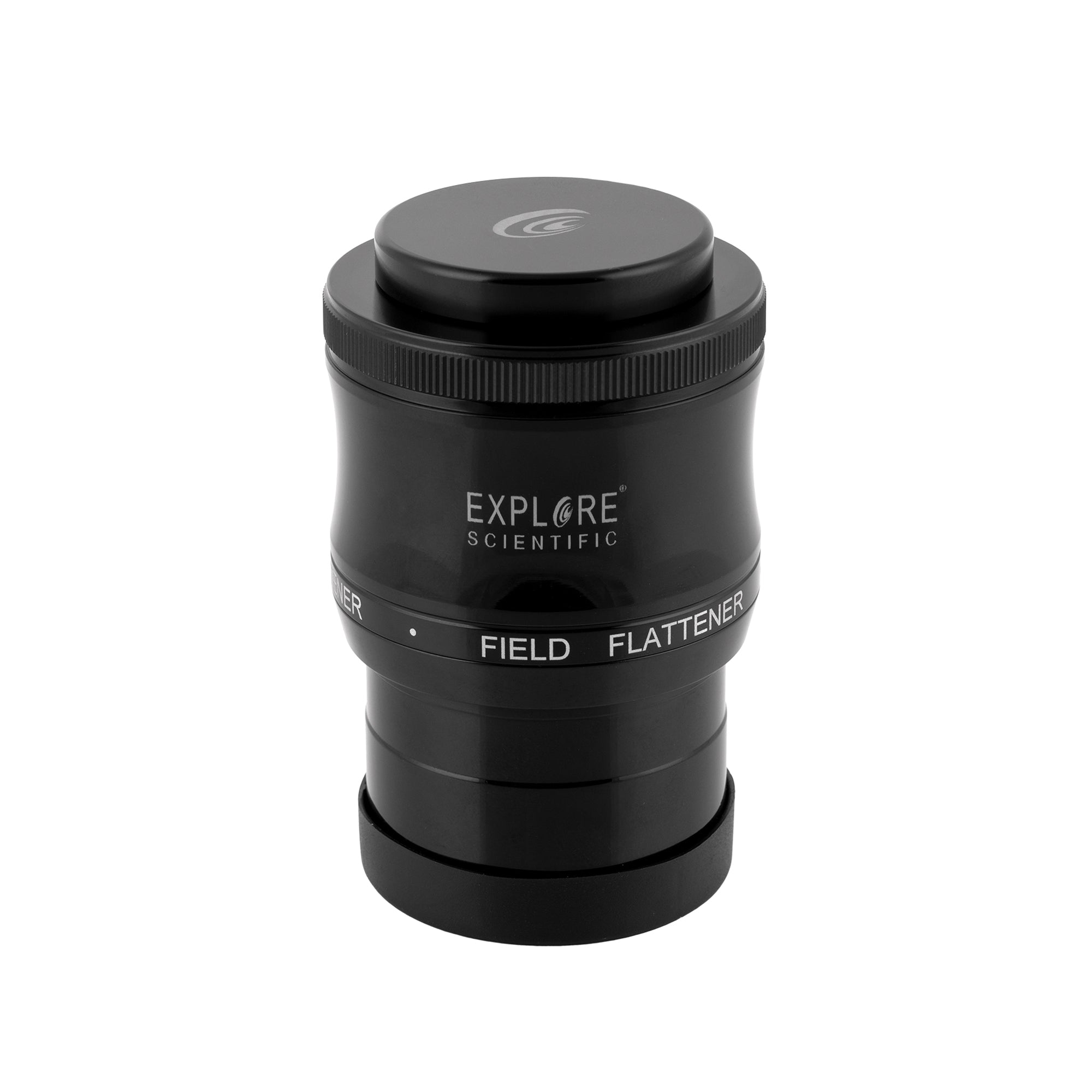
- Field flattener matched to f/5 through f/7 refractors for edge-to-edge star sharpness
- iEXOS-100-2 PMC-Eight GoTo equatorial tracker with WiFi and Bluetooth
- Eight-core PMC-Eight motion control, with CPUs assigned to separate tasks for smoother tracking
- Free ExploreStars app for Windows, Android, Amazon Fire, and Apple tablets, plus an ASCOM driver
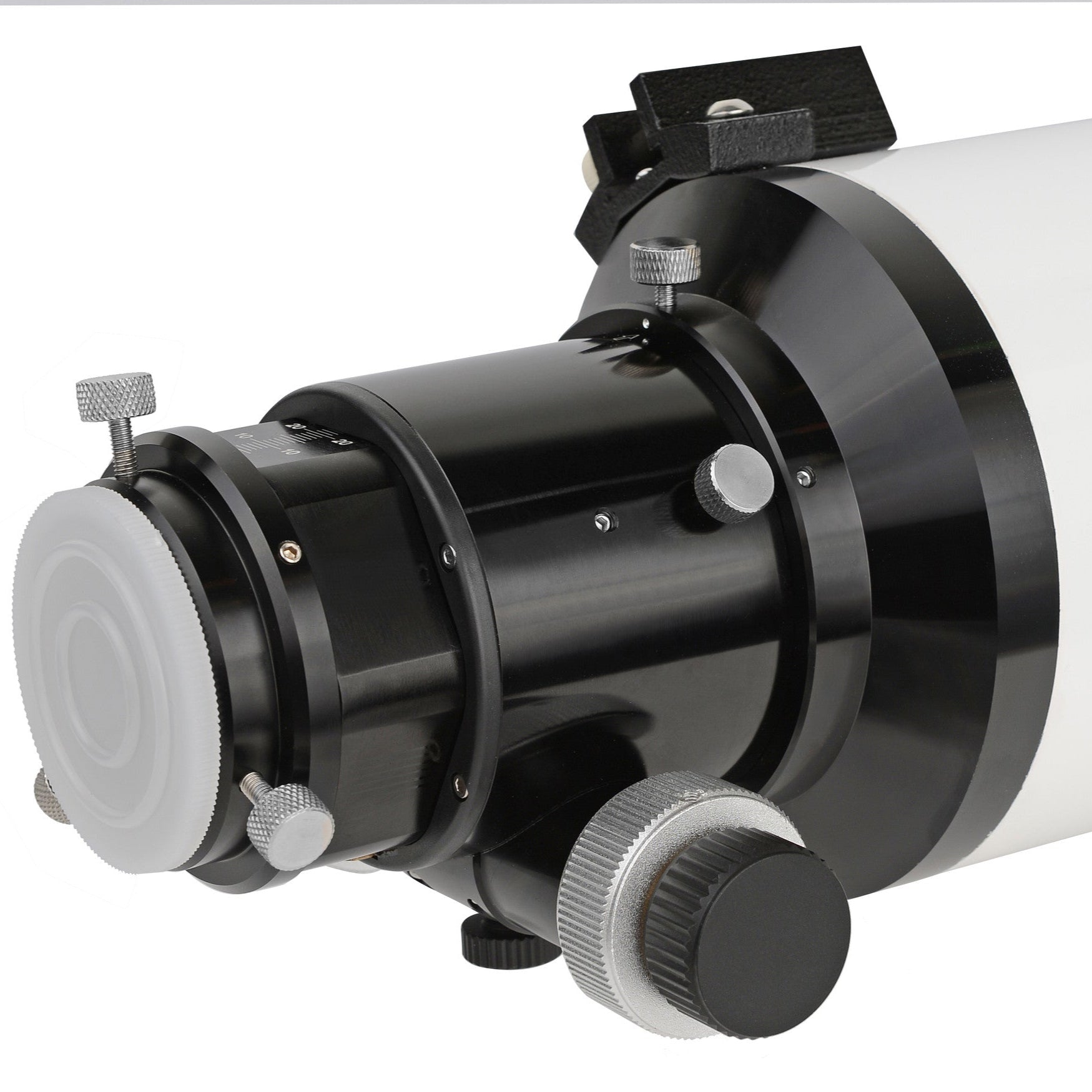
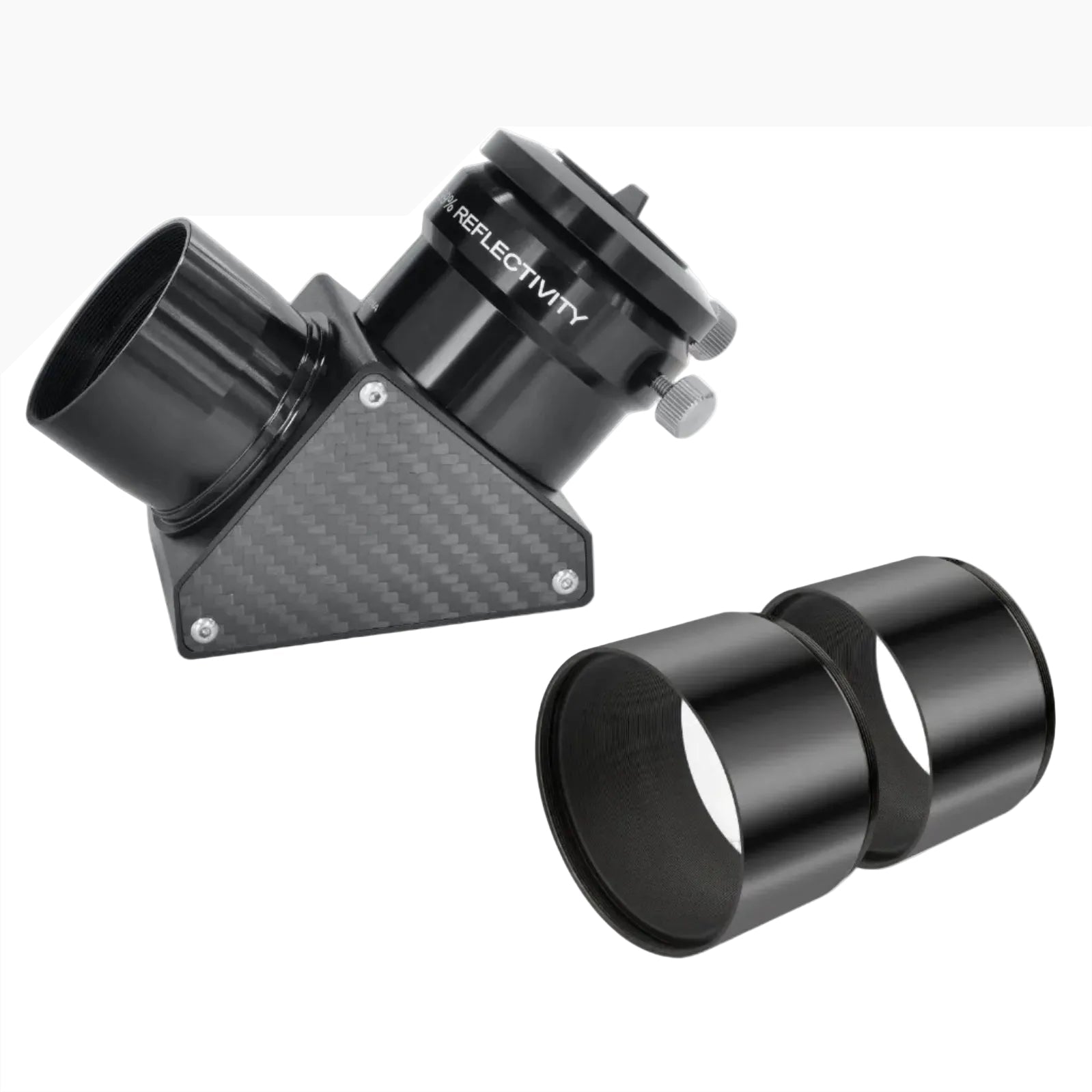
- 2.5-inch hexagonal focuser rated to 10 lb, 99% reflective 2-inch diagonal, two extension tubes, counterweights
Optical and Mechanical Design
Field curvature makes stars near the frame edge stretch radially into small comet shapes; the flattener sits ahead of the camera and returns the focal plane to flat so corner stars come to focus with the centre. The objective gives 1.45 arcsecond resolution and a limiting magnitude of 12, in a 7.5 lb tube of 85 mm diameter. The mount head weighs 9.45 lb on a 5.35 lb tripod with 1 kg counterweights, rated at approximately 9 lb of equipment alone, 15 lb photographic and 19 lb visual with counterweights. Tripod height runs 25.5 inches collapsed to 45 inches extended with the head fitted.
Recommended Uses
- Tracked deep-sky imaging at native f/6 with round stars into the corners
- Imaging with APS-C and larger sensors
- Mosaic projects needing consistent star shapes panel to panel
- GoTo-assisted visual observing with the included 2-inch diagonal
Compatibility and Accessory Notes
The flattener is specified for f/5 to f/7 refractors, which covers this telescope at f/6. Corner performance depends on getting the spacing between flattener and sensor right, so plan on the T-thread adapters and spacers that match your camera — we can work the stack out for your body. The Vixen-style dovetail seats in the mount's saddle as supplied. A tablet or computer for GoTo is not included, and a finder scope is separate.
Good to Know Before You Order
Eyepieces, camera adapters, and a tablet or laptop are separate. Power for the PMC-Eight comes from a battery pack or a 12 V DC supply, which we stock. Explore Scientific publishes no packing list for this configuration, so the included items above reflect the tube, flattener, and mount specifications they do publish — ask us if you need it confirmed before ordering. Published weights are 7.5 lb tube, 9.45 lb mount head, 5.35 lb tripod, 1 kg per counterweight; the checkout shipping weight is the sum of those rounded up to the next whole pound.
Frequently Asked Questions
Is it difficult to set up? Assembly is quick. Two things reward care: polar alignment, for which Explore Scientific publishes a guide, and flattener-to-sensor spacing, which we can specify for your camera so it is right first time.
Flattener or 0.8x reducer? The flattener keeps 480 mm at f/6 and flattens the field; the reducer shortens to 384 mm at f/4.8 for wider, faster framing. Larger sensors favour the flattener.
Do I need a computer? For GoTo, yes — a tablet running ExploreStars, or a laptop with ASCOM software.
Can I observe visually? Yes, using the included 2-inch diagonal and an eyepiece.
Bottom Line
A premium 80 mm apochromat, its matching flattener, and a GoTo mount together in one package, set up for flat-field imaging at native focal length. Get in touch and we will spec the camera spacing for you.
| Item numbers | FCD100-0806-02, ES-FF2F5/F7, ES-iEXOS-100-02, 2 × CW22-00 |
|---|---|
| Optical design | Air-spaced apochromatic triplet with HOYA FCD-100 ED element |
| Aperture | 80 mm |
| Focal length | 480 mm |
| Focal ratio | f/6 |
| Limiting magnitude | 12 |
| Resolution | 1.45 arcsec |
| Tube length with dew shield | 18.5″ (475 mm) |
| Tube diameter | 85 mm |
| Tube weight | 7.5 lb (3.4 kg) |
| Dovetail | Vixen style |
| Focuser | 2.5″ hexagonal rack and pinion, 10 lb capacity |
| Field flattener | Explore Scientific field flattener for f/5 to f/7 refractors |
| Mount | iEXOS-100-2 PMC-Eight GoTo equatorial tracker, WiFi and Bluetooth |
| Mount head weight | 9.45 lb |
| Tripod weight | 5.35 lb |
| Counterweights | 2 × 1 kg |
| Mount capacity | Approx. 9 lb equipment only; 15 lb photographic; 19 lb visual |
| Tripod height | 25.5″ collapsed; 45″ fully extended with head |
| Control | ExploreStars app (Windows, Android, Amazon, Apple) or ASCOM driver |
| Diagonal included | 99% reflective 2″ |
| Eyepieces included | None |
| Tablet or computer included | None |
You may also like
Recently viewed
Recent Blog Posts
View all
Your Guide Graph Is Lying to You
Read More

D-Size vs V-Size: A Complete Guide to Telescope Dovetail Systems
Read More

What Is Back Focus in Astrophotography? Telescope Reducers, Flatteners, and Spacing Explained
Read More