


- Description
- Specifications
Product Overview
The Explore Scientific AR102 is a 102mm air-spaced crown-and-flint achromatic doublet refractor with a published focal length of 663mm at f/6.5. Explore Scientific gives the optical diameter as 101mm, the limiting magnitude as 12.5 and the resolution as 1.14 arcsec — the three figures that describe how faint this aperture reaches and how close a pair of stars can sit and still separate.
The tube measures 25.5″ (698mm) with the dew shield extended, and the published weight is 11.5 lbs (5.2 kg). At f/6.5 this is a short-focus four-inch, built around bright wide-field views at low and medium power rather than long-focus planetary work. The short tube is a large part of why it stays a one-trip instrument.
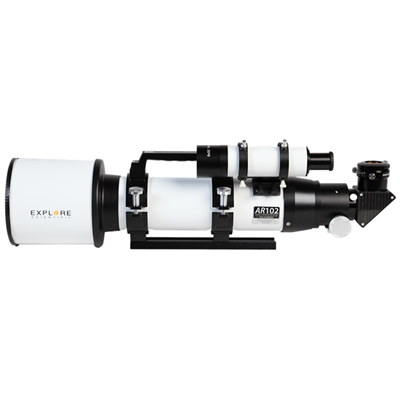
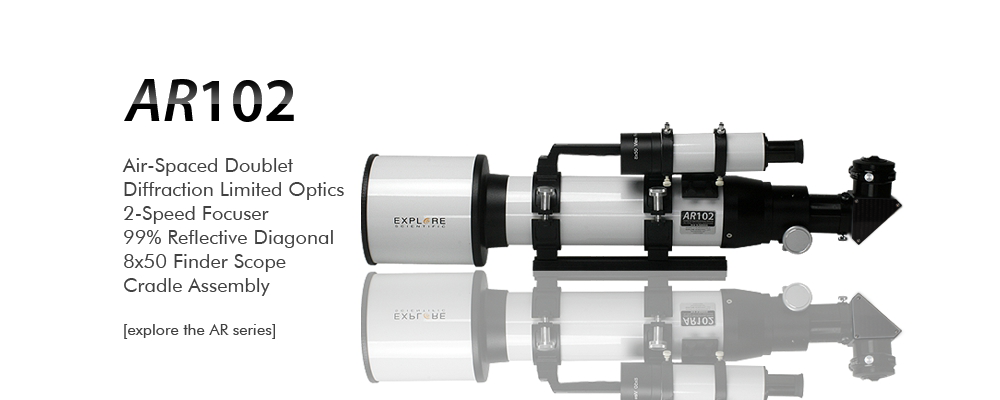
It ships as an optical tube assembly with its accessory package: a dual-speed 2-inch Crayford focuser, a 2-inch diagonal with 99% dielectric coatings, an 8x50 finderscope with a quick-release bracket, and a cradle ring assembly carrying a 45mm wide Vixen-style dovetail plate. A mount and eyepieces are chosen separately.
Who It's For
- Wide-field visual observers: a 101mm objective gathers on the order of 200 times the light a 7mm dark-adapted pupil collects, and at 663mm through a 2-inch focuser the true field stays wide enough for large open clusters and the brighter nebulae to sit inside a single view.
- Observers who set up and pack down every session: 11.5 lbs and 25.5 inches is a tube most people carry in one hand, and a refractor holds its optical alignment between sessions.
- Outreach and star-party use: nothing to collimate between events, a quick-release finder, and a dielectric diagonal already in the box.
- Anyone with mount capacity to spare: this is a good match if your mount is rated comfortably above the 11.5 lb tube once a diagonal, finder and 2-inch eyepiece are added to it.
Key Features & Design
- 102mm air-spaced doublet: crown and flint elements separated by an air gap rather than cemented, with a published optical diameter of 101mm.
- 663mm focal length at f/6.5: a short focal ratio for a four-inch refractor, which is what keeps both the tube length and the true field generous.
- Limiting magnitude 12.5: the faintest star the aperture is rated to reach.
- 1.14 arcsec resolution: the governing figure for splitting close double stars.
- Dual-speed 2-inch Crayford focuser: coarse and fine motion on the same shaft, which is what makes focus repeatable at higher magnification and under a heavy 2-inch eyepiece.
- 2-inch diagonal with 99% dielectric coatings, supplied with the tube rather than sold alongside it.
- Cradle ring assembly with a 45mm wide Vixen-style dovetail: the tube load spreads across two rings instead of one clamp point, and the rings allow the tube to be rotated for eyepiece position.
- 25.5″ (698mm) overall with the dew shield extended, at a published 11.5 lbs (5.2 kg).
Optical Design
An achromatic doublet brings two wavelengths of light to a common focus by pairing a crown element with a flint element. Air-spacing the pair, rather than cementing it, gives the designer two extra optical surfaces to shape and removes the cement layer as a thermal variable when the tube cools down at the start of a session.
An achromat is not an apochromat, and at f/6.5 that difference is visible on the brightest targets. Venus, Jupiter, Sirius and the lunar limb will show a violet edge at high magnification. That behaviour belongs to two-element crown-and-flint designs generally rather than to this tube in particular, and it scales with magnification: at the 25x to 60x range this focal length is happiest at, it is not something that intrudes. Observers who want it reduced at high power usually add a minus-violet or fringe-killer filter to the 2-inch diagonal, and we stock those. Observers who want the colour gone rather than reduced are looking at an ED doublet or an apochromatic triplet, which is a different price class and a different tube.
Recommended Uses
- Low and medium-power sweeping of open clusters, the brighter nebulae and the larger galaxies.
- Lunar observing at moderate magnification, where the flat, contrasty field of a refractor shows well.
- Double-star work within the 1.14 arcsec published resolution.
- Public outreach, school sessions and travel, where an 11.5 lb tube that needs no collimation is the practical advantage.
- Wide-field and solar-system imaging on an equatorial mount rated well above the tube weight.
Compatibility and Accessory Notes
- Mount: not included. The published tube weight of 11.5 lbs is before the diagonal, finder and eyepiece, so the loaded tube sits higher than that. A mount with 15 lb or more of rated visual capacity is a sensible starting point, and more again for imaging.
- Dovetail: the 45mm wide plate follows the Vixen-style pattern, so it drops into a Vixen saddle or a dual Vixen/Losmandy saddle without an adapter.
- Eyepieces: none included. At 663mm, a 30mm eyepiece gives 22x, a 25mm gives 27x, a 15mm gives 44x and a 9mm gives 74x. Divide 663 by the eyepiece focal length in millimetres for any other combination.
- Diagonal and barrel sizes: the supplied 2-inch diagonal takes 2-inch eyepieces, and 1.25-inch eyepieces with a 2-inch to 1.25-inch adapter.
- Filters: the 2-inch diagonal accepts 2-inch threaded filters. A minus-violet filter is the usual pairing for high-power lunar and planetary work on a fast achromat; broadband and narrowband nebula filters suit the wide-field work this focal ratio is built around.
- Imaging: Explore Scientific does not publish a corrected image circle or a backfocus figure for this tube, so we are not going to quote one. Send us the camera and flattener you have in mind and we will work out what fits before you order.
Good to Know Before You Order
- This is an optical tube assembly, not a complete telescope. A mount and tripod are needed to use it, and so is at least one eyepiece. We put packages together regularly and can price one against the mount you already own.
- Achromatic, not apochromatic. Colour on the brightest objects at high power is part of the design. A minus-violet filter reduces it, and at the low to medium powers this focal ratio is built for it is not the limiting factor.
- The 25.5-inch figure includes the dew shield extended. That is the dimension to measure against a case or a car boot if the tube travels with you.
- Explore Scientific publishes no corrected image circle and no backfocus figure for the AR102, so those rows are absent from the specification table below rather than estimated. If you are planning an imaging train, we will confirm spacing with you first.
Frequently Asked Questions
Is it difficult to set up?
No. A refractor needs no collimation, so the tube is ready the moment the rings are clamped into the saddle. At 11.5 lbs it lifts onto a mount comfortably, and the finder bracket and diagonal push in and lock with thumbscrews. The only first-night task is aligning the 8x50 finder to the main tube, which takes a few minutes on a distant daytime object.
What mount does it need?
One rated comfortably above the loaded tube. The bare tube is 11.5 lbs and the diagonal, finder and a 2-inch eyepiece add to that, so around 15 lbs of rated visual capacity is a reasonable floor and more is better for photography. Tell us what you have and we will give you a straight answer on whether it will carry this.
Does it come with eyepieces?
No. The 2-inch dielectric diagonal, the 8x50 finderscope and the cradle rings with dovetail are included; eyepieces are chosen separately to suit the 663mm focal length.
Will I see colour around bright objects?
On Venus, Jupiter, Sirius and the edge of the Moon at high magnification, yes — that is what a crown-and-flint doublet does. On clusters, nebulae and galaxies at the powers this f/6.5 tube is built for, it is not something that shows.
Bottom Line
In short: a 102mm f/6.5 air-spaced achromat at 663mm focal length, supplied as an 11.5 lb tube with a dual-speed 2-inch Crayford focuser, a 99% dielectric 2-inch diagonal, an 8x50 finder and a Vixen-style dovetail — four inches of low-maintenance aperture built for wide, bright fields. If you are matching it to a mount you already own or working out a first pair of eyepieces for 663mm, send us the details and we will sort it out with you.
| Item Number | DAR102065-02 |
|---|---|
| Optical Design | Air-Spaced Crown-and-Flint Achromatic Doublet |
| Diameter | 101mm |
| Focal Length | 663mm |
| Focal Ratio | f/6.5 |
| Limiting Magnitude | 12.5 |
| Resolution | 1.14 arcsec |
| Tube Length w/ Dew Shield | 25.5"; 698mm |
| Weight | 11.5 lbs; 5.2 kg |
| Dovetail Plate | 45mm Wide (Vixen-Style) |
| Focuser | 2-inch Dual-Speed Crayford |
| Diagonal Included | 2-inch, 99% Dielectric Coatings |
| Finder Included | 8x50 with Quick-Release Bracket |
| Rings Included | Cradle Ring Assembly |
| Mount | Not included |
| Eyepieces | Not included |
| Corrected Image Circle | Not published by vendor |
| Backfocus | Not published by vendor |
| UPC | 812257010080 |
You may also like
Recently viewed
Recent Blog Posts
View all
Your Guide Graph Is Lying to You
Read More
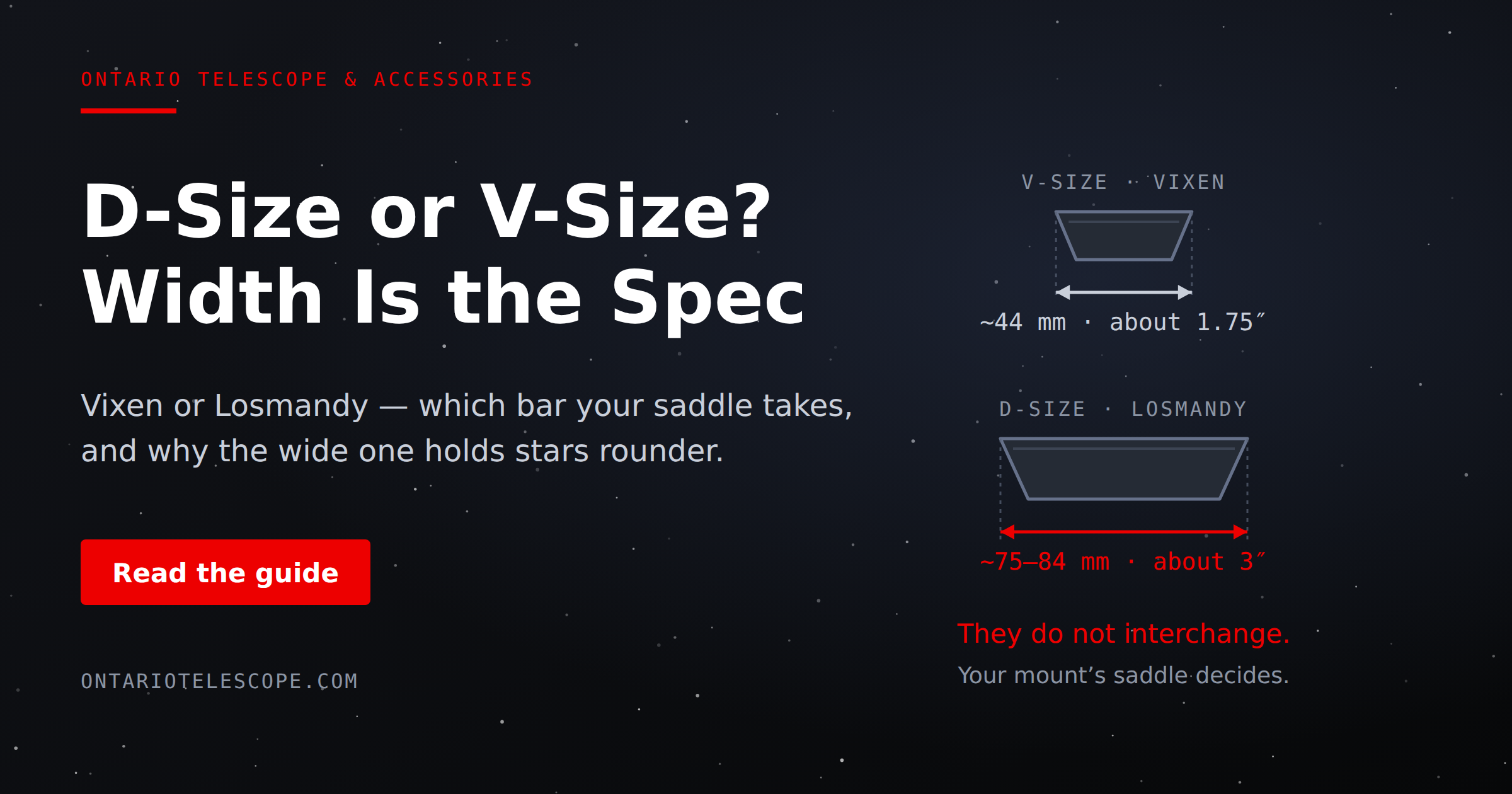
D-Size vs V-Size: A Complete Guide to Telescope Dovetail Systems
Read More
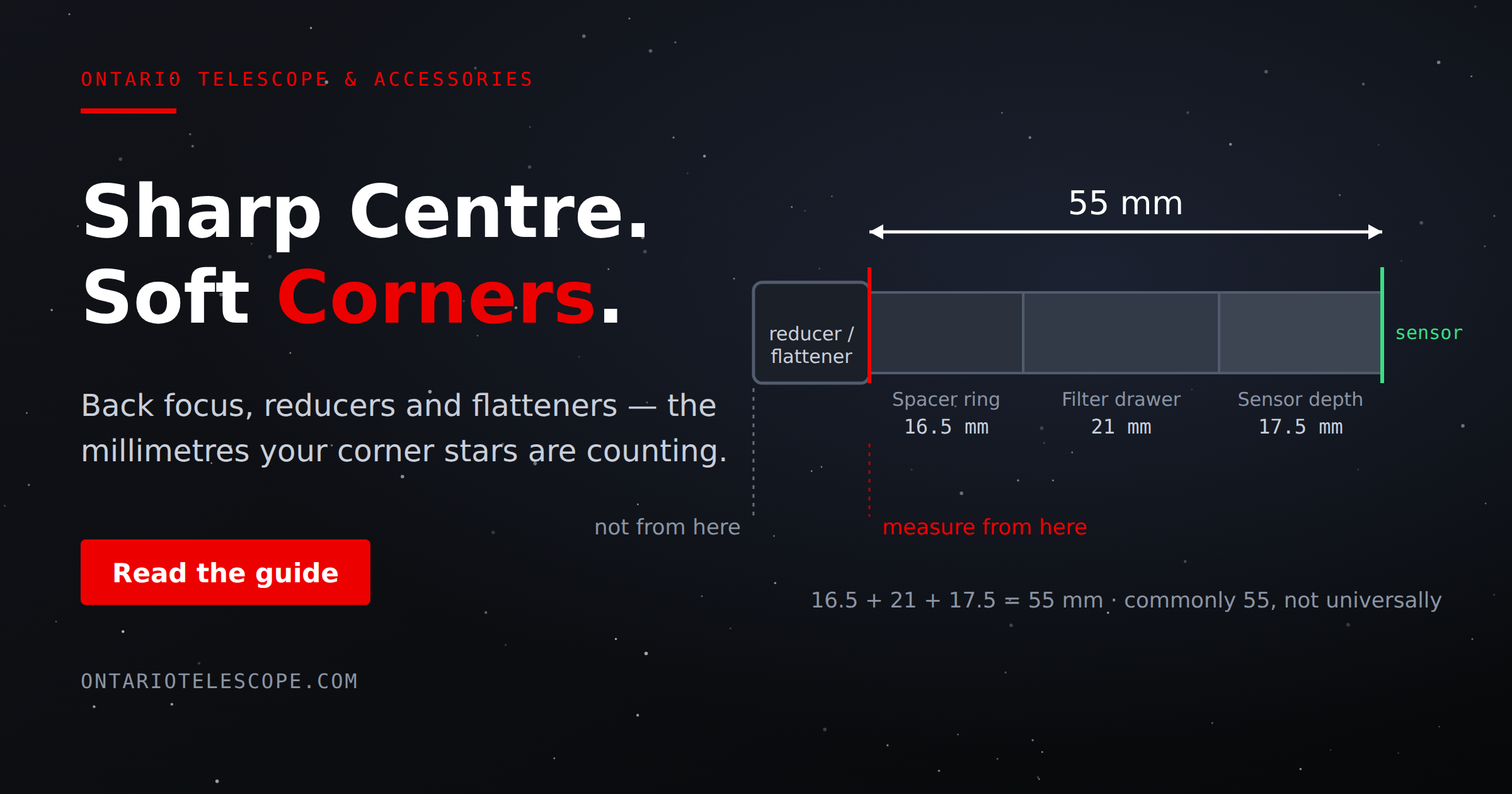
What Is Back Focus in Astrophotography? Telescope Reducers, Flatteners, and Spacing Explained
Read More