
For imagers who know what they want
Advanced imaging packages
Complete systems, specified the way we would buy them ourselves - mount, optics, rings and back focus all worked out on paper. Pick mono or colour on any card and the rest of the build follows. Every part is listed with its own price and links to its own page, so nothing here is a black box.
How we choose the parts
Three rules we don't break
Every package here is specified the same way, and none of it is guesswork. If you already know all this, skip to the kits.
Mount class before optics
We size the mount to about 60% of its rated payload with everything attached — camera, filter wheel, guider, cables and dew straps, not just the tube. A strainwave mount at 80% of rating will track, but it will not settle after a nudge, and at long focal length that shows in every frame.
Focal length decides the guiding
Under about 600 mm a guide scope is fine. Past 800 mm, differential flexure between two tubes becomes the limiting error and an off-axis guider is the honest answer — it takes its star through the main optic, so there is nothing to flex. Every kit past that mark defaults to the OAG, and a camera with its own guide sensor sidesteps the question entirely.
Filter size follows the sensor
An APS-C mono sensor takes 36 mm filters; a full-frame sensor measures 43.3 mm corner to corner and needs 2-inch glass or the corners vignette. The ZWO EFW Next Gen covers both, and the card picks the right size of it off the camera you choose — you cannot end up with a 36 mm wheel and 2-inch filters.
A fourth thing, less a rule than a fact people are caught out by: a Takahashi optical tube ships on its own. No rings, no dovetail. Every Takahashi kit below lists the correct rings or tube holder for that exact tube diameter, ticked by default — untick it only if you already own a set that fits.
The one real decision
Mono or one-shot colour
Every package below opens with this switch, because it is the choice that changes everything downstream - the camera, whether you need a wheel and filters, what size those filters are, and how many nights a target takes. Here is the honest comparison.
| One-shot colour | Mono + filters | |
|---|---|---|
| How it works | A colour filter array is bonded to the sensor. Every sub is already a colour image. | A bare sensor behind a wheel. You shoot each channel separately and combine them afterwards. |
| Resolution | Every pixel guesses two of its three colours from its neighbours. | Every pixel is measured, in every channel. Visibly sharper on small targets. |
| A night's work | Point, shoot, stack. One session can be a finished image. | Three or four times the exposure for the same target, usually across several nights. |
| Bright skies | A dual-band filter in a drawer ahead of the camera does most of the work, and every APS-C colour configuration below offers one. The colour array still limits how narrow you can usefully go. | Where mono wins outright. 4.5 nm or 3 nm passbands cut city light almost entirely. |
| Filter size | One 2-inch filter in a drawer, not a set. A full-frame colour sensor is the exception - the drawer aperture clips its corners, so we leave the option off those cards. | APS-C takes 36 mm; full frame takes 2 inch. The card sets this from the camera, not from you. |
Our default for mono is Antlia throughout — the LRGB-V Pro set for broadband and the 4.5 nm EDGE set for narrowband. Antlia holds tighter band edges and better-matched channel exposures than the cheaper options, which is time you get back in processing rather than money you spend twice. Every kit lets you swap either set, and the difference against the included pair shows on the card before you add anything to the cart.
If you are shooting colour from a suburban backyard, the equivalent move is a dual-band filter. Pick an APS-C colour camera on any kit below and the option appears: the L-Extreme for the heaviest skies, the L-Quad where you want stars and galaxies to stay honest, both riding in a ZWO drawer so you can pull the filter out for broadband targets without touching back focus. We do not offer it on the full-frame ASI6200MC — a 2-inch filter in an M42 drawer does not clear a 43.3 mm sensor cleanly, and vignetted corners are not a trade worth making. Call us if you want that combination and we will spec a larger drawer.
One thing that surprises people: below about f/4 a very narrow filter starts to lose transmission, because the light cone hits the coating at a steeper angle. If you are running the Epsilon 180ED at f/2.8, ask us before you upgrade to 3 nm — the 4.5 nm set may well outperform it on that telescope.
Complete systems
Seven systems, small to large
Ordered by aperture. Switch any card between one-shot colour and mono - the camera list, the wheel and the filter sets all follow, and the filter size is read off the sensor so it can never disagree with the wheel. Mono includes the Antlia LRGB-V Pro and 4.5nm EDGE sets; APS-C colour can add a dual-band filter and the drawer that holds it. Swap anything and the difference shows before you add to the cart. Prices in Canadian dollars.
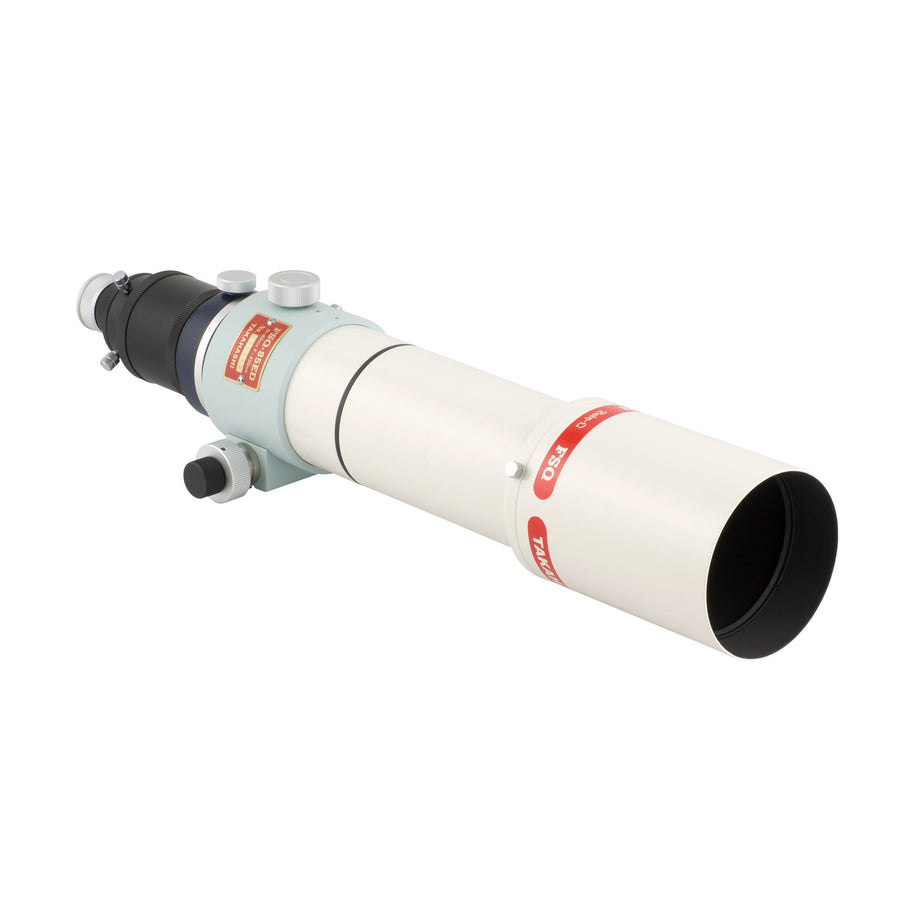 Complete system
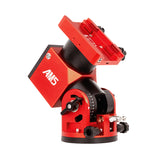
Takahashi FSQ-85EDX on a ZWO AM5N
The BabyQ is the telescope people keep after they have sold everything else. A four-element Petzval with the 1.01x flattener already fitted, flat to the corners of a full-frame sensor, on a harmonic mount light enough to carry to a dark site in one trip.
Flat, colour-perfect fields with nothing to space and nothing to tune. At 455 mm it is forgiving of guiding error, so nights are productive rather than fussy.
85 mm gathers what 85 mm gathers - small galaxies stay small. You are paying for optical perfection across a wide field, not for reach.
Back focusWith the bundled 1.01x flattener the FSQ-85EDX runs 455 mm at f/5.4 and wants 56.2 mm of back focus. The CA35 ring in this kit is the M55.9 drawtube adapter Takahashi lists for this telescope. Tell us the camera and filter wheel you plan to run and we will work the spacer stack out on paper and quote it with the kit, before you order.
In the kit
- Takahashi FSQ-85EDX BabyQ 85mm f/5.3 Petzval Astrograph OTA with 1.01x Flattener$4,851
- New ZWO AM5N Harmonic Equatorial Mount$2,799
- Takahashi 35mm Wide Mount Camera Adapter$72
- Starfield DH-4 4" Dew heater$89.99
Mounting the tube
The Baby Q rings are the set Takahashi lists for this tube. They clamp the FSQ-85EDX and give you the flat face the AM5N saddle grips - without them the tube has nothing to bolt to.
How do you want to shoot it?
Choose your camera
The mono imaging train
We include Antlia's LRGB-V Pro for broadband and the Antlia 4.5nm EDGE set for narrowband - the pairing we would buy ourselves. Swap either and the difference shows against the total.
Cutting through a bright sky
Autoguiding
At 455 mm a guide scope is entirely adequate and simpler to set up.
Guiding is built into this camera. The guide sensor sits alongside the main chip in the same body, so there is no guide scope to flex and no off-axis guider to align. Nothing to add.
The controller is built in too. This body has ASIAIR on board, so there is no separate controller to buy and nothing else to power or cable up.
100 mm covers the FSQ-85 dew shield.
 Complete system
Sky-Watcher Esprit 100ED on a Wave 150i Pro kit
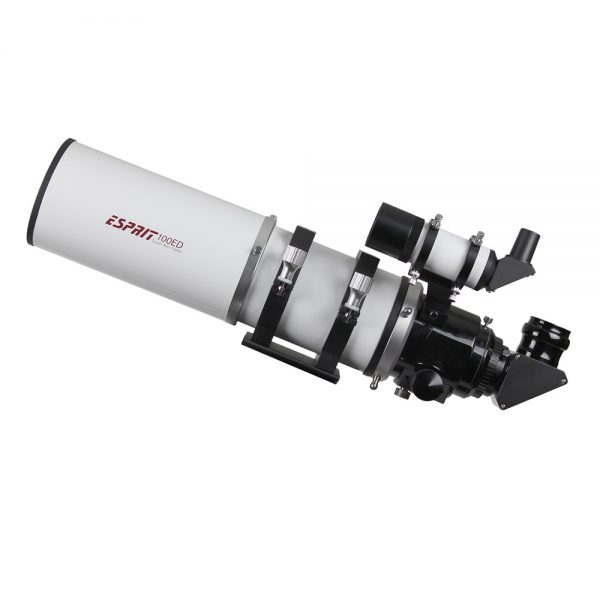
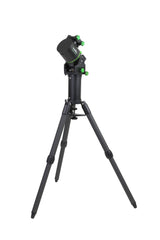
A proven 100 mm triplet on Sky-Watcher's 15 kg strainwave mount, bought as the Wave 150i Pro kit - head, carbon-fibre tripod and extension tube in one part number rather than three, with the extension already there so the tube clears the legs on a meridian flip. The whole thing packs into a car without a second trip.
Triplet colour correction and a matched flattener at a sensible price, on a mount and carbon tripod combination that is genuinely light for what it carries - and it arrives complete rather than as a shopping list. The Esprit ships with its own rings and dovetail, so there is nothing extra to buy to get it on the mount.
550 mm is a wide-field focal length - excellent for nebulae, modest for galaxies. If galaxies are the point, look at the TSA-120 or TOA-130 below.
Back focusThe Esprit's own field flattener sets 55 mm of back focus - the industry standard figure that every camera, filter wheel and off-axis guider here is designed around, so the train adds up without custom parts.
In the kit
- Skywatcher Esprit 100ED APO Triplet$4,460
- Sky-Watcher Wave 150i Pro Strain Wave Mount Kit with Carbon Fiber Tripod and Extension Tube$4,020
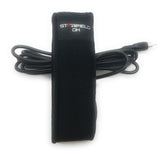
- Starfield DH-5 5" Dew heater$94.99
How do you want to shoot it?
Choose your camera
The mono imaging train
We include Antlia's LRGB-V Pro for broadband and the Antlia 4.5nm EDGE set for narrowband - the pairing we would buy ourselves. Swap either and the difference shows against the total.
Cutting through a bright sky
Autoguiding
At 550 mm a 50 mm guide scope is the simpler and cheaper answer.
Guiding is built into this camera. The guide sensor sits alongside the main chip in the same body, so there is no guide scope to flex and no off-axis guider to align. Nothing to add.
The controller is built in too. This body has ASIAIR on board, so there is no separate controller to buy and nothing else to power or cable up.
150 mm clears the Esprit 100 dew shield when it is extended.
 Complete system
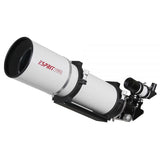

Sky-Watcher Esprit 120ED on a Wave 150i Pro kit
The same Wave 150i Pro kit as the Esprit 100 package - head, carbon-fibre tripod and extension tube together - with a counterweight added. At 120 mm the tube is long enough that balancing it properly matters, and the strainwave mount tracks better when it is not fighting an offset load.
840 mm puts galaxies and the smaller nebulae at a sensible scale, and the triplet holds colour correction right across it. Rings and dovetail come with the telescope, and the mount kit arrives complete. Still a rig you can carry outside in two trips.
Past 800 mm the guiding has to be right. We default this kit to an off-axis guider rather than a guide scope, and you should expect to spend a few sessions dialling in polar alignment.
Back focus55 mm from the Esprit flattener, same as the 100ED. With an off-axis guider and a filter wheel in the train that 55 mm fills up quickly - send us your camera model and we will lay the train out on paper before you order.
In the kit
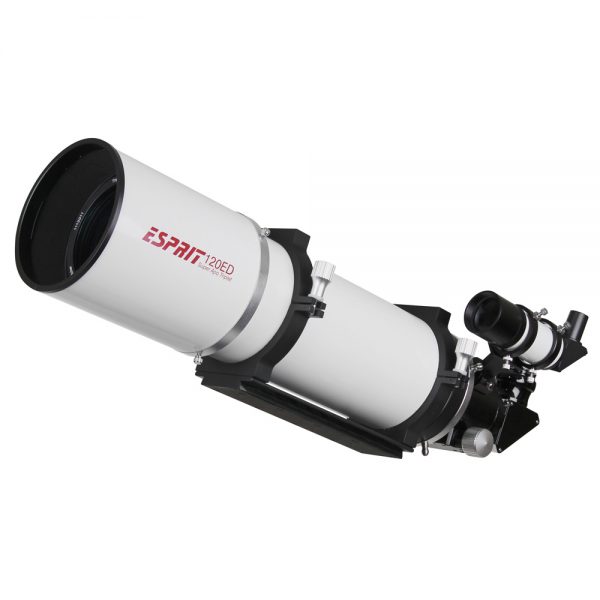
- Skywatcher Esprit 120ED APO Triplet$5,790
- Sky-Watcher Wave 150i Pro Strain Wave Mount Kit with Carbon Fiber Tripod and Extension Tube$4,020
- Sky-Watcher AZ-EQ6 11 lb Counterweight$80
- Starfield DH-6 6" Dew heater$99.99
How do you want to shoot it?
Choose your camera
The mono imaging train
We include Antlia's LRGB-V Pro for broadband and the Antlia 4.5nm EDGE set for narrowband - the pairing we would buy ourselves. Swap either and the difference shows against the total.
Cutting through a bright sky
Autoguiding
At 840 mm flexure between a guide scope and the main tube starts to dominate. The off-axis guider removes that variable entirely, which is why it is the default here.
Guiding is built into this camera. The guide sensor sits alongside the main chip in the same body, so there is no guide scope to flex and no off-axis guider to align. Nothing to add.
The controller is built in too. This body has ASIAIR on board, so there is no separate controller to buy and nothing else to power or cable up.
150 mm fits the Esprit 120; 190 mm if the dew shield stays extended.
 Complete system

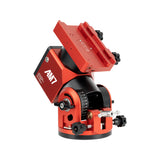
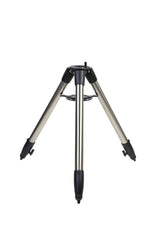
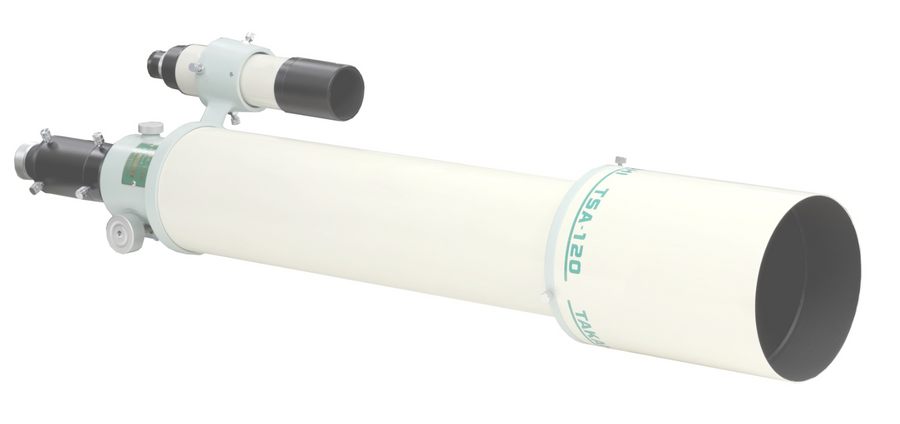
Takahashi TSA-120 on a ZWO AM7
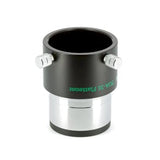
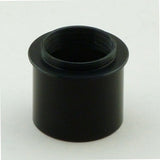
The TSA-120 is the telescope that does both properly - a triplet apo that photographs beautifully and is also one of the finest visual refractors made. This kit lists the TOA-35FL flattener, the 2 inch to M48 camera adapter and the 125 mm tube holder alongside the tube, so there is nothing else to order before you can image with it.
Genuinely dual-purpose. Planetary detail and double stars at the eyepiece, then the flattener and a camera for deep sky at 900 mm. Takahashi mechanics that will outlive you.
At f/7.5 it is slower than the astrographs here, so expect more total exposure. And the TOA-35FL corrects 40 mm, which rules out a full-frame sensor on this kit - mono or colour.
Back focusThe TOA-35FL holds 117.5 mm of back focus and corrects a 40 mm image circle - APS-C and smaller. That is why there is no full-frame option here: a 43.3 mm diagonal sensor would sit outside the corrected field. Every camera on this card is APS-C, so the filters are 36 mm throughout. The flattener presents a 2 inch female output, so the kit includes the 2 inch to M48 adapter that picks up a ZWO camera or filter wheel. Send us the rest of your train and we will work the remaining millimetres out with you before you order.
In the kit
- Takahashi TSA-120 120mm f/7.5 Triplet Apochromatic Refractor OTA$6,275
- ZWO AM7 Harmonic Mount$3,499
- ZWO PE200 Pier Extension$279
- Skywatcher EQ6 to Wave Steel Tripod$330
- Takahashi TOA-35FL 2.7" Flattener for TSA-120/TOA-130/TOA-150B$651
- 2" adapter to M48 T-Ring$35.64
- Starfield DH-5 5" Dew heater$94.99
Mounting the tube
All three fit the TSA-120's 125 mm tube. The plain 125S is right for this kit because it defaults to an off-axis guider - take the guidescope-mount version instead if you plan to run a separate guide scope, or the double 125WM if you want the tube carried at two points for an observatory setup.
How do you want to shoot it?
Choose your camera
The mono imaging train
We include Antlia's LRGB-V Pro for broadband and the Antlia 4.5nm EDGE set for narrowband - the pairing we would buy ourselves. Swap either and the difference shows against the total.
Cutting through a bright sky
Autoguiding
900 mm is past the point where a guide scope is trustworthy. The OAG is the default.
Guiding is built into this camera. The guide sensor sits alongside the main chip in the same body, so there is no guide scope to flex and no off-axis guider to align. Nothing to add.
The controller is built in too. This body has ASIAIR on board, so there is no separate controller to buy and nothing else to power or cable up.
150 mm covers the TSA-120.
 Complete system
Takahashi TOA-130NS on a CQ350 Pro
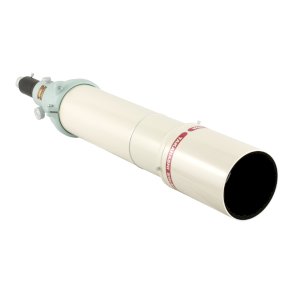
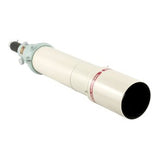
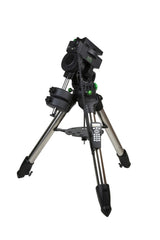
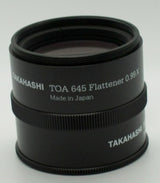
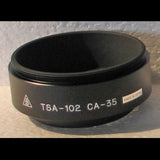
The TOA is Takahashi's orthogonal apochromat - a triplet designed to remove the residual colour error that even good apos leave behind. This kit pairs it with the TOA-645 large-format flattener, the wide-mount camera ring and the 156WM double-ring holder, on the CQ350 Pro with its heavy-duty field tripod.
About as good as refractor optics get at this aperture, and the TOA-645 corrects a 60 mm circle - comfortably past full frame, so nothing you put behind it is wasted. The switch starts on mono here because that is what this telescope is for.
Heavy, expensive, and slow at f/7.6 - this is a system for people who care more about how the stars look than how many hours it takes.
Back focusThe TOA-645 flattener holds 990 mm at f/7.6 and corrects a 60 mm image circle, and threads M72 x 1 on both faces. The wide-mount ring in this kit screws straight into that M72 output and presents M54 x 0.75 to your filter wheel or camera, with a published 28 mm light path. Send us your camera and we will check the full train adds up before you order.
In the kit
- Takahashi TOA-130NS 130mm f/7.7 Triplet Refractor OTA with MEF-2.7 Focuser$8,460
- Skywatcher CQ350 Pro Mount with Heavy Duty Field Tripod$6,530
- Takahashi TOA-645 Flattener 0.99x for TOA-130NS/NFB$945
- Takahashi TOA-130/TSA DSLR Wide Mount Camera Adapter$113
- Starfield DH-6 6" Dew heater$99.99
Mounting the tube
The 156WM is sized to the 156 mm tube of the TOA-130N series, which is what the NS is - two rings on a bridge plate spreading the load rather than clamping at one point. Note that the single TOA-130 holder we also stock is cut for the TOA-130S and 130F, a different tube: do not order that one for this telescope without asking us first.
How do you want to shoot it?
Choose your camera
The mono imaging train
We include Antlia's LRGB-V Pro for broadband and the Antlia 4.5nm EDGE set for narrowband - the pairing we would buy ourselves. Swap either and the difference shows against the total.
Cutting through a bright sky
Autoguiding
At 990 mm on optics this good, an off-axis guider is not optional if you want round stars in every sub.
Guiding is built into this camera. The guide sensor sits alongside the main chip in the same body, so there is no guide scope to flex and no off-axis guider to align. Nothing to add.
The controller is built in too. This body has ASIAIR on board, so there is no separate controller to buy and nothing else to power or cable up.
190 mm covers the TOA-130 with its dew shield out.
 Complete system
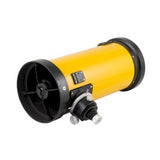
Takahashi Epsilon 180ED on a CQ350 Pro
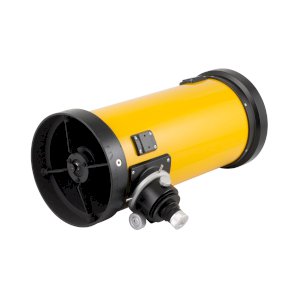
An f/2.8 hyperbolic astrograph with 180 mm of aperture. It gathers roughly four and a half times the light of an 85 mm at nearly twice the speed, which means faint outer nebulosity appears in an evening rather than over a fortnight. On the CQ350 Pro, which has the payload to hold a short heavy tube steady.
Speed. Nothing else here comes close - an hour on this telescope goes further than a night on an f/7 refractor, and the field stays flat across a full-frame sensor with no separate corrector to buy.
Fast optics are unforgiving. Collimation matters, tilt matters, and back focus has to be right to the millimetre. At f/2.8 a 3 nm filter also starts losing transmission - ask us before you upgrade the narrowband set on this one.
Back focusThe Epsilon corrects inside the tube - the hyperbolic primary, flat secondary and integrated flattener put a flat 44 mm circle 56.2 mm behind the focuser, with no corrector to buy or align. With a filter wheel in the train 56.2 mm is tight, so tell us your camera and wheel and we will confirm the spacing and the output thread with you before you order.
In the kit
- Takahashi Epsilon 180ED 180mm f/2.8 Hyperbolic Flat-Field Astrograph OTA$6,585
- Skywatcher CQ350 Pro Mount with Heavy Duty Field Tripod$6,530
- Starfield DH-8 8" Dew heater$104.99
Mounting the tube
The 232WS is sized to the Epsilon 180ED's 232 mm tube - the widest holder Takahashi makes for the Epsilon line, carrying the tube across a span rather than clamping one point, which matters on a fast Newtonian where any flexure shows as tilt. The alternative rings are lined and close with hand knobs if you prefer to be able to rotate the tube quickly.
How do you want to shoot it?
Choose your camera
The mono imaging train
We include Antlia's LRGB-V Pro for broadband and the Antlia 4.5nm EDGE set for narrowband - the pairing we would buy ourselves. Swap either and the difference shows against the total.
Cutting through a bright sky
Autoguiding
At 500 mm a guide scope is fine, and it keeps the imaging train short - which matters on a fast astrograph where back focus is critical.
Guiding is built into this camera. The guide sensor sits alongside the main chip in the same body, so there is no guide scope to flex and no off-axis guider to align. Nothing to add.
The controller is built in too. This body has ASIAIR on board, so there is no separate controller to buy and nothing else to power or cable up.
The Epsilon 180 tube is wide - measure your outside diameter before ordering, or ask and we will check.
 Complete system
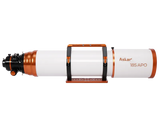
Askar 185APO on a CQ350 Pro
185 mm of triplet apochromat at 1295 mm, on Sky-Watcher's CQ350 Pro with the heavy-duty field tripod. This is the largest refractor package on this page that still comes apart and travels - beyond this you are into permanent piers.
Aperture and focal length together. Small galaxies resolve into structure, globulars resolve to the core, and the triplet holds colour across it all. The switch starts on mono because at this scale that is what the aperture is for.
This is a two-person setup and a serious commitment. At 1295 mm you need excellent seeing to use what the optics can deliver, and a dark site to justify the aperture.
Back focusThe 185APO has a retractable rear lens tube and takes Askar's own flattener and reducer options - which one is right depends on the sensor you choose. Tell us the camera and we will quote the corrector and spacers with the kit rather than guess here.
In the kit
- Askar 185APO Triplet APO Refractor Telescope$7,489.99
- Skywatcher CQ350 Pro Mount with Heavy Duty Field Tripod$6,530
- Starfield DH-8 8" Dew heater$104.99
How do you want to shoot it?
Choose your camera
The mono imaging train
We include Antlia's LRGB-V Pro for broadband and the Antlia 4.5nm EDGE set for narrowband - the pairing we would buy ourselves. Swap either and the difference shows against the total.
Cutting through a bright sky
Autoguiding
At 1295 mm an off-axis guider is the only sensible choice. A guide scope will flex, and you will spend months blaming the mount for it.
Guiding is built into this camera. The guide sensor sits alongside the main chip in the same body, so there is no guide scope to flex and no off-axis guider to align. Nothing to add.
The controller is built in too. This body has ASIAIR on board, so there is no separate controller to buy and nothing else to power or cable up.
225 mm suits the 185APO dew shield. Measure yours if you have already fitted anything to the front.
Nothing here quite right
We spec one-off systems every week
These are the combinations we are asked for most often, not a fixed catalogue. Tell us what you are trying to photograph and where from, and we will spec it properly - including telling you when a cheaper system would do the same job.
- Your targets, and whether you image from home or travel
- Pier, tripod or permanent observatory
- Mono with filters, or one-shot colour
- Whether it needs to run unattended
Worth adding
The parts that finish a system
None of these are in the kits above by default, and all of them get asked about. Dew heaters are sized to the outside of the tube, not the aperture.

Takahashi tubes ship without rings. Every holder is cut to one tube diameter, so tell us the exact model and we will match it - this 125S fits the TSA-120 and FSQ-106ED.
$455
The Next Gen EFW, in every size from 1.25 inch to 50 mm square. The mono kits above add the right one for your sensor automatically - this is the link if you are buying one on its own.
From $279Choose a size
Antlia's LRGB-V Pro broadband set in 36 mm - the set included with every APS-C mono configuration above.
$450
The dual-band filter for a one-shot colour camera - 7 nm on hydrogen and oxygen, everything else rejected. Offered on the APS-C colour configurations above; this is the link if you are buying one alone.
$395.99
What a 2 inch filter sits in when there is no wheel. Slide the filter out for galaxies and clusters without pulling the imaging train apart or changing back focus.
$111
M68 off-axis guider. Takes its guide star through the main optic, so nothing can flex between guider and camera. Not needed with the ASI2600MM Duo, which has its own guide sensor.
$264.59
The guide camera that goes on an off-axis guider - more sensitive than the 120MM Mini, which matters when the OAG only sees a sliver of sky.
$419
The standard guide camera for a guide scope. Plugs straight into an ASIAIR.
$279
Four independently controlled channels - objective, guide scope, camera window and finder, each at its own power level.
$169.99
Electric flat panel, 190 mm. Automated flats at the end of a session, which is the only way they reliably get shot.
$529.99Ask us before you order, not after it arrives
Send us your targets, your sky and anything you already own, and we will work the whole system out with you before you commit to it - including telling you when a cheaper one would do the same job. Everything ships factory-sealed. If something needs service later, our repair bench is here in Canada rather than across a border.