
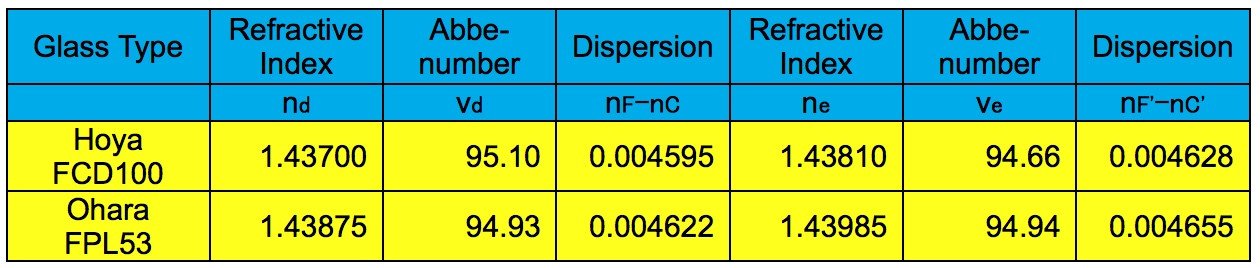


- Description
- Specifications
Product Overview
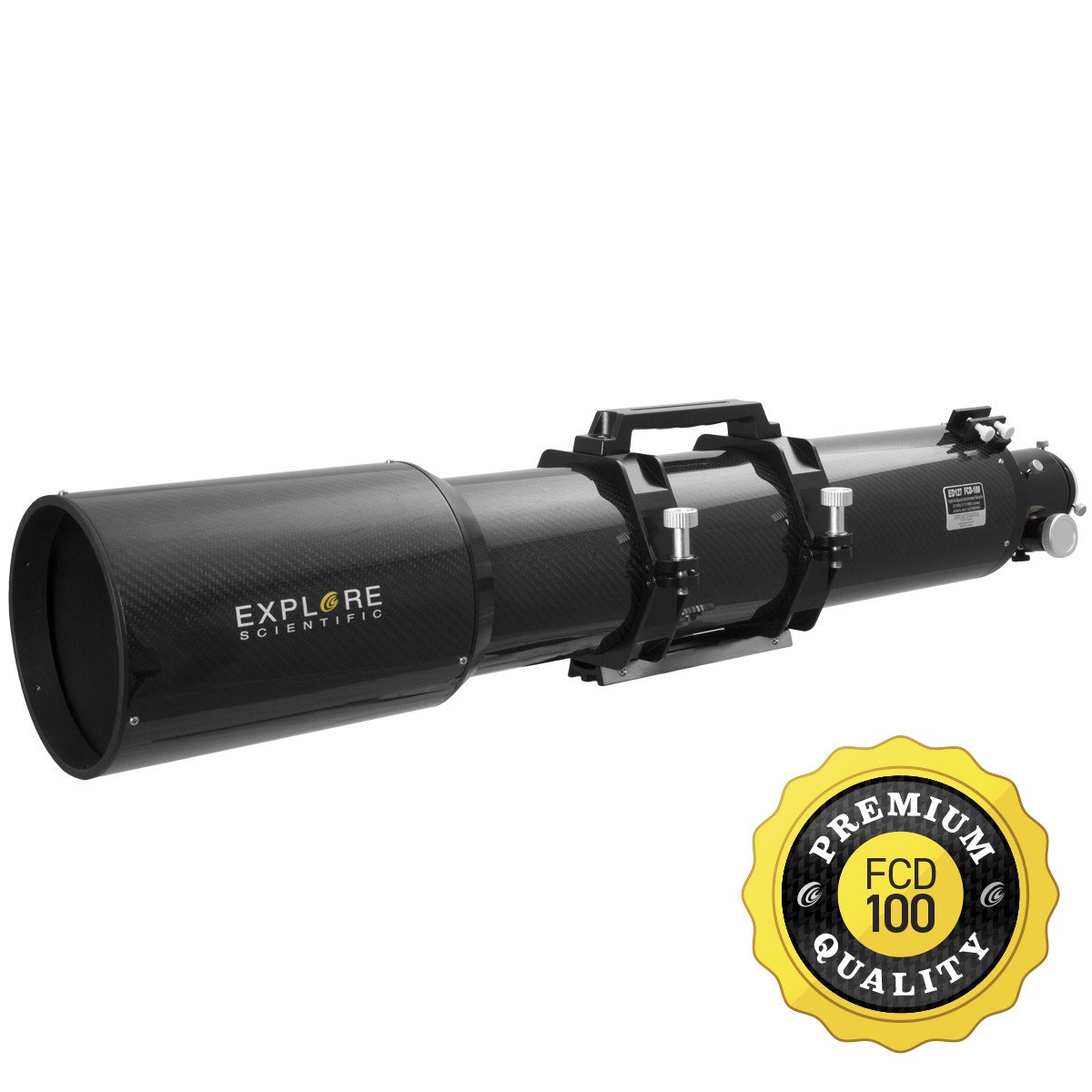
The Explore Scientific ED127 FCD100 Series is a 127mm air-spaced triplet apochromatic refractor with a focal length of 952mm at f/7.5, built into a carbon fiber optical tube. The centre element of the triplet is HOYA FCD100 extra-low-dispersion glass, and the front and rear elements are air-spaced against it rather than cemented. Explore Scientific publishes a limiting magnitude of 13 and a resolution figure of .9 arcsec for this aperture.
It is supplied as an optical tube assembly with a 2.5″ HEX focuser rated to carry 10 lb of imaging equipment, and a Vixen-pattern dovetail. The tube measures 41.75″ (1060mm) with the dew shield extended and 33.25″ (849mm) with it retracted, 145mm across, and weighs 14 lb (6.4 kg). No mount and no eyepieces are included.
Who It's For
- Deep-sky imagers: 952mm at f/7.5 is a long-enough focal length for galaxies and small nebulae without becoming an autoguiding problem, and the 2.5″ HEX focuser is specified to hold 10 lb of camera, filter wheel and rotator without sagging.
- Visual observers who want colour-free high power: an air-spaced triplet using FCD100 glass is built to bring three wavelengths to a common focus, which is what removes the violet halo an achromat shows on Venus, Jupiter and the lunar limb.
- Observers who travel to dark sites: this is a good match if you want five inches of apochromatic aperture that one person can carry to the car in a single trip. The carbon fiber tube is the reason the published weight is 14 lb rather than what a comparable aluminium tube would read.
- Owners of mid-capacity equatorial mounts: this is a good match if your mount is rated comfortably above the loaded weight of a 14 lb tube plus rings, diagonal, finder and camera train.
Key Features & Design
- 127mm air-spaced triplet: three elements with air gaps between them, rather than a cemented pair, giving the designer additional surfaces to work with and removing cement as a thermal variable in a five-inch lens.
- HOYA FCD100 ED glass: a high-grade extra-low-dispersion type used for the centre element, chosen for how tightly it brings the red, green and blue focal points together.
- 952mm focal length at f/7.5: a moderate focal ratio that keeps the image scale useful for galaxies and planetary detail while remaining tractable for imaging exposures.
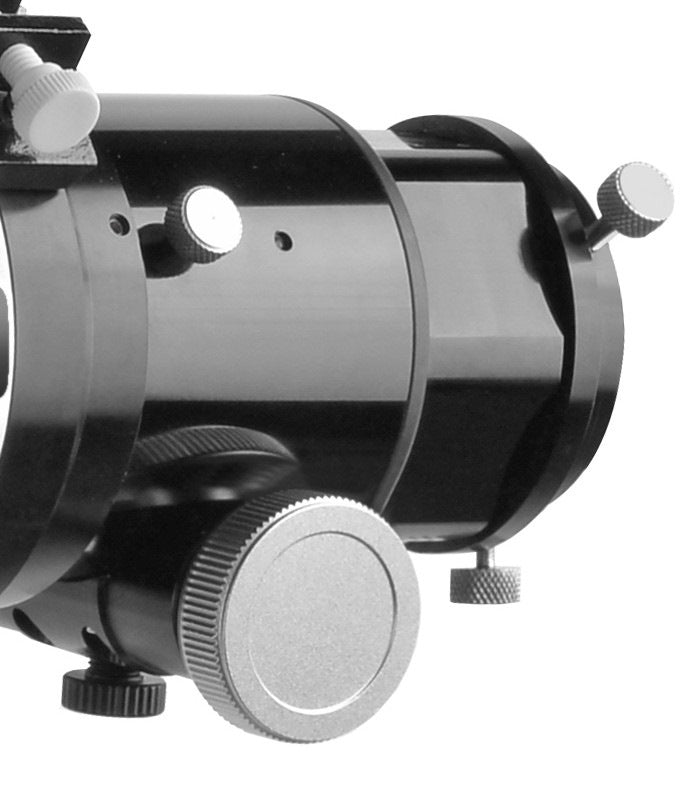
- 2.5″ HEX focuser: rated by Explore Scientific to support up to 10 lb of imaging equipment, so a camera, filter wheel and off-axis guider can ride on it together.
- Carbon fiber optical tube: stiffness per unit weight is the point — it is what allows a 127mm triplet to be published at 14 lb (6.4 kg).
- Retracting dew shield: 41.75″ (1060mm) extended, 33.25″ (849mm) retracted, which is the figure that matters for a case or a back seat.
- Vixen-pattern dovetail for mounting, on a tube 145mm in outside diameter.
Optical Design
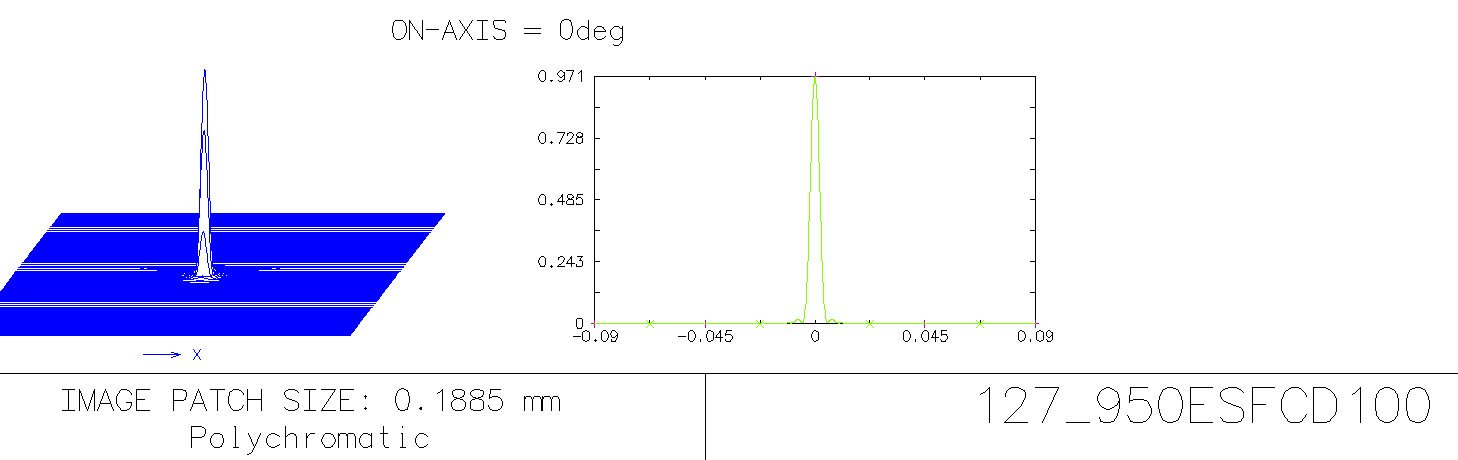
A doublet achromat brings two wavelengths to a common focus and leaves a residual violet fringe on the brightest targets. A triplet apochromat adds a third element so that three widely separated wavelengths land together, and the residual colour error drops to the point where it stops being visible at normal magnifications. The glass type in the centre element governs how well that works: extra-low-dispersion glass bends the different colours by more nearly the same amount, so less correction has to be forced by the surface curvatures. FCD100 is one of the higher-performing ED types HOYA produces, and it is what this tube is named for.
Air-spacing the elements, rather than cementing them, matters more as lenses get larger. A cemented joint in a 127mm lens is a thick layer of adhesive that expands and contracts with temperature at a different rate to the glass around it. Separating the elements removes that layer, adds two more optical surfaces the designer can shape, and lets the lens reach thermal equilibrium more predictably on a cooling night.
Explore Scientific does not publish a corrected image circle or a backfocus distance for this tube, so those rows are absent from the specifications rather than estimated. If you are planning an imaging train around a specific camera and flattener, send us the parts you have in mind and we will work the spacing out with you before you order.
Recommended Uses
- Deep-sky astrophotography of galaxies, globular clusters and small to medium emission nebulae at 952mm.
- High-power visual observing of the Moon, planets and planetary detail where colour correction is the limiting factor.
- Double-star work near the published .9 arcsec resolution.
- Portable dark-site sessions where the 14 lb tube weight and 33.25″ retracted length are what make the trip practical.
- Lunar and planetary imaging with a focal extender in the train.
Compatibility and Accessory Notes
- Mount: not included. The published tube weight of 14 lb is before rings, dovetail hardware, diagonal, finder and camera. For imaging, a mount rated at roughly twice the loaded tube weight is the usual working rule; for visual use the margin can be smaller.
- Dovetail: Vixen pattern, which fits Vixen saddles and dual-fit saddles that take both Vixen and Losmandy plates.
- Eyepieces: not included. At 952mm, a 30mm eyepiece gives 32x, a 20mm gives 48x, a 9mm gives 106x and a 5mm gives 190x.
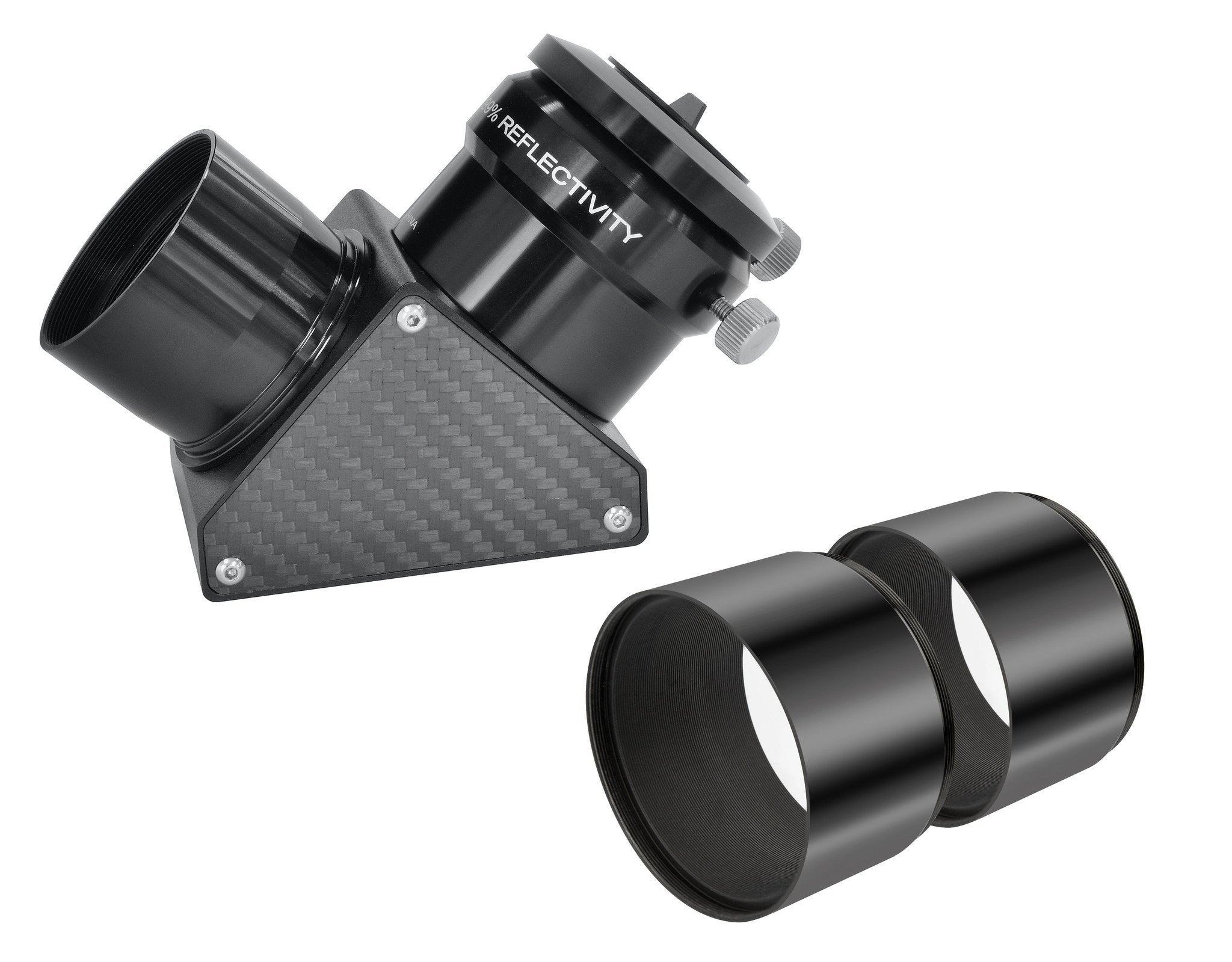
- Diagonal: the 2.5″ focuser takes 2-inch diagonals with the appropriate adapter. We stock dielectric 2-inch diagonals if one is not already in your case.
- Imaging train: a field flattener is the normal companion for deep-sky work with any refractor. Since no corrected image circle is published, we will confirm the flattener match against your camera rather than quote a figure.
Good to Know Before You Order
- This is an optical tube assembly, not a complete telescope. A mount, a tripod and at least one eyepiece are needed alongside it. We can quote the whole package together if that is simpler — just tell us what you already own.
- Explore Scientific has published two different outer-diameter figures for this tube — 130mm on the spec sheet supplied with the product and 145mm on the current product page. If the exact figure decides whether a set of rings or a case will fit, ask us and we will confirm it with our Explore Scientific rep before you commit.
- The 41.75″ length is with the dew shield extended. Retracted it is 33.25″, which is the number to measure a case or a vehicle against.
- No corrected image circle or backfocus figure is published for this tube, so those rows are left out below rather than filled with an estimate. Send us your camera and intended flattener and we will work out the spacing with you.
- The 10 lb focuser rating is a real ceiling. A camera, filter wheel, off-axis guider and rotator add up quickly, and staying inside that figure is what keeps the focuser drawtube square to the optical axis. We can total up a proposed train for you if you are close to the limit.
Frequently Asked Questions
Is it difficult to set up?
The telescope itself is simple — a refractor holds its collimation, so once the tube is in the rings and on the mount it is ready. The work is in the mount and the balance: at 14 lb plus accessories it is a comfortable one-person lift, and it goes on easiest with the mount already levelled and the counterweights roughly set.
What mount will carry it?
For visual use, a mount rated well above the 14 lb tube weight once rings, diagonal, finder and eyepiece are added. For imaging, more headroom again, because tracking accuracy degrades long before a mount reaches its stated capacity. Tell us which mount you own and we will give you a straight answer on whether it is enough.
Will I see colour fringing?
An air-spaced triplet using FCD100 ED glass is designed specifically to remove it. On Venus, Sirius and the lunar limb at high power an apochromat of this class shows a clean, neutral image where a two-element achromat would show violet.
Can I image with it?
Yes — that is a large part of what the 2.5″ HEX focuser and its 10 lb capacity are for. A field flattener is the usual addition for deep-sky work, and an equatorial mount with guiding is the other half of the system.
Bottom Line
In short: a 127mm f/7.5 air-spaced triplet apochromat with HOYA FCD100 ED glass, a 2.5″ HEX focuser rated to 10 lb, and a carbon fiber tube that keeps the whole assembly at 14 lb with a Vixen dovetail — five inches of apochromatic aperture on a mount that does not have to be enormous. If you are matching it to a mount or building an imaging train around it, send us the parts list and we will confirm the fit with you first.
| Description | ED127mm FCD100 Series Carbon Fiber Air-Spaced Triplet Refractor |
|---|---|
| Item Number | FCD100-127075-CF-01 |
| Optical Design | Air-spaced triplet ED apochromat |
| Optical Glass | HOYA FCD100 extra-low dispersion |
| Aperture | 127mm |
| Focal Length | 952mm |
| Focal Ratio | f/7.5 |
| Limiting Magnitude | 13 |
| Resolution | .9 arcsec |
| Focuser | 2.5″ HEX, rated to 10 lb of imaging equipment |
| Tube Material | Carbon fiber |
| Tube Length w/ Dew Shield | 41.75″; 1060mm |
| Tube Length w/out Dew Shield | 33.25″; 849mm |
| Diameter | 145mm |
| Weight | 14 lb; 6.4 kg |
| Dovetail | Vixen |
| Mount | Not included |
| Eyepieces | Not included |
| Corrected Image Circle | Not published by vendor |
| Backfocus | Not published by vendor |
You may also like
Recently viewed
Recent Blog Posts
View all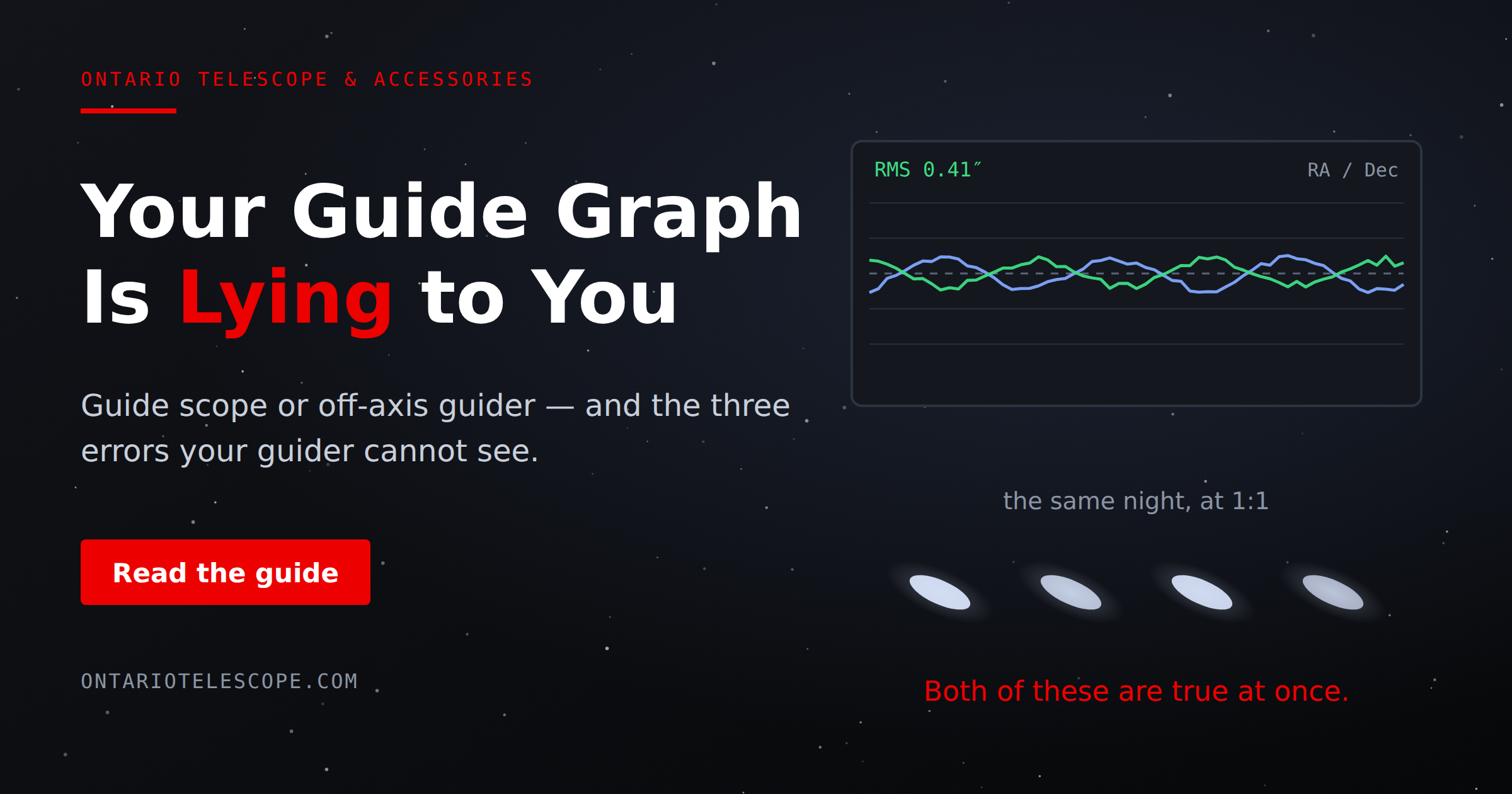
Your Guide Graph Is Lying to You
Read More
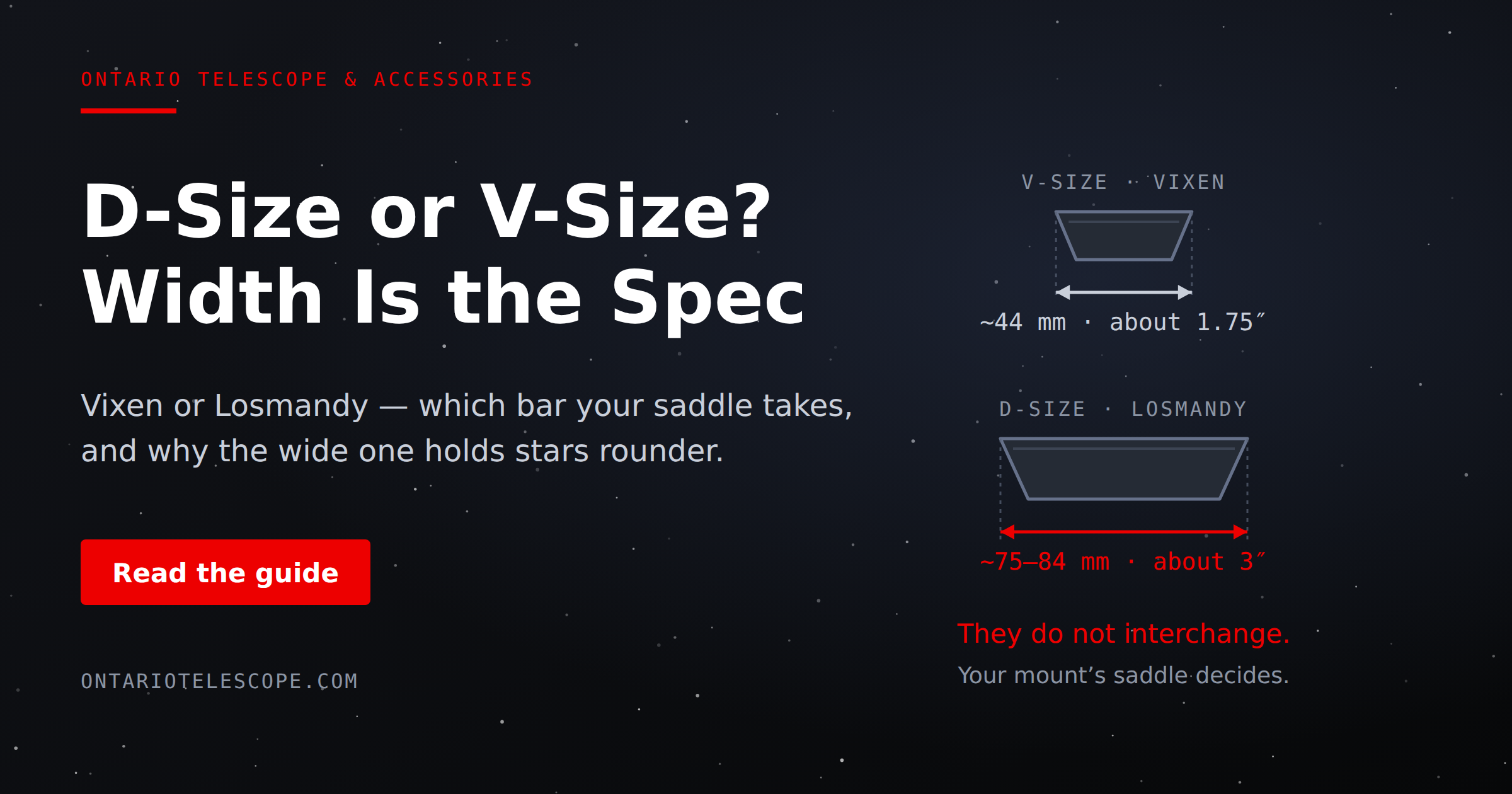
D-Size vs V-Size: A Complete Guide to Telescope Dovetail Systems
Read More
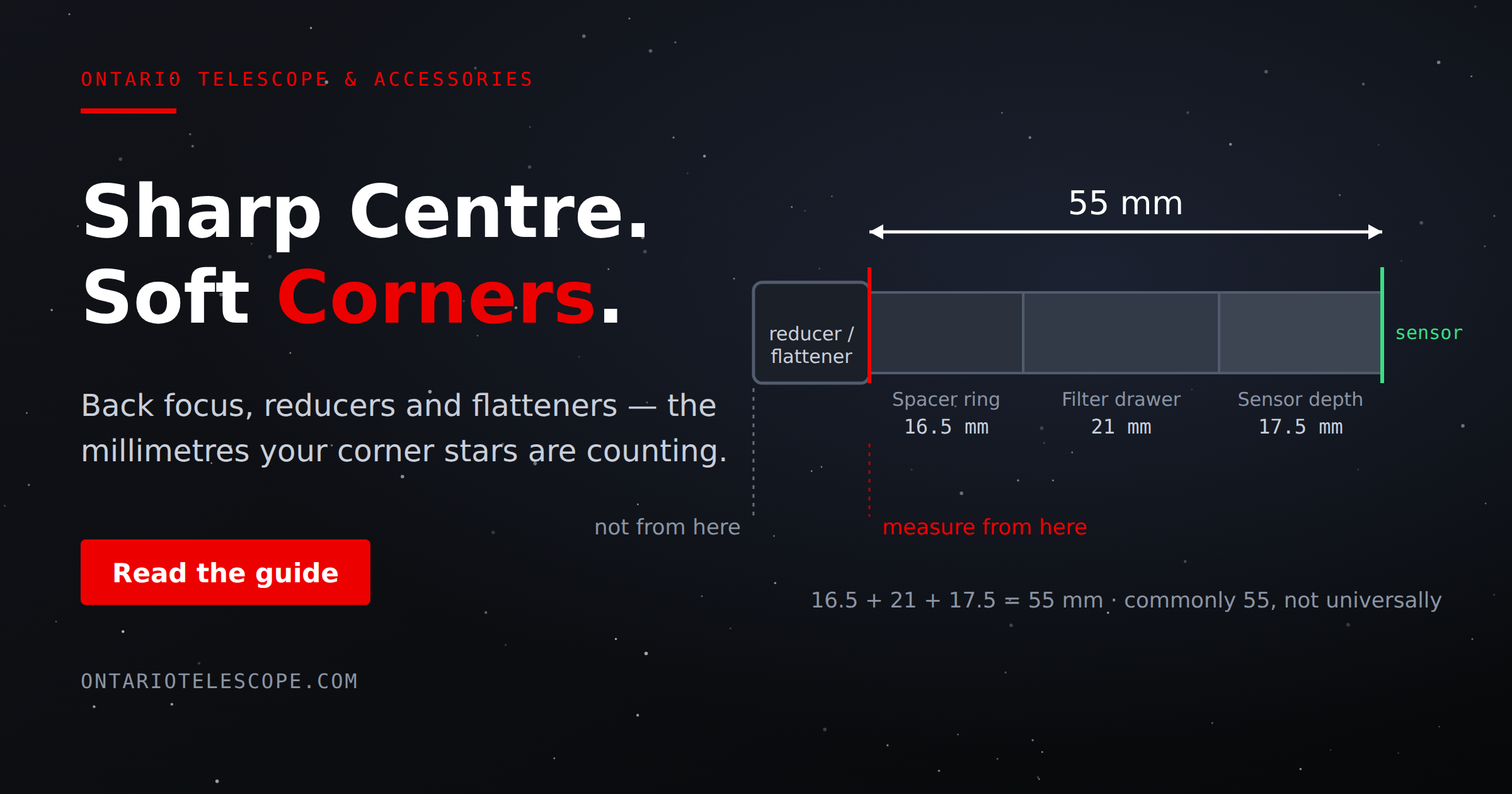
What Is Back Focus in Astrophotography? Telescope Reducers, Flatteners, and Spacing Explained
Read More