


- Description
- Specifications
Product Overview
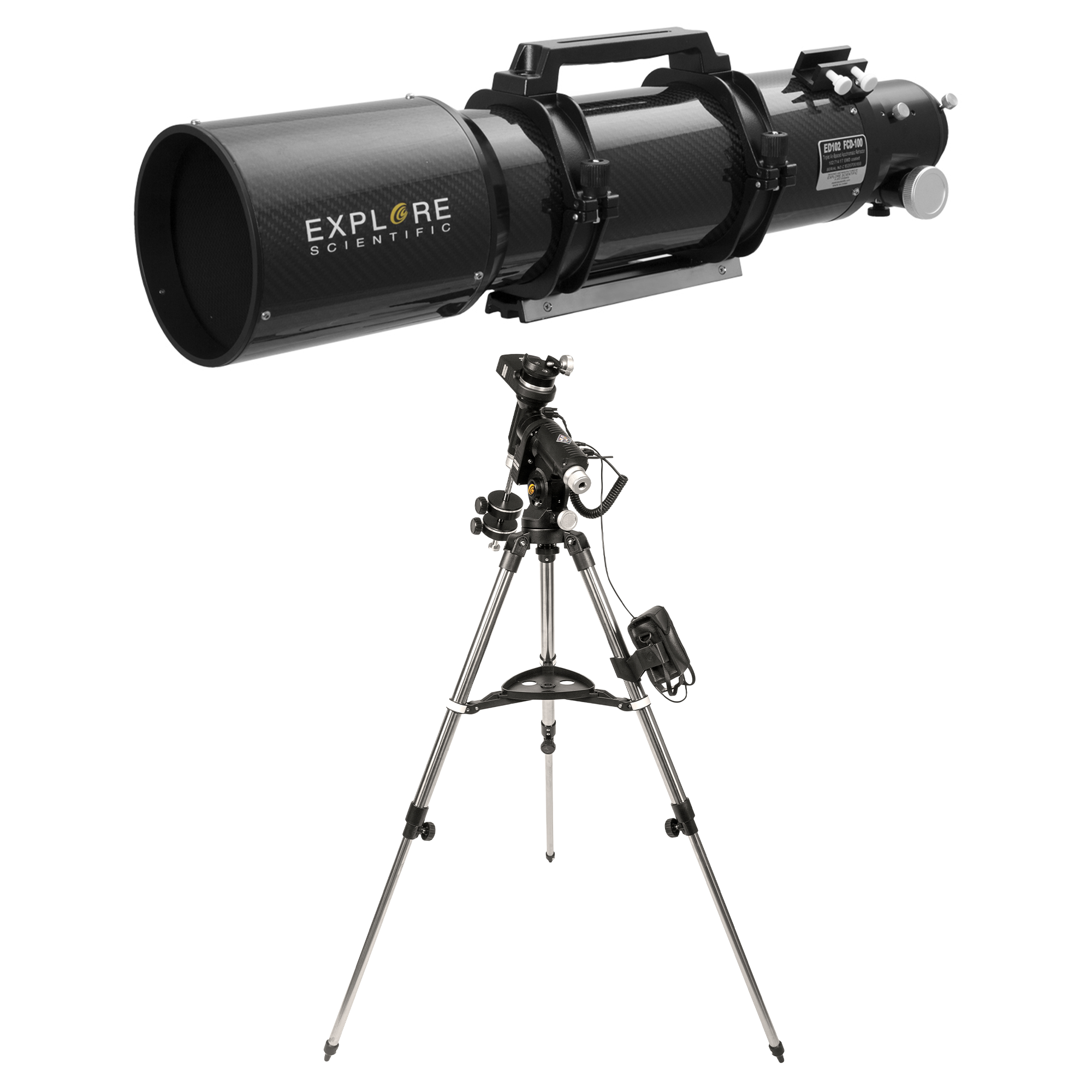
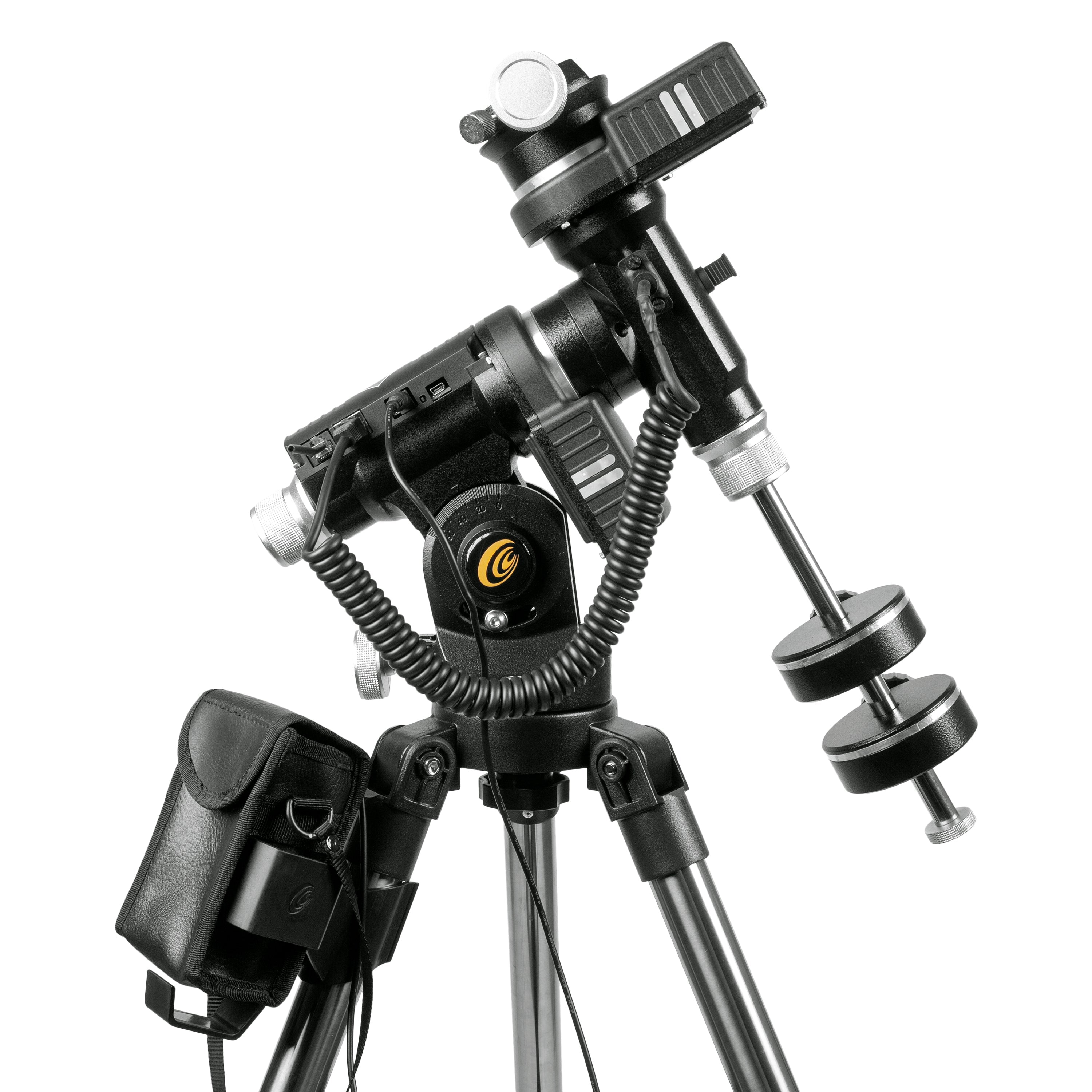
This package pairs the Explore Scientific ED102-FCD100 with the iEXOS-100-2 PMC-Eight equatorial tracker system. The telescope is a 102 mm f/7 air-spaced apochromatic triplet using HOYA FCD-100 extra-low-dispersion glass in a carbon fibre tube, at 714 mm focal length and 9.5 lb. It arrives with a computerised GoTo mount, tripod, and counterweights.
Who It's For
This is the step up in aperture from the 80 mm triplets while staying genuinely portable — the carbon fibre tube is what makes that possible. It suits an imager who wants more resolution and a longer native focal length for galaxies and planetary nebulae, and a visual observer who wants a 4-inch apochromat that still travels easily.
Key Features & Design
- 102 mm f/7 air-spaced triplet with HOYA FCD-100 ED glass, 714 mm focal length
- Carbon fibre tube, holding weight to 9.5 lb and reducing focus shift as temperature drops
- 45 mm wide Vixen-style dovetail plate with cone-angle adjustments
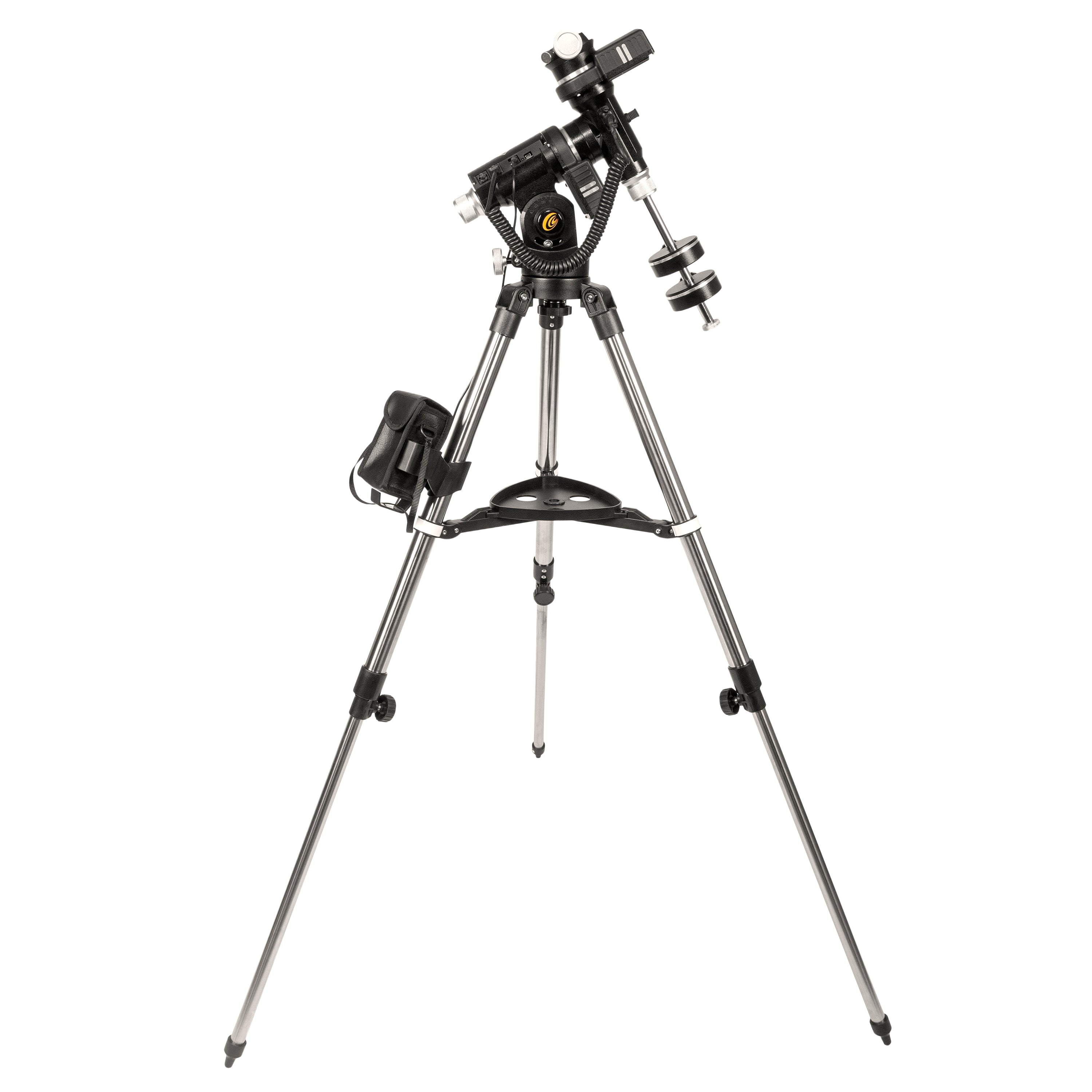
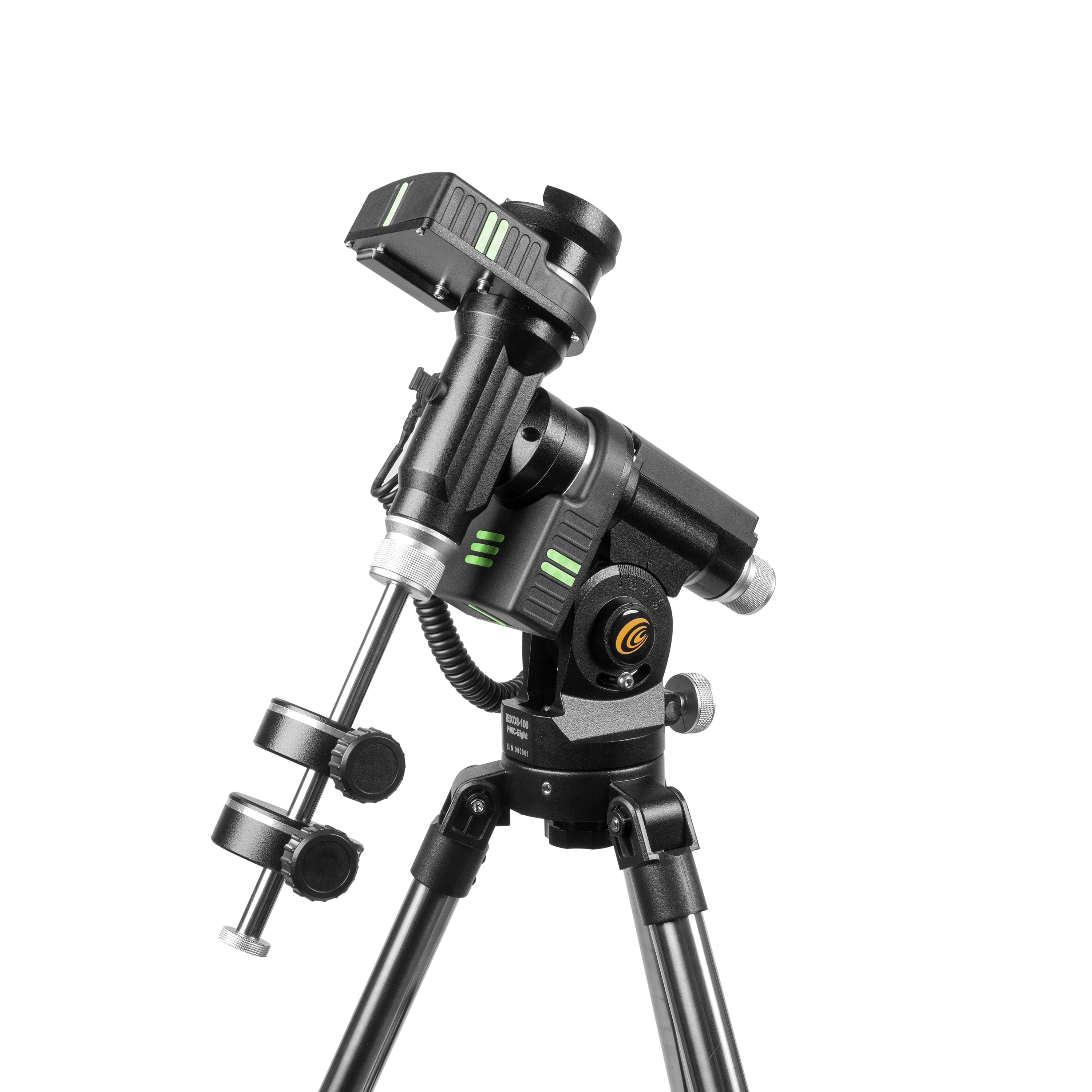
- iEXOS-100-2 PMC-Eight GoTo equatorial tracker with WiFi and Bluetooth
- Eight-core PMC-Eight motion control, tasks distributed across CPUs for smoother tracking
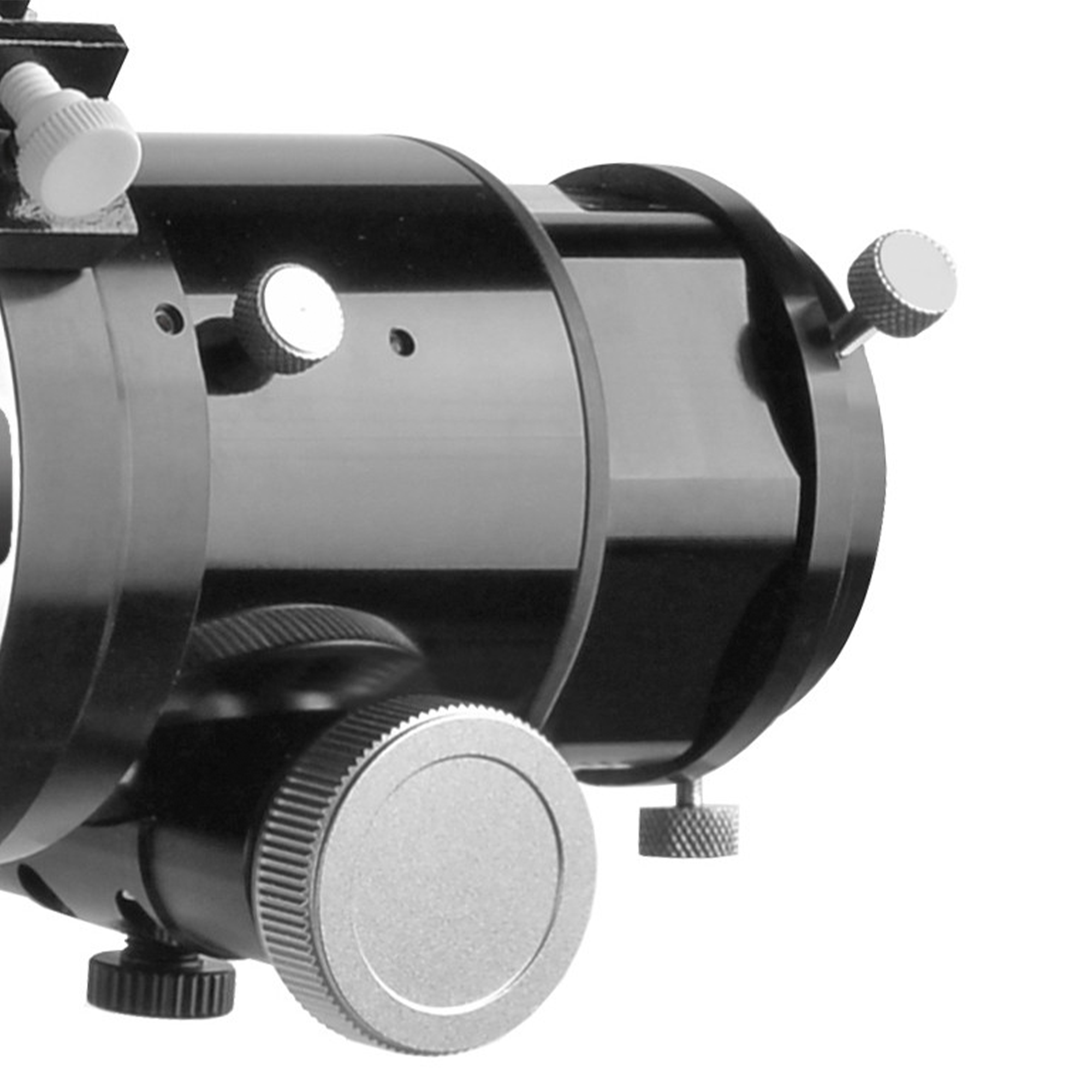
- Heavy-duty 2.5-inch HEX focuser rated to carry 10 lb of imaging equipment
Optical and Mechanical Design
A true air-spaced triplet with an FCD-100 element delivers diffraction-limited performance with residual colour low enough that bright stars record without a violet halo across the field. Carbon fibre matters for two reasons: it cuts weight, which is what lets a 4-inch triplet sit on a compact mount, and it expands far less than aluminium as the night cools, so focus holds through a long imaging session. The mount head weighs 9.45 lb on a 5.35 lb tripod with 1 kg counterweights, rated at approximately 9 lb of equipment alone and 15 lb photographic once counterweights are counted. Tripod height runs 25.5 inches collapsed to 45 inches extended with the head fitted.
Recommended Uses
- Deep-sky imaging of galaxies, planetary nebulae, and smaller clusters at 714 mm
- High-resolution lunar and planetary observing and imaging
- Double star work, where the extra aperture separates closer pairs
- Travel and dark-site trips needing 4-inch apochromatic performance in a light package
Compatibility and Accessory Notes
The 45 mm dovetail plate is Vixen-style and seats in the mount's saddle as supplied; the cone-angle adjustments let you square the tube to the mount for accurate GoTo pointing. At f/7 the telescope falls inside the range of the Explore Scientific field flattener for f/5 to f/7 refractors, which we stock separately, and a 0.7x reducer-corrector is also available for it. The mount runs over WiFi, Bluetooth, or wired serial with the ExploreStars app or any ASCOM-compatible software; a tablet or computer is not included.
Good to Know Before You Order
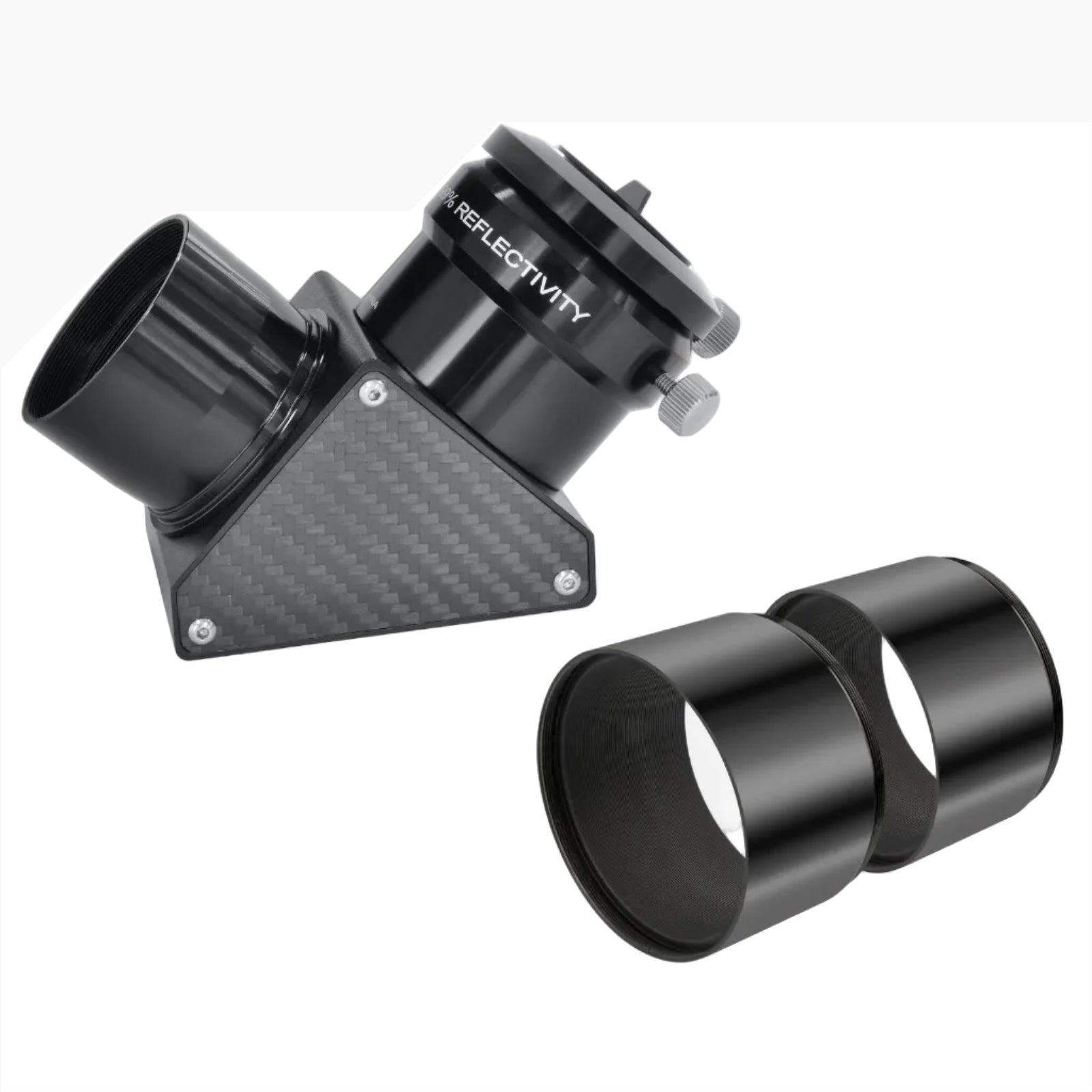
The 9.5 lb tube sits close to the mount's 9 lb equipment-only rating, so this pairing is best used with the counterweights fitted as supplied and a modest camera rather than a heavy imaging train — talk to us if you plan to add a filter wheel and off-axis guider. Explore Scientific publishes no packing list for this configuration, so the items above reflect the tube and mount specifications they do publish. Eyepieces, diagonal, camera adapters, and a tablet are separate. Published weights are 9.5 lb tube, 9.45 lb mount head, 5.35 lb tripod, 1 kg per counterweight; the checkout shipping weight is the sum rounded up to the next whole pound.
Frequently Asked Questions
Is it difficult to set up? Mechanically no — the dovetail drops in and the counterweights slide on. Polar alignment and star alignment take a first evening to learn, and Explore Scientific publishes guides for both.
Is the mount big enough for this telescope? It is within rating with the supplied counterweights, and fine for a camera or eyepiece. If you intend to hang a full imaging train off the back, a heavier mount such as the EXOS-2GT is the safer pairing, and we can quote that combination.
Why carbon fibre? Lower weight and far less focus drift as the temperature falls, which matters over a long exposure sequence.
Do I need a flattener? For imaging with a larger sensor, yes — the f/5 to f/7 flattener suits this telescope and we stock it.
Bottom Line
A 4-inch FCD-100 apochromat in a carbon fibre tube with a GoTo mount included, giving longer focal length and more aperture without a heavy setup to carry. Our team in Bolton can advise on the flattener and camera train that suit your sensor.
| Item numbers | FCD100-10207-CF-01, ES-iEXOS-100-02, 2 × CW22-00 |
|---|---|
| Optical design | Air-spaced apochromatic triplet with HOYA FCD-100 ED element |
| Aperture | 102 mm |
| Focal length | 714 mm |
| Focal ratio | f/7 |
| Tube material | Carbon fibre |
| Tube weight | 9.5 lb (4.3 kg) |
| Dovetail plate | 45 mm wide, Vixen style, with cone-angle adjustments |
| Focuser | 2.5″ HEX, 10 lb capacity |
| Mount | iEXOS-100-2 PMC-Eight GoTo equatorial tracker, WiFi and Bluetooth |
| Mount head weight | 9.45 lb |
| Tripod weight | 5.35 lb |
| Counterweights | 2 × 1 kg |
| Mount capacity | Approx. 9 lb equipment only; 15 lb photographic; 19 lb visual |
| Tripod collapsed height | 25.5″ without mount head |
| Tripod extended height | 45″ at highest point with mount head |
| Control | ExploreStars app (Windows, Android, Amazon, Apple) or ASCOM driver |
| Eyepieces included | None |
| Tablet or computer included | None |
You may also like
Recently viewed
Recent Blog Posts
View all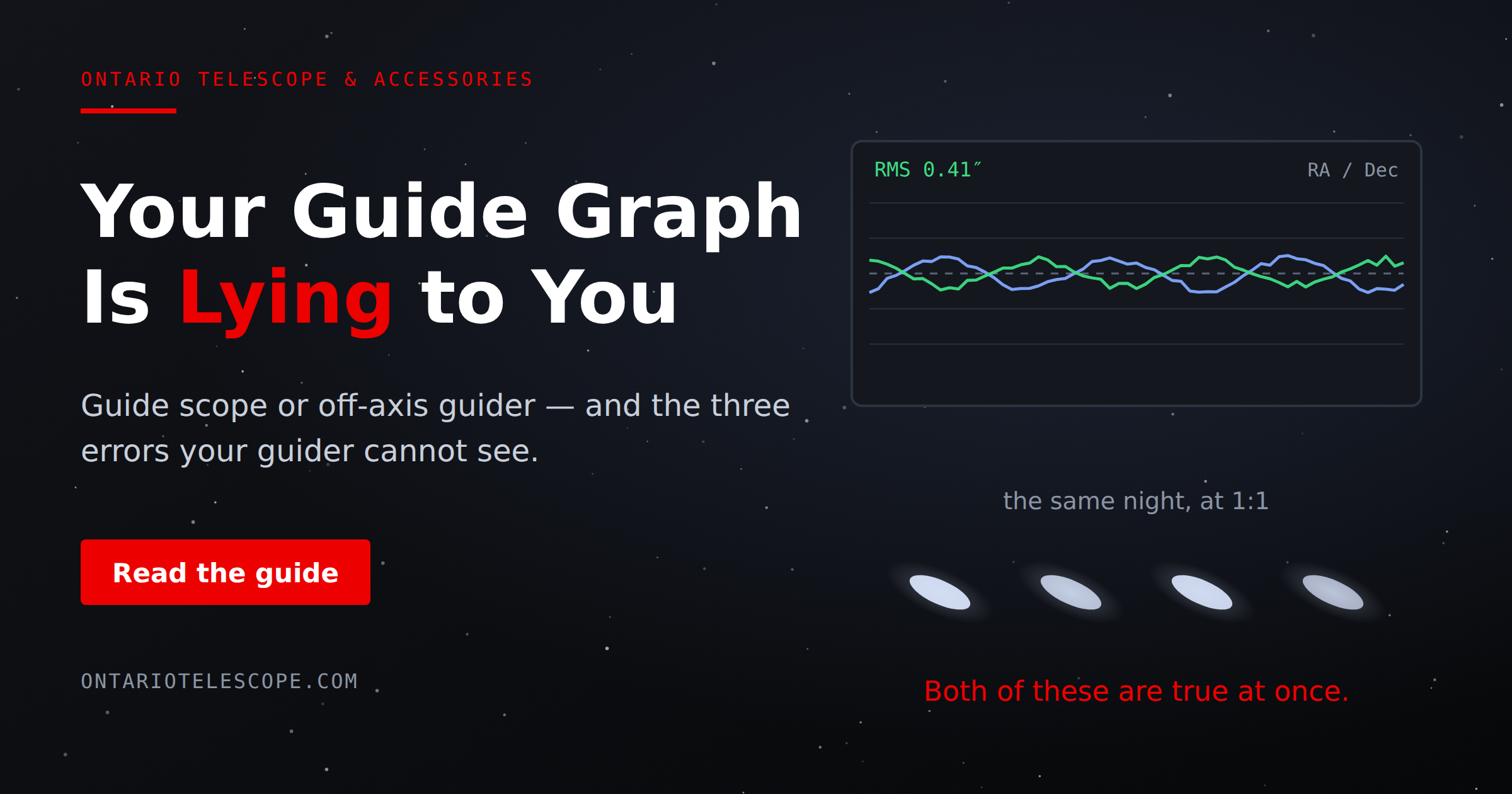
Your Guide Graph Is Lying to You
Read More
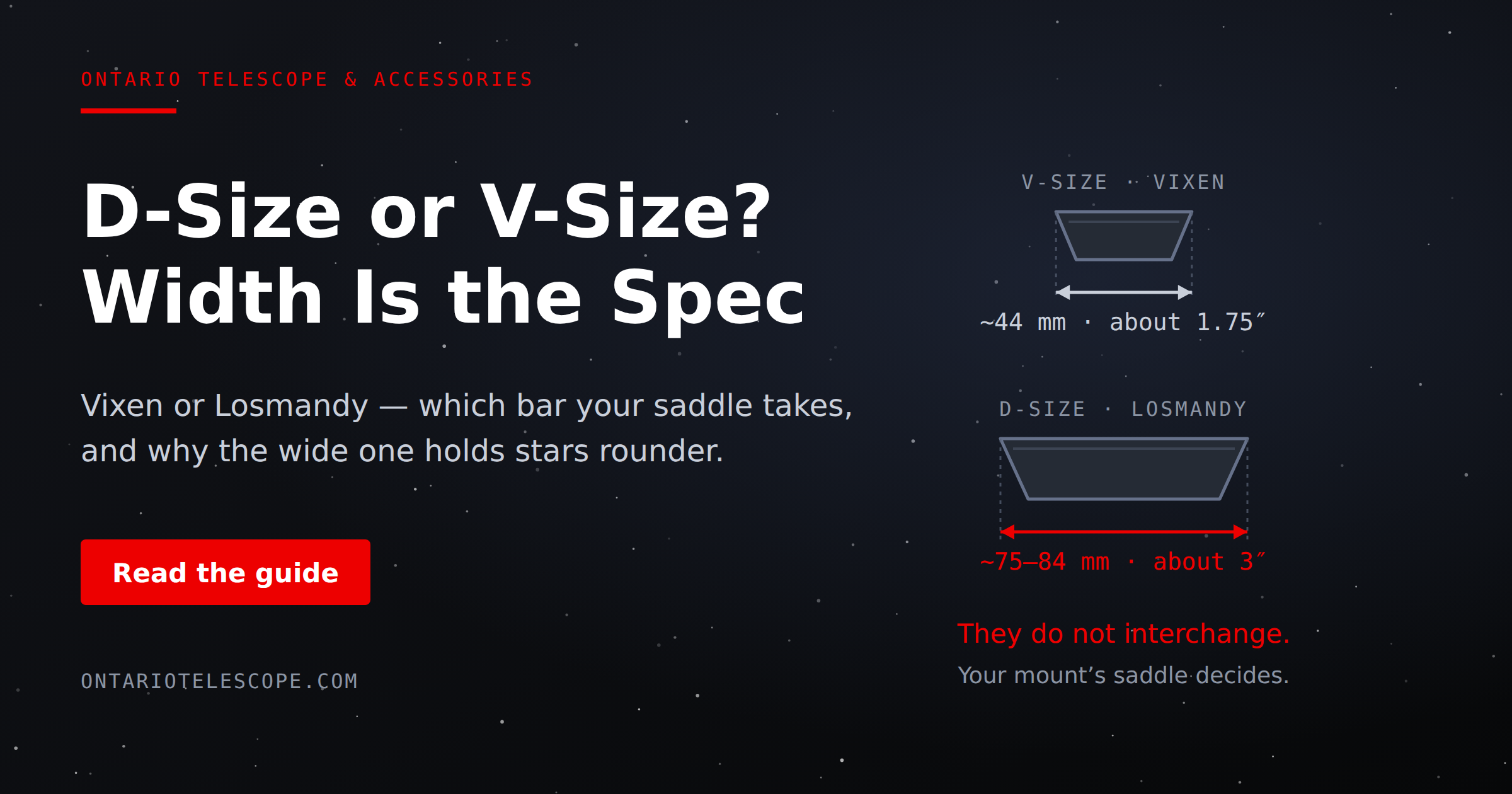
D-Size vs V-Size: A Complete Guide to Telescope Dovetail Systems
Read More
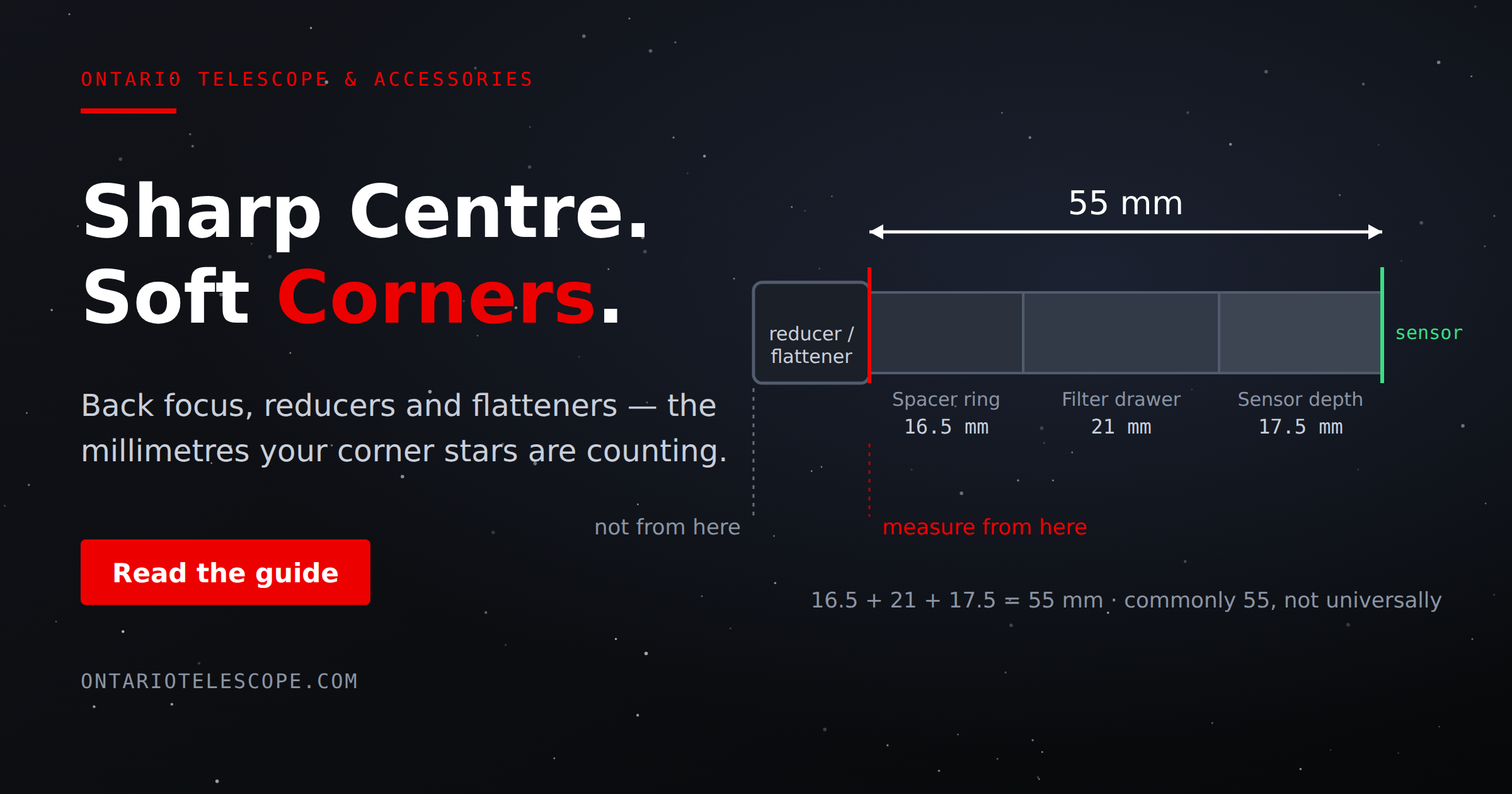
What Is Back Focus in Astrophotography? Telescope Reducers, Flatteners, and Spacing Explained
Read More