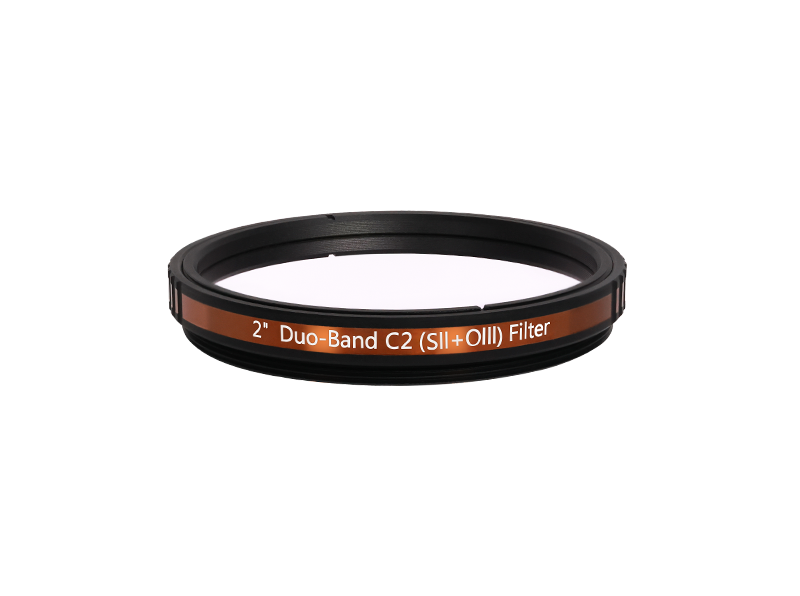
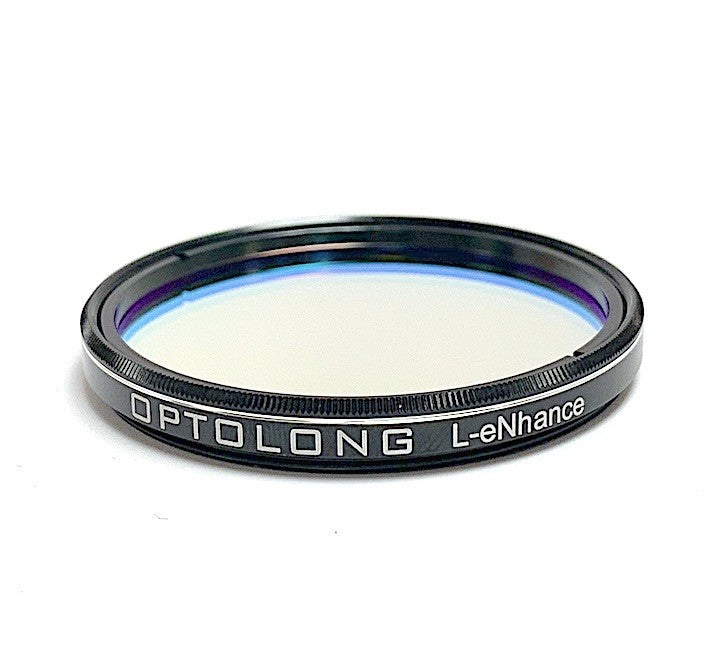
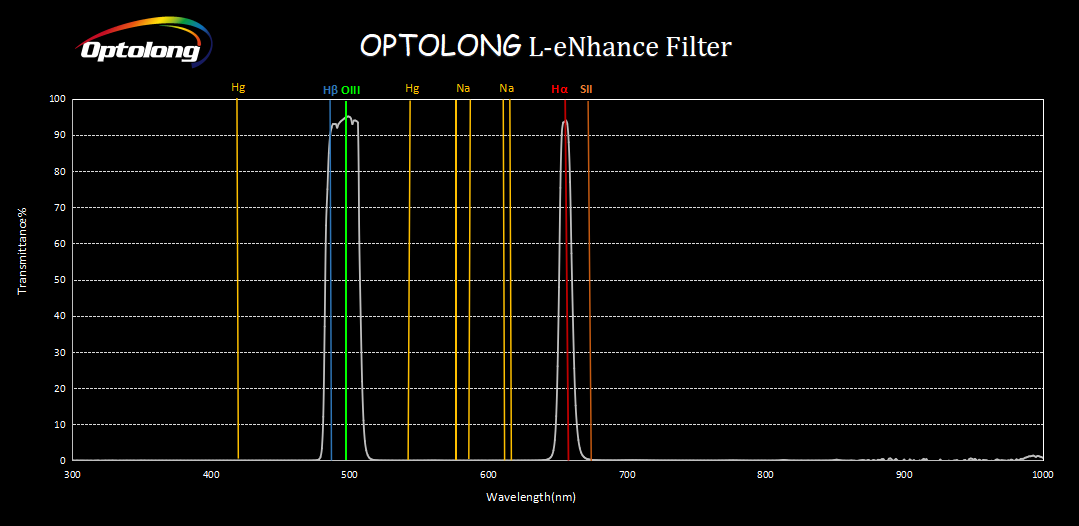
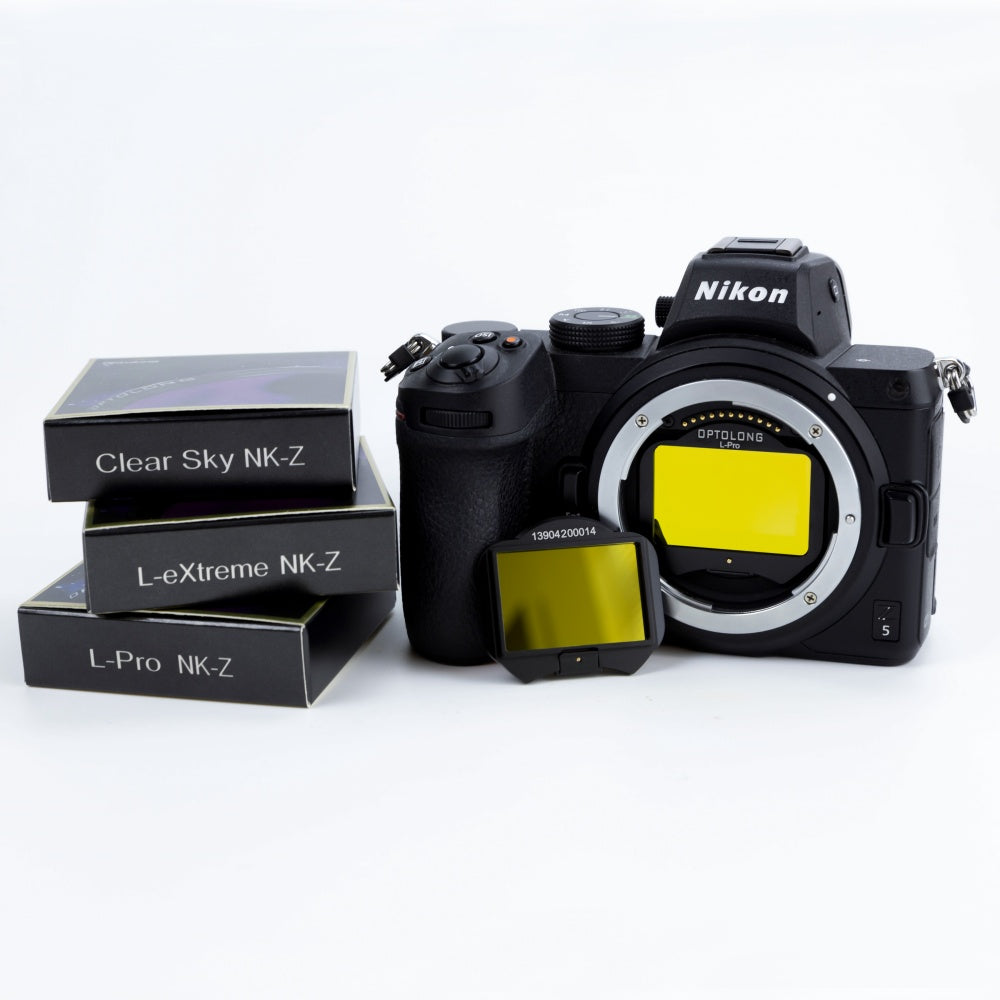
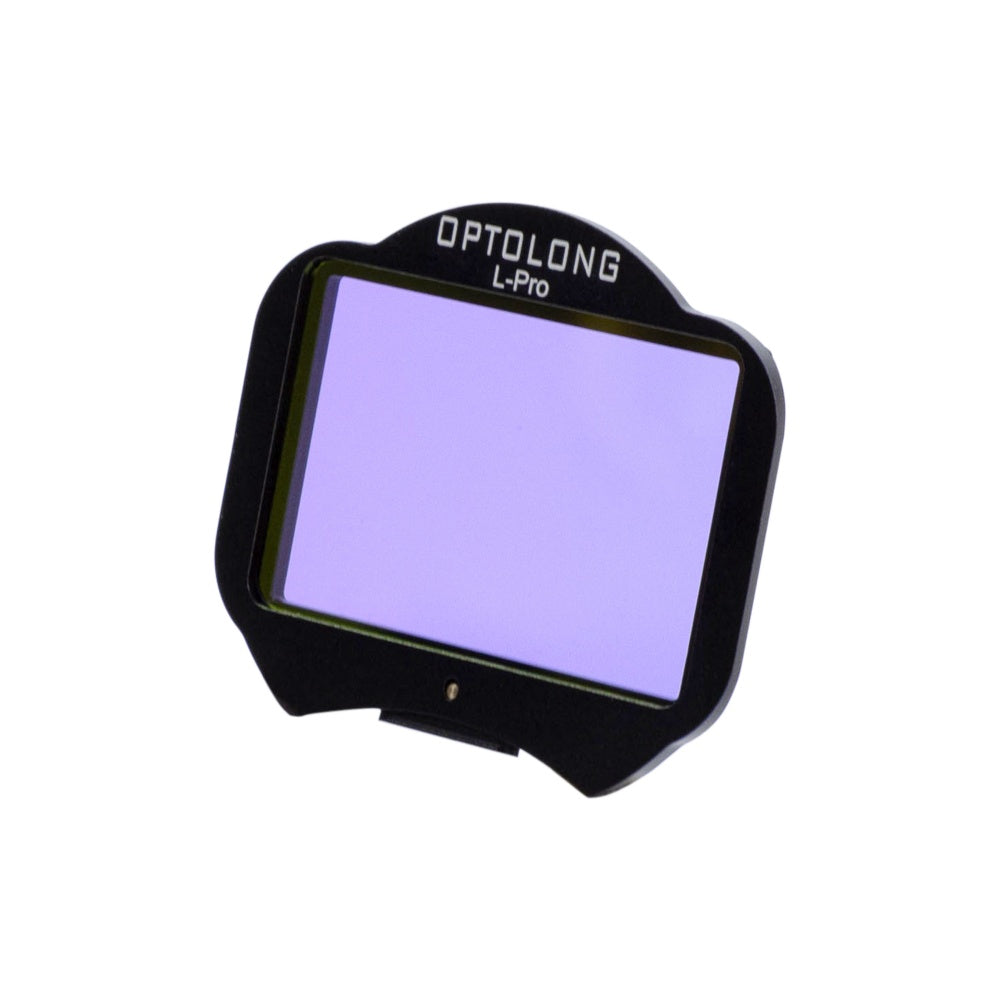
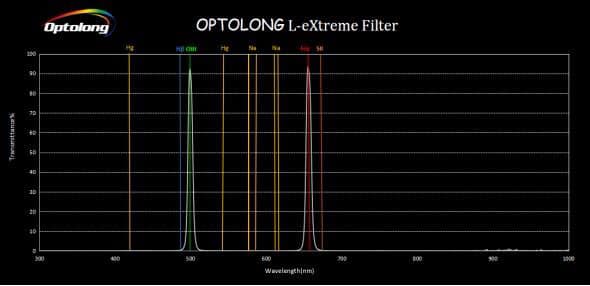
A dual-band filter passes two narrow emission lines — usually hydrogen-alpha (656nm) and oxygen-III (501nm) — and blocks most of the spectrum between them, so a one-shot-colour camera can record emission nebulae from light-polluted skies or under a bright Moon. Bandwidth is the main choice: 3–5nm filters such as the Optolong L-Ultimate, SVBONY SV220 3nm and Antlia ALP-T give the most contrast, 7nm designs like the L-eXtreme are more forgiving, and f/2–f/3 systems such as RASA or HyperStar need a high-speed version like the L-eXtreme F2 or ALP-T Highspeed. Tri- and quad-band filters, including the Optolong L-Quad Enhance and IDAS Nebula Booster NB1, pass additional emission lines for broader colour on nebulae; for mono cameras, see single-line narrowband filters.