

- Description
Product Overview
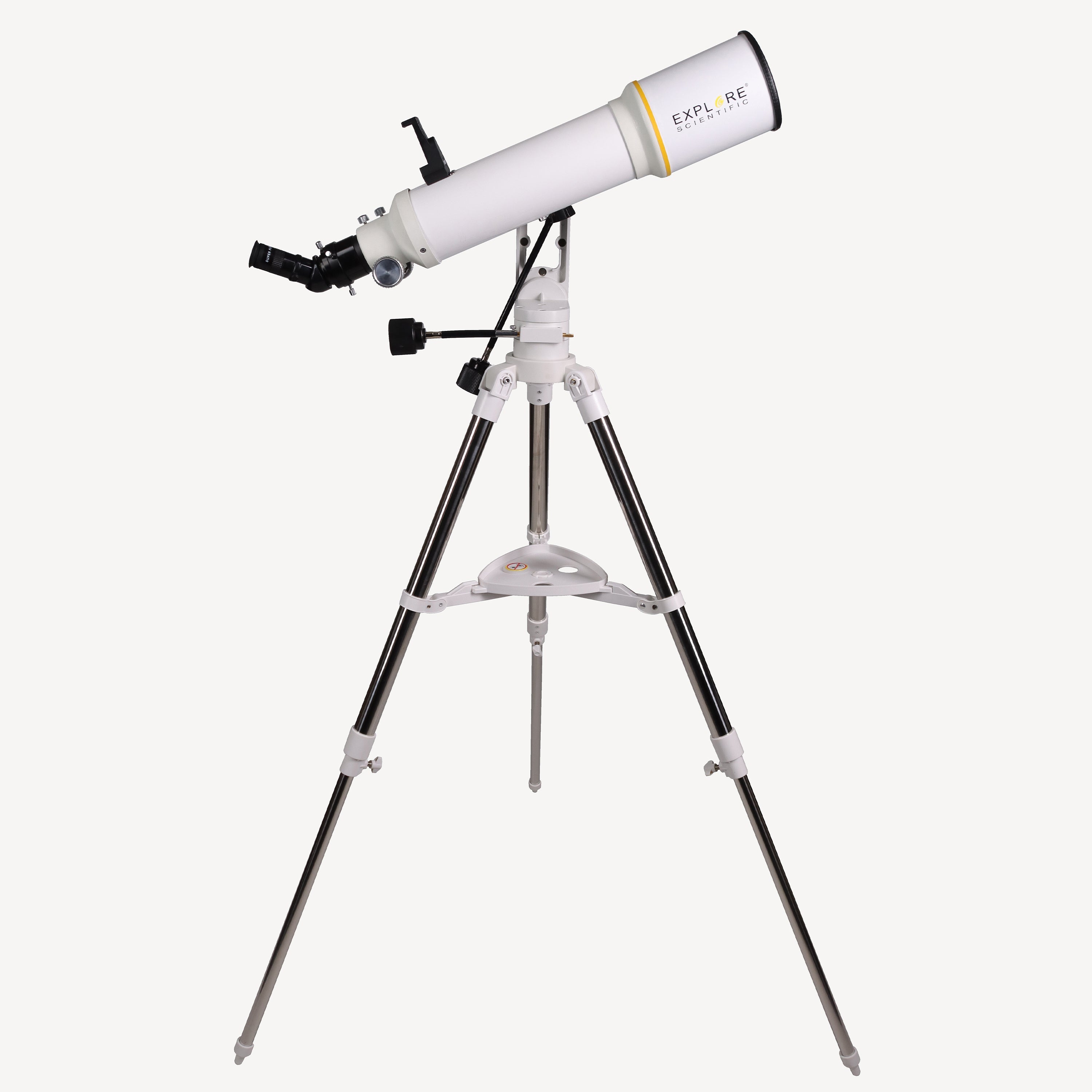
The Sidara Essential 102 pairs a 102 mm refractor with Explore Scientific's Essential alt-azimuth mount, a tripod, and eyepieces and accessories per the package configuration. Explore Scientific describes the combination as "a balanced system focused on brightness, versatility, and ease of use," with "smooth slow motion controls and adjustable positioning" on both axes, and calls it "an excellent choice for those who want a dependable, all around telescope that is easy to use and capable of delivering consistent results." It carries vendor item number ES-AR102660-MAZ01-ST10. A four-inch refractor on a steady alt-azimuth head has been the standard recommendation for a first telescope for decades, and this is Explore Scientific's current version of it.
Who It's For
This is the sensible middle of the Sidara range, and probably the most defensible choice if you are buying a first telescope for yourself or as a gift and do not yet know which direction the interest will run. At 102 mm it collects around a third more light than the 90 mm Sidara Nano and about forty per cent less than the 127 mm Sidara Plus, which in practice puts it comfortably past the threshold where a telescope stops being a novelty. Expect the Moon to be the object that converts people, with craters and mountain shadows in real relief. Saturn will clearly show its rings, Jupiter its cloud belts and four moons, Venus its phase. On deep sky objects a four-inch refractor from a suburban garden will show you the Orion Nebula, the Pleiades, the double cluster in Perseus, the brighter globulars as soft round glows, and the Andromeda Galaxy as an elongated smudge. What it will not show is colour in those objects, and no telescope will, because the eye's colour vision simply does not work at that light level. Anyone expecting Hubble images from an eyepiece is going to be disappointed by every telescope ever made, which is worth saying out loud before a gift is unwrapped.
Choosing the refractor over the 130 mm Essential reflector at a similar tier is a trade between convenience and raw aperture. The refractor arrives aligned and stays aligned, has a sealed tube that keeps dust off the optics, and needs no maintenance ritual at all, which matters a great deal if the intended owner is a child, a gift recipient, or anyone who will lose interest if the equipment demands homework. It also has cleaner contrast on the Moon and planets because there is no secondary mirror sitting in the light path. The reflector counters with more aperture for less money and no colour fringing. This 102 mm objective is an achromat, so on the very brightest targets, the limb of a full Moon or Venus low in twilight, you will see a faint violet-blue edge. It is a known characteristic of the design rather than a fault, and most people stop noticing it within a few sessions.
Key Features & Design
- 102 mm aperture refractor, the classic four-inch size long recommended as a capable first telescope.
- Essential alt-azimuth mount with dual-axis slow-motion controls for smooth, geared tracking on both axes.
- Adjustable mount positioning, which Explore Scientific highlights for comfortable viewing even on objects high in the sky.
- Sky Assist compatibility, which Explore Scientific says "helps users explore the night sky more efficiently."
- Sealed refractor tube with no central obstruction, no diffraction spikes and no collimation to maintain.
- Supplied complete: 102 mm refractor tube, Essential mount, tripod, and eyepieces and accessories per the package configuration.
- Positioned by Explore Scientific as the all-round choice in the Sidara line rather than a specialist for one kind of target.
Optical Design
An achromatic refractor of this class uses a two-element objective: a crown glass lens and a flint glass lens of differing dispersion, cemented or air-spaced, chosen so that two wavelengths of light come to focus at the same point. That correction is what makes the image usable, but it is only a correction at two wavelengths, so the far violet end of the spectrum lands slightly out of focus and appears as a soft halo around very bright objects. Aperture governs both light grasp and resolution, and at 102 mm the theoretical resolving limit is a little over one arcsecond, which is enough to split many attractive double stars and to show real texture in lunar terrain. Explore Scientific does not publish a focal length or focal ratio for this package on its product page, describing only a "moderate focal length"; the vendor item number ES-AR102660 follows the company's usual convention of encoding aperture and focal length, which would put it at 660 mm and roughly f/6.5, and that matches the pattern of the other packages in the series. We would rather flag that as a reasonable reading of the item number than present it as a published figure, so contact our team in Bolton and we will confirm it against the carton before you order eyepieces around it.
Recommended Uses
- Lunar observing, which is where a four-inch refractor makes its strongest first impression.
- Planetary viewing of Saturn, Jupiter, Venus and Mars at moderate to high magnification.
- Bright deep sky objects from suburban skies: open clusters, the brighter nebulae and the larger globulars.
- Daytime terrestrial viewing with an erecting diagonal, which a refractor handles better than a Newtonian.
- A first telescope as a gift, where low maintenance and quick setup matter as much as the optical specification.
Compatibility and Accessory Notes
The package includes eyepieces and accessories, though Explore Scientific does not itemise them on the product page. The additions worth considering first are a higher-power eyepiece around 8 mm to 10 mm for planetary nights, a neutral density Moon filter, and an erecting prism diagonal if terrestrial daytime use is part of the plan. Because the vendor does not publish the focuser barrel size, the finder type or the supplied diagonal for this package, do not order eyepieces or filters on assumption. Contact us and we will confirm whether it takes 1.25-inch or 2-inch fittings before anything ships. The same goes for the Essential mount's stated load capacity and dovetail standard, which Explore Scientific has not published; if you are thinking about putting a different tube on this mount later, or this tube on a different mount, ask us and we will check the specifics rather than guess on your behalf.
Good to Know Before You Order
Explore Scientific publishes no shipping weight for this item, so we are confirming it on our own scales before the listing goes live. That is why it is currently unpublished. Contact us and we will give you a shipping figure for your address. It is also fair to say that the vendor's published detail on this package is sparse. There is no specification table, no focal length figure, and no itemised accessory list, and where we have inferred a figure above from the item number we have said so rather than dressed it up as a specification. Practically, note that this is a manual mount with no motors and no GoTo function, so you point the telescope yourself and use the slow-motion controls to keep an object in view as the sky drifts. It is not an astrophotography instrument. And as with any telescope, a first evening spent assembling it indoors and aligning the finder in daylight will save a great deal of frustration on the first clear night.
Frequently Asked Questions
What is Sky Assist, in plain terms? On this package Explore Scientific describes it only as a way to "explore the night sky more efficiently," and elsewhere in the Sidara line as guidance that helps you find celestial targets and spend less time searching. On their motorised Sidara Pro mounts they say Sky Assist lets users "select targets and allow the mount to move the telescope into position," but this is a manual mount, so here it points you at the target and you move the telescope yourself. Explore Scientific has not published the full requirements or setup process, and we are not going to invent app features on their behalf. Ask us and we will confirm the current details with the distributor.
Is 102 mm enough aperture to be worth it? Yes. Four inches is the point at which the Moon, the planets and the brighter deep sky objects all become genuinely rewarding rather than merely visible. More aperture always shows more, but a 102 mm refractor that gets used regularly beats a larger telescope that stays in its box.
Should I get this or the 130 mm Essential reflector? Choose this if you want zero maintenance, cleaner planetary contrast, and the option of daytime use. Choose the 130 mm reflector if faint deep sky objects are the draw and you are willing to learn collimation. They sit at similar tiers, so it is genuinely a preference rather than a step up or down.
Is it suitable for a child? For a supervised child, yes, and the refractor's lack of collimation is a real advantage there. The tripod and mount are adult-sized, so expect to help with setup and with getting the eyepiece to a comfortable height.
Bottom Line
The Sidara Essential 102 is the safe, sensible answer in this range: enough aperture to show the things that make people keep observing, and no maintenance to get in the way. If you are choosing between it, the 130 mm reflector and the smaller Nano 90, contact our team in Bolton and we will help you match it to your skies and to who will actually be using it.
You may also like
Recently viewed
Recent Blog Posts
View all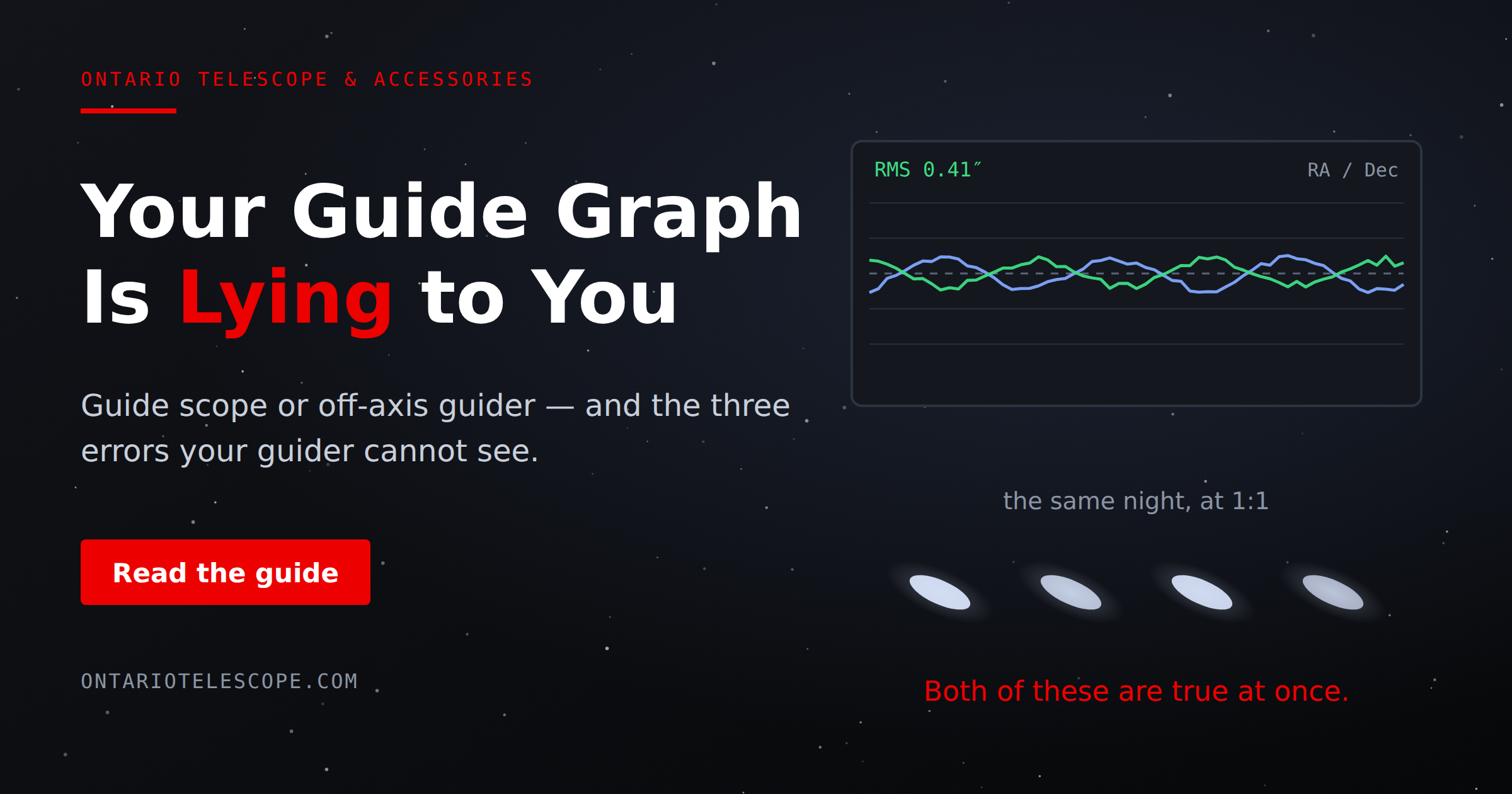
Your Guide Graph Is Lying to You
Read More
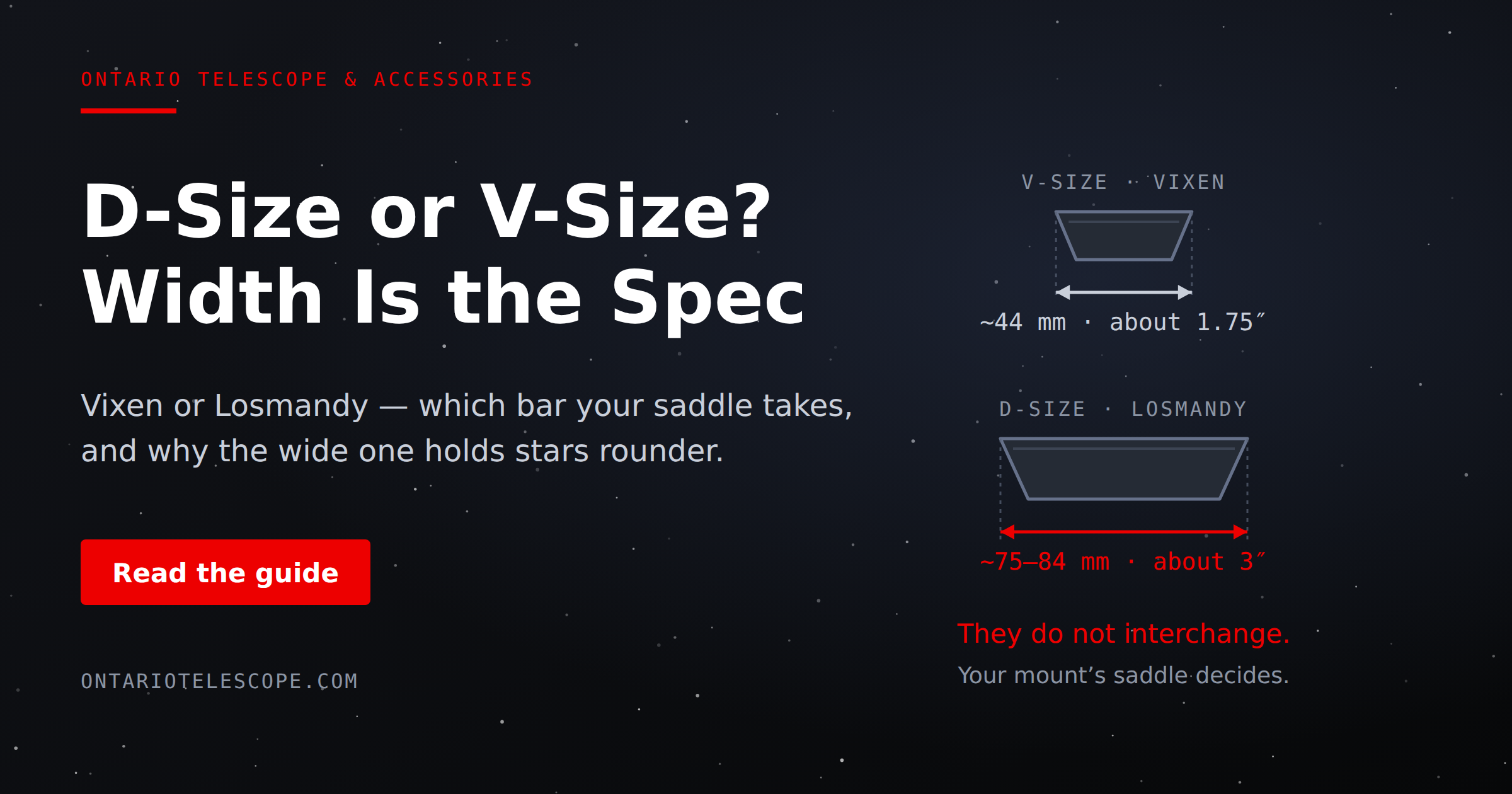
D-Size vs V-Size: A Complete Guide to Telescope Dovetail Systems
Read More
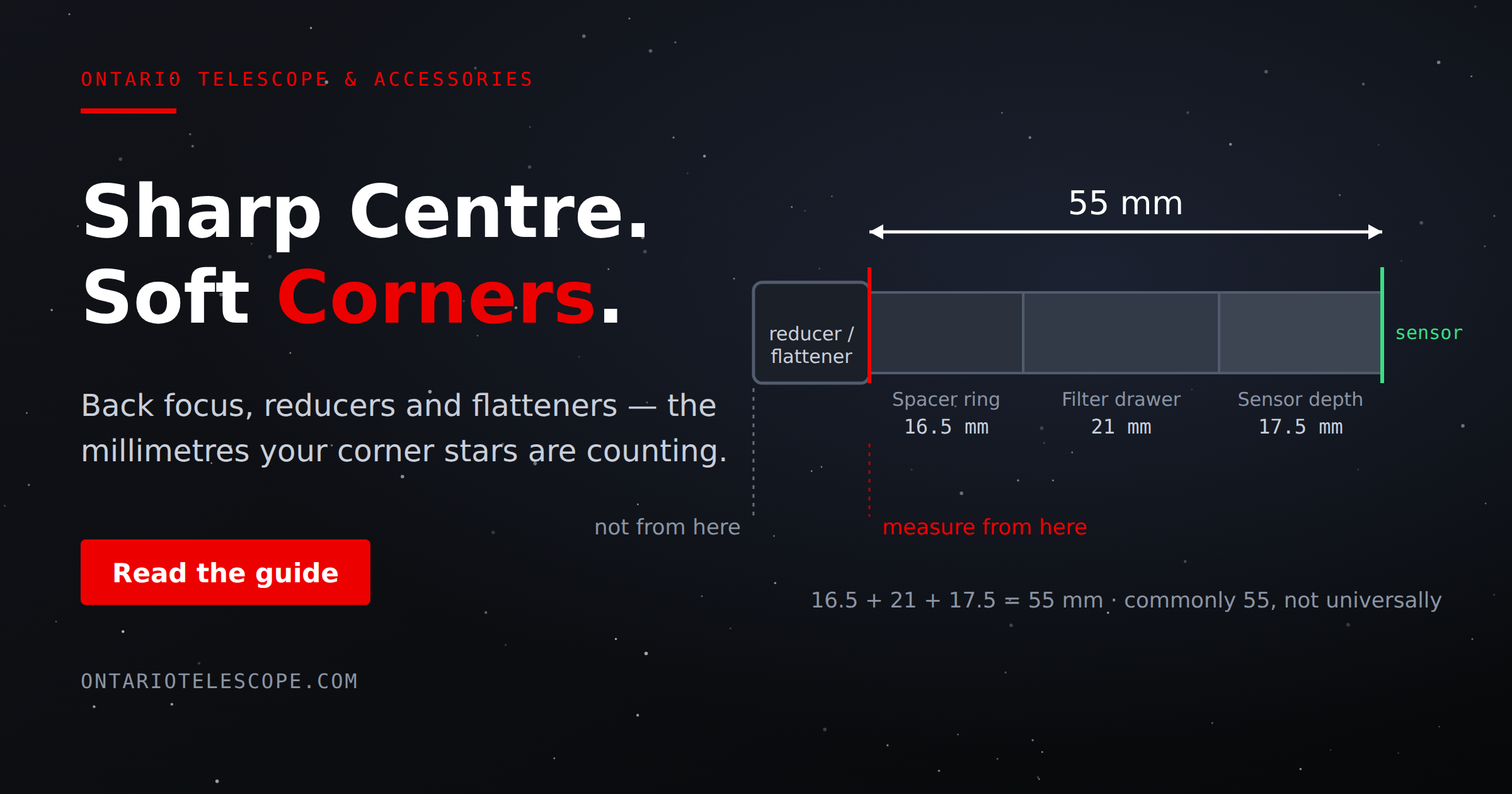
What Is Back Focus in Astrophotography? Telescope Reducers, Flatteners, and Spacing Explained
Read More