


- Description
- Specifications

Product Overview
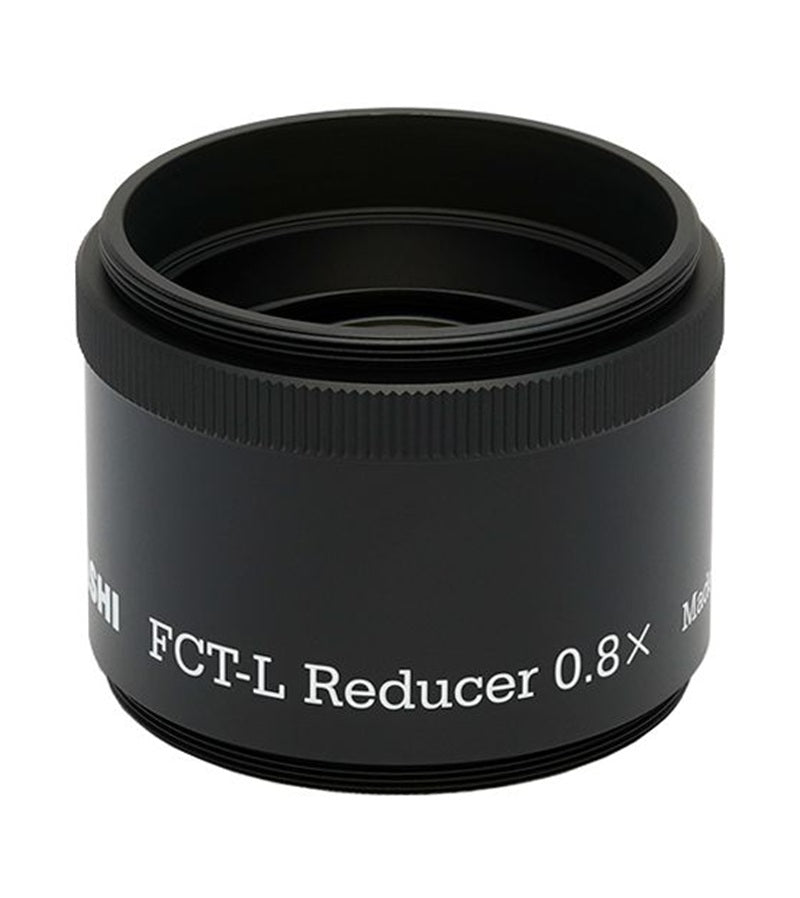
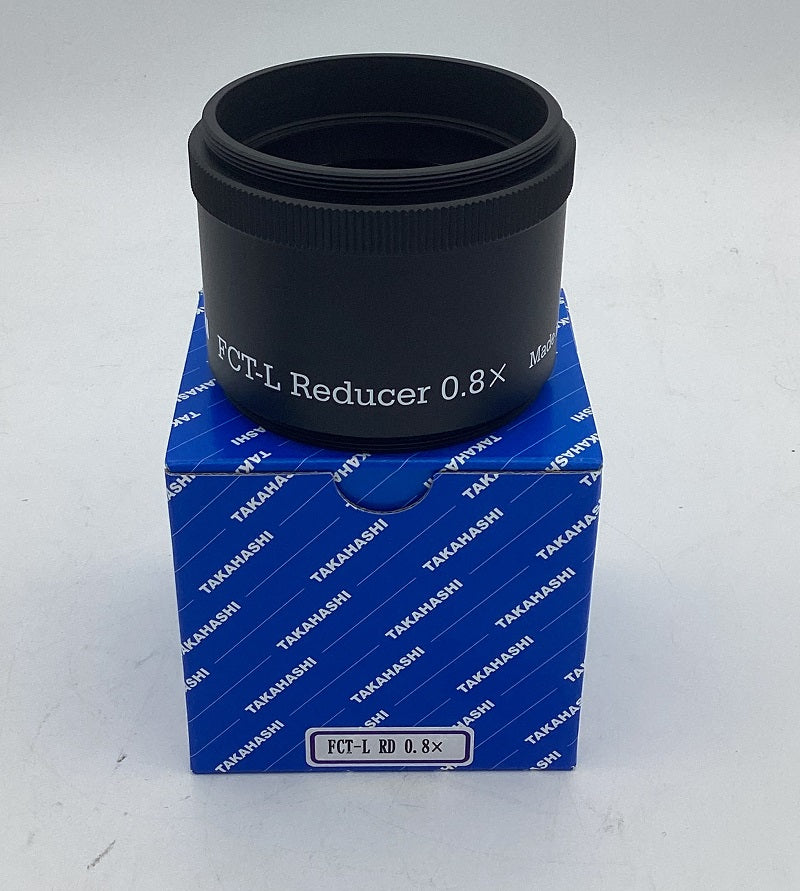
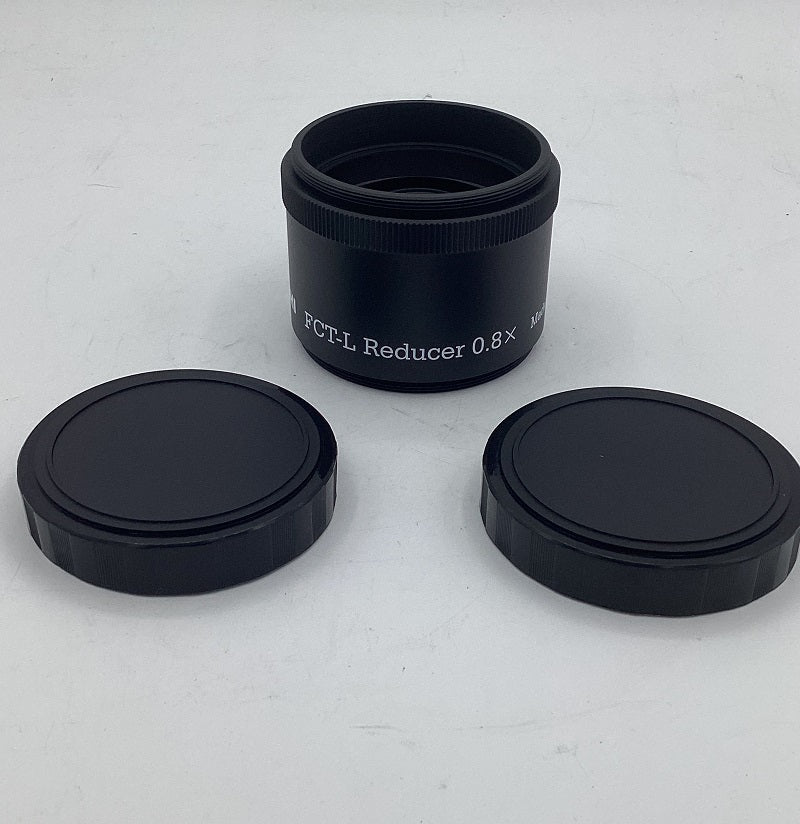
The Takahashi FCT-L Reducer 0.8x is a large-format reducer for Takahashi's FCT-114D series and FC-100D refractors. Its 2-group, 3-element design shortens focal length to 0.8× and covers a 44 mm image circle, giving a brighter image plane and sharp stars across the field, including the edges.
Who It's For
This is a good match if you image with an FCT-114DF, FCT-114DS, FC-100DZ or FC-100DF and want a faster system and a wider field.
Key Features & Design
- 0.8× reduction: shortens focal length for a faster focal ratio and wider field.
- 44 mm image circle.
- 2-group, 3-element design: keeps stars sharp to the edge of the field.
- About 92% illumination at the full-frame edge on the FCT-114DF.


Optical Design
Takahashi publishes measured results for each telescope it lists. On the FCT-114DF peripheral illumination reaches about 92% at the edge of a full-frame sensor. On the FCT-114DS vignetting typically begins around φ20 mm, with about 83% remaining at the full-frame edge. Across the FCT-114D series the RMS spot diameter is 4.4 μm at the centre and 6.6 μm at the edge of a full-frame sensor.
On the FC-100DZ vignetting also begins around φ20 mm, with about 83% illumination at the edge and RMS spots of 4.8 μm at the centre and 7.2 μm at the edge. The FC-100DF shows some residual chromatic aberration and holds about 82% illumination across the full-frame area, with RMS spots of 6.6 μm at the centre and 9.6 μm toward the edges.
Recommended Uses
- Faster deep-sky imaging: shorter exposures for the same signal.
- Wider framing of large nebulae and galaxy groups.
Compatibility and Accessory Notes
Takahashi lists results for the FCT-114DF, FCT-114DS, FC-100DZ and FC-100DF.
| Telescope | Illumination at full-frame edge | RMS spot (centre / edge) |
|---|---|---|
| FCT-114DF | Approx. 92% | 4.4 μm / 6.6 μm |
| FCT-114DS | Approx. 83% (vignetting from φ20 mm) | 4.4 μm / 6.6 μm |
| FC-100DZ | Approx. 83% (vignetting from φ20 mm) | 4.8 μm / 7.2 μm |
| FC-100DF | Approx. 82% (residual chromatic aberration) | 6.6 μm / 9.6 μm |
Takahashi's FCT-L line also includes CO rings listed by telescope — the FCT-L CO Ring 114D for the FCT-114DF, FCT-114DS and FC-100DZ, and the FCT-L CO Ring 100DF for the FC-100DF — but this page does not say which rings or adapters each telescope needs with this corrector. The reducer page does not state back focus or thread sizes; send us your camera and filter setup and we will work out the spacing with you.

What's in the Box
- Takahashi FCT-L Reducer 0.8x
Good to Know Before You Order
- Back focus and threads not published on the product page: we confirm them with Takahashi on request.
- 44 mm image circle: on the FCT-114DS and FC-100DZ, vignetting begins around φ20 mm, so a flat-field frame is part of the workflow on larger sensors.
- Pre-order item at Takahashi America: we will confirm the expected delivery when you order.
- Help with your imaging train: contact us with your telescope, camera and filters and we will confirm the setup with Takahashi.
Frequently Asked Questions
Is it difficult to set up?
Setup comes down to the adapters and back focus for your telescope and camera, which Takahashi does not list on this page. Send us your setup and we will work it out with you, so the train goes together right the first time.
Reducer or flattener?
The reducer gives a faster, wider 0.8× system with a 44 mm image circle. The FCT-L Flattener 0.99x keeps native focal length with a 55 mm image circle.
Bottom Line
In short: a 2-group, 3-element 0.8× reducer with a 44 mm image circle for the FCT-114D series and FC-100D refractors.
Performance Data
Takahashi's published illumination and spot-diagram charts for the FCT-L Reducer 0.8x on each telescope.


| Manufacturer | Takahashi |
|---|---|
| Part number | TKA34580 |
| Type | Focal reducer |
| Optical design | 3 elements in 2 groups |
| Magnification | 0.8× |
| Image circle | 44 mm |
| Listed for | FCT-114DF, FCT-114DS, FC-100DZ, FC-100DF |
| RMS spot, FCT-114D series | 4.4 μm centre / 6.6 μm edge (full frame) |
| RMS spot, FC-100DZ | 4.8 μm centre / 7.2 μm edge |
| RMS spot, FC-100DF | 6.6 μm centre / 9.6 μm edge |
| Back focus / threads | Not published by vendor |
| Colour | Black |
| Weight | Not published by vendor |
You may also like
Recently viewed
Recent Blog Posts
View all
Your Guide Graph Is Lying to You
Read More
D-Size vs V-Size: A Complete Guide to Telescope Dovetail Systems
Read More
What Is Back Focus in Astrophotography? Telescope Reducers, Flatteners, and Spacing Explained
Read More