
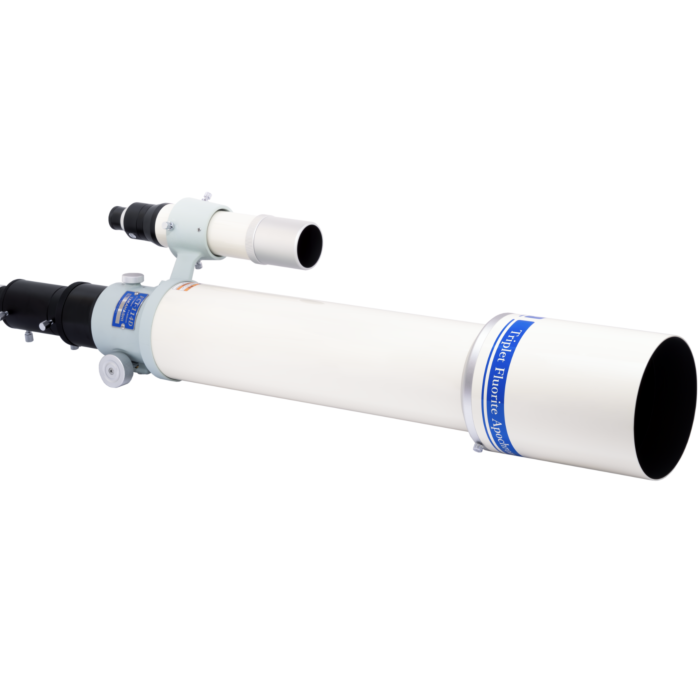
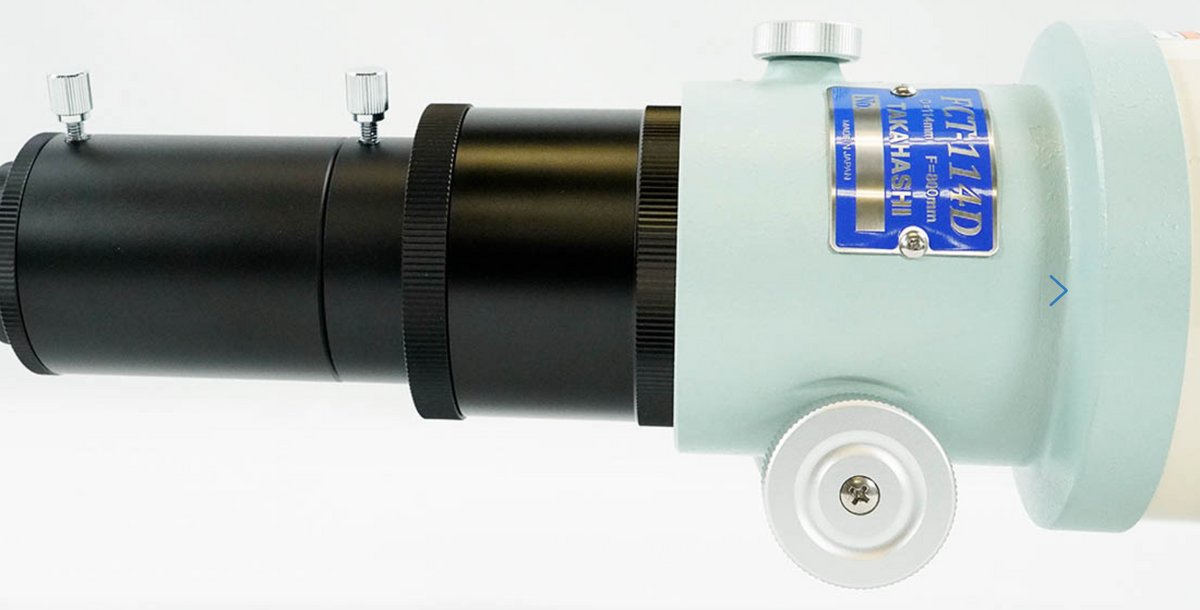


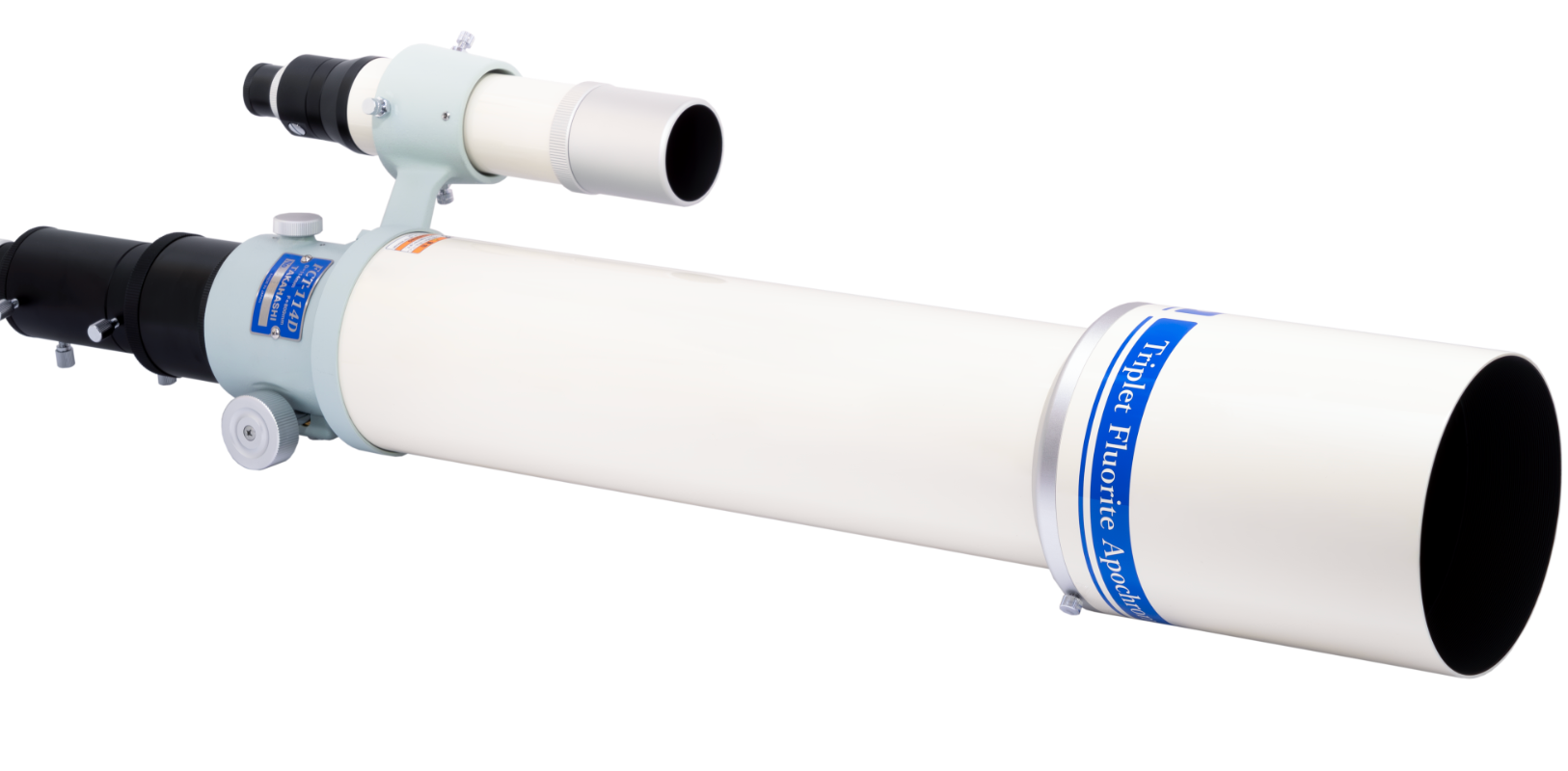
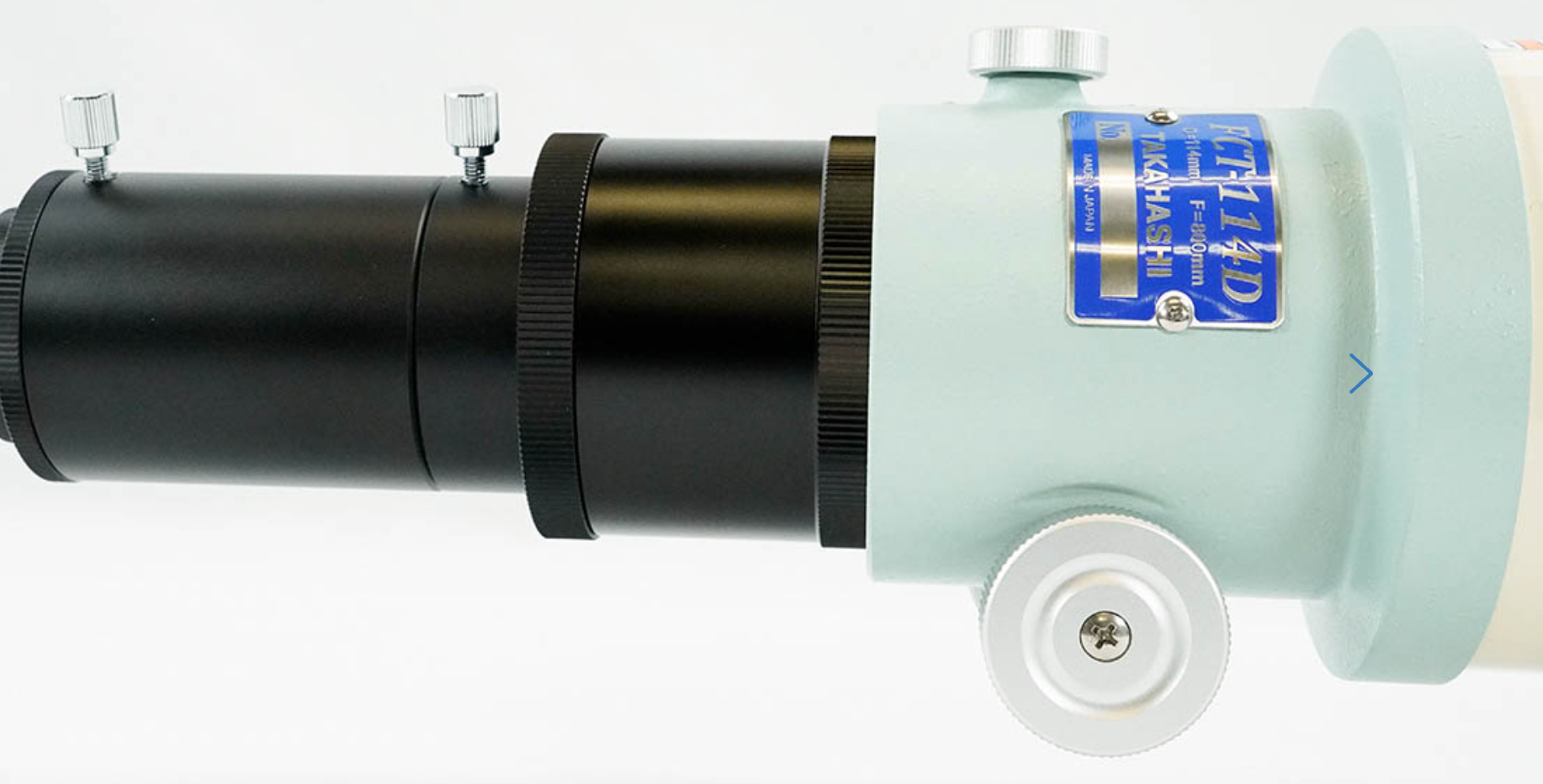




- Description
- Specifications
- Downloads
Product Overview
The FCT-114DS is Takahashi's 114 mm (4.5-inch) fluorite triplet apochromat, at 800 mm focal length and f/7. It combines a fluorite element with a triplet lens arrangement, published with a visual Strehl ratio of 97.5%, and its tube extends from 795 mm to 884 mm. Optical tube weight is 11.2 lb.
Who It's For
This is a good match if you want a 114 mm apochromatic triplet for high-contrast lunar and planetary viewing, or double-star splitting, where the 97.5% Strehl ratio and near-elimination of chromatic error matter more than field width. It also suits astrophotographers willing to add a flattener or reducer — Takahashi's FC/FS-family correctors are the starting point.
Key Features & Design
- Fluorite triplet apochromat: a fluorite element paired with a triplet lens arrangement for a published 97.5% visual Strehl ratio.
- 800 mm at f/7: in a 795–884 mm tube — 114 mm of aperture in a moderate-length instrument.
- 11.2 lb optical tube weight, as Takahashi publishes it.
- High-contrast optics: Takahashi states the design virtually eliminates chromatic aberration, aimed at lunar, planetary and stellar observation.
Optical / Mechanical Design
The FCT-114DS pairs a fluorite element with a triplet lens design — three elements working together to control both spherical and chromatic aberration more tightly than a doublet at the same aperture and speed, which is what a 97.5% Strehl ratio at f/7 requires. Takahashi markets it for lunar observation, high-magnification planetary viewing and stellar work, where the design's tight correction shows most directly at the eyepiece.
Recommended Uses
- Lunar and planetary observing: high-magnification visual work benefiting from the design's tight chromatic correction.
- Double star splitting: a well-corrected 114 mm aperture resolves close, faint pairs.
- Astrophotography with an add-on corrector: Takahashi notes that optional flatteners or focal reducers extend the tube to imaging use.
Good to Know Before You Order
- This is an optical tube assembly. Mount, rings, dovetail, diagonal and eyepiece are all sold separately.
- No corrector is matched to this tube by name. Tell us how you plan to image with it and we will work out which flattener or reducer suits your sensor.
Frequently Asked Questions
Is it difficult to set up?
No more than any refractor OTA — at prime focus with a diagonal and eyepiece it is straightforward.
What is it best used for?
Lunar and planetary observing and double star splitting, where the published 97.5% Strehl ratio and tight chromatic correction do the most visible work.
How is this different from the FCT-114DF?
Both share the same published aperture, focal length and f-ratio.
Can I use it for astrophotography?
Visually and at prime focus, yes. For a flat, corrected field you would need a matched flattener.
Bottom Line
In short: a 114 mm fluorite triplet apochromat at 800 mm and f/7, with a published 97.5% Strehl ratio, built for high-resolution lunar, planetary and double-star viewing at 11.2 lb.
| Product name | FCT-114DS |
|---|---|
| Product code | TCK11410 |
| Optical design | Fluorite triplet apochromat, 3 elements in 3 groups |
| Aperture | 114 mm (4.5 in) |
| Focal length | 800 mm |
| Focal ratio | f/7 |
| Visual Strehl ratio | 97.5% |
| Optical tube length | 795–884 mm |
| Optical tube weight | 11.2 lb (5.08 kg) |
| Corrected performance with optional flattener | Spot sizes of 6 µm RMS or less on a full-frame sensor |
| Supplied as | Optical tube assembly only |
| Case included | No |
Shopping Guide
- Takahashi English Catalog 2025 — PDF, 8.63 MB (FCT-114DS is not in the 2025 specification chapter; catalog included for reference only)
System Charts, Diagrams and Adapter Guides
- Takahashi Telescope Backfocus Table — PDF, 71 kB (FCT-114DS is not listed in this table)
You may also like
Recently viewed
Recent Blog Posts
View all
Your Guide Graph Is Lying to You
Read More

D-Size vs V-Size: A Complete Guide to Telescope Dovetail Systems
Read More

What Is Back Focus in Astrophotography? Telescope Reducers, Flatteners, and Spacing Explained
Read More