


- Description
- Specifications
- Downloads
Product Overview
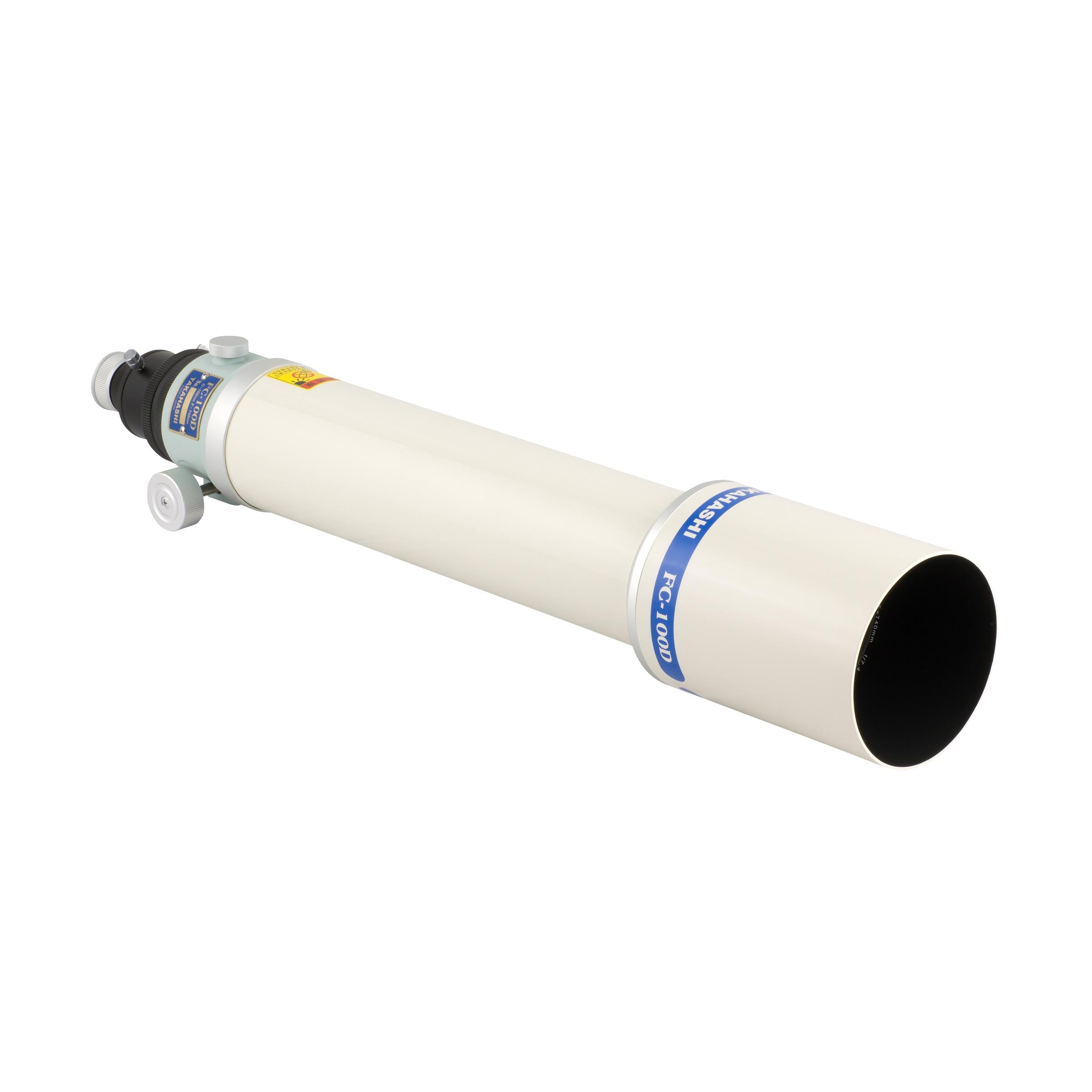
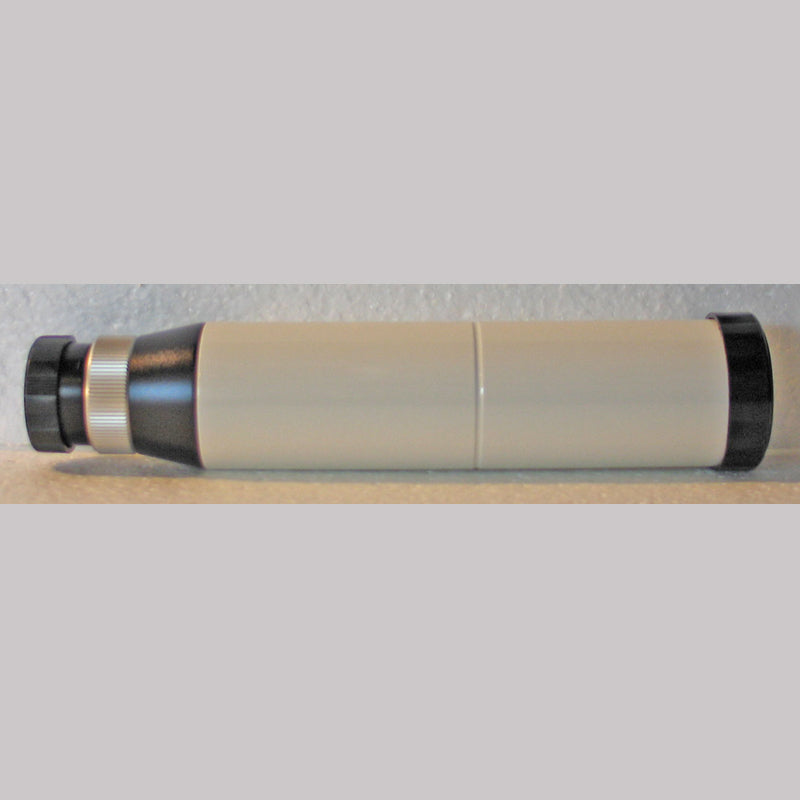
The FC-100DF is Takahashi's 100 mm Steinheil fluorite doublet apochromat in its imaging configuration — the same optical formula as the FC-100DC, built into a shorter 785 mm tube with a 2.7-inch focuser sized for camera loads. At 740 mm focal length and f/7.4 it weighs 3.3 kg, with 223 mm of back focus at prime giving an imaging train real room to work with.
Who It's For
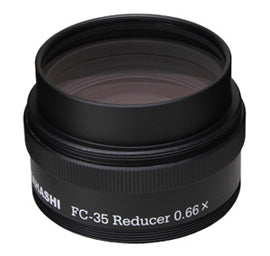
This is a good match if you want a 100 mm apochromat built for a camera train from the start — the imaging-length tube and larger focuser distinguish it from the visual-oriented FC-100DC. It suits deep-sky imagers working at moderate focal length, and it reduces to 480 mm at f/4.8 with the FC-35RD reducer for a wider field, or flattens to 760 mm at f/7.6 with the FC/FS MFL 1.04x for full-frame coverage.
Visual observers get a genuinely apochromatic 100 mm refractor with clean colour correction, though the shorter DC is the lighter choice if imaging is not the goal. Tell us your camera and sensor size and we will confirm which reducer or flattener fits your frame.
Key Features & Design
- Steinheil fluorite doublet: two elements in two groups, with hard multicoatings on the fluorite surfaces.
- 740 mm at f/7.4: in a 785 mm tube, 95 mm across (124 mm dew shield) — built for the imaging-length back focus this focal ratio needs.
- 2.7-inch rack-and-pinion focuser: sized for the added weight of a camera, filter wheel and off-axis guider.
- 223 mm of back focus at prime focus — generous room for a full imaging train.
- 3.3 kg: heavier than the FC-100DC's visual configuration, reflecting the longer tube and larger focuser.
- 63 mm of drawtube extension for fine focus travel.
Optical / Mechanical Design
The objective is a two-element air-spaced fluorite doublet in the Steinheil configuration, sharing its optical prescription with the visual-oriented FC-100DC. Fluorite's anomalous partial dispersion pulls the red, green and blue focal points close enough together that secondary spectrum is not the limiting factor at 100 mm, and hard multicoatings protect the softer fluorite surfaces from moisture and handling.
What separates the DF from the DC is mechanical, not optical: a shorter 785 mm tube paired with a 2.7-inch focuser rather than the DC's visual-oriented mount, giving the imaging train more rigidity under camera weight. The FC/FS MFL 1.04x flattener brings the system to 760 mm at f/7.6 with a 44 mm corrected circle at 71.2 mm back focus, and the FC-35RD 0.66x reducer shortens it to 480 mm at f/4.8, also with a 44 mm circle, at 74.1 mm back focus.
Recommended Uses
- Deep-sky imaging at native focal length: 740 mm and f/7.4 for medium-sized targets — galaxies, planetary nebulae, tighter framing on emission nebulae.
- Wide-field imaging: with the FC-35RD 0.66x reducer at 480 mm and f/4.8, a 44 mm corrected circle for larger nebulae and star fields.
- Flat-field full-frame imaging: with the FC/FS MFL 1.04x flattener at 760 mm and f/7.6.
- Visual observing: lunar, planetary and double-star work with a diagonal and eyepiece, though the DC is the lighter-weight choice for visual-only use.
Compatibility and Accessory Notes
Back focus at prime is 223 mm, dropping to 71.2 mm with the MFL 1.04x flattener or 74.1 mm with the FC-35RD reducer — each conversion changes the spacing your imaging train needs to hit. Takahashi's own system charts for the base configuration, the FC-35RD reducer, the EX-Q 1.6x extender and the EX-C2X extender are in the Downloads tab, with the parts and distances for each. Our Takahashi Back Focus Guide collects the same figures for the whole range in one table.
- Flattener: FC/FS MFL 1.04x, 760 mm at f/7.6, 44 mm circle, 71.2 mm back focus.
- Reducer: FC-35RD 0.66x, 480 mm at f/4.8, 44 mm circle, 74.1 mm back focus.
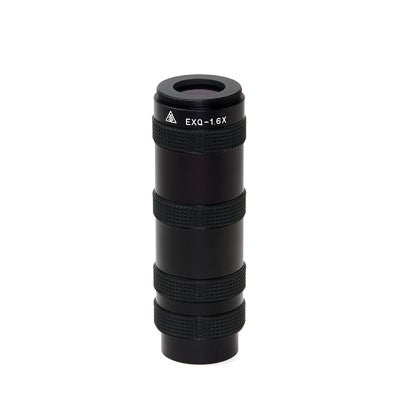
- Extenders: EX-Q 1.6x and EX-C2X extend the focal length further for planetary and lunar imaging — system charts for both are in the Downloads tab.
- Mount: sold as an OTA — no mount, rings, dovetail, diagonal or eyepiece included. At 3.3 kg plus a full imaging train, a mount rated for 8–10 kg of total payload is a reasonable starting point.
If you are not sure which reducer or flattener matches your sensor, send us your camera and filter setup and we will work it out with you.
Good to Know Before You Order
- This is an optical tube assembly. Mount, rings, dovetail, diagonal, eyepiece and finder are all sold separately.
- A flat field needs a corrector. At prime focus the field curves; the MFL 1.04x flattener corrects it across 44 mm.
- Back focus changes with every conversion lens. 223 mm at prime, 71.2 mm with the flattener, 74.1 mm with the reducer — the system charts in the Downloads tab list the exact parts for each.
- Fluorite needs ordinary care. The hard multicoatings protect it; standard optical cleaning practice is what it asks for.
Frequently Asked Questions
Is it difficult to set up?
No. At prime focus with a diagonal and eyepiece it is straightforward visual use. Imaging trains take more care because the spacing changes with each conversion lens, and the published system charts name the exact parts and distances — send us your camera and we will confirm the train with you.
What is it best used for?
Deep-sky imaging at 740 mm native, or wider at 480 mm with the FC-35RD reducer. The larger focuser and imaging-length tube distinguish it from the visual-oriented FC-100DC.
How is this different from the FC-100DC?
Same optical formula, different mechanics. The DF has a shorter 785 mm tube and a 2.7-inch focuser built for camera loads; the DC is the visual-oriented configuration.
Do I need a flattener for astrophotography?
For a flat field across an APS-C or full-frame sensor, yes — the MFL 1.04x flattener corrects the field curvature that shows at prime focus.
What mount does it need?
At 3.3 kg before accessories, most mid-weight imaging mounts handle it once a full imaging train is added. Tell us your setup and we will confirm the total payload.
When should this not be the choice?
For visual-only use where the extra focuser weight and imaging-length tube add nothing — the FC-100DC covers that use case at a lighter weight.
Bottom Line
In short: a 100 mm fluorite doublet apochromat built for imaging, at 740 mm and f/7.4 with 223 mm of back focus, reducing to 480 mm at f/4.8 or flattening to 760 mm at f/7.6 depending on the conversion lens fitted. It weighs 3.3 kg and pairs a 2.7-inch focuser with published system charts for every configuration.
Optical Diagram Reports
Takahashi publishes a spot diagram for the FC-100D optical design at prime focus, showing star images across the field at the design wavelengths.

| Optical design | 2 elements in 2 groups, Steinheil fluorite apochromat |
|---|---|
| Aperture | 100 mm |
| Focal length (prime focus) | 740 mm |
| Focal ratio (prime focus) | f/7.4 |
| Back focus (prime focus) | 223 mm |
| With FC/FS MFL 1.04x flattener | 760 mm, f/7.6, Φ44 mm image circle, 71.2 mm back focus |
| With FC-35RD 0.66x reducer | 480 mm, f/4.8, Φ44 mm image circle, 74.1 mm back focus |
| Tube length | 785 mm |
| External diameter | 95 mm |
| Dew shield diameter | 124 mm |
| Drawtube extension | 63 mm |
| Focuser | 2.7-inch rack-and-pinion |
| Weight | 3.3 kg |
| Case included | No |
Shopping Guide
- Takahashi English Catalog 2025 — PDF, 8.63 MB
System Charts, Diagrams and Adapter Guides
- FC-100DF System Chart — PDF, 105.2 kB
- FC-100DF FC-35RD Reducer System Chart — PDF, 33.2 kB
- FC-100DF EX-Q 1.6x Extender System Chart — PDF, 87.7 kB
- FC-100DF EX-C2X Extender System Chart — PDF, 79.9 kB
- Takahashi Telescope Backfocus Table — PDF, 71 kB
You may also like
Recently viewed
Recent Blog Posts
View all
Your Guide Graph Is Lying to You
Read More

D-Size vs V-Size: A Complete Guide to Telescope Dovetail Systems
Read More

What Is Back Focus in Astrophotography? Telescope Reducers, Flatteners, and Spacing Explained
Read More