


- Description
- Specifications
- Downloads
Product Overview
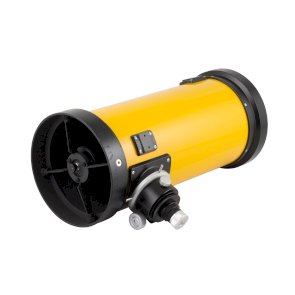
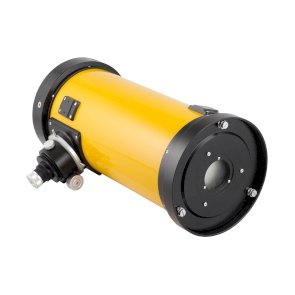
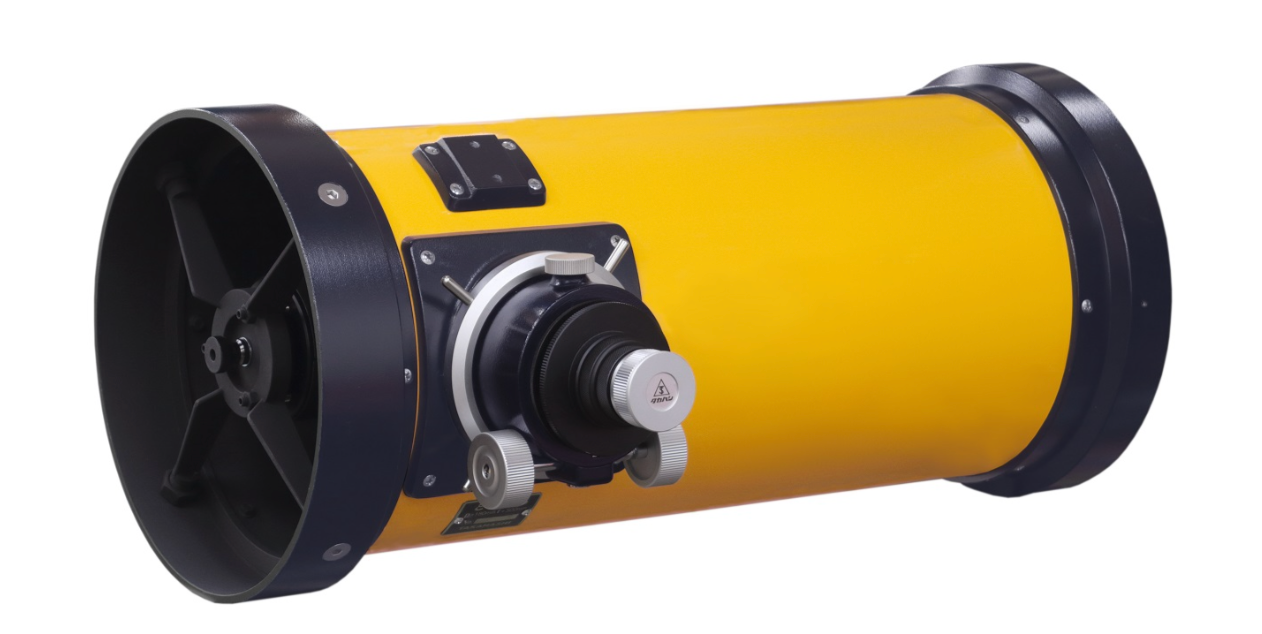
The Epsilon-180ED is Takahashi's largest and fastest Epsilon astrograph, a 180 mm hyperbolic Newtonian design running at a native f/2.8. A hyperbolic primary mirror, flat secondary, and an integrated field-flattening corrector combine inside the tube to put a flat 44 mm image circle 56.2 mm behind the focuser, with no separate corrector to buy or align. The published tube weight is 10.7 kg, putting it toward the upper end of what a mid-to-large equatorial mount should carry with a full imaging train attached.
Who It's For
This is a good match if your priority is imaging speed — f/2.8 gathers light quickly enough to shorten exposure times noticeably against slower optics, which matters most for faint, extended nebulosity. It suits an imager already running a fast reflector or astrograph, since the larger 180 mm mirror and 10.7 kg tube ask for a mount with real payload margin and benefit from a user comfortable checking collimation.
Key Features & Design
- Hyperbolic primary + flat secondary + integrated flattener: corrects coma and field curvature inside the tube, with no separate corrector to purchase or space.
- f/2.8 native speed: among the fastest astrograph designs Takahashi builds, cutting exposure times sharply against conventional reflectors.
- 44 mm image circle: covers full-frame and APS-C sensors with a flat field.
- Rack-and-pinion focuser with rotary framing and integrated Camera Angle Adjuster: rotates the imaging train to frame a target without loosening the tube rings.
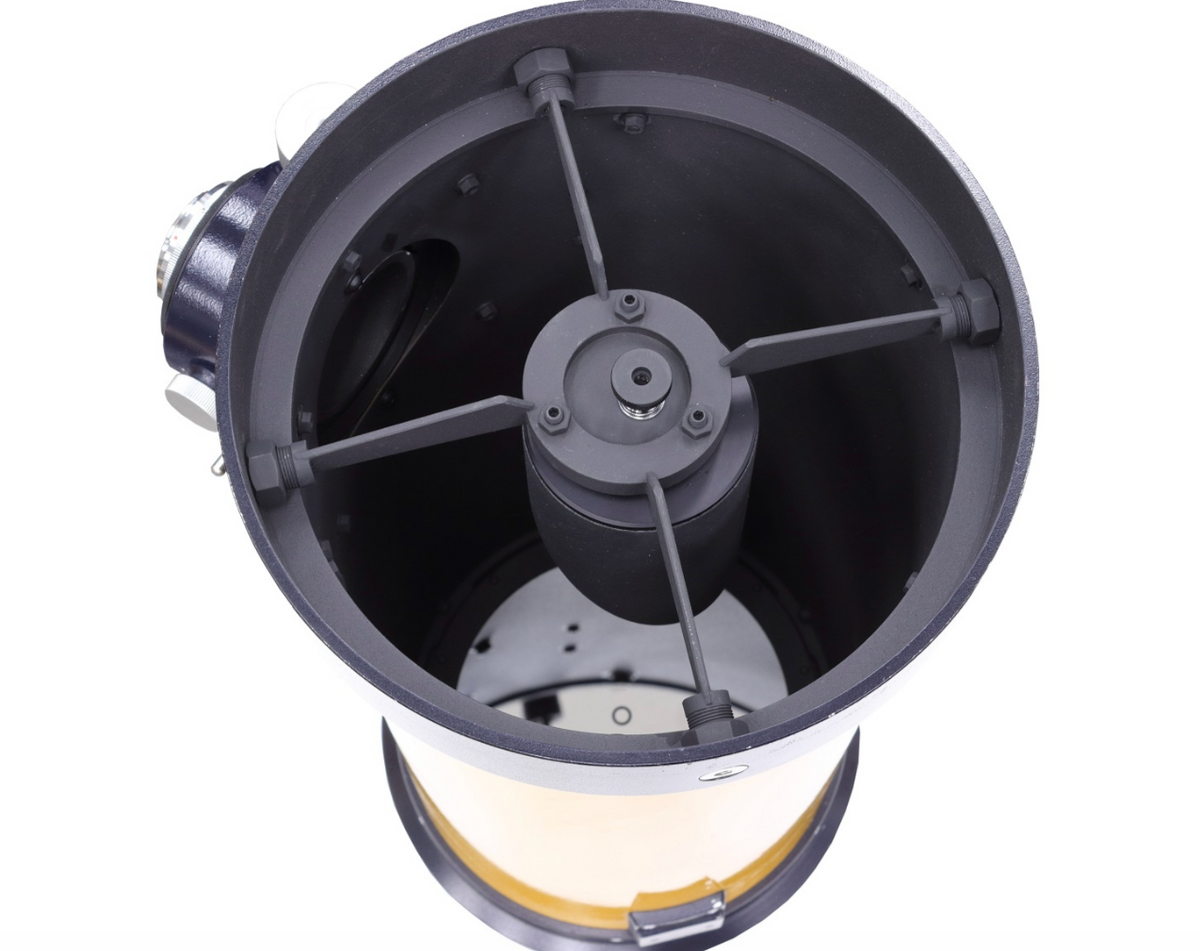
- Accessible collimation with reference marks on both mirrors: makes checking and adjusting the optical alignment more direct than on a typical Newtonian.
Optical / Mechanical Design
The Epsilon-180ED combines a 180 mm hyperbolic primary with a flat secondary and a built-in multi-element field flattener — the same modified-hyperbolic-Newtonian family as the smaller Epsilon-160ED, scaled up to a larger primary and a faster f/2.8. Takahashi's own comparison places this design's chromatic performance below that of a conventional Schmidt camera at the same speed, while keeping the focal plane flat without a curved plate or field corrector as a separate purchase. Back focus is fixed at 56.2 mm from the focuser's rear end. An optional Ɛ-EX 180ED extender changes the configuration to 780 mm at f/4.3, holding the same 44 mm image circle and 56.2 mm back focus, for imagers who want a longer effective focal length on the same tube.
Recommended Uses
Fast deep-sky astrophotography of faint nebulae, galaxies and extended objects where exposure time matters; narrowband and broadband imaging with a cooled CMOS or CCD camera; observatory imaging setups built around a large, fast reflector.
Compatibility and Accessory Notes
The 56.2 mm back focus is fixed by the integrated flattener and measured from the rear of the focuser to the focal plane — camera body, filter wheel and any off-axis guider all need to fit within that figure together. The Takahashi Back Focus Guide covers this figure and the Ɛ-EX 180ED extender configuration, and we're glad to check a specific camera and filter setup against it before you order. As a Newtonian-derived design, the mirrors benefit from a collimation check after transport, and the built-in reference marks make that a more direct process than on many reflectors.
Good to Know Before You Order
Not built for eyepiece observing: the fast mirror and fixed-backfocus flattener are matched to a camera sensor.
A larger mount than the Epsilon-160ED needs: at 10.7 kg published weight, this is a heavier tube than Takahashi's smaller Epsilon models and is worth checking against your mount's imaging payload rating, not just its rated visual capacity.
Mount and tripod are not included: this listing is the optical tube assembly only.
Frequently Asked Questions
Is it difficult to set up?
The flattener is built in, so there is no separate corrector to space out. Collimation is the part that takes practice on any fast Newtonian-derived design, and the reference marks on both mirrors here are built to make that check more direct.
What is it best used for?
Fast deep-sky astrophotography where exposure time and light-gathering speed matter more than reach — faint nebulae, galaxies and wide extended targets.
Can I use it for visual observing?
It has no real application in a visual eyepiece train; the flattener and back focus are set for a camera sensor.
What cameras does it fit?
Any cooled CMOS or CCD astronomy camera reaching the 56.2 mm back focus with its own nosepiece, filter wheel or off-axis guider included in that figure — send us your camera and filter setup and we will work it out with you.
How is this different from the Epsilon-160ED?
The 180ED is larger and faster — 180 mm aperture at f/2.8 against 160 mm at f/3.3 — and correspondingly heavier at 10.7 kg against 6.9 kg.
Bottom Line
In short: a 180 mm f/2.8 hyperbolic astrograph with the flattener built in, delivering a flat 44 mm image circle at a fixed 56.2 mm back focus for imagers who want the fastest deep-sky speed Takahashi's Epsilon line offers.
| Optical design | Modified hyperbolic Newtonian astrograph (hyperbolic primary mirror, flat secondary, integrated field flattener) |
|---|---|
| Aperture | 180 mm |
| Focal length | 500 mm |
| Focal ratio | f/2.8 |
| Image circle | 44 mm |
| Back focus | 56.2 mm |
| External tube diameter | 232 mm (264 mm at front end) |
| Tube length | 570 mm |
| Drawtube extension | 23 mm |
| Focuser | Rack-and-pinion with rotary framing and integrated Camera Angle Adjuster |
| Weight | 10.7 kg |
| With Ə-EX 180ED extender | 780 mm, f/4.3, 44 mm image circle, 56.2 mm back focus |
Shopping Guide
- Takahashi English Catalog 2025 — PDF, 8.63 MB
System Charts, Diagrams and Adapter Guides
- Takahashi Telescope Backfocus Table — PDF, 71 kB
- Epsilon-180ED System Chart — PDF
Manuals
You may also like
Recently viewed
Recent Blog Posts
View all
Your Guide Graph Is Lying to You
Read More
D-Size vs V-Size: A Complete Guide to Telescope Dovetail Systems
Read More
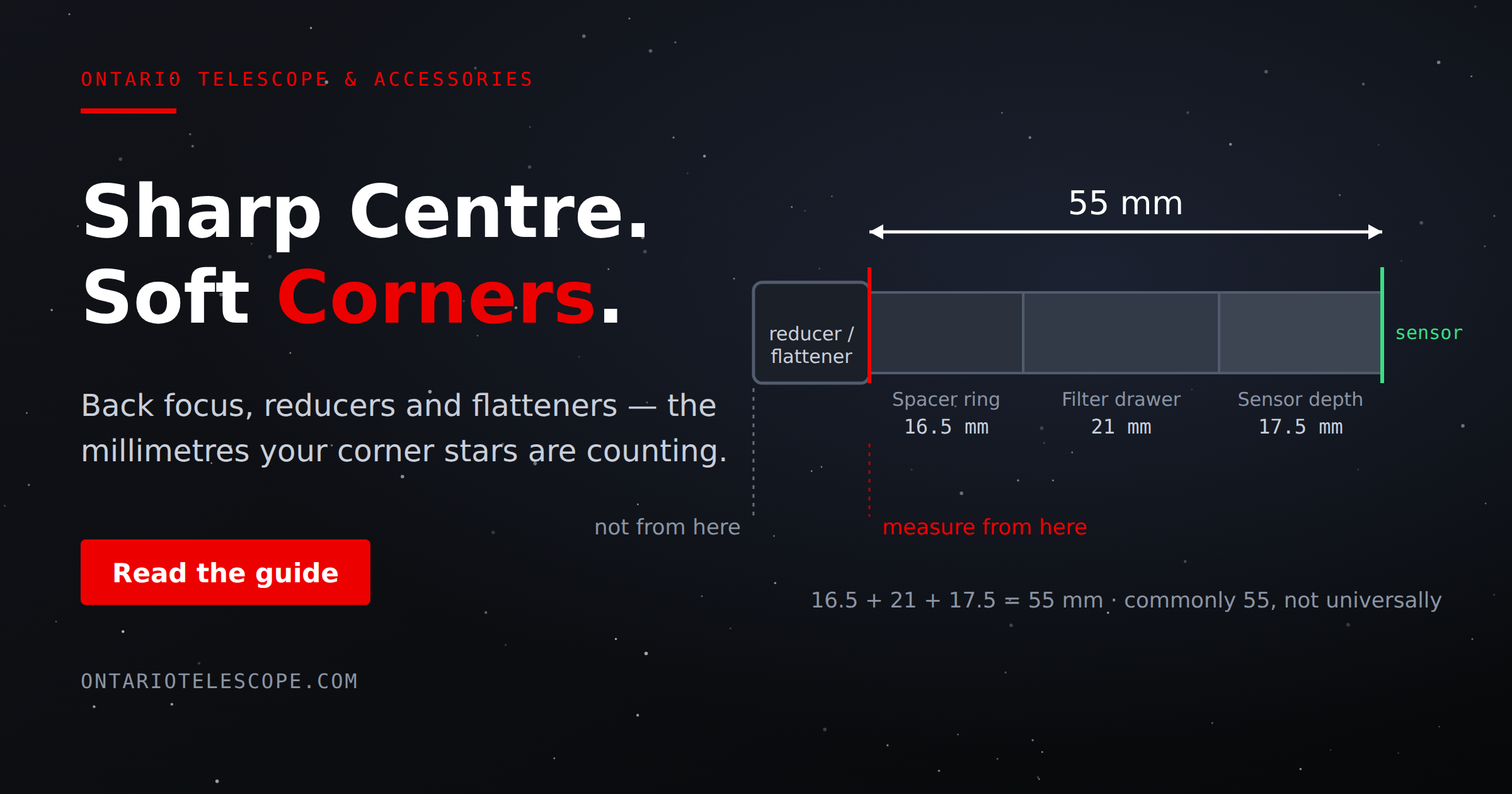
What Is Back Focus in Astrophotography? Telescope Reducers, Flatteners, and Spacing Explained
Read More