

- Description
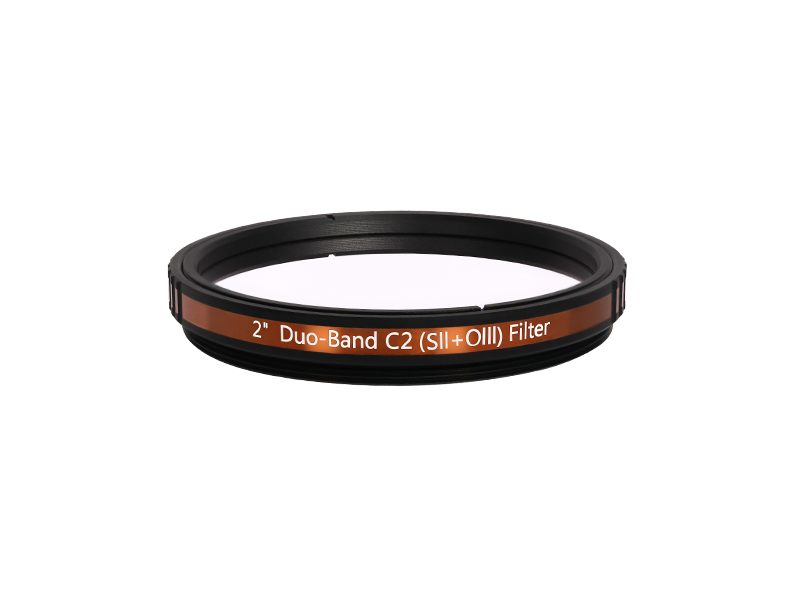
Colour Magic C 2" Duo-band filter is a professional astrophotography tool specifically designed for deep-sky imaging. The Colour Magic C2 duo-band filter is SII+OIII filter.
When shooting deep-sky galaxies with color cameras, a duo-band filter in the Hα +OⅢ bands is often used; whereas with a mono camera, a narrowband filter in the Hα, SⅡ, and OⅢ bands is often used, leaving users with color cameras missing one band of nebula detail. This can be compensated by using the Colour Magic C Duo-band filter (SⅡ+OIII) mentioned above.
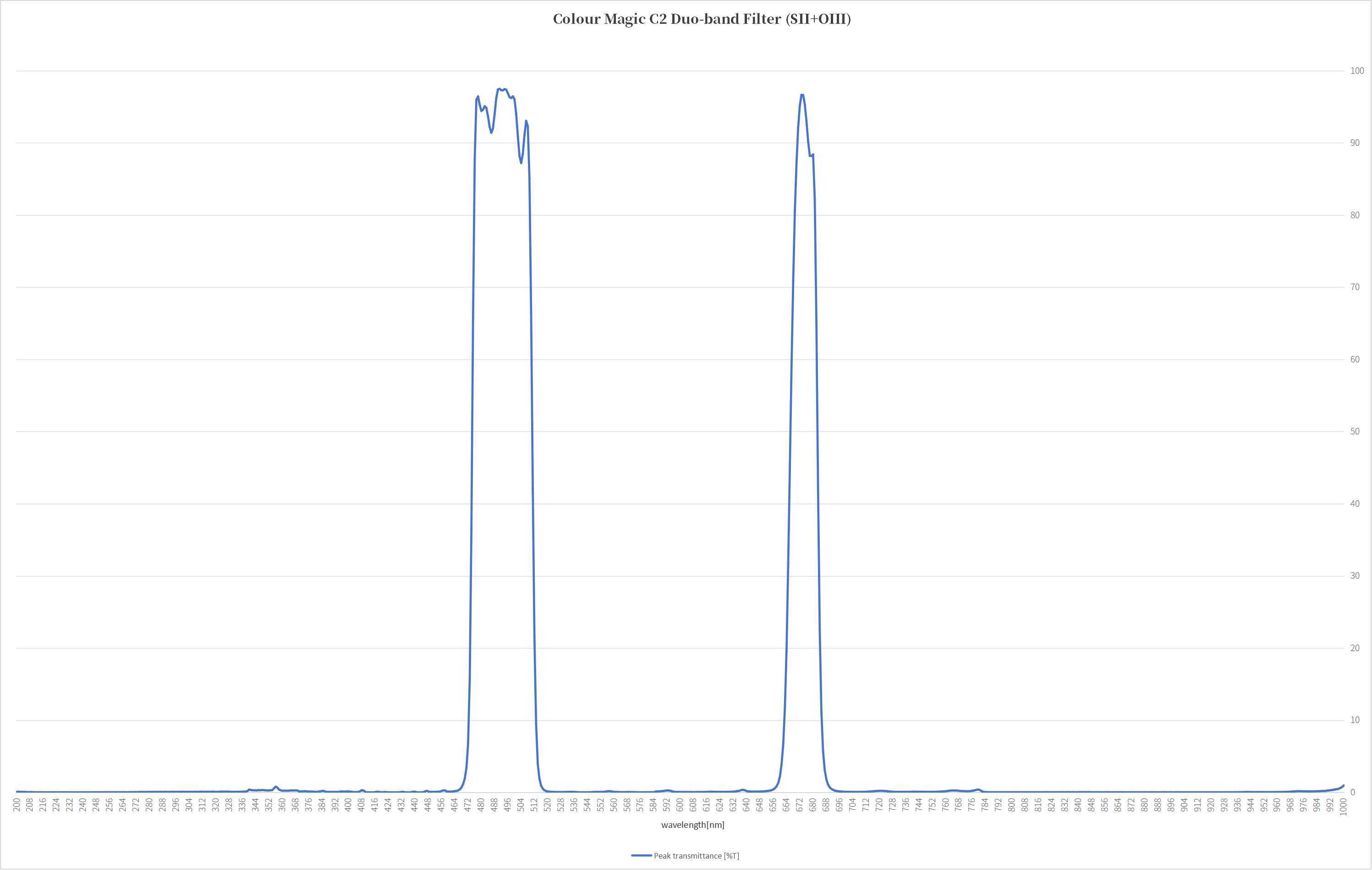
Colour Magic C2 Duo-band filter (SII+OIII) has a high transmittance of over 90% at its center wavelength (500.7nm and 672nm). It can effectively improve the quality of the image by making the sky background of the image darker while maximizing the contrast throughout the image, enhancing the contrast of your pictures, and making it easier to display the details of the stars. In areas with very serious light pollution, this filter can also selectively filter light pollution and cluttered signals through the emission lights of the nebula to achieve the ideal shooting effect.
Specifications
|
C2 Duo-band Filter (OIII & SⅡ) 2” |
||
|
FWHM |
OIII:35nm±5nm/SⅡ:15nm±3nm |
|
|
CWL |
500.7nm & 672nm |
|
|
Peak transmittance |
90% |
|
|
Thickness |
2 ± 0.05mm |
|
|
Barrier property |
OD3 @ 200-1000nm |
|
|
Surface finish |
60/40 |
|
|
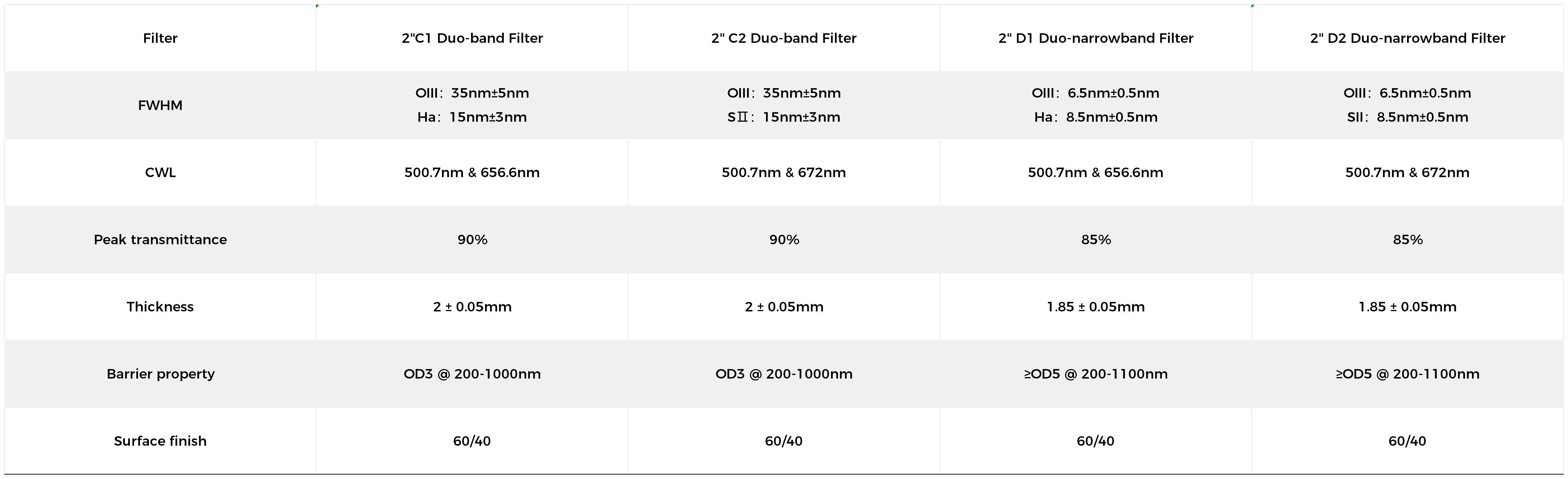
C Filters VS D Filters |
|
C Transmittance |
Video
Images

IC 1848 Soul Nebula(SOO) | ASKAR 103APO+0.6x Full-frame Reducer+ASI 2600MC Pro | Colour Magic C2 Duo-band Filter (SII+OIII)
You may also like
Recently viewed
Recent Blog Posts
View all
Your Guide Graph Is Lying to You
Read More
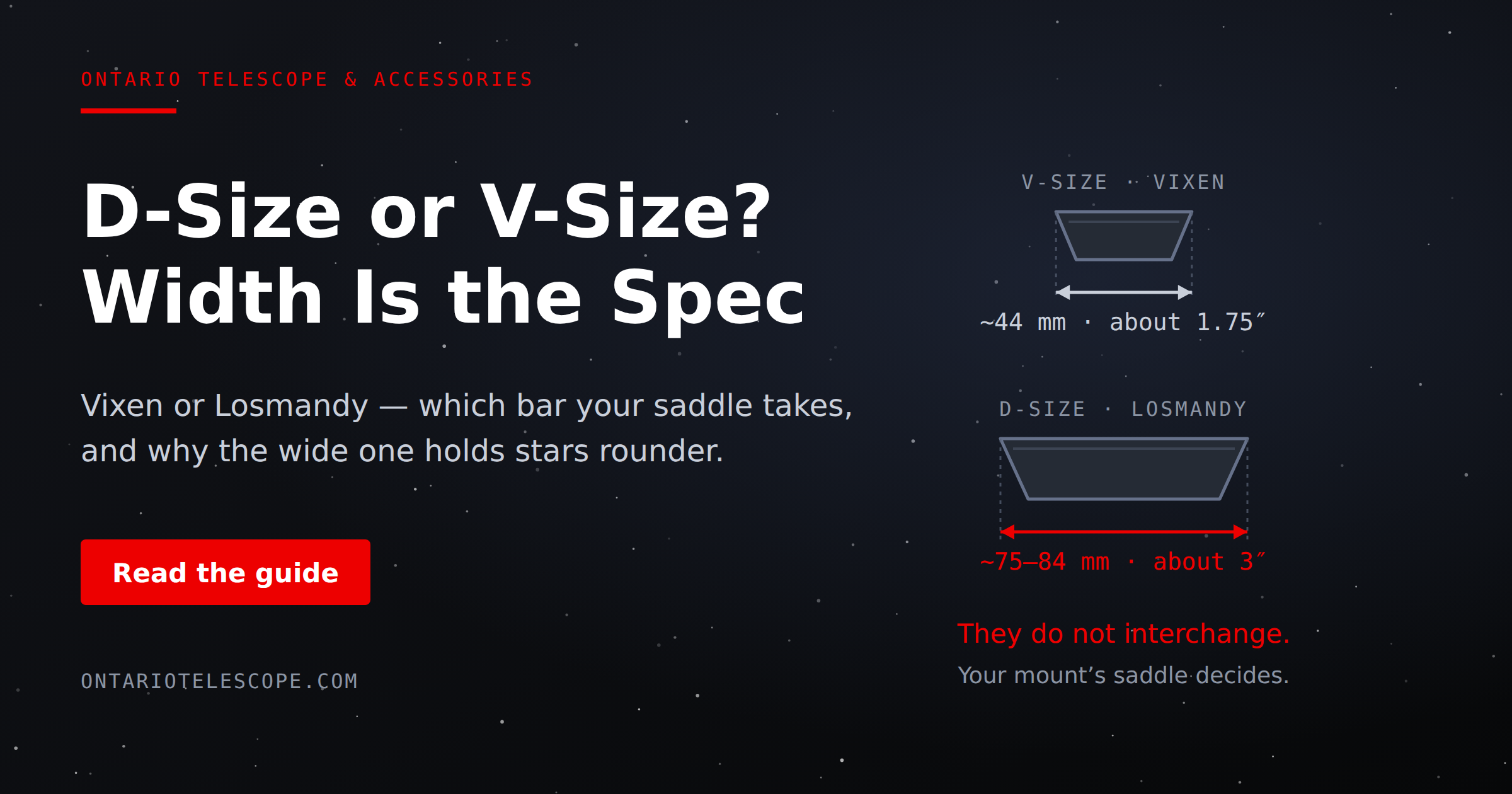
D-Size vs V-Size: A Complete Guide to Telescope Dovetail Systems
Read More
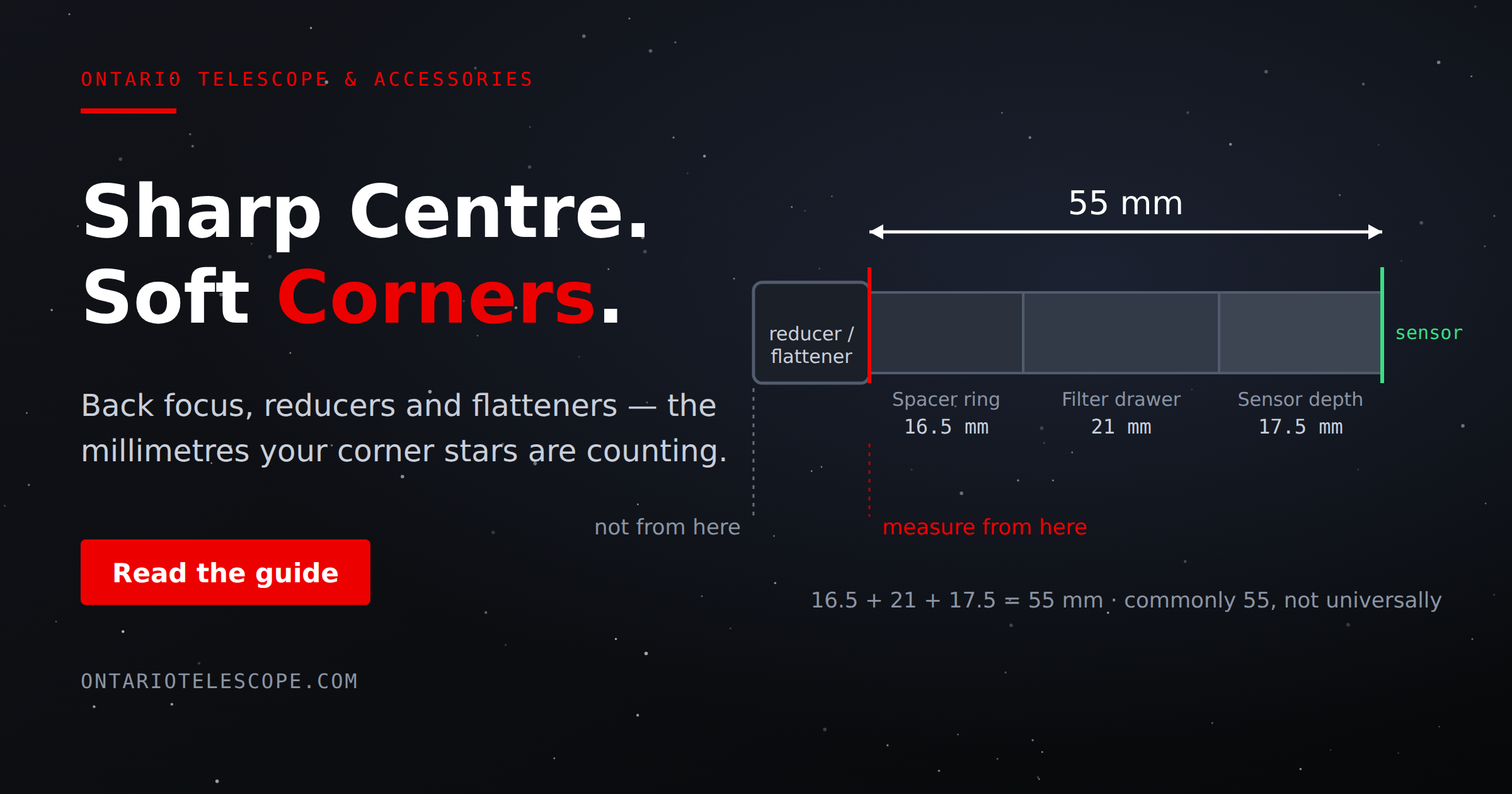
What Is Back Focus in Astrophotography? Telescope Reducers, Flatteners, and Spacing Explained
Read More