




- Description
- Specifications

Product Overview
The Pegasus Astro Saddle Powerbox is a CNC-machined aluminium telescope saddle with a complete power and USB hub built into its body. It replaces the plain saddle on top of your mount, takes a Losmandy 3″ or Vixen dovetail, and puts 12 V power, two PWM dew heater channels, a powered USB3 hub and an ambient temperature and humidity sensor directly under the telescope. Your camera, focuser, dew straps and guide camera all connect a few centimetres away, so only one power lead and one USB cable run down to the mount.
It distributes up to 10 A (120 W) in total from a 12 V supply, carries telescopes and imaging trains up to 40 kg (88 lb), and is controlled through ASCOM, INDI or Pegasus Astro's own Unity platform. Once configured, it runs standalone and keeps its settings through a power cycle.
Who It's For
This is a good match if you image deep-sky targets from a portable or backyard rig and want to cut the cable bundle that drags on your mount's axes, or if you run a permanent observatory setup and want power, dew control and USB managed from software. It mounts directly on the Pegasus NYX-101, and fits ZWO, Sky-Watcher, iOptron, Rainbow Astro and Avalon mounts through a dedicated puck, listed below.
Key Features & Design

- Four 12 V DC outputs: 5.5 × 2.1 mm centre-positive sockets, switched together on or off in software. The two dew channels can also be set to constant 12 V, giving six 12 V outputs in total.
- 10 A (120 W) total distributed current: comfortably above the 5–7 A a typical imaging rig draws.
- Two PWM dew heater channels: 2.1 mm outputs rated at 4 A each in Pegasus Astro's specification table, with power set from software or left on automatic dew control driven by the onboard sensor. Two 2.1 mm to RCA pigtails are included for RCA-terminated heater straps.
- Powered USB3 hub: 2 × USB3.1 and 2 × USB2 ports, with USB3 ports backward compatible with USB2 devices. One high-power port supplies up to 3 A, enough to run a Raspberry Pi 3 or 4.
- Power metering: live readings of power, current and input voltage (5–15 V voltmeter range).
- Environmental sensor: ambient temperature (−40 to 80 °C, ±0.5 °C) and humidity (0–100 %), with the dew point calculated from both.
- Protection: reverse polarity protection, an automatic output cut-off above 14.5 V input, and a hardware watchdog that resets the unit if the controller stops responding for two seconds.
- Standalone operation: output and dew settings are retained through a power cycle, so a PC is not required once it is set up. Firmware is upgradable.
- LED status indicators: show power faults, and can be turned off in software for a dark site.


Mechanical Design
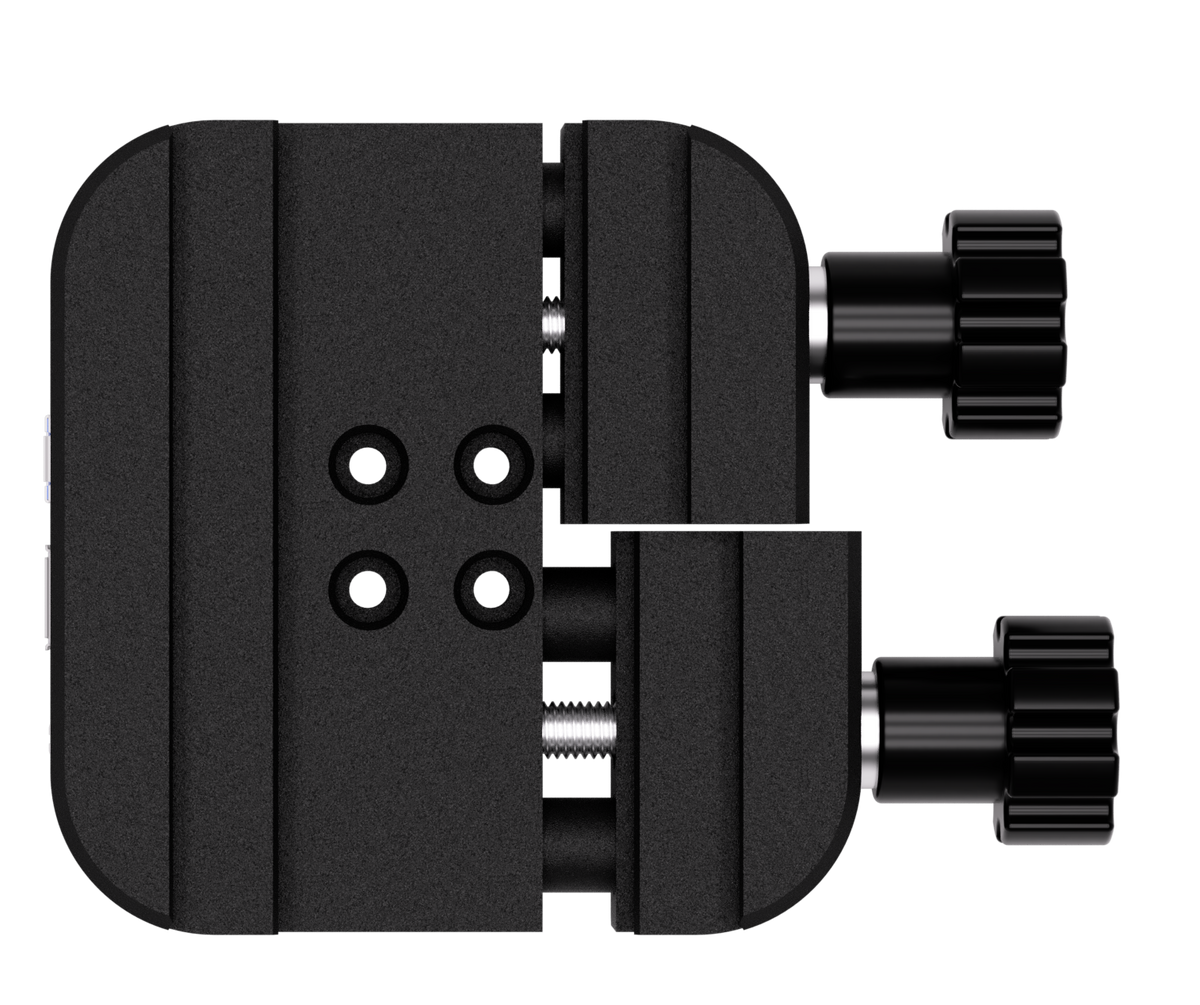
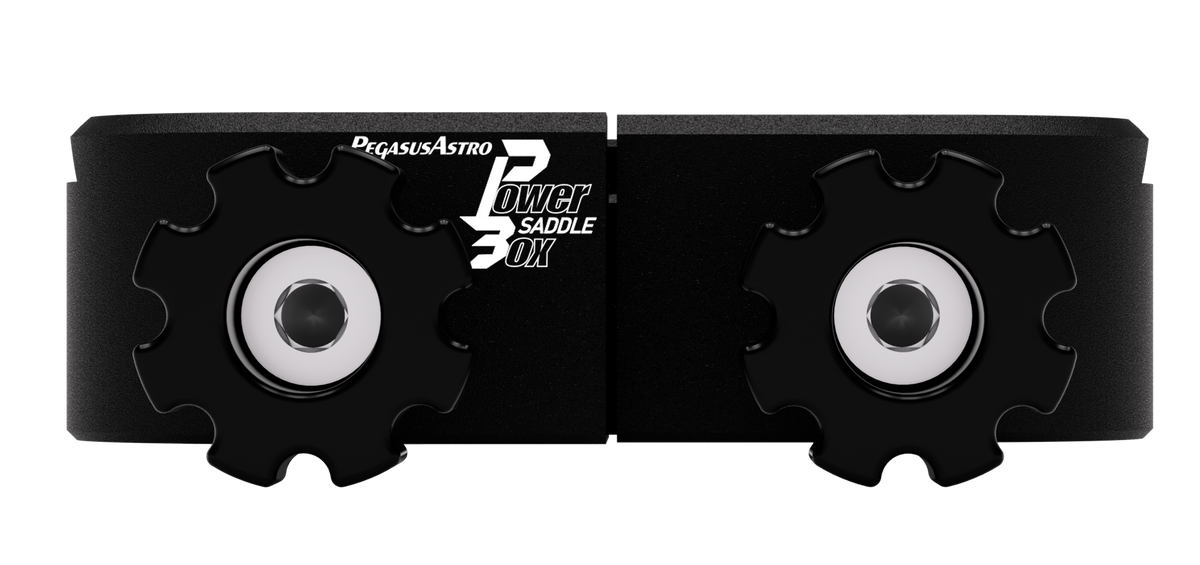
The body is machined from 6061 aircraft-grade aluminium and black anodised, measuring 110 × 110 × 32 mm. The clamp accepts both Losmandy 3″ and Vixen dovetail bars, and two adjustable knobs secure the plate. Pegasus Astro rates the saddle for payloads up to 40 kg (88 lb). The saddle attaches to the mount through a puck matched to the mount head, secured with the four M5 bolts supplied; the NYX-101 takes the saddle directly with no puck. Pegasus Astro publishes a clamp adjustment guide for setting knob tension.


Recommended Uses
- Deep-sky imaging rigs: powering a cooled camera, electronic focuser, filter wheel and guide camera from the saddle, with a single USB3 link to your PC, mini PC or controller.
- Dew control: running two heater straps — main optic and guide scope, for example — on automatic control from the dew point.
- Raspberry Pi or Stellarmate setups: powering the controller from the 3 A USB port and running the hub through INDI.
- Observatory automation: switching outputs and reading environmental data through ASCOM (ObservingConditions and Switch drivers) or the Unity REST JSON API.

Compatibility and Accessory Notes
Mount pucks. The NYX-101 takes the Saddle Powerbox directly. Every other mount needs the puck made for it, sold separately:
- ZWO AM5 and AM3: PEG-PUCK-AM5
- Sky-Watcher NEQ6 and EQ6-R: PEG-PUCK-EQ6R
- Sky-Watcher AZ-EQ6 (Pro): PEG-PUCK-EQ6AZ
- Sky-Watcher HEQ5: PEG-PUCK-HEQ5
- Sky-Watcher Star Adventurer GTi: PEG-PUCK-SAGTi
- iOptron CEM26 and GEM28: PEG-PUCK-iCEM26GEM28
- Rainbow Astro RST-135 and RST-300: PEG-PUCK-RST
- Avalon M-UNO and LINEAR: PEG-PUCK-UNO
Power input. The input is a 5.5 × 2.1 mm centre-positive barrel socket. Pegasus Astro recommends its certified 12 V / 10 A supply, PEG-PSU-21. In the field, a 12–14 V LiFePO4 battery able to supply at least 8 A — and up to 10 A at peak — does the same job. Short, heavy-gauge power leads keep voltage drop down.

USB. The hub connects to your computer through a USB3 Type-B input, and Pegasus Astro recommends keeping that cable to 3 m or less. Each port delivers up to 2.5 A, with 3.5 A shared across all USB ports. Shorter Pegasus USB3 Type-A to Type-B cables keep the leads from camera and filter wheel to the hub tidy.
Software. ASCOM 6 drivers (ObservingConditions and Switch), INDI (including Stellarmate), and the Pegasus Astro Unity platform with REST JSON API.
What's in the Box
- 1 × Saddle Powerbox
- 2 × DC 2.1 mm male to male power cables, 1.0 m
- 2 × DC 2.1 mm male to male power cables, 0.5 m
- 2 × DC 2.1 mm male to RCA female pigtails, 0.15 m
- 1 × USB3 Type-A to Type-B cable, 1.8 m
- 4 × M5 bolts for the saddle-to-puck connection


Good to Know Before You Order
- Mount puck sold separately: apart from the NYX-101, every mount needs its matching puck from the list above. If your mount is not listed, send us the model and we will check the fit with you.
- No power supply in the box: the PEG-PSU-21 12 V / 10 A supply or a suitable 12–14 V battery is needed.
- Input voltage range: the unit runs on 11–14.5 V and cuts its outputs automatically above 14.5 V; Pegasus Astro rates the board for a maximum of 15 V DC input. Pegasus Astro does not recommend running it from a step-up converter.
- Shared 10 A budget: the 10 A total covers all 12 V outputs and dew channels together, so a rig with a large cooled camera and two heaters at full power is worth adding up before the first night.
- Operating environment: −20 °C to +60 °C, up to 99 % humidity.
Frequently Asked Questions
Is it difficult to set up?
No. Bolt the puck to your mount, fix the saddle to the puck with the four M5 bolts supplied, then connect 12 V and the USB3 cable. Out of the box the four outputs pass DC straight through and the dew channels run on automatic control, so it works before any software is installed. Unity, ASCOM or INDI then gives you per-channel control.
Which mounts does it fit?
The Pegasus NYX-101 directly, and the ZWO AM5 and AM3, Sky-Watcher NEQ6, EQ6-R, AZ-EQ6, HEQ5 and Star Adventurer GTi, iOptron CEM26 and GEM28, Rainbow Astro RST-135 and RST-300, and Avalon M-UNO and LINEAR through their dedicated pucks.
Does it take Losmandy or Vixen dovetails?
Both. The clamp accepts Losmandy 3″ and Vixen bars.
How much weight can it carry?
Pegasus Astro rates it for payloads up to 40 kg (88 lb). Your mount's own payload rating still sets the practical limit.
Can it run without a computer?
Yes. Output and dew settings are stored in the unit and restored after a power cycle, so it can run standalone once configured.
Can it power a Raspberry Pi?
Yes — the high-power USB port supplies up to 3 A, which covers a Raspberry Pi 3 or 4. It is also supported under INDI and Stellarmate.
How is it different from the Pocket Powerbox or Ultimate Powerbox?
The power and USB functions sit in the telescope saddle itself rather than in a separate box strapped to the tube or tripod, so there is one less part on the rig and the cabling stays short.
Bottom Line
In short: a Losmandy and Vixen saddle with 10 A of 12 V distribution, two auto-controlled dew channels, a powered USB3 hub and an environmental sensor built in. It needs the puck for your mount and a 12 V / 10 A supply or battery, and in return turns the cable bundle on your mount into one power lead and one USB cable.
| Product type | Telescope saddle with integrated power distribution and USB3 hub |
|---|---|
| Dovetail compatibility | Losmandy 3″ and Vixen |
| Supported payload | Up to 40 kg (88 lb) |
| Dimensions | 110 × 110 × 32 mm |
| Material | CNC 6061 aluminium, black anodised |
| Mount attachment | Direct on NYX-101; other mounts via dedicated puck (sold separately) |
| Supply voltage | 12–14 V DC (outputs cut off above 14.5 V; 15 V DC absolute maximum) |
| Input connector | 5.5 × 2.1 mm barrel, centre positive |
| Total current | 10 A (120 W) |
| 12 V outputs | 4 × 5.5 × 2.1 mm, switched collectively (6 with dew channels set to constant 12 V) |
| Dew heater outputs | 2 × PWM, 2.1 mm, 4 A per channel; automatic dew control |
| USB hub | 2 × USB3.1, 2 × USB2; USB3 Type-B input |
| USB power | Up to 2.5 A per port; high-power port up to 3 A; 3.5 A total |
| Voltmeter range | 5–15 V |
| Temperature sensor | −40 to 80 °C, ±0.5 °C |
| Humidity sensor | 0–100 % |
| Protection | Reverse polarity protection, over-voltage cut-off, hardware watchdog |
| Software | ASCOM 6 (ObservingConditions, Switch), INDI / Stellarmate, Pegasus Unity with REST JSON API |
| Operating environment | −20 °C to +60 °C, up to 99 % humidity |
| Included | 2 × 1.0 m and 2 × 0.5 m DC 2.1 mm cables, 2 × DC 2.1 mm to RCA pigtails (0.15 m), 1.8 m USB3 A-B cable, 4 × M5 bolts |
| Weight | Not published by Pegasus Astro |
| Warranty | 2 years (manufacturer) |
You may also like
Recently viewed
Recent Blog Posts
View all
Your Guide Graph Is Lying to You
Read More
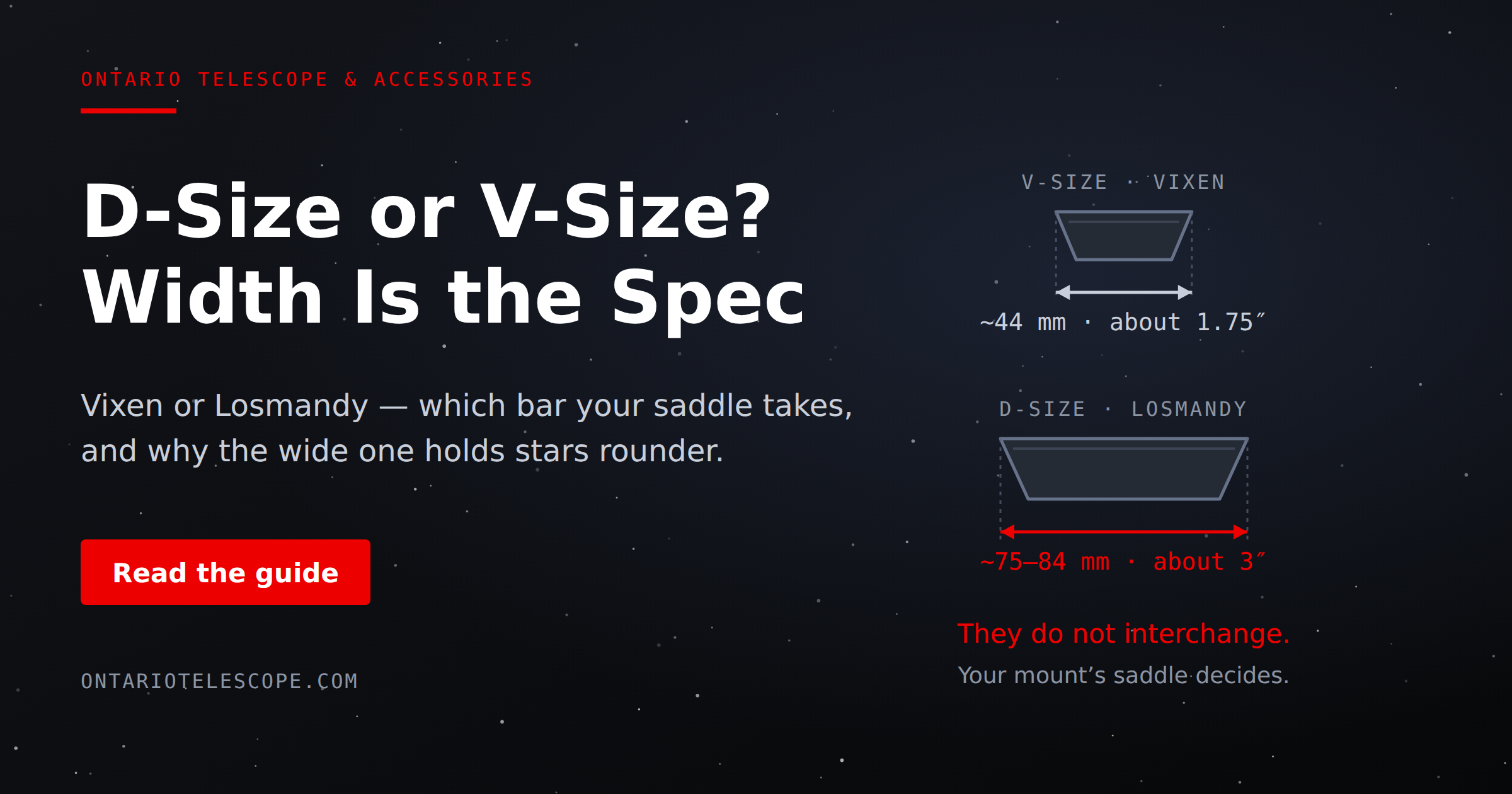
D-Size vs V-Size: A Complete Guide to Telescope Dovetail Systems
Read More
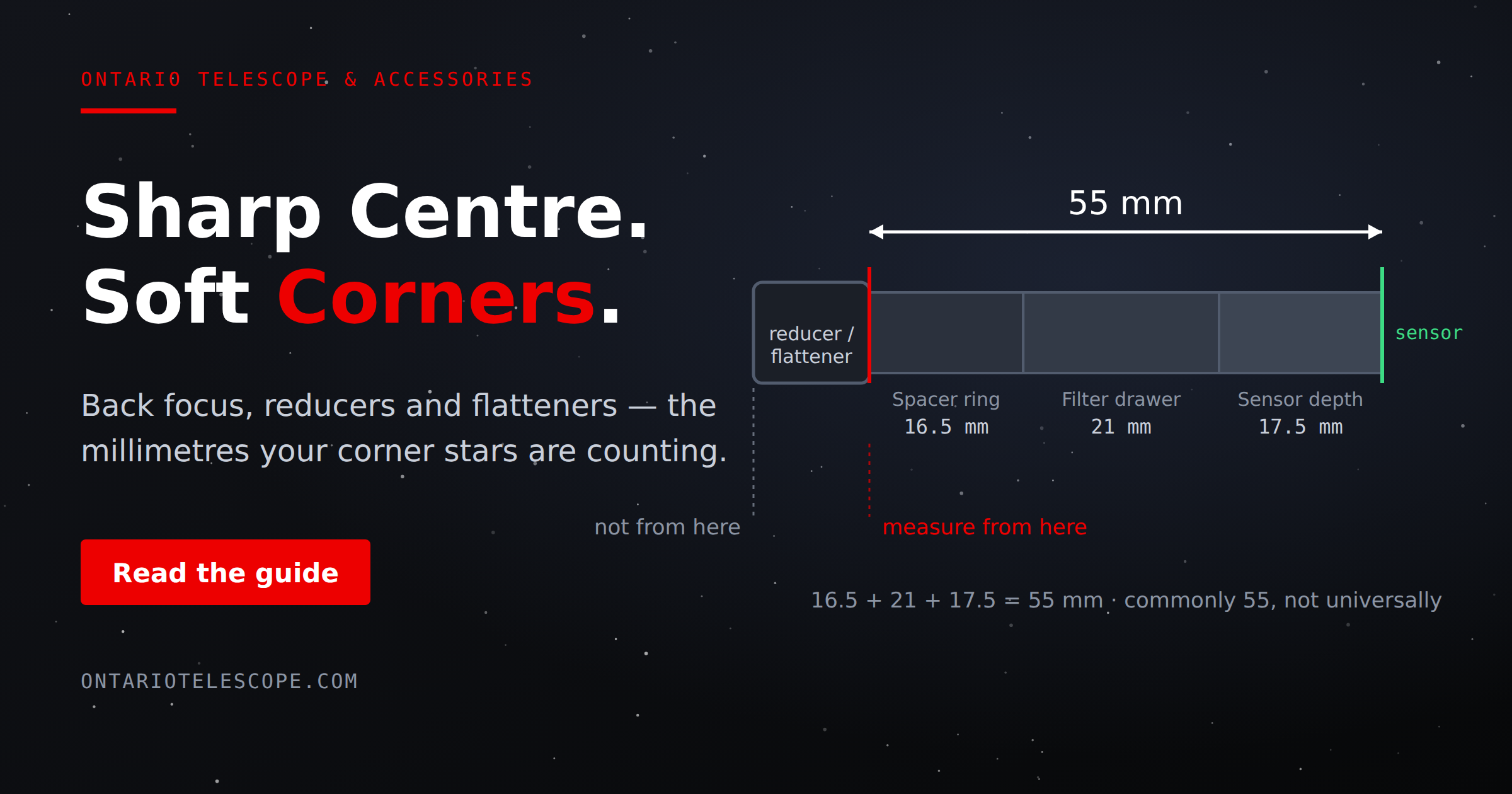
What Is Back Focus in Astrophotography? Telescope Reducers, Flatteners, and Spacing Explained
Read More