
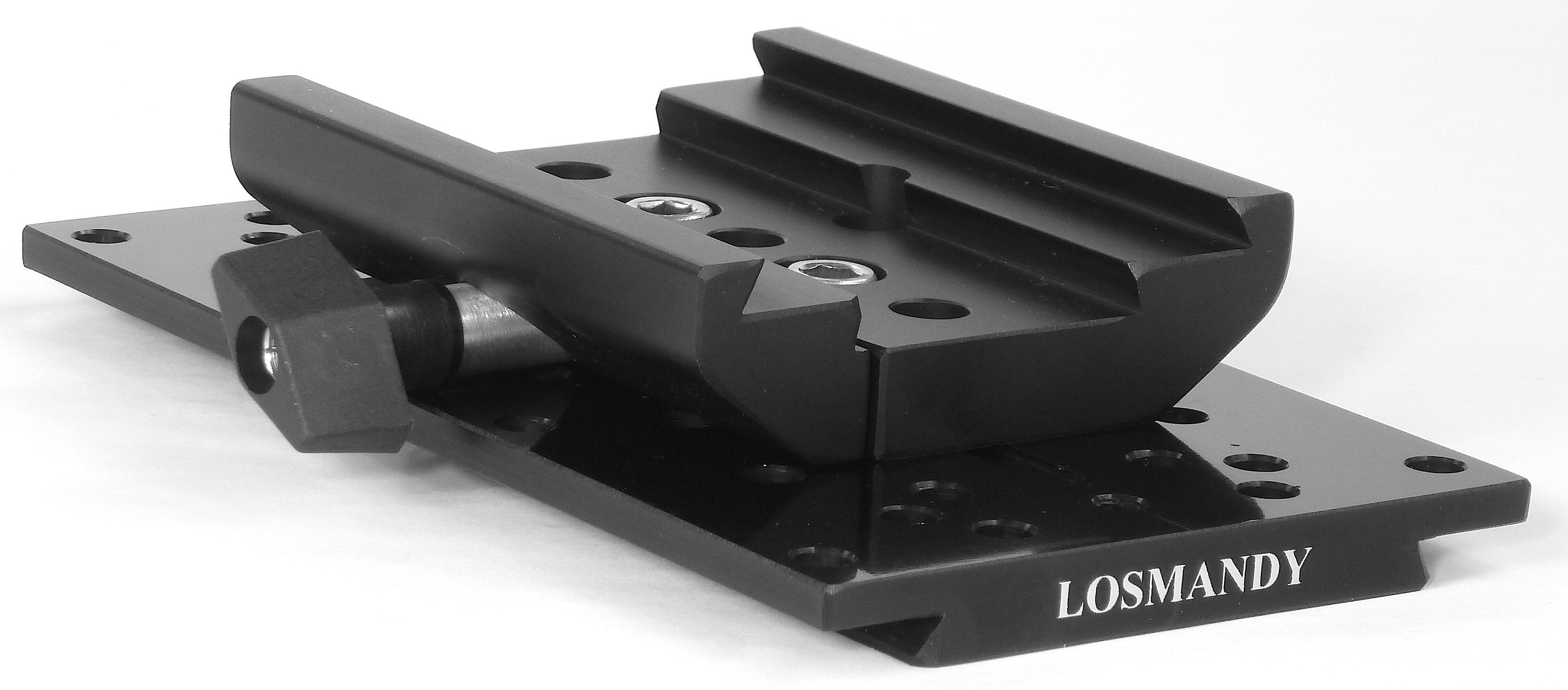

- Description
- Specifications
Product Overview
The DVADAPTER is a male D-series saddle adapter: it presents a Losmandy D-series dovetail on the underside and a saddle on top that accepts either a D-series or a Vixen-style V-series plate. Clamped into a Losmandy saddle, it turns that saddle into one that takes V-series dovetails.
Who It's For
Vixen-style plates are the small-telescope standard, and most people who own a Losmandy mount also own something that came on one — a travel refractor, a guide scope, a camera lens bracket. Rather than re-plating that instrument, this adapter goes into the Losmandy saddle and accepts the V-series plate as it is. It works the other way too: it gives you a second D-series saddle wherever you clamp it.
Key Features & Design
- Male D-series dovetail underneath, clamping into any Losmandy saddle.
- Saddle on top accepting D-series or Vixen-style V-series plates.
- Machined aluminium.
- No tools needed to change instruments once the adapter is in place — it clamps like any saddle.
Recommended Uses
Putting a Vixen-plated telescope onto a Losmandy mount without changing its plate. Mounting a guide scope, small refractor or camera bracket that arrived on a V-series plate. Adding a second saddle to a plate or a side-by-side platform. Swapping quickly between instruments that use different dovetail standards.
Compatibility and Accessory Notes
- Below: any Losmandy D-series saddle — the G-11 saddle, the GM8 saddle plate, the AZ8 saddles, or both saddles on the DVSBS.
- Above: Losmandy D-series plates, or Vixen-style V-series plates. We stock the V-series universal plates in 4", 7", 11" and 14".
- Different approach: the DVA dovetail adapter solves the reverse problem — it bolts to rings or a tube to give an instrument a clamp that fits both D and V plates.
- Both Losmandy saddles already take V plates: the G-11 and GM8 saddles accept D and V natively, so this adapter is for adding a saddle rather than for basic V compatibility on the mount itself.
Good to Know Before You Order
- Losmandy's own saddles already accept V-series plates. If all you need is to put a Vixen-plated tube on a G-11 or GM 8, you may not need this at all — tell us your setup and we will say so rather than sell you a part you can skip.
- Every adapter adds height, which raises the instrument above the declination axis and changes the balance. On a long tube that is worth a thought before ordering.
- Losmandy publishes no weight or dimensions for this part. Ask us if either matters to your build and we will measure the one in stock.
- Specifications are Losmandy's published figures.
Frequently Asked Questions
Is it difficult to set up?
No. It clamps into your existing saddle, and your plate clamps into it.
What does it let me do?
Mount a D-series or Vixen-style V-series plate wherever you have a Losmandy D-series saddle.
Do I need it for a Vixen plate on my G-11?
Probably not — the G-11 saddle accepts V-series plates already. It is more useful for adding a saddle somewhere else in the setup.
How is it different from the DVA?
This provides a saddle above a dovetail. The DVA provides a clamp that bolts to rings or a tube, so the instrument itself can sit on a plate.
Can I use it on a side-by-side plate?
Yes — that is one of the more useful places for it.
Bottom Line
In short: a male D-series dovetail underneath, a saddle on top that takes D or Vixen-style V plates — the part that adds a saddle, or a V-series interface, wherever a Losmandy dovetail already exists.
| Model | Losmandy DVADAPTER D to V adapter plate |
|---|---|
| Function | Male D-series saddle adapter — D-series dovetail below, saddle above |
| Accepts above | Losmandy D-series or Vixen-style V-series plates |
| Fits below | Any Losmandy D-series saddle |
| Material | Machined aluminium |
| Weight and dimensions | Not published by Losmandy |
| Source | Losmandy DVA adapter product data |
You may also like
Recently viewed
Recent Blog Posts
View all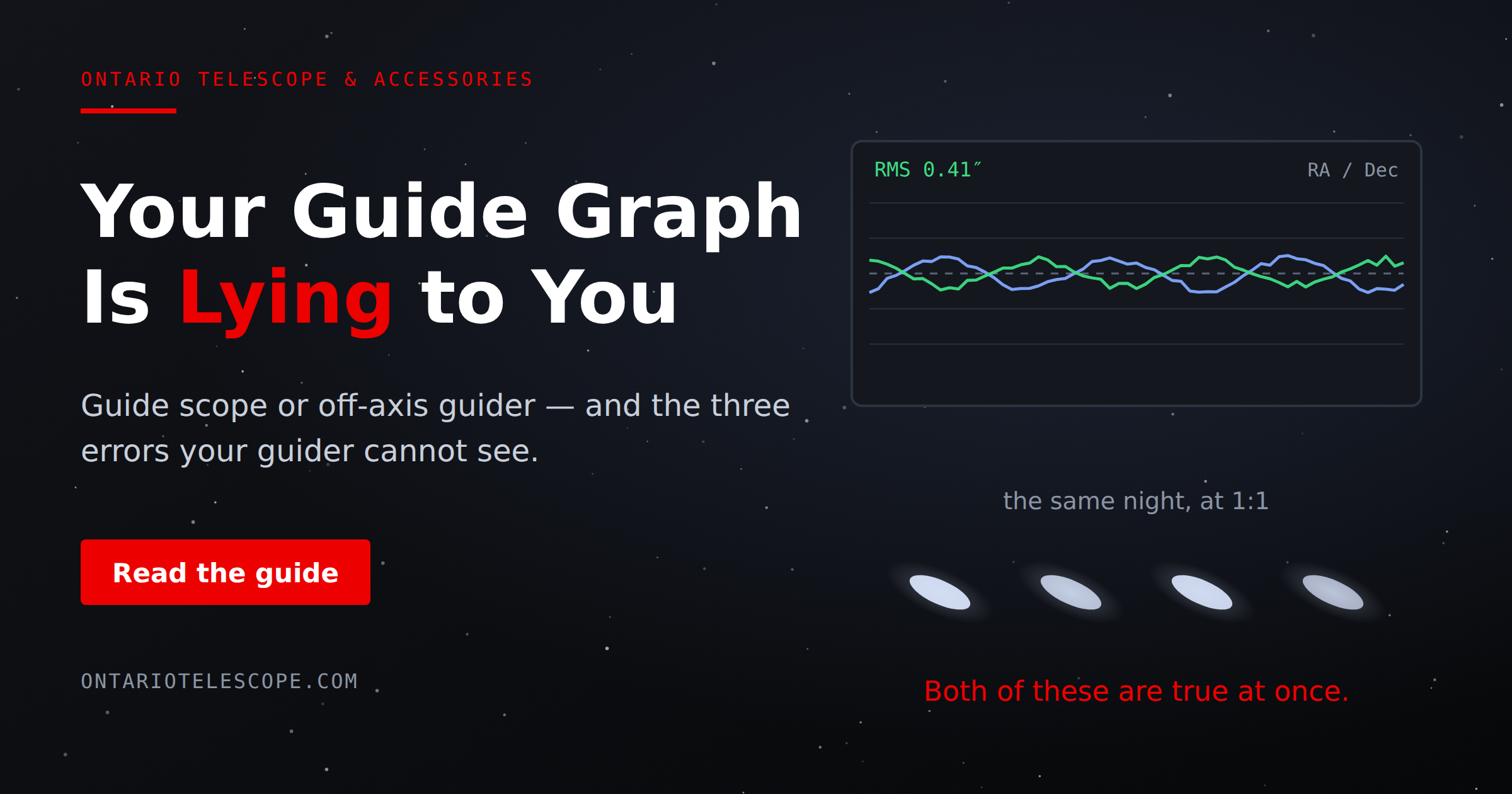
Your Guide Graph Is Lying to You
Read More
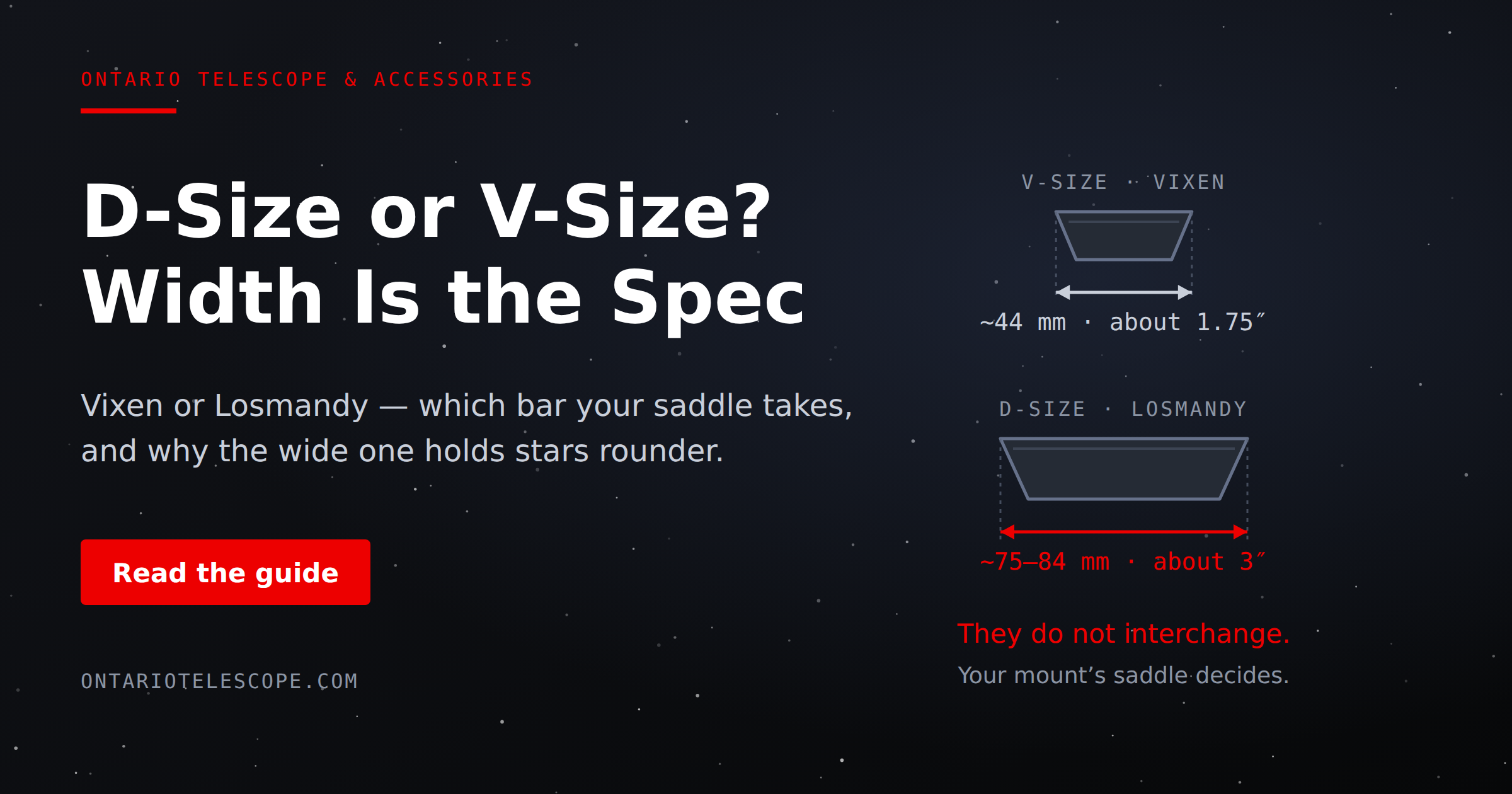
D-Size vs V-Size: A Complete Guide to Telescope Dovetail Systems
Read More
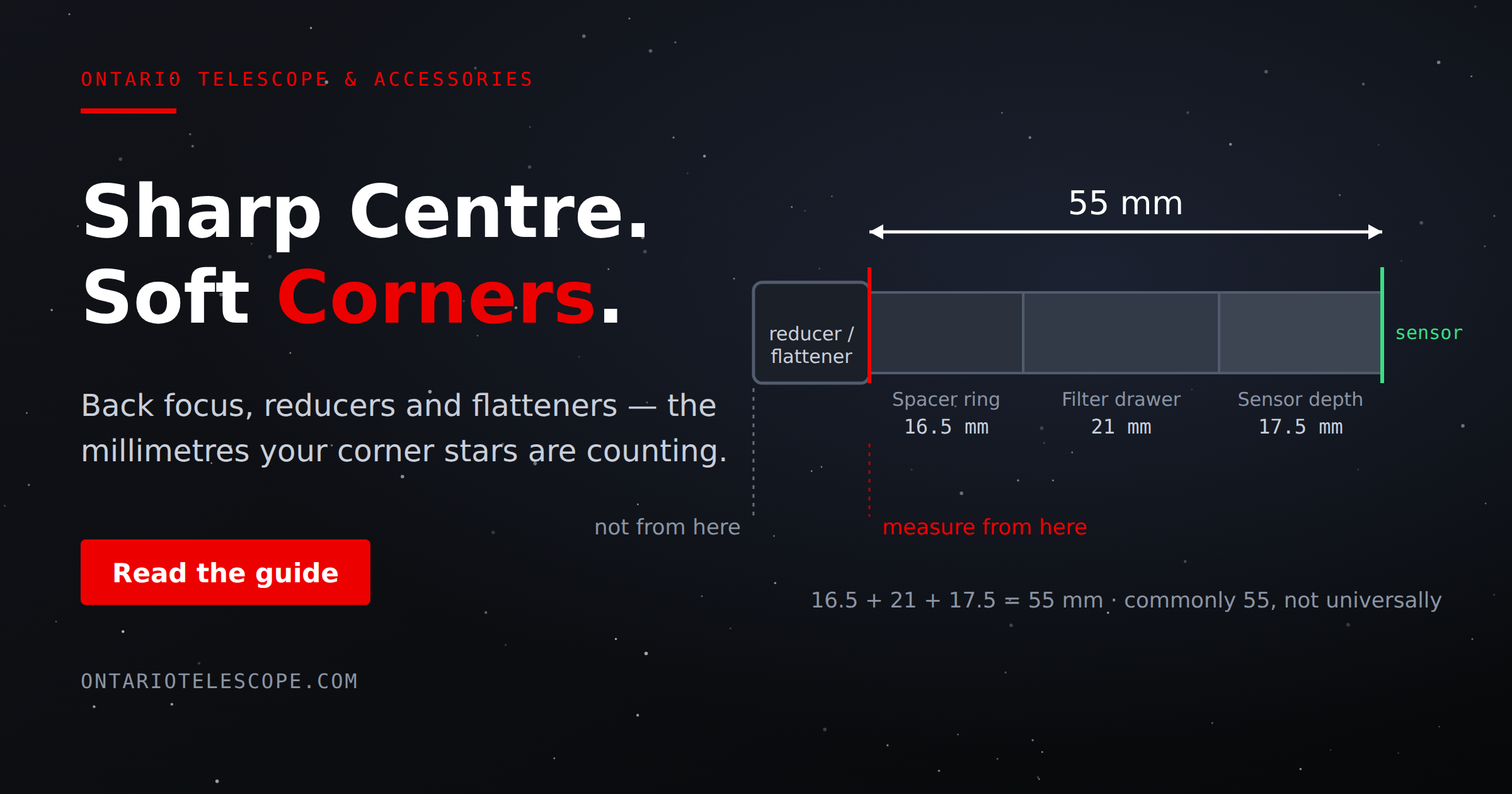
What Is Back Focus in Astrophotography? Telescope Reducers, Flatteners, and Spacing Explained
Read More