

- Description
- Specifications
Product Overview
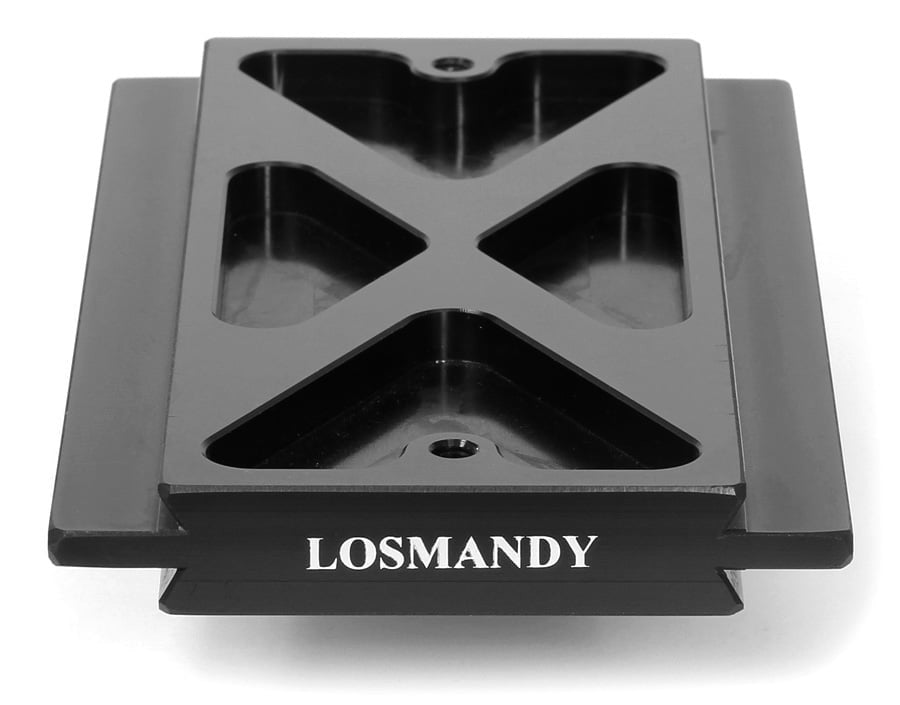
The DMM7 is a short male-to-male D-series dovetail plate: a dovetail profile on both faces rather than a flat underside. Losmandy lists it for mounting secondary equipment on an equatorial mount and for use with the side-by-side system. It is 7 inches long, 0.8 inches thick and weighs 13 oz.
Who It's For
A male-to-male plate solves a specific problem: you have a dovetail saddle and you want to put something on it that has a saddle of its own, not a plate. Clamping this bar into both turns one into the other. On a side-by-side rig it is how a second instrument or a counterweight arm joins the assembly, and at 7 inches it is the size for a guide scope, a camera mount or a small refractor rather than a main tube.
Key Features & Design
- D-series dovetail profile on both faces, so it clamps into a saddle at each end of the sandwich.
- 7 inches long, 0.8 inches thick, at 13 oz.
- Listed for secondary equipment on an equatorial mount and for side-by-side use.
- Machined aluminium, to the same D-series section as Losmandy's plates.
Recommended Uses
Joining two Losmandy saddles back to back. Mounting a guide scope assembly, camera mount or small refractor that arrived with a saddle rather than a plate. Building up a side-by-side arrangement on the DVSBS. Adding a secondary instrument to a saddle already carrying the main tube.
Compatibility and Accessory Notes
- Saddles: any Losmandy D-series saddle — the G-11 saddle, the GM8 saddle plate, the twin saddles on the AZ8, and both saddles on the DVSBS.
- Longer version: the DMM14 is the same bar at 14 inches and 1.75 lb.
- Making your own: the DMM adapter plate is a 7-inch piece that mates to any DUP plate to create a male-to-male dovetail, which is the cheaper route if you already own a DUP.
- Rings: the DVR108 guide scope rings clamp onto a dovetail directly, which often removes the need for a male-to-male plate.
Good to Know Before You Order
- This is an adapter, not a mounting plate for a telescope. It has no ring-mounting holes — both faces are dovetail.
- 7 inches is short by design. It suits secondary equipment; for a main instrument the 14-inch DMM14 gives more clamping length and balance travel.
- Two clamps means two things to check. Both saddle clamps carry load, so both want tightening properly before the telescope goes on.
- Specifications are Losmandy's published figures.
Frequently Asked Questions
Is it difficult to set up?
No. It clamps into one saddle, and the second saddle clamps onto its other face. There is nothing to bolt or adjust.
What would I use this for?
Putting something with a saddle onto something else with a saddle — a guide scope assembly, a camera mount, or a second instrument on a side-by-side rig.
How is it different from a DUP plate?
A DUP has a flat underside with ring-mounting holes. This has a dovetail on both faces and no mounting holes.
Should I get the 7" or the 14"?
7 inches for secondary equipment, 14 for anything substantial or where you need more adjustment range.
Is there a cheaper way to get male-to-male?
If you already own a DUP plate, the DMM adapter plate bolts to it and does the same job.
Bottom Line
In short: a 7-inch D-series bar with a dovetail on both faces, 0.8" thick at 13 oz — the part that joins two Losmandy saddles for secondary equipment or a side-by-side build.
| Model | Losmandy DMM7 male-to-male D-series dovetail plate |
|---|---|
| Length | 7" |
| Thickness | 0.8" |
| Weight | 13 oz |
| Profile | Losmandy D-series dovetail on both faces |
| Intended use | Secondary equipment on an equatorial mount; side-by-side systems |
| Mounting holes | None — both faces are dovetail |
| Source | Losmandy DMMS product data |
You may also like
Recently viewed
Recent Blog Posts
View all
Your Guide Graph Is Lying to You
Read More
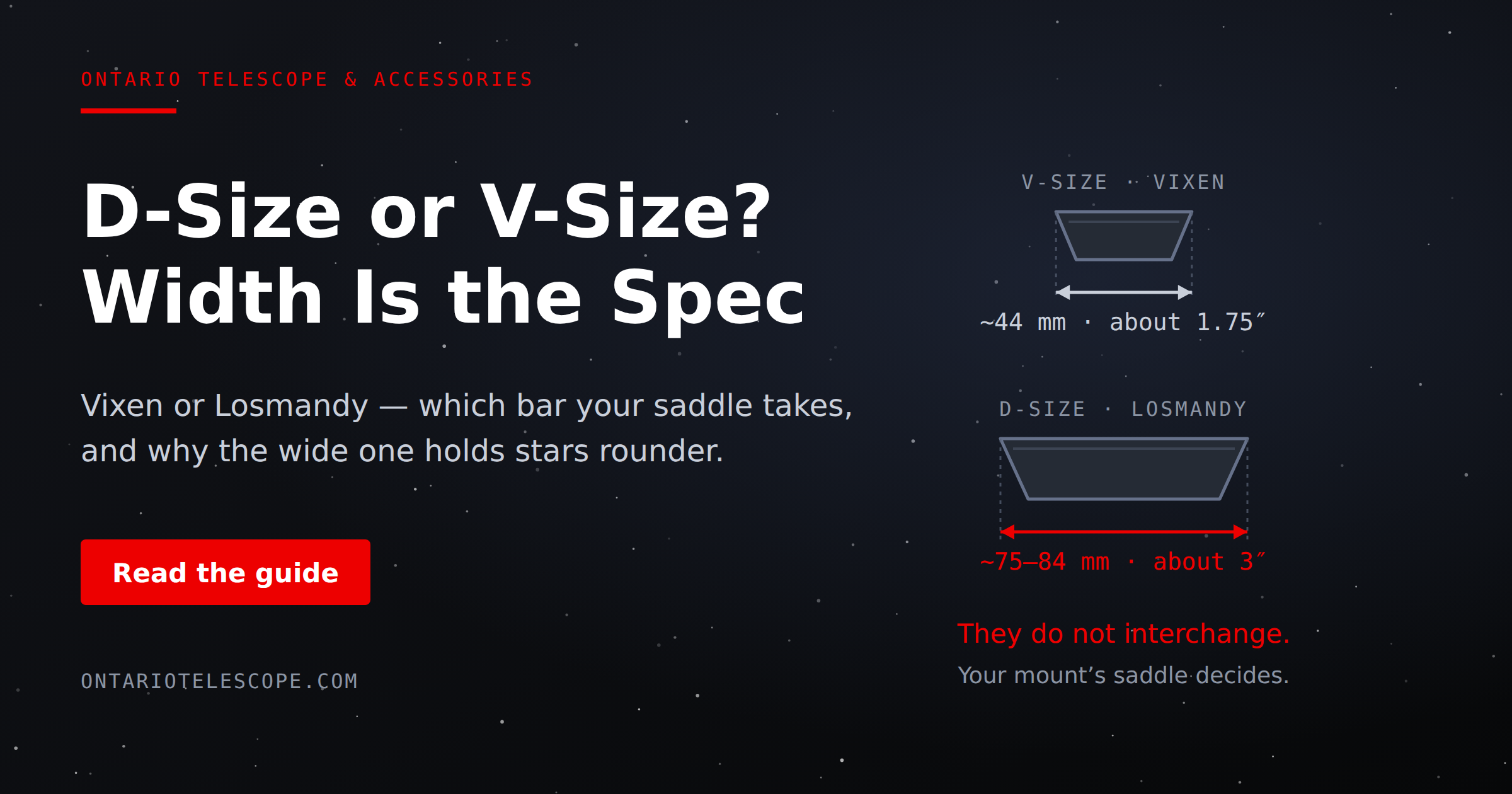
D-Size vs V-Size: A Complete Guide to Telescope Dovetail Systems
Read More
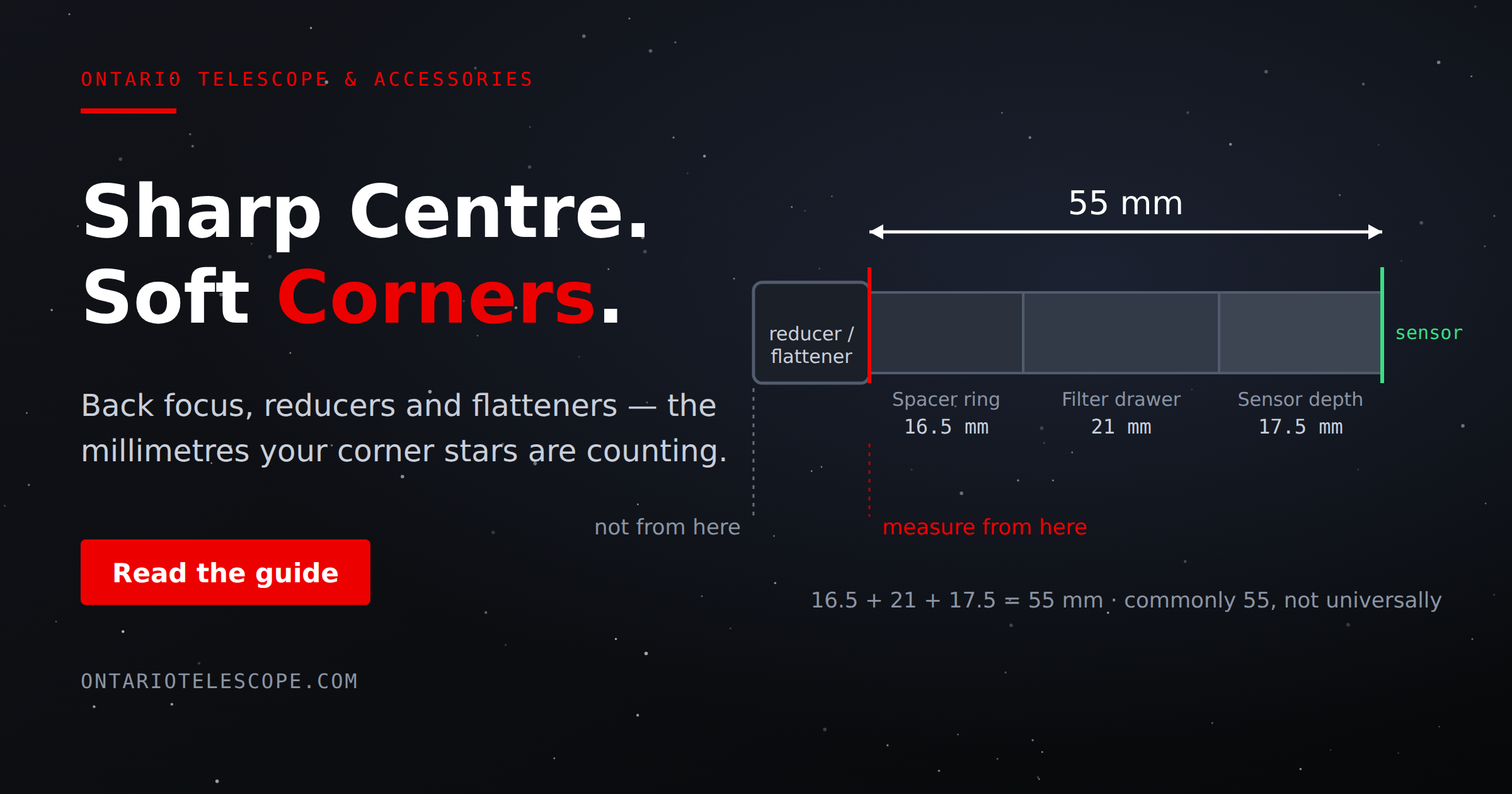
What Is Back Focus in Astrophotography? Telescope Reducers, Flatteners, and Spacing Explained
Read More