


- Description
- Specifications
- Downloads
Product Overview
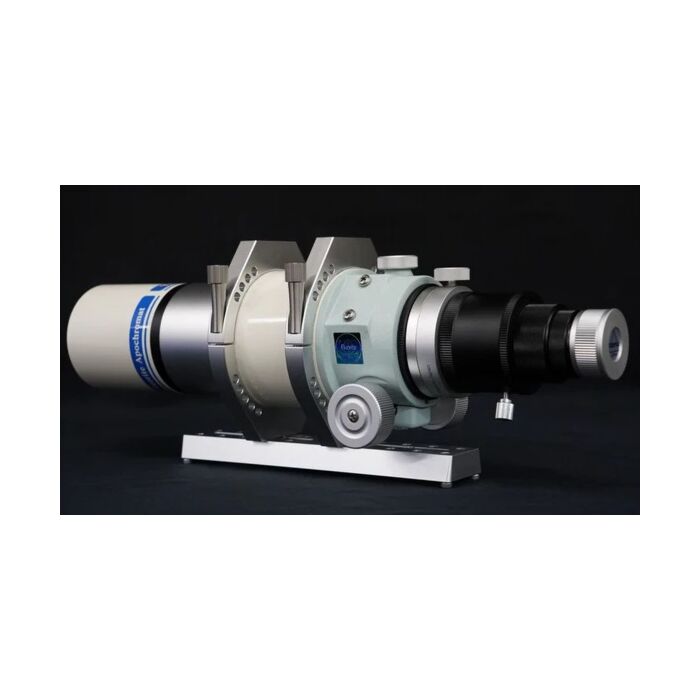
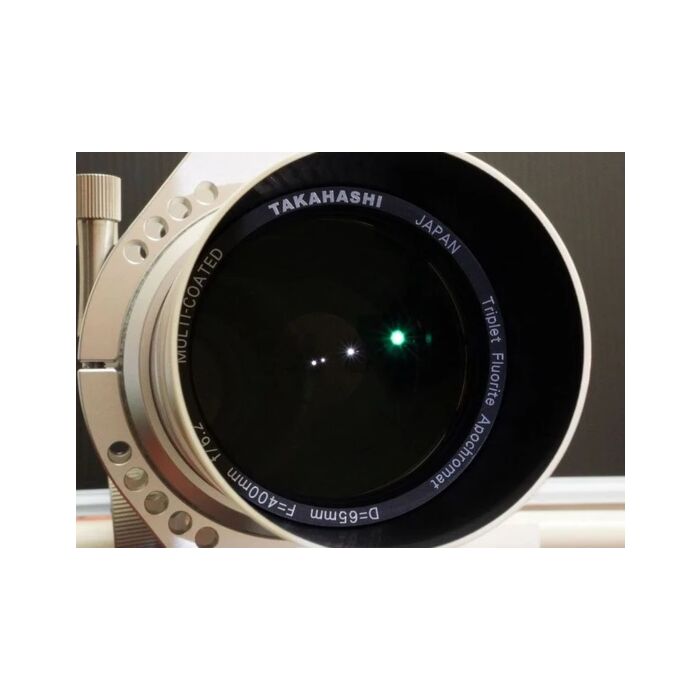
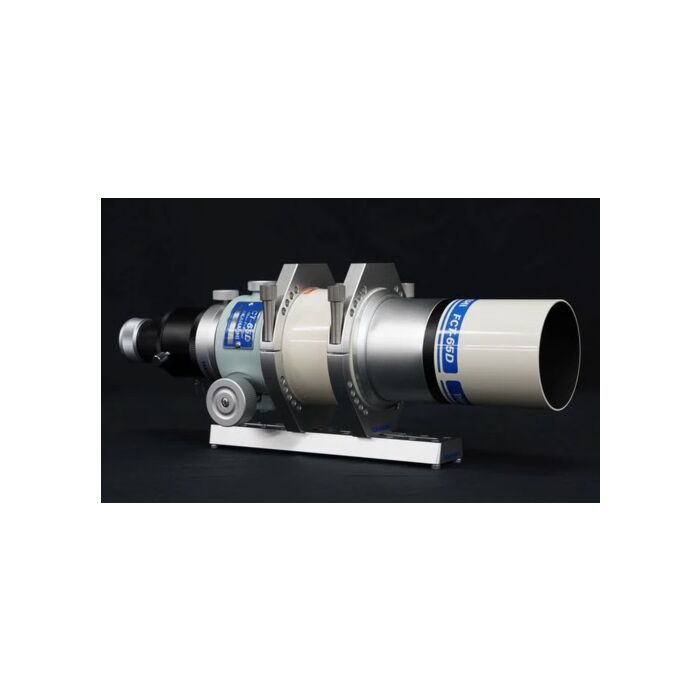
The Takahashi FCT-65D is a compact fluorite triplet apochromatic refractor: 65 mm of aperture at 403 mm focal length, working at f/6.2. It is small enough to travel with and corrected well enough to image with, which is an unusual combination in a telescope this size.
Two design decisions define it. The objective is a fluorite triplet, made in Japan — three elements, one of them fluorite, which is what brings chromatic aberration down to the point where bright stars and planetary limbs stay free of colour fringing. And the tube is built to a 95 mm outside diameter specifically so that Takahashi's high-performance reducer fits inside the body rather than hanging off the back, which keeps the imaging train short.
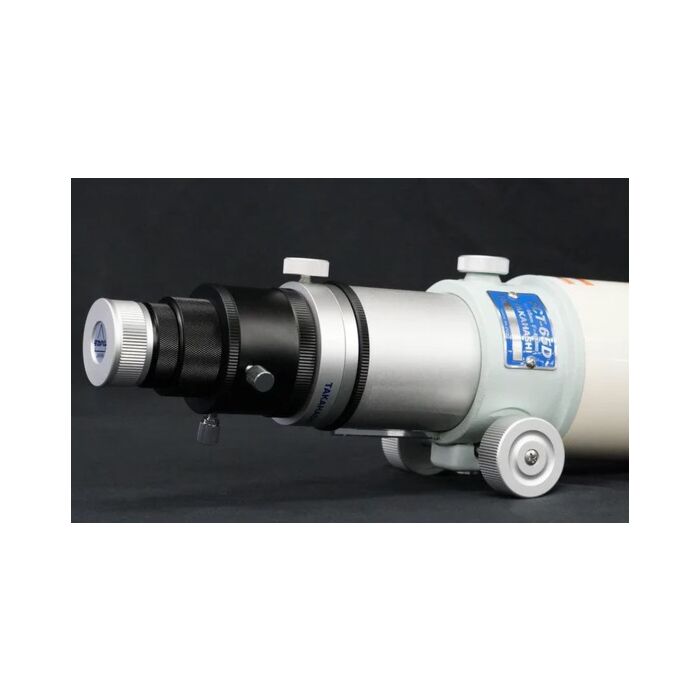
A camera angle adjuster is built into the tube, so framing rotates without adding another component to the train.
Who It's For
This is a good match if you want one telescope that travels easily and images seriously — wide-field deep-sky work at 403 mm, or a high-quality grab-and-go instrument for visual sessions. It also works as a premium guide scope on a larger rig.
If you are moving up from a starter achromat, the difference here is colour correction and star shape rather than raw aperture: 65 mm is not a light bucket, and it is not trying to be. What it gives you is a clean, tight image across the field.
Key Features & Design
- 65 mm fluorite triplet objective: three elements including fluorite, for colour correction well beyond a doublet achromat.
- 403 mm focal length at f/6.2: a wide field with enough focal length for framed deep-sky targets.
- 95 mm aluminium tube: sized to take the high-performance reducer internally.
- Built-in camera angle adjuster: rotate the camera for framing without a separate CAA in the train.
- Fully multi-coated optics: for transmission and contrast.
- 1.9 kg optical tube: light enough to carry assembled and to sit within the payload of a small travel mount.
- Made in Japan: Takahashi's own optical manufacture.
Optical / Mechanical Design
A refractor's weakness is colour: different wavelengths focus at slightly different points, and the result is a violet halo around bright objects and a softening of fine detail. A doublet using ED glass reduces it substantially; a triplet with a fluorite element reduces it further still. Fluorite has optical dispersion characteristics that no ordinary glass matches, which is why Takahashi has built their reputation on it — and why a 65 mm fluorite triplet resolves detail more cleanly than its aperture alone would suggest.
The 95 mm tube diameter is the other deliberate figure. Most reducers thread onto the back of a telescope and add length to the imaging train, which eats backfocus and moves the sensor further from the optics. Building the tube wide enough to house the reducer internally avoids that: the corrector sits inside the body, and the train behind the focuser stays short. On a small travel refractor, where every millimetre of backfocus counts once a filter drawer and camera are attached, that matters more than it would on a large instrument.
At f/6.2 the telescope is fast enough for reasonable exposure times without being so fast that spacing tolerances become unforgiving.
Recommended Uses
Wide-field deep-sky astrophotography — large nebulae, open clusters, and extended objects that a longer focal length would crop. Visual observing of star fields, clusters and the Moon. Travel and grab-and-go sessions where a full-size refractor stays home. Guiding duty alongside a larger imaging telescope.
Compatibility and Accessory Notes
Supplied as an optical tube assembly only. To put it on a mount you will also need tube rings or a holder and a dovetail plate.
We stock the matched accessories for this telescope:
- FCT-65D 0.65x FU Reducer — the high-performance reducer the 95 mm body is built to house internally.
- Multi CA Ring 65D — the camera-angle ring for this tube.
- 95mm Tube Holder Ring (FCT-65) — Takahashi's own holder, sized to the 95 mm tube.
No case, finderscope or diagonal is included. If you are planning the full imaging train — camera, filter drawer, spacers — send us the parts and we will work the backfocus through with you before you order.
Good to Know Before You Order
Optical tube only: the mount, tube rings and dovetail are separate. We stock the matched Takahashi holder and can suggest a mount to suit how you plan to use it.
No case, finder or diagonal in the box: for visual use you will want a diagonal and an eyepiece, and we stock Takahashi's own.
65 mm is a wide-field aperture: this telescope is built for framing large objects cleanly rather than for high-magnification planetary work. On planets it gives a sharp, well-corrected image at modest magnification — if planetary detail is your main interest, a longer instrument suits better, and we are happy to talk that through.
Takahashi's own figures differ slightly: their specification table gives 403 mm focal length while their description text rounds to 400 mm. We publish the specification figure, 403 mm.
Frequently Asked Questions
Is it difficult to set up?
No — it is a small refractor with a built-in camera angle adjuster, so there is less to assemble than on most imaging setups. The tube seats in its holder, the holder bolts to the mount, and the camera angle rotates on the telescope itself rather than on an extra part in the train.
What can I photograph with it?
At 403 mm and f/6.2 it suits large nebulae, open clusters and extended objects — targets that need field rather than magnification.
Do I need the reducer?
Not to use the telescope. The FU reducer widens the field further and speeds the system, and this tube was designed to house it internally, so the two are a natural pair.
What else do I need to get started?
A mount, tube rings or a holder, and a dovetail plate. For visual use, a diagonal and eyepieces. We stock all of it — tell us how you plan to use it and we will put a list together.
What does fluorite actually do?
It controls the way different wavelengths of light come to focus, which is what removes colour fringing around bright objects and keeps fine detail crisp.
Can I use it as a guide scope?
Yes — it is a capable guider on a larger rig, though most guiders cost considerably less.
Bottom Line
A 65 mm fluorite triplet at 403 mm and f/6.2, weighing 1.9 kg, built around a 95 mm body that takes its reducer internally and a camera angle adjuster that is already part of the tube — a small refractor built to be imaged with.
| Product name | FCT-65D |
|---|---|
| Product code | TSK06510 |
| Aperture | 65mm |
| Focal length | 403mm |
| Focal ratio | f/6.2 |
| Optical design | Fluorite triplet apochromat, 3 elements in 3 groups |
| Optical coatings | Fully multi-coated |
| Optical tube material | Aluminium |
| Optical tube diameter | 95mm (80mm at the dew shield) |
| Optical tube length | 403mm |
| Weight | 1.9 kg (Takahashi published tube weight) |
| Camera angle adjuster | Built in |
| Reducer | High-performance reducer housed internally (sold separately) |
| Fine focuser | Optional |
| Manufactured | Japan |
| Supplied as | Optical tube assembly only |
| Case included | No |
| Finderscope included | No |
| Diagonal included | No |
Shopping Guide
- Takahashi English Catalog 2025 — PDF, 8.63 MB
You may also like
Recently viewed
Recent Blog Posts
View all
Your Guide Graph Is Lying to You
Read More

D-Size vs V-Size: A Complete Guide to Telescope Dovetail Systems
Read More

What Is Back Focus in Astrophotography? Telescope Reducers, Flatteners, and Spacing Explained
Read More