
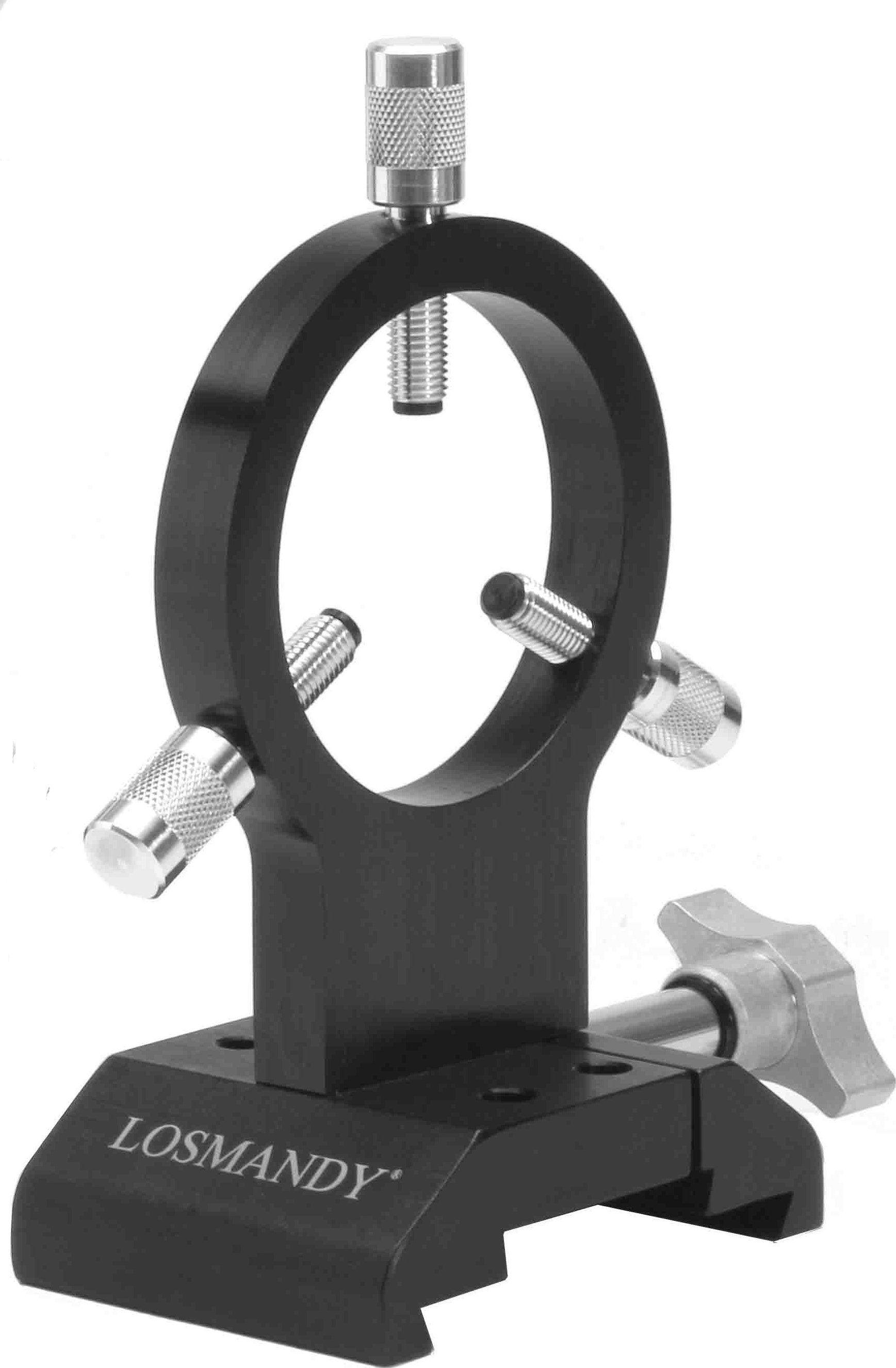

- Description
- Specifications
Product Overview
The DVR66 is a single mounting ring for an autoguider camera, used with the DVR108 ring set to stabilise the camera or guider at the back of a guide scope. It takes tubes and bodies from 3/4" to about 2.6" (66 mm) in diameter and clamps to a Losmandy D-series or Vixen-style V-series plate.
Who It's For
This is the third ring in a guiding setup, and it exists to kill flexure. A camera bolted to the back of a short guide scope hangs on the focuser's drawtube and its own adapter stack — a few thousandths of movement there translates into guiding error the software reads as real star motion and dutifully corrects, chasing itself all night. Supporting the camera body directly on the plate takes the leverage out of the problem.
Key Features & Design
- Single ring for an autoguider camera or guider body.
- 3/4" minimum to about 2.6" (66 mm) maximum diameter.
- Clamps to a Losmandy D-series or Vixen-style V-series plate.
- Designed to work with the DVR108 ring set as the third ring in the assembly.
- Machined aluminium.
Recommended Uses
Steadying a guide camera at the back of a guide scope. Removing differential flexure between the main telescope and the guiding train. Supporting a small camera lens or finder within the diameter range. Completing a two-ring DVR108 installation into a three-ring one.
Compatibility and Accessory Notes
- Diameter range: 3/4" minimum, about 2.6" or 66 mm maximum. Losmandy notes the minimum explicitly — a very slim camera body will not reach the clamp.
- Used with: the DVR108 ring set.
- Bought together: the DVR108/66 set supplies all three rings in one package.
- Plates: Losmandy D-series — the 14", 19" and 24" — and Vixen-style V-series such as the 11" plate.
Good to Know Before You Order
- Measure the camera body. It must be at least 3/4" and no more than about 2.6" in diameter — send us the model and we will check it.
- It needs somewhere to sit. The ring clamps to the same plate as the DVR108 rings, so there has to be plate length left once everything else is on.
- It supports, it does not aim. Alignment comes from the three-point adjustment on the DVR108 rings; this ring holds the camera end steady.
- Specifications are Losmandy's published figures.
Frequently Asked Questions
Is it difficult to set up?
No. It clamps onto the dovetail, slides to where the camera sits, and closes around the body.
Do I need it?
If your guide camera is unsupported at the back of a guide scope and your guiding shows drift that does not match the seeing, this is the usual cause and the usual fix.
What diameters does it take?
From 3/4" up to about 2.6", or 66 mm.
Does it work on its own?
It is designed to be used with the DVR108 ring set. On its own it is one ring, which will not hold a tube square.
Is there a bundle?
Yes — the DVR108/66 set supplies the two guide scope rings and this one together.
Bottom Line
In short: the third ring in a Losmandy guiding assembly, taking bodies from 3/4" to 66 mm and clamping to any D or Vixen-style V plate — the part that stops a guide camera flexing on the back of its scope.
| Model | Losmandy DVR66 guide camera mounting ring |
|---|---|
| Rings supplied | One |
| Function | Stabilises an autoguider camera or guider at the back of a guide scope |
| Minimum diameter | 3/4" |
| Maximum diameter | Approximately 2.6" (66 mm) |
| Used with | Losmandy DVR108 ring set |
| Accepts plates | Losmandy D-series and Vixen-style V-series |
| Material | Machined aluminium |
| Source | Losmandy DVR66 product data |
You may also like
Recently viewed
Recent Blog Posts
View all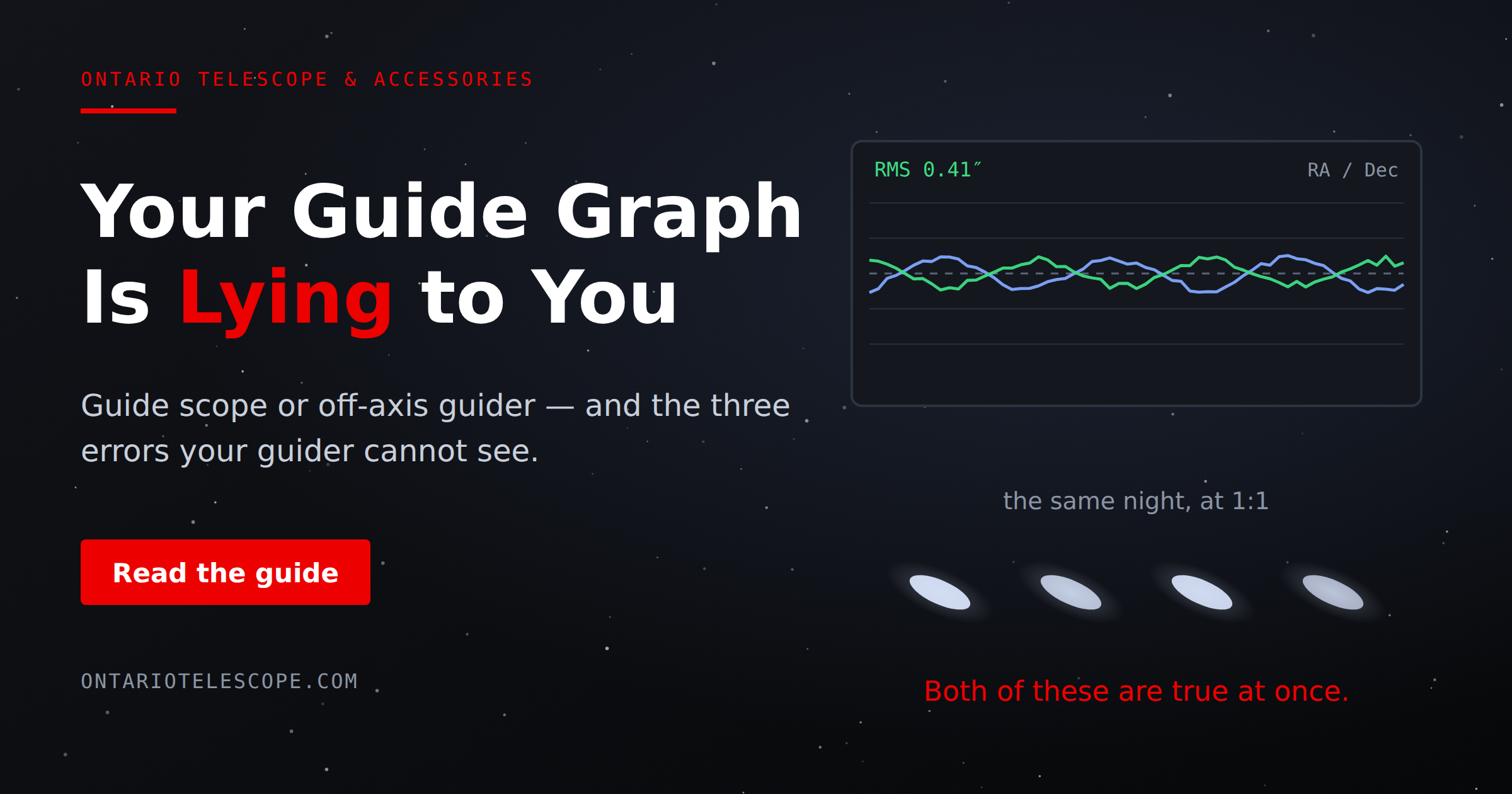
Your Guide Graph Is Lying to You
Read More
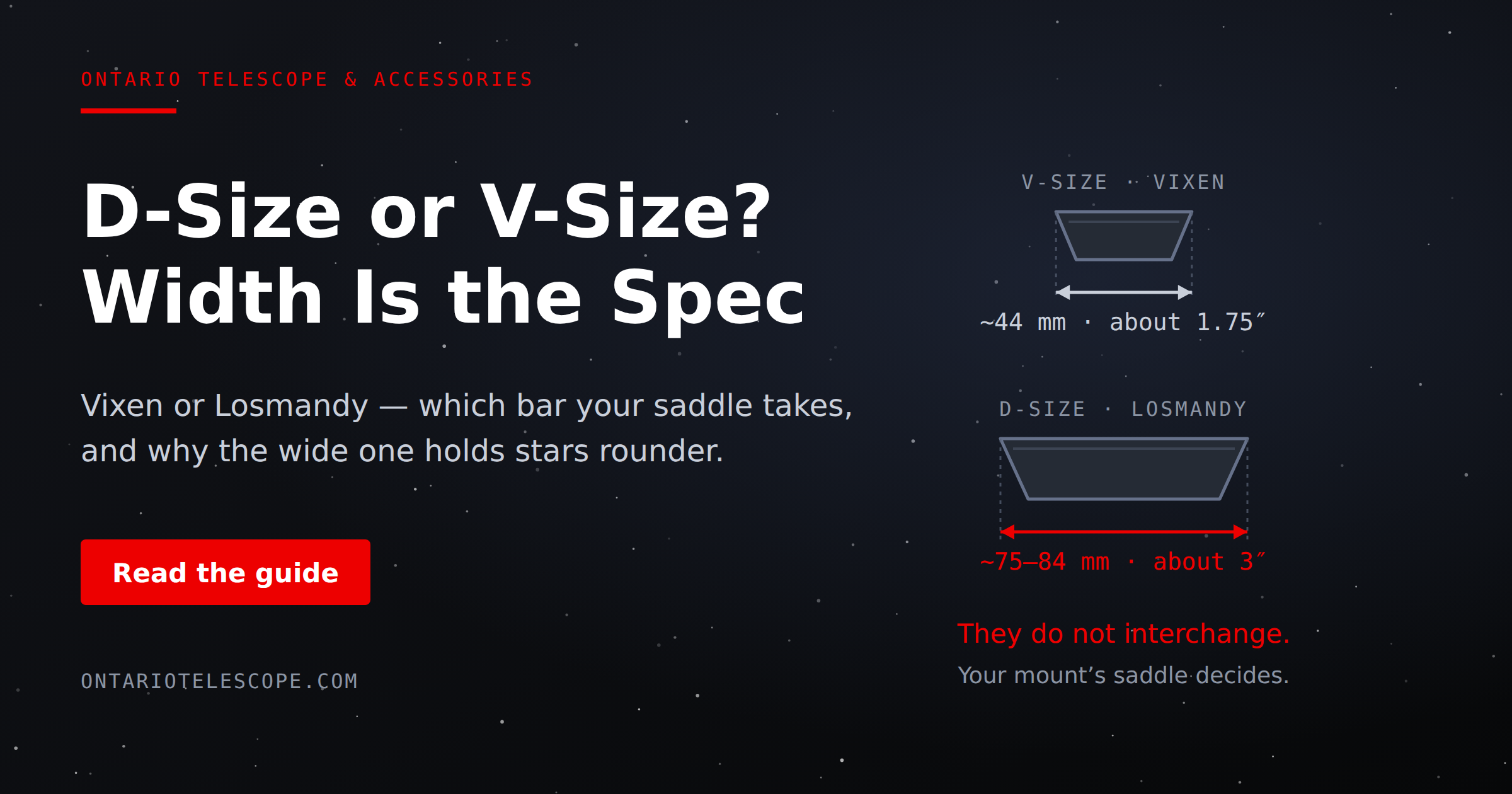
D-Size vs V-Size: A Complete Guide to Telescope Dovetail Systems
Read More
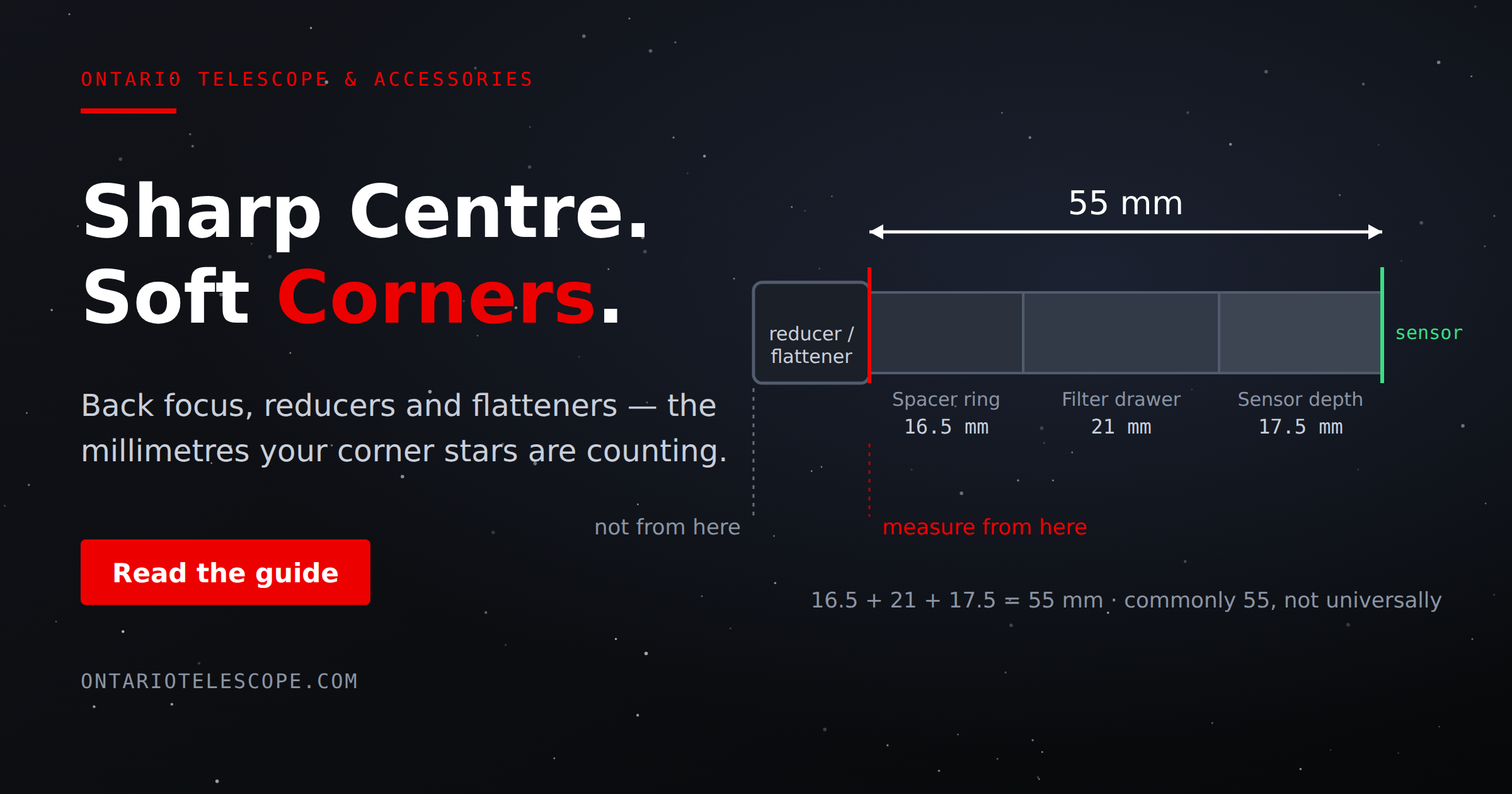
What Is Back Focus in Astrophotography? Telescope Reducers, Flatteners, and Spacing Explained
Read More