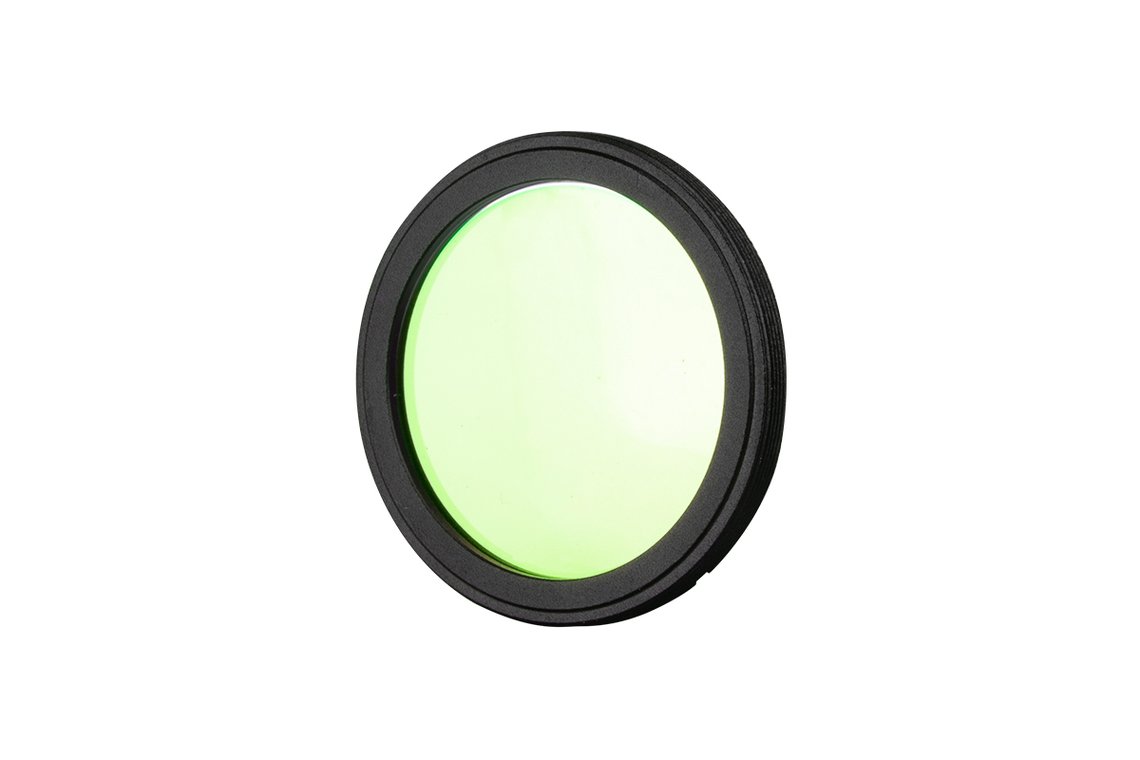
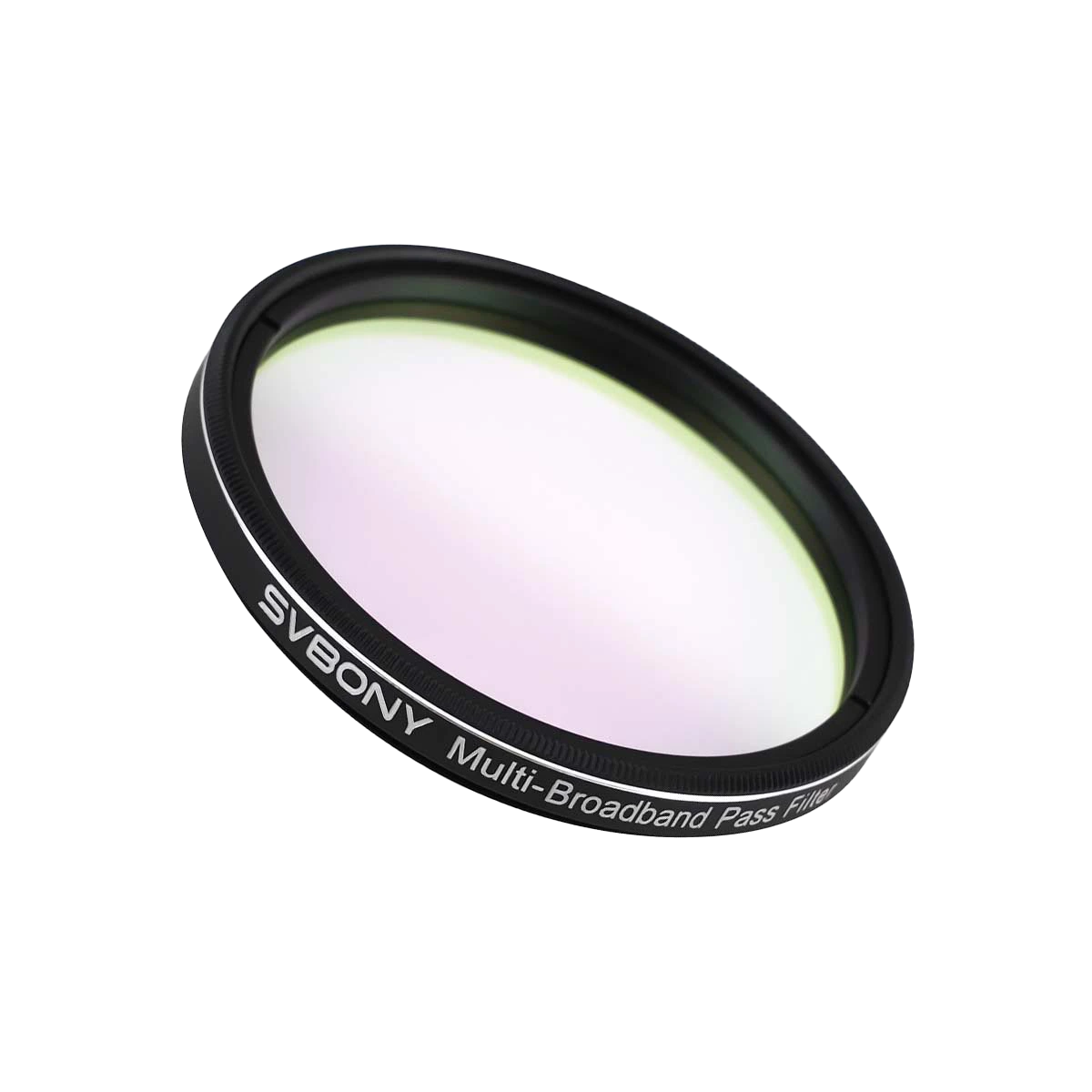
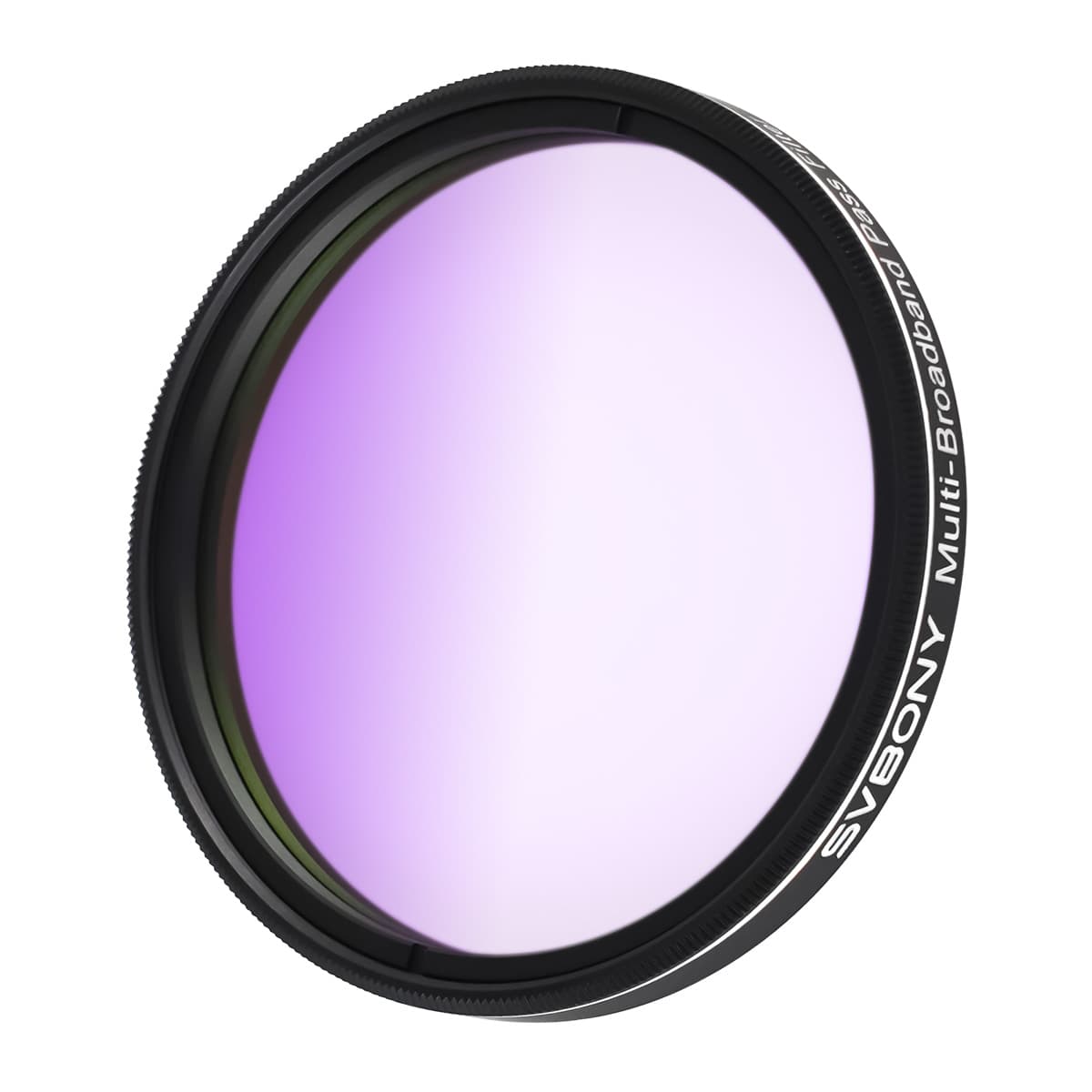
A light pollution filter blocks the wavelengths emitted by artificial lighting — chiefly the sodium and mercury lines of older street lamps — while passing more of the light from stars, galaxies and nebulae, improving contrast from suburban skies. Broadband filters such as the Optolong L-Pro, IDAS LPS-D3 and Baader Moon and Skyglow keep colour balance natural for galaxies and star clusters, while UHC and CLS designs pass a narrower range for stronger contrast on emission nebulae; under LED-lit or very bright city skies, a dual-band filter is usually more effective. Camera versions, including the L-Pro clip-ins for Canon, Nikon and Sony and the Explore Scientific 77mm Dark Sky filter, bring the same approach to DSLR and mirrorless imaging.