


- Description
- Specifications

Product Overview
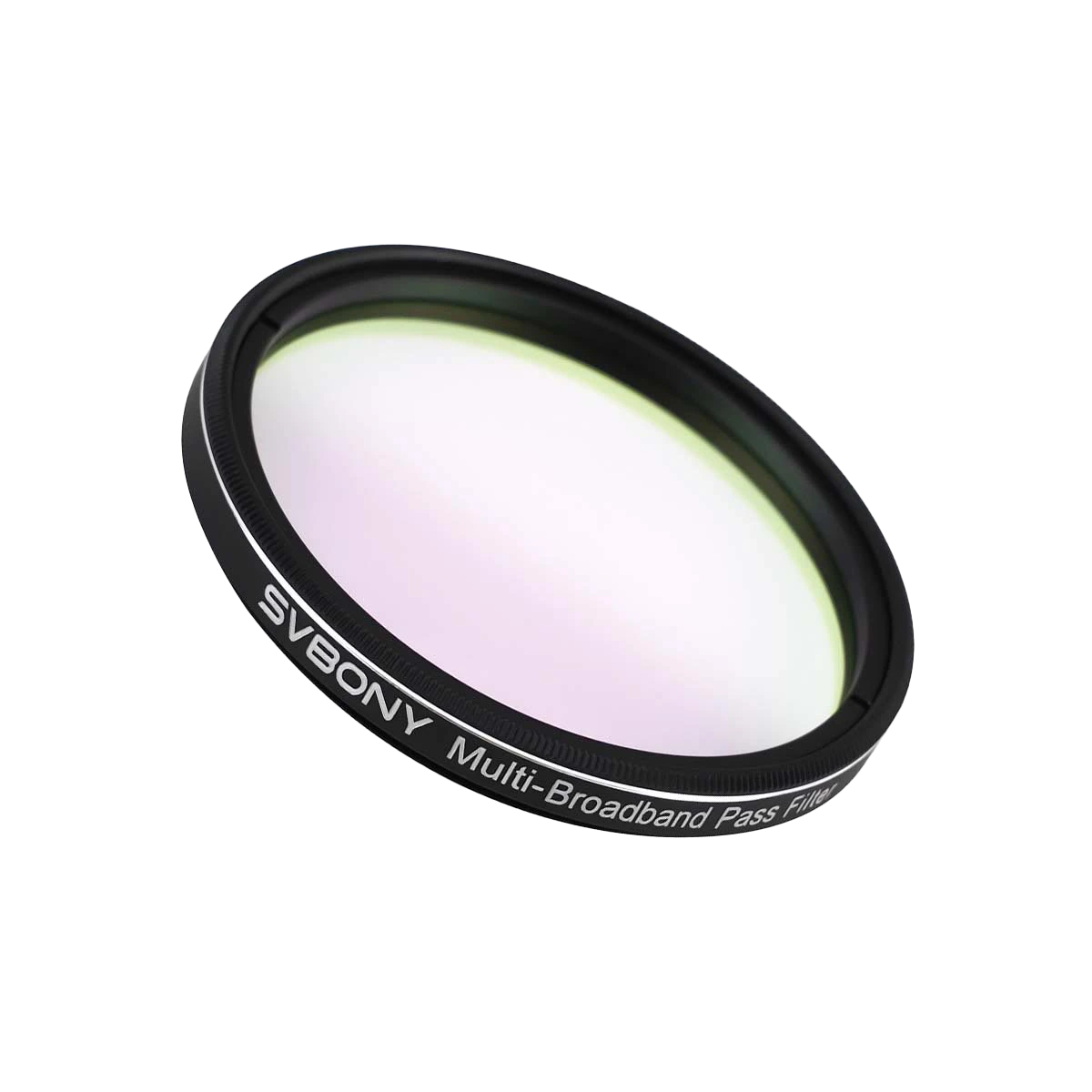
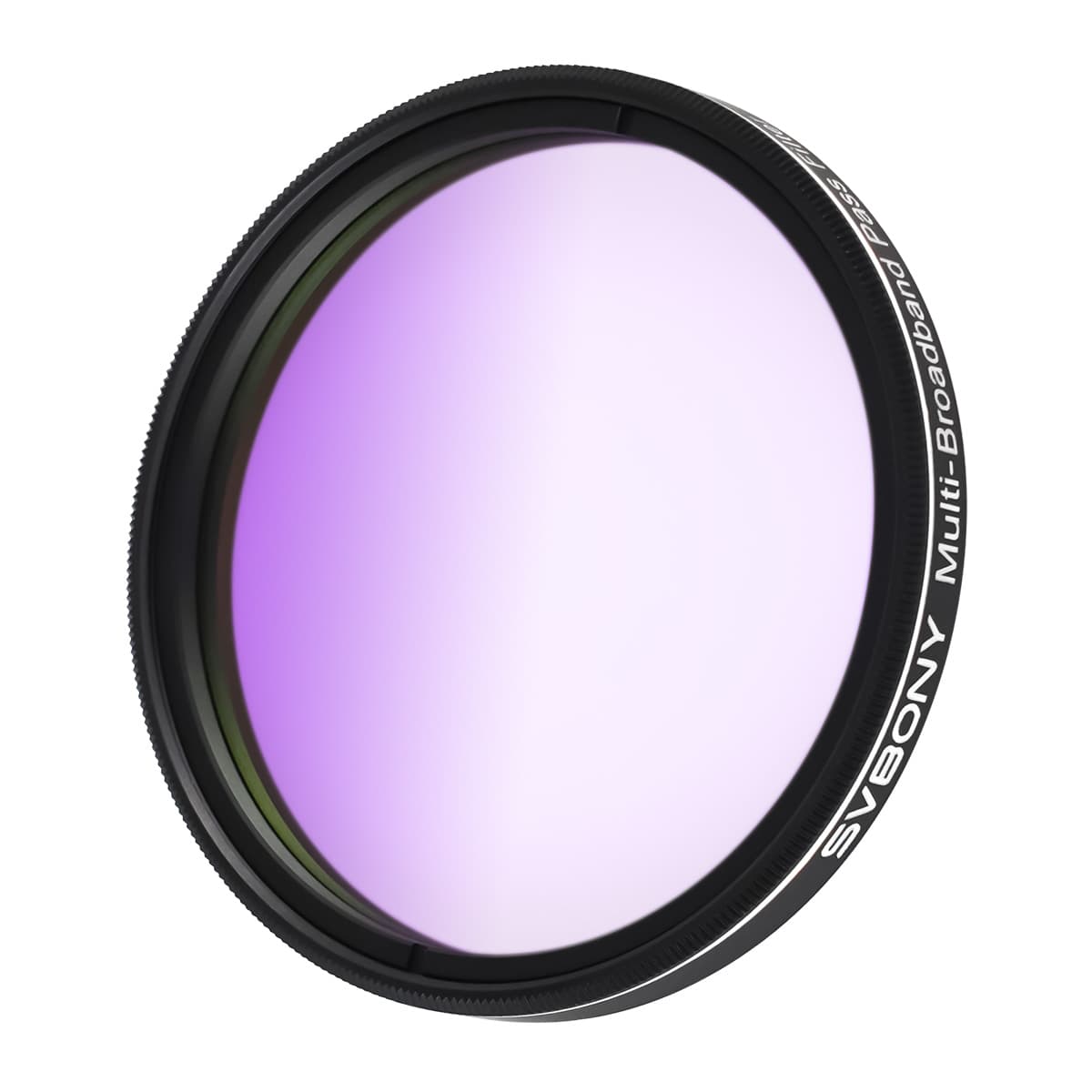
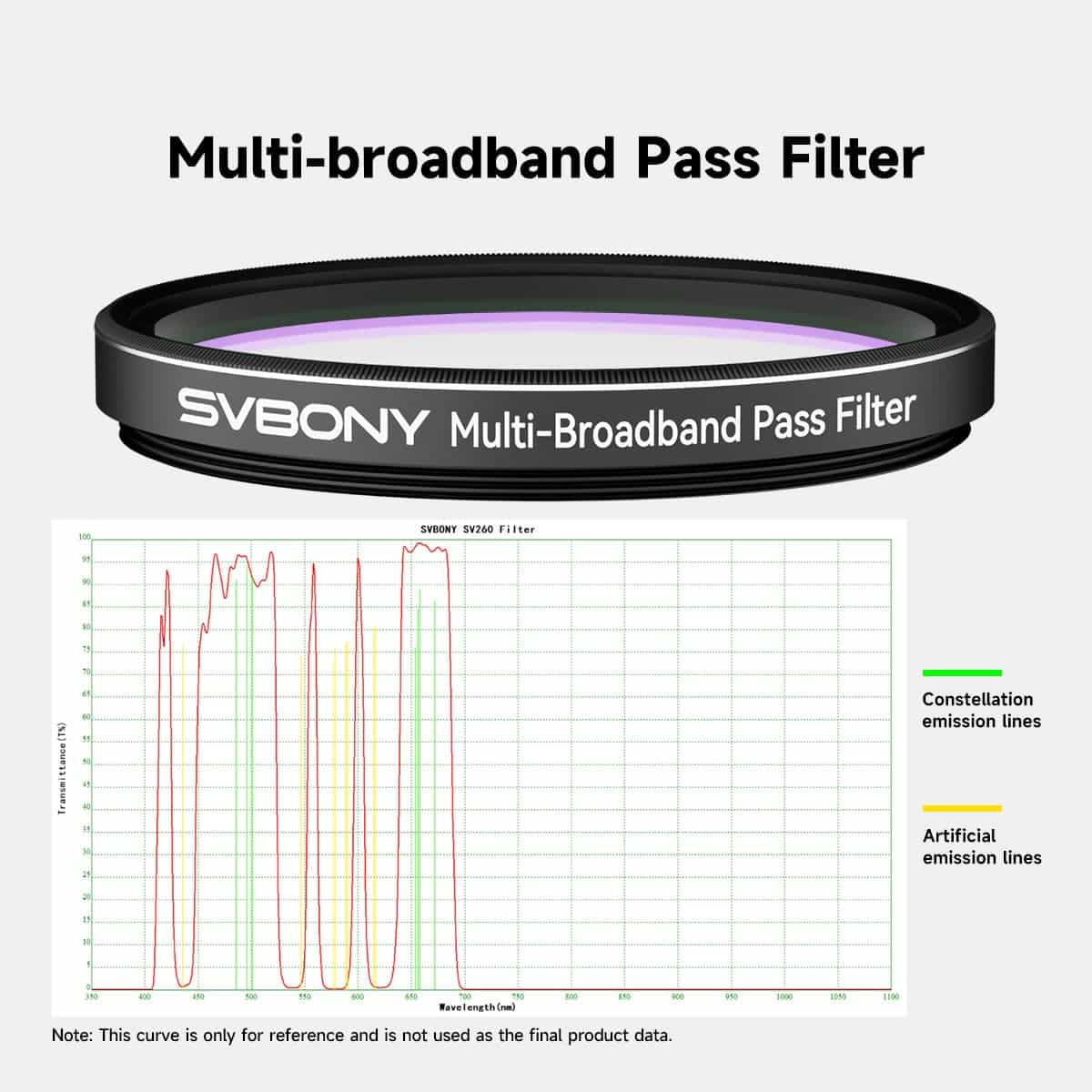
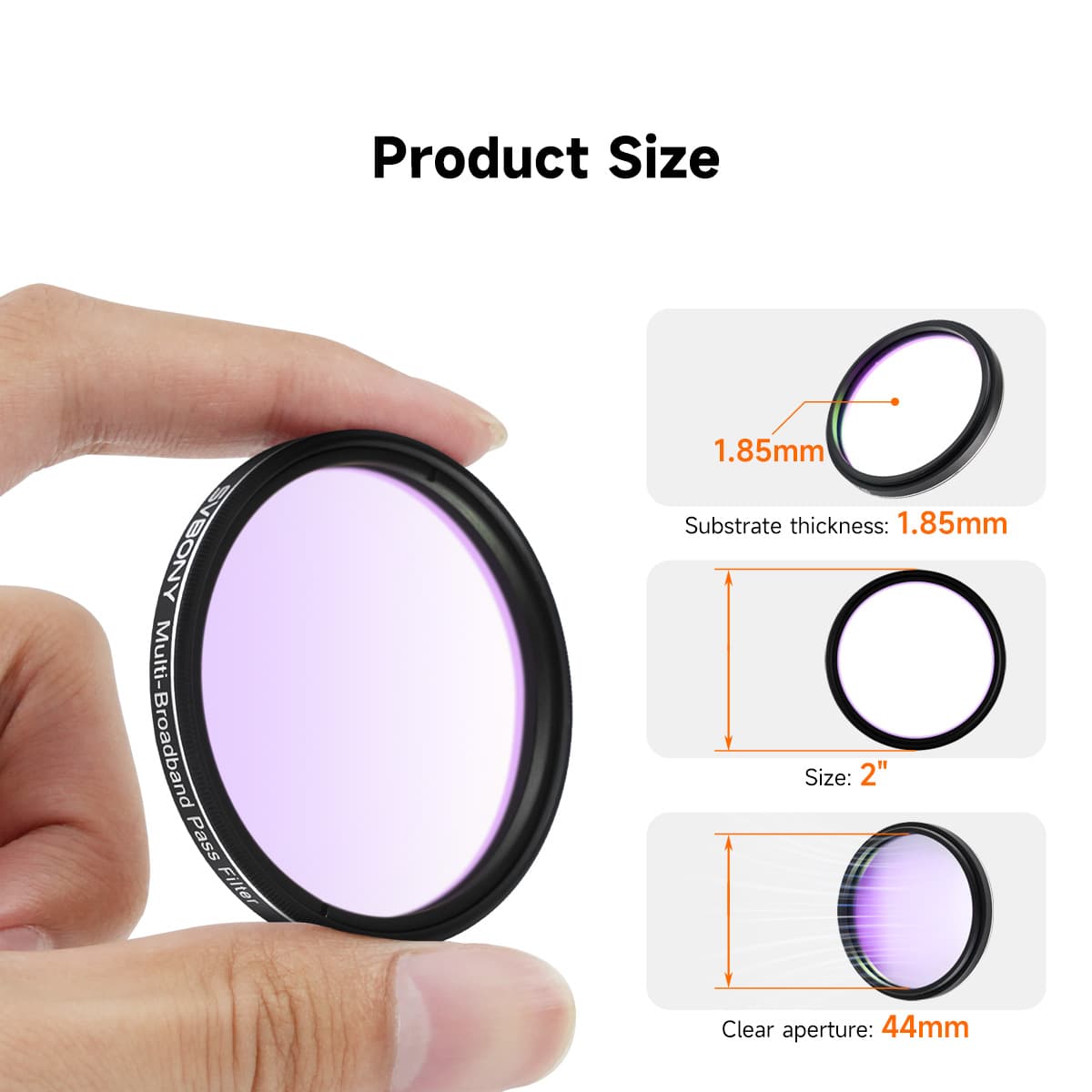
The SVBONY SV260 is a 2″ multi-bandpass broadband light-pollution filter. Instead of two narrow emission lines, it passes several wider windows across the visible spectrum and blocks the specific wavelengths emitted by mercury and sodium street lighting, as well as ultraviolet below 400 nm and infrared from 720 to 1100 nm at OD4. SVBONY rates peak transmittance at 90%. The filter has a 2 mm substrate, 44 mm clear aperture, 60/40 surface quality and 1/2λ parallelism, in an M48 x 0.75 cell, and weighs 12.5 g.
Who It's For
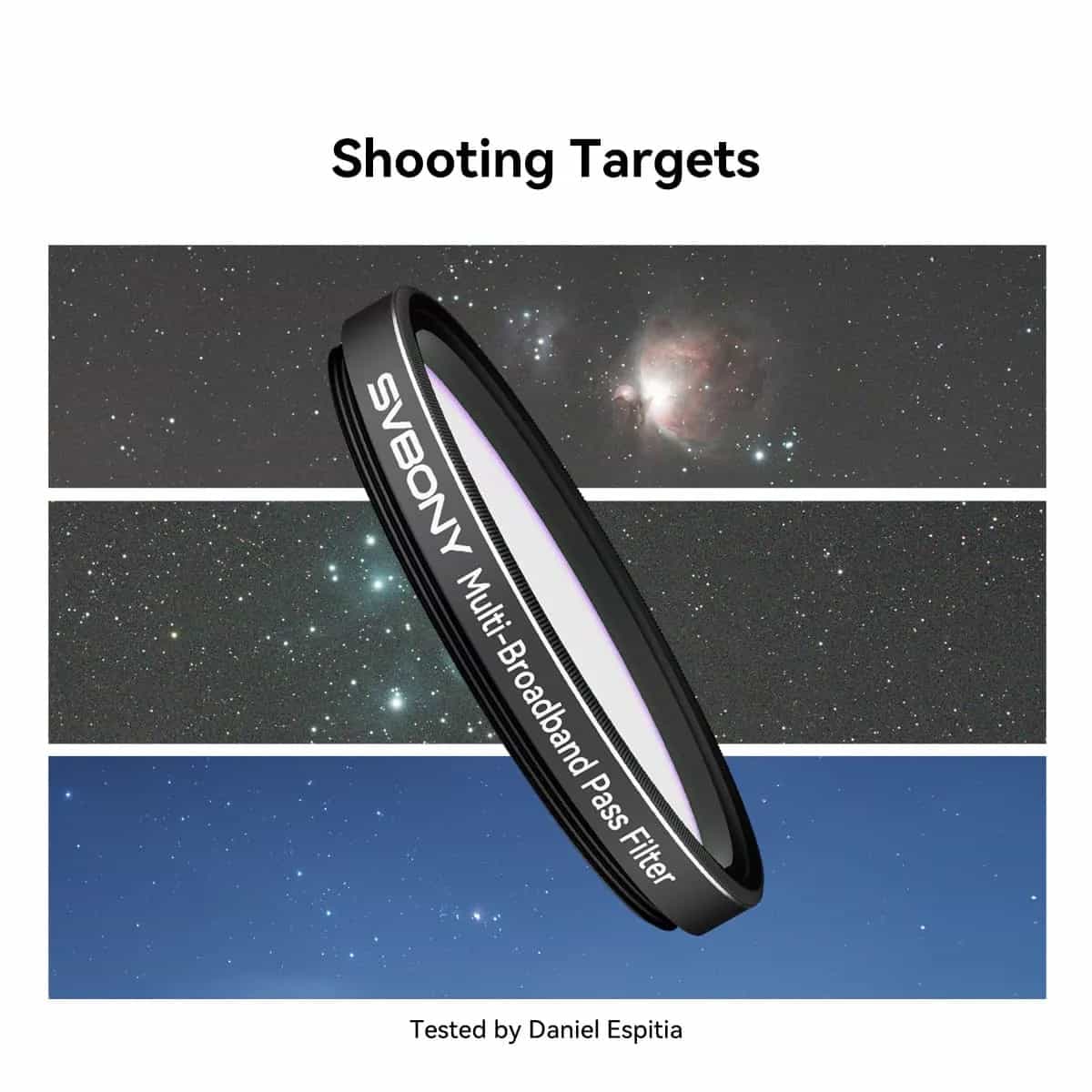
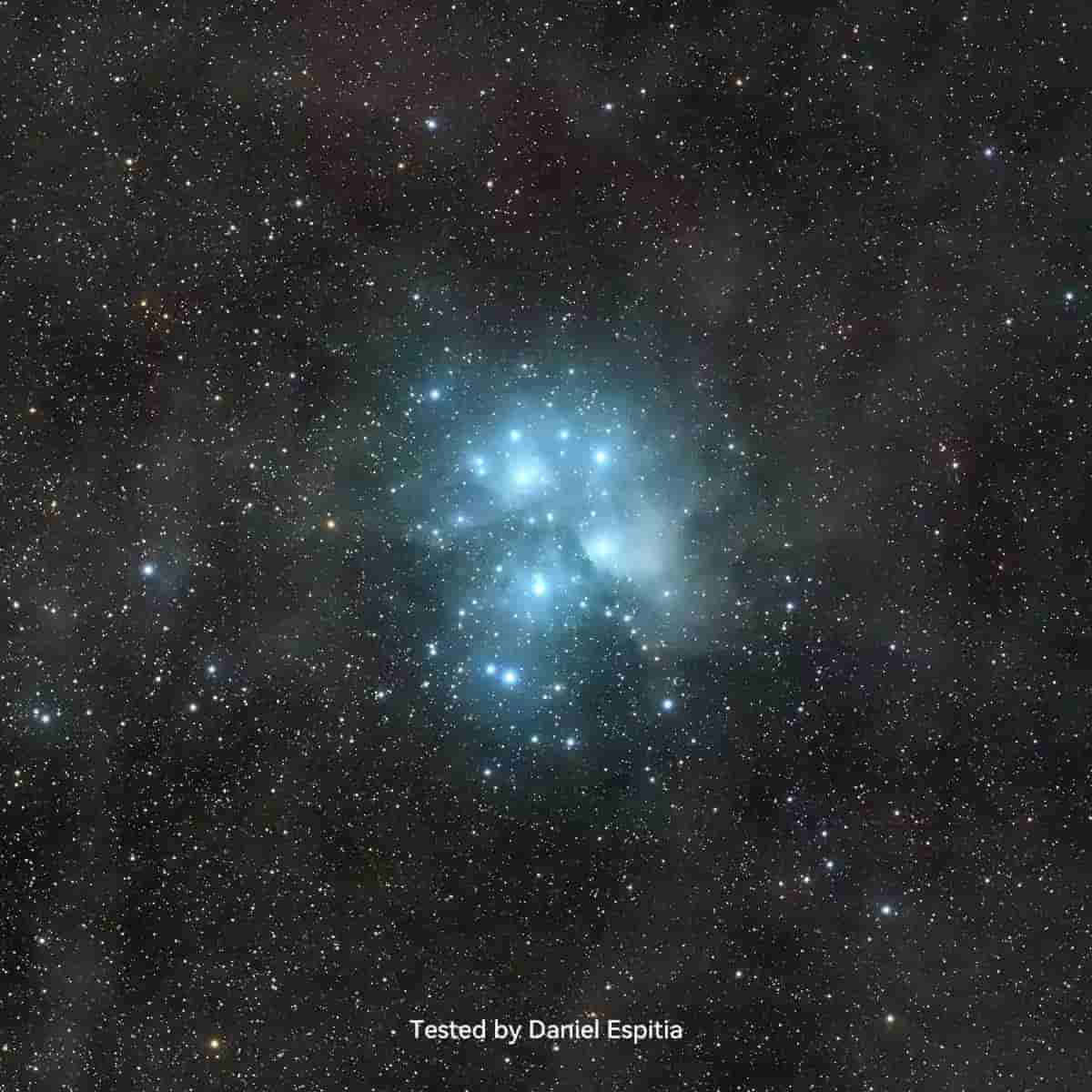
This is a good match if you image from a suburban or town site and want to cut sky glow on broadband targets such as galaxies, reflection nebulae and star fields, where a narrowband filter would remove too much of the signal and star colour.
Key Features & Design
- Multi-bandpass design: transmits several emission and continuum windows while rejecting common artificial-light lines.
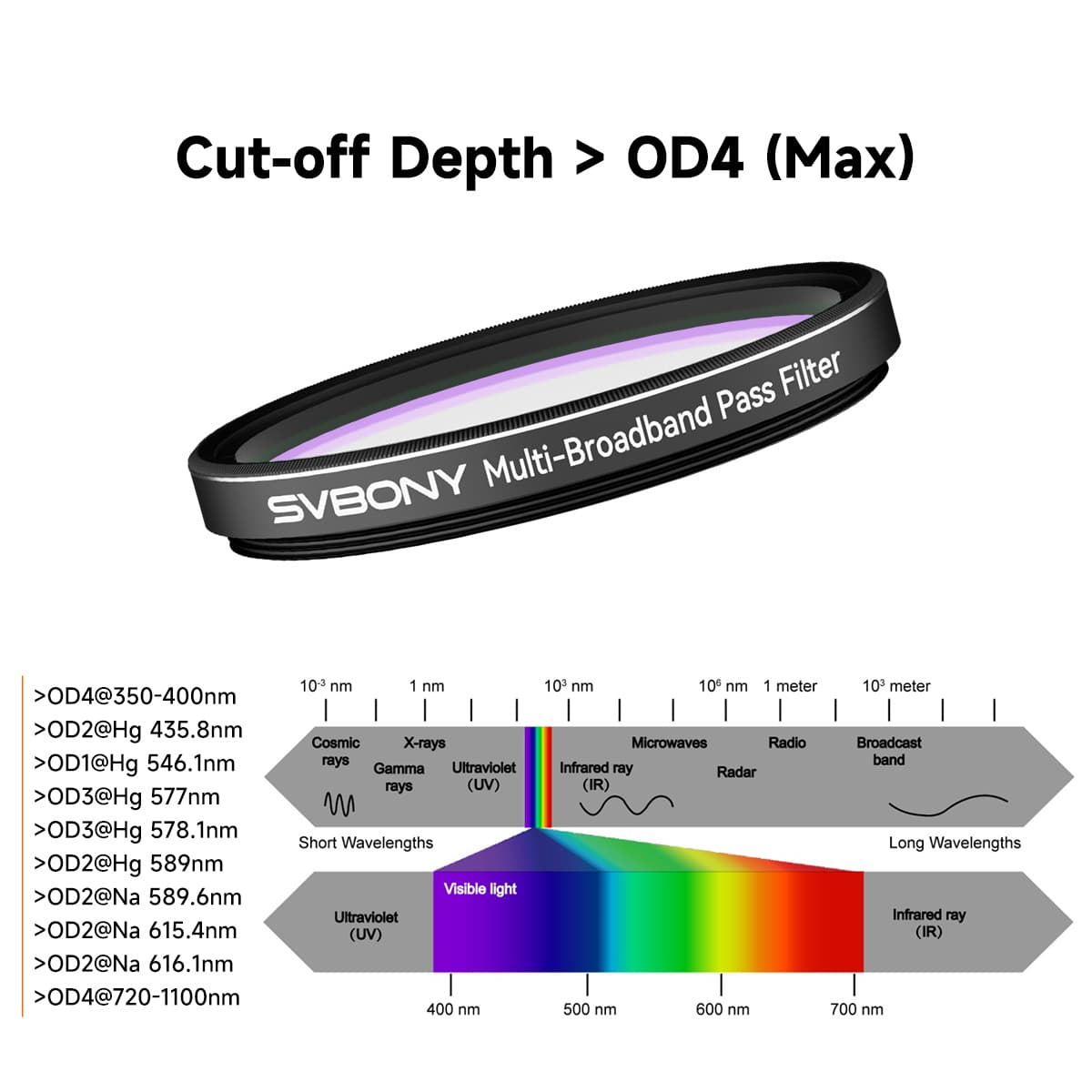
- Targeted blocking: mercury lines at 435.8, 546.1, 577 and 578.1 nm and the sodium line at 589.6 nm, with published optical densities from OD1 to OD3.
- OD4 UV and IR cut: 350–400 nm and 720–1100 nm, which keeps stars tight and colour balanced on colour sensors.
- 90% peak transmittance in the pass windows.
- 2″ M48 x 0.75 cell with a 44 mm clear aperture.


Recommended Uses
- Galaxies and star clusters from light-polluted skies.
- Wide star fields and Milky Way regions.
- Emission nebulae in broadband colour, where a dual-band filter would be too selective.
- Colour cameras and DSLRs where a UV/IR cut is also needed.


Compatibility and Accessory Notes
- Thread: M48 x 0.75 standard 2″ filter thread, for filter drawers, filter wheels and 2″ nosepieces with filter threads.
- Cameras: one-shot-colour astronomy cameras and DSLRs; it also includes the UV/IR blocking these sensors need.
- Filter drawers: SVBONY SV226 filter drawers take 2″ M48 filters, which makes it easy to swap between the SV260 and a narrowband filter during a session.


Good to Know Before You Order
- Imaging filter: SVBONY designs it for deep-sky and star-field photography.
- Broadband, not narrowband: it reduces sky glow rather than eliminating it. For emission nebulae under very bright skies, a dual-band filter such as the SVBONY SV220 isolates the emission lines more strongly.
- LED lighting: the published blocking lines are mercury and sodium; broad-spectrum white LED light falls partly inside the pass windows.
- Focal ratio: SVBONY does not publish a focal-ratio rating for this filter.
- Blocking data: two entries of SVBONY's published blocking list could not be read from the vendor page and are omitted from the specification table.

Frequently Asked Questions
Is it difficult to set up?
No. It threads into any M48 x 0.75 filter thread or 2″ filter drawer, and focus is set with the filter in place as usual.
How is it different from a dual-band filter?
The SV260 passes several broad windows and keeps natural star colour, which suits galaxies and star fields. A dual-band filter passes only H-alpha and OIII and suits emission nebulae.
Do I still need a UV/IR cut filter?
No. The SV260 blocks 350–400 nm and 720–1100 nm at OD4 itself.
Bottom Line
In short: a 2″ M48 multi-bandpass filter that blocks mercury and sodium light pollution plus UV and IR, for broadband deep-sky and star-field imaging from town and suburban sites.
| Brand | SVBONY |
|---|---|
| Model | SV260 Multi-Broadband Filter |
| Size | 2″ |
| Peak transmittance | 90% |
| Blocking (published) | >OD4 @ 350–400 nm; >OD2 @ Hg 435.8 nm; >OD1 @ Hg 546.1 nm; >OD3 @ Hg 577 nm; >OD3 @ Hg 578.1 nm; >OD2 @ Na 589.6 nm; >OD4 @ 720–1100 nm |
| Wavelength range | 300–1000 nm |
| Substrate thickness | 2 mm |
| Clear aperture | 44 mm |
| Surface quality | 60/40 |
| Surface parallelism | 1/2λ |
| Thread | M48 x 0.75 |
| Single thread | Yes |
| Net weight | 12.5 g (0.44 oz) |
| Use case | Deep-sky and star-field imaging from light-polluted sites |
You may also like
Recently viewed
Recent Blog Posts
View all
Your Guide Graph Is Lying to You
Read More

D-Size vs V-Size: A Complete Guide to Telescope Dovetail Systems
Read More

What Is Back Focus in Astrophotography? Telescope Reducers, Flatteners, and Spacing Explained
Read More