




- Description
- Specifications

Product Overview
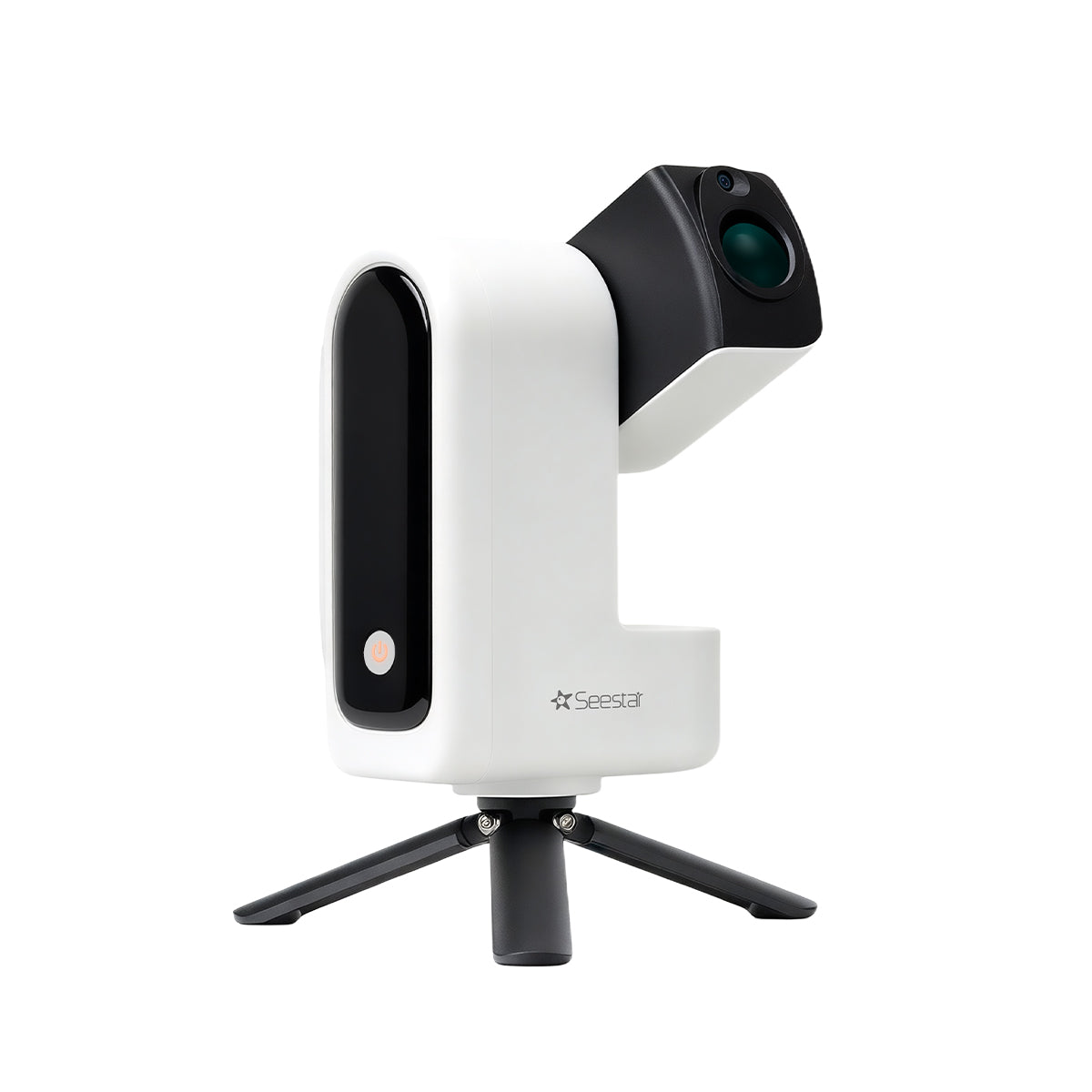
The ZWO Seestar S30 Plus is an all-in-one smart telescope that combines a 30 mm f/5.3 four-element apochromatic telephoto lens, a separate wide-angle camera, an alt-azimuth mount with GOTO, and onboard imaging and processing in a single 1.65 kg body. You mount it on the supplied tripod, power it on, and control everything from the Seestar app on your phone or tablet — target selection, focusing, tracking, live stacking and post-processing.
Both cameras capture at 2K (1440 × 2560, portrait orientation). The telephoto channel uses a 1/1.8″ SC485SL sensor behind a 160 mm focal length (815 mm full-frame equivalent) for a 3° field — enough to frame most nebulae, galaxies and clusters in one shot. The wide-angle channel uses a 1/2″ IMX586 sensor at 6 mm f/1.75 (55 mm equivalent) with a 43.5° cropped field for the Milky Way, star trails, meteors and time-lapse.

Who It’s For
This is a good match if you want to photograph the night sky without assembling a separate telescope, mount, camera and computer. It works well as a first astrophotography instrument, as a compact travel scope, as a family or gift telescope, and as a grab-and-go second rig for an imager who also runs a larger setup. Because every setting can be left on automatic or adjusted by hand, it stays useful as your skills grow.
It suits backyard and balcony imaging from the city (the built-in duo-band filter handles light pollution), dark-site trips where you want to travel light, and daytime scenery and wildlife viewing. It is an imaging instrument with no eyepiece — the view is on your screen.


Key Features & Design
- 2K dual-lens imaging: separate telephoto (3° field) and wide-angle (43.5° field) cameras, both at 1440 × 2560 at 1× zoom, with 1080p live preview.
- Four-element apochromatic telephoto: a 30 mm aperture at f/5.3 with a folded optical path that fits a 160 mm focal length into a 210 × 140 × 80 mm body.
- Triple built-in filter system: UV/IR-cut on both cameras, plus a duo-band OIII 30 nm / Hα 20 nm light-pollution filter and a dark filter on the telephoto channel.
- Magnetic solar filter included: snaps over the telephoto lens for white-light solar imaging.
- Alt-azimuth mount with EQ Mode: slew rate from 1× sidereal to 1440× (about 6°/s), auto homing, and Equatorial Mode for 60 s tracked exposures.
- 80,000+ object SkyAtlas: pick a target in the app and the Seestar finds, tracks and stacks it automatically.
- 64 GB onboard storage: about 45 GB available after system files; JPEG and FITS stills, MP4 and AVI video.
- 6000 mAh battery: up to about 6 hours in Stargazing Mode per ZWO laboratory testing, charged over USB-C (5 V / 3 A).
- Wi-Fi 2.4/5 GHz, Bluetooth and NFC: connect directly to the telescope's own network in the field, or tap an NFC-equipped phone to pair.
- Active anti-dew control: helps keep the optics clear through long outdoor sessions.


Optical & Camera Design
The telephoto channel is a 30 mm four-element apochromatic lens at f/5.3 with a 160 mm focal length. A folded optical path packs that focal length into the compact body, and the apochromatic design keeps stars tight and colour-neutral across the 3° field. Behind it sits a 1/1.8″ SC485SL CMOS sensor (3.68 MP) in portrait orientation, with the UV/IR-cut, duo-band and dark filters selected automatically or from the app. The telephoto channel focuses from about 6 m to infinity.
The wide-angle channel uses a 3.4 mm aperture, 6 mm f/1.75 lens and a 1/2″ IMX586 sensor read out at 2K (cropped) in portrait orientation — chosen so more of the Milky Way's band fits in a single vertical frame. It focuses from 0.1 m to infinity, so it also covers close daytime subjects.


Recommended Uses
- Deep-sky imaging: emission nebulae, galaxies and star clusters, live-stacked in the app. The duo-band filter brings out OIII and Hα nebulae from light-polluted skies.
- Solar system: the Moon, the Sun (with the included magnetic solar filter) and the brighter planets in Solar System Mode.
- Wide-field nightscapes: the Milky Way, star trails turned automatically into video, meteors and astro time-lapse from the wide-angle camera. Freeze the Ground locks the foreground so the landscape stays sharp while the sky is tracked.
- Telephoto mosaics: overlapping frames stitched automatically for targets larger than the 3° field.
- Unattended sessions: Plan Mode, including one-tap Auto Plan, moves through a list of targets through the night.
- Remote imaging: Telescope Network in the app lets you operate a Seestar at another location, using that site's position and conditions.
- Daytime scenery and wildlife through either camera.


Compatibility and Accessory Notes
- Tripod interface: 3/8″-16 thread on the base. The included aluminum alloy tripod is ready to use; any tripod with a 3/8″ mount also fits.
- Equatorial Mode: ZWO recommends the Seestar TH10 fluid tripod head with the ZWO TC20 carbon fiber tripod for polar-aligned EQ use. If you already own a tripod with a 3/8″ thread, the TH10 head on its own is enough. Both are available as add-ons on this page.
- Control: Seestar app over Wi-Fi (effective range up to 10 m) or Bluetooth (up to 5 m). NFC pairing needs a compatible phone with Wi-Fi, Bluetooth, NFC and GPS enabled.
- File transfer: Wi-Fi or USB Type-C; FITS output for processing in your own software.
- Power: USB-C, DC 5 V at 3 A; charges between 0 °C and 40 °C.
Not sure which support suits your plans? Tell us how you intend to use it and we will help you choose.
What’s in the Box
- Seestar S30 Plus smart telescope
- Magnetic solar filter
- Aluminum alloy tripod
- Protective carrying case with shoulder strap
- USB-C cable
- Astronomy stickers
- Quick guide and safety guide

Good to Know Before You Order
- Screen-based viewing: there is no eyepiece; images and live views appear in the Seestar app on your phone or tablet.
- Wide-angle limits: the S30 Plus does not do wide-angle mosaic stitching, so Milky Way panoramas and Milky Way arch capture are features of the S30 Pro. The two cameras also capture one at a time rather than simultaneously.
- Long exposures: 60 s exposures run in Equatorial Mode only, and depend on accurate polar alignment. Alt-azimuth mode uses shorter stacked subs.
- Zoom and resolution: full 2K resolution applies at 1× zoom; 2× and 4× zoom reduce resolution.
- Solar imaging: the included magnetic solar filter fits over the telephoto lens before the Sun is in view — it protects the sensor and is what makes solar imaging safe.
- Milky Way imaging needs a reasonably dark sky; the band is faint or invisible under heavy light pollution, where deep-sky targets with the duo-band filter work better.
- Weather during Plan Mode: the telescope does not shut down automatically if cloud, rain or wind arrives mid-plan, so the overnight forecast is worth a glance first.
- Operating range: −10 °C to 40 °C and 20–80% humidity. Very cold Ontario winter nights fall outside that range.
- Storage: about 45 GB of the 64 GB is available; system updates can change this.
Frequently Asked Questions
Is it difficult to set up?
No. Set it on the tripod, power it on, connect the Seestar app and choose a target. The telescope finds, focuses, tracks and stacks on its own. Exposure, filter and zoom are available in the app when you want manual control.
Can I use it from the city?
Yes. The built-in duo-band OIII/Hα filter combined with live stacking is designed for nebulae and clusters under light-polluted skies, from a backyard or balcony.
How is it different from the original Seestar S30?
ZWO lists six upgrades: wide-field astrophotography for the Milky Way, star trails and meteors; a larger 1/1.8″ 3.68 MP telephoto sensor (from 1/2.8″ 2 MP) and a 1/2″ portrait-oriented wide-angle sensor (from 1/3″); 2K output instead of 1080p; a four-element apochromatic lens instead of three; 160 mm focal length instead of 150 mm, widening the telephoto field from 2.46° to 3°; and NFC pairing.
Should I choose the S30 Plus or the S30 Pro?
Both share the same optical and lens design. The S30 Pro adds a 1/1.2″ 8.3 MP sensor, a 63° wide-angle field, 4K output, wide-angle stitching, Milky Way arch capture and simultaneous dual-camera capture. The S30 Plus covers deep-sky, solar system and wide-field imaging at 2K for less.
Do I need a different tripod?
Not to get started — a tripod is included. For Equatorial Mode, ZWO recommends the TH10 head and TC20 tripod; the TH10 alone works on any tripod with a 3/8″ thread.
Can I control it remotely?
Yes. Telescope Network in the Seestar app connects to a Seestar at another location and uses that site's position, conditions and target altitudes.
Are the images real photographs?
Yes. Smart Noise Reduction refines noise and star shapes in your captured data; ZWO states it does not generate AI imagery.
How long does the battery last?
Up to about 6 hours in Stargazing Mode and about 4 hours of video in Scenery Mode, per ZWO laboratory tests at 25 °C. Cold weather, dew heating and a continuously connected phone shorten it.
Bottom Line
In short: a 1.65 kg smart telescope with a 30 mm f/5.3 four-element apochromatic telephoto and a wide-angle camera, both at 2K, with built-in light-pollution filtering, GOTO tracking and onboard stacking — everything needed for deep-sky, solar system and Milky Way imaging from one app, tripod included.
Model and Field-of-View Comparison


| Product model | Seestar S30 Plus |
|---|---|
| Optical system | 4-element apochromatic |
| Sensor | Tele: 1/1.8″ CMOS SC485SL Wide: 1/2″ CMOS IMX586 |
| Resolution | Tele: 1440 × 2560, vertical Wide: 1440 × 2560 (crop), vertical |
| Field of view | Tele: 3° Wide: 43.5° (crop) |
| Aperture | Tele: 30 mm Wide: 3.4 mm |
| Focal length | Tele: 160 mm Wide: 6 mm |
| Equivalent focal length | Tele: 815 mm Wide: 55 mm |
| Focal ratio | Tele: f/5.3 Wide: f/1.75 |
| Built-in filters | UV/IR-cut (Tele + Wide) Duo-band OIII 30 nm / Hα 20 nm (Tele only) Dark filter (Tele only) |
| External filter | Magnetic solar filter (included) |
| Working distance | Tele: 6 m – ∞ Wide: 0.1 m – ∞ |
| Storage | 64 GB (about 45 GB available) |
| Transmission | Wi-Fi / USB Type-C / Bluetooth |
| Wi-Fi | 5 GHz / 2.4 GHz, effective range ≤ 10 m |
| Bluetooth range | ≤ 5 m |
| Image format | JPEG / FITS |
| Video format | MP4 / AVI |
| Mount | Alt-azimuth (EQ Mode supported) |
| Slew rate | 1× – 1440× |
| Auto homing | Supported |
| Battery | 6000 mAh, up to 6 hours (ZWO laboratory test) |
| Power input | USB Type-C, DC 5 V / 3 A |
| Base interface | 3/8″-16 |
| Working temperature | −10 °C to 40 °C |
| Charging temperature | 0 °C to 40 °C |
| Storage temperature | −10 °C to 60 °C |
| Working humidity | 20% – 80% |
| Storage humidity | 20% – 50% |
| Wi-Fi reset button | Supported |
| Dimensions | 210 × 140 × 80 mm (closed) |
| Weight | 1.65 kg (without tripod) |
| Included | Telescope, magnetic solar filter, aluminum alloy tripod, carrying case with shoulder strap, USB-C cable, stickers, quick guide, safety guide |
You may also like
Recently viewed
Recent Blog Posts
View all
Your Guide Graph Is Lying to You
Read More
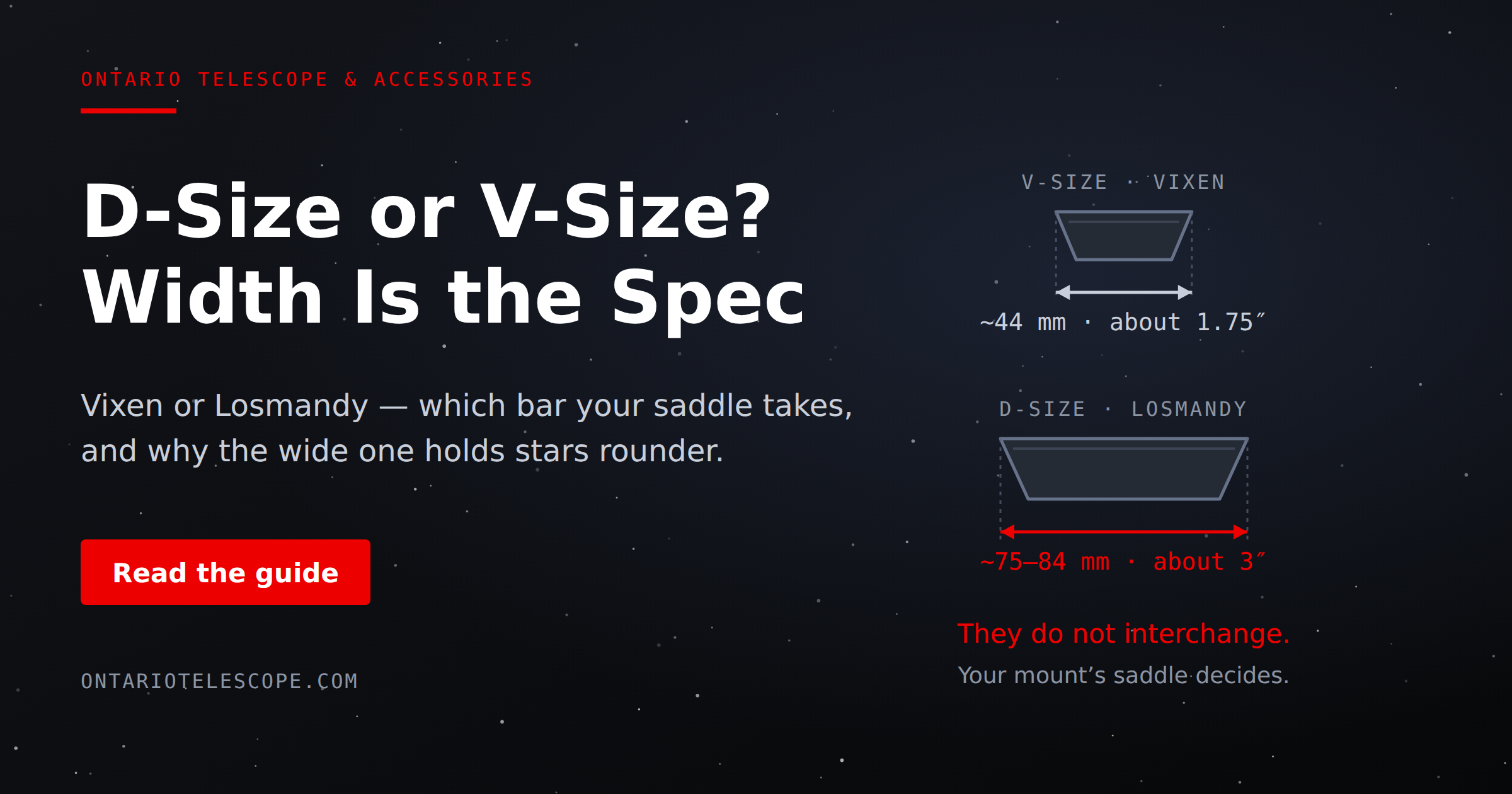
D-Size vs V-Size: A Complete Guide to Telescope Dovetail Systems
Read More
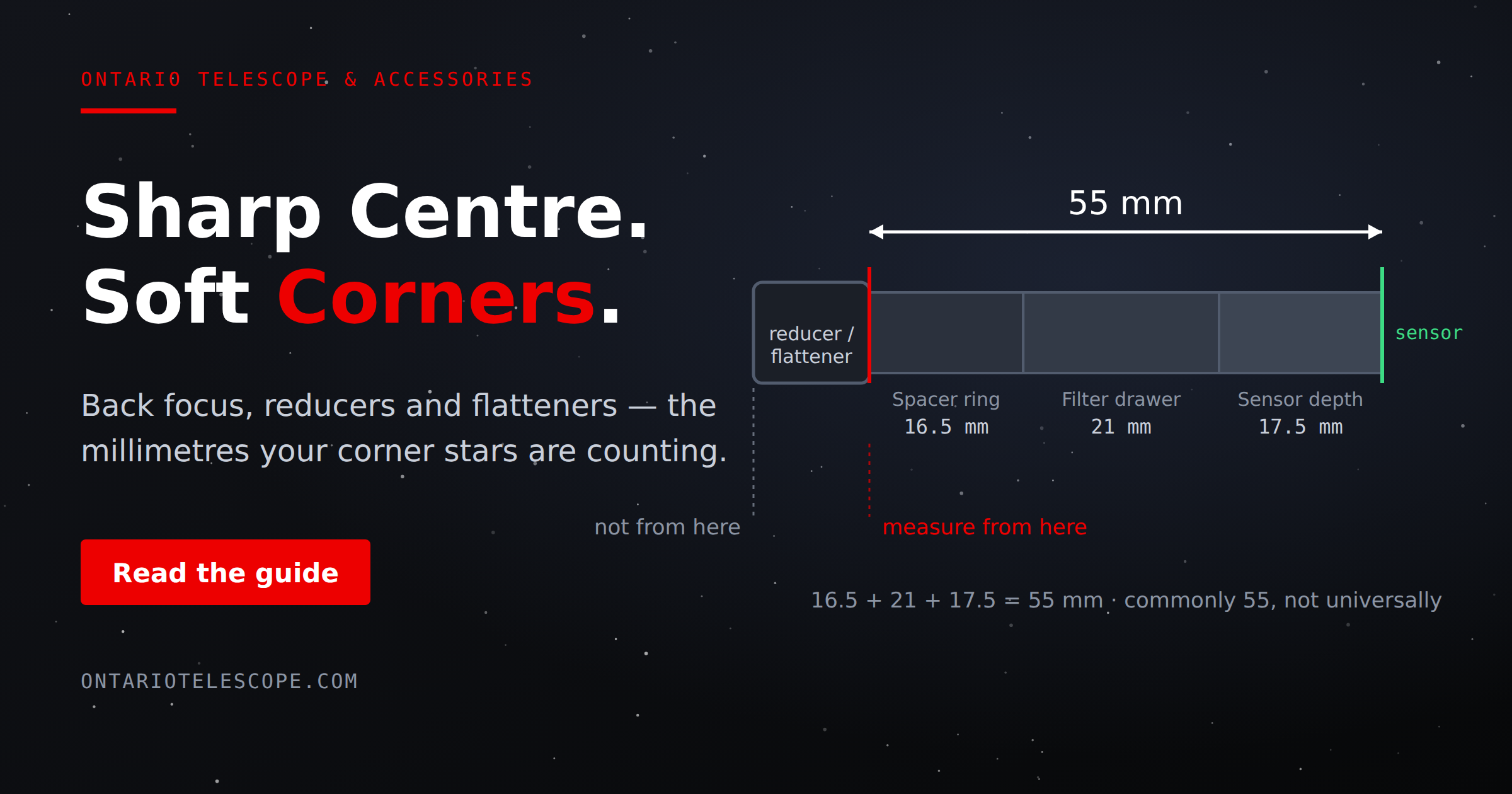
What Is Back Focus in Astrophotography? Telescope Reducers, Flatteners, and Spacing Explained
Read More