


- Description
- Specifications
Product Overview
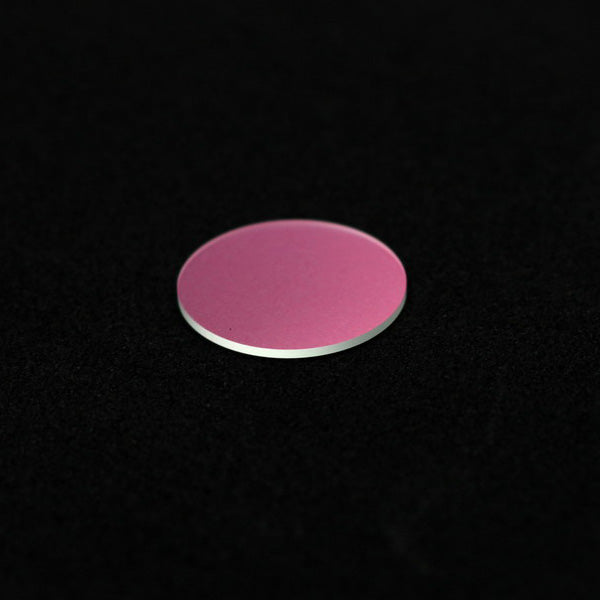
The ZWO D60 UV IR-Cut Protective Window is a 60 mm replacement window for ZWO's large-format cooled cameras. It is 2 mm thick, figured to 1/4 λ flatness, and mounts directly in front of the sensor — sealing the cooled sensor chamber against dust and humidity while blocking ultraviolet and infrared outside the visible band.
This is the window ZWO fits to its one-shot-colour full-frame and APS-C cooled bodies. The monochrome equivalents take the AR window instead, for reasons covered below.
Who It's For
This is a good match if you own an ASI6200MC Pro, ASI2400MC Pro, or ASI2600MC Pro/Duo and need to replace a window that is scratched, fogged, or contaminated beyond cleaning.
On a cooled camera the window matters more than on an uncooled one: it is the seal that keeps the desiccated sensor chamber dry. A compromised window is not just an optical problem — it is a condensation problem.
Key Features & Design
- 60 mm diameter, 2 mm thick: the D60 form factor, sized for ZWO's APS-C and full-frame cooled bodies
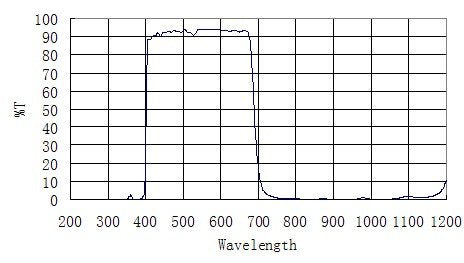
- UV IR-cut coating: passes visible light and rejects ultraviolet and infrared — the correct behaviour for a one-shot-colour sensor with no filter in the train
- 1/4 λ flatness across 60 mm: holding that figure over this aperture is why the substrate is 2 mm rather than 1.1 mm
- Sensor-chamber seal: on a TEC-cooled camera this window is the barrier keeping humidity away from a sensor held well below ambient
- Coated optical glass, supplied as a bare window
Recommended Uses
- Replacing a scratched or contaminated window on an ASI6200MC Pro, ASI2400MC Pro, or ASI2600MC Pro/Duo
- Restoring the sensor-chamber seal on a cooled camera that has begun showing condensation or frosting
- One-shot-colour deep-sky imaging, where IR-cut at the sensor keeps stars tight and colour honest without consuming a filter slot
- Wide-field refractor work, where uncorrected infrared focuses at a different point than visible light and bloats stars
Compatibility and Accessory Notes
- Cameras shipped with this window: ASI6200MC Pro, ASI2400MC Pro, and ASI2600MC Pro/Duo
- Colour bodies take IR-cut, mono bodies take AR. The ASI6200MM Pro and ASI2600MM Pro/Duo ship with the D60 AR window instead, because a monochrome camera does its filtering in the filter wheel and an IR-cut at the sensor would be redundant. The ASI071MC Pro also takes the AR window
- Diameter is not interchangeable: D60 fits 60 mm bodies only. ASI1600 / ASI294 / ASI183 / ASI533 take the D32; smaller planetary bodies take the D21 or D25
- No installation direction: ZWO confirms the window has no preferred orientation
- Replacement procedure: see ZWO's official guide, How to Replace the Camera Protective Window
- Mechanical part only — no electronic function, no camera communication
Important Limitations
- This is the highest-risk window in the range to replace yourself. These are cooled, desiccated cameras — opening the sensor chamber exposes a large sensor to dust and room humidity, and any moisture sealed inside will condense the moment the TEC runs. Check your desiccant before reassembling
- It will defeat infrared imaging. If you shoot IR-pass work, this window blocks exactly the light you want. Use the D60 AR instead
- Not a threaded filter. It is a bare optical window that only works installed inside the camera body
- Not a light-pollution or narrowband filter — it cuts UV and IR only
- Fits 60 mm bodies only. Check your camera against the list above before ordering
- Sold as a single window. No tools, gaskets, desiccant, or retaining ring included
Frequently Asked Questions
Which cameras use the D60 UV IR-cut window?
The ASI6200MC Pro, ASI2400MC Pro, and ASI2600MC Pro/Duo — ZWO's one-shot-colour large-format cooled bodies.
Why does my ASI2600MM Pro have a different window?
Because it is monochrome. Mono cameras filter in the filter wheel, so an IR-cut coating at the sensor would be redundant and would block narrowband and infrared work. ZWO fits the D60 AR window to the mono bodies instead.
What is the difference between the AR window and the UV IR-cut window?
The AR window is anti-reflective coated but optically clear and passes UV and IR. This one blocks both. ZWO confirms the AR window does not cut UV.
Do I still need a UV/IR-cut filter in my imaging train?
Not for that purpose. With this window fitted the IR-cut happens at the sensor, which frees a slot in your drawer or wheel.
Does the window have to face a particular direction?
No. ZWO confirms there is no specific installation direction.
Why is this window 2 mm thick when the D21 and D25 are 1.1 mm?
Holding 1/4 λ flatness across a 60 mm aperture takes a thicker substrate than across 21 mm. Thin glass at this diameter would not stay flat.
My cooled camera is frosting up. Is the window the cause?
It can be, if the seal is compromised — but exhausted desiccant is the more common culprit. Check and bake or replace the desiccant first before opening the sensor chamber.
Is this good for beginners?
No. Replacing a window on a large cooled camera is the least forgiving job in this range. If you are not equipped to work clean and manage desiccant, have it done.
Bottom Line
In short: a 60 mm × 2 mm UV IR-cut window at 1/4 λ flatness — the factory part for the ASI6200MC Pro, ASI2400MC Pro, and ASI2600MC Pro/Duo. Colour bodies take this; mono bodies take the D60 AR. Fitting it means opening a cooled, desiccated chamber, so treat the desiccant as part of the job.
| Type | UV IR-cut protective window |
|---|---|
| Diameter | 60 mm |
| Thickness | 2 mm |
| Flatness | 1/4 λ |
| Function | Blocks ultraviolet and infrared; seals cooled sensor chamber against dust and humidity |
| Match model | ASI6200MC Pro, ASI2400MC Pro, ASI2600MC Pro/Duo |
| Mono equivalent | D60 AR window (ASI6200MM Pro, ASI2600MM Pro/Duo, ASI071MC Pro) |
| Installation direction | None — no preferred orientation |
| Interface | Internal sensor-chamber window; mechanical only |
| Weight | Not provided by vendor |
| Recommended use | Replacement sensor window for one-shot-colour large-format cooled cameras |
You may also like
Recently viewed
Recent Blog Posts
View all
Your Guide Graph Is Lying to You
Read More

D-Size vs V-Size: A Complete Guide to Telescope Dovetail Systems
Read More

What Is Back Focus in Astrophotography? Telescope Reducers, Flatteners, and Spacing Explained
Read More