


- Description
- Specifications

Product Overview
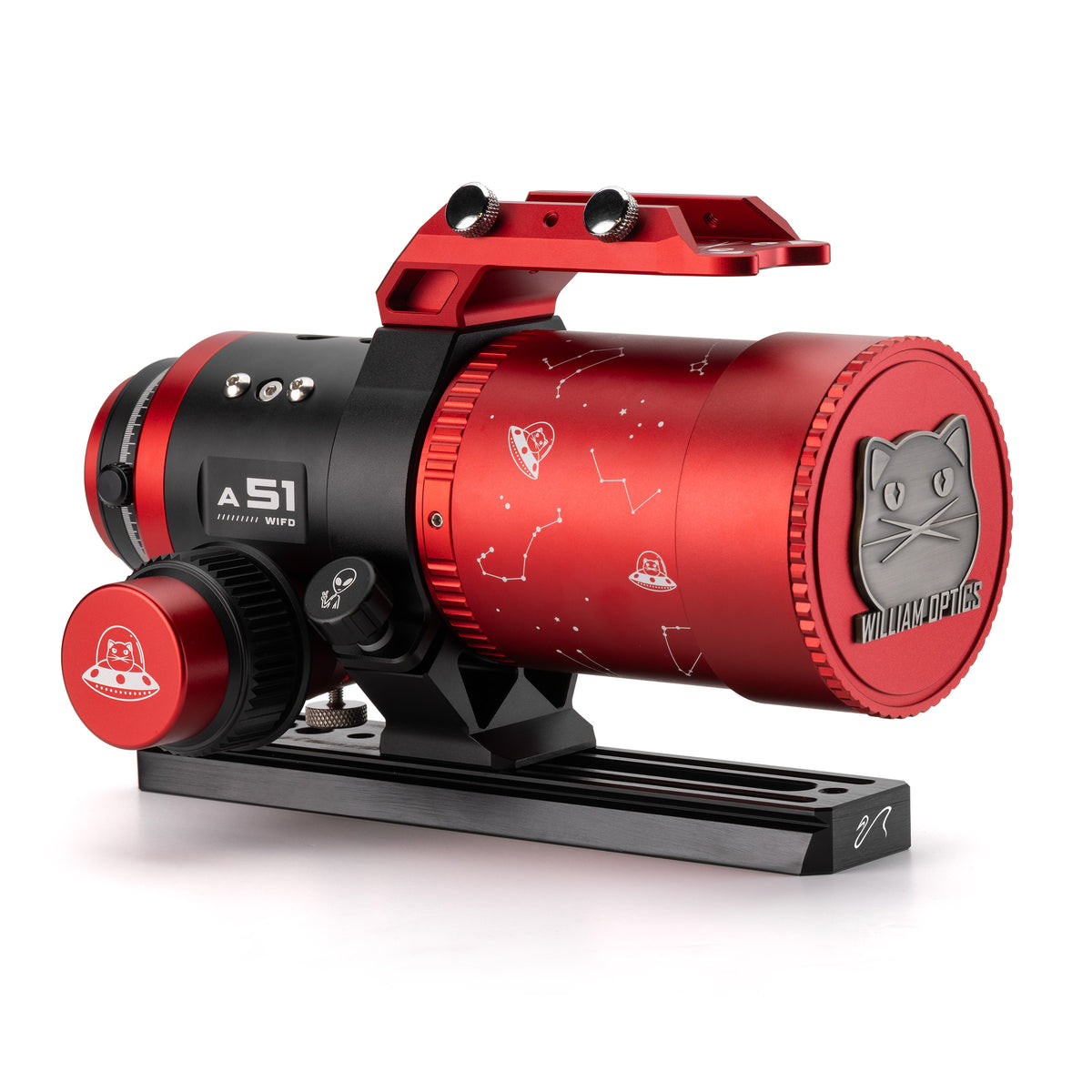
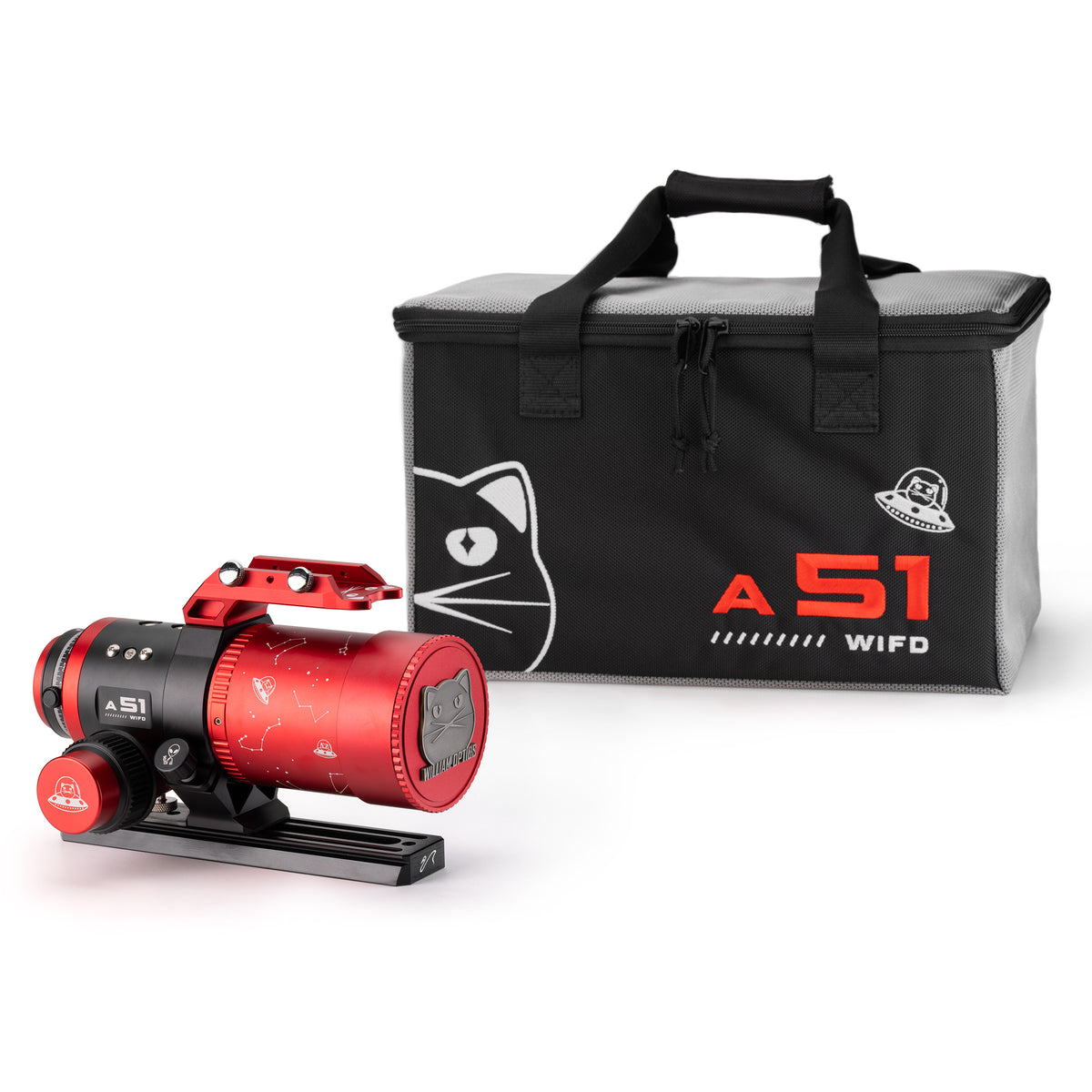
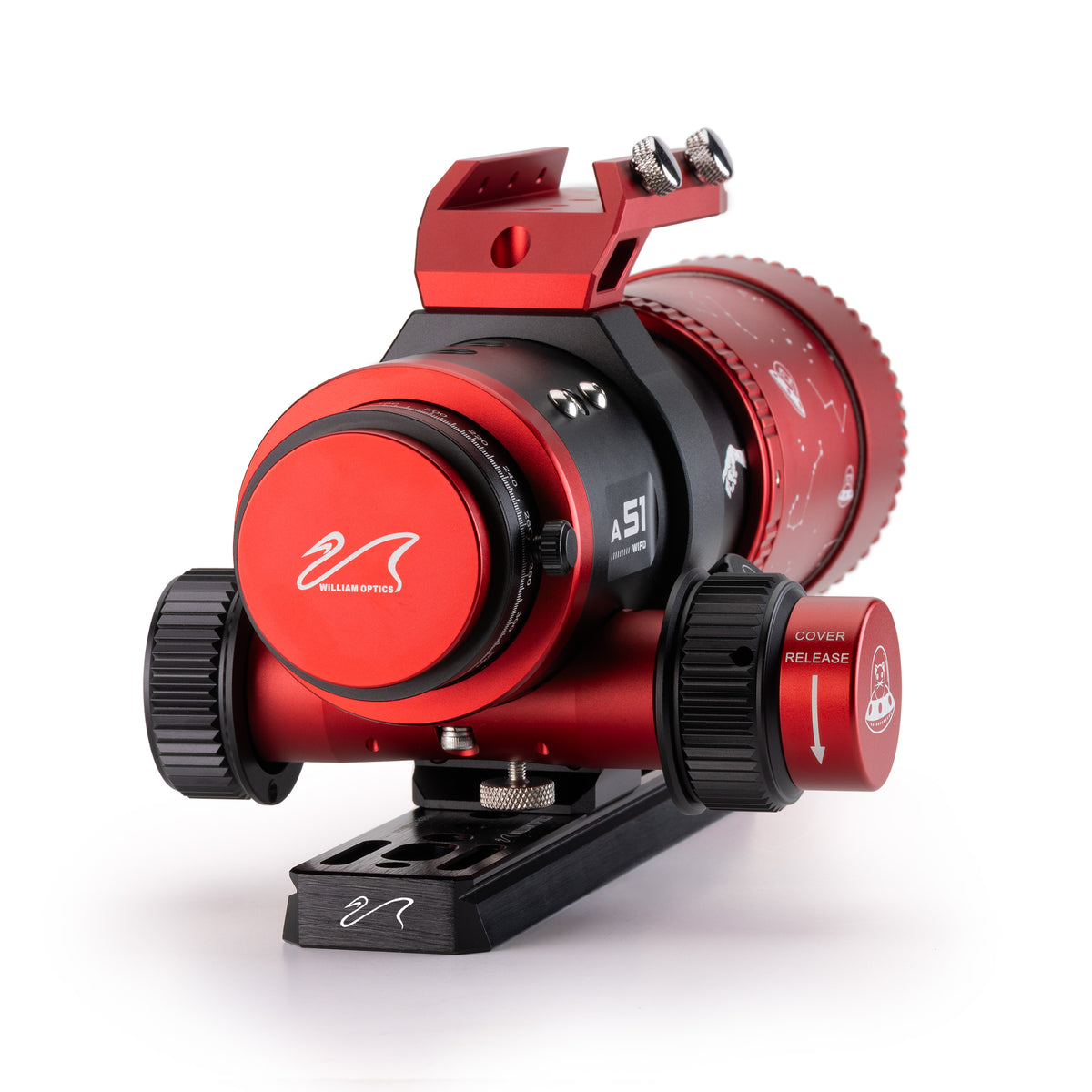
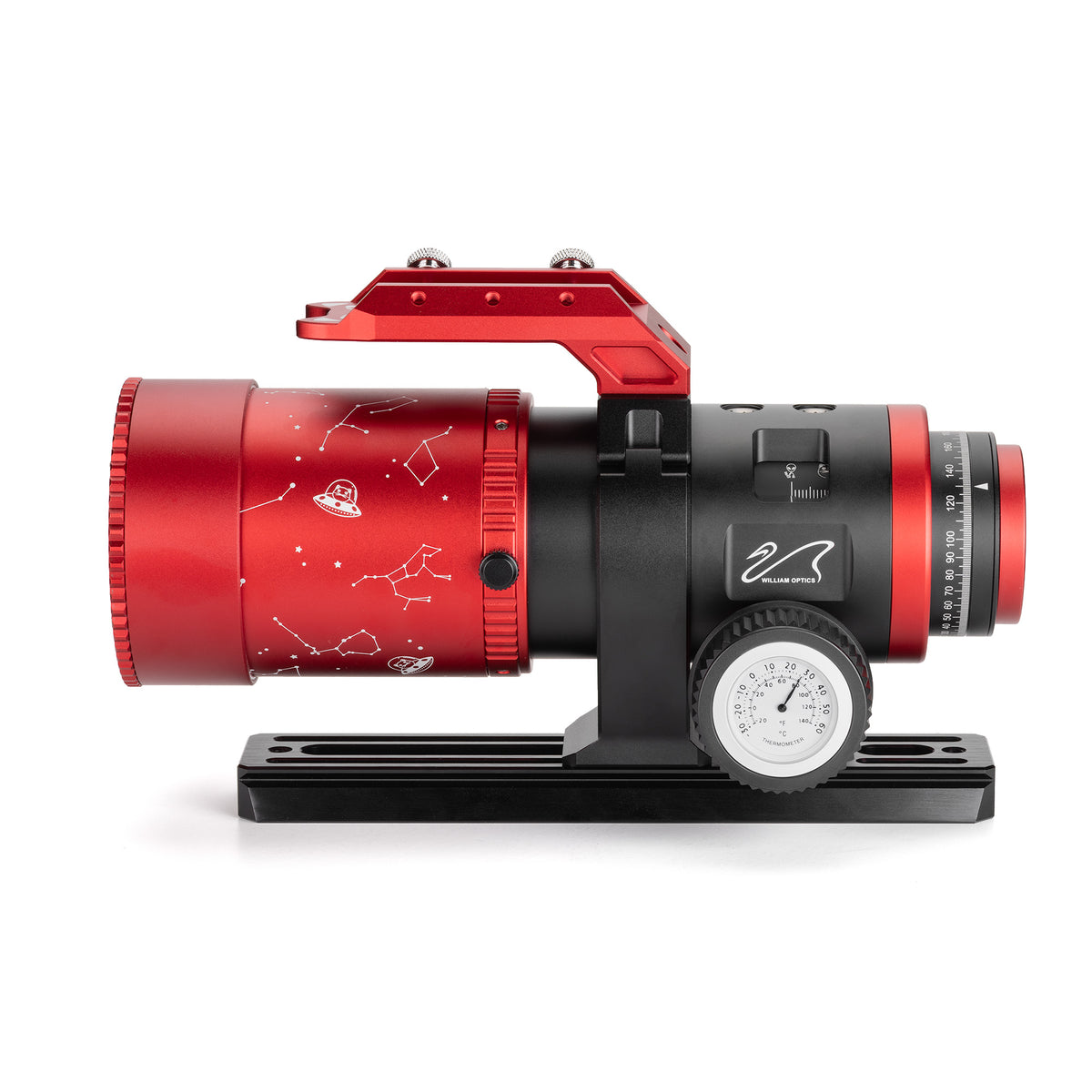
The William Optics Cat A-51 WIFD is a 51 mm, 250 mm focal length, f/4.9 four-element Petzval astrograph built for wide-field imaging from a small, light package. Its 48 mm image circle covers full-frame, APS-C and Micro Four Thirds sensors with a flat field and no separate flattener. The M54 to M48 adapter, sensor tilt adjuster and camera angle rotator are included, so a camera adapter for your body is the only part needed to complete the imaging train.
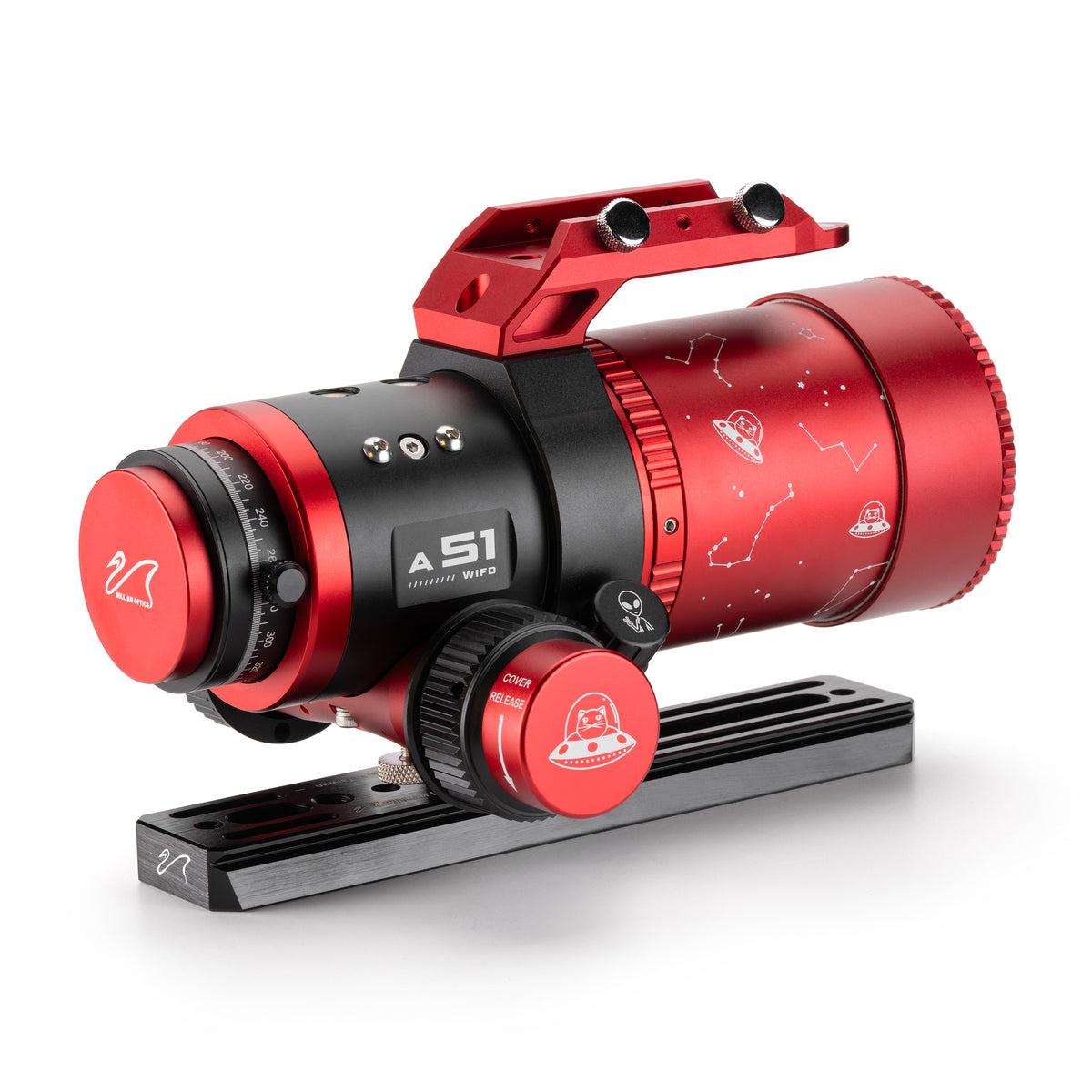
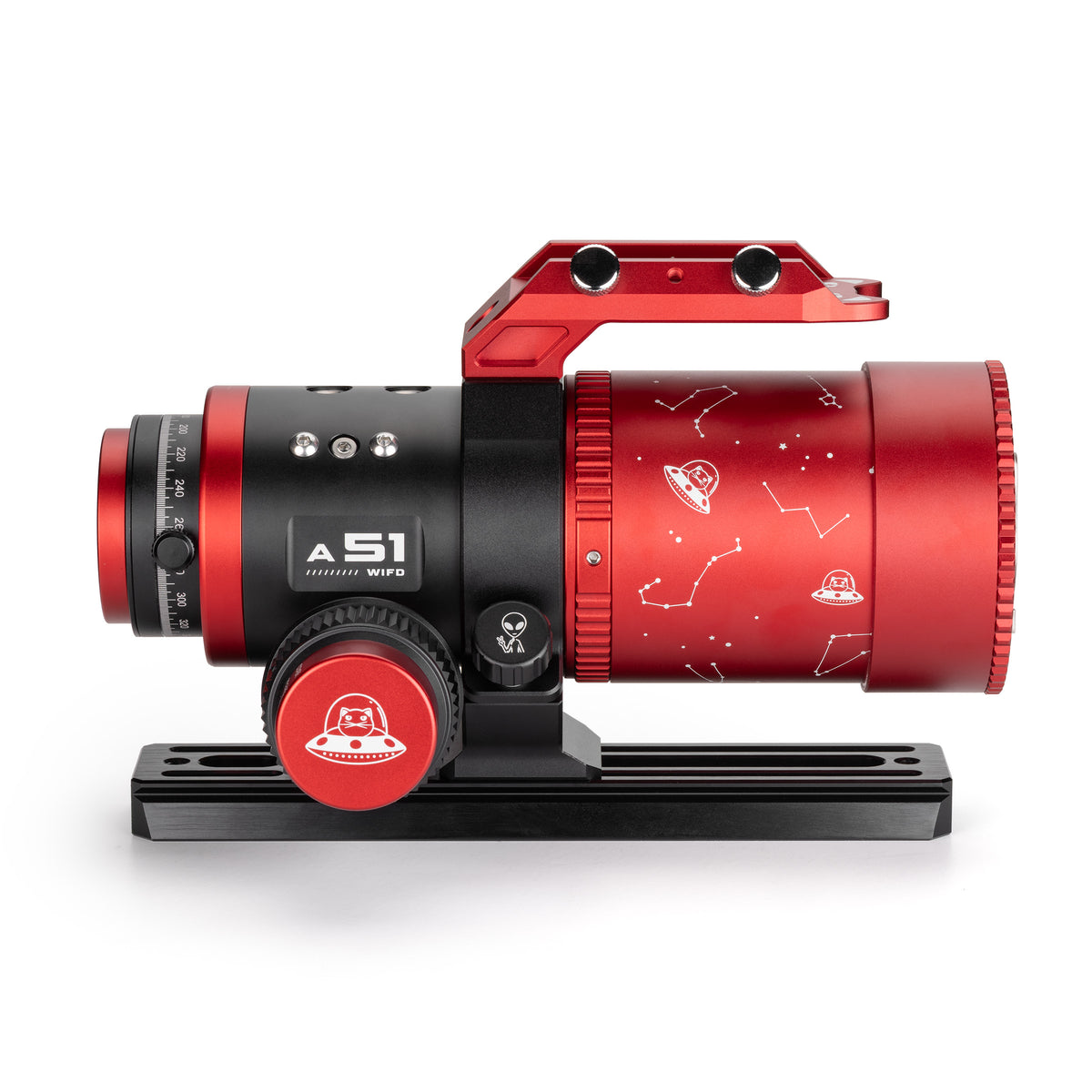
The optical tube weighs 1.53 kg (3.37 lb), and the complete package with handle bar, ring and dovetail weighs 2.2 kg (4.85 lb). Tube length runs from 229.4 mm to 266 mm with the dew shield retracted and extended. Focusing is handled by William Optics' WIFD rack-and-pinion focuser with a 1:10 fine-focus knob, a focus scale window and a temperature gauge built into the knob.
Who It's For
This is a good match if you:
- Image large deep-sky targets: 250 mm frames the big emission nebulae, the Milky Way core regions, dark-nebula complexes and comets that overfill longer telescopes.
- Travel or image from a dark-sky site: at 2.2 kg complete it rides on a star tracker or a compact equatorial mount.
- Use a full-frame or APS-C camera: the 48 mm image circle is sized for full-frame, so a DSLR, mirrorless body or dedicated astronomy camera uses the whole sensor.
- Want a second, wide-field rig: it runs alongside a longer-focal-length imaging system for mosaics or widefield context frames of the same target.
It is also an easy telescope to start an imaging setup with: the Petzval design is corrected out of the box, focus is reached within a forgiving back spacing range, and the camera hardware is included.

Key Features & Design
- Four-element Petzval optics: 51 mm aperture, 250 mm focal length, f/4.9, with a flat 48 mm image circle and no flattener required.
- WIFD rack-and-pinion focuser: 15 mm of travel, a two-speed 1:10 fine-focus knob with a protective cover, a focus scale window, and a temperature gauge in the focus knob.
- Quick tension knob: on the underside of the focuser, for holding heavier camera trains without draw-tube slip.
- EAF-ready: the temperature-gauge knob comes off to fit an electronic auto focuser, and the focuser has M4 holes for the motor bracket and for a finder or guide-scope bracket.
- Built-in sensor tilt adjuster: push-pull screw pairs let you correct camera tilt from the field.
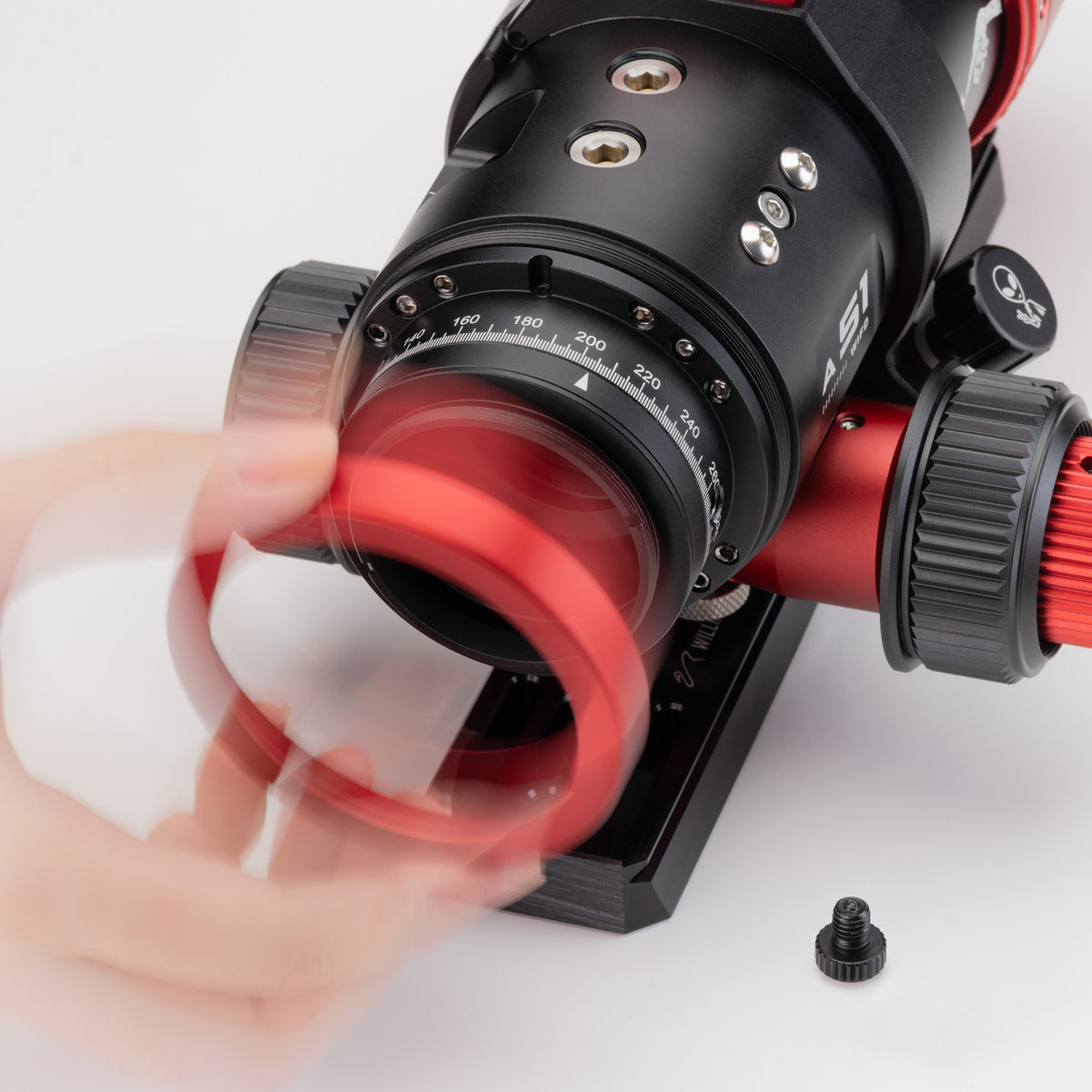
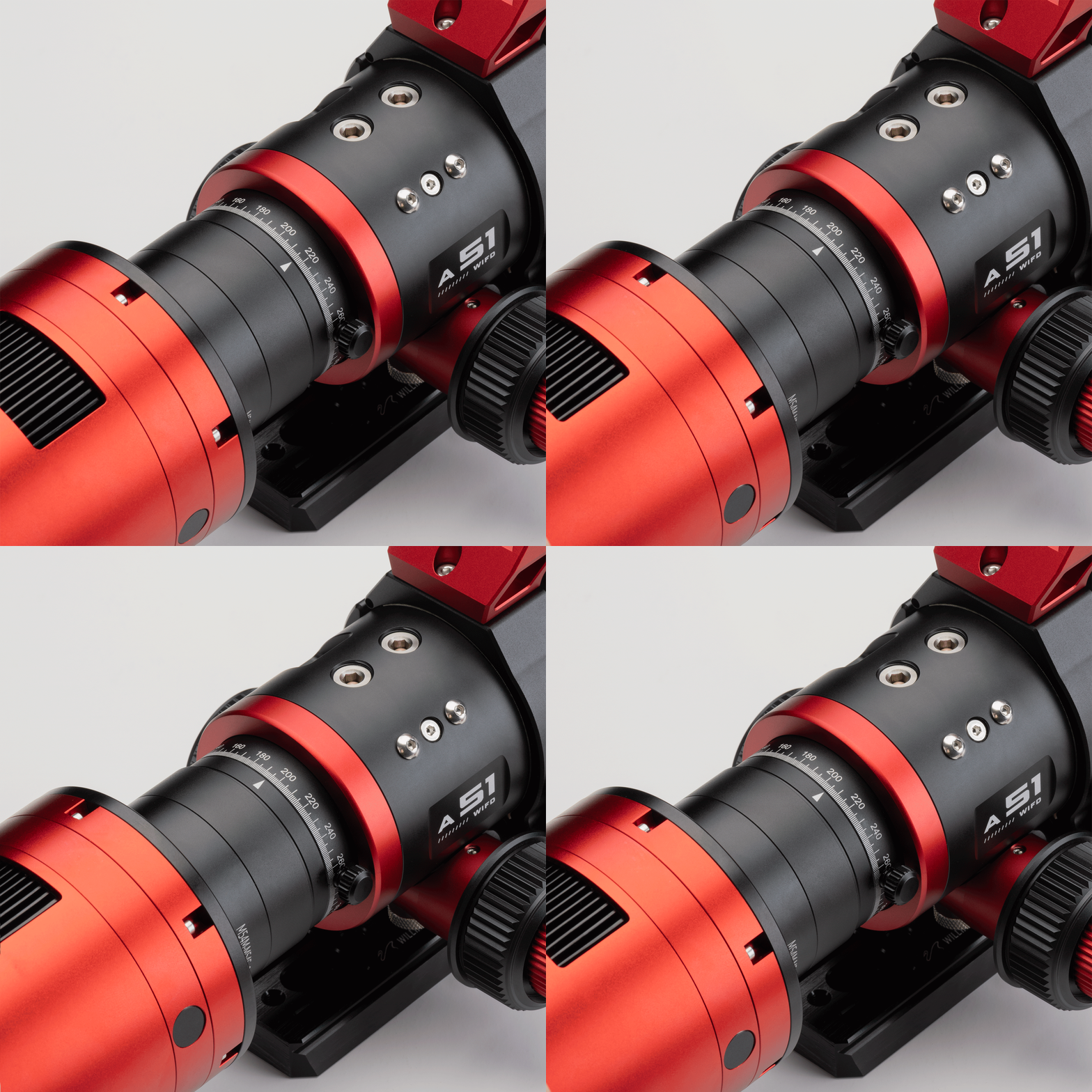
- Camera angle rotator (CAA): rotates the camera to frame the target without loosening the imaging train; it locks with an M6 × 1.0 knob.
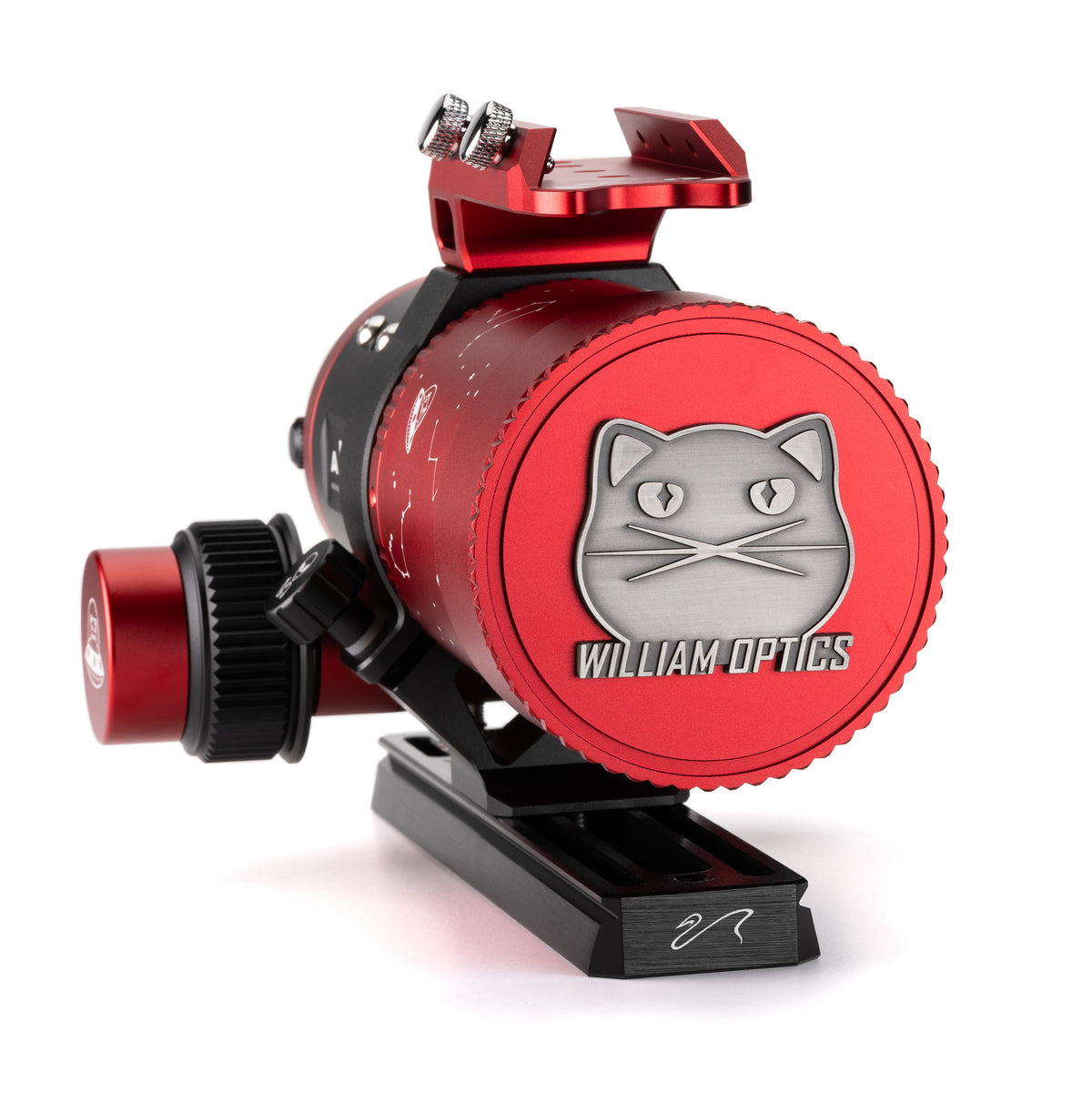
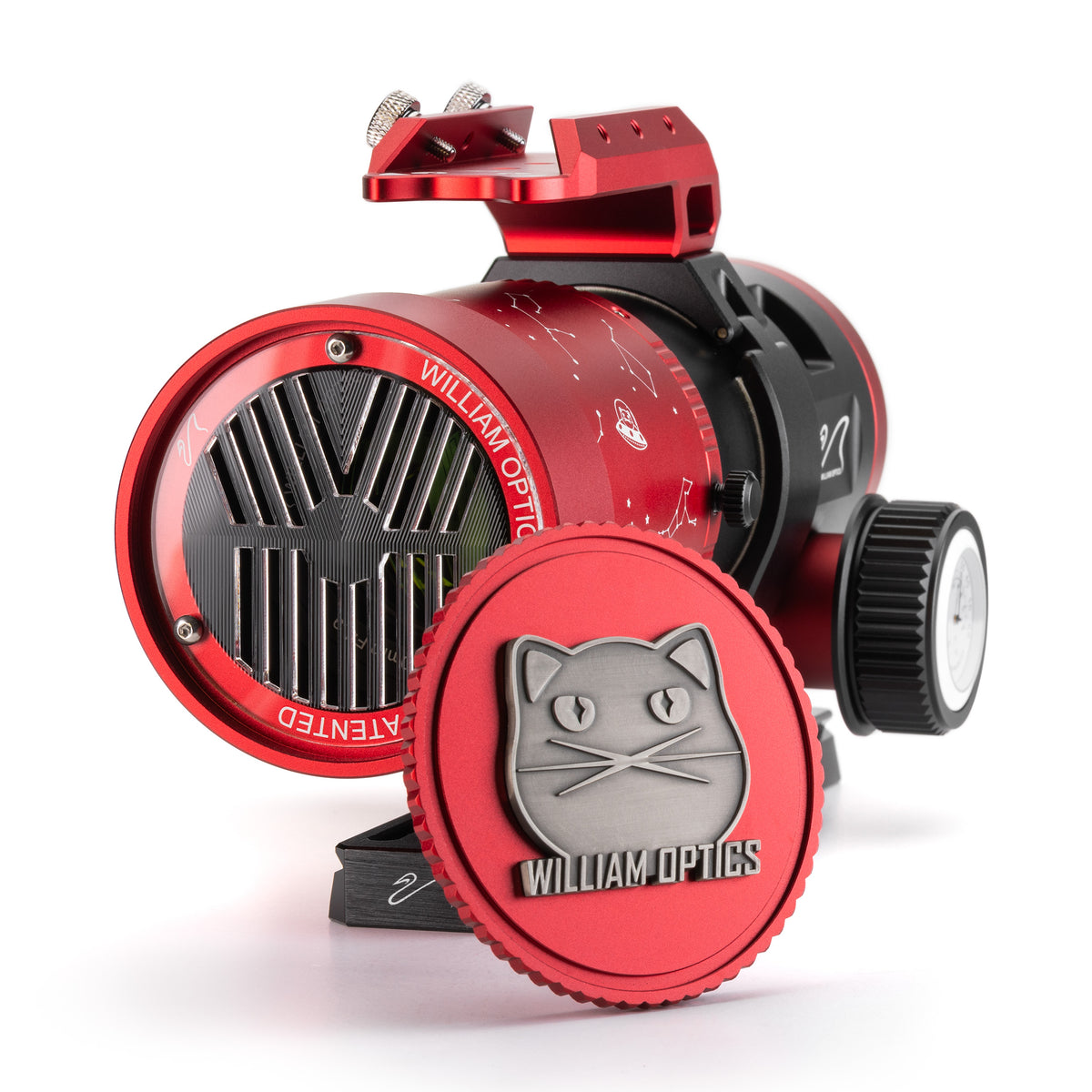
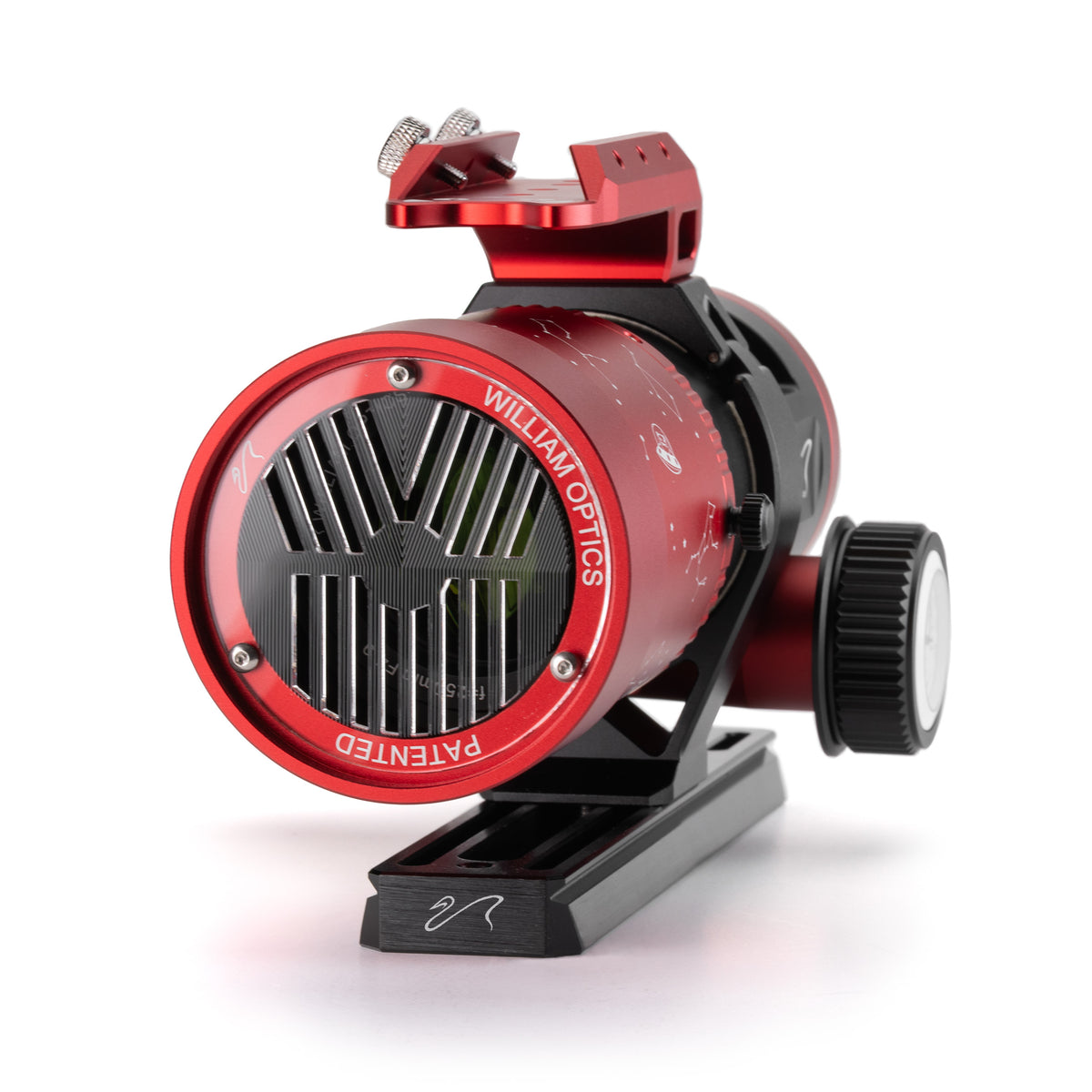
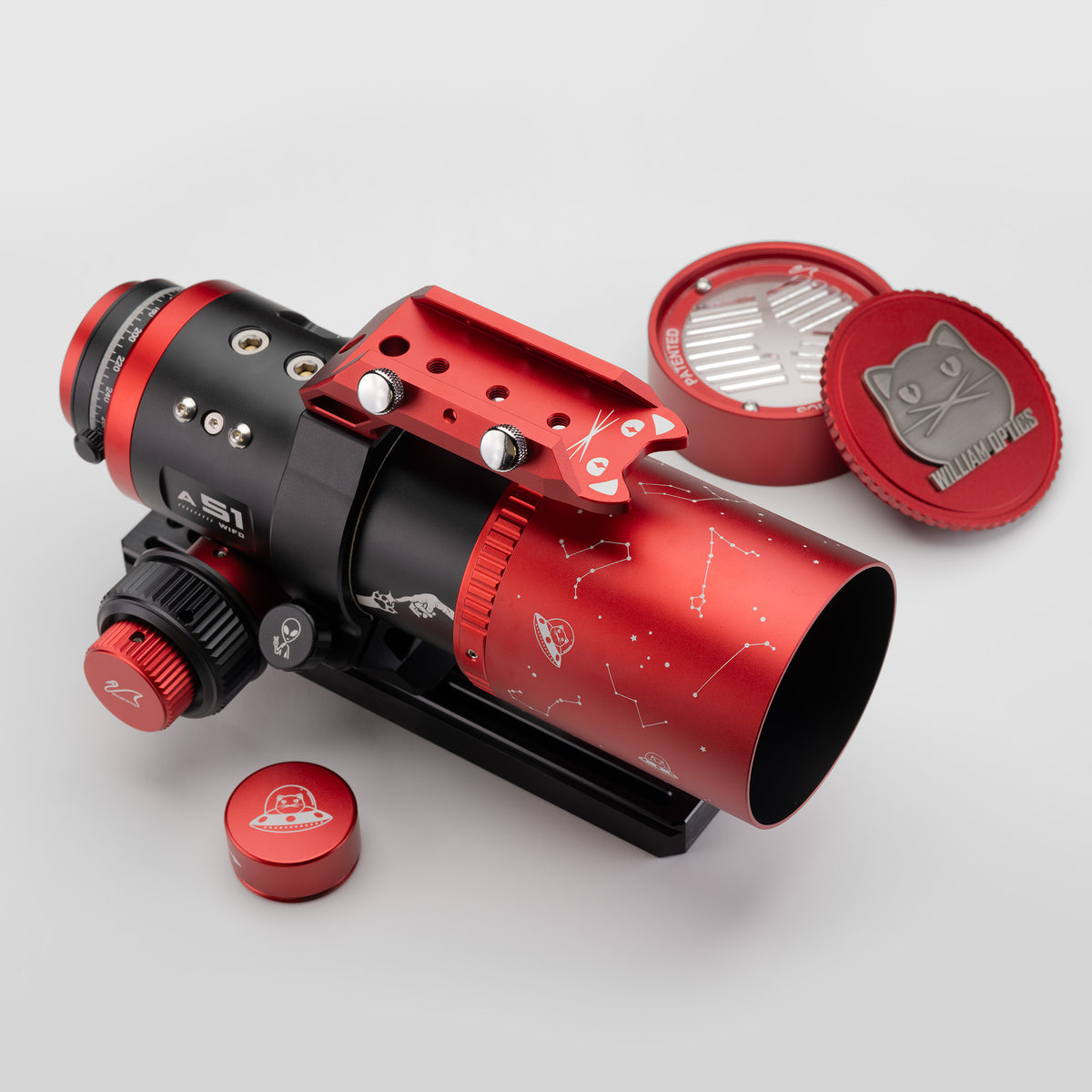
- Bahtinov mask lens cover: the front cover doubles as a focusing mask.
- Retractable 36 mm dew shield with a locking screw.
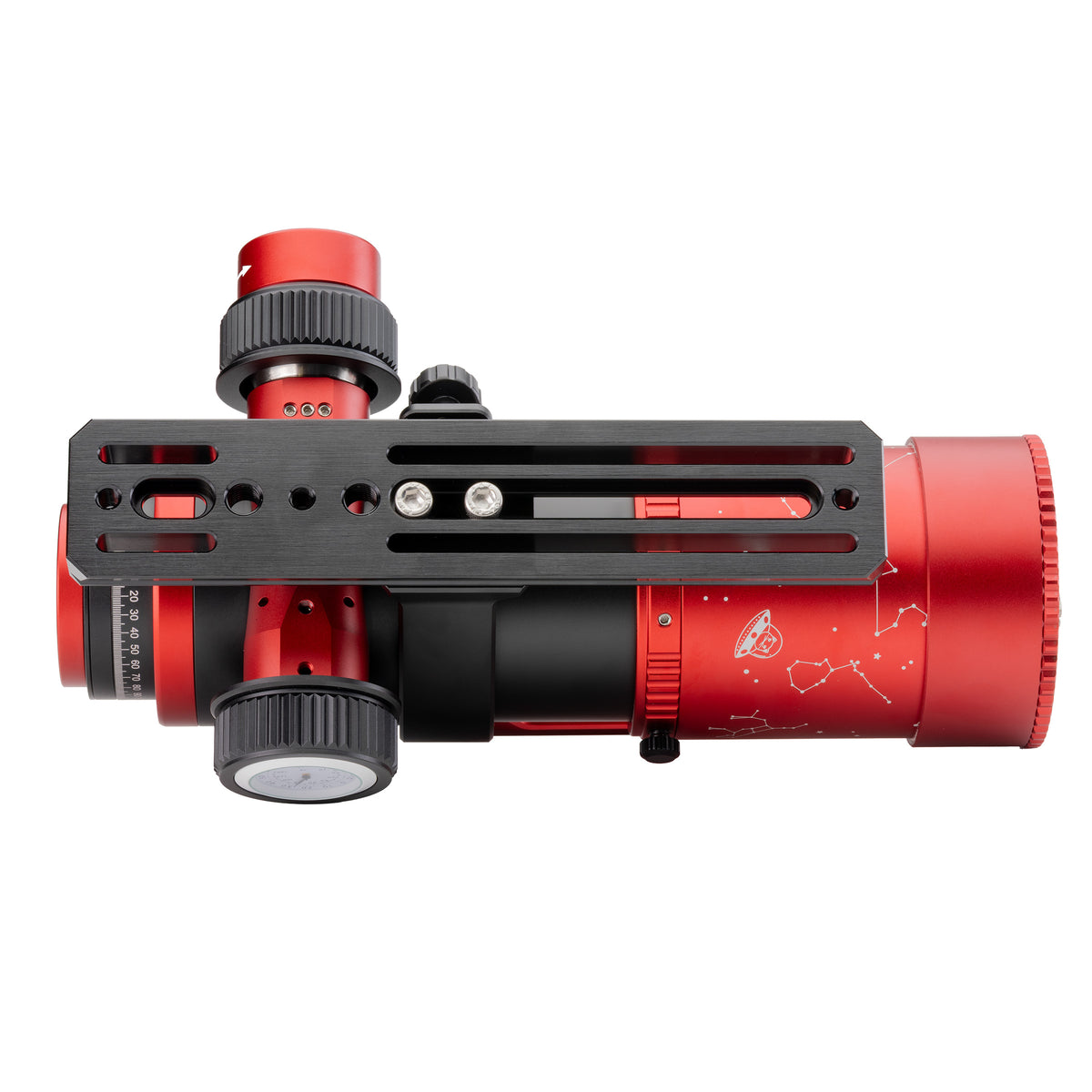
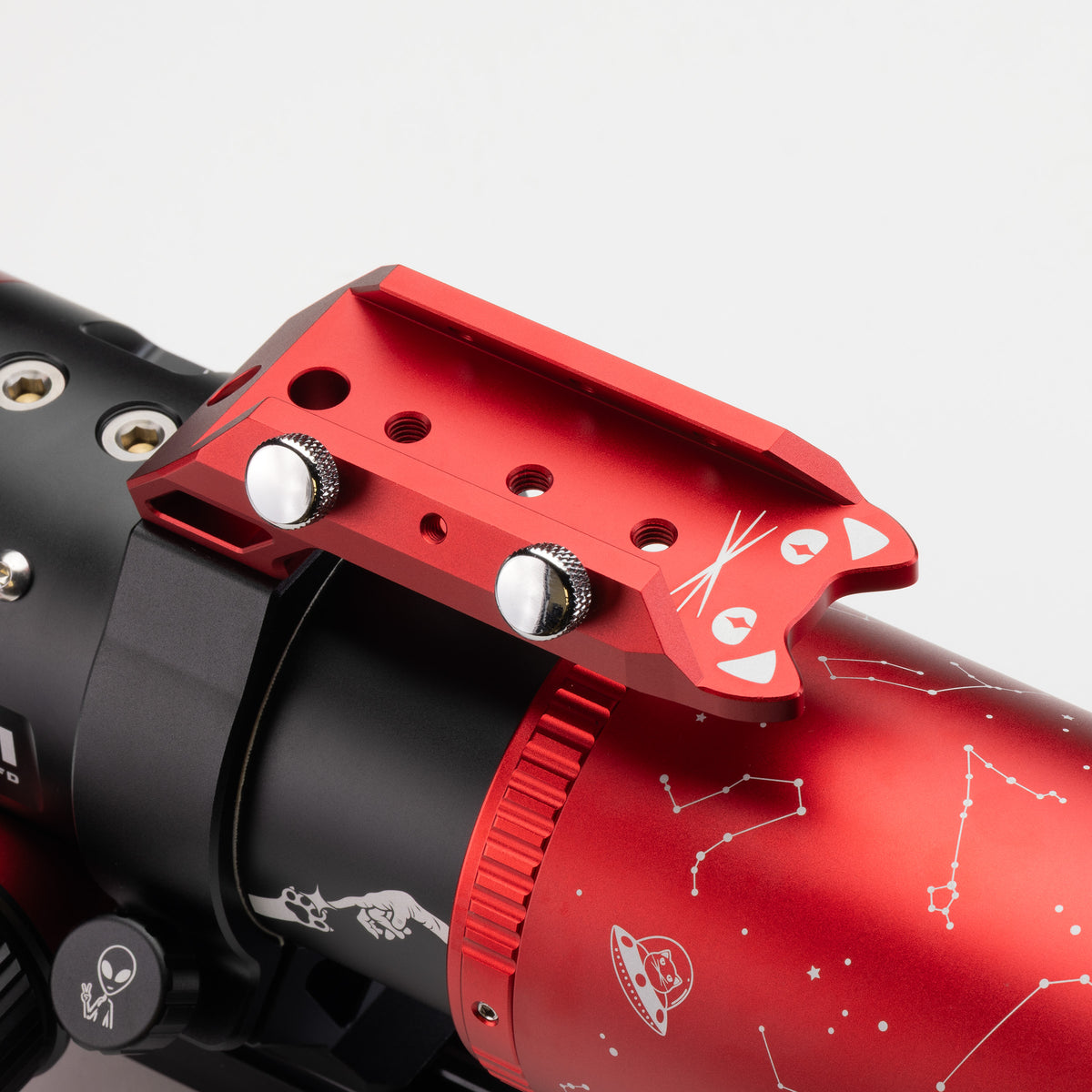
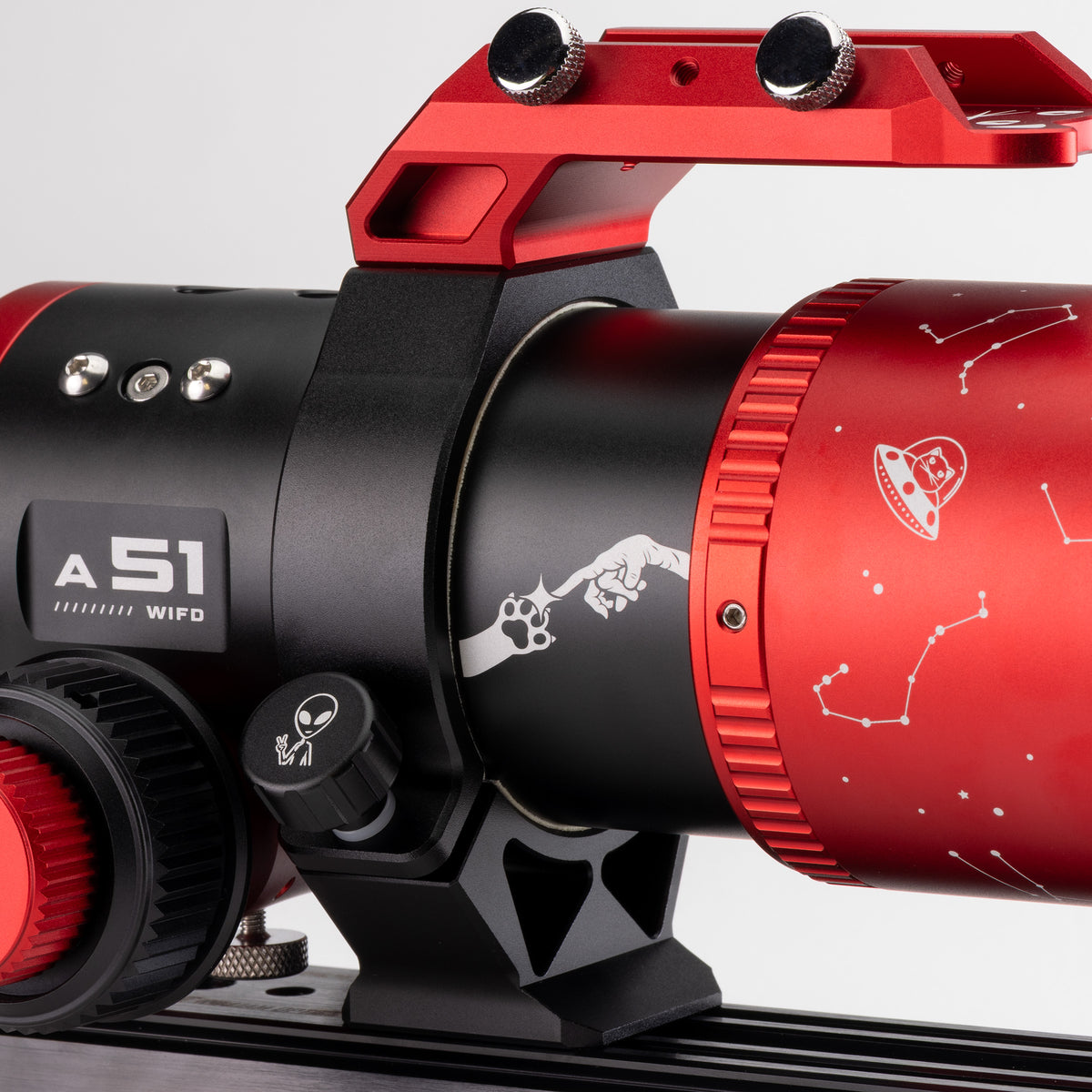
- Mounting hardware included: mounting ring, handle bar with a mini Vixen-style base, and a 210 mm dual-side dovetail plate that fits both Vixen-style and Arca-Swiss-type clamps.


Optical & Mechanical Design
A Petzval astrograph places a corrector group at the rear of the tube, so the field is flattened by the telescope itself rather than by an add-on flattener at a fixed spacing. On the Cat A-51 the four elements give a 48 mm corrected image circle at f/4.9, enough to cover a 43.3 mm full-frame diagonal. The practical result is that you do not need to hit a single exact back focus distance: the design focuses across a supported back spacing range, and William Optics recommends 55 ± 3 mm for imaging.
The WIFD focuser sits inside the tube body. Its 15 mm of travel is short by design, because the Petzval corrector fixes the image position; it handles focus for any camera train inside the supported spacing range. The size and parts drawings below show the layout.

Recommended Uses
- Wide-field deep-sky imaging of large nebulae and dark-nebula regions
- Milky Way star fields and widefield mosaics
- Comet imaging, where a wide field holds the full tail
- Travel and dark-site imaging on a star tracker or compact equatorial mount
- A dedicated widefield second rig alongside a longer imaging telescope
- Visual observing with the optional erecting prism and an eyepiece
Compatibility and Accessory Notes
- Camera connection: the rear thread is M54, with an M54 to M48 adapter included. Mirrorless and DSLR bodies attach through a camera adapter for your lens mount; dedicated astronomy cameras attach through M48 spacers.
- Back spacing: 55 ± 3 mm is the recommended range for imaging. Staying in it keeps the draw tube near its retracted position and reduces the chance of light leaks. If you send us your camera and filter setup, we will work out the spacers with you.
- Electronic focuser: the focus knob removes to fit an EAF using a 5–6 mm flexible coupling and four M4 bracket screws. William Optics lists a ZWO EAF mounting bracket as the matching accessory. Because travel is 15 mm, the EAF is set up with small step sizes and travel limits.
- Guiding and finding: M4 holes on the focuser take a finder or guide-scope bracket. William Optics lists the UniGuide 32 mm f/3.75 guide scope and a dot sight finder for this telescope.
- Mounting: the 210 mm dovetail clamps in Vixen-style and Arca-Swiss-type saddles. William Optics also offers a riser block for the 51 ring. Set the telescope in the ring so both focuser knobs sit level and parallel to the mount; that keeps them clear of the saddle.
- Visual use: an erecting prism replaces the rear adapter for eyepiece viewing with a correctly oriented image.


What's in the Box
- Cat A-51 WIFD optical tube with retractable 36 mm dew shield
- Bahtinov mask lens cover and front cover
- WIFD focuser with fine-focus knob and temperature gauge
- Sensor tilt adjuster
- Camera angle rotator (CAA)
- M54 to M48 adapter and M48 rear dust cap
- Mounting ring
- Handle bar with mini Vixen-style base
- 210 mm dual-side dovetail plate (Vixen-style and Arca-Swiss-type)

Good to Know Before You Order
- Camera adapter sold separately: the telescope ends in an M48 thread. A camera-specific adapter (or M48 spacers for an astronomy camera) completes the connection, and we can match one to your body.
- Short focuser travel: the 15 mm travel is matched to the Petzval design and the 55 ± 3 mm spacing range. A camera train well outside that range may not reach focus.
- Visual observing needs the erecting prism: it is an optional accessory, and an eyepiece is not included.
- A tracking mount is needed for long exposures: the dovetail fits Vixen-style and Arca-Swiss-type clamps on star trackers and equatorial mounts.
- Solar viewing: the Sun is observed only through a full-aperture front solar filter fitted over the dew shield.
Frequently Asked Questions
Is it difficult to set up?
No. The field flattening is built into the optics, and the tilt adjuster, rotator and M48 adapter come on the telescope. Thread on your camera adapter, keep the spacing near 55 mm, and use the Bahtinov mask cover to focus.
Do I need a field flattener?
No. The four-element Petzval design delivers a flat 48 mm field on its own.
Will it cover a full-frame sensor?
Yes. The 48 mm image circle is larger than the 43.3 mm diagonal of a full-frame sensor. APS-C and Micro Four Thirds are covered as well.
What back focus does it need?
William Optics recommends 55 ± 3 mm for astrophotography. Being a Petzval, it focuses across a range rather than at one exact figure.
Can I add an electronic focuser?
Yes. The temperature-gauge knob removes to fit an EAF, and William Optics lists a ZWO EAF mounting bracket for it.
Can I use it visually?
Yes, with the optional erecting prism in place of the rear adapter and an eyepiece.
What mount do I need?
At 2.2 kg complete plus your camera, it suits star trackers and compact equatorial mounts. The dovetail fits Vixen-style and Arca-Swiss-type saddles.
Bottom Line
The Cat A-51 WIFD is a 250 mm f/4.9 Petzval astrograph with a flat 48 mm field, a 2.2 kg complete weight, and the tilt adjuster, rotator and mounting hardware included. Add a camera adapter and a tracking mount, keep the spacing near 55 mm, and it is ready for wide-field imaging.
Optical Diagram Reports
William Optics publishes a spot diagram and a longitudinal aberration chart for the Cat A-51 optical design.


| Optical design | 4-element Petzval |
|---|---|
| Aperture | 51 mm |
| Focal length | 250 mm |
| Focal ratio | f/4.9 |
| Image circle | 48 mm |
| Flattener | No flattener required |
| Camera format | Full frame, APS-C, M4/3 |
| Focuser | WIFD rack-and-pinion, 1:10 fine focus, temperature gauge, EAF-compatible |
| Focuser travel | 15 mm |
| Recommended back spacing | 55 ± 3 mm (astrophotography) |
| Rear thread | M54, with M54 to M48 adapter included |
| Adapters included | Tilt adjuster, rotator (CAA), M54 to M48 adapter |
| Dew shield | Retractable, 36 mm |
| Dovetail | 210 mm dual-side (Vixen-style and Arca-Swiss-type) |
| Tube length | 229.4 mm to 266 mm |
| OTA weight | 1.53 kg / 3.37 lb |
| Total weight | 2.2 kg / 4.85 lb |
| Primary use | Wide-field deep-sky astrophotography |
You may also like
Recently viewed
Recent Blog Posts
View all
Your Guide Graph Is Lying to You
Read More
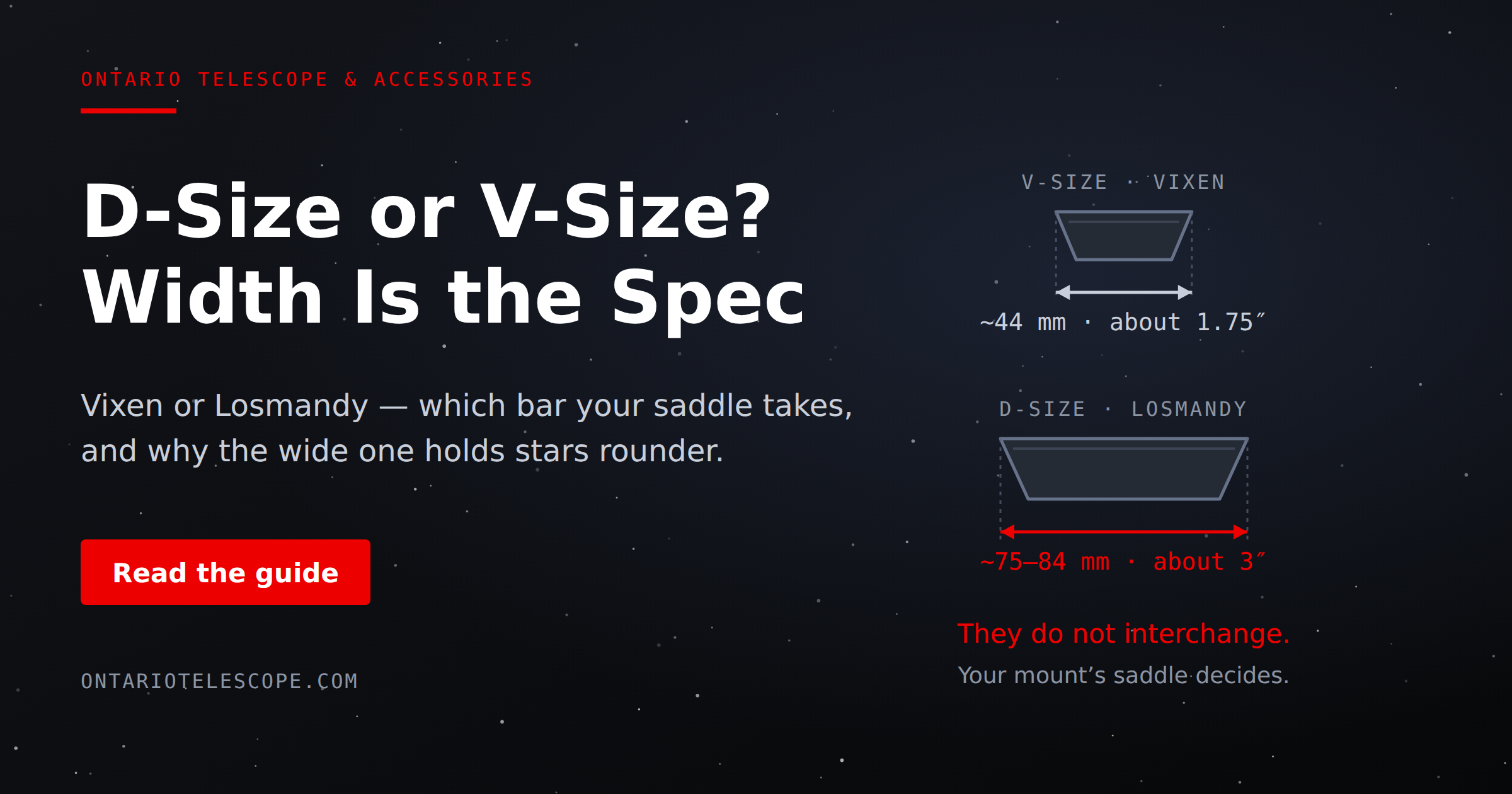
D-Size vs V-Size: A Complete Guide to Telescope Dovetail Systems
Read More
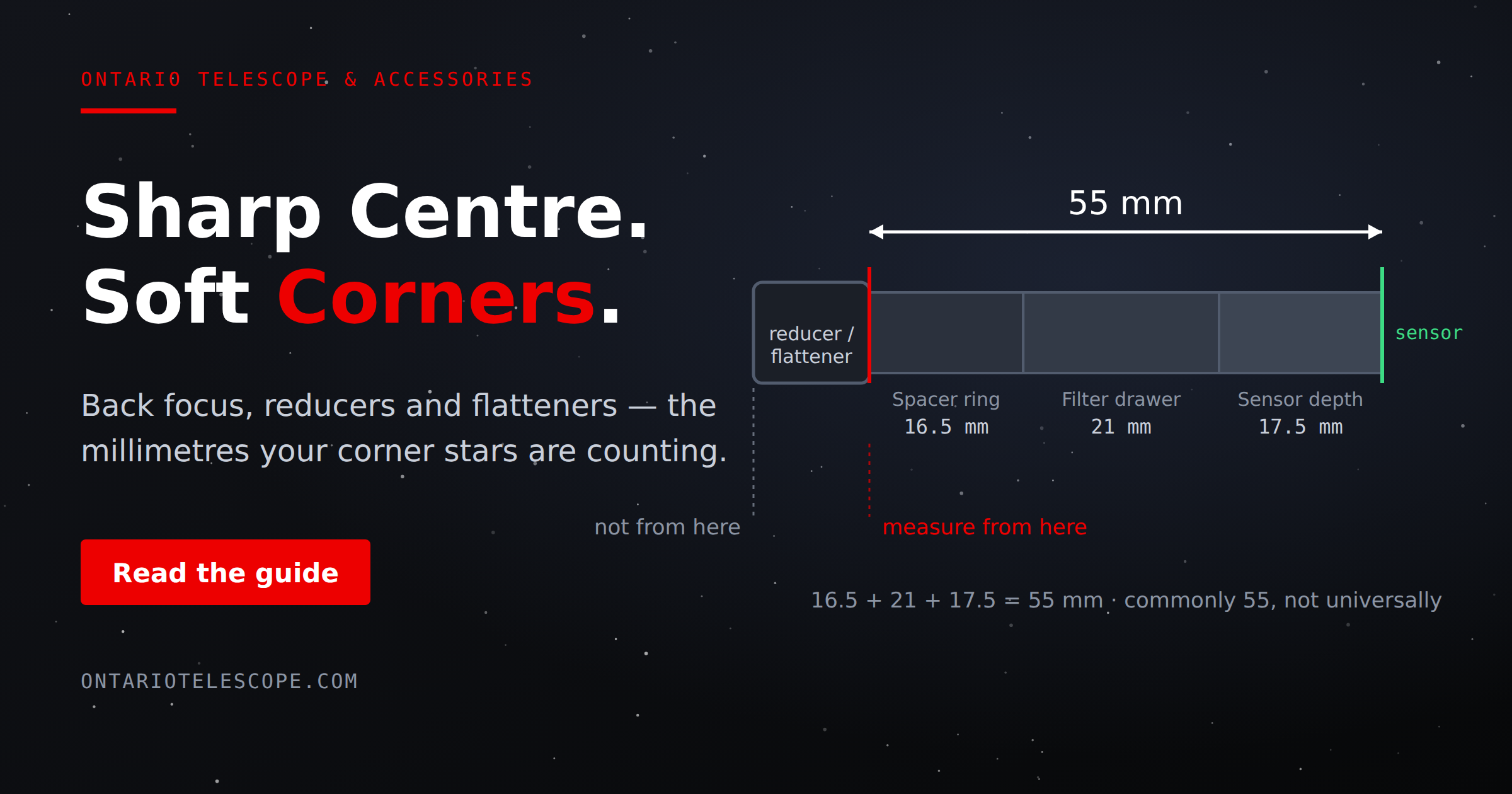
What Is Back Focus in Astrophotography? Telescope Reducers, Flatteners, and Spacing Explained
Read More