
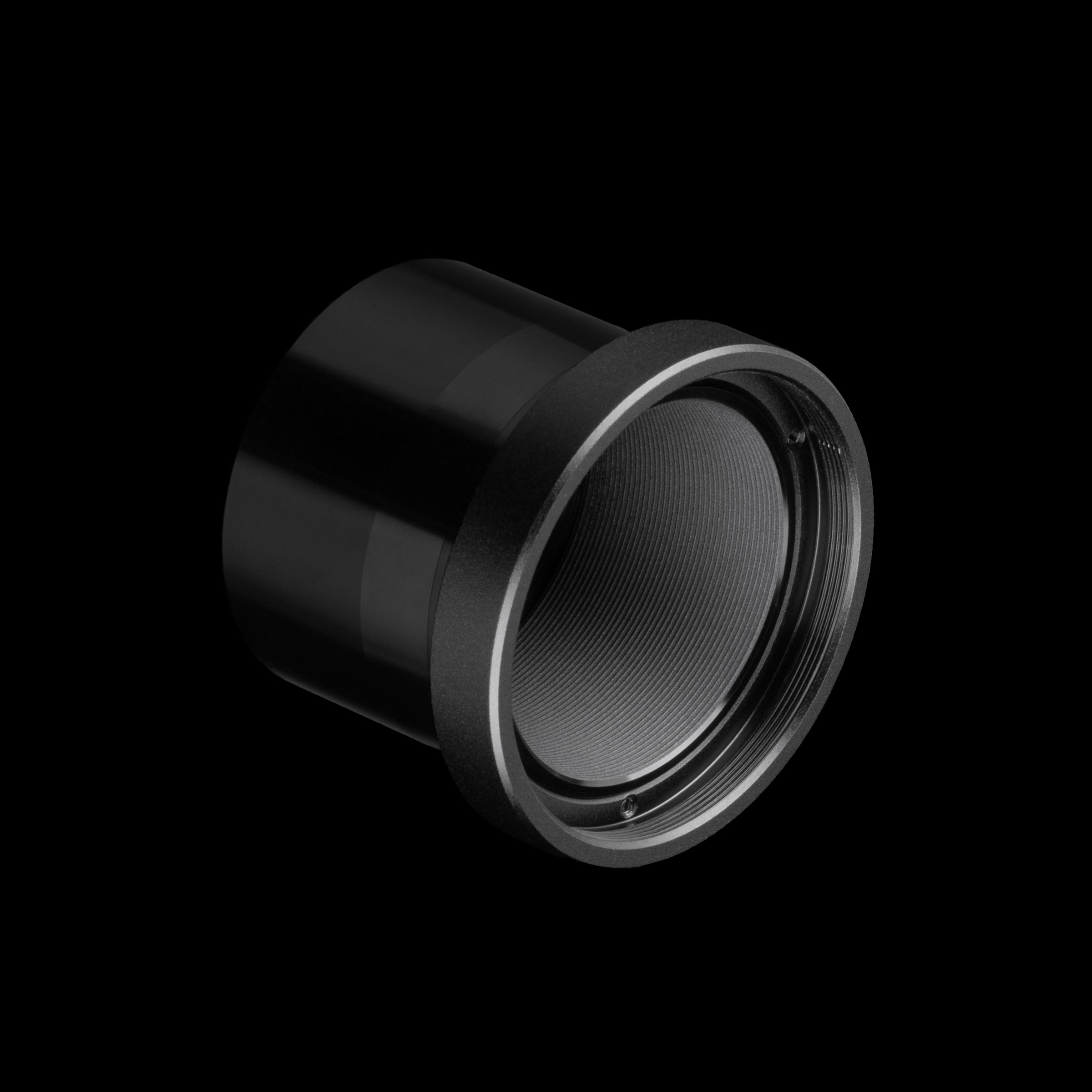

- Description
The William Optics 2 inch Push-In Nosepiece to M63 Adapter is a mechanical adapter designed to help connect the FLAT 6AIII reducer/flattener to compatible 2-inch focuser or accessory setups.
Who Is This Product Best For?
Best for astrophotographers using the William Optics FLAT 6AIII who need a 2-inch push-in connection option for their imaging train.
Why Choose This Product?
- 2-inch push-in connection: Allows a compatible nosepiece-style connection.
- M63 adapter support: Helps connect to FLAT 6AIII-compatible threads.
- Imaging train flexibility: Useful when configuring reducer/flattener spacing and camera accessories.
Recommended Uses
- FLAT 6AIII connection setups
- Astrophotography camera train configuration
- Reducer/flattener adapter compatibility
Compatibility and Accessory Notes
Confirm your telescope focuser, FLAT 6AIII configuration, camera adapter, and spacing requirements before purchase.
Important Limitations
This is a mechanical adapter only. It does not provide optical correction by itself.
Our Recommendation
Choose this adapter when you need a 2-inch push-in nosepiece connection for a compatible William Optics FLAT 6AIII imaging train.
You may also like
Recently viewed
Recent Blog Posts
View all
Your Guide Graph Is Lying to You
You drove ninety minutes to dark sky, PHD2 held 0.4 arcseconds all night, and half your subs still have eggs for stars. Here are the three things your
Read More
Read More

D-Size vs V-Size: A Complete Guide to Telescope Dovetail Systems
What's the difference between D-size and V-size telescope dovetails? Here's everything you need to know.
Read More
Read More

What Is Back Focus in Astrophotography? Telescope Reducers, Flatteners, and Spacing Explained
What Is Back Focus in Astrophotography? Telescope Reducers, Flatteners, and Spacing Explained
Back focus is one of those astrophotography terms that c
Read More
Read More