


- Description
- Specifications
Product Overview
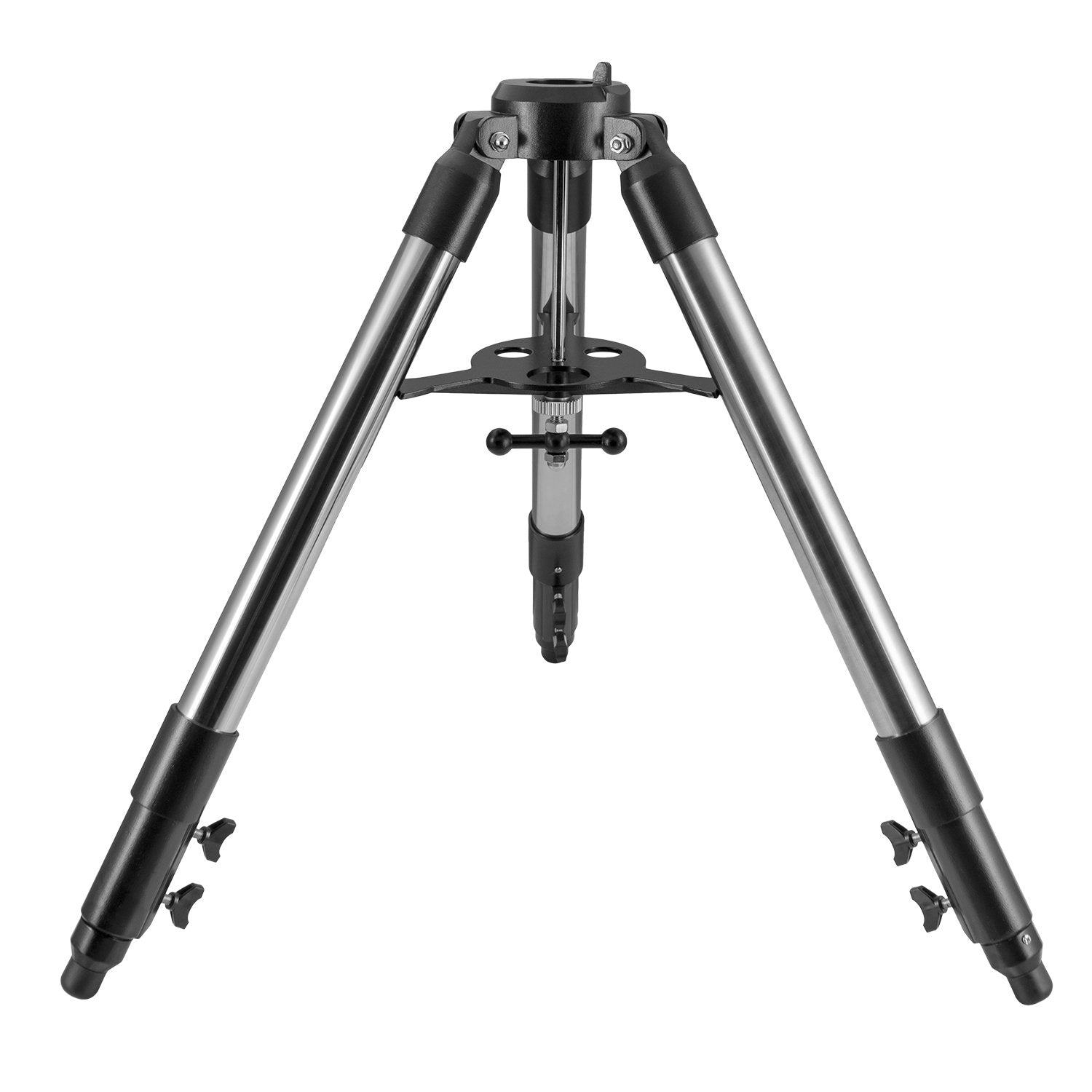
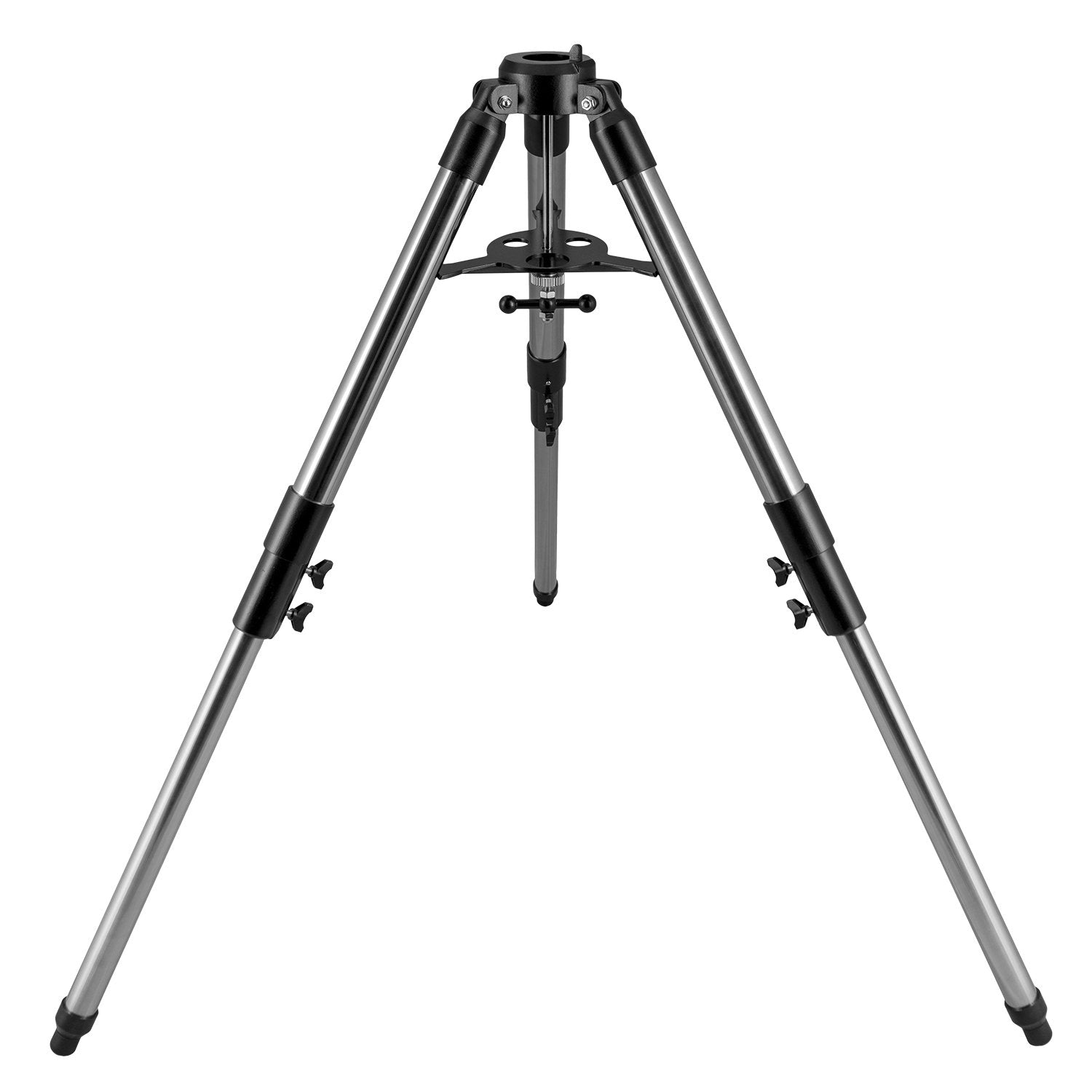
The Explore Scientific Twilight Heavy Duty Tripod is the black stainless-steel tripod designed to sit under a Twilight I or an iEXOS-100 mount head. It is built around 2-inch stainless steel legs and an aluminium spreader tray, and it weighs 13.6lb (6.2kg) — a figure that is the point rather than a drawback, because mass under a mount is what damps the vibration that a light tripod passes straight into the eyepiece.
Published heights run from 26.5 inches with the legs open and retracted to 42.5″ with them fully extended, and the tripod folds to 31.5 inches for transport and storage. The spreader tray does two jobs: it braces the legs against splaying under load, and it holds eyepieces and small accessories at waist height during a session.
Who It's For
- Twilight I owners who want a heavier, stiffer base than a lightweight tripod provides, particularly at higher magnifications where vibration is most visible.
- iEXOS-100 owners looking to put the mount head on a substantially more rigid platform for imaging or for heavier visual loads.
- Observers working at high power, where settling time after a touch on the focuser is what decides whether the last detail is visible.
- This is a good match if your current setup shakes for several seconds after each nudge and you would rather solve that at the tripod than anywhere else.
- Anyone who observes standing and seated in the same session, given the 26.5 to 42.5 inch adjustment range.
Key Features & Design
- 2-inch stainless steel legs: stiffness and mass at the point where a tripod either damps vibration or transmits it.
- Aluminium spreader tray: braces the three legs against each other and doubles as an accessory tray for eyepieces and filters.
- 26.5″ to 42.5″ working height, adjustable by extending the legs, which covers both a seated eyepiece position and a standing one.
- 31.5 inches folded, which is the figure to measure against a car boot or a storage cupboard.
- 13.6lb (6.2kg) published weight: heavy by design, since damping is largely a function of mass and stiffness.
- Black finish, consistent with the Twilight line.
- Designed for Twilight I and iEXOS-100 mounts, with an azimuth adjuster adapter available separately for the iEXOS-100 pairing.
Recommended Uses
- Supporting a Twilight I alt-azimuth mount for visual observing.
- Supporting an iEXOS-100 equatorial head, with the separate azimuth adjuster adapter fitted.
- High-magnification lunar, planetary and double-star observing, where settling time is the limiting factor.
- Fixed-site or garden observing where the extra 13.6lb is carried once and left in place.
- Sessions where a stable accessory tray at waist height keeps eyepieces off the ground.
Compatibility and Accessory Notes
- Twilight I: the tripod is designed for this mount head directly.
- iEXOS-100: the pairing works with an azimuth adjuster adapter, which is a separate purchase. We can add it to the same order so both parts arrive together.
- Height range: 26.5 inches open with retracted legs to 42.5″ fully extended. Adding a mount head and telescope raises the eyepiece further, which is worth working through against your own height.
- Spreader tray: included, and it is a structural part as well as a convenience — it is what keeps the legs from splaying under load.
- Transport: 31.5 inches folded at 13.6lb, which is a one-handed carry over short distances and an easy fit alongside a mount case.
- Other mounts: Explore Scientific publishes this tripod for the Twilight I and iEXOS-100. If you are considering it under something else, send us the mount and we will look at the mounting interface with you before you order.
Good to Know Before You Order
- The iEXOS-100 pairing needs an azimuth adjuster adapter, which is sold separately. It is a small part and we stock the Explore Scientific accessory line, so it can travel in the same box.
- 13.6lb is deliberate. This is a heavy-duty tripod, and the weight is doing the damping work. For a setup that is carried a long way on foot each session, a lighter tripod trades stability for portability — we can talk through which side of that trade suits you.
- Explore Scientific does not publish a load capacity figure for this tripod, so that row is absent from the table below rather than estimated. The mount head it sits under carries its own published capacity, and that is the figure to plan a payload against.
- The mounting interface is not published either. Because it is specified for the Twilight I and iEXOS-100, we are happy to check the fit for any other mount you have in mind before anything ships.
- It is the tripod on its own. The mount head, counterweights and telescope are separate items, and we can quote them together if that is easier.
Frequently Asked Questions
Is it difficult to set up?
No — the legs open, the extensions lock at the height you want and the spreader tray tightens up from underneath. It is a one-minute job, and the tray does most of the work of holding the legs where you set them.
Which mounts does it fit?
Explore Scientific specifies it for the Twilight I and the iEXOS-100. The iEXOS-100 combination uses an azimuth adjuster adapter, which is a separate item.
How tall does it stand?
26.5 inches with the legs open and retracted, extending to 42.5″. It folds to 31.5 inches for transport.
Does the weight actually help?
Yes, and it is the main reason to choose a tripod like this one. Vibration settles as a function of mass and stiffness, so 13.6lb of stainless steel under a mount head shortens the wobble after a focuser touch compared with a light aluminium tripod.
Is an accessory tray included?
Yes. The aluminium spreader tray comes with the tripod and holds eyepieces and small accessories while it braces the legs.
What can it carry?
Explore Scientific does not publish a load rating for the tripod itself, so we would rather work from the mount head's published capacity. Tell us the head and telescope you plan to use and we will look at the numbers with you.
Will it fit in a car?
At 31.5 inches folded it lies flat across most boots and back seats, and at 13.6lb it is a single comfortable carry.
Bottom Line
In short: a 13.6lb black tripod on 2-inch stainless steel legs with an aluminium spreader tray, adjusting from 26.5 to 42.5 inches and folding to 31.5, built for the Twilight I and, with the separate azimuth adjuster adapter, the iEXOS-100. If you would like the adapter included or want us to check it against a different mount head, send us the details and we will sort it out before your order goes out.
| Item Number | TL-ST3B-00 |
|---|---|
| Colour | Black |
| Leg Construction | 2-inch stainless steel |
| Spreader Tray | Aluminum; doubles as accessory tray |
| Tripod height fully collapsed | 31.5 inches |
| Tripod height open, retracted legs | 26.5 inches |
| Tripod height open, legs fully extended | 42.5" |
| Tripod weight | 13.6lb, 6.2kg |
| Compatible Mounts | Twilight I; iEXOS-100 (azimuth adjuster adapter sold separately) |
| Load Capacity | Not published by vendor |
| Mounting Interface | Not published by vendor |
| Mount Head | Not included |
You may also like
Recently viewed
Recent Blog Posts
View all
Your Guide Graph Is Lying to You
Read More

D-Size vs V-Size: A Complete Guide to Telescope Dovetail Systems
Read More

What Is Back Focus in Astrophotography? Telescope Reducers, Flatteners, and Spacing Explained
Read More