


- Description
- Specifications
- Downloads
Product Overview
The TOE 10 mm sits at the long end of Takahashi's TOE planetary eyepiece line. It gives a 58° apparent field with 15 mm of eye relief, from six elements arranged in four groups — more glass than a classic orthoscopic, used to widen the field and push the eye point further back without giving up the contrast that makes an ortho worth using on planets.
At 10 mm it is the eyepiece you reach for when you want detail without pushing to the seeing limit: 35x on an FS-60CB, 76x on an FC-76D, 110x on a Mewlon 210.
Who It's For
This is a good match if you observe planets, the Moon and double stars and want an eyepiece whose contrast keeps up with a good apochromat. The 58° field is deliberately moderate — wide enough that the target does not drift out of view quickly on an undriven mount, narrow enough that the design can stay simple and well corrected.
The 15 mm eye relief is the practical difference from a traditional orthoscopic. Short-focal-length orthos put your eye almost against the lens; 15 mm gives room to observe comfortably, including over glasses in many cases.
It is a visual eyepiece. Imaging trains connect a camera directly and do not use one.
Key Features & Design
- 10 mm focal length: medium-to-high power on most telescopes — the range where planetary detail appears without over-magnifying average seeing.
- 58° apparent field: wider than a classic orthoscopic, and enough that a planet stays in view for a usable interval on an undriven mount.
- 15 mm eye relief: a comfortable eye position rather than the pressed-in view short orthos demand.
- Six elements in four groups: the extra elements buy field width and eye relief while holding correction across the field.
- Parfocal with the rest of the TOE range: swap focal lengths mid-session with only a touch of refocusing.
- Blackened element edges and multi-layer coatings: suppress the internal scatter that washes out low-contrast planetary detail.
Optical Design
Planetary observing is a contrast problem before it is a resolution problem. The features that matter — belt structure on Jupiter, the Cassini division, subtle shading on Mars — are low-contrast detail sitting on a bright disc, and any scattered light inside the eyepiece raises the background and buries them. That is why the classic four-element orthoscopic held on for decades: fewer air-glass surfaces, less scatter.
The TOE design accepts six elements in four groups and then attacks the scatter directly. Multi-layer coatings cut reflection at each surface, and the element edges are blackened so light striking them is absorbed rather than bounced back into the light path. The result keeps orthoscopic-class contrast while delivering a 58° field and 15 mm of eye relief — both well beyond what a four-element design produces at this focal length.
Parfocality across the range is a working convenience that matters more than it sounds: changing power on a planet mid-session without hunting for focus keeps you on the target while the seeing is steady.
Recommended Uses
- Planetary detail — Jupiter's belts and festoons, Saturn's rings and division, Martian surface shading.
- Lunar observing — crater walls, rilles and terminator detail at medium-high power.
- Double star splitting where contrast and clean star images matter more than field width.
- Brighter open clusters and planetary nebulae at medium power.
- Daytime and terrestrial use with a suitable diagonal, where the long eye relief is comfortable.
Compatibility and Accessory Notes
- Magnification: divide your telescope's focal length by 10. An FS-60CB at 355 mm gives 35x; an FC-100DZ at 800 mm gives 80x; a Mewlon 210 at 2415 mm gives 242x.
- Diagonal: in a refractor you will normally use it behind a star diagonal. The Takahashi 1.25-inch prism diagonal is a direct pairing.
- Parfocal range: parfocal with the other TOE eyepieces, so changing focal length needs only a touch of refocusing.
- Filters: standard eyepiece filters thread into the barrel where the barrel size matches.
Good to Know Before You Order
- 58° is a moderate field, by design. If you want a 82° or 100° immersive view for sweeping deep-sky fields, this is not that eyepiece — it trades field width for contrast, which is the right trade on a planet and the wrong one on a large nebula.
- Magnification depends on your telescope. The same 10 mm gives 35x on a short 60 mm refractor and 242x on a Mewlon 210. Tell us your telescope and we will tell you where this lands in your eyepiece set.
- This is a visual eyepiece. Camera trains connect directly to the telescope or its corrector.
Frequently Asked Questions
Is it difficult to set up?
No — it drops into a 1.25-inch diagonal or focuser and you focus. Nothing to assemble or adjust.
What magnification will I get?
Your telescope's focal length divided by 10. Send us your telescope model and we will work out where it fits alongside the eyepieces you already own.
How does it compare to a classic orthoscopic?
A four-element ortho at 10 mm gives roughly a 42° to 45° field and short eye relief. The TOE gives 58° and 15 mm of eye relief from six elements, with coatings and blackened edges doing the contrast work the simpler design got from having fewer surfaces.
Is it good for deep-sky observing?
It works well on brighter open clusters and planetary nebulae. For large faint objects a wider field and longer focal length eyepiece suits better — this one is built around contrast at medium-high power.
Can I use it with glasses?
15 mm of eye relief is workable for many glasses wearers, though it depends on your frames and how far they hold the lens from your eye.
Will it work with my Barlow or extender?
Yes — a 2x Barlow makes it behave as a 5 mm. Takahashi's Ortho Extender 2X and 4X are the matched options.
Is it parfocal with my other Takahashi eyepieces?
It is parfocal with the rest of the TOE range. Across other Takahashi families, expect to refocus.
Bottom Line
In short: a 10 mm planetary eyepiece with a 58° field and 15 mm of eye relief, built from six elements with the coatings and blackened edges that keep low-contrast detail visible. It is the comfortable medium-power eyepiece in a planetary set.
| Type | Eyepiece |
|---|---|
| Focal length | 10 mm |
| Apparent field of view | 58° |
| Eye relief | 15 mm |
| Optical design | 6 elements in 4 groups |
| Coatings | Multi-layer, with blackened element edges |
| Parfocal | Yes, within the TOE range |
| Colour | Black |
| In the box | Takahashi TOE 10 mm eyepiece |
Shopping Guide
- Takahashi English Catalog 2025 — PDF, 8.63 MB
You may also like
Recently viewed
Recent Blog Posts
View all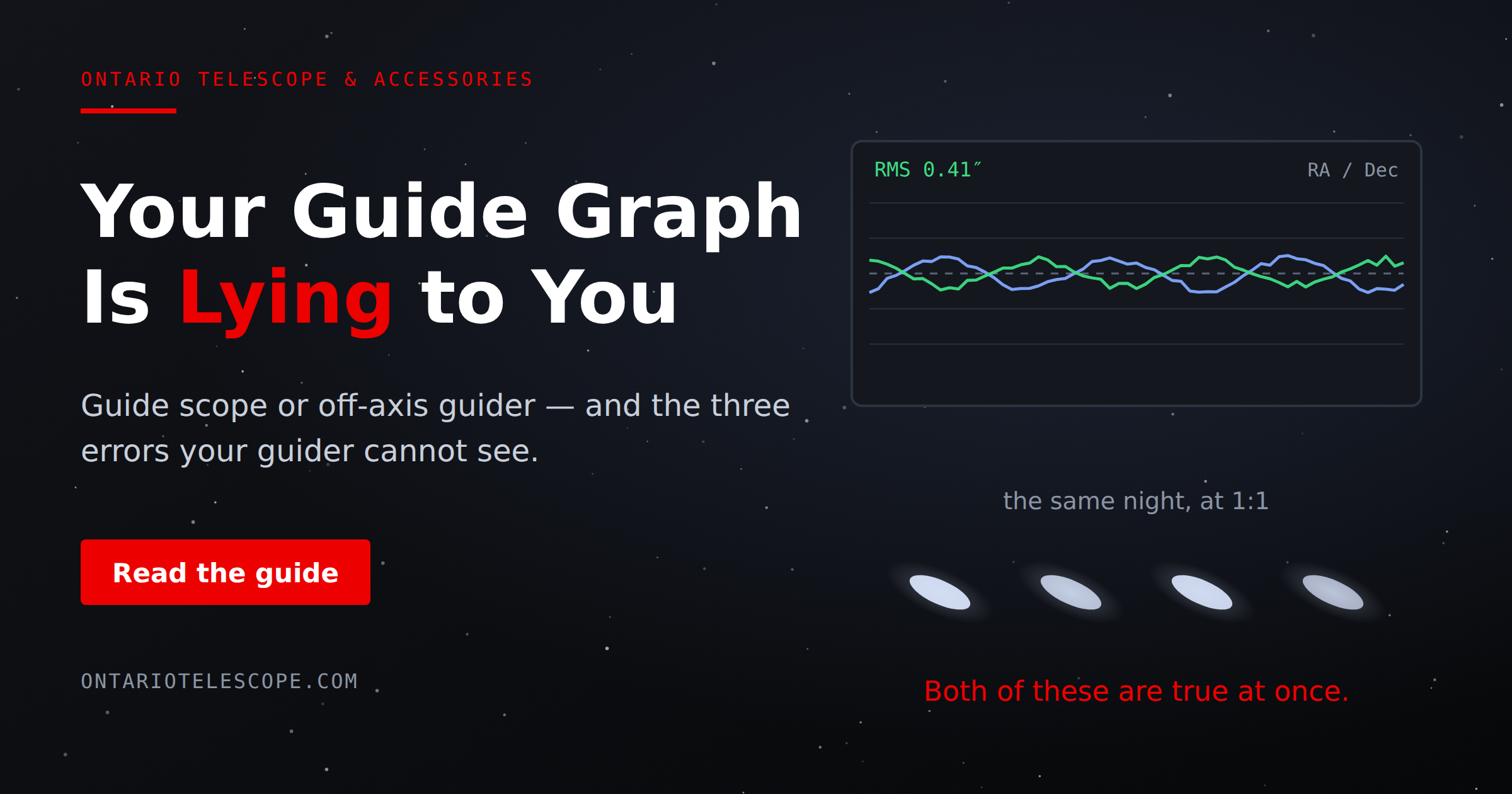
Your Guide Graph Is Lying to You
Read More
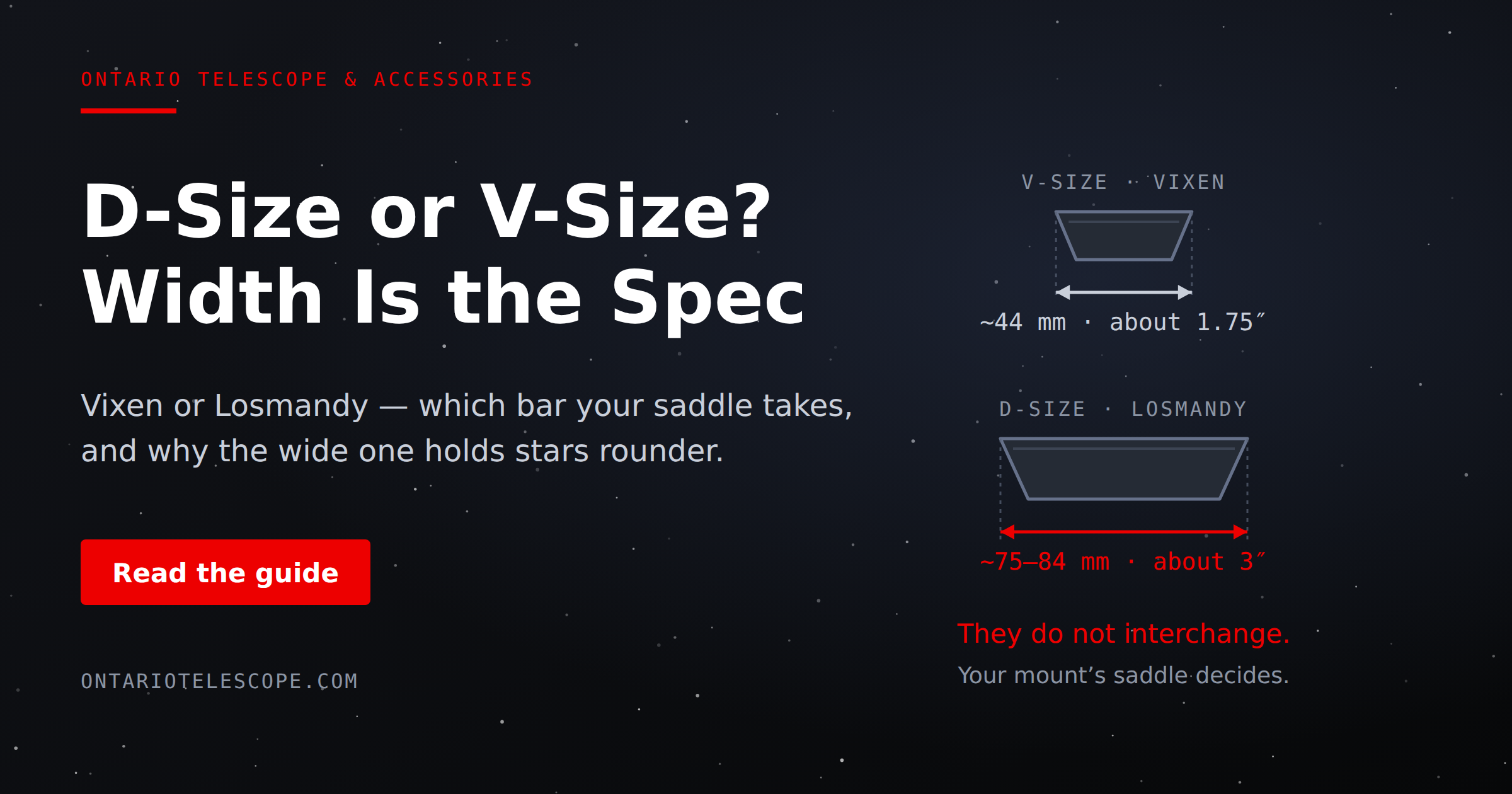
D-Size vs V-Size: A Complete Guide to Telescope Dovetail Systems
Read More
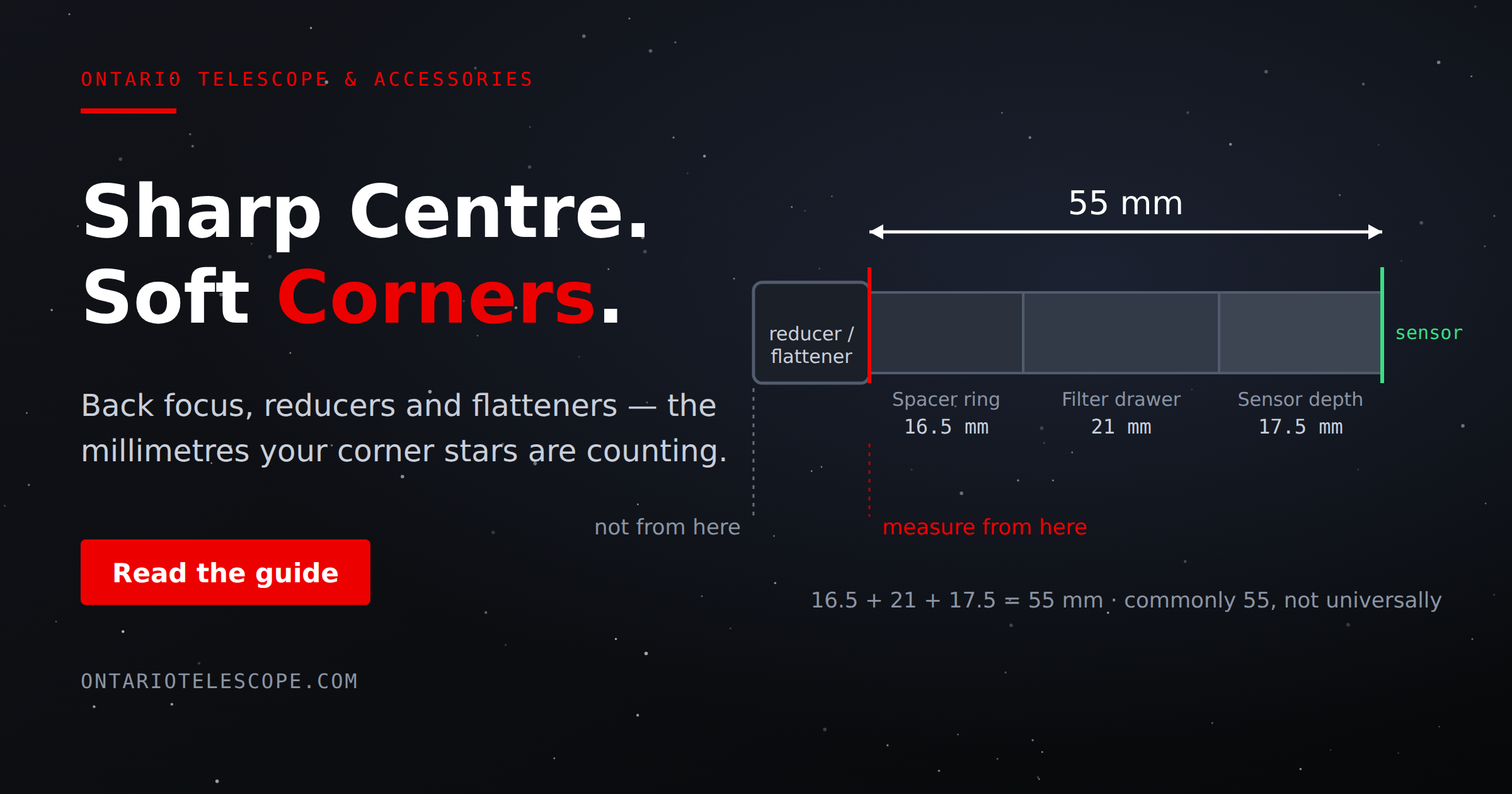
What Is Back Focus in Astrophotography? Telescope Reducers, Flatteners, and Spacing Explained
Read More