




- Description
- Specifications
- Downloads
Product Overview
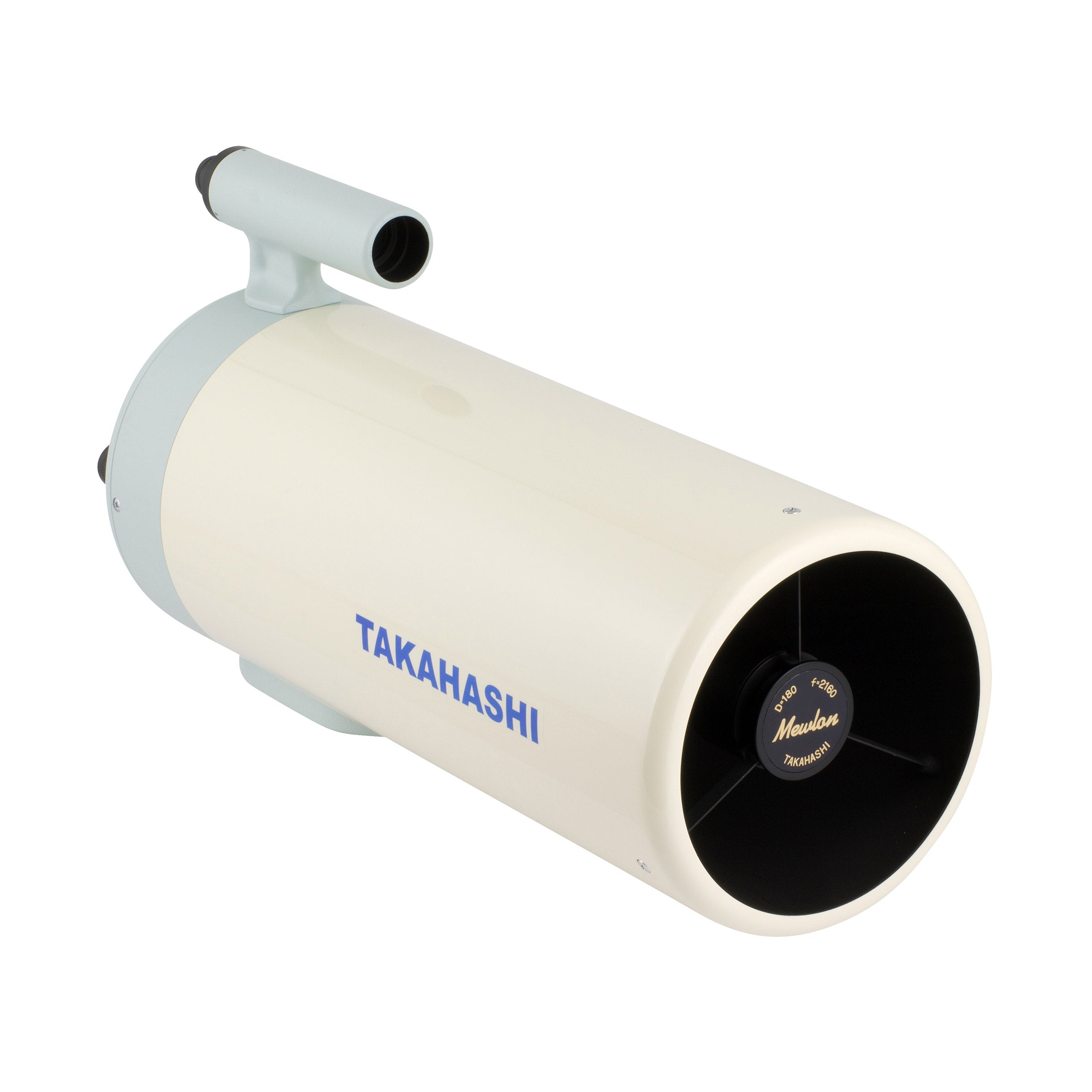
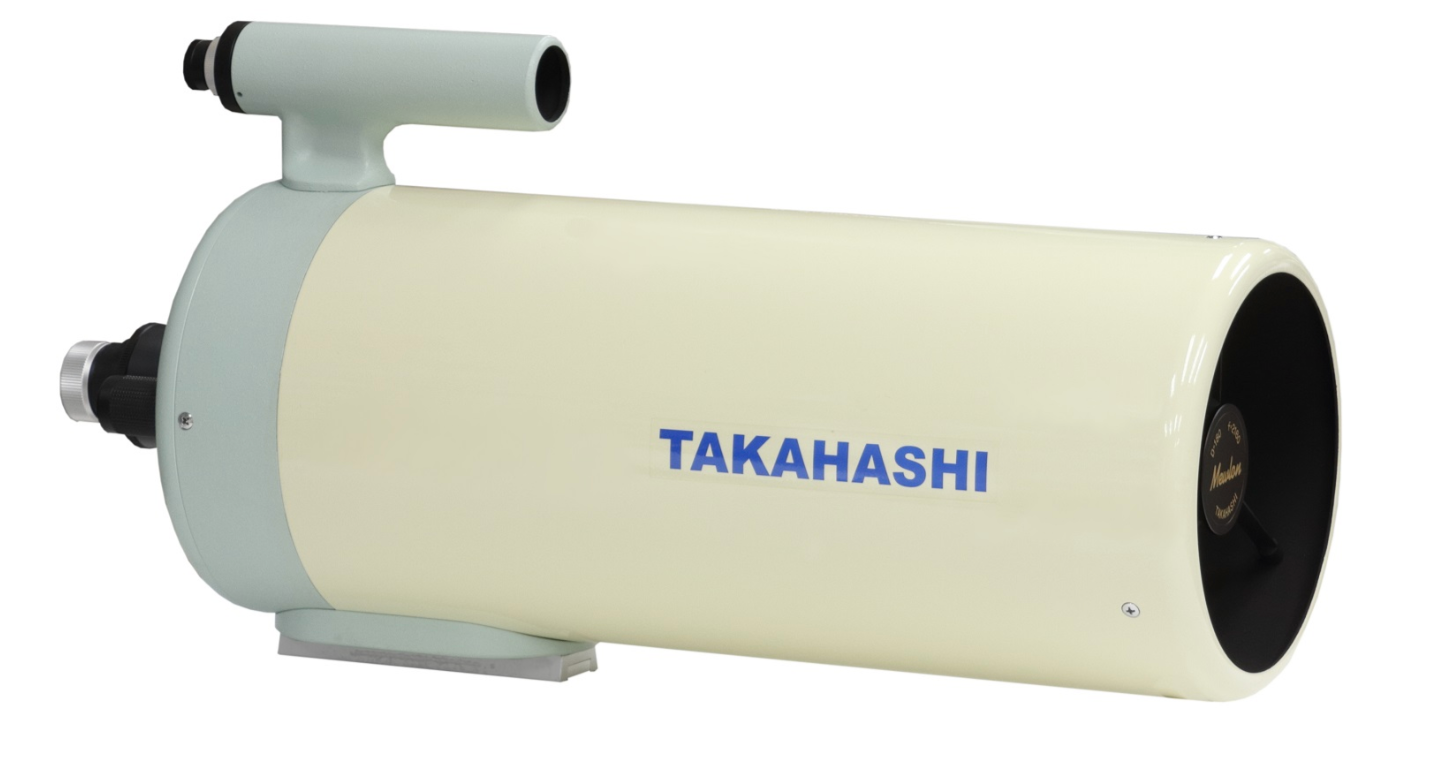
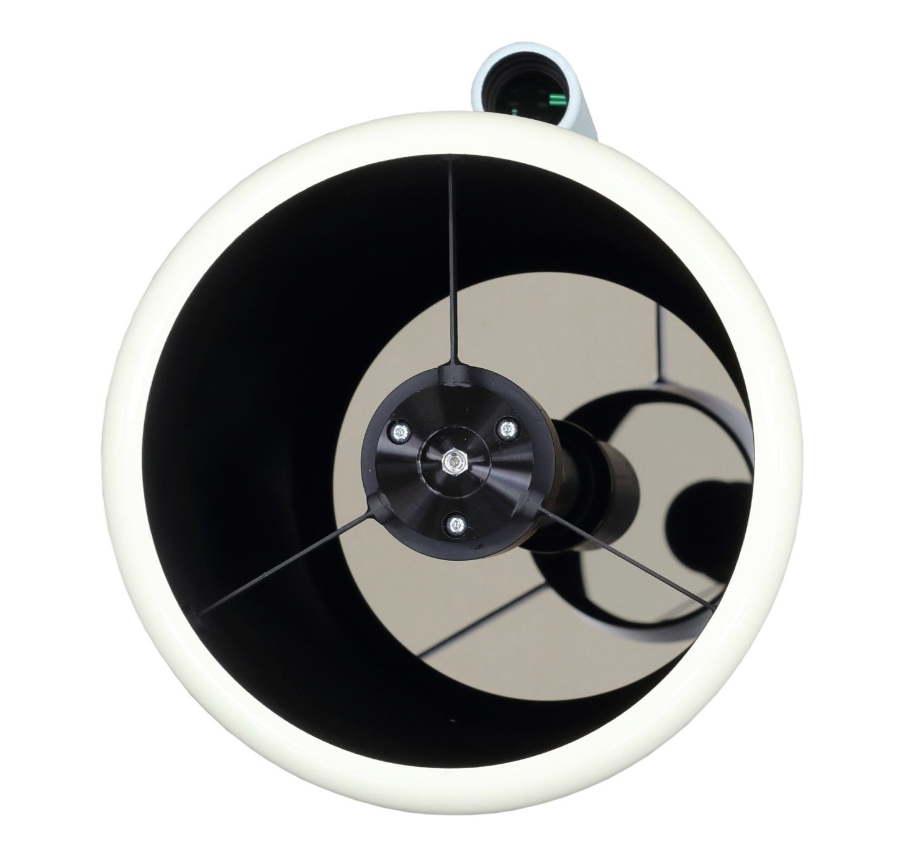
The Mewlon-180C is Takahashi's 180 mm Dall-Kirkham Cassegrain, sold here as an optical tube assembly with a D-series dovetail plate included. At 2160 mm focal length and f/12 in a 625 mm tube, it packs long-focus resolving power into a 210 mm-diameter body that weighs 6.2 kg. The concave ellipsoidal primary and spherical secondary form the image with no corrector in the light path, and focusing is done by moving the primary mirror itself rather than by a rack-and-pinion drawtube.
Who It's For
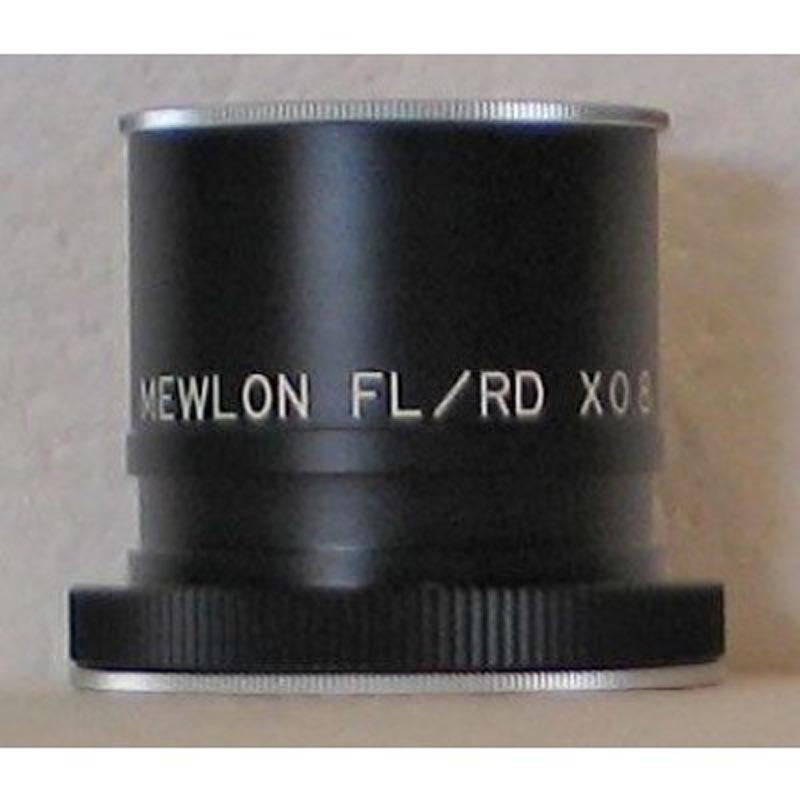
This is a good match if you want a compact, long-focal-length instrument for high-resolution planetary, lunar and double-star observing — the Dall-Kirkham design holds coma to a minimum across the visual field, so images stay sharp to the edge at high power. It also suits imagers working on small- and medium-sized targets — planetary nebulae, galaxy cores, the Moon and planets — where 2160 mm or, with the M-FLRD reducer, 1760 mm at f/9.8 gives the reach a wide-field refractor cannot.
If your interest is nebulae and wide Milky Way fields, a fast refractor covers that ground better than this tube's native focal length. Tell us what you are imaging and we can confirm whether the 180C or a shorter instrument fits your target list.
Key Features & Design
- Dall-Kirkham Cassegrain optics: a concave ellipsoidal primary paired with a spherical secondary — simpler to figure accurately than a hyperbolic Ritchey-Chrétien secondary, with negligible coma on-axis.
- 2160 mm at f/12: in a 625 mm tube, 210 mm across — a long native focal length in a body short enough to carry to a dark site.
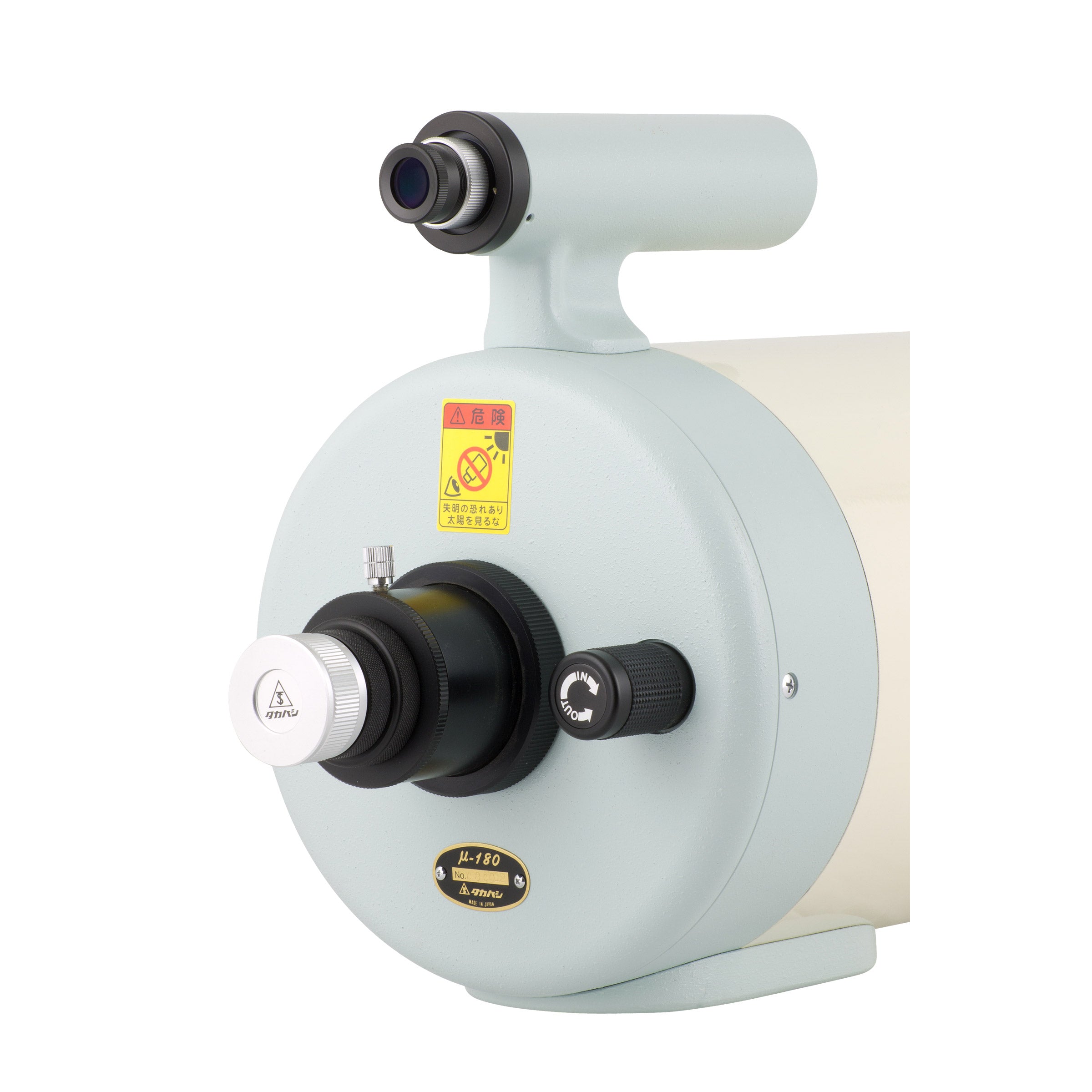
- Primary-mirror focusing: the focal point moves by translating the primary, extending the back focal length by about 130 mm rather than relying on drawtube travel.
- 6.2 kg: light for a 180 mm Cassegrain, within reach of mid-weight equatorial mounts once a diagonal or camera is added.
- D-series dovetail plate included: mounts directly to a compatible saddle without a separate plate purchase.
- 67.2 mm of back focus at prime focus, measured from the rear of the 50.8 mm adapter.
Optical / Mechanical Design
Dall-Kirkham optics use a concave ellipsoidal primary and a spherical secondary rather than the hyperbolic primary and secondary of a Ritchey-Chrétien. The spherical secondary is easier to figure to a high standard, and on-axis coma stays low enough that visual observers rarely notice it. Off-axis field curvature is the tradeoff — the design suits the narrow, high-magnification field a planetary or lunar observer actually uses, rather than a wide, flat astrograph field.
Takahashi focuses the Mewlon by moving the primary mirror rather than by extending a drawtube, which keeps the optical path sealed against dust and airflow disturbance during focusing. The M-FLRD focal reducer/flattener brings the system to 1760 mm at f/9.8 with a 30 mm corrected image circle and 56.2 mm of back focus — useful for imaging where the native f/12 field is narrower than the sensor calls for.
Recommended Uses
- Lunar and planetary observing: at 2160 mm and f/12, high magnification with minimal coma.
- Double star splitting: the long focal length and central obstruction ratio favour close, faint pairs.
- Occultation timing: a stable, long-focus platform for precise event capture.
- Small- and medium-target imaging: galaxy cores and planetary nebulae at native focal length, or at 1760 mm and f/9.8 with the M-FLRD reducer for a 30 mm corrected circle.
Compatibility and Accessory Notes
Back focus at prime is 67.2 mm from the rear of the 50.8 mm adapter — narrower than most apochromatic refractors, so a camera train with a long nosepiece or filter drawer may not reach focus without adjustment. Fitting the M-FLRD reducer changes that figure to 56.2 mm. Our Takahashi Back Focus Guide collects these figures for the whole Takahashi range in one table, and the Downloads tab below carries the Mewlon-180C's own system chart with the exact parts and distances for each configuration.
- Finder: Takahashi specifies a 6x30 finder for this tube; a compatible bracket and finder are separate purchases unless noted otherwise at checkout.
- Dovetail: the included D-series plate fits a Vixen-style or compatible saddle directly.
- Reducer/flattener: the M-FLRD is sold separately and is the only listed conversion accessory for this tube.
- Mount: sold as an OTA with dovetail plate — no mount, diagonal or eyepiece included. At 6.2 kg plus accessories, a mid-weight equatorial mount rated for 8–10 kg of total payload is a reasonable starting point.
If you are not sure your camera's back focus reaches 67.2 mm, send us your imaging train and we will work out the spacing with you.
Good to Know Before You Order
- This is an optical tube assembly. The dovetail plate is included; mount, diagonal, eyepiece and finder are sold separately.
- Back focus is tighter than a typical refractor. At 67.2 mm from the 50.8 mm adapter, some camera and diagonal combinations need a shorter adapter stack — the system chart in the Downloads tab lists the parts for each configuration.
- Native field is narrow. At f/12, the corrected field suits planetary and lunar targets rather than wide nebulae; the M-FLRD reducer widens the field to a 30 mm circle at f/9.8.
- Collimation is occasional maintenance, not a setup step. Like any Cassegrain it can drift with transport, and a collimation eyepiece brings it back into alignment.
Frequently Asked Questions
Is it difficult to set up?
No. It arrives collimated from the factory, and because focusing moves the primary mirror rather than a drawtube, there is no separate focuser mechanism to adjust before first light. Occasional collimation touch-ups are normal maintenance for any Cassegrain and are quick with a collimation eyepiece.
What is it best used for?
High-resolution lunar and planetary observing, double star splitting, and long-focal-length imaging of small targets — galaxy cores, planetary nebulae, occultation events.
Does it come with a mount?
No. It ships as an optical tube assembly with the D-series dovetail plate. The plate fits a compatible saddle directly, but the mount itself is a separate purchase.
What cameras and accessories does it need for imaging?
Any camera reaching the 67.2 mm back focus at prime, or 56.2 mm with the M-FLRD reducer fitted. Send us your camera and filter setup and we will confirm the spacing before you order.
How is this different from the Mewlon-210?
Aperture and resolving power. The 210 has a larger primary and a longer focal length; the 180C is lighter and more portable at a slightly smaller aperture.
When should this not be the choice?
For wide-field nebula or Milky Way imaging, where a fast, short-focal-length refractor covers the frame this tube's narrower field cannot.
Bottom Line
In short: a 180 mm Dall-Kirkham Cassegrain OTA at 2160 mm and f/12 — 1760 mm at f/9.8 with the M-FLRD reducer — weighing 6.2 kg and shipping with a D-series dovetail plate. It is built for long-focal-length resolution on the Moon, planets and double stars, with 67.2 mm of back focus to work into an imaging train.
Optical Diagram Reports
Takahashi publishes a spot diagram for the Mewlon-180C at prime focus, showing star images across the field at the design wavelengths.

| Optical design | Dall-Kirkham Cassegrain — concave ellipsoidal primary, spherical secondary |
|---|---|
| Aperture | 180 mm |
| Focal length (prime focus) | 2160 mm |
| Focal ratio (prime focus) | f/12.0 |
| With M-FLRD reducer/flattener | 1760 mm, f/9.8, Φ30 mm image circle, 56.2 mm back focus |
| Back focus (prime focus) | 67.2 mm (from rear of 50.8 mm adapter) |
| Tube length | 625 mm |
| External diameter | 210 mm |
| Maximum back focal length extension | about 130 mm (primary mirror focusing) |
| Recommended finder | 6x30 |
| Weight | 6.2 kg |
| Included | D-series dovetail plate |
| Case included | No |
Shopping Guide
- Takahashi English Catalog 2025 — PDF, 8.63 MB
System Charts, Diagrams and Adapter Guides
- Mewlon-180C System Chart — PDF, 88.8 kB
- Takahashi Telescope Backfocus Table — PDF, 71 kB
Manuals
- Mewlon-180C Instruction Manual (English) — PDF, 2.15 MB
You may also like
Recently viewed
Recent Blog Posts
View all
Your Guide Graph Is Lying to You
Read More

D-Size vs V-Size: A Complete Guide to Telescope Dovetail Systems
Read More

What Is Back Focus in Astrophotography? Telescope Reducers, Flatteners, and Spacing Explained
Read More