


- Description
- Specifications
- Downloads
Product Overview
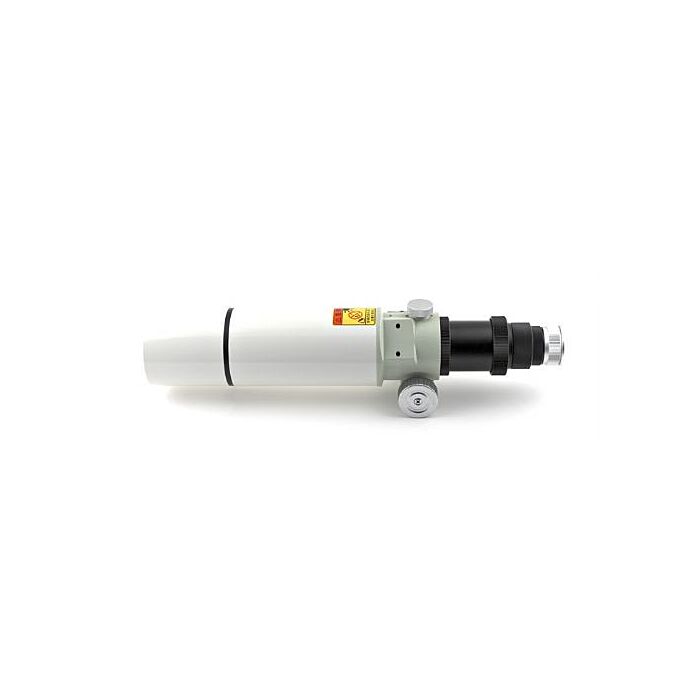
The FS-60CB is Takahashi's 60 mm fluorite doublet apochromat, built in Tokyo and sold here as an optical tube assembly. At 355 mm focal length and f/5.9 it is a short, light instrument — 413 mm long, 80 mm across the tube, and 1.1 kg — which puts it within reach of almost any tracking mount, including small travel heads and star trackers.
What separates it from other 60 mm refractors is that the tube is a platform rather than a fixed configuration. The rear cell accepts a field flattener, a 0.85x focal reducer, or a 1.7x extender, and each one changes the telescope's working focal length and field. The same tube covers 300 mm at f/5.0 for wide-field imaging, 370 mm at f/6.2 with a flat 44 mm corrected circle, and 600 mm at f/10 for lunar and planetary work.
Who It's For
This is a good match if you want a small, genuinely apochromatic refractor that travels well and can be reconfigured rather than replaced. Wide-field imagers use it reduced, at 300 mm and f/5.0, to frame large emission nebulae on an APS-C sensor. Visual observers use it at prime focus or extended for lunar detail and double stars. Eclipse chasers take it because it fits in a carry-on and holds focus in changing temperature.
It also works as a guide scope or a second imaging tube alongside a larger instrument, and as a high-quality daytime spotting scope with a diagonal and eyepiece.
If you are buying your first telescope and want one box that works out of the box, this is not that — it is an OTA, and you will be choosing a mount, a diagonal and an eyepiece alongside it. Tell us how you plan to use it and we will put the pieces together with you.
Key Features & Design
- Air-spaced fluorite doublet: two elements in two groups, with a genuine fluorite crystal element rather than an ED-glass substitute.
- Hard multicoatings: applied to the fluorite surfaces, which are softer and more hygroscopic than glass and need the protection.
- 355 mm at f/5.9: a 60 mm aperture in a 413 mm tube — short enough to balance on a light mount, long enough to reach useful magnification.
- 162 mm of back focus: generous rear spacing, which is what allows the flattener, reducer and extender modules to fit without running out of focus travel.
- Rack-and-pinion focuser with 30 mm of drawtube extension.
- 80 mm dew shield: retracts over the tube for transport.
- 1.1 kg: light enough that mount payload is rarely the limiting factor.
Optical Design
The objective is a two-element air-spaced doublet built around a fluorite crystal element. Fluorite has anomalous partial dispersion that ordinary optical glass cannot reproduce, and in a doublet it brings the red, green and blue focal points close enough together that secondary spectrum is not the limiting factor at this aperture. In practice that means clean white stars and no violet fringing on the lunar limb or on bright planets — the failure mode that defines cheaper short refractors.
Because fluorite is softer and more sensitive to moisture than glass, Takahashi applies hard multicoatings to the exposed surfaces. These also cut internal reflections, which matters when the target is a bright object against a dark field.
The 162 mm of back focus is the design decision that makes the FS-60CB modular. Most short refractors leave just enough room for a camera and nothing else. The extra rear space here is what lets a 0.85x reducer, a 1.04x flattener or a 1.7x extender sit in the light path and still reach focus — so one tube covers f/5.0 through f/10.
Recommended Uses
- Wide-field deep-sky imaging: with the 60C RD NC 0.85x reducer at 300 mm and f/5.0, covering a 44 mm image circle — large nebulae, the Andromeda field, wide Milky Way regions.
- Flat-field imaging at prime focus: with the FC/FS MFL 1.04x flattener at 370 mm and f/6.2, corrected across 44 mm — full-frame coverage.
- Lunar and planetary: with the EX CQ 1.7x extender at 600 mm and f/10, which is the FS-60Q configuration.
- Solar eclipse work: short, light, and quick to set up on a travel mount, with a suitable solar filter.
- Visual observing: open clusters, double stars, lunar detail and bright planets with a diagonal and eyepiece.
- Guiding and dual-rig imaging: as a second tube beside a larger instrument.
Compatibility and Accessory Notes
The FS-60CB has a published system chart — included in the Downloads tab — that names every adapter, ring and spacer for each configuration, along with the exact distances. It is the fastest way to confirm a train before ordering, and it removes the guesswork that usually surrounds backfocus. Our Takahashi Back Focus Guide collects the same figures for the whole range in one table.
- Back focus: 162 mm at prime focus, measured from the rear end of the focuser to the focal plane.
- Field flattener: the FC/FS MFL 1.04x needs the CA-60C ring (Takahashi part TKA20203) on this telescope, and gives 370 mm at f/6.2 with a 44 mm corrected circle at 87.5 mm of back focus.
- Focal reducer: the 60C RD NC 0.85x brings the tube to 300 mm at f/5.0 with a 44 mm corrected circle at 56.0 mm of back focus.
- Extender: the EX CQ 1.7x converts the tube to the FS-60Q configuration — 600 mm at f/10, 44 mm circle, 158.4 mm of back focus. The EX-C2X and EX-Q extenders each have their own system chart, both included below.
- Visual train: a 1.25-inch or 2-inch diagonal and eyepiece attach through the matching Takahashi visual adapter. The Takahashi 1.25-inch prism diagonal is a direct fit.
- Mount: sold as an OTA — no mount, rings or dovetail are included. At 1.1 kg the tube suits small equatorial and travel mounts once a camera or diagonal is added.
- Finder and rings: tube rings, a dovetail plate and a finder bracket are separate purchases. Takahashi recommends a 6x30 finder for this tube.
If you are not sure which corrector and ring combination your camera needs, send us your camera model, filter thickness and any spacers you already own and we will work the train out with you before you order.
Good to Know Before You Order
- This is an optical tube assembly. Mount, tripod, tube rings, dovetail, diagonal, eyepiece and finder are all sold separately. We can quote a complete setup if that is easier.
- A flat field needs a corrector. At prime focus the field curves, as it does on any short doublet. The FC/FS MFL 1.04x flattens it to 44 mm; the 60C RD NC 0.85x reducer flattens and shortens at once.
- The flattener needs its own CA ring. On the FS-60CB that is the CA-60C (TKA20203). The system chart in the Downloads tab lists the part for every configuration.
- Fluorite needs ordinary care. The coatings protect it, and the retractable dew shield helps in dew. Standard optical cleaning practice is all it asks for.
- 60 mm is 60 mm. It resolves and gathers light like a 60 mm aperture, and its strength is field, portability and colour correction rather than reach on faint galaxies.
Frequently Asked Questions
Is it difficult to set up?
No. At prime focus it is a diagonal and an eyepiece and you are observing. Imaging trains take more thought because the spacing matters, and Takahashi publishes a system chart for every configuration — it is in the Downloads tab, and it names the parts and distances so there is no trial and error. Send us your camera details and we will confirm the train with you.
What is it best used for?
Wide-field imaging and portable visual work. Reduced to 300 mm at f/5.0 it frames large nebulae; extended to 600 mm at f/10 it shows lunar and planetary detail. Few telescopes cover that range without swapping tubes.
Can I use it for astrophotography without buying anything else?
You can attach a camera at prime focus, but the field will curve at the edges. For flat stars across an APS-C or full-frame sensor you need the flattener and its CA ring, or the 0.85x reducer.
What is the difference between the FS-60CB and the FS-60Q?
The FS-60Q is the FS-60CB with the EX CQ 1.7x extender module fitted — 600 mm at f/10 instead of 355 mm at f/5.9. Buying the CB and adding the extender later reaches the same place.
Will it work on a star tracker?
At 1.1 kg it is within range of the larger travel trackers once a camera is attached, though the total load and the tracker's rated capacity are worth checking together. Tell us which tracker you have and we will confirm.
Is fluorite better than ED glass?
Fluorite is a crystal, not a glass, and its dispersion behaviour is what a two-element design needs to control colour. It is why this doublet performs like designs that otherwise take three elements. It is also softer, which is why the coatings matter.
Does it come with a case?
No — the OTA ships without a case.
Bottom Line
In short: a 60 mm fluorite apochromat at 355 mm and f/5.9 that reconfigures to 300 mm at f/5.0 or 600 mm at f/10, weighs 1.1 kg, and comes with published system charts for every one of those configurations. Add a mount, a corrector matched to your camera, and it covers wide-field imaging through planetary detail from one tube.
| Optical design | 2 elements in 2 groups, air-spaced fluorite apochromat |
|---|---|
| Coatings | Hard multicoatings |
| Aperture | 60 mm |
| Focal length (prime focus) | 355 mm |
| Focal ratio (prime focus) | f/5.9 |
| Back focus (prime focus) | 162 mm |
| With FC/FS MFL 1.04x flattener | 370 mm, f/6.2, Φ44 mm image circle, 87.5 mm back focus |
| With 60C RD NC 0.85x reducer | 300 mm, f/5.0, Φ44 mm image circle, 56.0 mm back focus |
| With EX CQ 1.7x extender (FS-60Q) | 600 mm, f/10.0, Φ44 mm image circle, 158.4 mm back focus |
| Tube length | 413 mm |
| External diameter | 80 mm |
| Dew shield diameter | 80 mm |
| Focuser | Rack-and-pinion, 30 mm drawtube extension |
| Recommended finder | 6x30 |
| Weight | 1.1 kg |
| Case included | No |
| Supplied as | Optical tube assembly only — no mount, rings, diagonal or eyepiece |
Shopping Guide
- Takahashi English Catalog 2025 — PDF, 8.63 MB
System Charts, Diagrams and Adapter Guides
- FS-60CB Photo & Visual System Chart — PDF, 176 kB
- FS-60CB Extender-Q System Chart — PDF, 45 kB
- FS-60CB Extender-C2X System Chart — PDF, 36 kB
- Takahashi Telescope Backfocus Table — PDF, 71 kB
Manuals
- FS-60CB Instruction Manual (English) — PDF, 2.75 MB
You may also like
Recently viewed
Recent Blog Posts
View all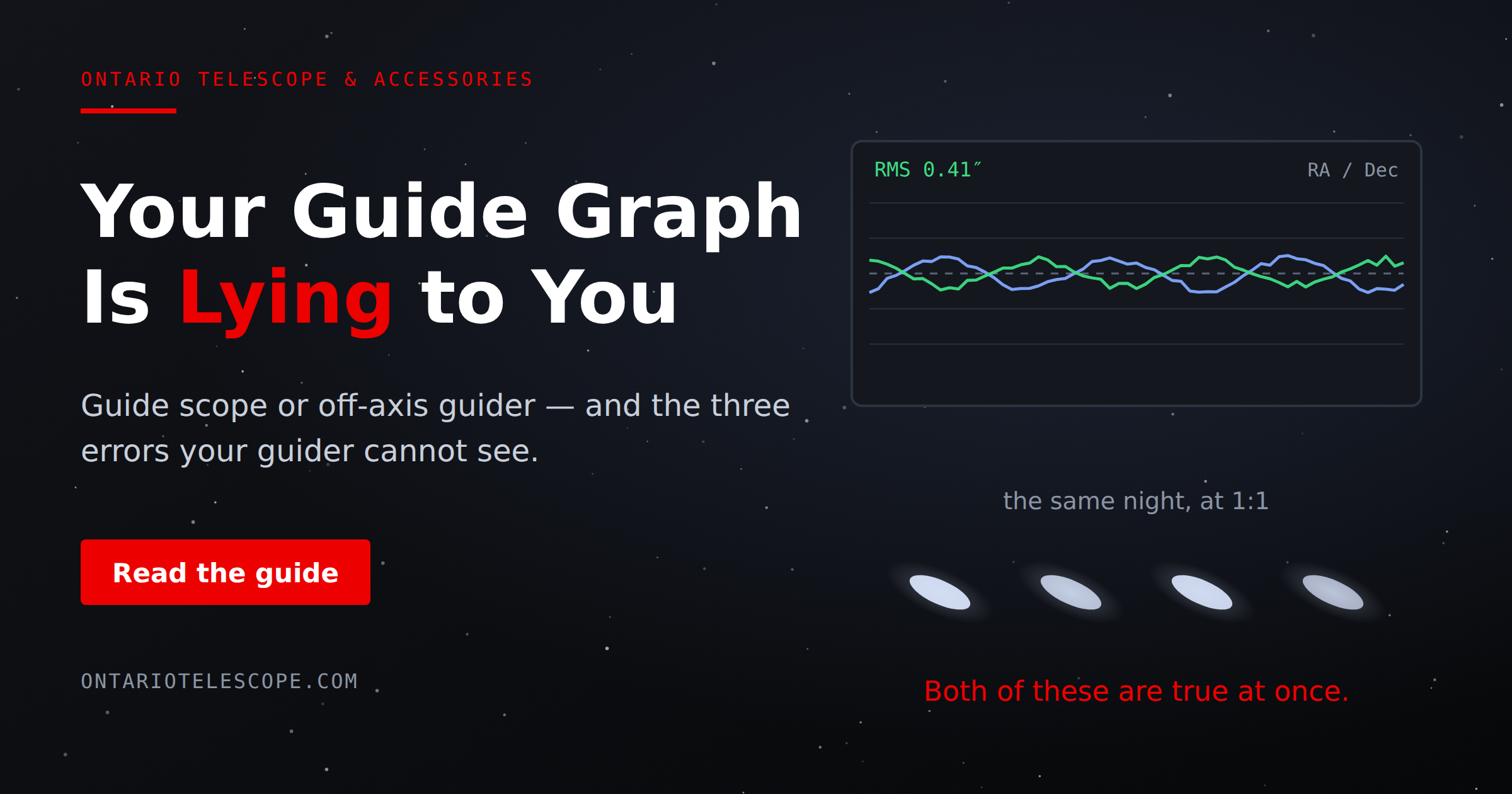
Your Guide Graph Is Lying to You
Read More
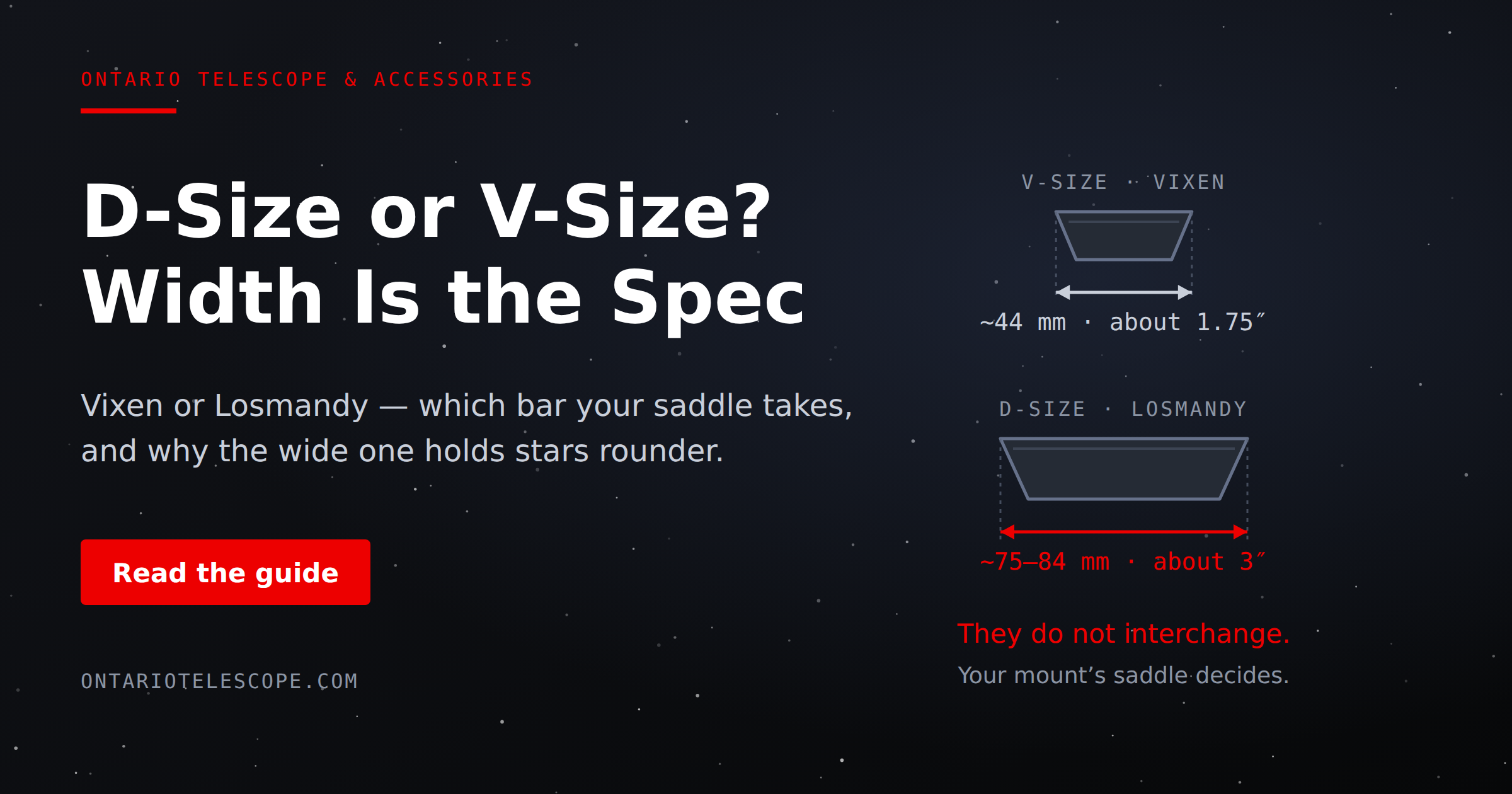
D-Size vs V-Size: A Complete Guide to Telescope Dovetail Systems
Read More
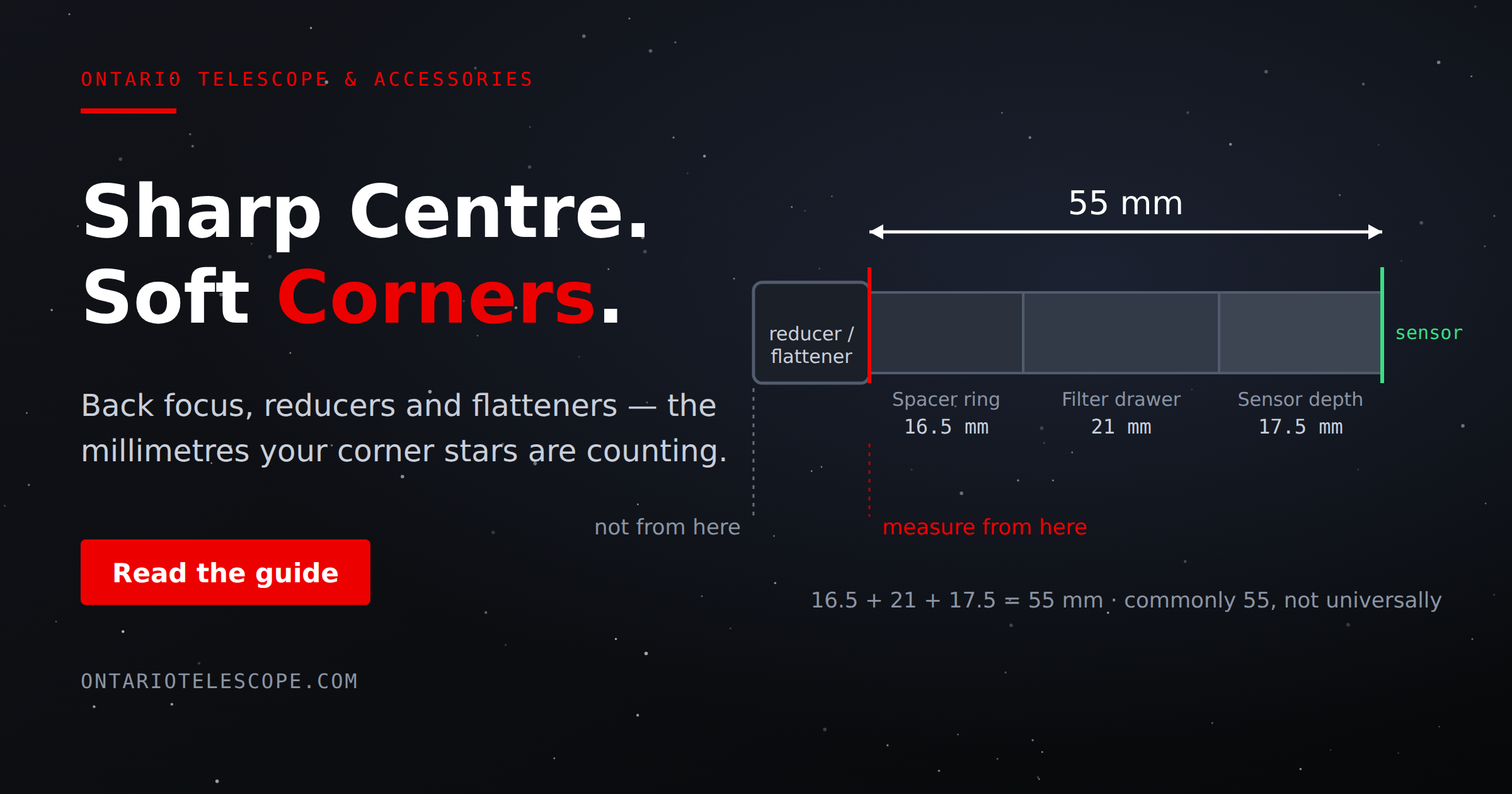
What Is Back Focus in Astrophotography? Telescope Reducers, Flatteners, and Spacing Explained
Read More