


- Description
- Specifications
- Downloads
Product Overview
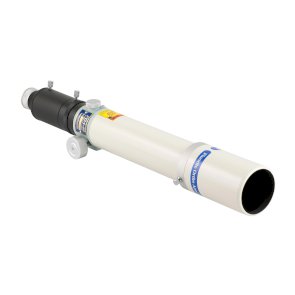
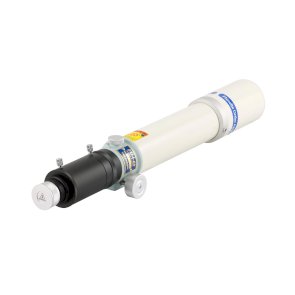
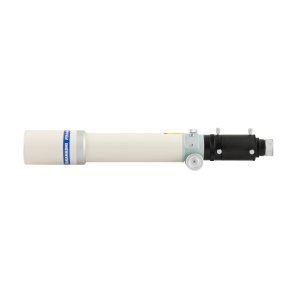
The FOA-60 is Takahashi's Ortho Apochromat — a 60 mm fluorite doublet built for correction quality rather than field width, with a published Strehl ratio in excess of 96%, a figure normally associated with Takahashi's larger TOA series. At 530 mm focal length and f/8.8 it is a slower, more deliberate design than the FS-60 line, in a retractable-dew-shield tube that weighs 1.8 kg.
Who It's For
This is a good match if what you want from a 60 mm refractor is correction quality — tight, well-controlled stars for lunar and planetary detail and demanding double-star splits — rather than the widest possible field. It suits observers and imagers who already own a wide-field instrument and want a second, high-precision tube for close work, and anyone who wants a compact travel scope that performs like a considerably larger apochromat on the moon and planets.
Key Features & Design
- Ortho Apochromat design: a two-element air-spaced fluorite doublet optimized for correction over field width — a published Strehl ratio above 96%.
- 530 mm at f/8.8: 60 mm aperture in a compact 500 mm tube.
- 175.5 mm of back focus: ample working distance for a diagonal or camera train.
- Retractable dew shield: extends to 80 mm over a slim 68 mm tube for transport.
- 84 mm drawtube extension on a rack-and-pinion focuser.
- Upgrade path: the 1.7x EX extender converts it to the FOA-60Q configuration — 900 mm at f/15 with a 44 mm image circle.
Optical / Mechanical Design
The FOA-60 uses the same two-element, air-spaced fluorite doublet family as the rest of the FS/FC line, but Takahashi has specified and figured it as an Ortho Apochromat — a design tier aimed at the correction levels normally reserved for the TOA triplets. The published Strehl ratio, in excess of 96% at prime focus and over 99% with the 1.7x extender fitted, describes how closely the wavefront approaches a theoretically perfect optic; in practice it shows up as tighter Airy disks and cleaner diffraction rings on planets and double stars than a standard doublet at this aperture delivers.
Hard multicoatings protect the fluorite element, and the 175.5 mm of back focus — generous for a 60 mm scope — is what leaves room for the FL 0.93x flattener or the EX 1.7xR extender to reach focus without running out of drawtube travel.
Recommended Uses
- Lunar and planetary observing: at 530 mm and f/8.8, or extended to 900 mm and f/15 with the EX 1.7xR extender.
- Double-star splitting: the high Strehl ratio is most visible on close, even-magnitude pairs.
- Compact travel observing: a 500 mm tube and 1.8 kg weight that packs down with the retractable dew shield.
- Flat-field imaging: with the FL 0.93x flattener, 495 mm at f/8.2 across a 44 mm circle.
- High-resolution planetary imaging: with the EX 1.7xR extender, 900 mm at f/15 across an 88 mm circle — the FOA-60Q configuration.
Compatibility and Accessory Notes
The FOA-60's system chart and extender chart, both in the Downloads tab, list the exact adapters and distances for the flattener and extender configurations. Our Takahashi Back Focus Guide collects the same figures for the whole Takahashi range.
- Back focus: 175.5 mm at prime focus.
- Field flattener: FL 0.93x — 495 mm, f/8.2, 44 mm circle, 56.0 mm back focus.
- Extender: EX 1.7xR — converts the tube to the FOA-60Q configuration, 900 mm, f/15, 88 mm circle, 208.1 mm back focus. The extender has its own system chart, included below.
- Mount: sold as an OTA — no mount, rings or dovetail included. At 1.8 kg it suits small to mid-sized equatorial and travel mounts.
If you already own the EX 1.7xR extender or are considering it, send us your camera and filter setup and we will confirm the back focus with you.
Good to Know Before You Order
- This is an optical tube assembly. Mount, tripod, rings, dovetail, diagonal, eyepiece and finder are sold separately.
- A flat field for imaging needs the FL 0.93x flattener. At prime focus the field curves, as on any doublet refractor.
- 60 mm still sets the light grasp. The Ortho design improves correction, not aperture — its strength is image quality on bright, small targets rather than reach on faint deep-sky objects.
Frequently Asked Questions
Is it difficult to set up?
No — at prime focus it is a diagonal and eyepiece and you are observing. The flattener and extender configurations are documented on Takahashi's system charts in the Downloads tab, which list the parts and distances.
What is it best used for?
Lunar and planetary observing, double-star splitting, and high-resolution imaging once extended to the FOA-60Q configuration.
What does Ortho Apochromat mean, and how is this different from the FS-60CB?
It is a correction-focused design tier — a published Strehl ratio above 96% versus a standard doublet's typical figures — aimed at planetary and double-star performance rather than the FS-60CB's wide-field flexibility.
Can this become a FOA-60Q?
Yes — fitting the EX 1.7xR extender converts it to the FOA-60Q's 900 mm f/15 configuration with an 88 mm image circle.
Does it need a flattener for astrophotography?
For a flat field to the edge of frame, yes — the FL 0.93x flattener corrects the native field curvature.
Bottom Line
In short: a 60 mm fluorite Ortho Apochromat at 530 mm and f/8.8, with a Strehl ratio above 96%, 175.5 mm of back focus, and an upgrade path to 900 mm f/15 with the EX 1.7xR extender.
| Optical design | 2 elements in 2 groups, air-spaced fluorite Ortho Apochromat |
|---|---|
| Aperture | 60 mm |
| Focal length (prime focus) | 530 mm |
| Focal ratio (prime focus) | f/8.8 |
| Back focus (prime focus) | 175.5 mm |
| Strehl ratio | Over 96% (prime focus); over 99% with EX 1.7xR extender, per Takahashi |
| With FL 0.93x flattener | 495 mm, f/8.2, Φ44 mm image circle, 56.0 mm back focus |
| With EX 1.7xR extender (FOA-60Q) | 900 mm, f/15.0, Φ88 mm image circle, 208.1 mm back focus |
| Tube length | 509–569 mm (with drawtube extension) |
| External diameter | 68 mm |
| Dew shield diameter | 80 mm |
| Focuser | Rack-and-pinion, 84 mm drawtube extension |
| Weight | 1.8 kg |
| Supplied as | Optical tube assembly only — no mount, rings, diagonal or eyepiece |
Shopping Guide
- Takahashi English Catalog 2025 — PDF, 8.63 MB
System Charts, Diagrams and Adapter Guides
- FOA-60 Photo & Visual System Chart — PDF
- FOA-60 Extenders System Chart — PDF
- Takahashi Telescope Backfocus Table — PDF, 71 kB
Manuals
You may also like
Recently viewed
Recent Blog Posts
View all
Your Guide Graph Is Lying to You
Read More
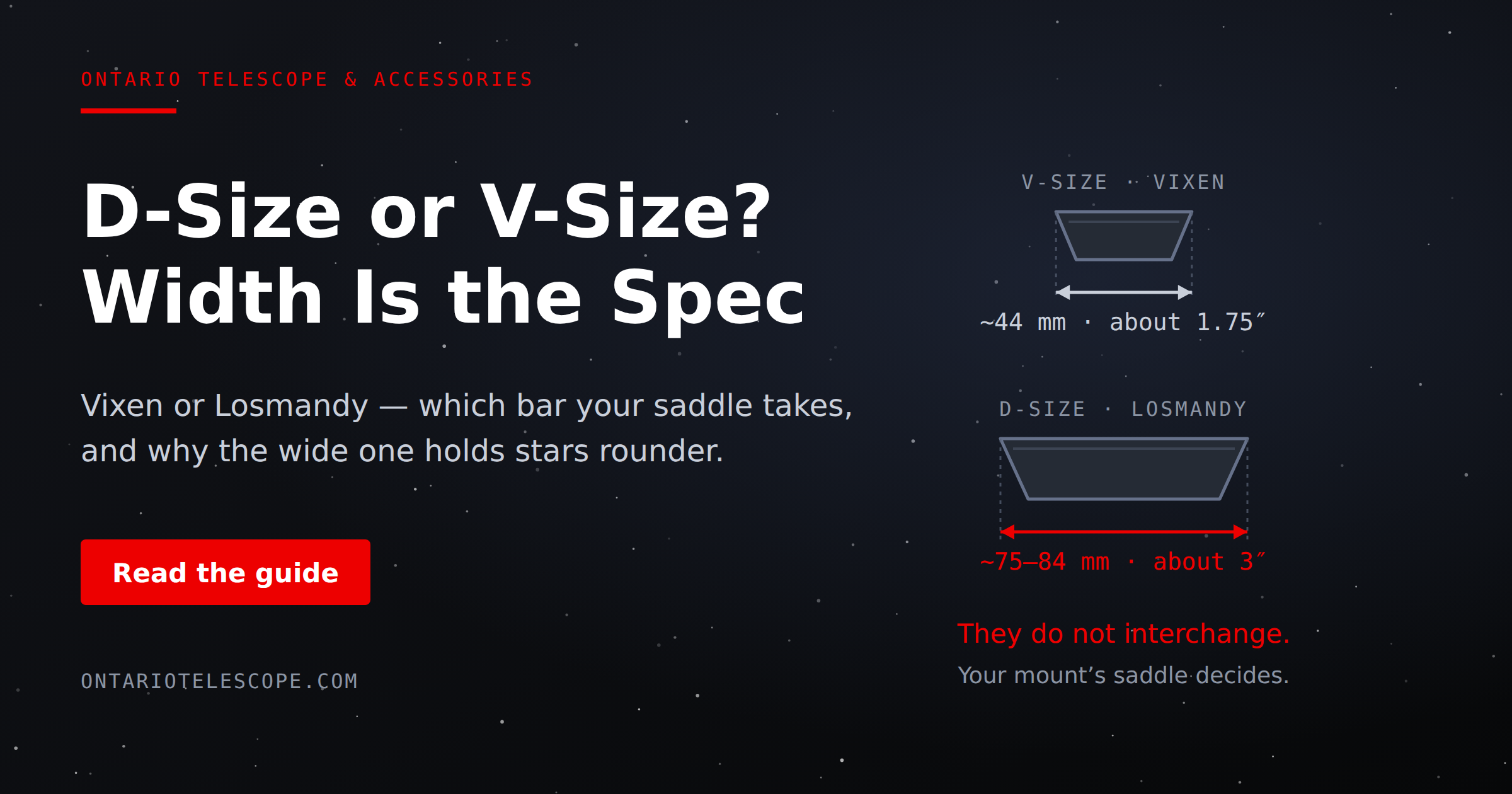
D-Size vs V-Size: A Complete Guide to Telescope Dovetail Systems
Read More
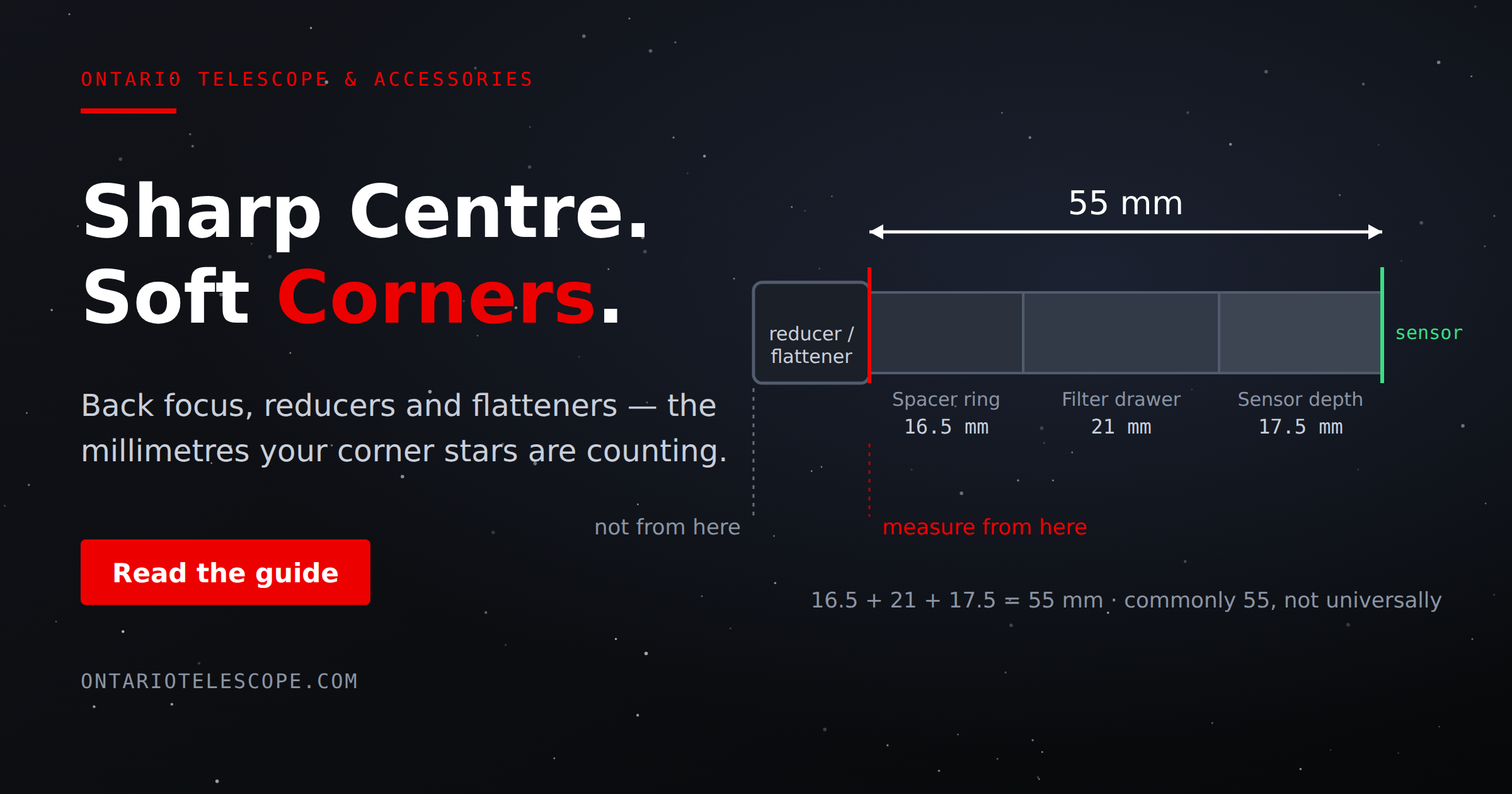
What Is Back Focus in Astrophotography? Telescope Reducers, Flatteners, and Spacing Explained
Read More