


- Description
- Specifications
- Downloads
Product Overview
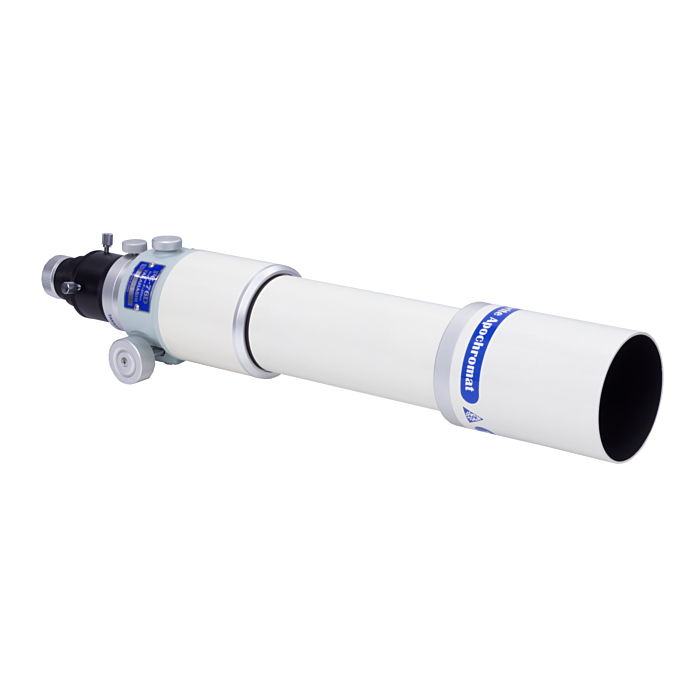
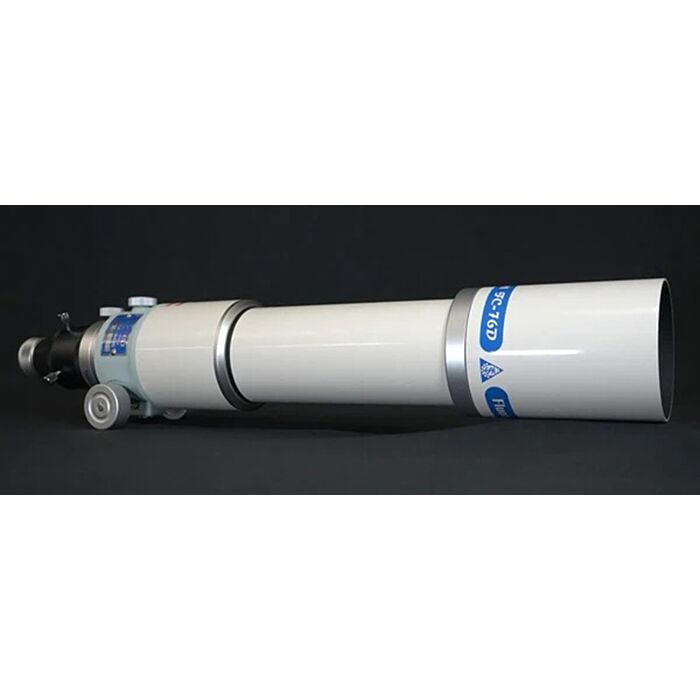
The FC-76DP is the fixed-tube, long-backfocus version of Takahashi's 76 mm fluorite doublet apochromat — the same objective as the FC-76DCU, in a longer 95 mm-diameter tube built for reducer-based astrophotography. At 570 mm focal length and f/7.5 it shares the DCU's native optics, but its 207.1 mm of back focus at prime focus — close to 50 mm more than the DCU — is what lets it run the dedicated 76DP FURD 0.64x reducer without running out of drawtube travel.
Who It's For
This is a good match if you already know you want a permanent 76 mm imaging platform built around the FU reducer, rather than a travel tube you reconfigure between sessions. It suits imagers assembling a fixed rig around the 365 mm f/4.8 fast configuration the FURD reducer gives, and anyone who does not need the DCU's retractable dew shield for portability.
Key Features & Design
- Air-spaced fluorite doublet: the same two-element, two-group 76 mm objective used in the FC-76DCU.
- 570 mm at f/7.5: native prime-focus figures identical to the DCU.
- 207.1 mm of back focus: a fixed 95 mm tube gives substantially more rear clearance than the DCU's 159 mm, built for FU reducer use.
- 63 mm drawtube extension on a rack-and-pinion focuser.
- 2.3 kg: heavier than the DCU by the length of tube, still manageable for mid-sized mounts.
Optical / Mechanical Design
The objective is the same two-element, air-spaced fluorite doublet used in the FC-76DCU — fluorite's anomalous partial dispersion gives this doublet the colour correction of a more complex design at 76 mm aperture, protected by Takahashi's hard multicoatings.
What sets the DP apart is tube length rather than glass. The fixed 95 mm barrel extends the back focus to 207.1 mm at prime focus, which is what makes room for the 76DP FURD 0.64x reducer — a part built for this tube's back focus and not interchangeable with the DCU's 0.85x reducer. With it fitted, the same objective runs at 365 mm and f/4.8, a materially faster system for deep-sky imaging than the native f/7.5.
Recommended Uses
- Fast deep-sky imaging: with the 76DP FURD 0.64x reducer at 365 mm and f/4.8.
- Flat-field imaging at prime focus: with the FC/FS MFL 1.04x flattener at 590 mm and f/7.8, corrected to a 44 mm circle.
- Reduced-field imaging: with the 76D RD NC 0.85x reducer at 486 mm and f/6.4.
- Visual observing: lunar and planetary work at 570 mm and f/7.5 with a diagonal and eyepiece.
Compatibility and Accessory Notes
The FC-76DCU and FC-76DP share the same objective and the flattener and 0.85x reducer, but the 76DP FURD 0.64x reducer is built specifically for this tube's 207.1 mm back focus. Our Takahashi Back Focus Guide lists the figures for both tubes side by side.
- Back focus: 207.1 mm at prime focus.
- Field flattener: FC/FS MFL 1.04x — 590 mm, f/7.8, 44 mm circle, 75.0 mm back focus.
- Focal reducer: 76D RD NC 0.85x — 486 mm, f/6.4, 44 mm circle, 56.0 mm back focus.
- FU reducer: 76DP FURD 0.64x — 365 mm, f/4.8, 44 mm circle, 56.0 mm back focus measured from the rear of the adapter.
- Mount: sold as an OTA — no mount, rings or dovetail included.
If you are not sure which reducer your camera needs, send us your camera and filter setup and we will work it out with you.
Good to Know Before You Order
- This is an optical tube assembly. Mount, tripod, rings, dovetail, diagonal, eyepiece and finder are sold separately.
- The DP's FU reducer is model-specific. The 76DP FURD 0.64x is built for this tube's back focus and is a different part from the DCU's reducer.
- A flat field needs a corrector. At prime focus the field curves; the flattener or reducer corrects it.
- No fixed dew shield extension. Unlike the DCU, the DP's dew shield diameter matches the tube diameter rather than retracting further — the tube is longer overall as a result.
Frequently Asked Questions
Is it difficult to set up?
No — at prime focus it is a diagonal and eyepiece, or a camera and the appropriate spacer for your chosen reducer.
What is the difference between the FC-76DCU and FC-76DP?
Same 76 mm objective and 570 mm native focal length, different tube. The DP's fixed 95 mm barrel gives 207.1 mm of back focus against the DCU's 159 mm, and that extra room is what the FURD reducer needs to reach focus.
What is it best used for?
Fast deep-sky imaging with the FURD 0.64x reducer, where the extra back focus over the DCU matters most.
Does it need a flattener for astrophotography?
At prime focus, yes, for a flat field to the edge — the MFL 1.04x flattener or the reducers each correct it differently.
Can I use FC-76DCU accessories on this tube?
The flattener and 0.85x reducer are shared. The FURD reducer is specific to the DP's back focus and is a separate part from the DCU's reducer.
Bottom Line
In short: a 76 mm fluorite apochromat at 570 mm and f/7.5, built into a fixed 95 mm tube with 207.1 mm of back focus for reducer and flattener work — and a 365 mm f/4.8 fast astrograph once the FURD reducer is attached.
| Optical design | 2 elements in 2 groups, air-spaced fluorite apochromat |
|---|---|
| Aperture | 76 mm |
| Focal length (prime focus) | 570 mm |
| Focal ratio (prime focus) | f/7.5 |
| Back focus (prime focus) | 207.1 mm |
| With FC/FS MFL 1.04x flattener | 590 mm, f/7.8, Φ44 mm image circle, 75.0 mm back focus |
| With 76D RD NC 0.85x reducer | 486 mm, f/6.4, Φ44 mm image circle, 56.0 mm back focus |
| With 76DP FURD 0.64x reducer | 365 mm, f/4.8, Φ44 mm image circle, 56.0 mm back focus (from rear of adapter) |
| Tube length | 592 mm |
| External diameter | 95 mm |
| Dew shield diameter | 95 mm |
| Focuser | Rack-and-pinion, 63 mm drawtube extension |
| Weight | 2.3 kg |
| Supplied as | Optical tube assembly only — no mount, rings, diagonal or eyepiece |
Shopping Guide
- Takahashi English Catalog 2025 — PDF, 8.63 MB
System Charts, Diagrams and Adapter Guides
- Takahashi Telescope Backfocus Table — PDF, 71 kB
You may also like
Recently viewed
Recent Blog Posts
View all
Your Guide Graph Is Lying to You
Read More
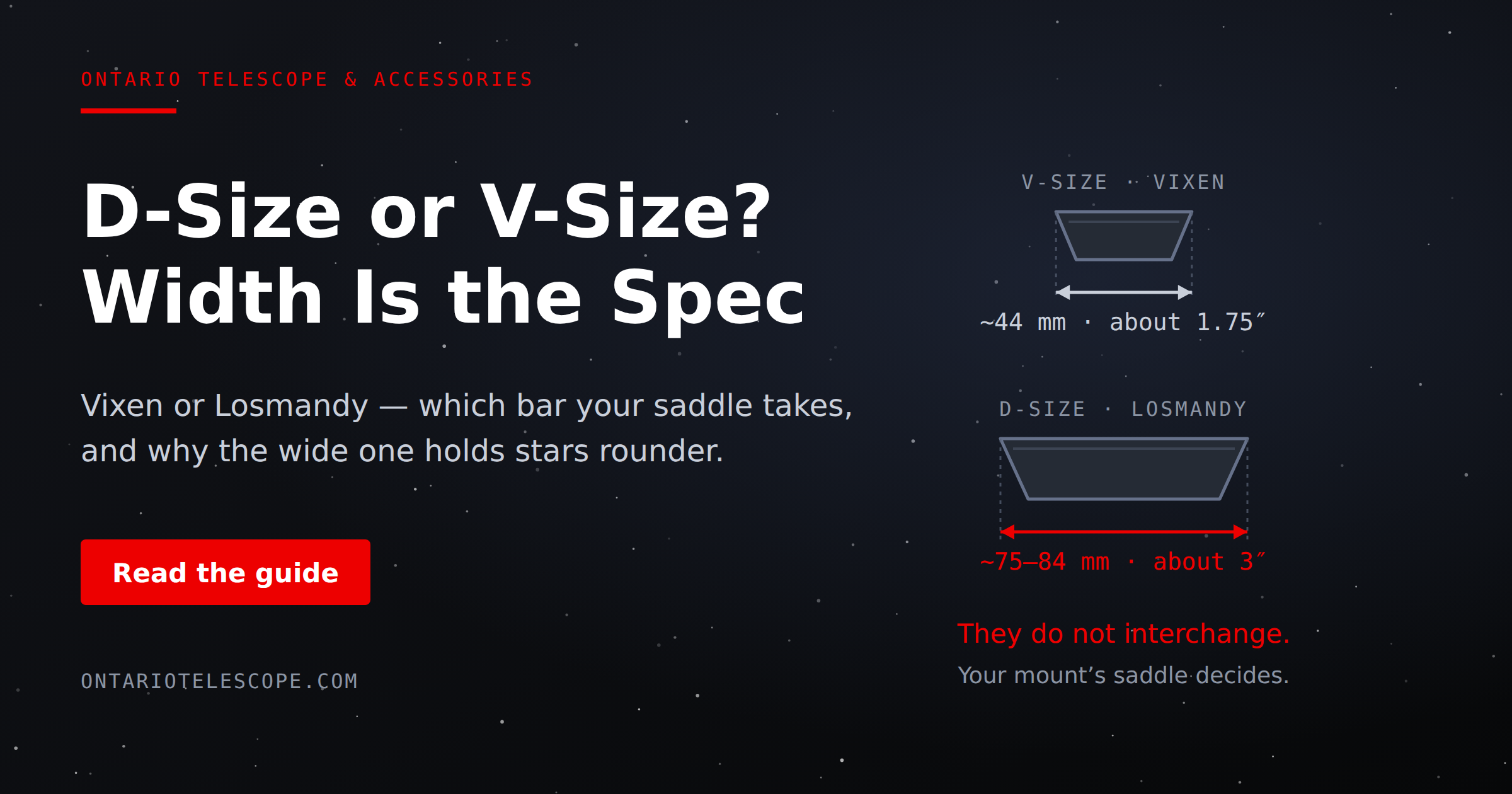
D-Size vs V-Size: A Complete Guide to Telescope Dovetail Systems
Read More
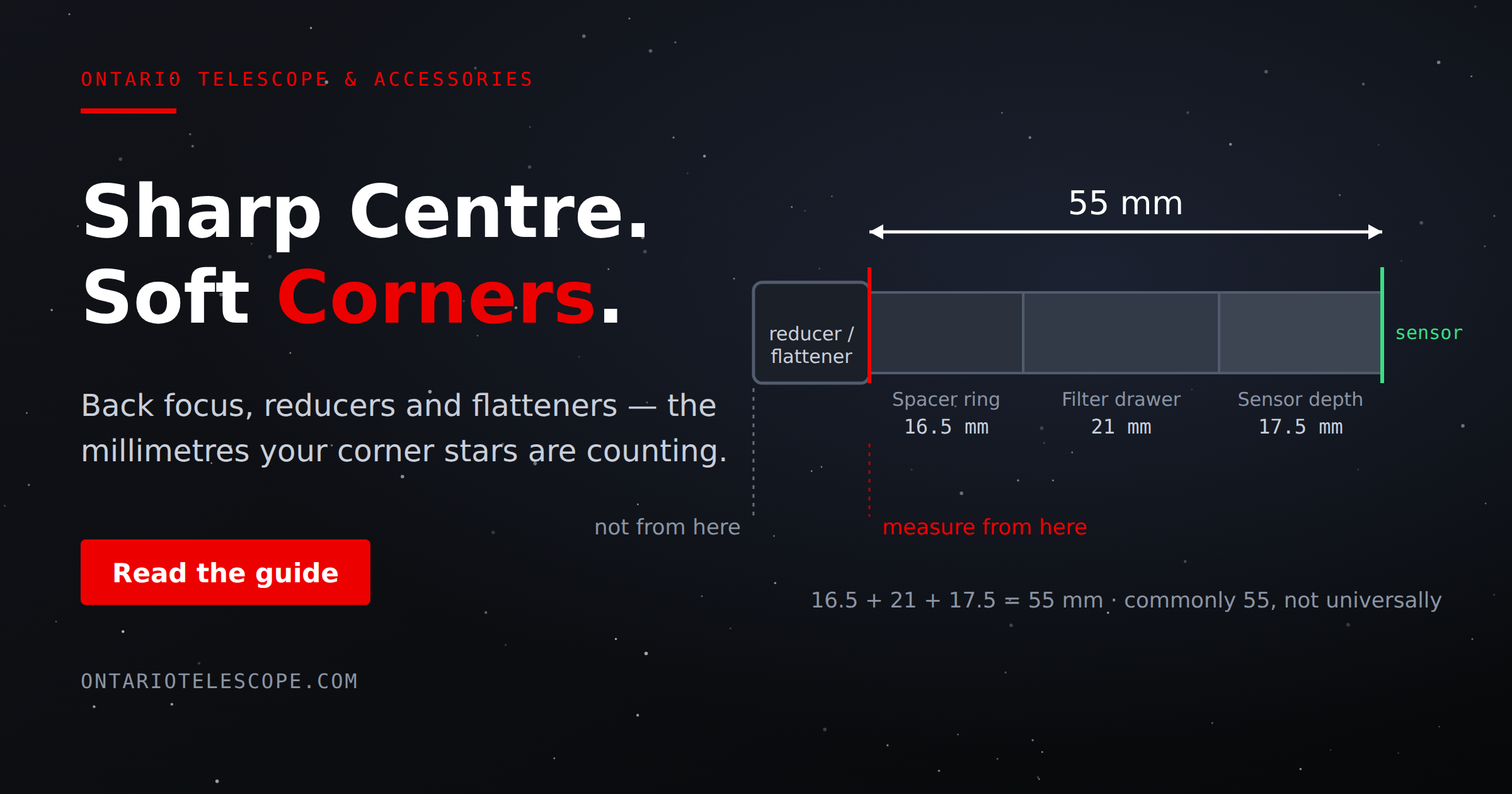
What Is Back Focus in Astrophotography? Telescope Reducers, Flatteners, and Spacing Explained
Read More