



- Description
- Specifications
- Downloads
Product Overview
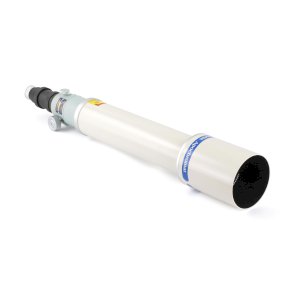
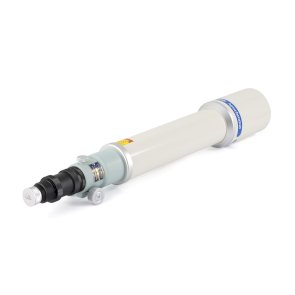
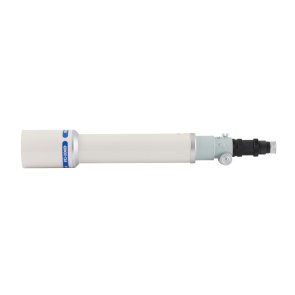
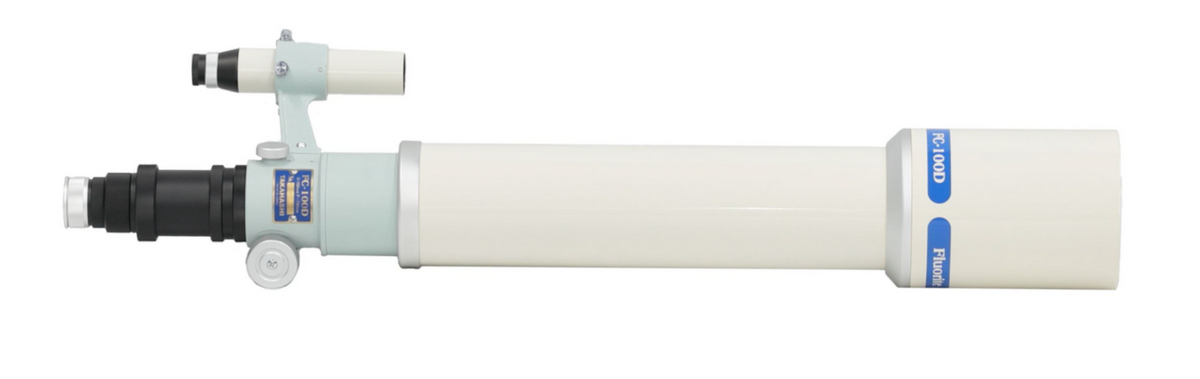
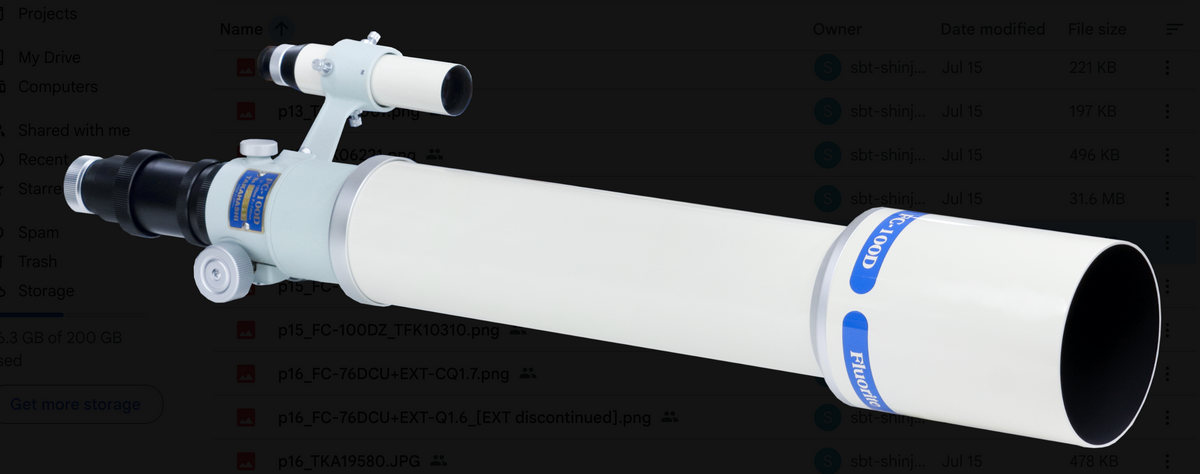
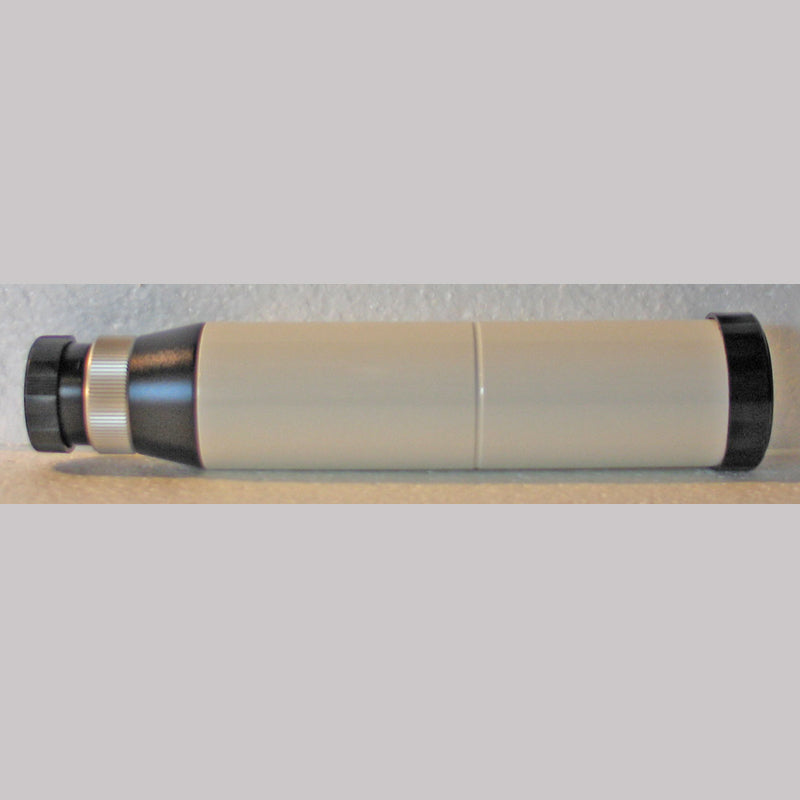
The FC-100DC is Takahashi's 100 mm Steinheil fluorite doublet apochromat, sold here as the Visual model — the crown element leads in this design rather than following, a configuration Takahashi has used specifically for its 100 mm fluorite refractors. At 740 mm focal length and f/7.4 it runs 815 mm long with a 30 mm drawtube extension, and weighs 2.7 kg.
Who It's For
This is a good match if visual observing is the main use — lunar, planetary and double-star work at 100 mm aperture, where the Steinheil doublet's colour correction and light throughput matter more than field width. It suits observers stepping up from a 60 or 76 mm apochromat who want a noticeably brighter, higher-resolution view, and anyone who wants a single well-corrected tube for the moon and planets without the added elements of a larger triplet. Takahashi also sells this objective as the FC-100DF, an imaging-oriented configuration in a different tube; this Visual model is built around eyepiece use.
Key Features & Design
- Steinheil fluorite doublet: two elements in two groups, with the fluorite crown element leading the light path — a Takahashi design choice specific to its 100 mm doublets.
- 740 mm at f/7.4: 100 mm aperture with meaningfully more light grasp and resolution than a 60–76 mm refractor.
- 161 mm of back focus: room for a diagonal or a straightforward imaging train.
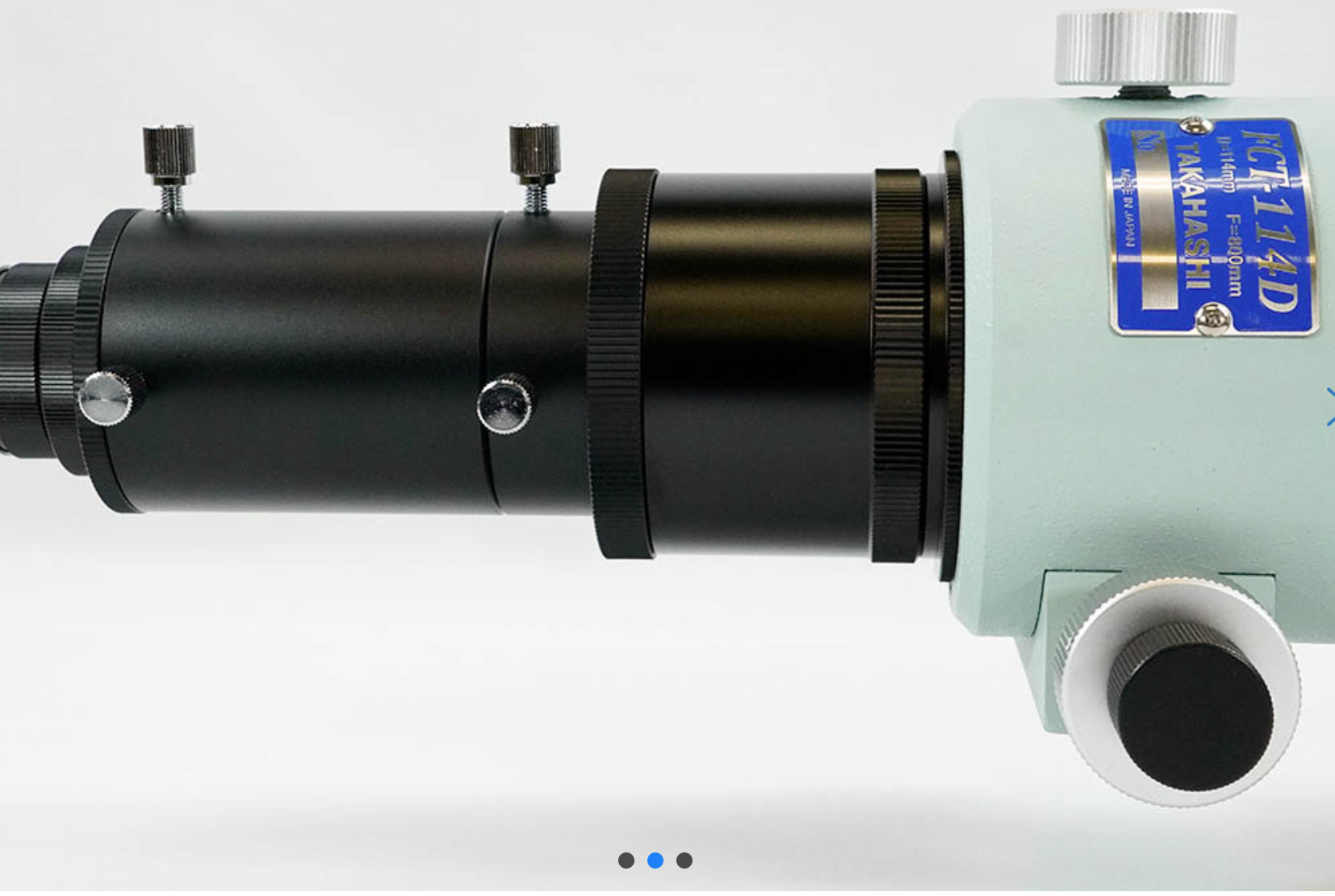
- 30 mm drawtube extension on a rack-and-pinion focuser.
- 2.7 kg: substantial but still manageable on a mid-sized equatorial mount.
Optical / Mechanical Design
Most doublet apochromats use a Fraunhofer layout, with the ED or fluorite element behind the crown glass. Takahashi's 100 mm fluorite doublets instead use a Steinheil configuration, with the fluorite crown element in front. Combined with fluorite's anomalous partial dispersion, the arrangement is what Takahashi credits for the FC-100 series' colour correction and contrast at this aperture — clean planetary and lunar detail without the residual violet fringing that limits achromats at 100 mm.
Hard multicoatings protect the fluorite surfaces, and the 161 mm of back focus is enough for the FC/FS MFL 1.04x flattener to reach focus at 760 mm and f/7.6, correcting to a 44 mm image circle if imaging is added to the visual use this model is built around.
Recommended Uses
- Lunar and planetary observing: at 740 mm and f/7.4, where the 100 mm aperture resolves finer detail than a smaller refractor.
- Double-star splitting: the Steinheil doublet's colour correction shows clearly on close, bright pairs.
- Casual deep-sky visual observing: star clusters and brighter nebulae benefit from the extra aperture over a 60–76 mm scope.
- Occasional imaging: with the FC/FS MFL 1.04x flattener at 760 mm and f/7.6, for those who want to photograph the moon or planets without switching to the dedicated FC-100DF.
Compatibility and Accessory Notes
The FC-100DC's system chart, plus its Extender-Q and Extender-C2X charts, are in the Downloads tab and list the adapters and distances Takahashi publishes for each configuration. Our Takahashi Back Focus Guide collects the same figures for the whole range.
- Back focus: 161 mm at prime focus.
- Field flattener: FC/FS MFL 1.04x — 760 mm, f/7.6, 44 mm circle, 71.2 mm back focus.
- Mount: sold as an OTA — no mount, rings or dovetail included. At 2.7 kg it suits mid-sized equatorial mounts.
- Related model: the FC-100DF shares this objective in a tube built around imaging rather than visual use, with a different back focus and reducer options.
If you are weighing this Visual model against the imaging-oriented FC-100DF, send us how you plan to use it and we will help you choose.
Good to Know Before You Order
- This is an optical tube assembly. Mount, tripod, rings, dovetail, diagonal, eyepiece and finder are sold separately.
- This is the Visual model. It is built around eyepiece use; the FC-100DF is Takahashi's dedicated imaging configuration of the same objective, in a different tube.
- A flat field for imaging needs the MFL 1.04x flattener. At prime focus the field curves, as on any doublet refractor.
Frequently Asked Questions
Is it difficult to set up?
No — at prime focus it is a diagonal and eyepiece and you are observing. The system chart in the Downloads tab lists parts and distances if you add a flattener for imaging.
What is it best used for?
Visual observing of the moon, planets and double stars at 100 mm aperture. It can image with the MFL 1.04x flattener, but the FC-100DF is Takahashi's dedicated model for that use.
What is the difference between this and the FC-100DF?
Same 100 mm Steinheil fluorite doublet objective, different tube and intended use — this Visual model is built for eyepiece observing; the DF is configured for astrophotography with its own back focus and reducer options.
What does Steinheil mean, and why does it matter?
It describes which element leads the light path — the fluorite crown element sits in front here, rather than behind the flint element as in a Fraunhofer doublet. Takahashi uses this layout specifically on its 100 mm fluorite doublets.
Can I use it for astrophotography?
With the FC/FS MFL 1.04x flattener, yes, at 760 mm and f/7.6 across a 44 mm corrected circle — though the FC-100DF is the model built specifically for that purpose.
Bottom Line
In short: a 100 mm Steinheil fluorite doublet apochromat at 740 mm and f/7.4, with 161 mm of back focus, built as a visual instrument for lunar, planetary and double-star observing.
| Optical design | 2 elements in 2 groups, Steinheil-configuration fluorite apochromat |
|---|---|
| Aperture | 100 mm |
| Focal length (prime focus) | 740 mm |
| Focal ratio (prime focus) | f/7.4 |
| Back focus (prime focus) | 161 mm |
| With FC/FS MFL 1.04x flattener | 760 mm, f/7.6, Φ44 mm image circle, 71.2 mm back focus |
| Tube length | 815 mm |
| External diameter | 95 mm |
| Dew shield diameter | 124 mm |
| Focuser | Rack-and-pinion, 30 mm drawtube extension |
| Weight | 2.7 kg |
| Model | Visual model (see FC-100DF for the imaging-oriented configuration) |
| Supplied as | Optical tube assembly only — no mount, rings, diagonal or eyepiece |
Shopping Guide
- Takahashi English Catalog 2025 — PDF, 8.63 MB
System Charts, Diagrams and Adapter Guides
You may also like
Recently viewed
Recent Blog Posts
View all
Your Guide Graph Is Lying to You
Read More

D-Size vs V-Size: A Complete Guide to Telescope Dovetail Systems
Read More

What Is Back Focus in Astrophotography? Telescope Reducers, Flatteners, and Spacing Explained
Read More