
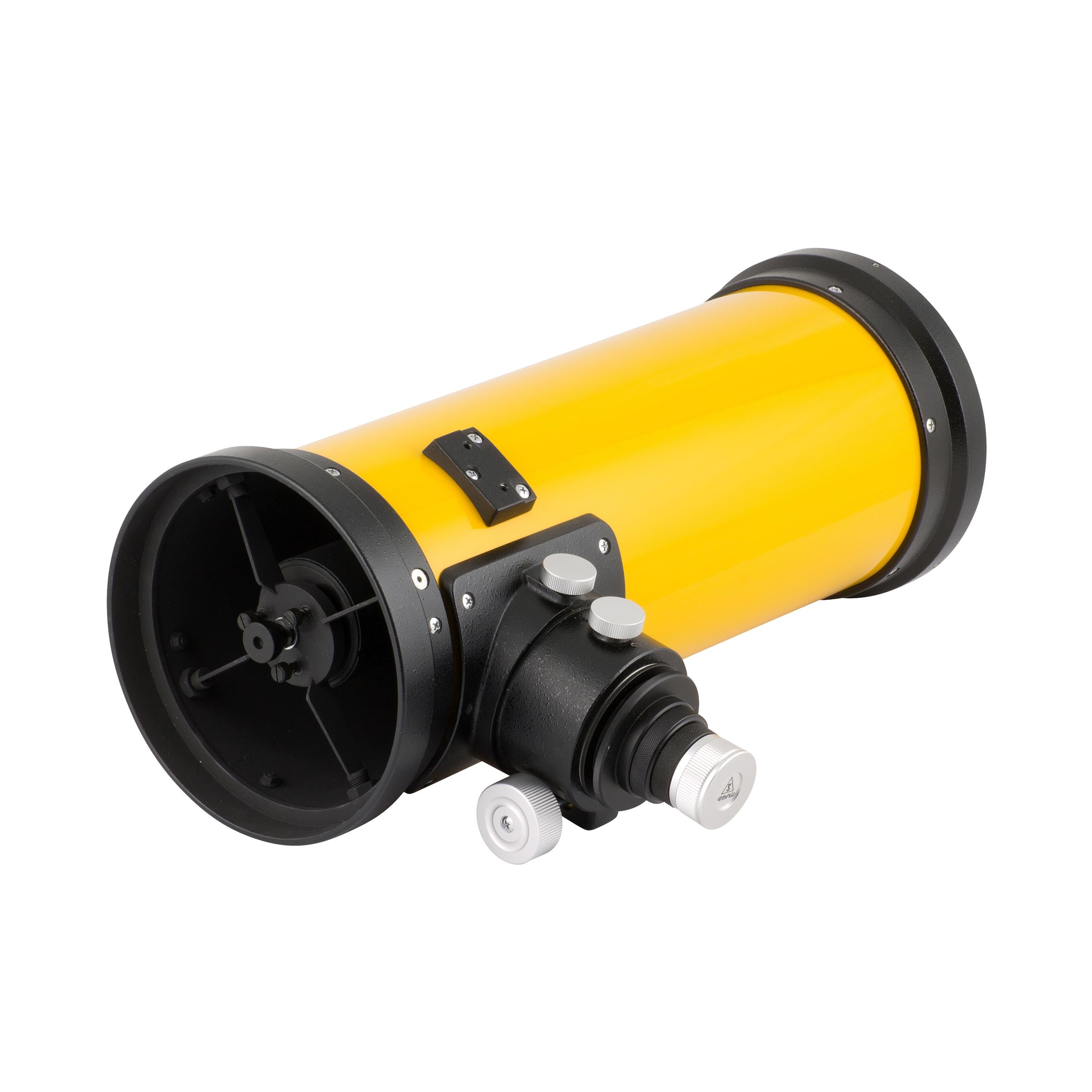
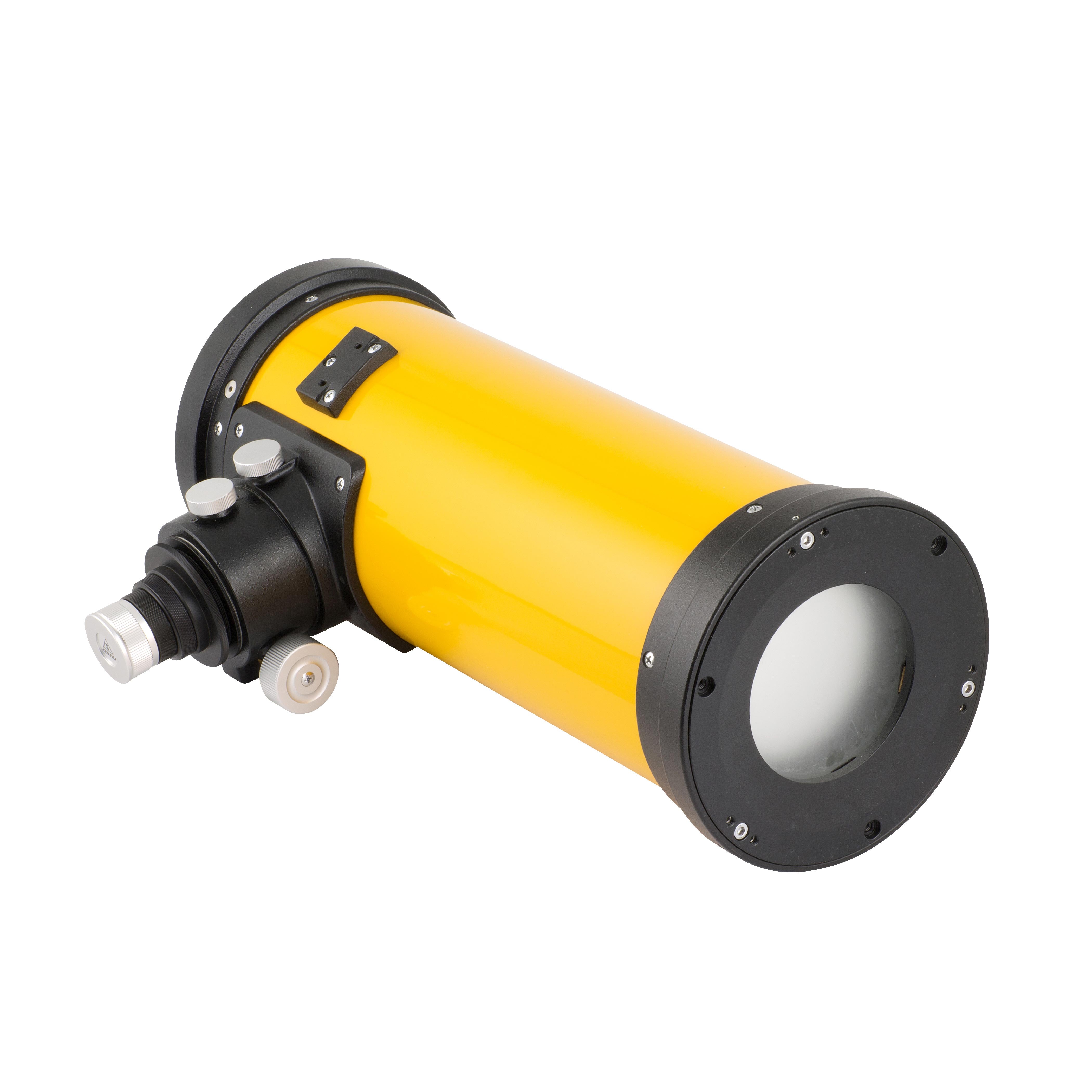


- Description
- Specifications
- Downloads
Product Overview
The Epsilon-130D is Takahashi's 130 mm hyperbolic astrograph — a fast, wide-field imaging system rather than a visual telescope. At 430 mm focal length and f/3.3 in a 460 mm tube, it covers a 44 mm image circle at native focus and weighs 4.9 kg. The digital-generation redesign of Takahashi's original 1980s Epsilon series, it uses a hyperbolic primary and a digital corrector built specifically for modern CMOS and CCD sensors.
Who It's For
This is a good match if you want speed and field over reach — f/3.3 gathers light fast enough to shorten exposure times on faint, extended targets, and the 44 mm corrected circle covers full-frame sensors at native focus, no separate flattener needed. It suits imagers working large emission nebulae, wide star fields and the kind of targets that need field, not focal length, and its 4.9 kg weight and airline-transportable design make it a workable travel astrograph.
It is not built for eyepiece observing — there is no meaningful visual use case at f/3.3 with a Newtonian-style light path. If wide-field imaging is the goal, tell us your camera and mount and we will confirm the fit.
Key Features & Design
- Hyperbolic primary with digital corrector: a redesigned optical train delivering sub-10 µm spots across the field, tuned for modern digital sensors.
- 430 mm at f/3.3: fast enough to shorten integration time on faint, extended targets.
- 44 mm corrected image circle at native focus — full-frame coverage without a separate flattener.
- 4.9 kg: light for a fast 130 mm astrograph, and compact enough to check as airline baggage.
- 23 mm of drawtube extension and a 56.2 mm back focus at prime.
- 1.5x extender compatible: the Ɛ-EX 130D converts the system to 650 mm at f/5.0, still a 44 mm circle.
Optical / Mechanical Design
The Epsilon-130D uses a hyperbolic primary mirror paired with a multi-element digital corrector positioned ahead of the focal plane — the corrector is what flattens the field and controls coma across a fast f/3.3 system, delivering sub-10 µm spot sizes at the design wavelengths. This is a purpose-built imaging design: there is no accessible focal plane for a diagonal and eyepiece, and the light path exists to put a flat, corrected image on a sensor.
The Ɛ-EX 130D 1.5x extender converts the system to 650 mm at f/5.0, still with a 44 mm corrected circle and 56.2 mm back focus — useful for tighter framing on smaller targets without leaving the Epsilon-130D's optical train.
Recommended Uses
- Wide-field deep-sky imaging: at 430 mm and f/3.3, large emission nebulae and star fields across a 44 mm circle.
- Fast narrowband imaging: the f/3.3 speed shortens exposure times where signal is otherwise faint.
- Tighter framing: with the Ɛ-EX 130D 1.5x extender at 650 mm and f/5.0, for smaller targets.
- Travel astrophotography: compact and light enough for portable rigs and checked baggage.
Compatibility and Accessory Notes
Back focus at prime is 56.2 mm, unchanged with the Ɛ-EX 130D extender fitted — a tight figure that camera and filter-wheel stacks need to hit precisely to reach focus and keep the field flat. The Epsilon-130D's own system chart, in the Downloads tab, lists the exact parts and distances for both configurations. Our Takahashi Back Focus Guide collects these figures for the whole Takahashi range in one table.
- Extender: Ɛ-EX 130D 1.5x, 650 mm at f/5.0, 44 mm circle, sold separately.
- Mount: sold as an OTA — no mount, rings, dovetail or camera included. At 4.9 kg plus a full imaging train, a mount rated for 8–10 kg of total payload is a reasonable starting point.
- Collimation: as a fast hyperbolic system, collimation accuracy matters more than on a slower Newtonian — Takahashi's modified collimation system on this model is built to make that adjustment manageable.
If you are not sure your camera and filter setup will hit 56.2 mm exactly, send us the details and we will work it out with you.
Good to Know Before You Order
- Not for eyepiece observing. This is an imaging-only optical train with no accessible visual focal plane.
- This is an optical tube assembly. Mount, rings, dovetail and camera are all sold separately.
- Back focus is tight and fixed. 56.2 mm at both native focus and with the 1.5x extender — the system chart in the Downloads tab lists the parts that hit it.
- Collimation matters more at f/3.3. A fast hyperbolic system shows collimation error more readily than a slower one; the modified collimation system on this model is built for that adjustment.
Frequently Asked Questions
Is it difficult to set up?
Collimation needs more attention than on a slower telescope because f/3.3 shows error more readily, but the modified collimation system is built for that adjustment, and the published system chart names the exact spacing your imaging train needs. Send us your camera and filter setup and we will confirm the train with you.
What is it best used for?
Wide-field deep-sky imaging — large emission nebulae, star fields, and fast narrowband work where the f/3.3 speed shortens exposure time.
Can I use it for visual observing?
No. It has no accessible visual focal plane — this is a dedicated imaging astrograph.
Do I need a flattener?
No — the 44 mm image circle is corrected at native focus, covering full-frame sensors without a separate flattener.
What mount does it need?
At 4.9 kg before accessories, most imaging mounts in the mid-payload class handle it. Tell us your mount model and full imaging train weight and we will confirm.
How does the 1.5x extender change things?
It converts the system to 650 mm at f/5.0, still with a 44 mm circle — useful for tighter framing on smaller targets without changing telescopes.
Bottom Line
In short: a 130 mm f/3.3 hyperbolic astrograph at 430 mm focal length with a 44 mm corrected image circle at native focus, weighing 4.9 kg. It is a dedicated imaging telescope built for wide, fast deep-sky work, with a 1.5x extender available for tighter framing.
Optical Diagram Reports
Takahashi publishes a spot diagram for the Epsilon-130D at native focus, showing star images across the field at the design wavelengths.

| Optical design | Hyperbolic astrograph with digital corrector |
|---|---|
| Aperture | 130 mm |
| Focal length (native) | 430 mm |
| Focal ratio (native) | f/3.3 |
| Image circle (native) | Φ44 mm |
| Back focus (native) | 56.2 mm |
| With Ɛ-EX 130D 1.5x extender | 650 mm, f/5.0, Φ44 mm image circle, 56.2 mm back focus |
| Tube length | 460 mm |
| External diameter | 166 mm |
| Dew shield diameter | 188 mm |
| Drawtube extension | 23 mm |
| Weight | 4.9 kg |
| Case included | No |
Shopping Guide
- Takahashi English Catalog 2025 — PDF, 8.63 MB
System Charts, Diagrams and Adapter Guides
- Epsilon-130D System Chart — PDF, 53.6 kB
- Takahashi Telescope Backfocus Table — PDF, 71 kB
Manuals
- Epsilon-130D Instruction Manual (English) — PDF, 4.26 MB
You may also like
Recently viewed
Recent Blog Posts
View all
Your Guide Graph Is Lying to You
Read More
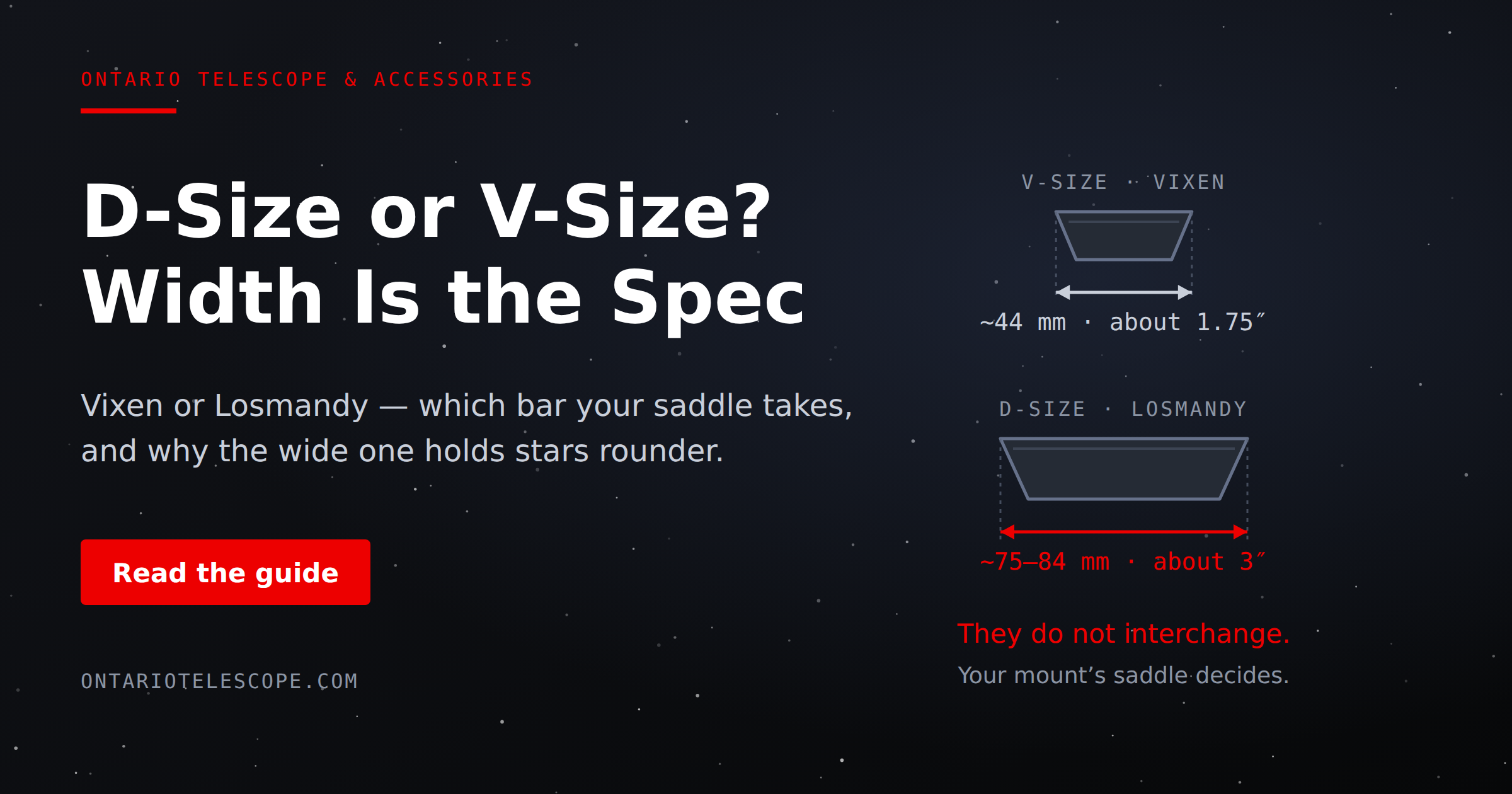
D-Size vs V-Size: A Complete Guide to Telescope Dovetail Systems
Read More
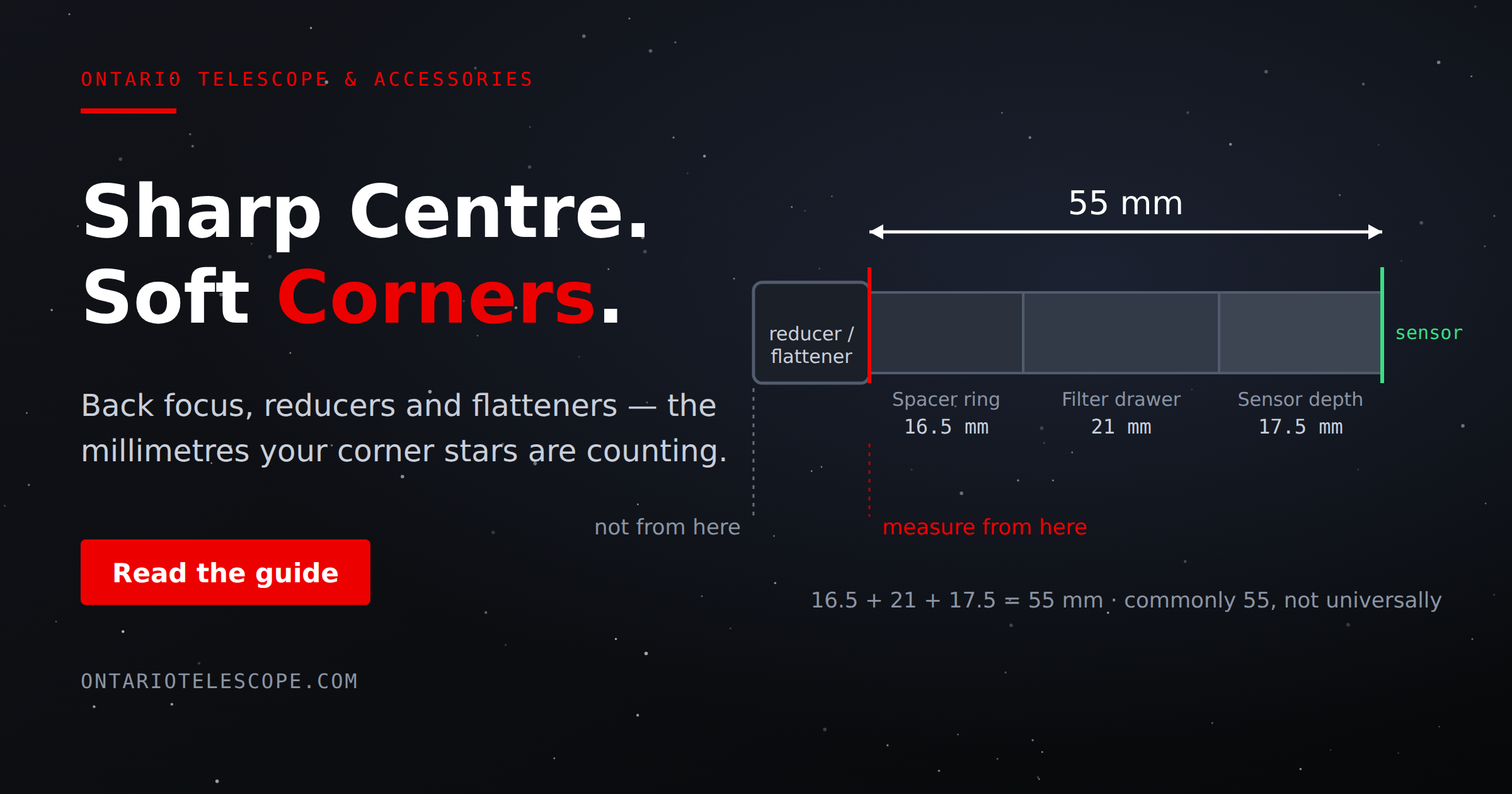
What Is Back Focus in Astrophotography? Telescope Reducers, Flatteners, and Spacing Explained
Read More