
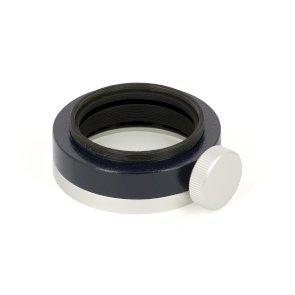
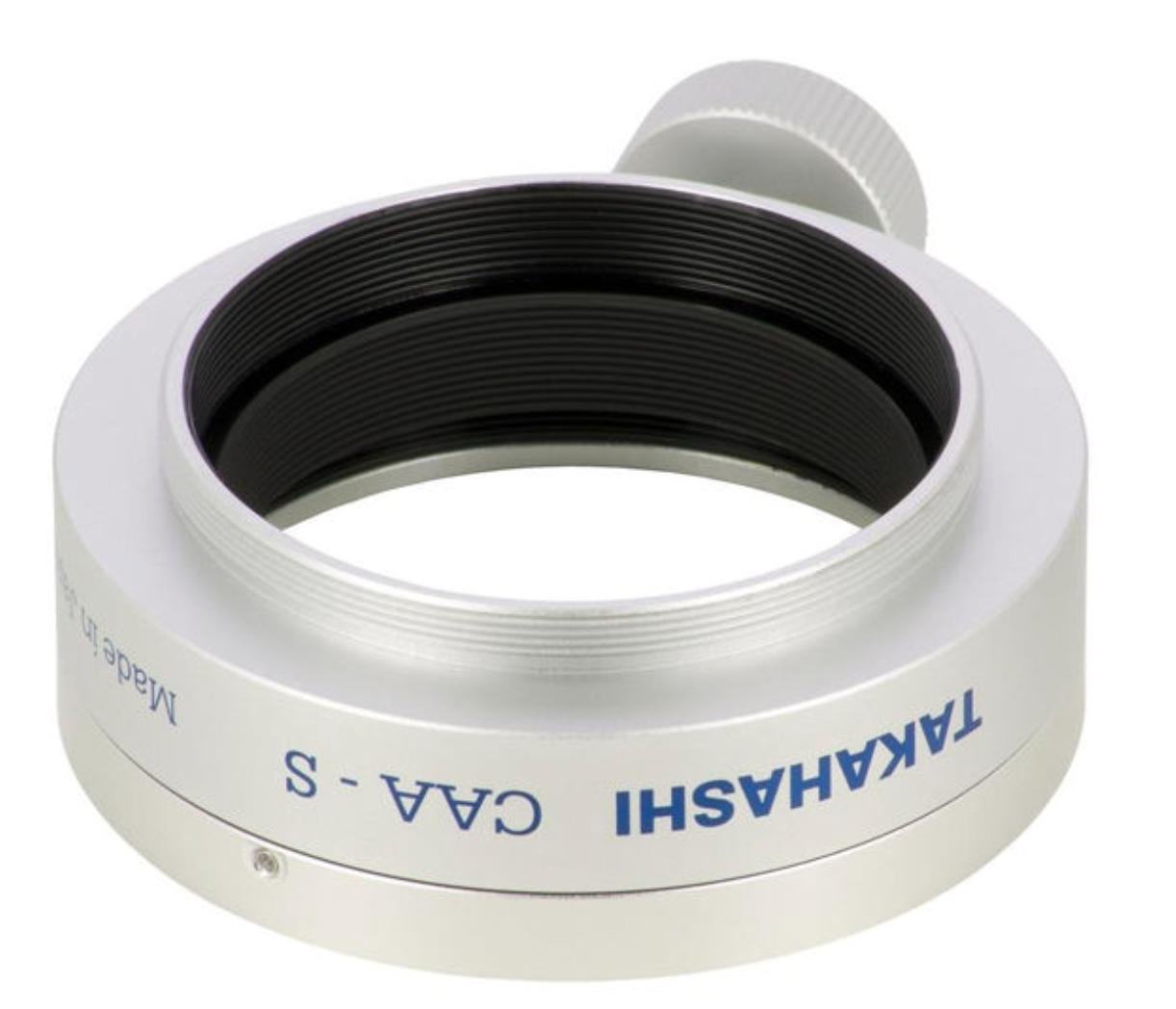


- Description
- Specifications
- Downloads
Product Overview
The Camera Angle Adjuster S rotates your camera to any framing angle and locks it there for the exposure, without breaking the imaging train apart to do it. It threads M55.9 × 0.75 — female to the telescope, male to the camera — consumes 12.3 mm of light path, measures 70.0 × 24.9 mm and weighs 110 g.
This is the current TKA21200N version, which Takahashi released in April 2023 as the successor to the camera rotator sold as CAA (SKY90). Takahashi treats the two as compatible and interchangeable.
Who It's For
This is a good match if you image through a Takahashi with an M55.9 × 0.75 drawtube interface — the FS-60 and FC-76 families, the FCT-65D, or a SKY90 — and want to reframe a target by rotating the camera rather than by rebuilding the train behind it.
Key Features & Design
- M55.9 × 0.75, female to the telescope and male to the camera: it drops into the M55.9 chain without changing the thread standard on either side.
- 12.3 mm light path: Takahashi's published figure, measured from the tip of the left ring to the base of the male thread on the right. The part's outer thickness is 20 mm and its overall length 24.9 mm — the 12.3 mm is what goes into a backfocus total.
- 110 g, 70.0 mm maximum diameter: light enough that it changes nothing about focuser load on the small refractors it is built for.
- Machined aluminium, anodised: the 2023 revision moved from an aluminium casting to a machined part, and from paint to an anodised finish with a silk-screened name.
- Rotate, then lock: turn the camera to the framing you want and lock it for the exposure.
- Interchangeable with the earlier CAA (SKY90): a direct replacement in an existing train.
Recommended Uses
Framing adjustments on FS-60 and FC-76 series refractors, the FCT-65D and the SKY90; rotating an imaging camera to align a target with the frame without loosening the rest of the train; quick reframing between targets across a session.
Compatibility and Accessory Notes
Takahashi's system charts list the CAA-S (chart symbol 6S) as follows:
| Telescope | How Takahashi lists it |
|---|---|
| FS-60CBX | Supplied with the optical tube |
| FS-60CP | Standard accessory |
| FCT-65D | Supplied with the optical tube |
| FS-60CB | Listed in the system chart |
| FC-76DS / FC-76DP / FC-76DCU | Optional |
| SKY90 | Successor to, and compatible with, the SKY90 camera rotator |
Takahashi US additionally lists the predecessor part for the FS-78 and FS-60C.
The figure to carry into a backfocus total is 12.3 mm. If you are adding this to a train that already has a corrector with a spacing figure to hit, send us the corrector, the spacers and the camera and we will total it through with you.
If your train is on Takahashi's larger M72 × 1.0 standard rather than M55.9, the part you want is the Camera Angle Adjuster CAA-M instead — 32.0 mm light path, 90.0 × 37.0 mm, 220 g. The thread gender is reversed between the two, so they are not interchangeable with an adapter.
Good to Know Before You Order
Two length figures, two jobs: 12.3 mm is the light path — the number that belongs in a backfocus calculation. The 20 mm outer thickness and 24.9 mm overall length describe the part physically. Use 12.3 mm for spacing.
Rotation range is not published: Takahashi describes the function — rotate the camera with it attached and lock for the exposure — without printing a degree figure or naming the clamp mechanism.
Mechanical only: no optics inside. It sets angle and consumes a known 12.3 mm, and has no effect on focal length, focal ratio or field correction.
This is the current N version: the earlier painted-casting TKA21200 is discontinued. If you are matching an existing setup, the two are interchangeable.
Frequently Asked Questions
Is it difficult to set up?
No — it threads onto the drawtube like any M55.9 adapter, and rotation is a loosen-turn-lock motion with the camera still attached.
How much backfocus does it use?
12.3 mm. That is Takahashi's published light path, measured ring tip to the base of the male thread.
Is it the same as the old CAA (SKY90)?
It is the successor, and Takahashi lists the two as compatible and interchangeable. What changed in 2023 was the manufacturing: a machined aluminium body instead of a casting, and an anodised finish instead of paint.
How far does it rotate?
Takahashi does not publish a degree figure. In use it turns to the framing you want and locks there.
What is the difference between the CAA-S and the CAA-M?
The thread standard. The S is M55.9 × 0.75 and consumes 12.3 mm; the M is M72 × 1.0 and consumes 32.0 mm, in a 90 mm body at 220 g. The gender is reversed between them too, so one does not substitute for the other.
Will it fit my telescope?
If your drawtube interface is M55.9 × 0.75, yes. Send us your telescope model and we will confirm it against Takahashi's system chart.
Bottom Line
An M55.9 × 0.75 camera rotator that locks your framing in place for 12.3 mm of light path and 110 g, machined from aluminium and interchangeable with the SKY90 rotator it replaced.
| Product name | Camera Angle Adjuster S (CAA-S) |
|---|---|
| Product code | TKA21200N (Takahashi Japan: KA21200N; system-chart symbol 6S) |
| Related part | Camera Angle Adjuster CAA (TKA21200) is a separate part, not this one |
| Telescope-side thread | M55.9 P=0.75, female |
| Camera-side thread | M55.9 P=0.75, male |
| Light path length | 12.3 mm (tip of the left ring to the base of the male thread) |
| Outer thickness | 20 mm |
| Maximum diameter × overall length | 70.0 mm × 24.9 mm |
| Weight | 110 g |
| Material and finish | Machined aluminium, anodised, silk-screened name |
| Rotation range | Not published by Takahashi |
| Compatibility | FS-60CBX and FCT-65D (supplied); FS-60CP (standard accessory); FS-60CB; FC-76DS / FC-76DP / FC-76DCU (optional); SKY90 |
| Optics | None — mechanical rotator only |
Shopping Guide
- Takahashi English Catalog 2025 — PDF, 8.63 MB
System Charts, Diagrams and Adapter Guides
- Takahashi Telescope Backfocus Table — PDF, 71 kB
You may also like
Recently viewed
Recent Blog Posts
View all
Your Guide Graph Is Lying to You
Read More
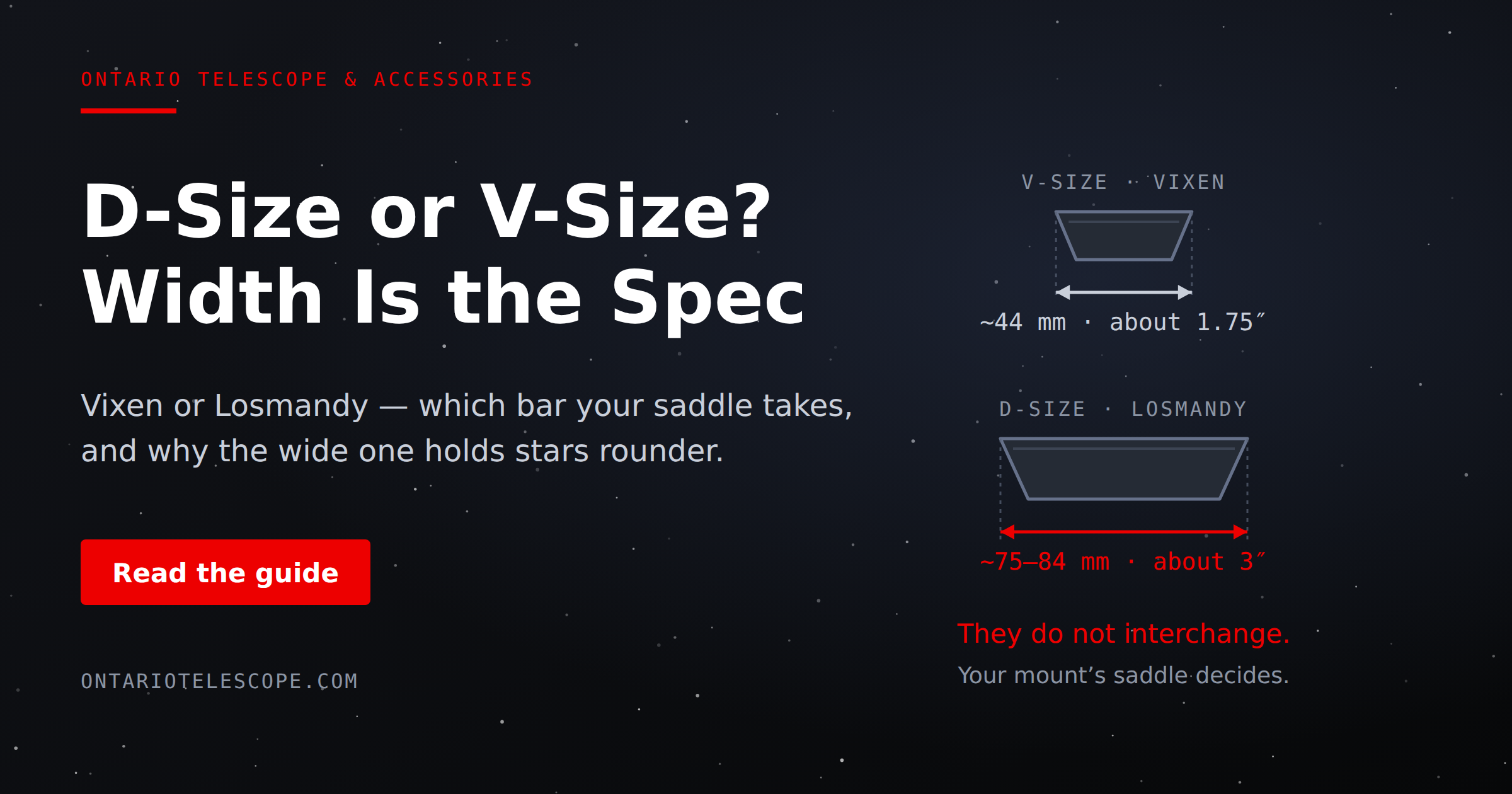
D-Size vs V-Size: A Complete Guide to Telescope Dovetail Systems
Read More
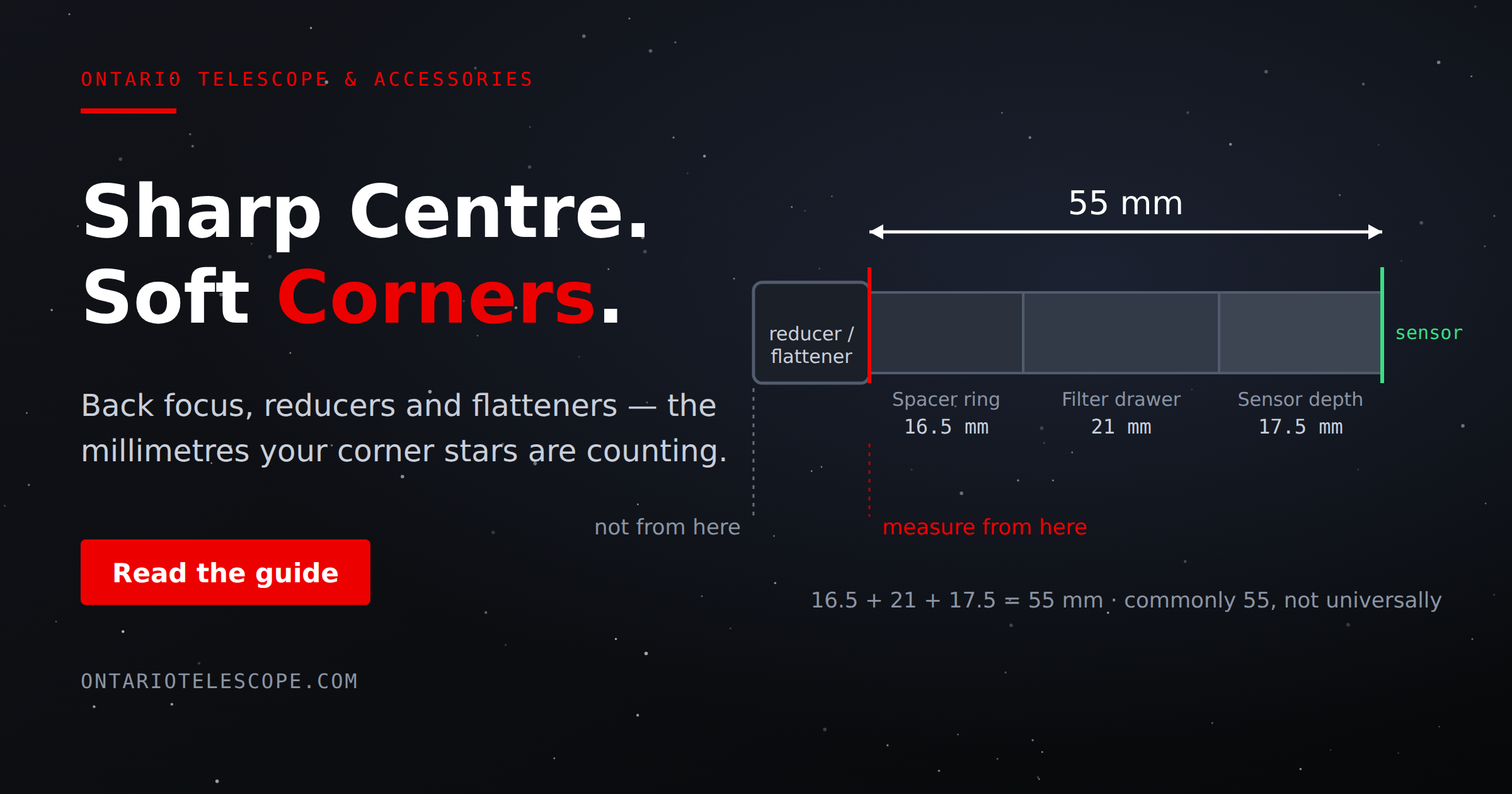
What Is Back Focus in Astrophotography? Telescope Reducers, Flatteners, and Spacing Explained
Read More