


- Description
- Specifications
- Downloads
Product Overview
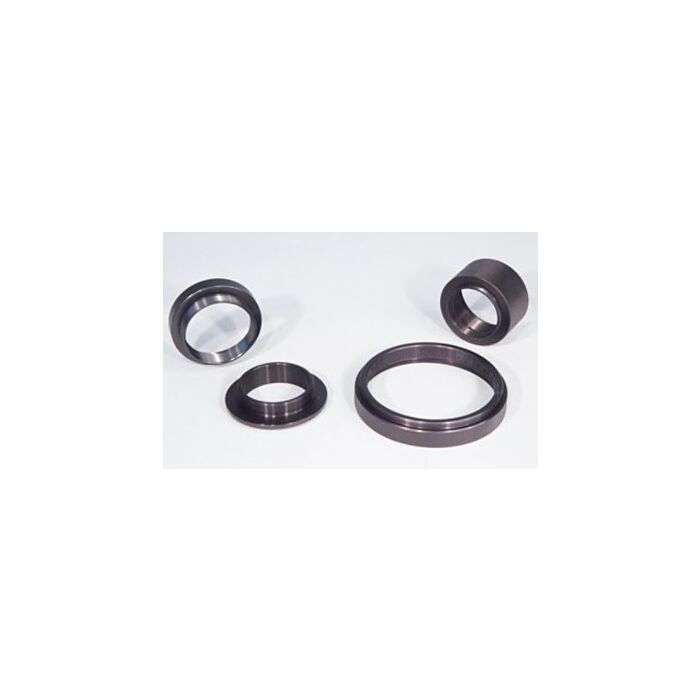
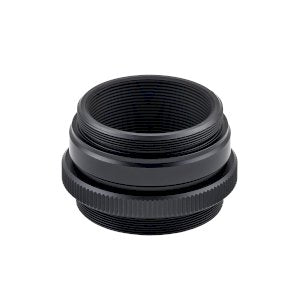
The CA 35mm Adapter FS-60C is Takahashi's CA35 C2X camera adapter for the FS-60 series — an M43 x 0.75 to M42 x 0.75 (T-thread) ring with an adjustable metal back distance of 17–21 mm. Takahashi publishes its weight at 50 g.
Who It's For
This is a good match if you're mounting a T-ring-equipped DSLR or mirrorless camera to an FS-60C-family refractor and want the metal back distance adjustable within a small range rather than fixed.
Key Features & Design
- M43 x 0.75 male, telescope side: threads onto the FS-60C accessory chain.
- M42 x 0.75 T-thread, camera side: accepts a standard T-ring for your camera mount.
- Adjustable 17–21 mm metal back distance: a small range you can dial in rather than a single fixed figure.
- 7 mm M43 counter ring included for centering adjustment.
- 50 g: Takahashi's published weight.
Recommended Uses
Use it for prime-focus DSLR or mirrorless imaging on an FS-60C-family refractor, where the adjustable 17–21 mm back distance lets you fine-tune spacing against a flattener's target rather than relying on a fixed-length ring.
Compatibility and Accessory Notes

Its metal back distance runs 17–21 mm, published by Takahashi — this is what the adapter contributes to your optical train across its adjustment range, not a single caliper measurement of the part. It takes a standard M42 x 0.75 T-ring on the camera side, so you'll need the ring matched to your camera mount separately. The Takahashi Back Focus Guide tabulates comparable Takahashi adapter figures alongside each telescope's back focus target, useful for checking your total spacing.
Good to Know Before You Order
It needs a separately sold T-ring for your camera mount. The adapter itself ends in a standard M42 x 0.75 T-thread rather than a body-specific mount.
Frequently Asked Questions
Is it difficult to set up?
No — the back distance adjusts within its 17–21 mm range using the included counter ring, and then it's a standard T-thread connection to your camera.
What is it best used for?
Prime-focus imaging on an FS-60C-family refractor with a T-ring-mounted DSLR or mirrorless camera.
What makes it different from a fixed camera adapter?
The 17–21 mm metal back distance is adjustable, so it can be tuned to a flattener's exact backfocus target instead of landing wherever a fixed-length ring happens to put it.
Bottom Line
A 50 g M43-to-T-thread camera adapter for the FS-60C series, with an adjustable 17–21 mm metal back distance and a standard T-ring connection.
| Takahashi part number | TKA00205 |
|---|---|
| Type | CA35 C2X Camera Adapter (FS-60) |
| Input thread | M43 x 0.75 male |
| Output thread | T-thread, M42 x 0.75 male |
| Metal back distance (light path) | 17–21 mm, adjustable |
| Height | 31 mm |
| Diameter | 51 mm |
| Weight | 50 g |
Shopping Guide
- Takahashi English Catalog 2025 — PDF, 8.63 MB
System Charts, Diagrams and Adapter Guides
- Takahashi Telescope Backfocus Table — PDF, 71 kB
- TKA00205 Dimensional Schema — PNG
You may also like
Recently viewed
Recent Blog Posts
View all
Your Guide Graph Is Lying to You
Read More

D-Size vs V-Size: A Complete Guide to Telescope Dovetail Systems
Read More

What Is Back Focus in Astrophotography? Telescope Reducers, Flatteners, and Spacing Explained
Read More