
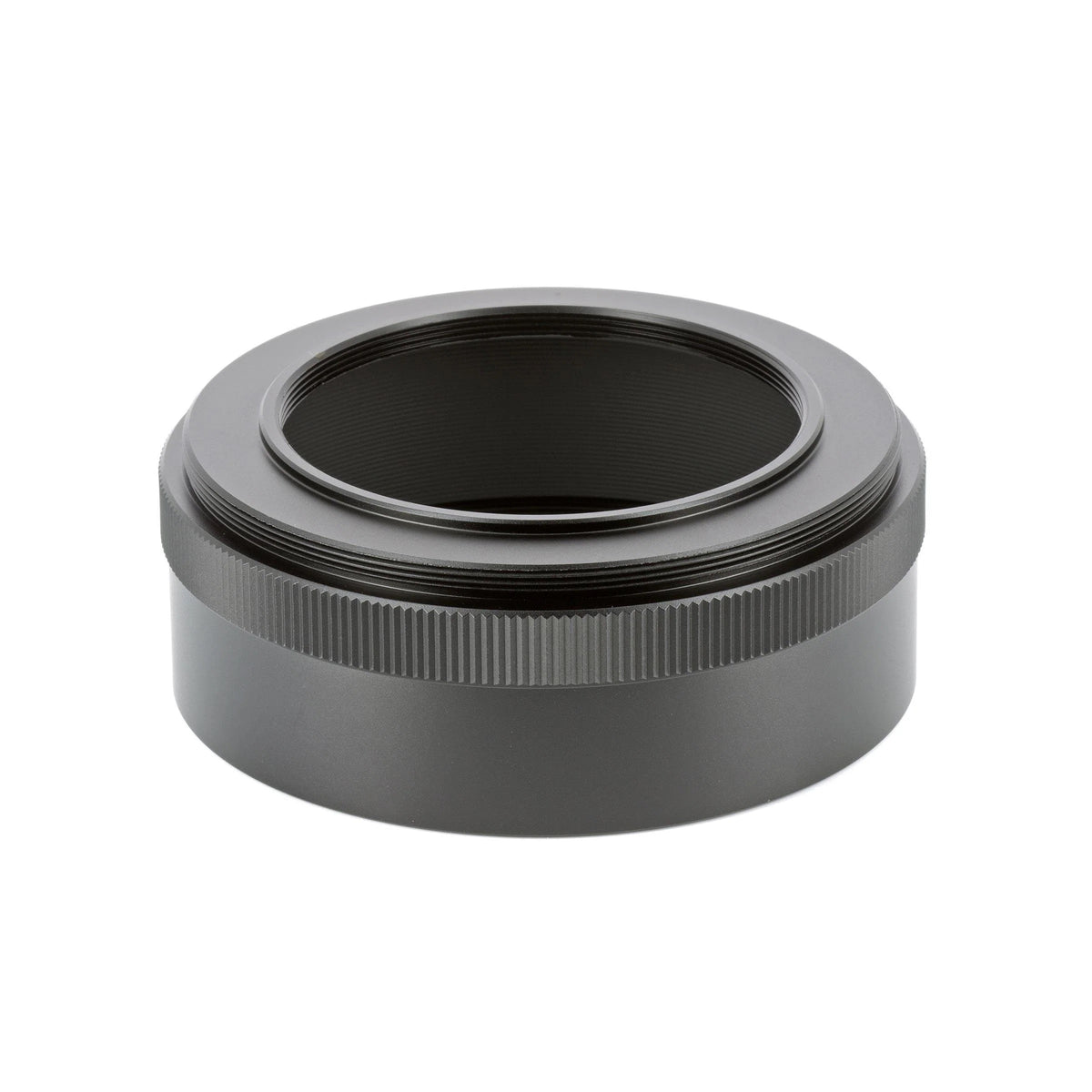
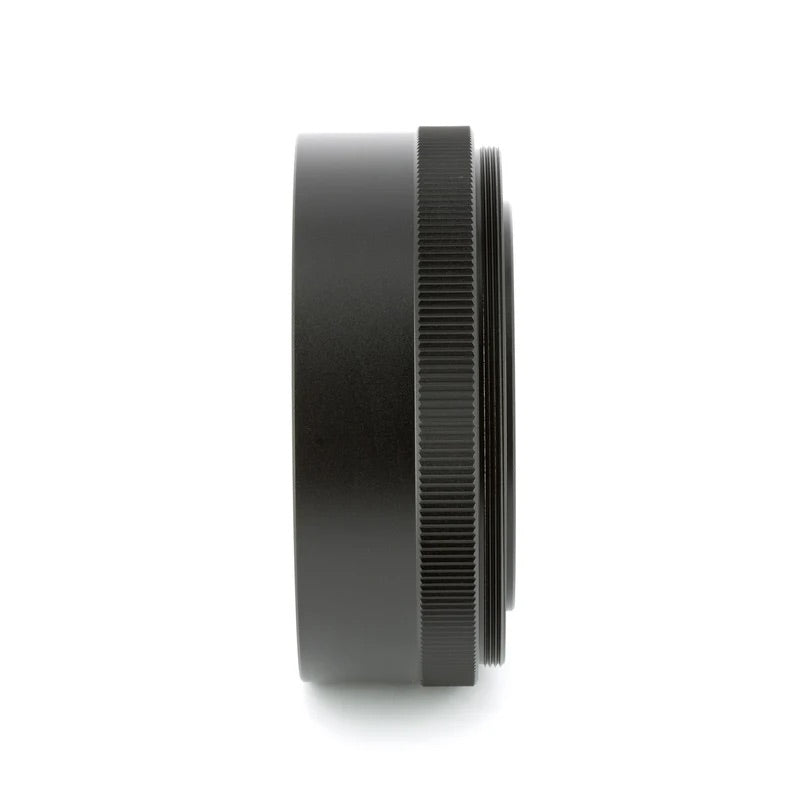
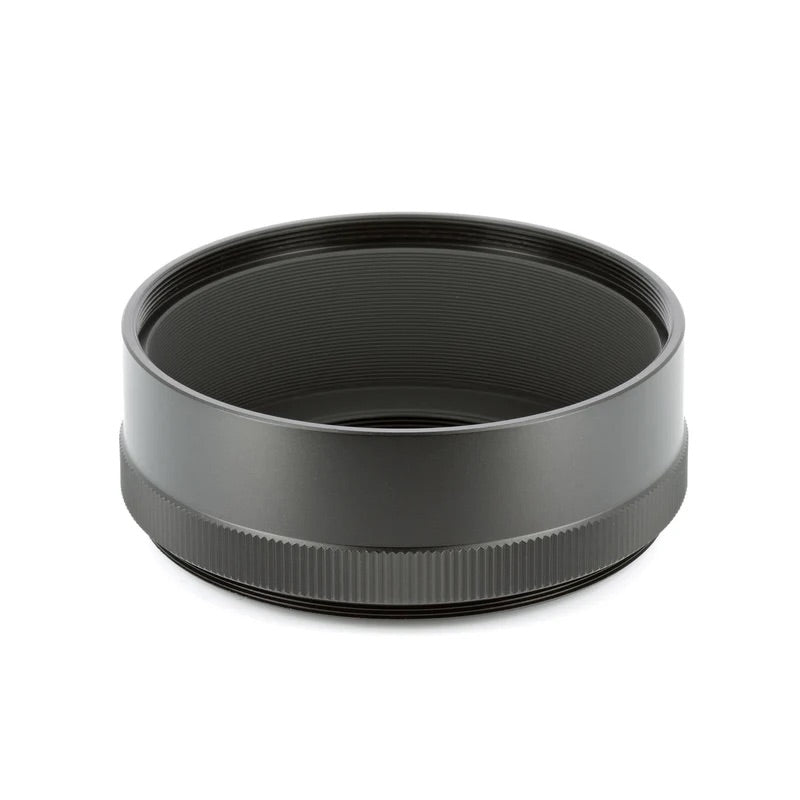


- Description
- Specifications
- Downloads
Product Overview
This is Takahashi's 98mm RD-EXT adapter, part TKA86205, built to the M98 thread Takahashi uses on its CCA-250 camera angle system and related Mewlon-250CRS accessories. Takahashi publishes a light path length of 33.2 mm for it — what it adds to the train, not its physical size — and at that length it's a meaningful spacing step in a 98 mm accessory chain, not just a coupling ring.
Who It's For
This is a good match if you're assembling or extending a Takahashi 98 mm-thread accessory train — typically behind a CCA-250 camera angle adjuster — and need the 33.2 mm spacing step it provides.
On its own it doesn't do much: it's one link in a larger 98 mm-thread chain, not a stand-alone camera or eyepiece adapter.
Key Features & Design
- 98 mm thread family: built to Takahashi's M98 interface, shared with the CCA-250 camera angle system.
- 33.2 mm light path: Takahashi's published figure for what this ring contributes to the optical train.
- Purely mechanical: a spacer/coupling ring, with no optical element of its own.
Recommended Uses
- Extending a CCA-250 or Mewlon-250CRS camera angle train by the published 33.2 mm.
- Filling a specific spacing gap in a 98 mm-thread accessory chain.
Compatibility and Accessory Notes
- Part of the 98 mm (M98) Takahashi accessory family, the same thread standard used on the CCA-250 camera angle adjuster and its couplings.
- Adds 33.2 mm to the optical train — the figure to check against your total spacing. Our Takahashi Back Focus Guide covers backfocus figures for Takahashi telescopes and their adapters.
- Purely mechanical — no glass, no reduction, no correction.
Send us the rest of your 98 mm accessory chain — CCA-250, couplings and camera — and we'll confirm exactly where this ring fits and whether it's the spacing step you need.
Good to Know Before You Order
- It's a mechanical spacer, not an optical corrector — it doesn't change focal length or focal ratio.
Frequently Asked Questions
Is it difficult to set up?
No — it's a threaded ring that installs like any other coupling in the 98 mm accessory family. There's nothing to align or adjust.
What does it add to my optical train?
33.2 mm of light path, per Takahashi's published figure.
Does it work with any Takahashi telescope?
It's built to the 98 mm thread standard shared by the CCA-250 camera angle system. Send us your setup and we'll confirm compatibility.
Does it include any optics?
No. It's a mechanical adapter only.
Bottom Line
In short: a 98 mm-thread spacer that adds 33.2 mm of light path to a CCA-250-based accessory train — purely mechanical, and built to slot into Takahashi's existing 98 mm system.
| Type | Mechanical adapter — no optical element |
|---|---|
| Takahashi designation | 98mm RD-EXT Adapter |
| Thread family | 98mm (M98) — CCA-250 accessory system |
| Light path length | 33.2 mm |
| In the box | Takahashi 98mm RD-EXT 33.2mm Adapter |
Shopping Guide
- Takahashi English Catalog 2025 — PDF, 8.63 MB
System Charts, Diagrams and Adapter Guides
- Takahashi Telescope Backfocus Table — PDF, 71 kB
You may also like
Recently viewed
Recent Blog Posts
View all
Your Guide Graph Is Lying to You
Read More

D-Size vs V-Size: A Complete Guide to Telescope Dovetail Systems
Read More

What Is Back Focus in Astrophotography? Telescope Reducers, Flatteners, and Spacing Explained
Read More