
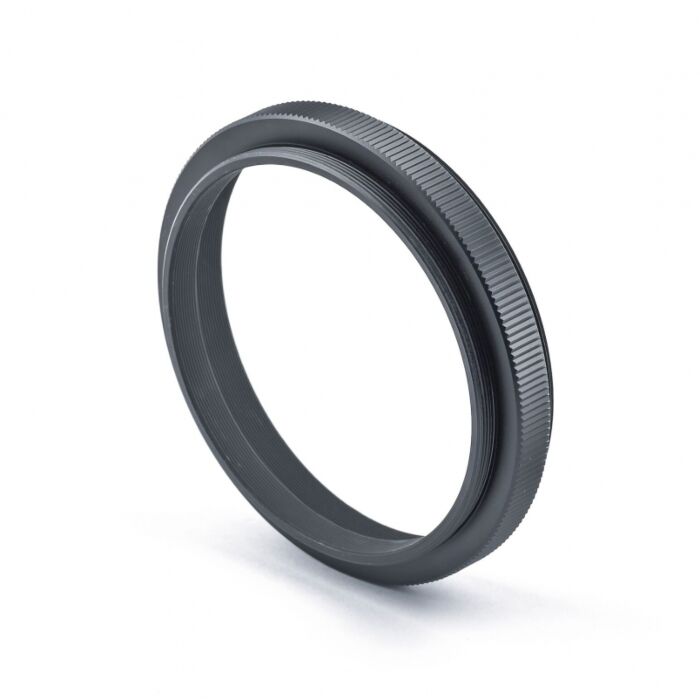

- Description
- Specifications
- Downloads
Product Overview
This adapter ring — numbered "Ring #82" in Takahashi's 645-format system charts — is a fitting piece in Takahashi's medium-format reducer train, built around the 645 digital back format. It connects a telescope's output to the reducer side of that train.
Who It's For
This is what you need if you are assembling a 645-format reducer imaging train and the system chart for your telescope calls for this adapter.
Key Features & Design
- Purpose-built for the 645 reducer system: one of the numbered adapter rings in Takahashi's 645-format parts list.
Recommended Uses
- Medium-format reducer imaging trains built around Takahashi's 645 system.
Compatibility and Accessory Notes
If you are assembling a 645-format train and want to confirm this is the correct ring for your telescope, send us the model and we will check it against the system chart with you.
Frequently Asked Questions
Is it difficult to set up?
It's a single ring in a numbered system chart — straightforward once you know which position it fills. Send us your telescope and reducer combination and we will confirm it's the right one.
Does this include the 645 Reducer itself?
No — this is the adapter ring only. The reducer optics are a separate purchase.
Bottom Line
In short: a fitting ring within Takahashi's 645-format reducer system, numbered Ring #82 in Takahashi's system charts.
| Type | Adapter ring (645 reducer system, "Ring #82") |
|---|---|
| System | Takahashi 645-format reducer imaging train |
Shopping Guide
- Takahashi English Catalog 2025 — PDF, 8.63 MB
System Charts, Diagrams and Adapter Guides
- Takahashi Telescope Backfocus Table — PDF, 71 kB
You may also like
Recently viewed
Recent Blog Posts
View all
Your Guide Graph Is Lying to You
Read More

D-Size vs V-Size: A Complete Guide to Telescope Dovetail Systems
Read More
What Is Back Focus in Astrophotography? Telescope Reducers, Flatteners, and Spacing Explained
Read More