


- Description
- Specifications

Product Overview
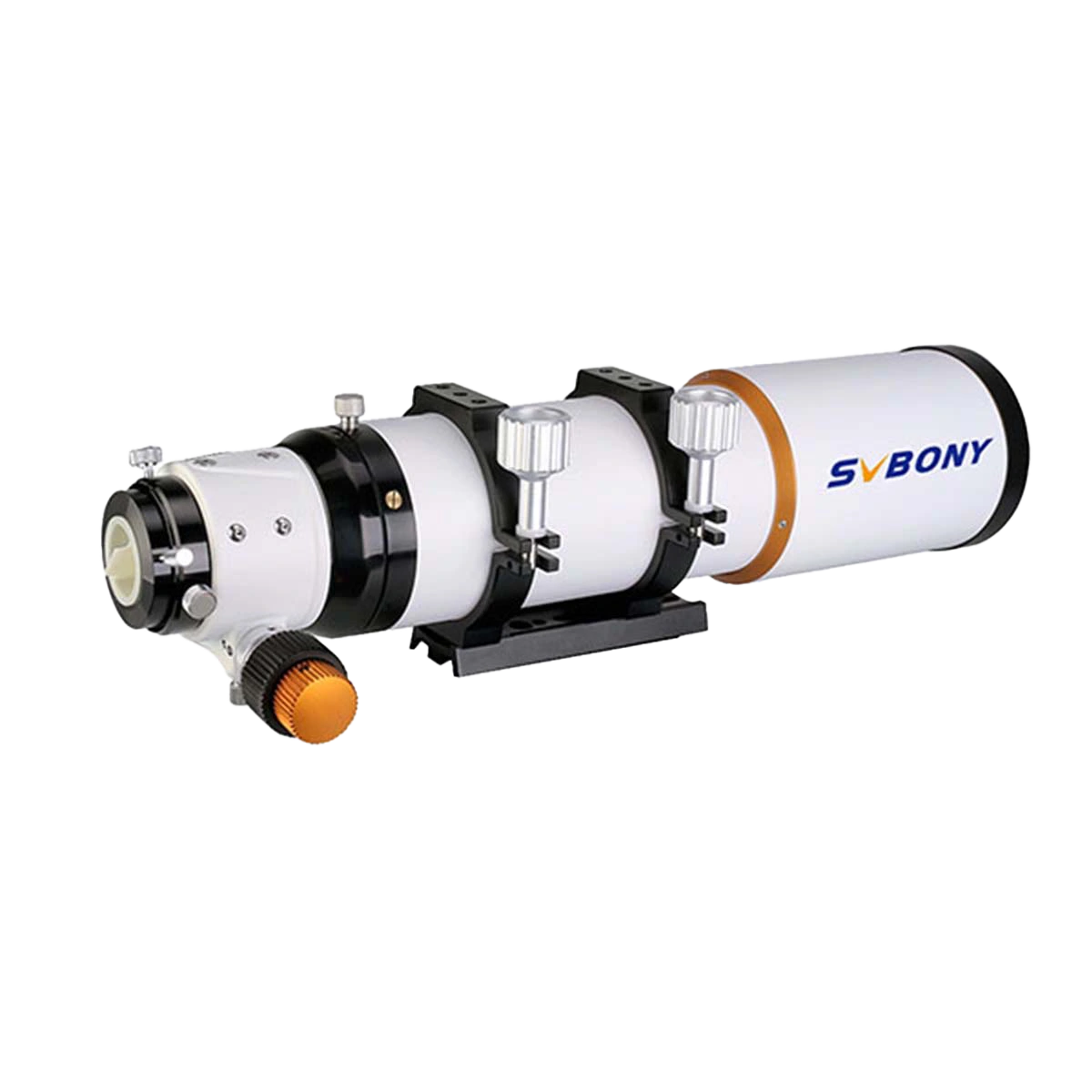
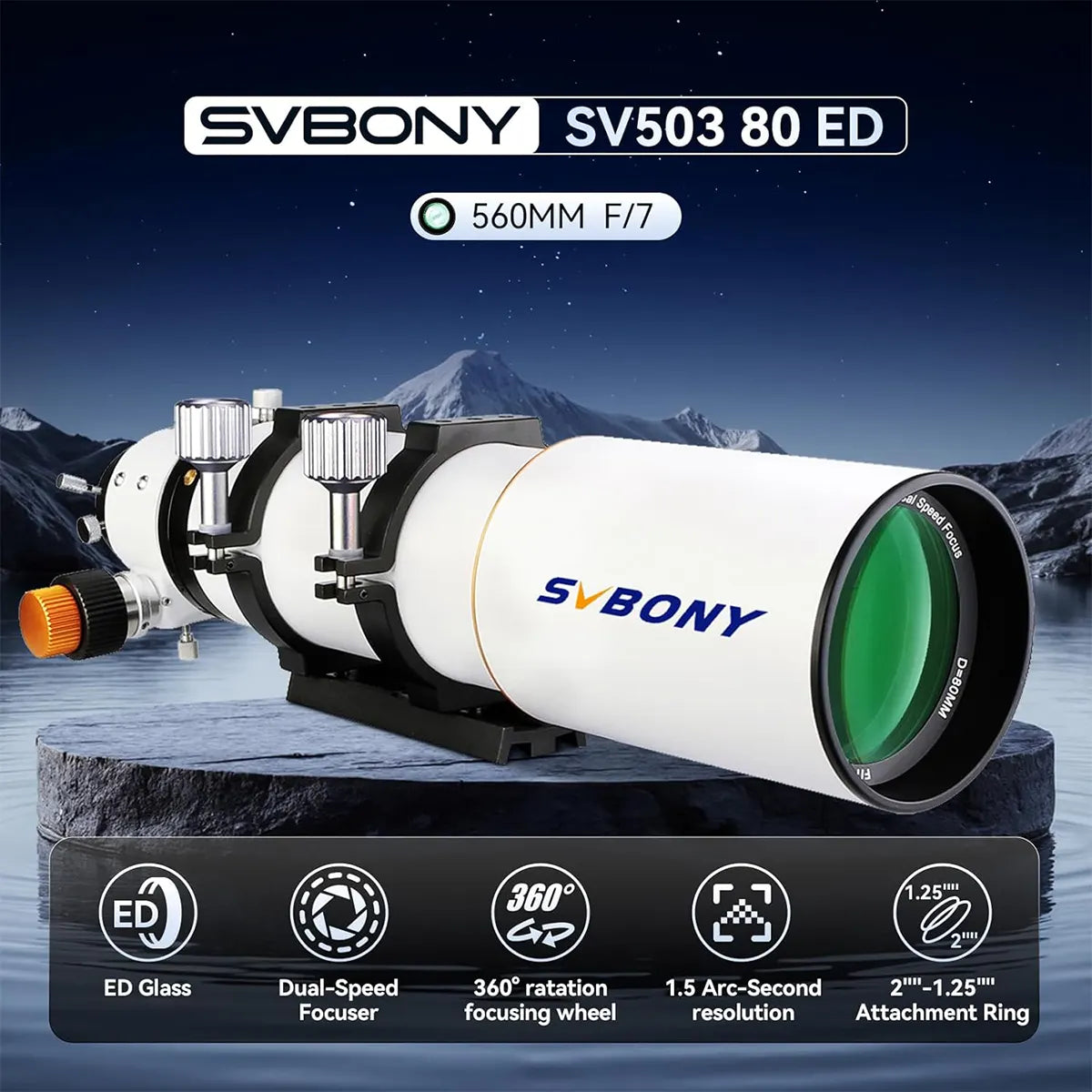
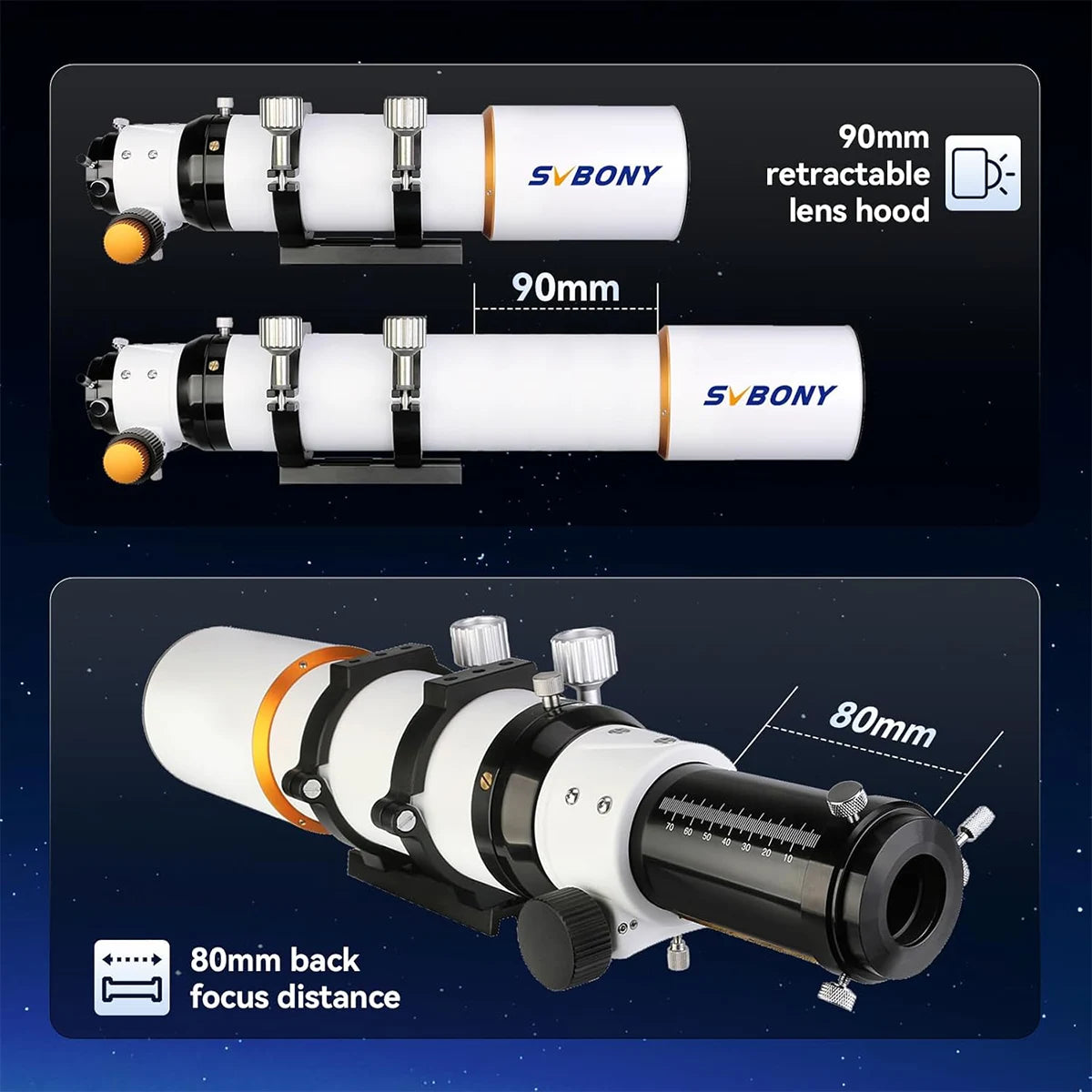
The SVBONY SV503 80ED is an 80 mm f/7 extra-low-dispersion doublet refractor with a 560 mm focal length. The objective uses an S-FPL51 ED element in an air-spaced two-element design with ultra-wideband coatings, and the 2″ dual-speed rack-and-pinion focuser rotates through 360°. It is built for both observing and astrophotography, in a white aluminum tube with a 103 mm outer diameter and a listed weight of 3950 g.

Who It's For
This is a good match if you:
- Want one refractor for viewing and imaging: 560 mm at f/7 frames many nebulae and galaxies and gives crisp views of the Moon and planets.
- Are starting in astrophotography: an 80 mm ED doublet is a forgiving size for a first imaging scope on a modest equatorial mount.
- Prefer a grab-and-go telescope: under 4 kg and quick to cool, it suits garden sessions and travel.
Key Features & Design
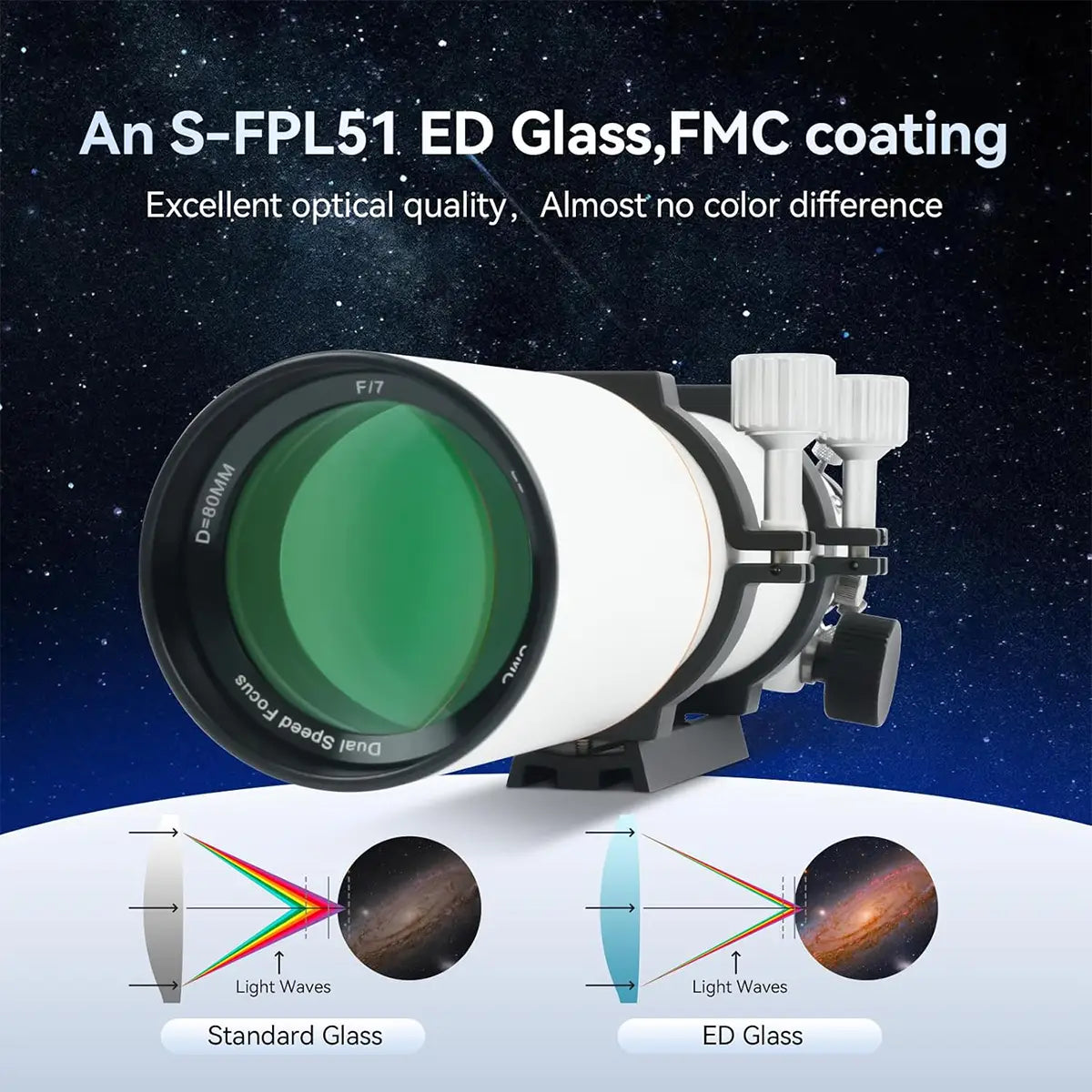
- 80 mm f/7 ED doublet: S-FPL51 extra-low-dispersion glass for good colour correction.
- Ultra-wideband coatings: on the objective for high light transmission.
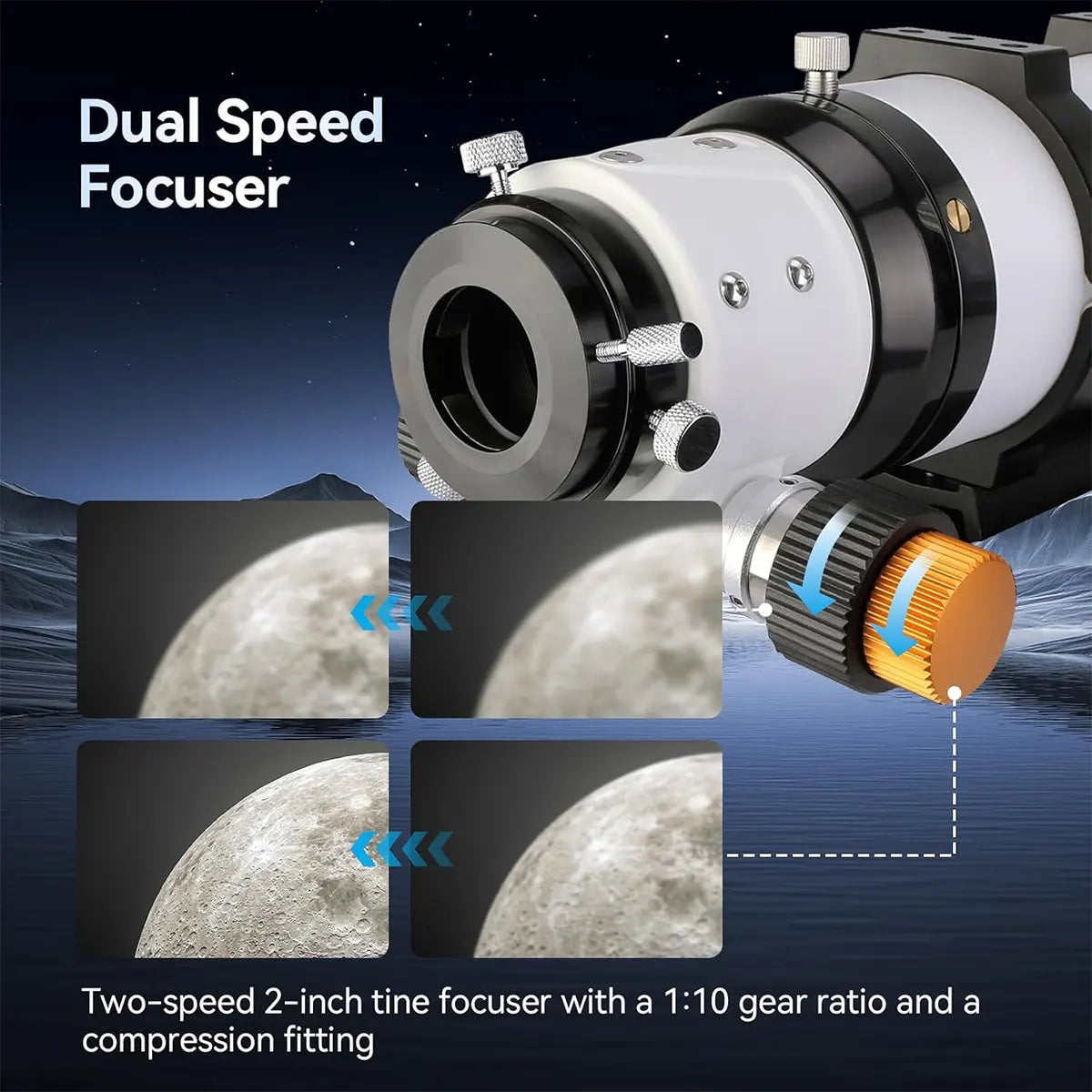
- 2″ dual-speed focuser: rack-and-pinion with a 1:10 fine-focus ratio.
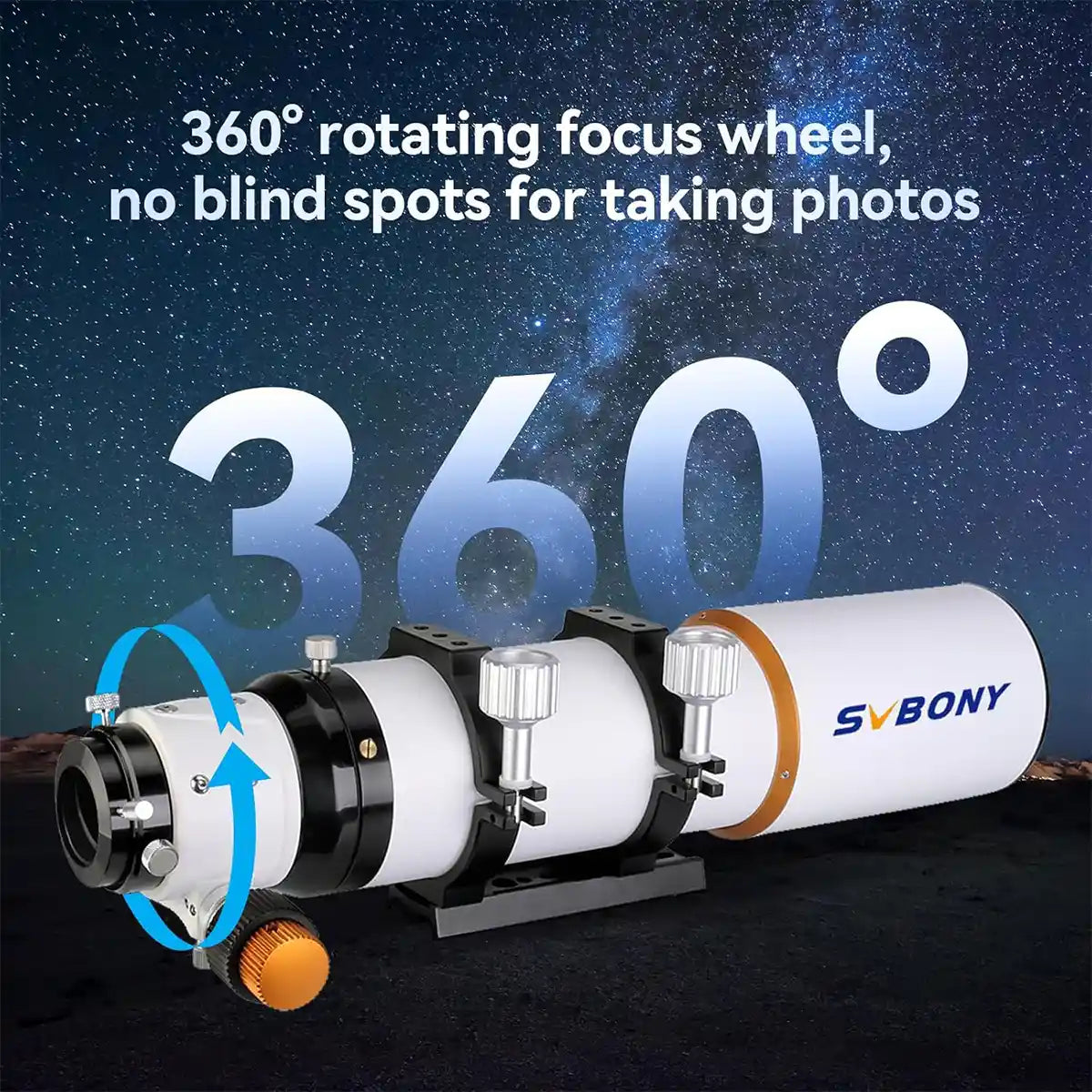
- 360° rotating focuser: turn a camera to frame a target or an eyepiece to a comfortable angle.
- Aluminum tube: 103 mm outer diameter.

Optical and Mechanical Design
The SV503 80ED pairs an S-FPL51 extra-low-dispersion element with a second element in an air-spaced doublet. ED glass disperses colours more evenly than standard crown glass, so blue and red light come to focus much closer to green and bright objects show little false colour. At f/7 the residual colour of an FPL51 doublet is low enough for colour imaging with a suitable flattener. SVBONY lists 1.5 arcseconds resolution, limiting magnitude 11.6 and 130.6x light-gathering power.
The focuser is a 2″ rack-and-pinion design with a coarse knob and a 1:10 fine knob, and the whole drawtube rotates so a camera can be squared to the frame without loosening the train.


Recommended Uses
- Deep-sky astrophotography: emission nebulae, galaxies and clusters, with a flattener for a flat field.
- Visual observing: wide, sharp star fields and high-contrast lunar and planetary views.
- Daytime and nature viewing: with a correct-image diagonal.

Compatibility and Accessory Notes
- Flattener: SVBONY offers this OTA with its SV193 0.8x reducer/flattener for imaging.
- Visual accessories: a 2″ or 1.25″ diagonal and eyepieces are needed; SVBONY also pairs the tube with the SV182 finder and SV211 handle bar.
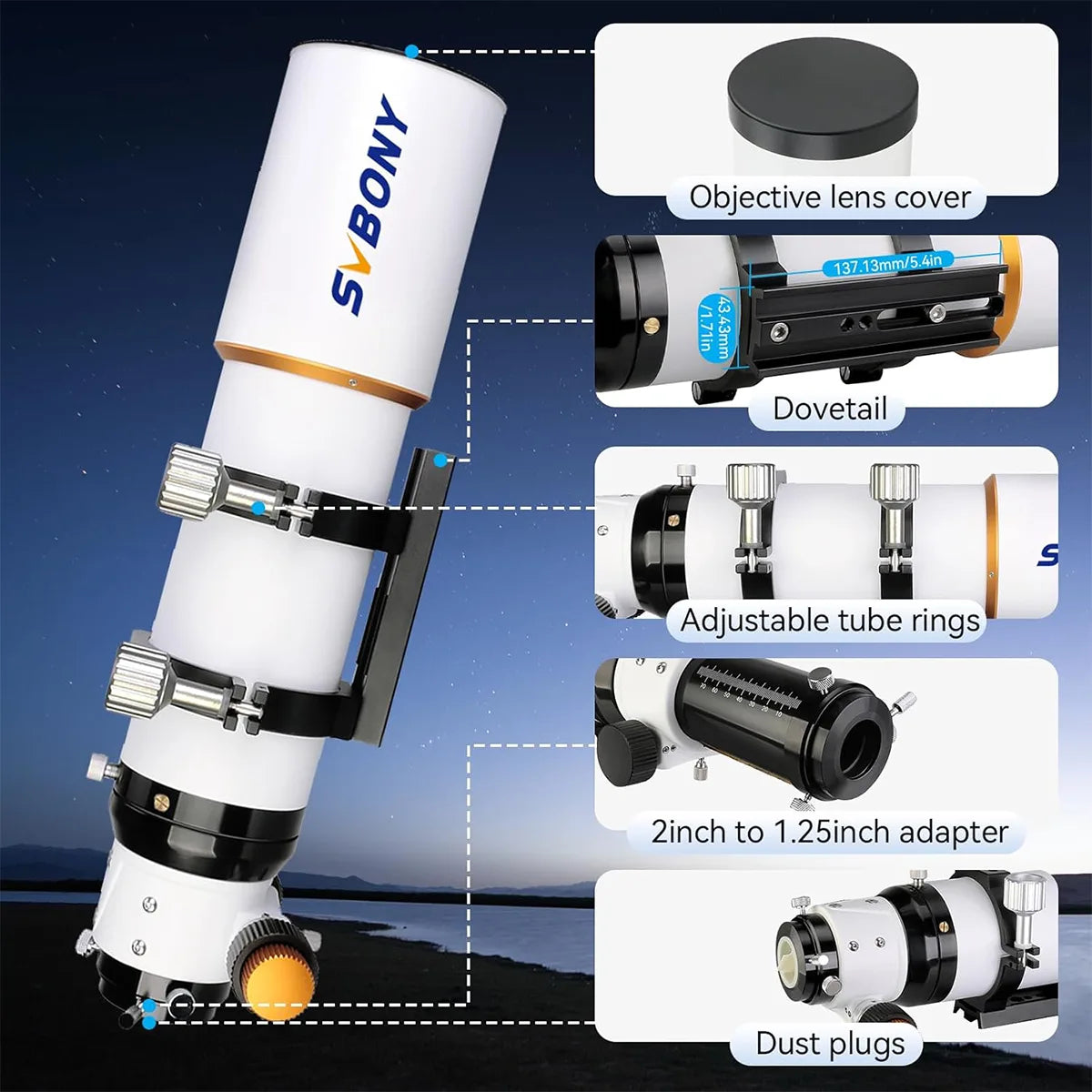
- Mounting: the tube mounts by dovetail on alt-azimuth or equatorial mounts. SVBONY's SV225 alt-azimuth mount is one of the add-ons on this page.
- Cameras and dew control: the add-ons on this page include SVBONY cameras and a dew heater strip sized for this tube.
If you want help choosing a flattener, camera or spacing for your setup, send us your equipment list and we will work it out with you.
What's in the Box
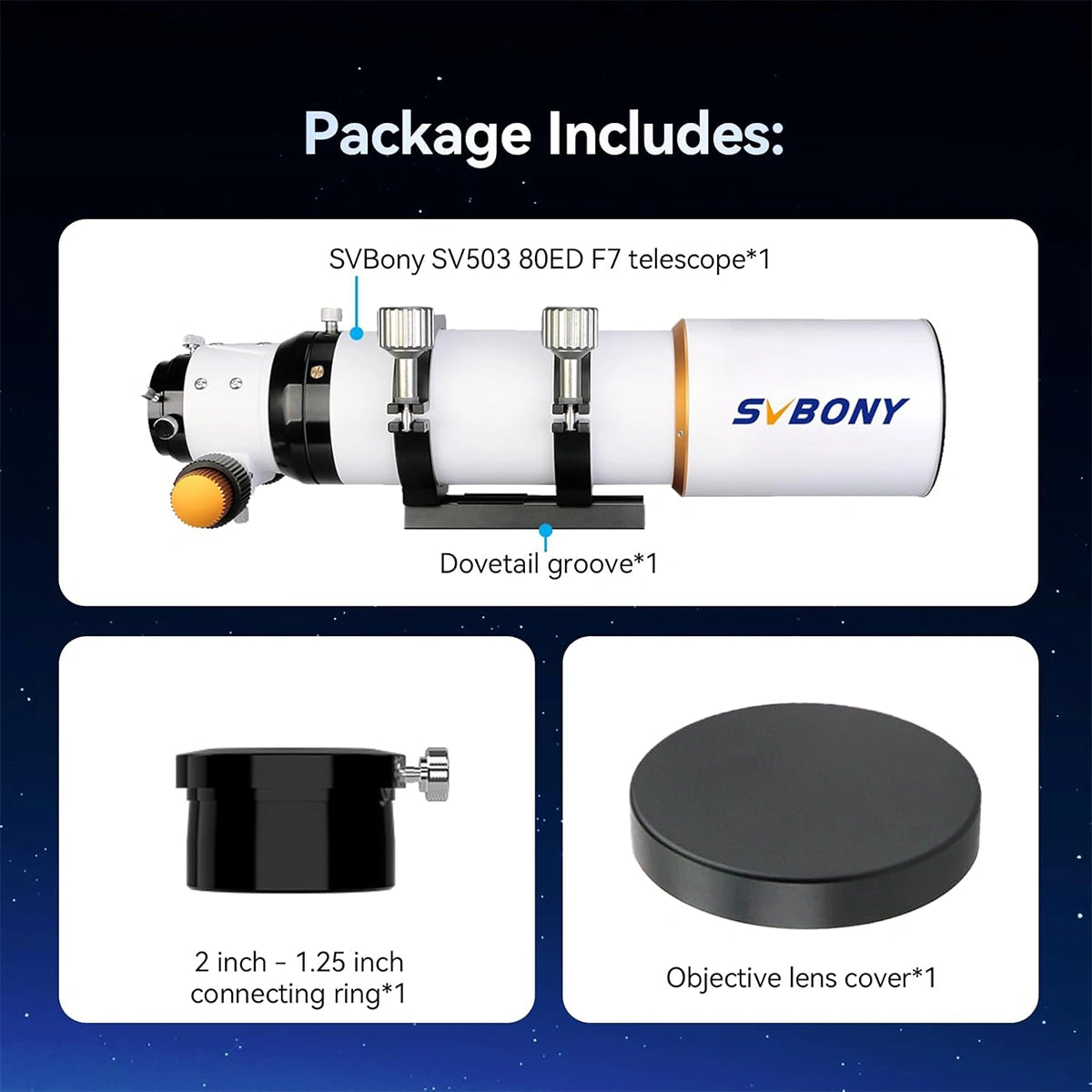
- 1 x SV503 white 80ED f/7 telescope OTA
Good to Know Before You Order
- Optical tube only: no mount, diagonal, eyepiece or finder is included. The add-ons on this page cover visual kits, cameras, a mount and a dew strip.
- Field flatness for imaging: like any doublet, the native field is curved; the SV193 flattener corrects it for larger sensors.
- Dimensions: SVBONY lists 540 x 215 x 230 mm.
Frequently Asked Questions
Is it difficult to set up?
No. Attach it to a mount by its dovetail, add a diagonal and eyepiece or a camera, and focus. The optics need no collimation.
Is it for visual use or imaging?
Both. SVBONY designs the SV503 80ED for observing and astrophotography.
Do I need a flattener?
For visual use, no. For imaging with larger sensors, the SV193 0.8x reducer/flattener gives round stars to the edge and a wider field.
How heavy is it?
3950 g, per SVBONY.
What magnification can it reach?
With 560 mm focal length, a 10 mm eyepiece gives 56x and a 5 mm gives 112x.
Bottom Line
In short: an 80 mm f/7 FPL51 ED doublet with a rotating dual-speed 2″ focuser, suited to both visual observing and deep-sky imaging. Add a mount and either visual accessories or a flattener and camera, and it is ready to use.
| Brand | SVBONY |
|---|---|
| Model | SV503 |
| Objective lens diameter | 80 mm |
| Lens | ED |
| Focal length | 560 mm |
| Focal ratio | f/7 |
| Lens coating | Ultra-wideband coating |
| Objective lens type | Double separation lens structure |
| Limiting magnitude | 11.6 |
| Light gathering power | 130.6x |
| Resolution | 1.5 arcseconds |
| Weight | 3950 g |
| Tube material | Aluminum |
| Tube outer diameter | 103 mm |
| Focuser | 2″ dual-speed rack and pinion, 1:10 gear ratio, 360° rotating |
| Product dimensions | 540 x 215 x 230 mm |
| Package | 1x SV503 white 80ED f/7 telescope OTA |
| Recommended use | Visual observing and astrophotography |
You may also like
Recently viewed
Recent Blog Posts
View all
Your Guide Graph Is Lying to You
Read More

D-Size vs V-Size: A Complete Guide to Telescope Dovetail Systems
Read More

What Is Back Focus in Astrophotography? Telescope Reducers, Flatteners, and Spacing Explained
Read More