


- Description
- Specifications

Product Overview
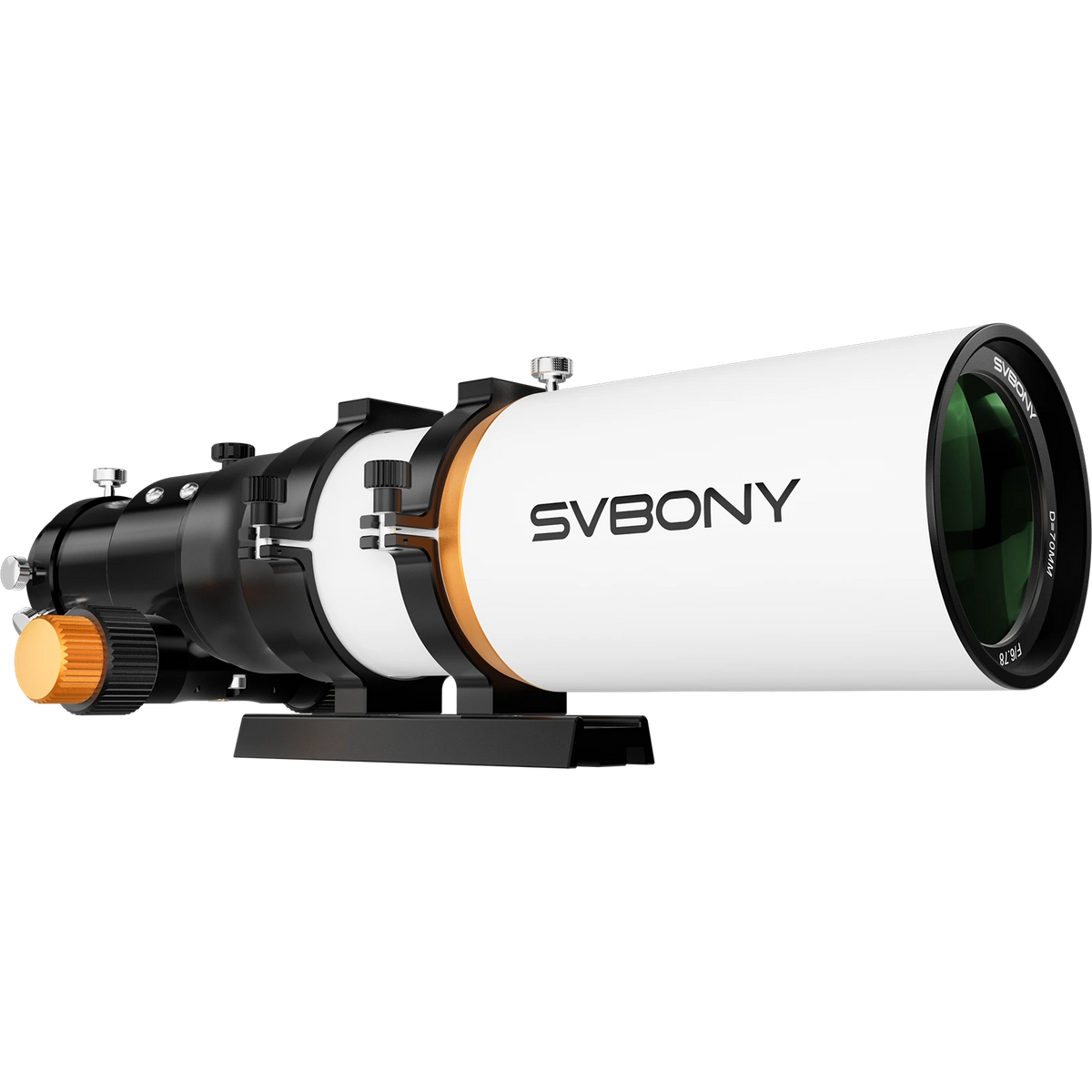
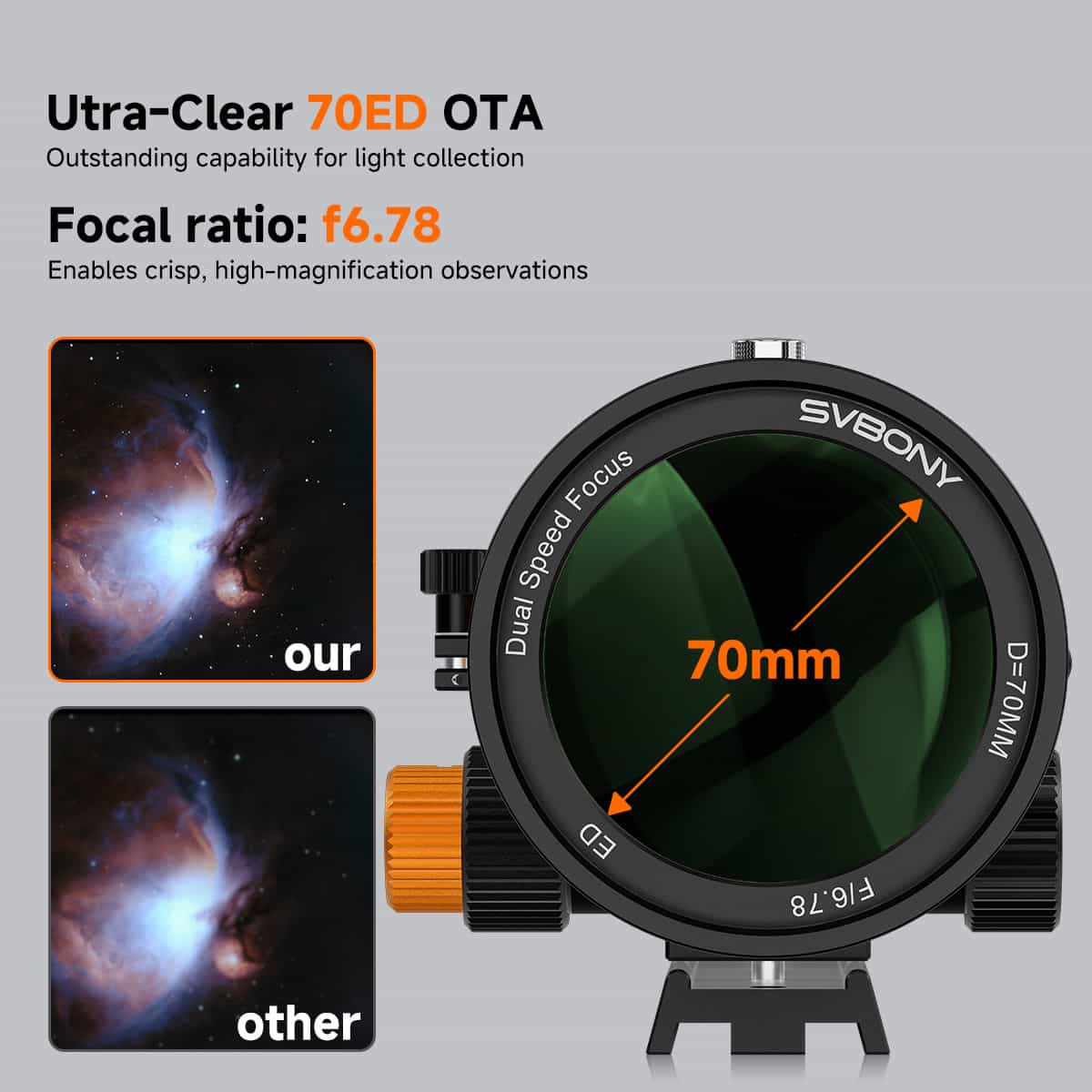
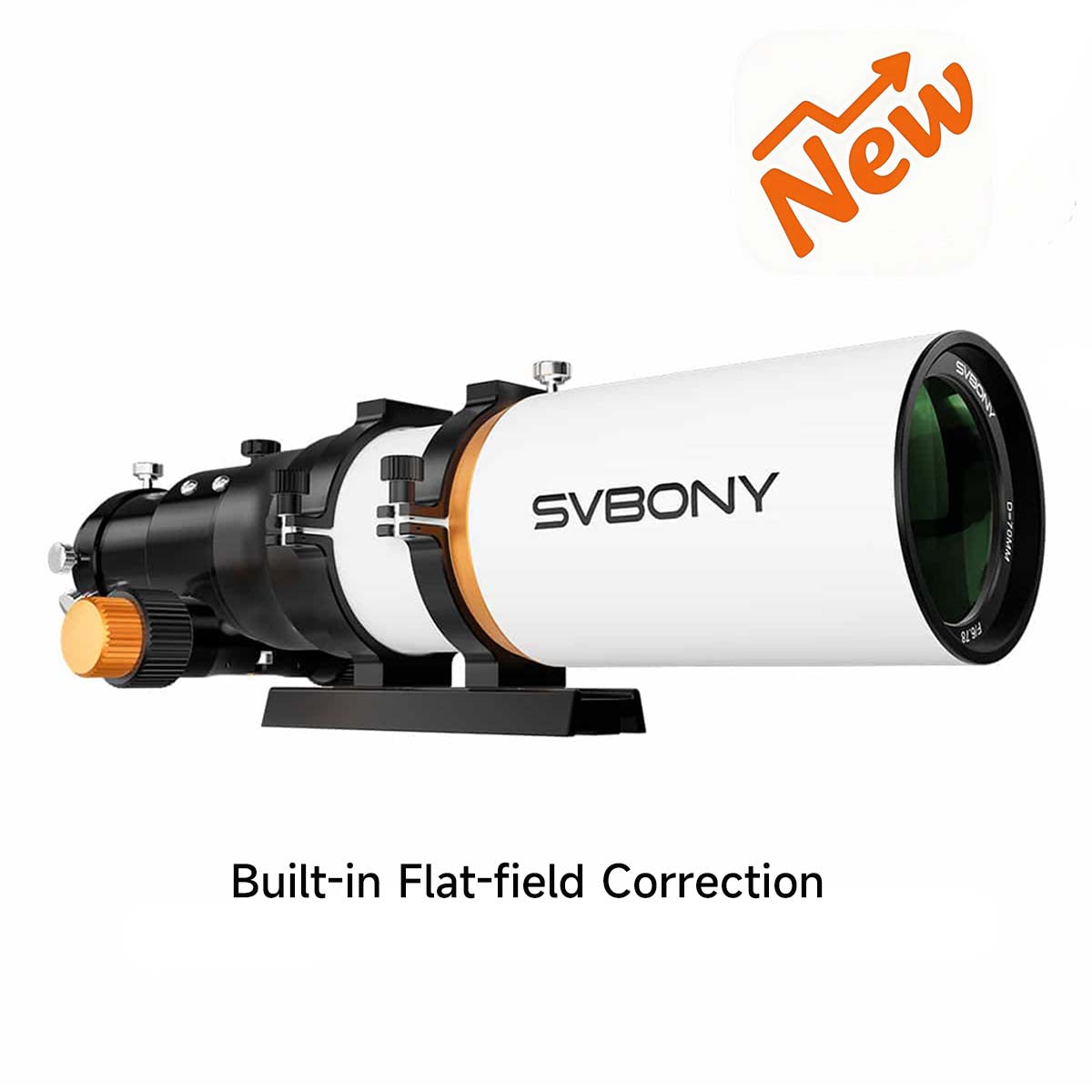
The SVBONY SV503 70ED is a 70 mm f/6.78 extra-low-dispersion doublet refractor with a 474 mm focal length and a two-element field corrector built into the tube. Because the flattener is already in the optical path, the telescope delivers a corrected, flat field 32 mm across without a separate corrector or spacer calculation, which makes it a compact, ready-to-image wide-field astrograph that also works well visually.
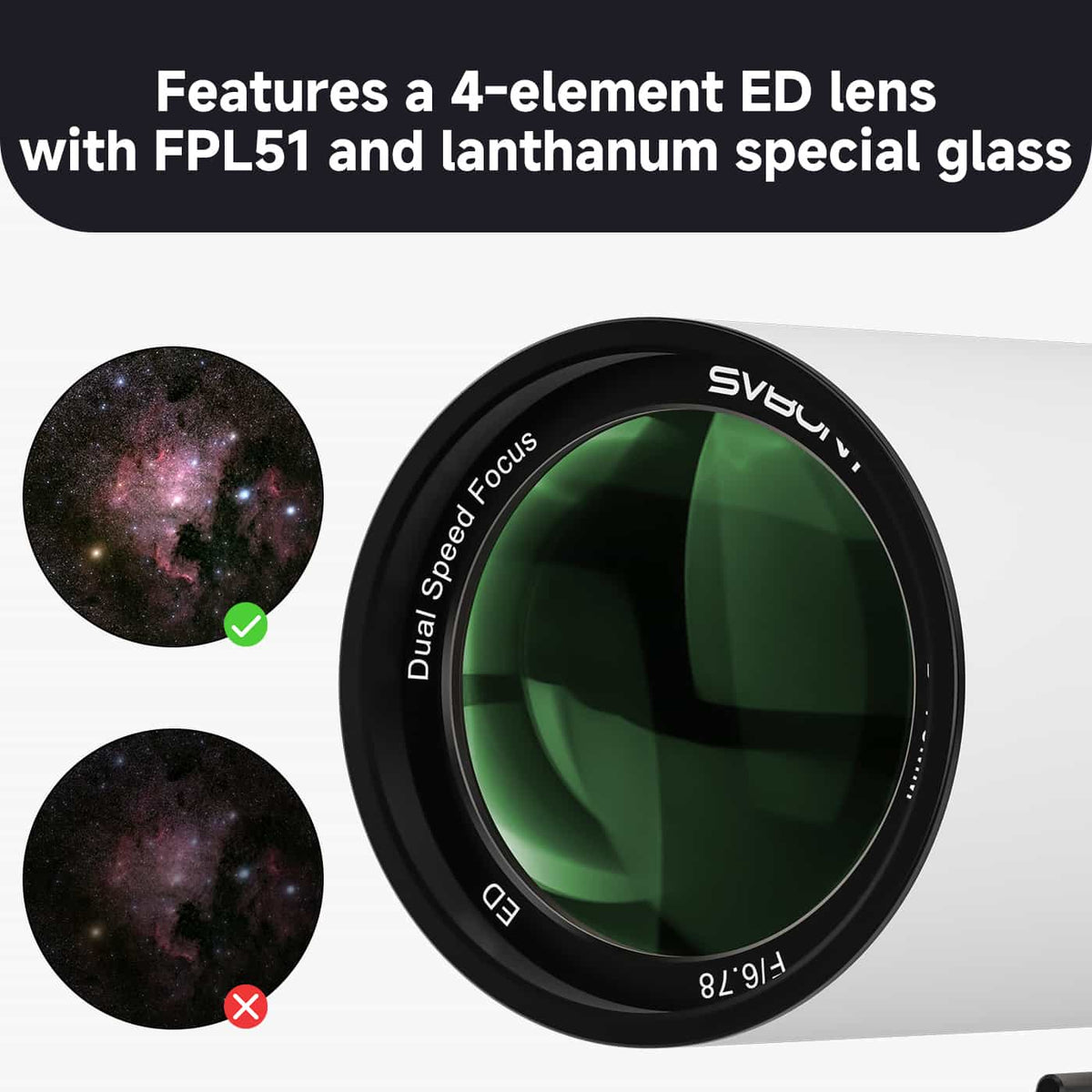
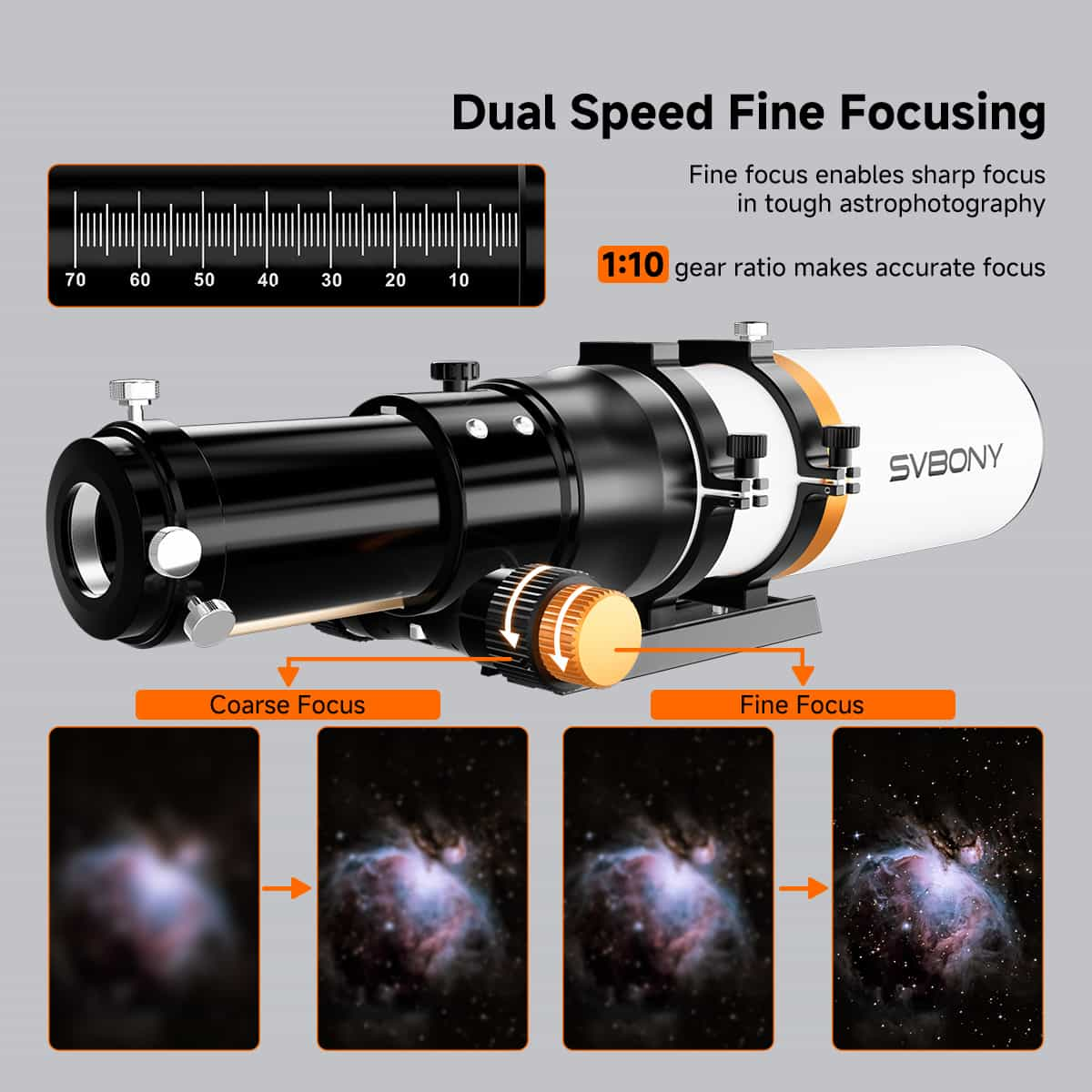
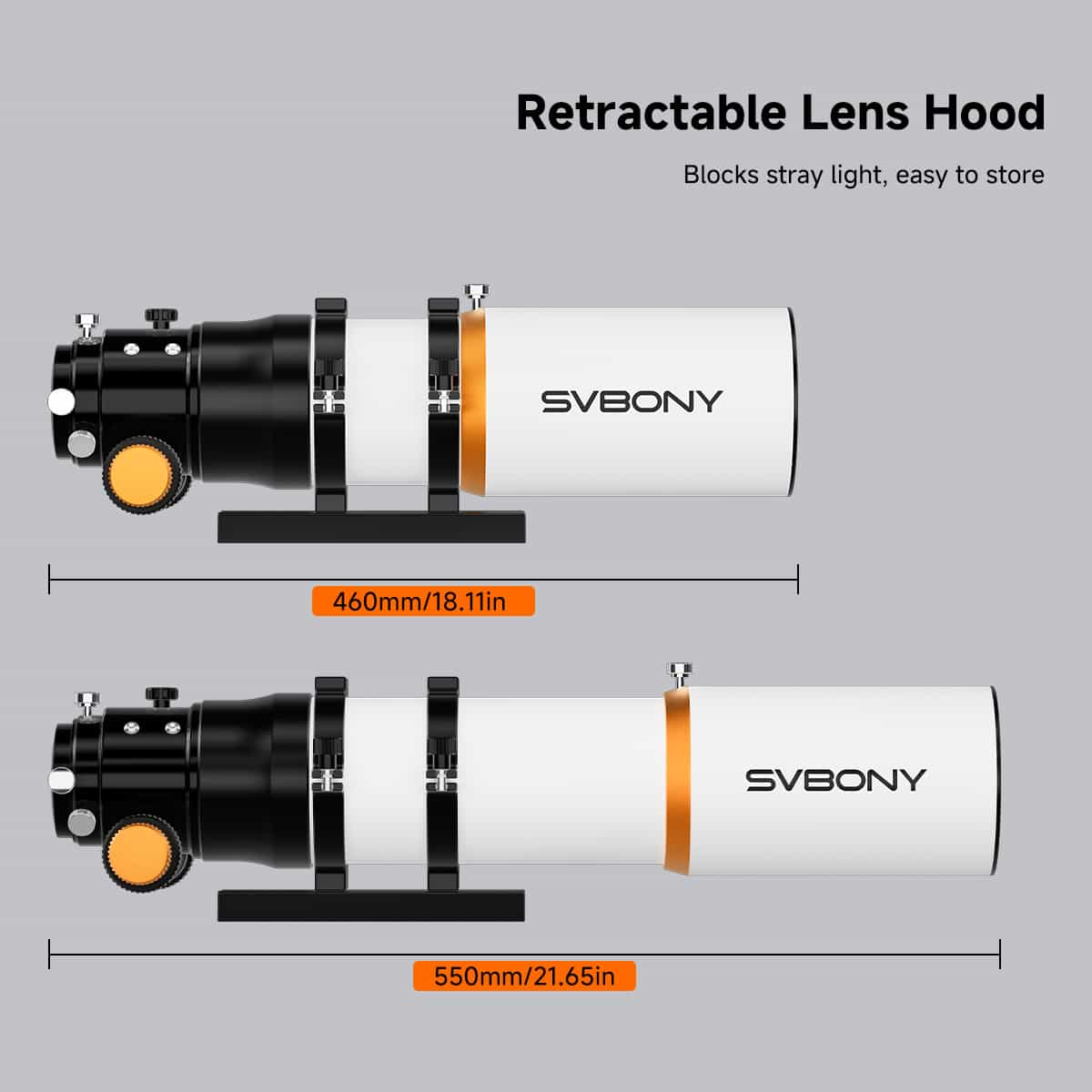
The objective combines FPL51 ED glass with a lanthanum special-glass element. The 2.5″ rack-and-pinion focuser has coarse and fine knobs, a 2″ reduction adapter and an M54x0.75 female thread, and the dew shield retracts for storage. SVBONY lists the tube at 2685 g (5.9 lb) including accessories.

Who It's For
This is a good match if you:
- Want a small refractor that images without extra correctors: the built-in flattener removes the spacing step that external flatteners need.
- Image wide fields: 474 mm suits large nebulae, star fields and the bigger galaxies such as M31.
- Travel or set up quickly: a 365 mm minimum tube length and under 3 kg fit small mounts and star trackers with suitable payload.
- Also observe: with a diagonal and eyepiece it gives sharp, low-colour wide-field views.
Key Features & Design
- 70 mm f/6.78 ED doublet: FPL51 and lanthanum special glass to control chromatic aberration.
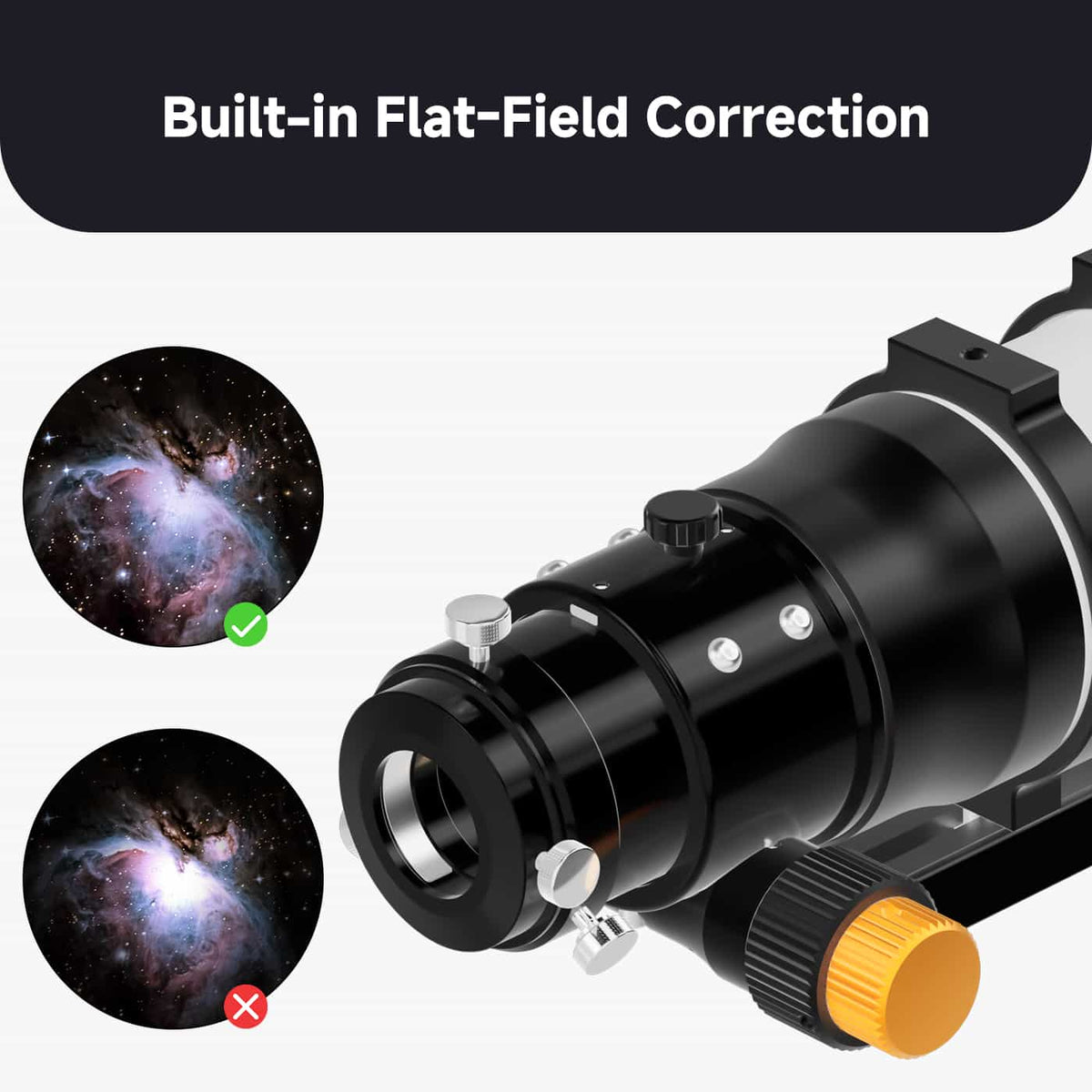
- Built-in two-element corrector: a 32 mm flat field with 100% correction, per SVBONY.
- 2.5″ rack-and-pinion focuser: dual-speed knobs, 2″ reduction adapter, M54x0.75 female thread.
- CNC-machined threads and bayonets: keep components aligned on the optical axis.
- Retractable dew shield: adjustable length, 93 mm diameter, to block stray light and slow dew.
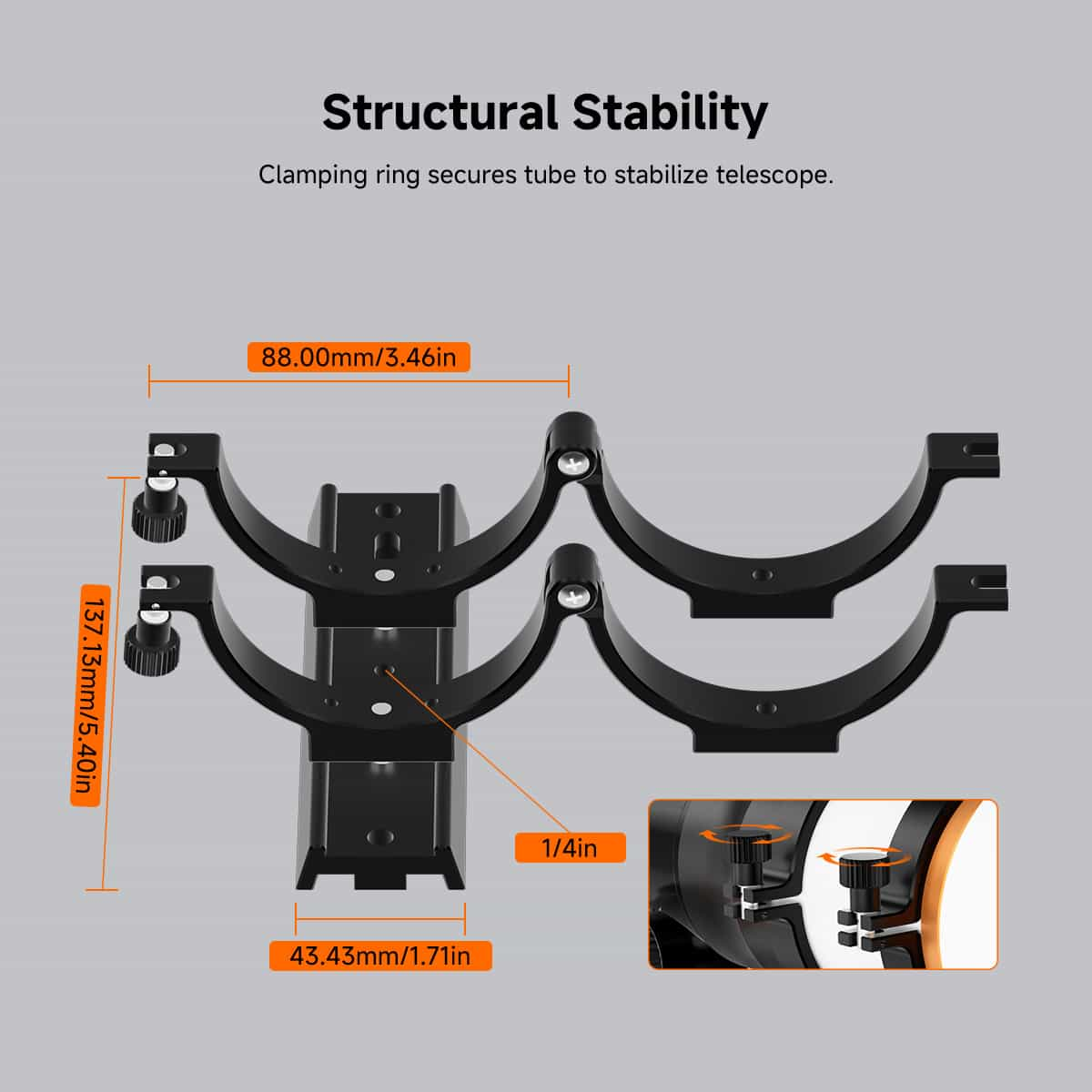
- Rings and dovetail included: a pair of tube rings and a dovetail plate come with the OTA.

Optical and Mechanical Design
A conventional doublet focuses onto a curved surface, so stars toward the edge of a camera sensor elongate unless a separate flattener is fitted at a precise distance. In the SV503 70ED, SVBONY installs a two-element corrector inside the tube, at the correct position for the objective, and specifies a 32 mm corrected circle. That covers APS-C-sized and smaller astronomy camera sensors. The working distance is 127.5 mm from the 2″ receptacle, so the camera needs no further corrector spacing.
The ED objective pairs FPL51 with a lanthanum element to bring colours to a common focus. The 2.5″ focuser carries the weight of a camera and filter train, and its fine knob makes precise focus at the sensor straightforward.


Recommended Uses
- Wide-field deep-sky imaging: large emission nebulae, the Milky Way's star clouds and big galaxies with a dedicated astronomy camera.
- Narrowband imaging: with filters in the 2″ or M54 train.
- Portable imaging: on compact equatorial mounts for travel and dark-site trips.
- Visual observing: wide, flat star fields with a diagonal and eyepiece.


Compatibility and Accessory Notes
- Camera connection: M54x0.75 female thread on the focuser, plus a 2″ receptacle; working distance 127.5 mm from the 2″ receptacle.
- Visual use: SVBONY notes that a diagonal or an extension tube is needed to reach focus. A 2″-1.25″ adapter is included.
- Sensor coverage: the 32 mm flat field suits sensors up to that diagonal.
- Mounting: the supplied rings and dovetail fit Vixen-style saddles.
- Dew control: the 82 mm tube and 93 mm dew shield suit a dew heater strip; a matching SVBONY strip is among the add-ons on this page.
SVBONY also pairs this tube with its SV215 zoom eyepiece, a diagonal and a finder as a visual kit. If you want help matching a camera or filter train to the 127.5 mm working distance, send us your setup.

What's in the Box
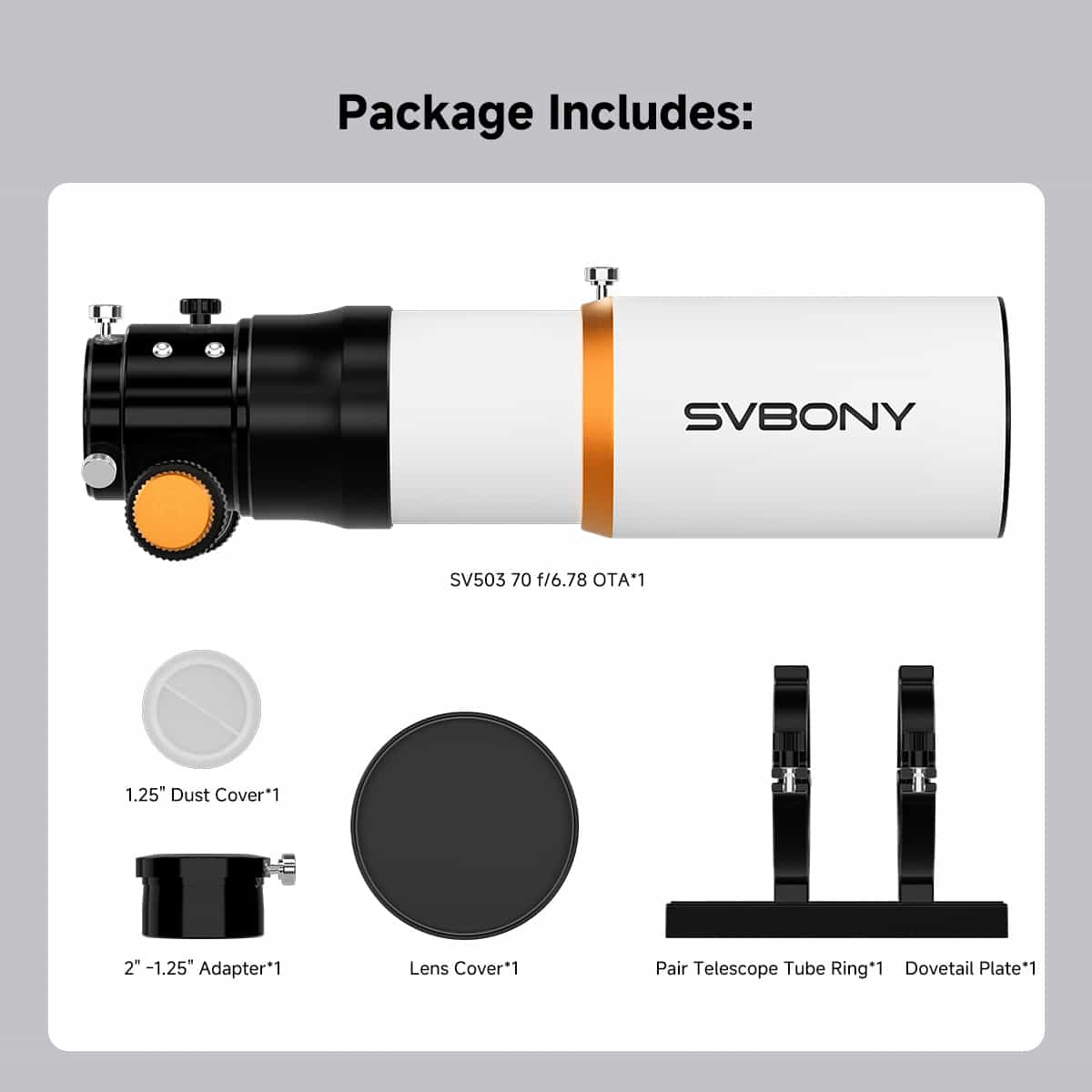
- 1 x SV503 70 f/6.78 OTA
- 1 x 2″-1.25″ adapter
- 1 x lens cover
- 1 x pair of telescope tube rings
- 1 x dovetail plate
- 1 x 1.25″ dust cover
Good to Know Before You Order
- Optical tube only: no mount, diagonal, eyepiece or finder is included.
- Focus for visual use: reaching focus with an eyepiece needs a diagonal or extension tube.
- No separate flattener required: the corrector is built in, so an external flattener is not part of the imaging train.
Frequently Asked Questions
Is it difficult to set up?
No. Mount it by the supplied rings and dovetail, thread or clamp a camera on the focuser and focus. With the flattener built in, there is no corrector spacing to work out.
Do I need a field flattener for imaging?
No. The two-element corrector inside the tube gives a 32 mm flat field.
What is the working distance?
127.5 mm from the 2″ receptacle.
Can I use it visually?
Yes, with a diagonal or an extension tube to reach focus.
How heavy is it?
2685 g (5.9 lb) including accessories, per SVBONY.
Bottom Line
In short: a 70 mm f/6.78 ED doublet with its flattener built into the tube, giving a 32 mm flat field at 474 mm in a 2685 g package. Add a mount and a camera, or a diagonal and eyepiece, and it is ready to use.
Performance Data
SVBONY publishes an interferometer report for the upgraded SV503 70ED OTA.


| Brand | SVBONY |
|---|---|
| Model | SV503 |
| Aperture | 70 mm / 2.8″ |
| Focal length | 474 mm / 18.7″ |
| Focal ratio | f/6.78 |
| Objective type | 2-element ED lens with FPL51 and lanthanum special glass |
| Corrector | 2-element corrector installed in the tube |
| Focuser | 2.5″ RAP focuser with 2″ reduction adapter and M54x0.75 female thread |
| Corrected flat field | 32 mm / 1.3″ with 100% correction |
| Working distance from the 2″ receptacle | 127.5 mm / 5″ |
| Tube length min. | 365 mm / 14.4″ |
| Tube diameter | 82 mm / 3.2″ |
| Dew shield diameter | 93 mm / 3.7″ |
| Tube weight incl. accessories | 2685 g / 5.9 lb |
| Included accessories | 2″-1.25″ adapter; lens cover; pair of tube rings; dovetail plate; 1.25″ dust cover |
| Recommended use | Wide-field deep-sky astrophotography; visual observing |
You may also like
Recently viewed
Recent Blog Posts
View all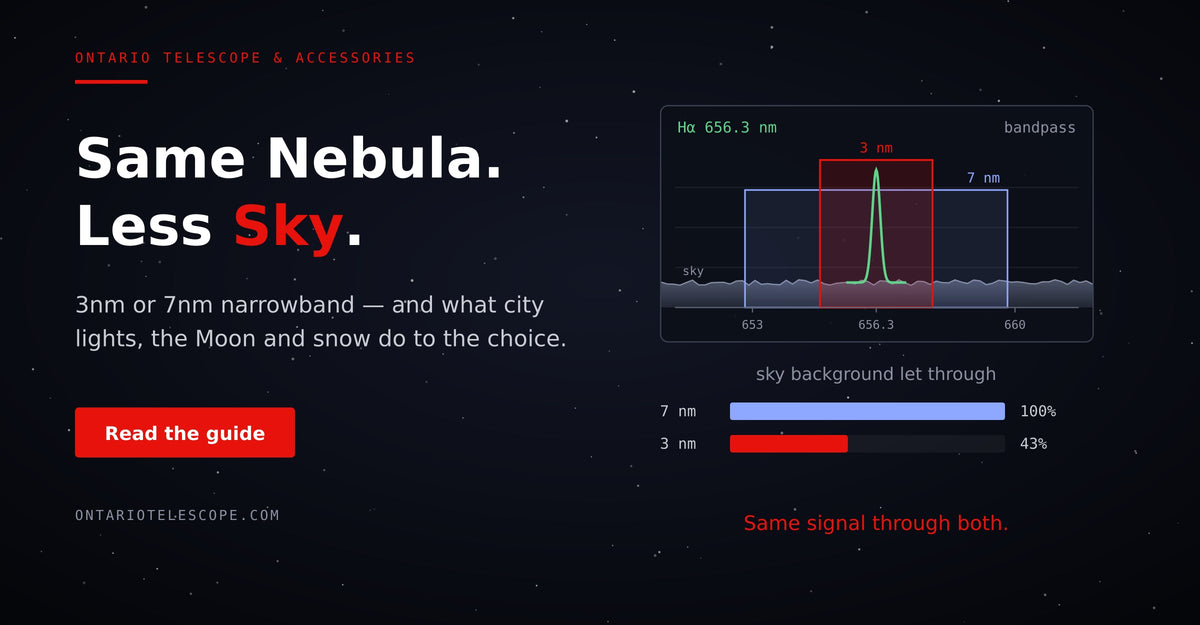
3nm vs 7nm Narrowband Filters: Which One Do You Actually Need?
Read More
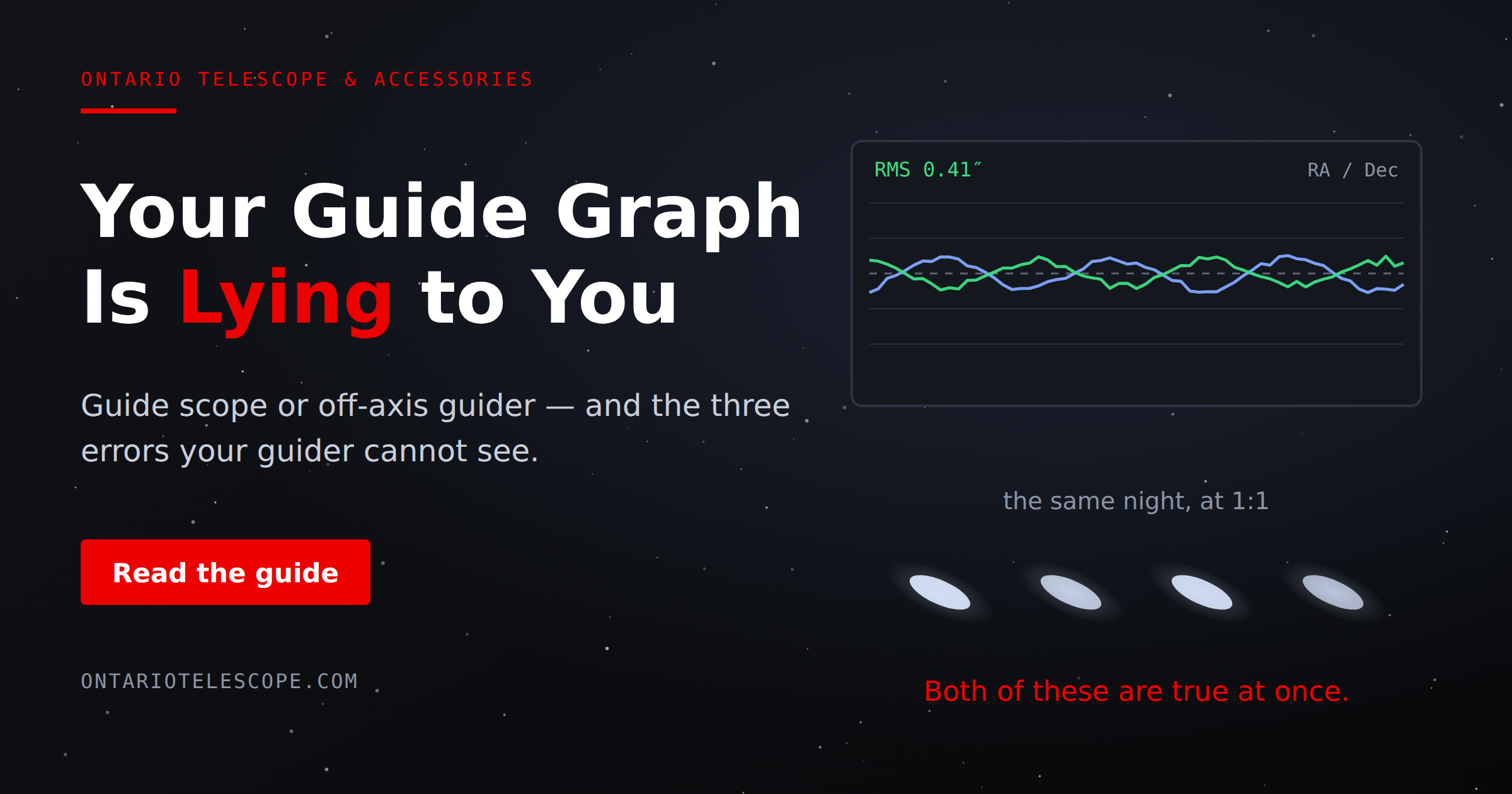
Your Guide Graph Is Lying to You
Read More
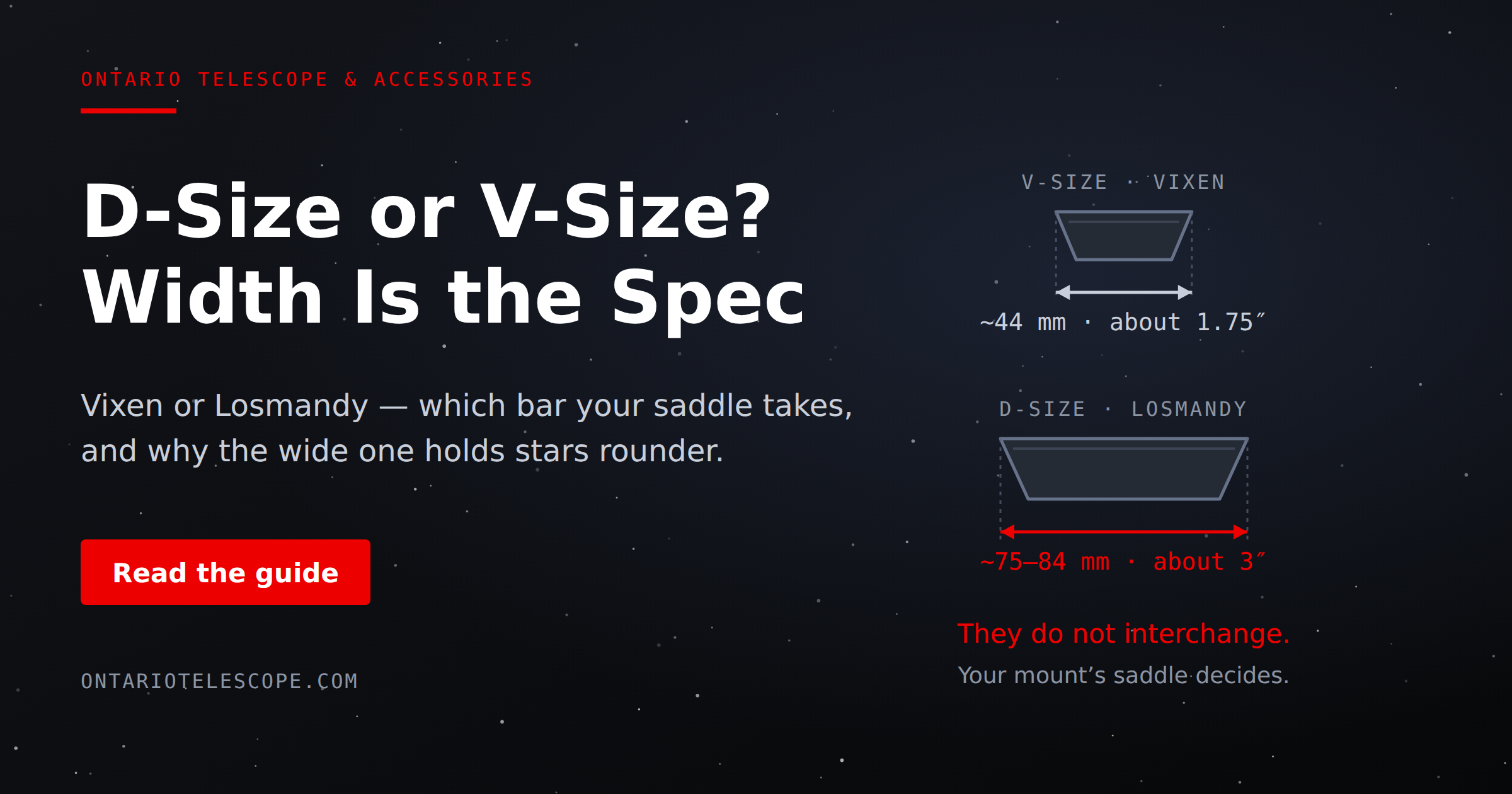
D-Size vs V-Size: A Complete Guide to Telescope Dovetail Systems
Read More