


- Description
- Specifications

Product Overview
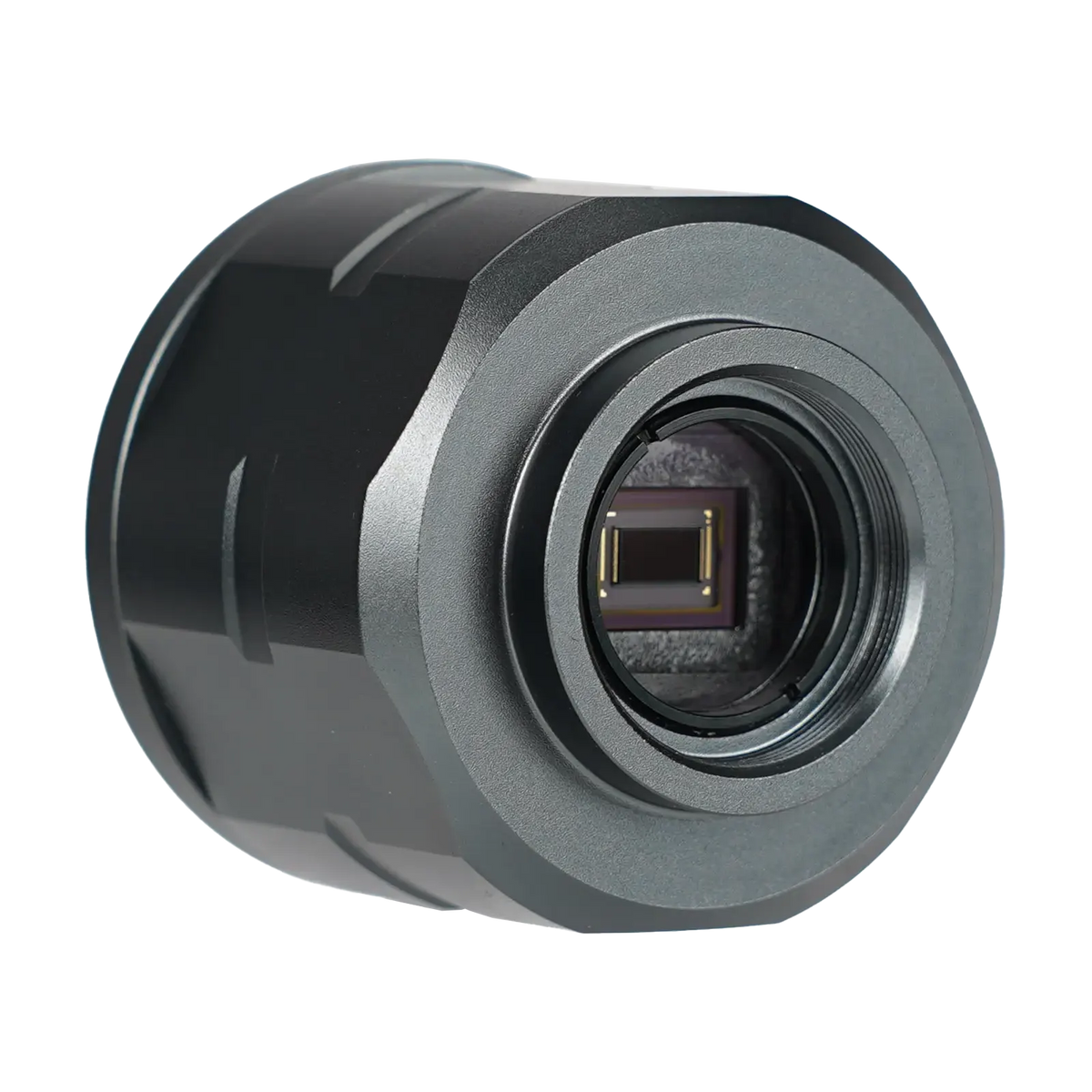
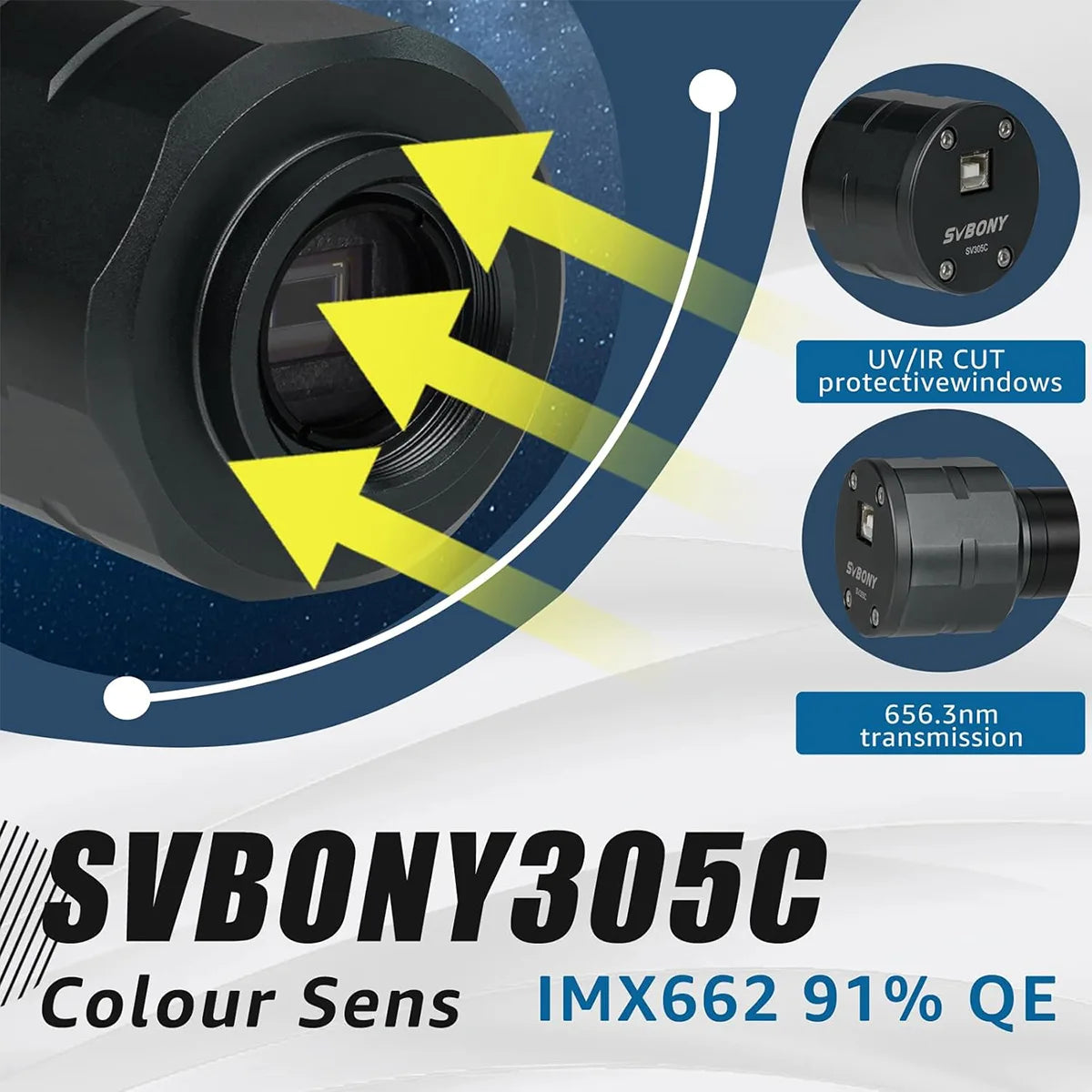
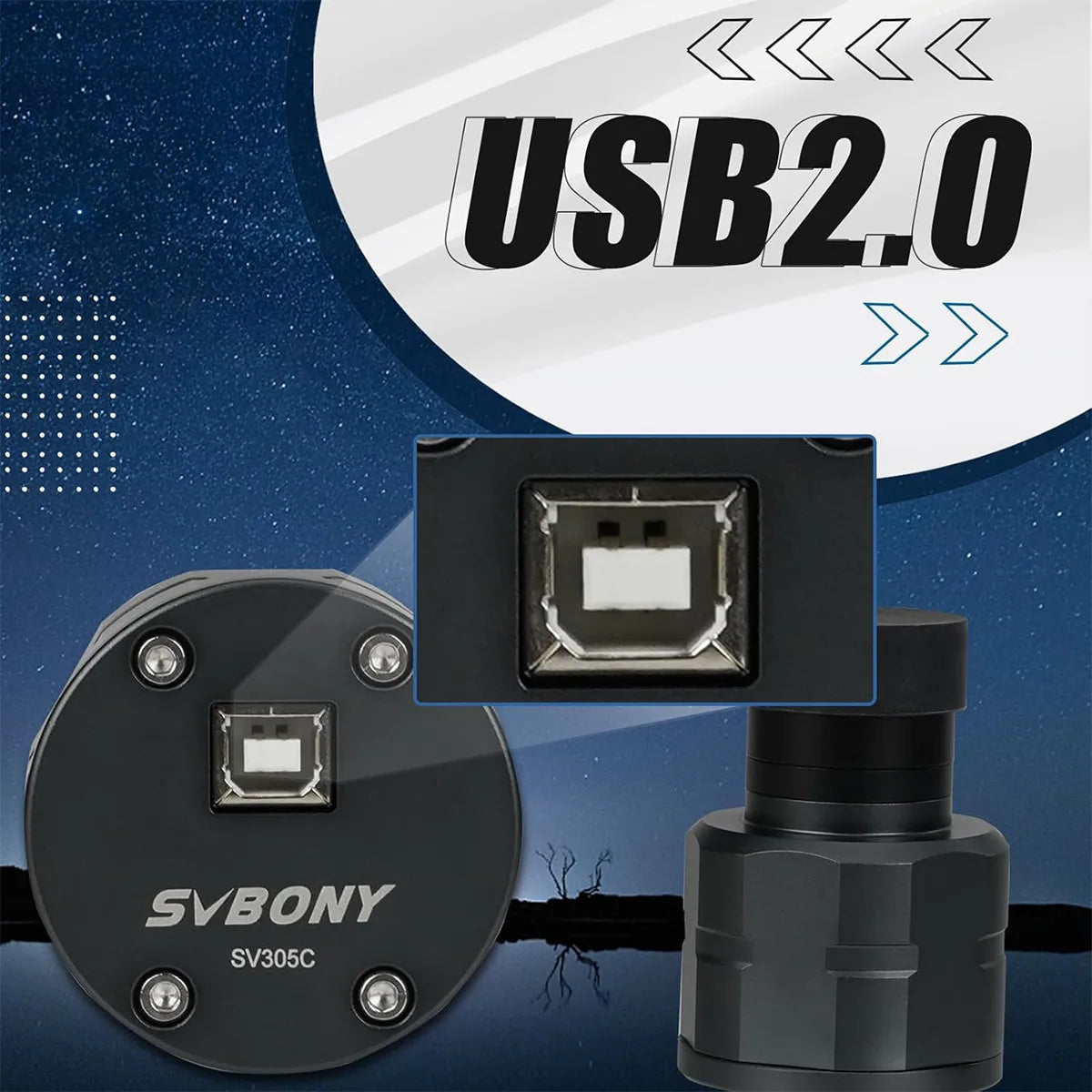
The SVBONY SV305C is an uncooled colour astronomy camera for lunar and planetary imaging, built on the Sony IMX662 back-illuminated sensor. The 1/2.8″ chip (5.6 x 3.2 mm, 6.44 mm diagonal) records 1920 x 1080 pixels at 2.9 µm, with read noise from 6.5 e⁻ down to 0.7 e⁻, roughly 91% peak QE, a 38 ke⁻ full well and 12-bit output over USB 2.0 at up to 24 fps.

Who It's For
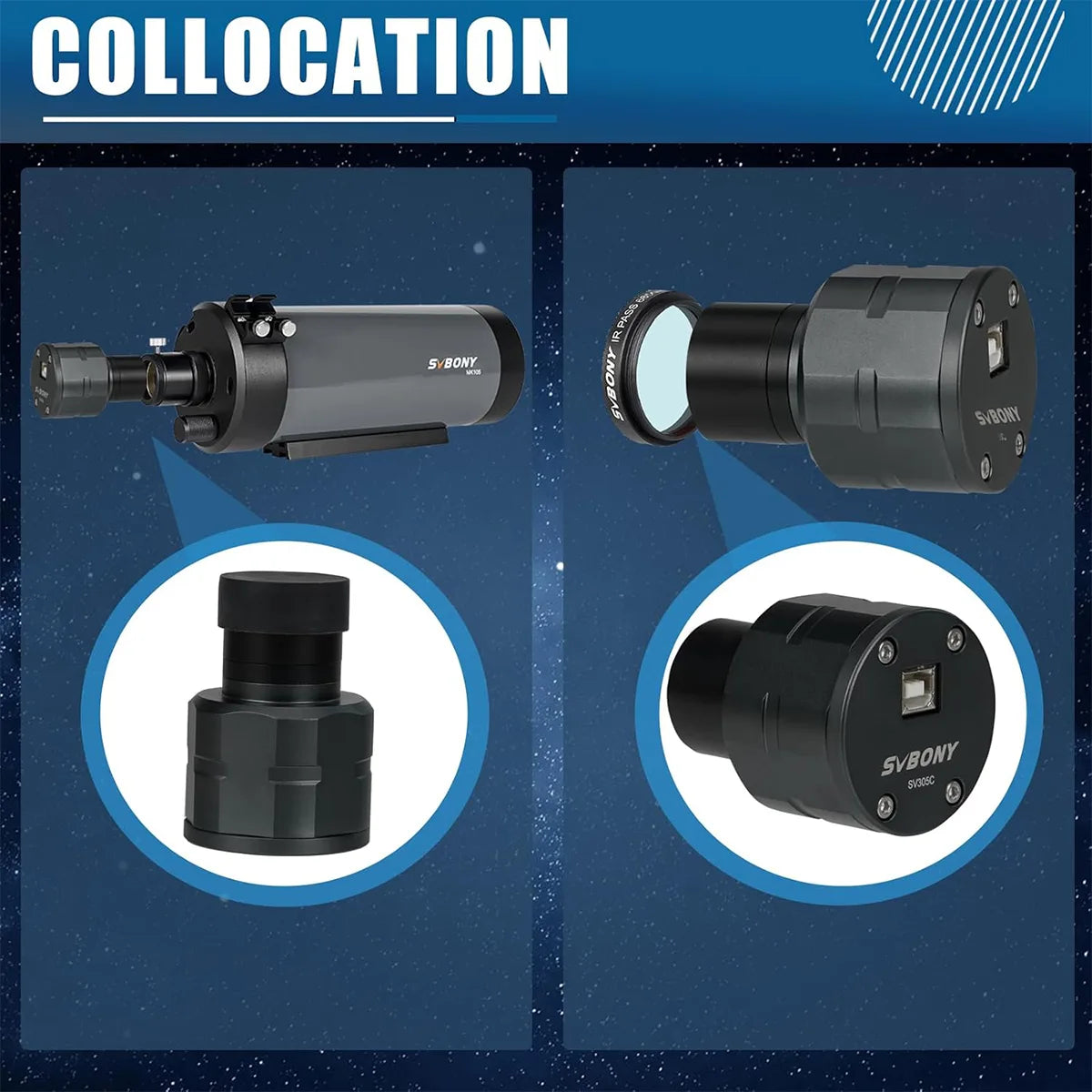
This is a good match if you want a compact colour camera for the Moon and planets on a Maksutov, SCT or long refractor, a camera for live-stacked EAA views, or a small camera that runs from a laptop or Raspberry Pi with a straightforward setup.
Key Features & Design
- Sony IMX662 back-illuminated sensor: 2.1 MP, 1920 x 1080, 2.9 µm pixels, with about three times the full well of the previous IMX462 generation.
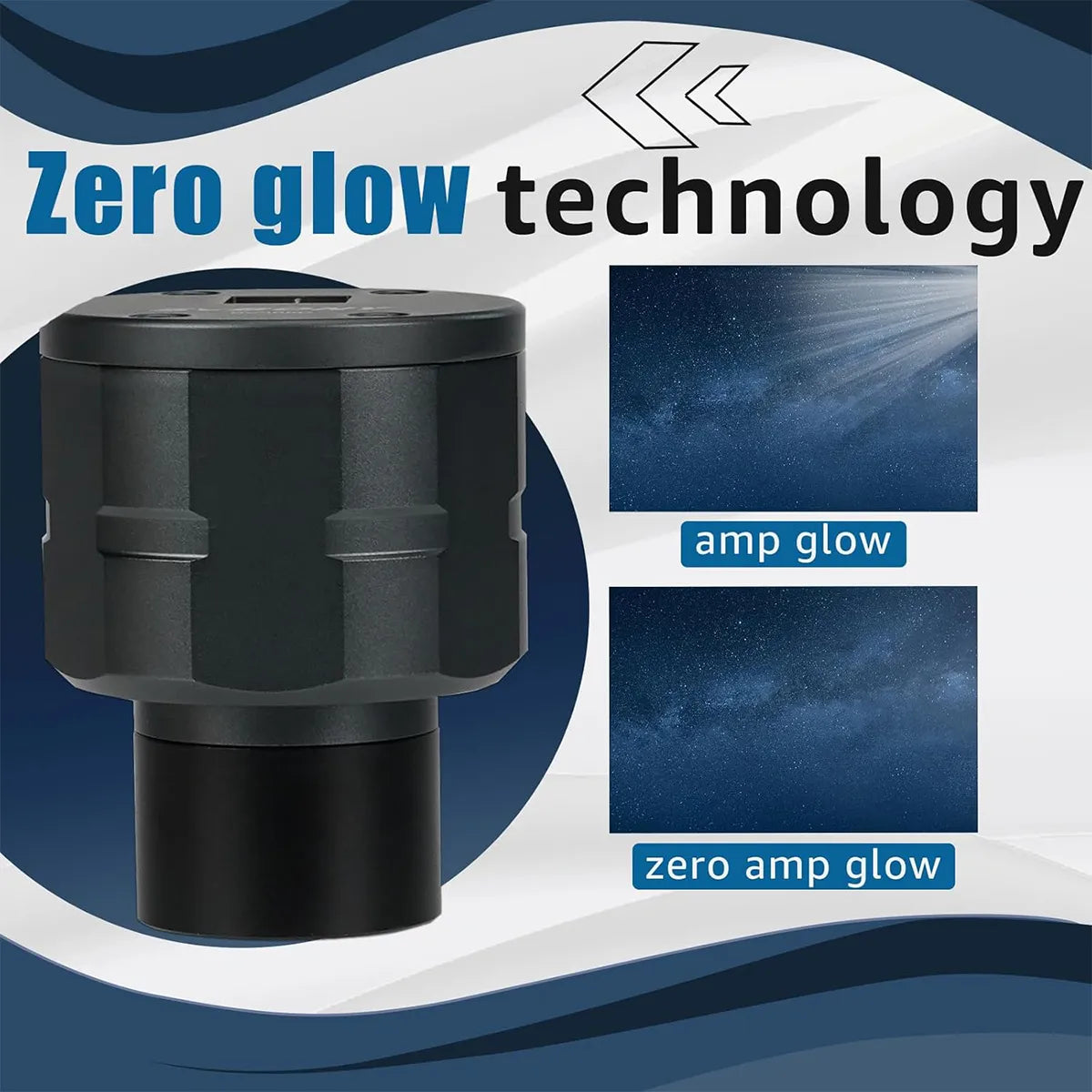
- Low read noise with HCG: 6.5–0.7 e⁻; high-conversion-gain mode turns on automatically at gain 190.
- Peak QE ≈91%: high sensitivity for short planetary exposures.
- 128 MB buffer: holds frames so none are lost or corrupted during USB 2.0 transfer.
- UV/IR cut protective window: above 96% transmission across 400–700 nm, so no separate UV/IR filter is needed for natural colour.
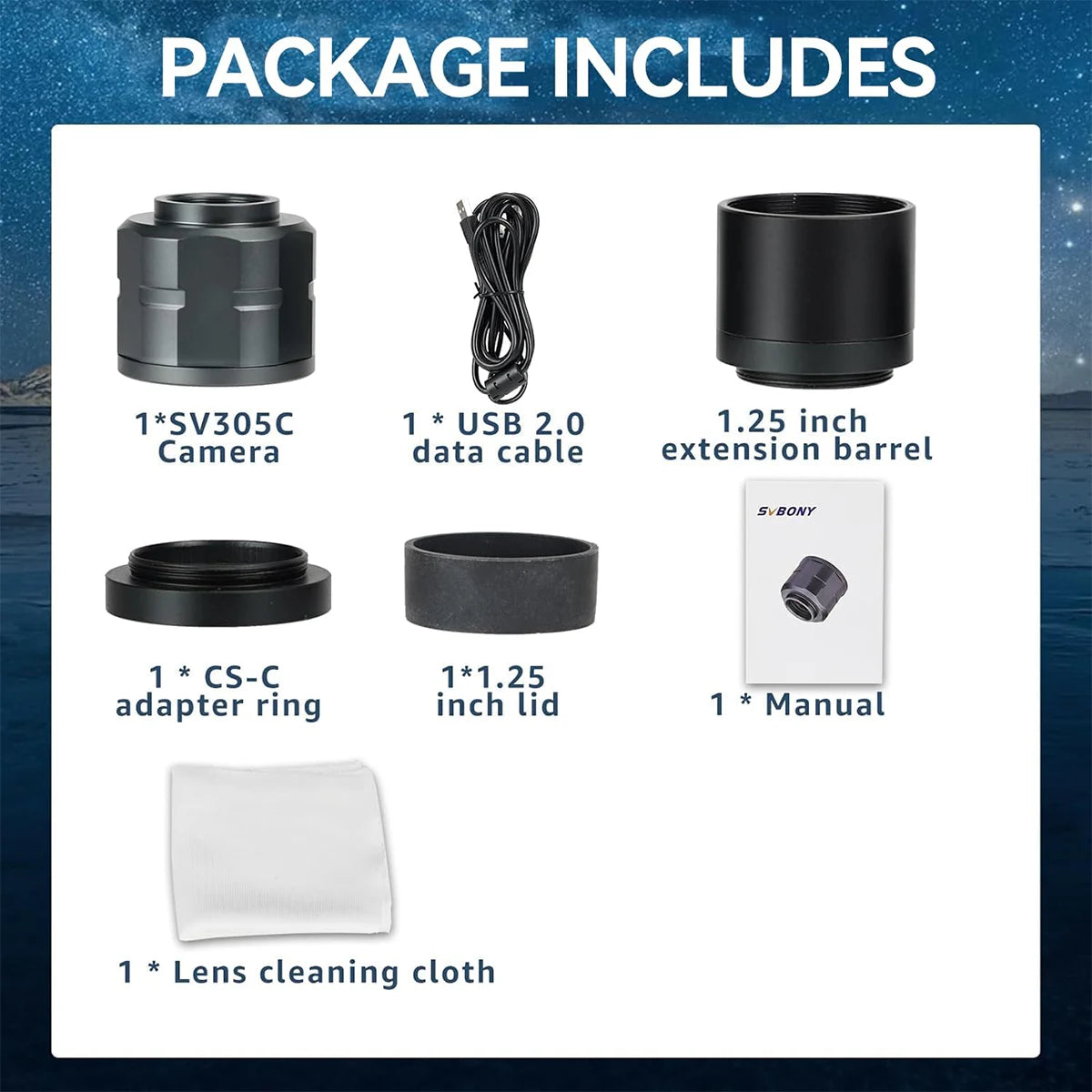
- 1.25″ nosepiece and CS thread: with a CS-C adapter ring for C- and CS-mount lenses.
- Exposure range: 32 µs to 2000 s, with ROI and 1x1 / 2x2 binning.


Camera Design
The IMX662's 2.9 µm pixels sample finely at planetary focal lengths, and its low read noise in HCG mode suits the very short exposures used in lucky imaging, where thousands of frames are captured and the sharpest are stacked. The QE and read-noise charts below are SVBONY's published sensor curves.


Recommended Uses
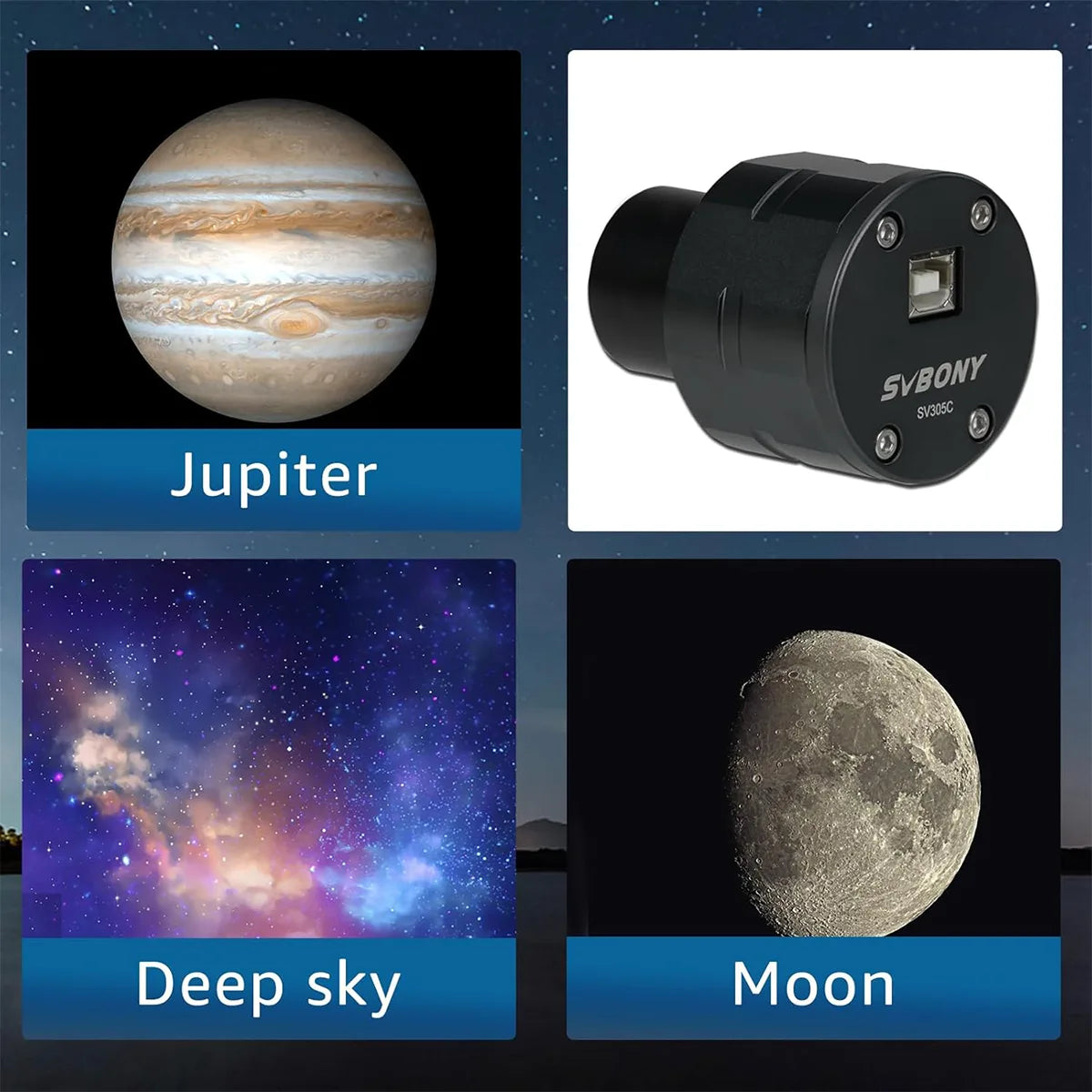
- Planetary imaging: Jupiter, Saturn, Mars and Venus.
- Lunar imaging: crater and terrain close-ups.
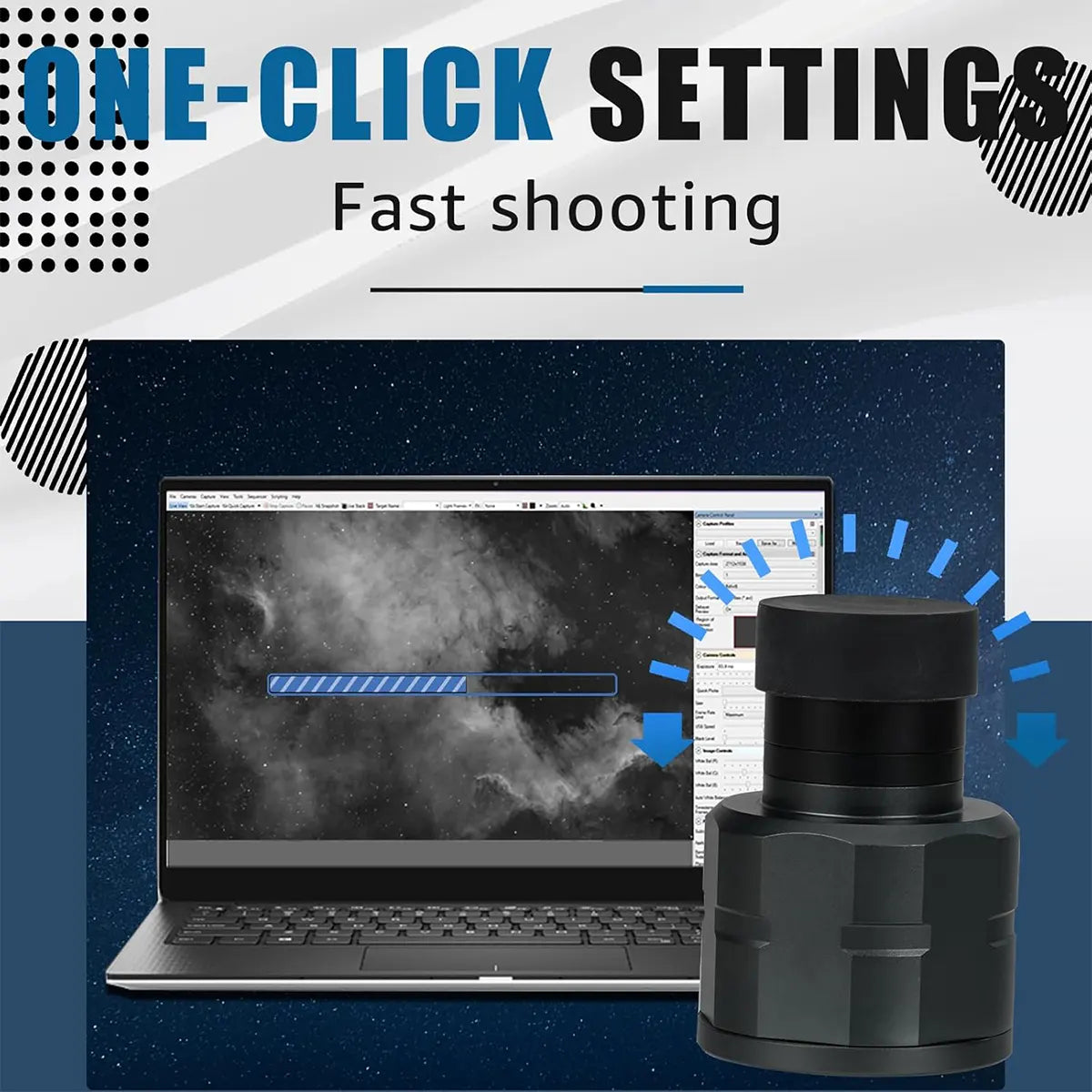
- Electronically assisted astronomy: live stacking of brighter deep-sky objects; SharpCap has one-key planetary and deep-sky presets for this camera.
- Lens-based imaging: with C- or CS-mount lenses via the CS-C adapter.

Compatibility and Accessory Notes
- Telescope connection: 1.25″ nosepiece into any 1.25″ focuser, star diagonal or Barlow.
- Lenses: CS thread on the body, with a CS-C adapter ring for C-mount lenses.
- Back focal length: 7.5 mm / 12.5 mm as published by SVBONY.
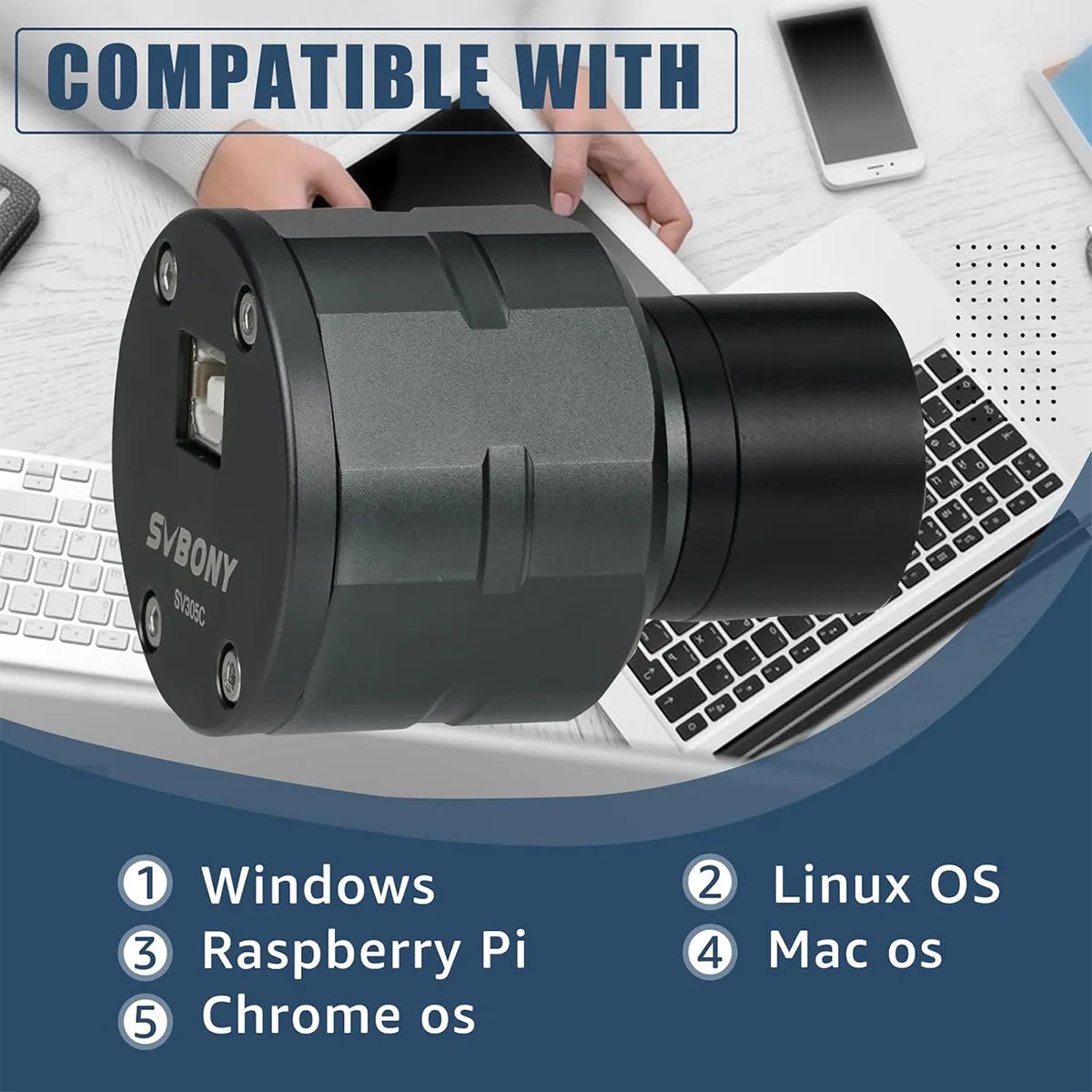
- Platforms: Windows, Linux, macOS, Chrome OS and Raspberry Pi.
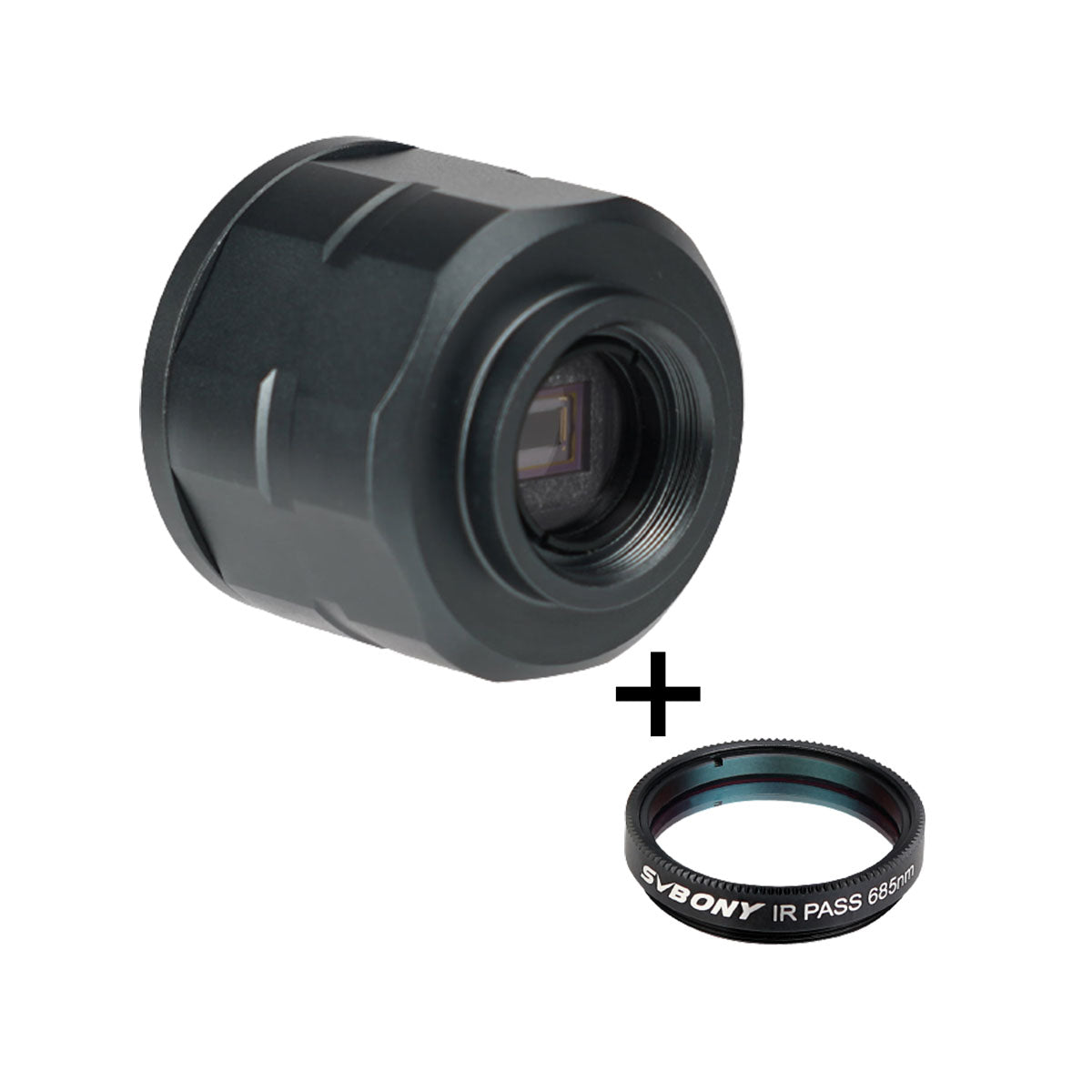
- Filters: the UV/IR cut window is built in. SVBONY also sells this camera with an IR pass filter; this listing is the camera only.


Good to Know Before You Order
- USB 2.0: frame rate is 24 fps at full 1920 x 1080; ROI raises it on small targets.
- Uncooled: designed for short exposures and live stacking rather than long cooled deep-sky integrations.
- Small sensor: the 6.44 mm diagonal gives a narrow field suited to planets and lunar detail.
- Computer required: the camera runs from capture software such as SharpCap.
- Weight: SVBONY does not publish a weight for this camera.
Frequently Asked Questions
Is it difficult to set up?
No. Install the driver and SharpCap, connect the USB cable and slide the camera into the focuser. SharpCap's one-key presets set it up for planetary or deep-sky mode.
Do I need a UV/IR cut filter?
No. The protective window is a UV/IR cut filter with more than 96% transmission across 400–700 nm.
Can I use a camera lens with it?
Yes. The CS thread and included CS-C adapter ring accept C- and CS-mount lenses.
Does it work on a Raspberry Pi?
Yes. SVBONY lists Raspberry Pi and Linux support.
Can it image deep-sky objects?
It can live-stack brighter deep-sky targets for EAA; for long deep-sky integrations a cooled camera is the better fit.
Bottom Line
In short: a compact colour planetary camera with a Sony IMX662 sensor, 2.9 µm pixels, sub-electron read noise in HCG mode and a built-in UV/IR cut window, ready for lunar, planetary and EAA work from a 1.25″ focuser.
| Model | SV305C |
|---|---|
| Sensor | Sony IMX662 colour CMOS, back-illuminated |
| Sensor size | 1/2.8″, 5.6 mm x 3.2 mm |
| Diagonal | 6.44 mm |
| Resolution | 1920 x 1080 (2.1 MP) |
| Pixel size | 2.9 µm x 2.9 µm |
| Frame rate | 24 fps |
| Shutter | Rolling shutter |
| Exposure | 32 µs – 2000 s |
| Read noise | 6.5–0.7 e⁻ |
| QE peak | ≈91% |
| Full well | 38 ke⁻ |
| ADC | 12-bit |
| ROI | Yes |
| Binning | 1x1, 2x2 |
| Digital noise reduction | HCG |
| Buffer | 128 MB |
| Data port | USB 2.0 |
| Adapter | 1.25″ / CS / C |
| Protective window | UV/IR cut, >96% transmission 400–700 nm |
| Back focal length | 7.5 mm / 12.5 mm |
| Operating systems | Windows, Linux, macOS, Raspberry Pi, Chrome OS |
| Cooling | None |
| Weight | Not published by vendor |
| Recommended use | Lunar and planetary imaging, EAA |
You may also like
Recently viewed
Recent Blog Posts
View all
Your Guide Graph Is Lying to You
Read More

D-Size vs V-Size: A Complete Guide to Telescope Dovetail Systems
Read More

What Is Back Focus in Astrophotography? Telescope Reducers, Flatteners, and Spacing Explained
Read More