


- Description
- Specifications

Product Overview
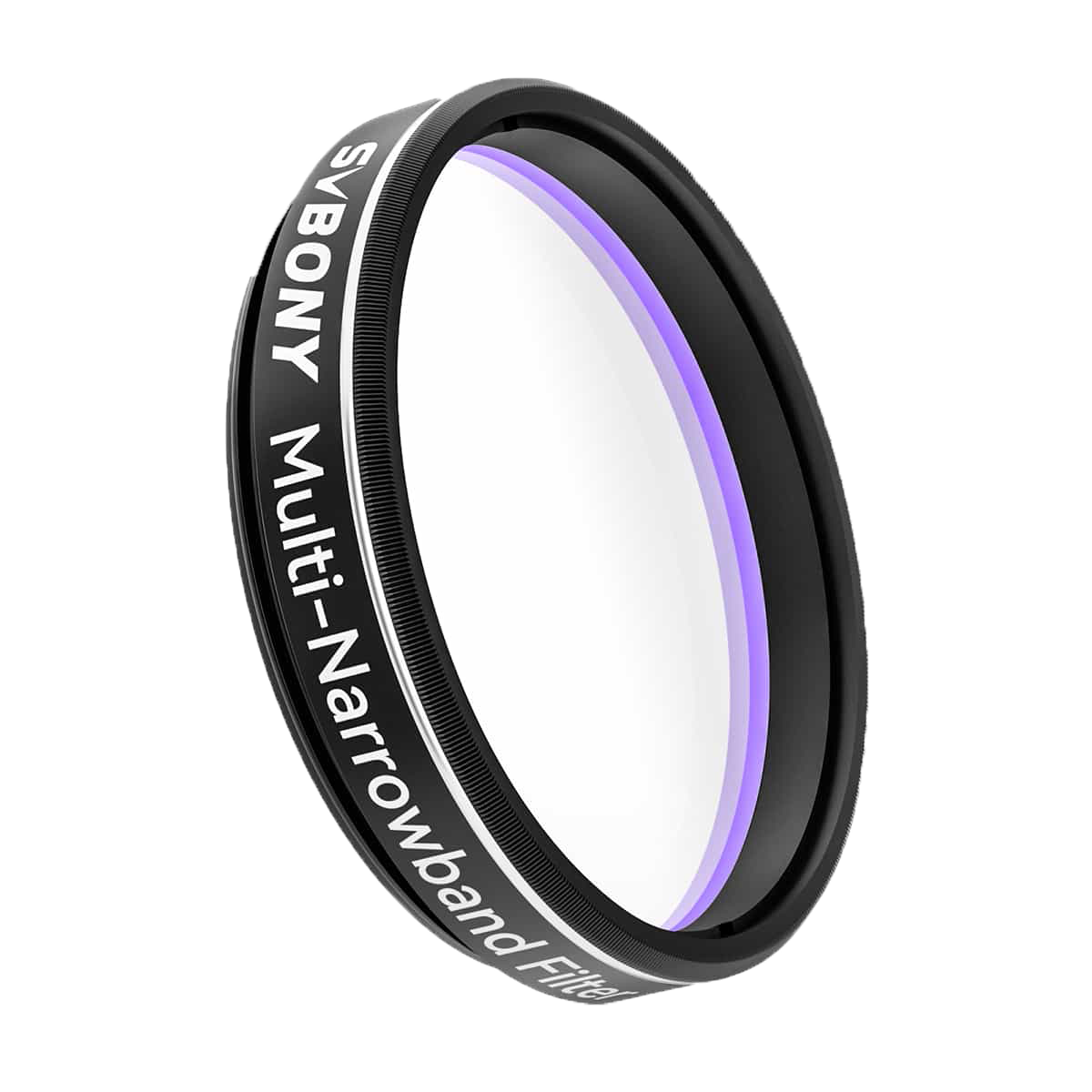
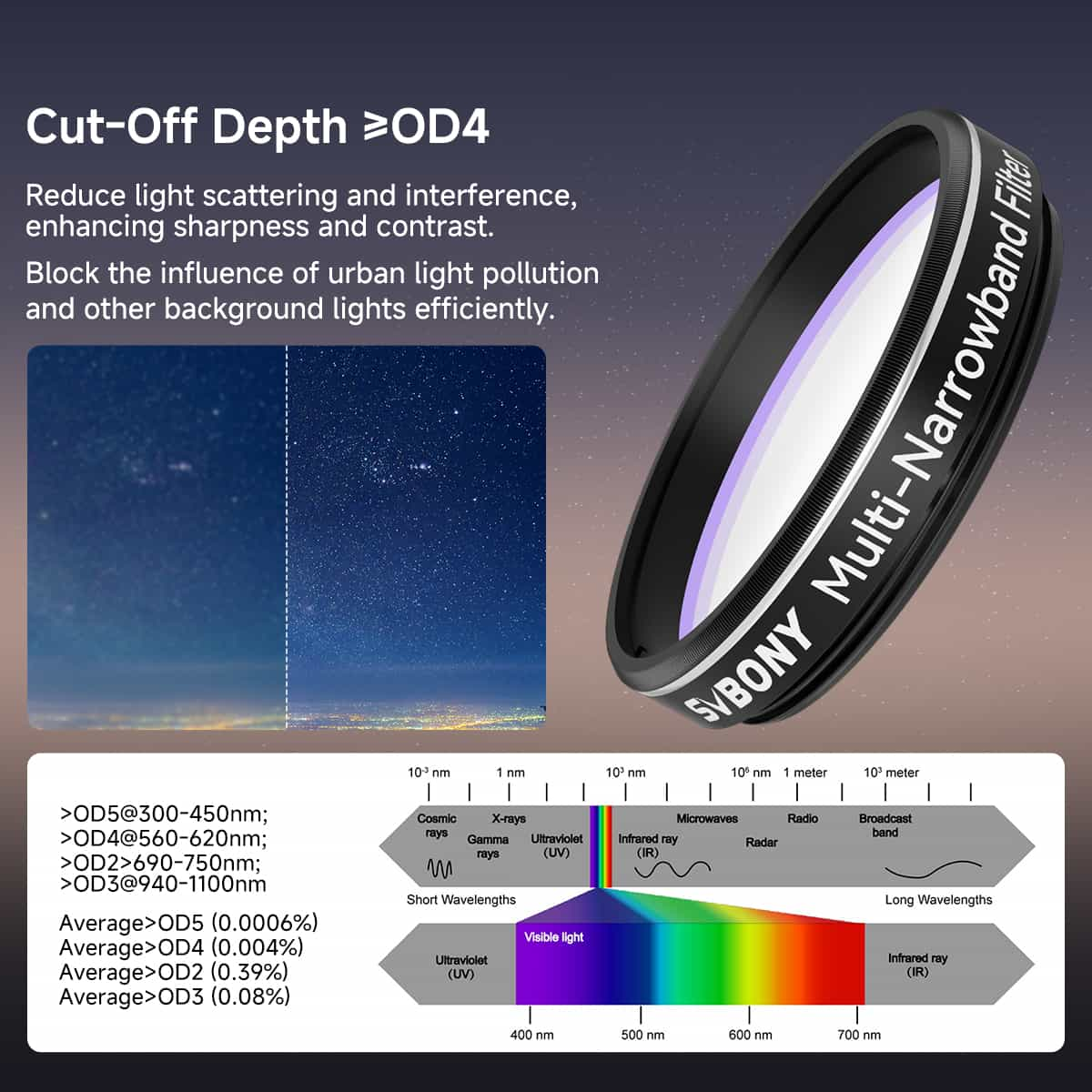
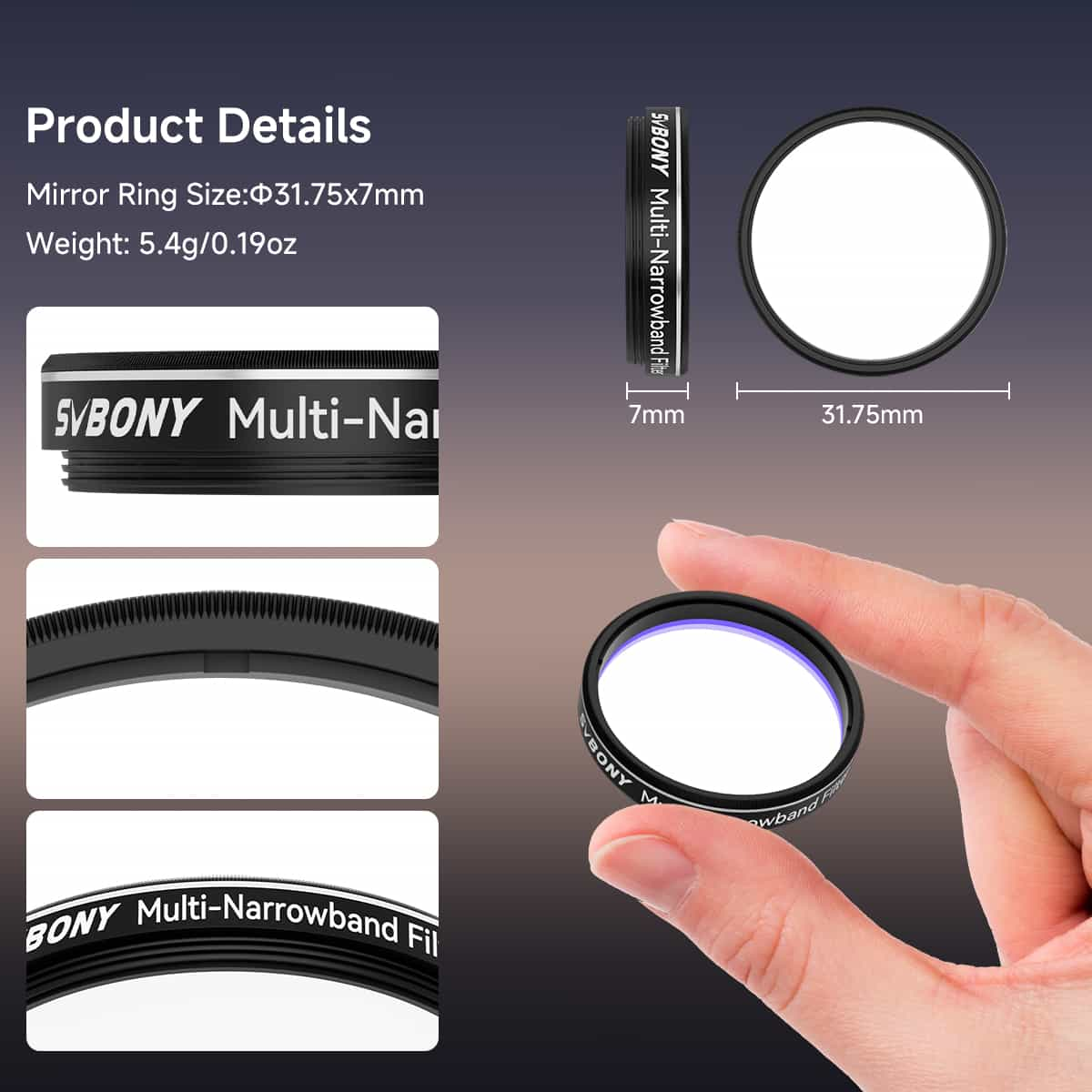
The SVBONY SV240 1.25″ is the smaller-format version of SVBONY's multi-bandpass filter for colour-camera deep-sky imaging under light pollution. It passes H-beta (486.1 nm), OIII (495.9 and 500.7 nm) and H-alpha (656.3 nm), adds a near-infrared window averaging over 98.2% transmission across 830–870 nm, and blocks 300–450 nm, 560–620 nm, 690–750 nm and 940–1100 nm. The coating sits on a 2.0 mm Corning EAGLE substrate with a 26 mm clear aperture, in a CNC-machined, blackened 6061-T aluminium cell with an M28.5 x 0.6 male thread. It weighs 5.4 g.
Who It's For
This is a good match if you image with a one-shot-colour camera that takes 1.25″ filters — a small-sensor planetary or guide-size camera, or a 1.25″ filter wheel or drawer — and want nebula contrast from a suburban or city site without moving to a monochrome workflow. SVBONY rates it for skies from Bortle 1 to Bortle 8.
Key Features & Design
- Multi-band passband: H-beta, OIII and H-alpha with published FWHM figures of 25 nm, 22 nm and 115 nm, plus a near-infrared window.
- High line transmission: T>95% at 486.1 nm, T>92.4% at 495.9 nm, T>88.2% at 500.7 nm and T>97% at 656.3 nm.
- Cut-off depth ≥ OD4 across the main light-pollution bands, with 50% transmission points at 482 nm and 783 nm.
- 300–1100 nm working range: controlled well into the infrared.
- Corning EAGLE substrate: 2.0 mm thick, 60/40 surface quality, λ/2 parallelism.
- Machined cell: 6061-T aluminium, blackened and anodized, Φ31.75 x 7 mm, single M28.5 x 0.6 male thread.


Optical Design
A multilayer interference coating opens narrow windows at the three main nebular lines and a broader window in the near infrared, while rejecting the visible bands where streetlights and sky glow are strongest. Recent colour sensors respond well in the near infrared, and that region carries less artificial light, so the NIR window adds usable signal and improves contrast while keeping colour balance manageable in processing.


Recommended Uses
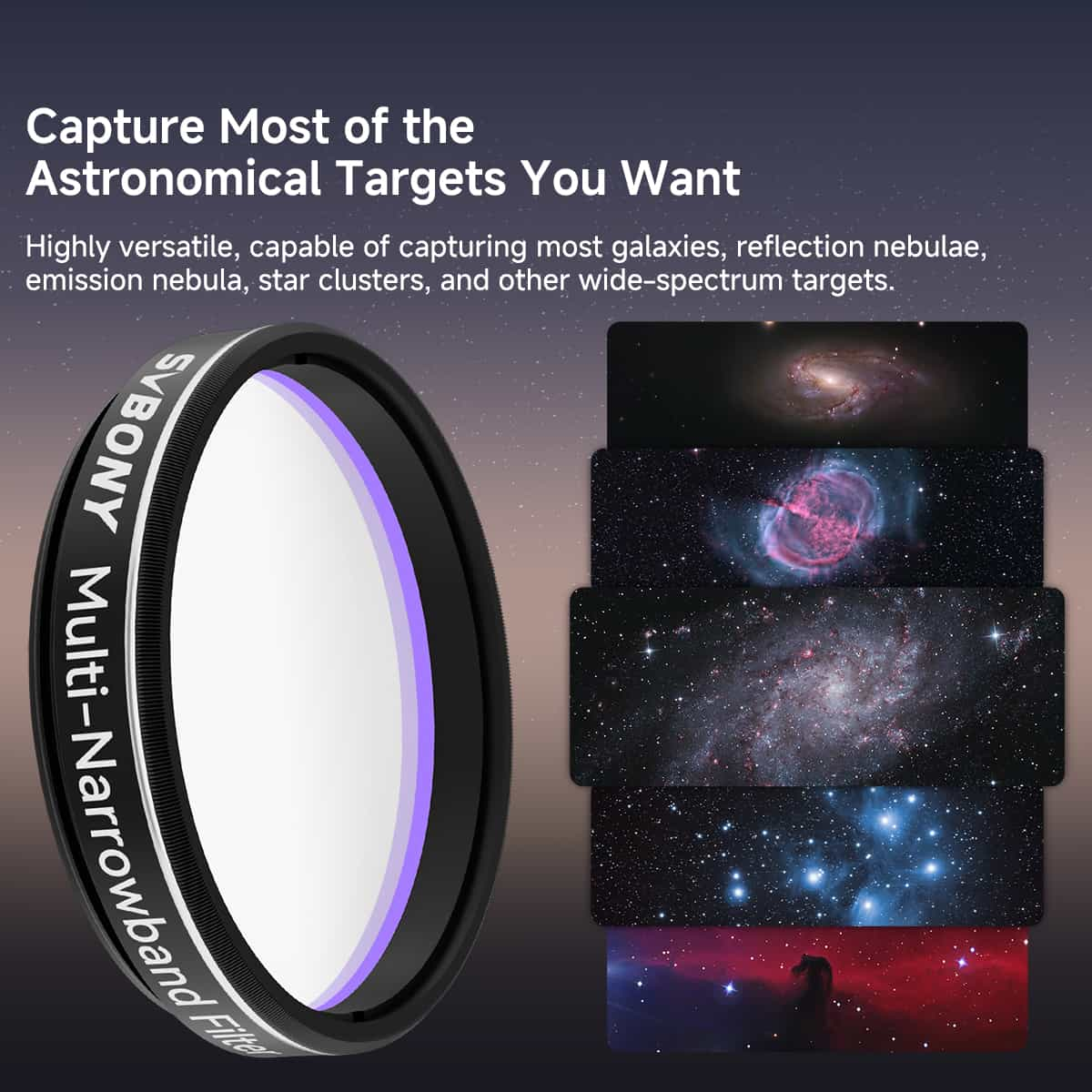
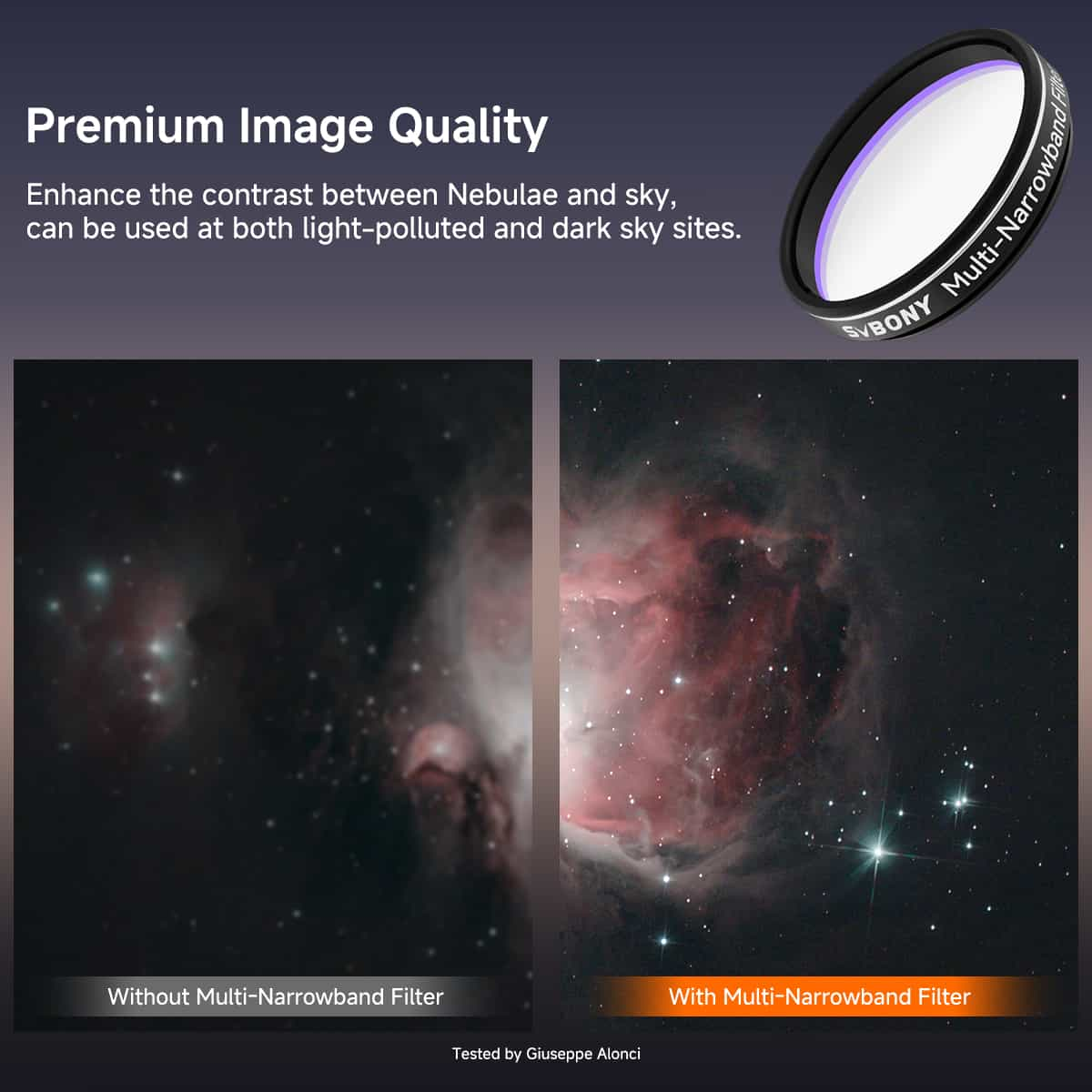
- Emission nebulae and supernova remnants from light-polluted skies with a colour camera.
- Small-sensor deep-sky imaging and EAA with 1.25″ filter trains.
- One filter across several setups that share the 1.25″ filter size.

Compatibility and Accessory Notes
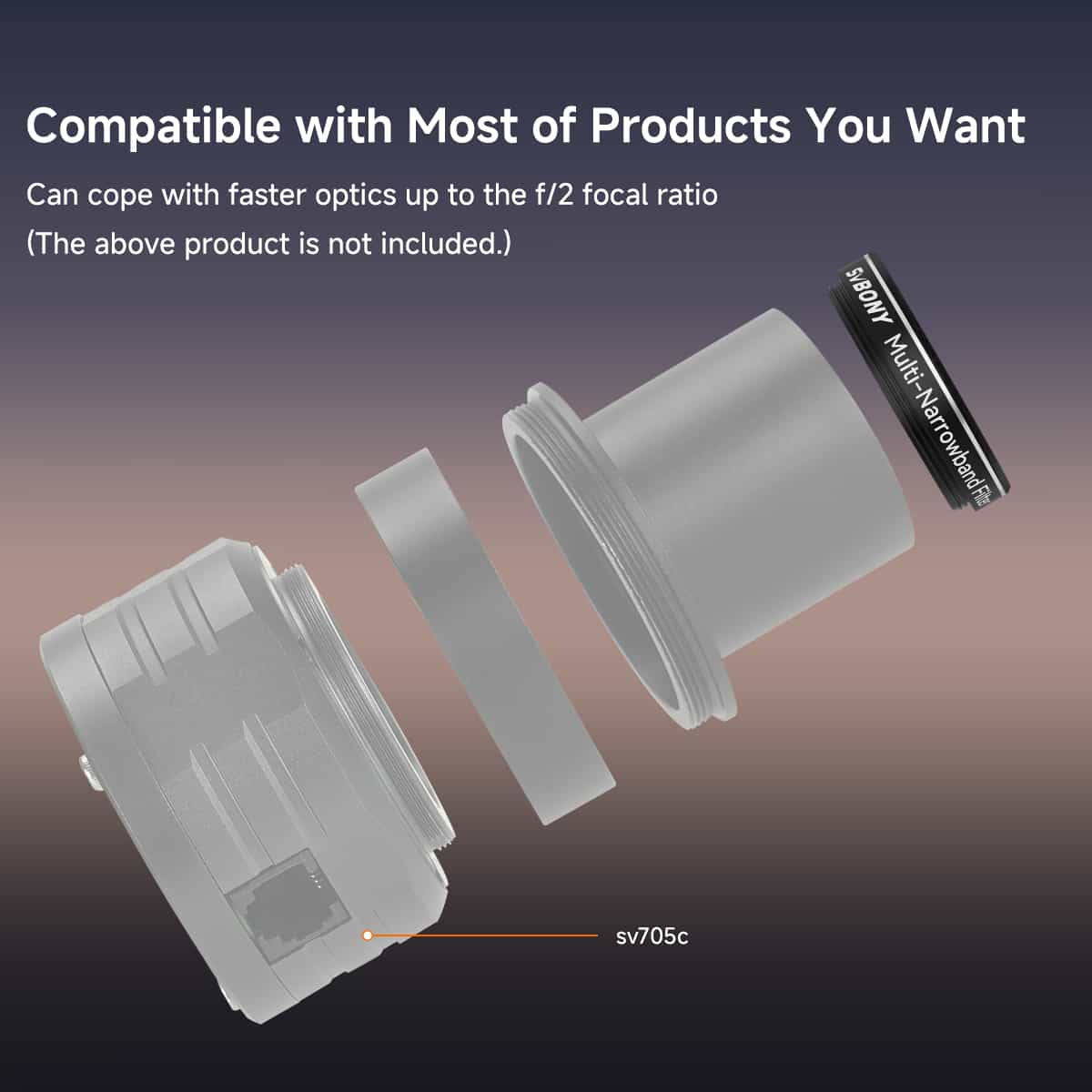
- Thread: M28.5 x 0.6, the standard 1.25″ filter thread used by eyepiece barrels, camera nosepieces, filter wheels and drawers.
- Cameras: designed for one-shot-colour cameras. A camera with a UV/IR cut window blocks the near-infrared passband; an AR-coated window keeps it.
- Sensor size: the 26 mm clear aperture suits smaller sensors; for larger sensors the 2″ SV240 is also available.

What's in the Box
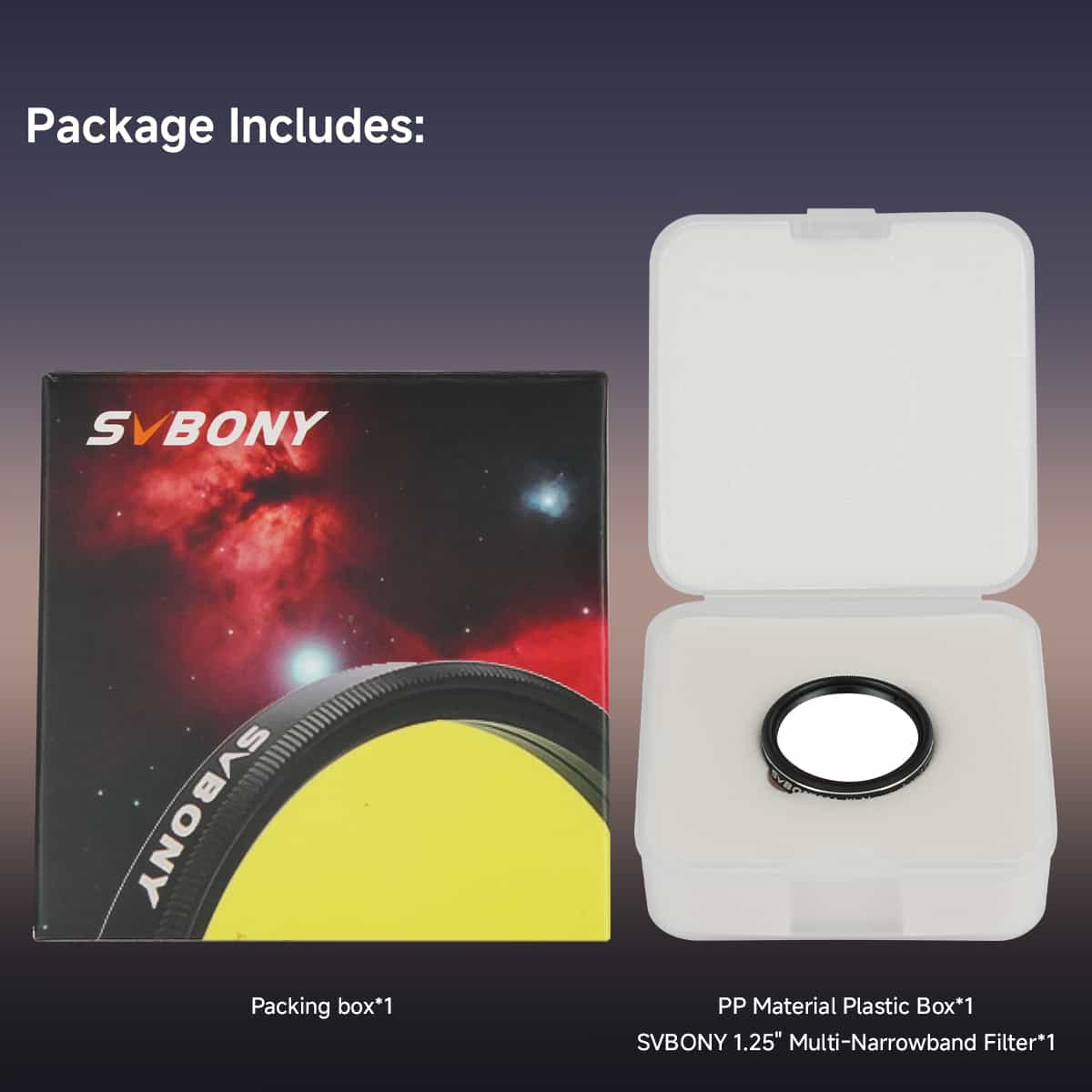
- 1 x SV240 1.25″ multi-narrowband filter
- 1 x PP plastic filter box
- 1 x Packing box
Good to Know Before You Order
- Imaging filter: it is designed for cameras and has no application in visual observing.
- Near-infrared halos: SVBONY notes that filters passing infrared can show halos in the NIR region with optics not corrected that far into the infrared.
- Not a solar filter.
Frequently Asked Questions
Is it difficult to set up?
No. It threads into the 1.25″ filter thread of a camera nosepiece, filter wheel or drawer, and focus is set as usual in your capture software.
Does it work with a mono camera?
It is designed for one-shot-colour cameras, where all three lines and the NIR window are recorded together in one exposure.
What is the difference between the 1.25″ and 2″ versions?
Format and published figures: the 1.25″ has a 26 mm clear aperture and an M28.5 x 0.6 thread; the 2″ has a 44 mm clear aperture and an M48 x 0.75 thread for larger sensors.
Why include near infrared?
Many recent colour sensors are sensitive there, and it carries less artificial light, so it adds signal and contrast.
Bottom Line
In short: a 5.4 g, 1.25″ M28.5 multi-bandpass filter that passes H-alpha, OIII, H-beta and a near-infrared window for colour-camera nebula imaging from Bortle 1 to Bortle 8 skies.
| Brand | SVBONY |
|---|---|
| Model | SV240 |
| Size | 1.25″; mirror ring Φ31.75 x 7 mm |
| Thread | M28.5 x 0.6 mm, single male thread |
| Cell material | 6061-T aluminium, CNC machined, blackened and anodized |
| Substrate | Corning EAGLE, 2.0 mm |
| Clear aperture | 26 mm |
| Transmittance | T>95% @ 486.1 nm; T>92.4% @ 495.9 nm; T>88.2% @ 500.7 nm; T>97% @ 656.3 nm |
| NIR transmittance | Tavg >98.2% @ 830–870 nm |
| 50% transmission points | 482 nm, 783 nm |
| Cut-off bands | 300–450 nm, 560–620 nm, 690–750 nm, 940–1100 nm |
| FWHM | 25 nm, 22 nm, 115 nm |
| Surface quality | 60/40 |
| Surface parallelism | λ/2 |
| Weight | 5.4 g |
| Package | Filter, PP plastic box, packing box |
You may also like
Recently viewed
Recent Blog Posts
View all
Your Guide Graph Is Lying to You
Read More
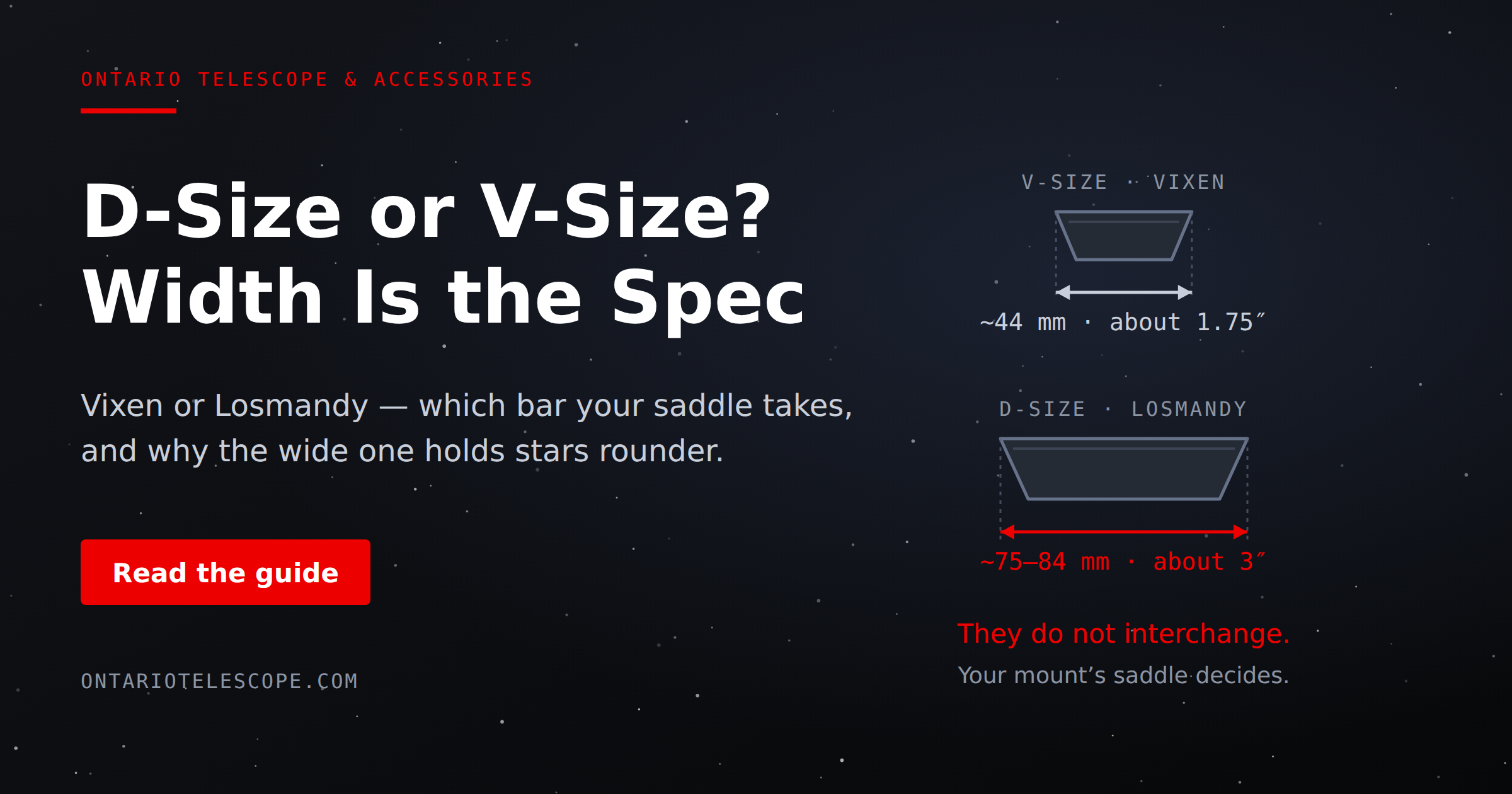
D-Size vs V-Size: A Complete Guide to Telescope Dovetail Systems
Read More
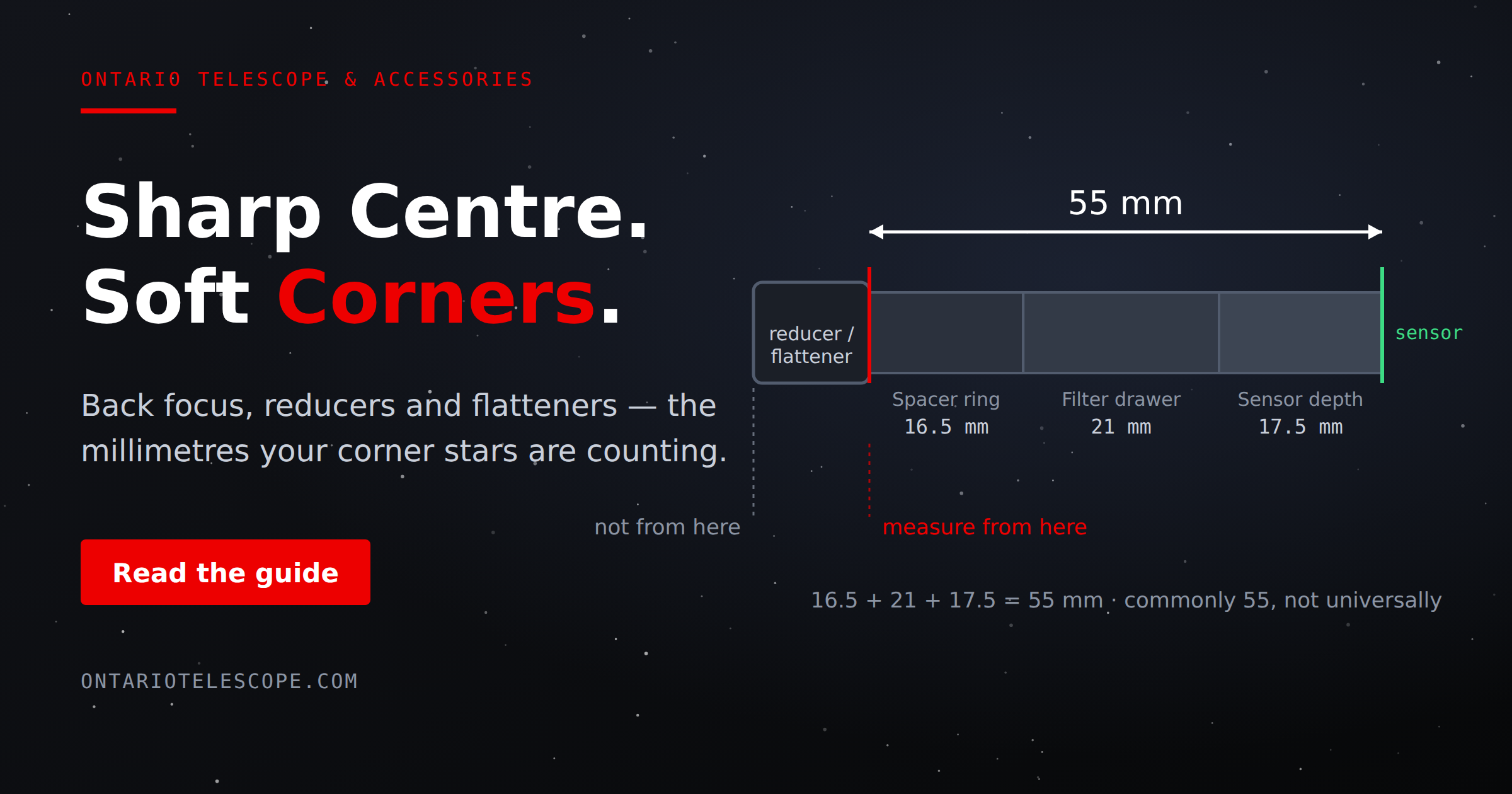
What Is Back Focus in Astrophotography? Telescope Reducers, Flatteners, and Spacing Explained
Read More