


- Description
- Specifications
Product Overview
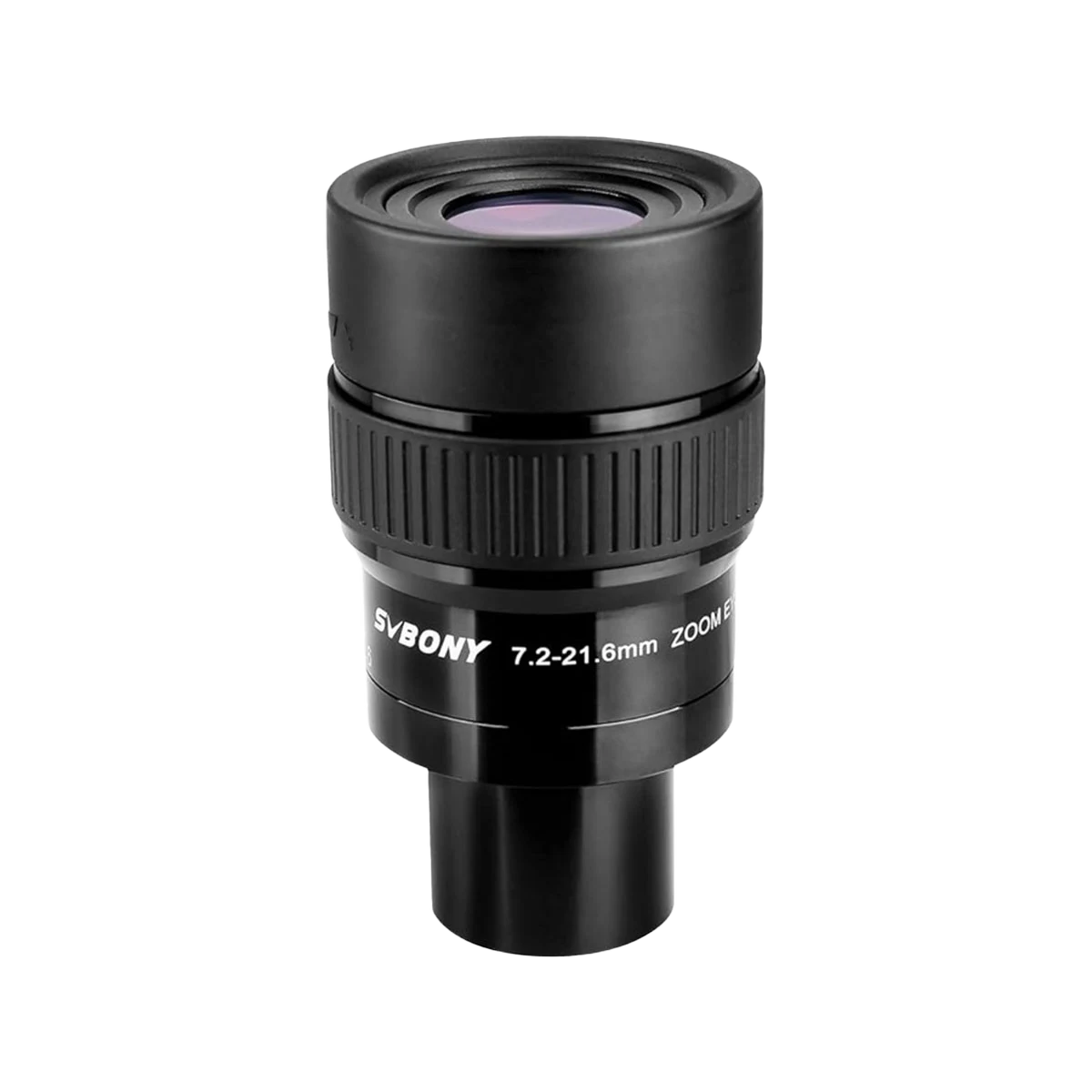
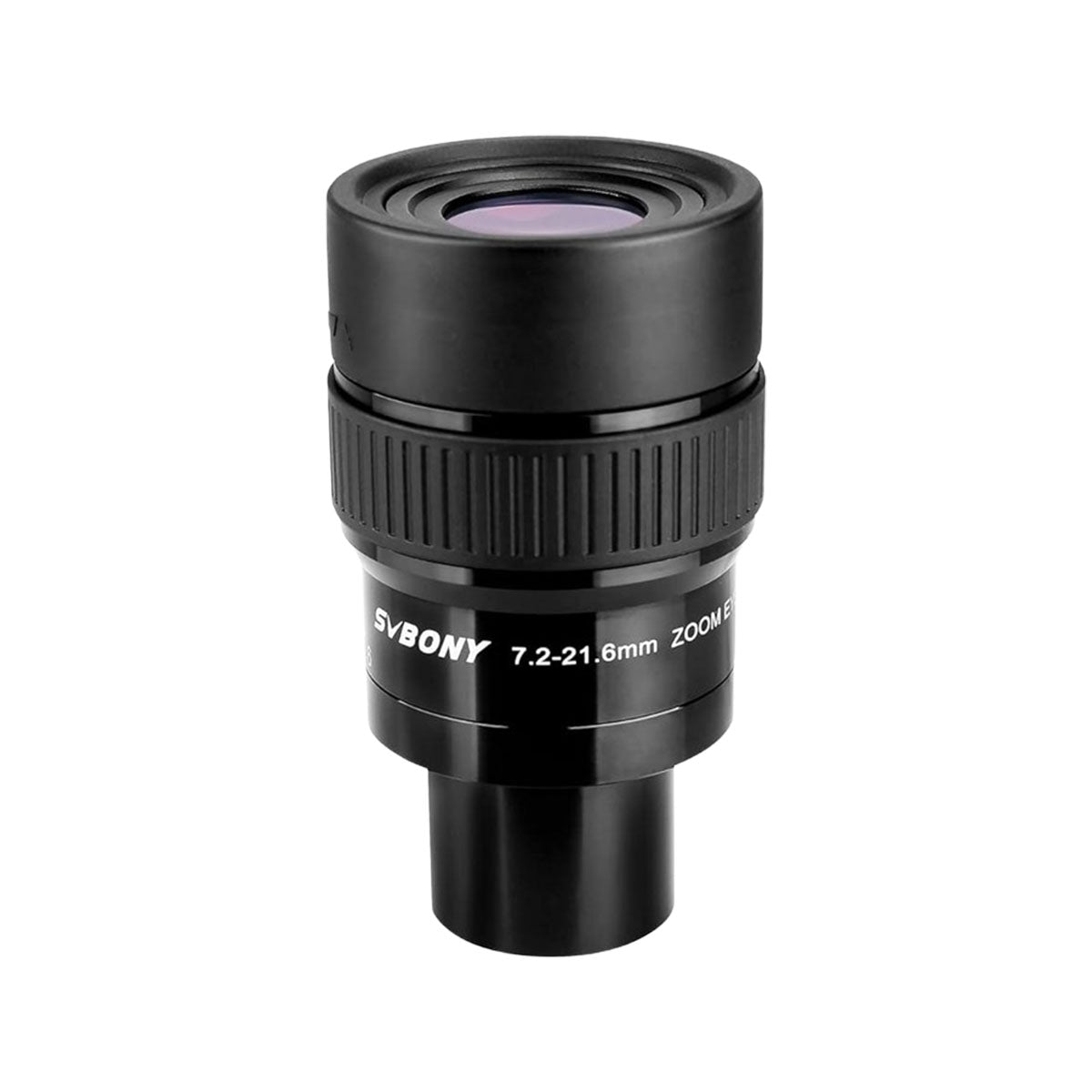
The SVBONY SV191 is a 1.25″ zoom eyepiece that covers 7.2 mm to 21.6 mm in one continuous 3x range. The apparent field widens from 42° at the long end to 65° at the short end, eye relief stays at 18–20 mm throughout, and the optics are a fully multi-coated 7-element, 4-group design with blackened lens edges. It weighs 167 g.
Who It's For
This is a good match if you want to move from a finding view to a high-power planetary view without swapping eyepieces, observe with glasses, or want one compact eyepiece for travel.
Key Features & Design
- 7.2–21.6 mm continuous zoom: dial in the magnification that suits the seeing.
- 42°–65° apparent field: the field widens as you zoom to higher power.
- 18–20 mm eye relief: comfortable with eyeglasses.
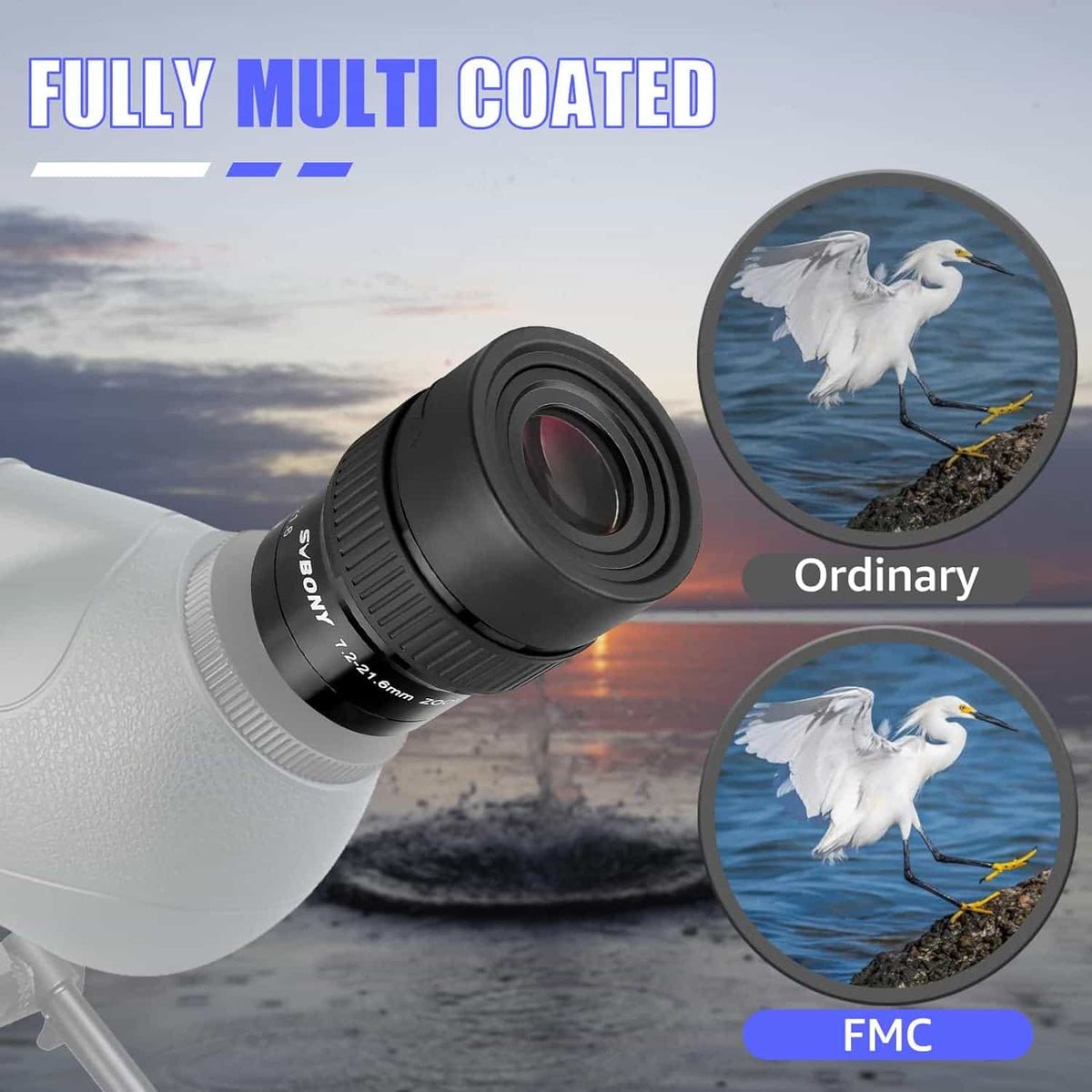
- 7 elements in 4 groups: fully multi-coated, with blackened lens edges for contrast.
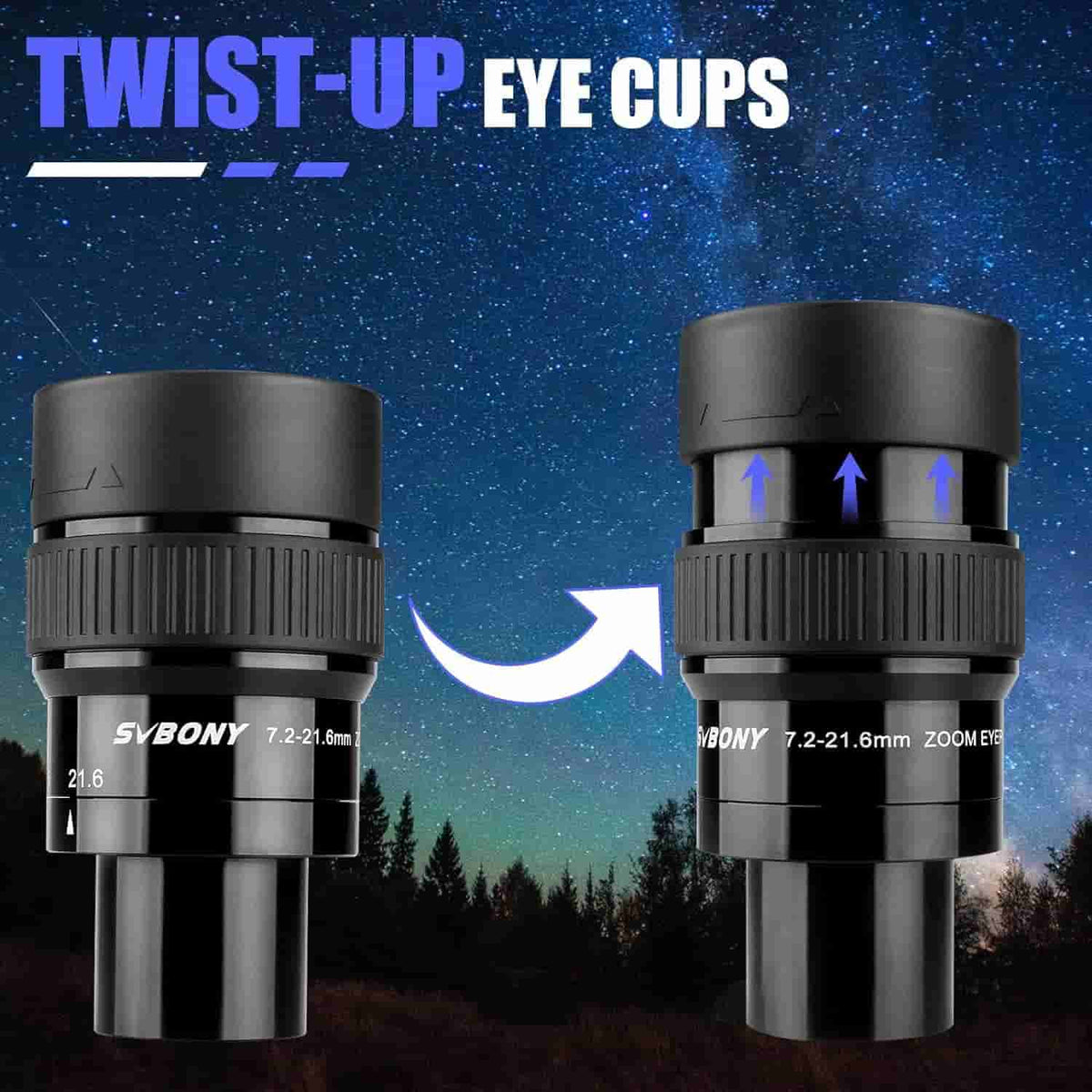
- Metal twist-up eyecup.
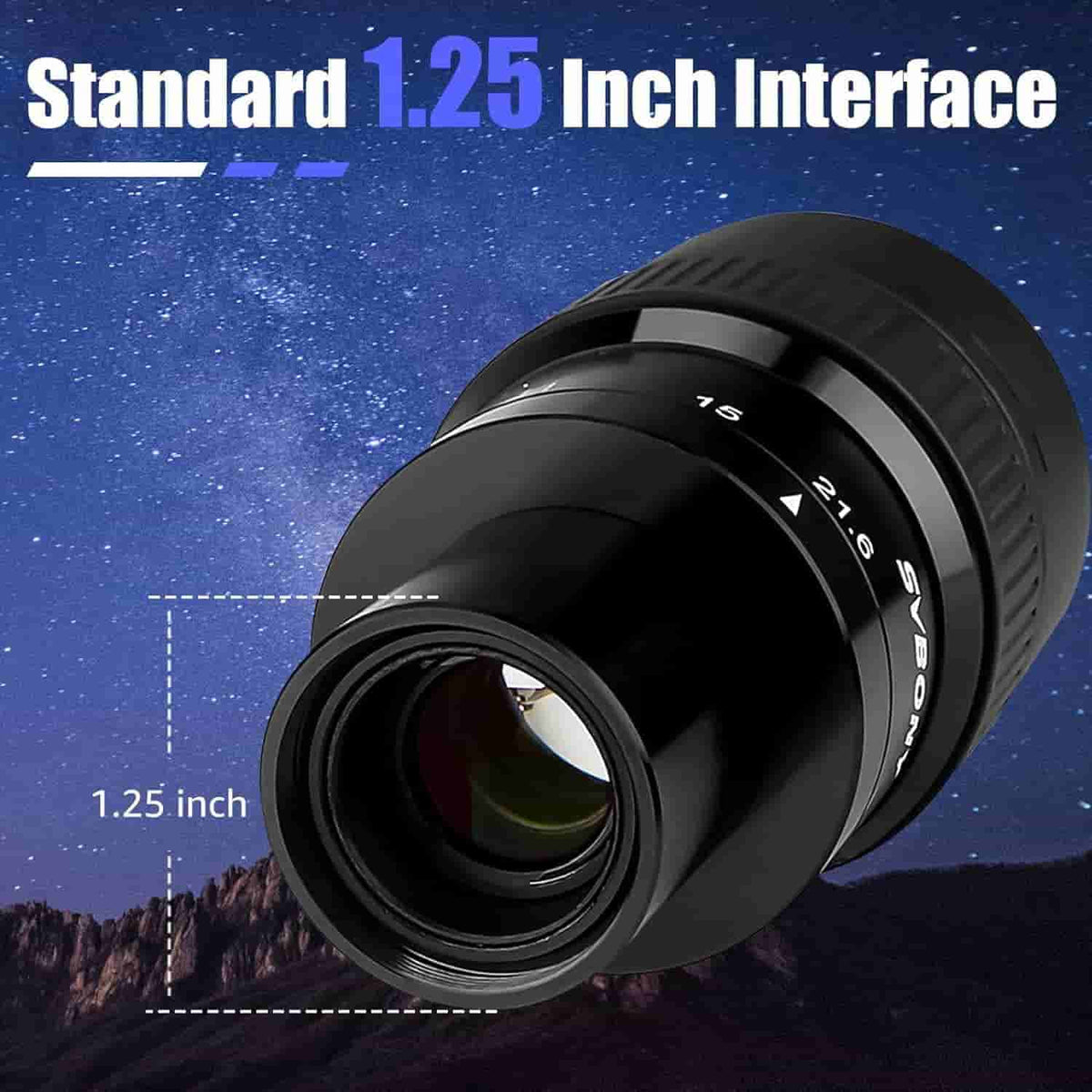
- 1.25″ barrel with M28.5 x 0.6 filter thread.

Recommended Uses
- Planetary and lunar observing: zoom in until the seeing limits the view, then back off slightly for the sharpest image.
- Double stars and clusters across a range of magnifications.
- Travel kits where one eyepiece replaces several.
Compatibility and Accessory Notes
- Barrel: 1.25″, fits any 1.25″ diagonal or focuser.
- Filters: M28.5 x 0.6 thread for standard 1.25″ filters.
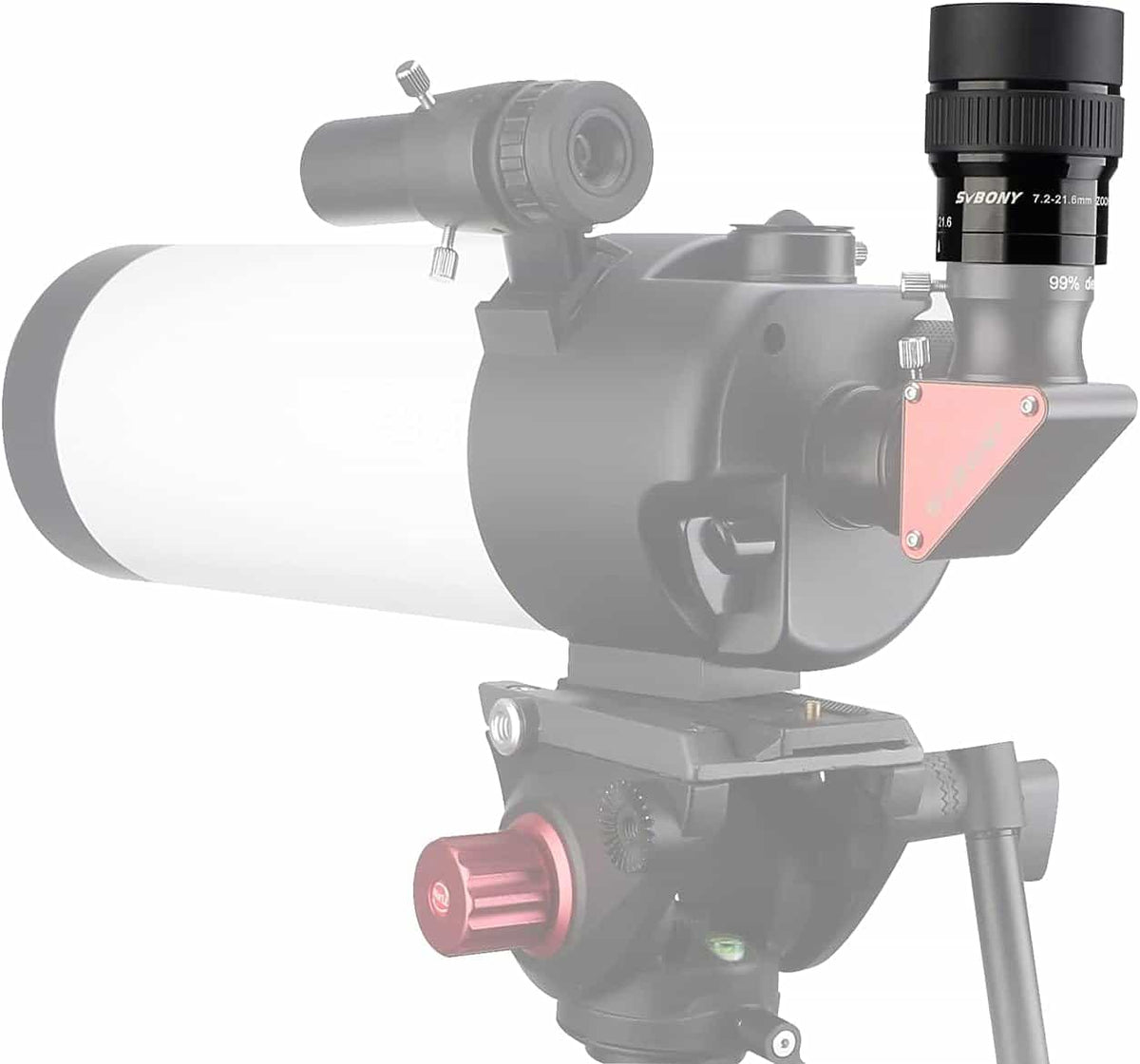
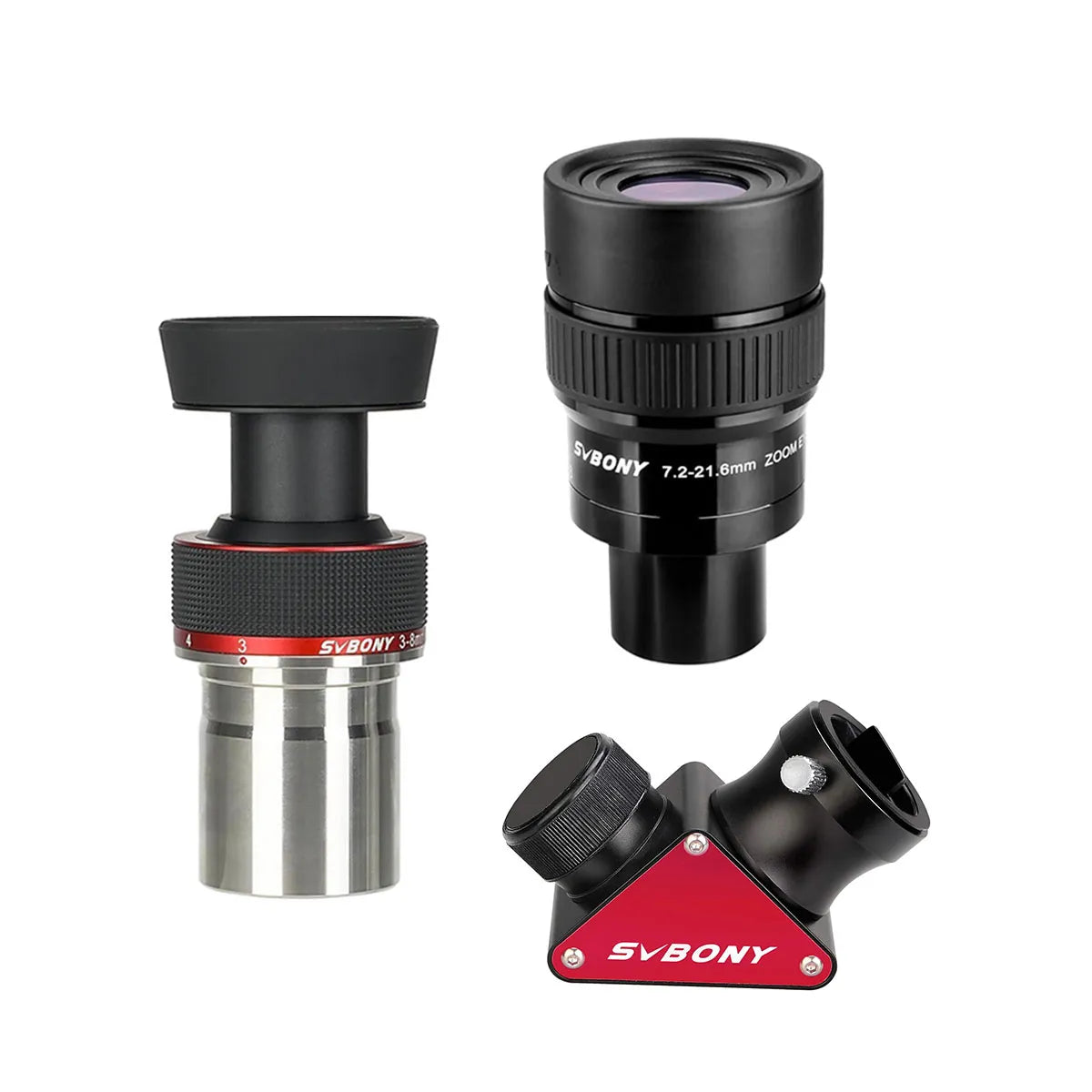
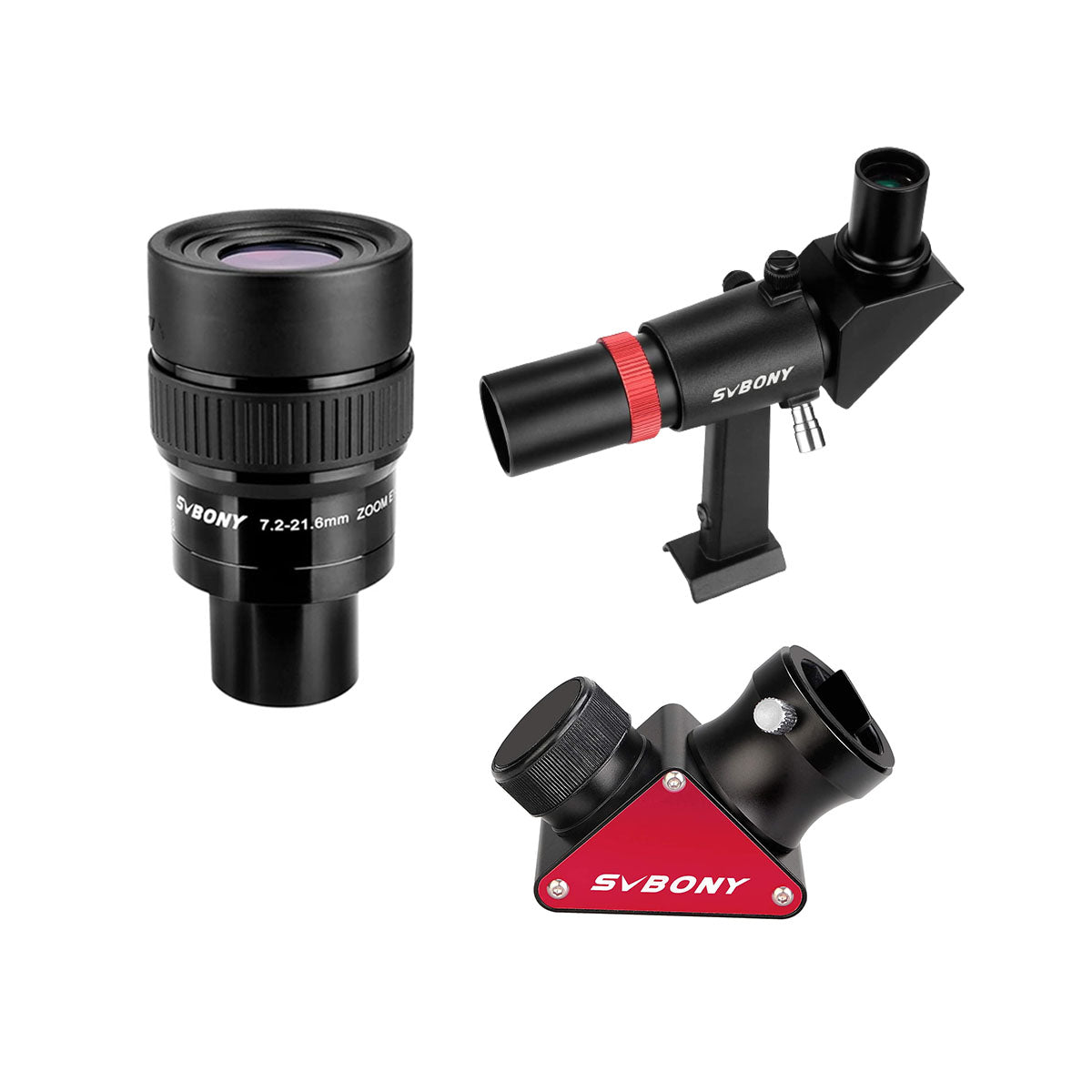
- With the SVBONY MK127: at 1500 mm focal length the SV191 gives about 69x to 208x, a range that covers most lunar and planetary nights. A 1.25″ diagonal such as the SV188P sits between the eyepiece and the telescope's SCT-to-1.25″ adapter.
Good to Know Before You Order
- Narrower field at low power: at 21.6 mm the apparent field is 42°, so wide-field sweeping is better served by a dedicated low-power wide-angle eyepiece.
Frequently Asked Questions
Is it difficult to set up?
No. It slides into any 1.25″ diagonal or focuser. Turn the zoom barrel to change magnification and refocus slightly as needed.
Can I use it with glasses?
Yes. Eye relief is 18–20 mm across the zoom range.
Does it take filters?
Yes. Standard 1.25″ filters thread into its M28.5 x 0.6 filter thread.
Bottom Line
In short: a 7.2–21.6 mm 1.25″ zoom eyepiece with long eye relief and a field that widens to 65°, covering low to high power in one compact eyepiece.
| Model | SV191 |
|---|---|
| Focal length | 7.2–21.6 mm zoom |
| Apparent field of view | 42°–65° |
| Eye relief | 18–20 mm |
| Field stop diameter | 16 mm |
| Barrel | 1.25″ |
| Optical design | 7 elements in 4 groups |
| Coatings | Fully multi-coated; blackened lens edges |
| Filter thread | M28.5 x 0.6 |
| Eyecup | Metal, twist-up |
| Weight | 167 g |
| Use case | Lunar, planetary and double-star observing |
You may also like
Recently viewed
Recent Blog Posts
View all
Your Guide Graph Is Lying to You
Read More

D-Size vs V-Size: A Complete Guide to Telescope Dovetail Systems
Read More

What Is Back Focus in Astrophotography? Telescope Reducers, Flatteners, and Spacing Explained
Read More