




- Description
- Specifications

Product Overview
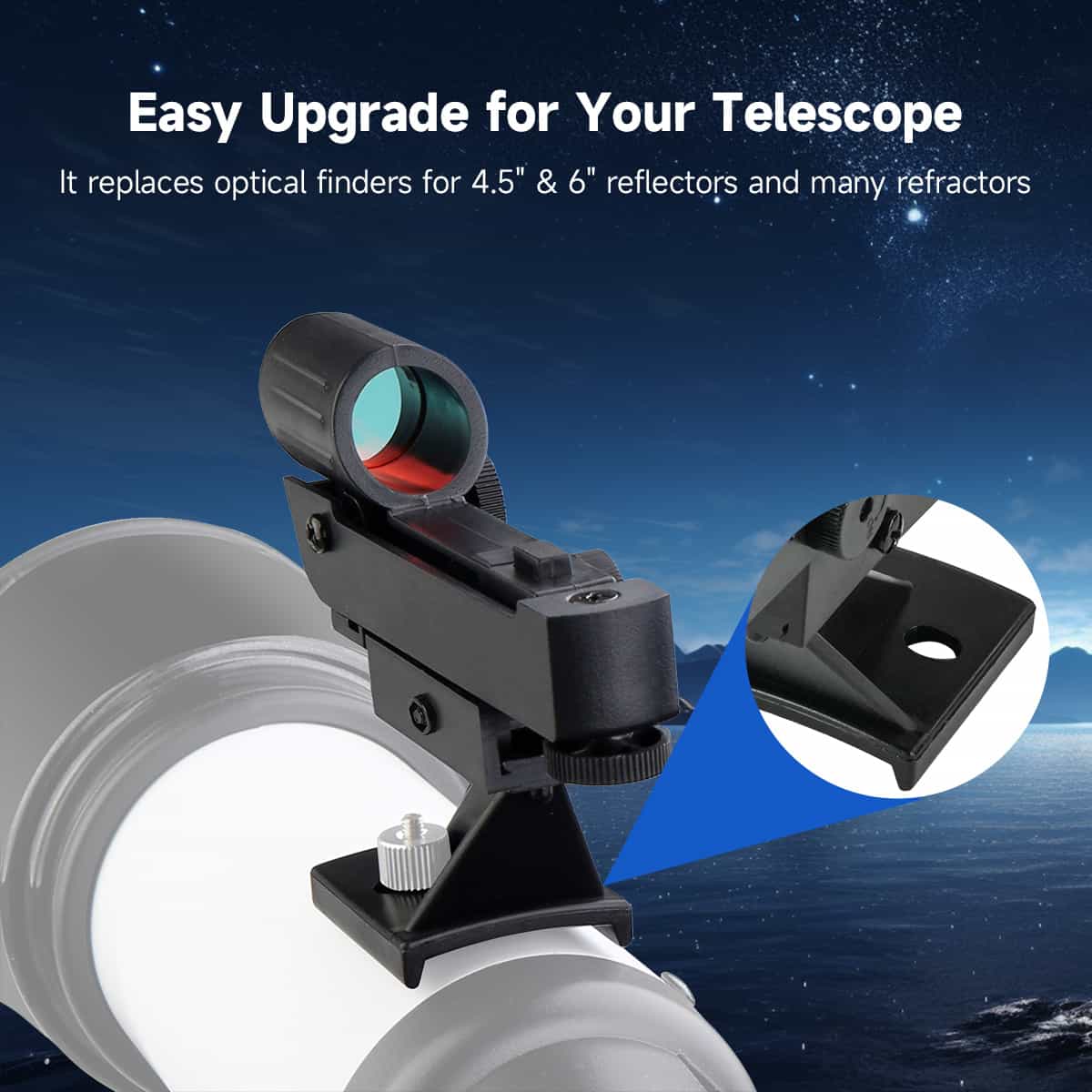
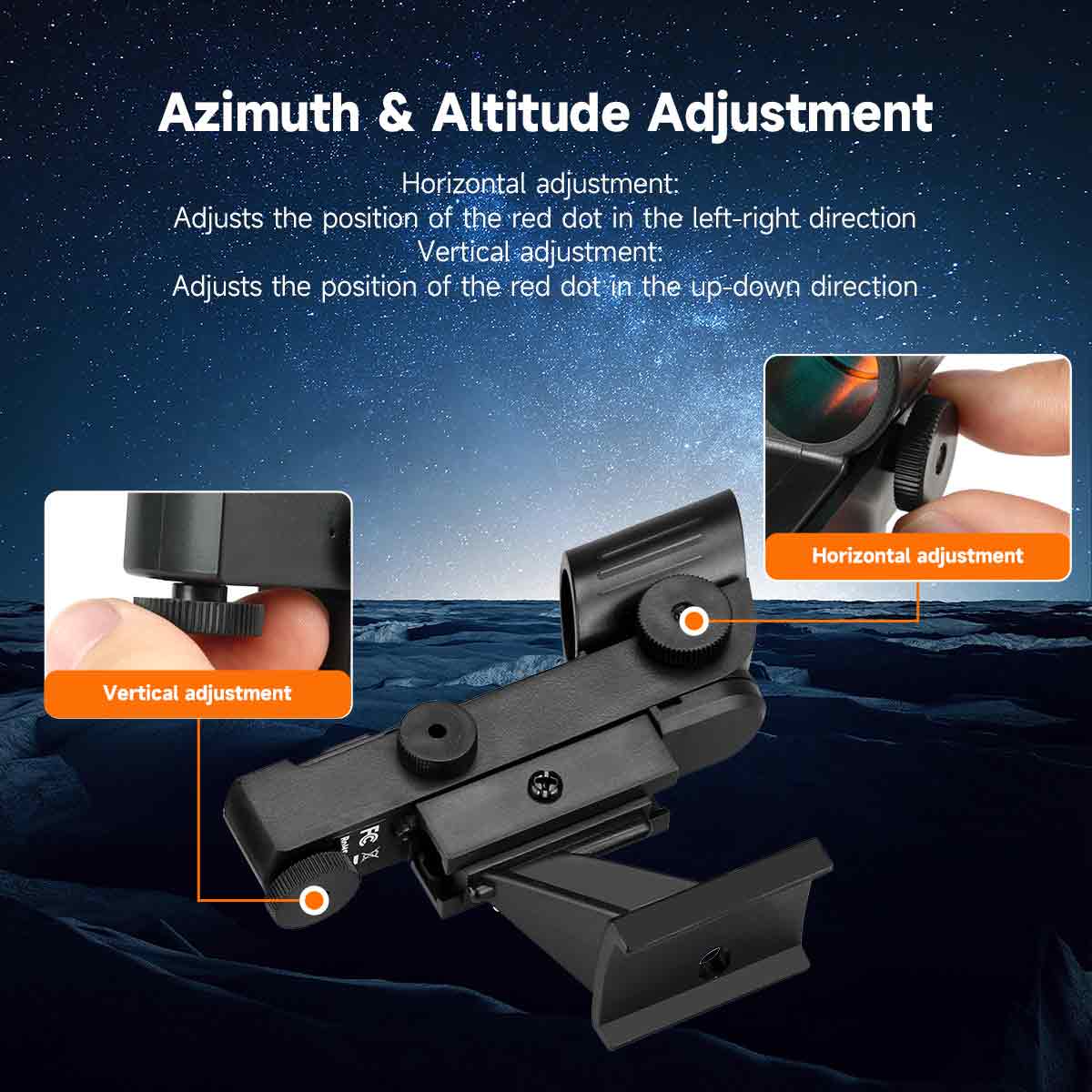
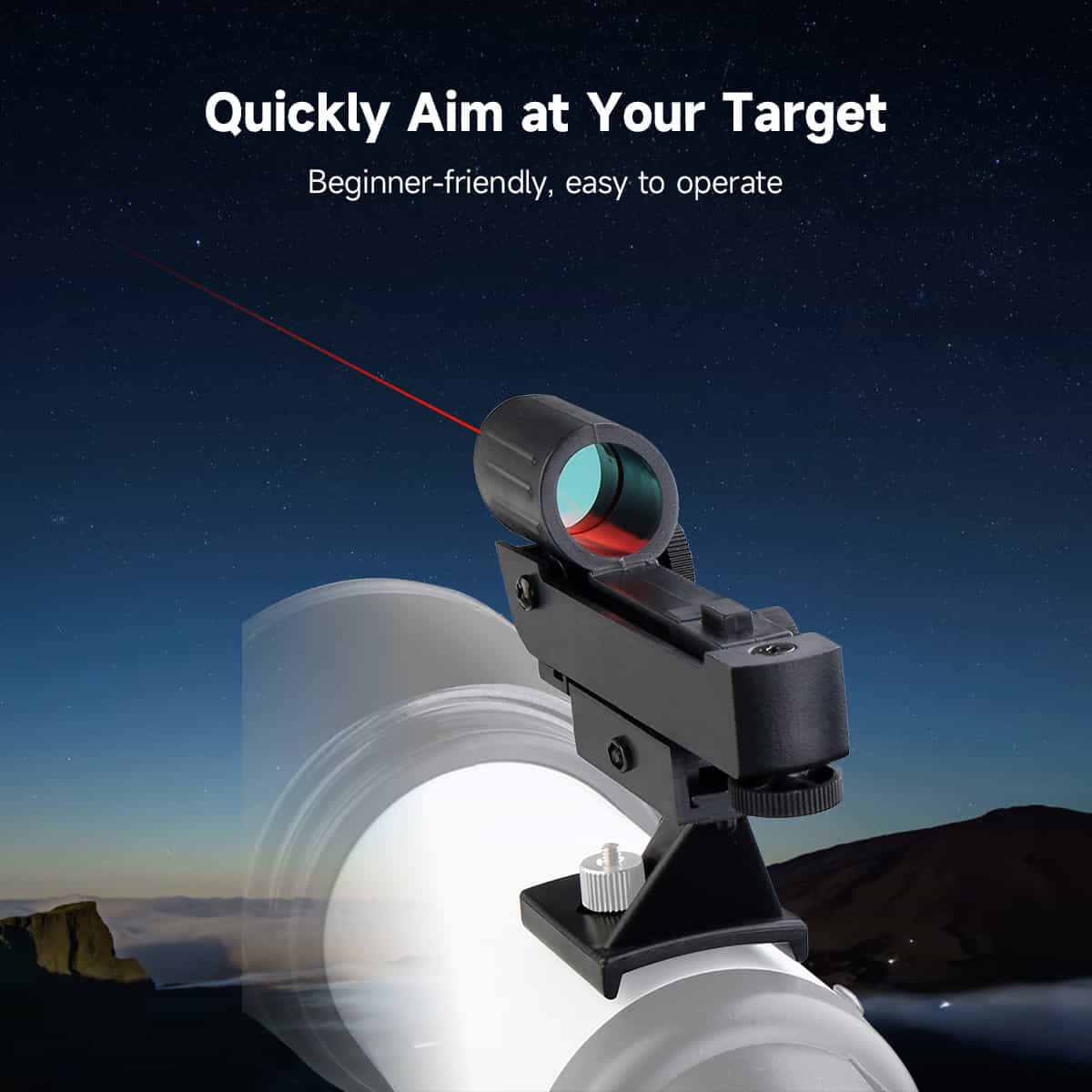
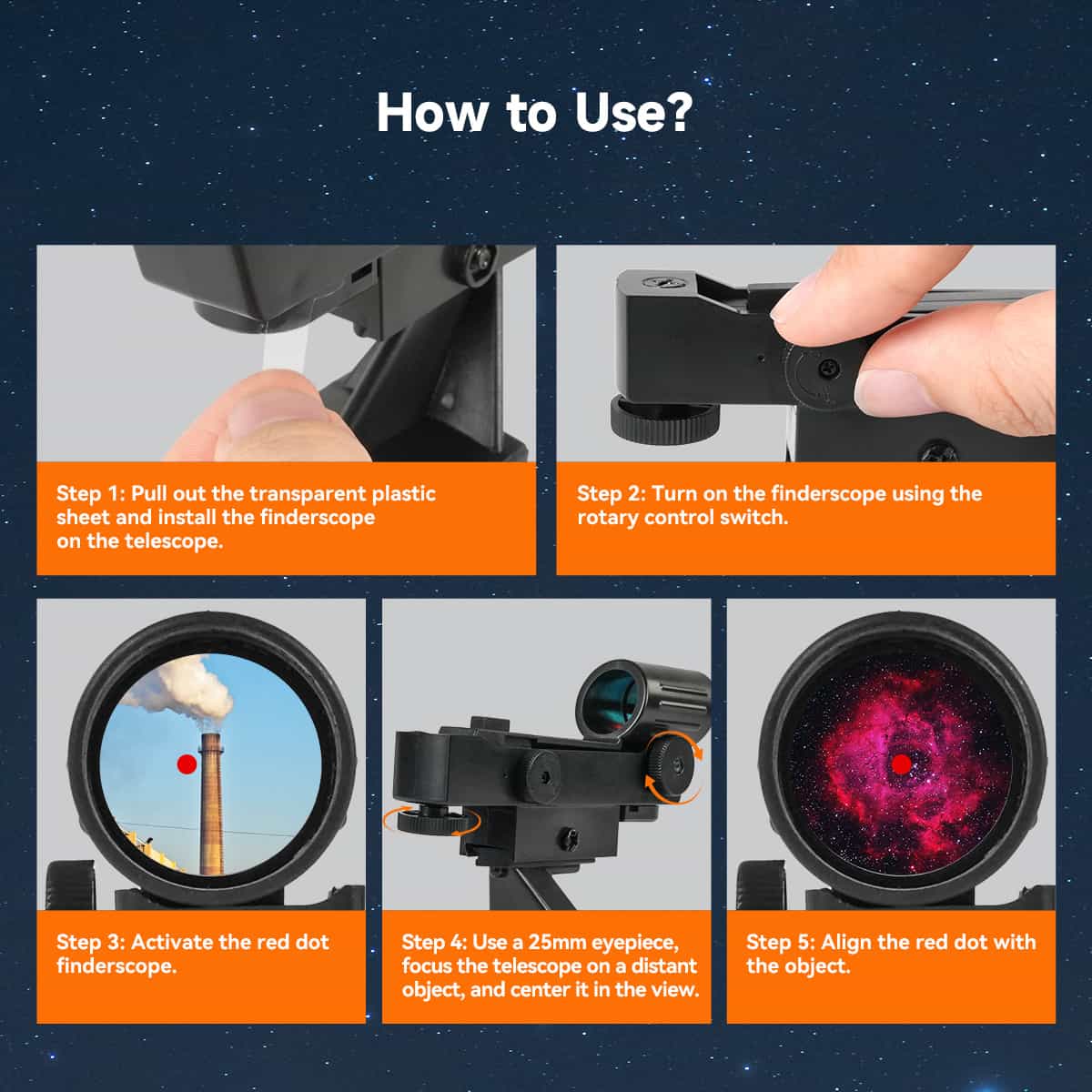
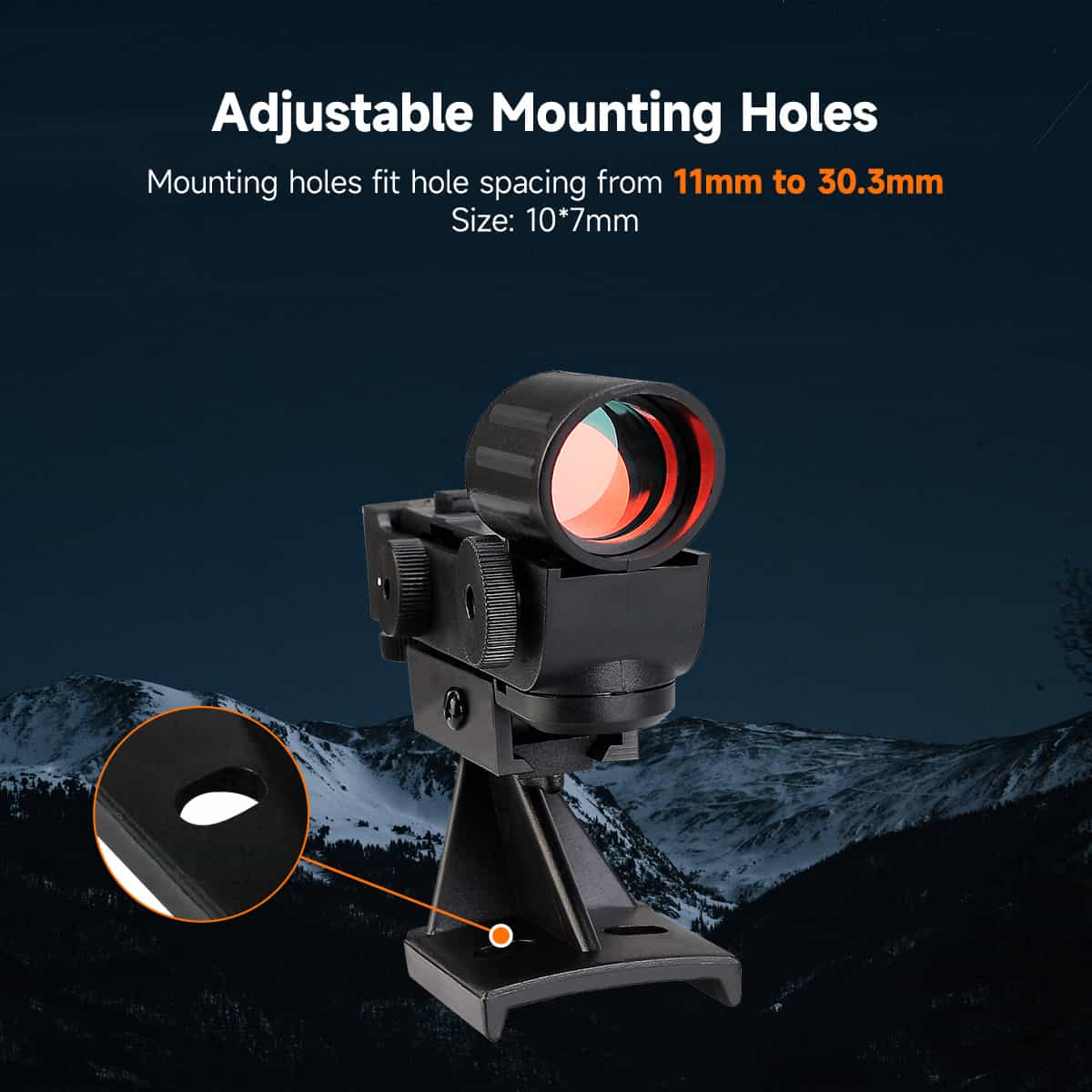
The SVBONY SV179 is a red dot finder with a two-hole fixing base (item W9139A). It projects an LED dot onto a non-magnifying window, so you look through it with both eyes open and place the dot on your target to aim the main telescope. Brightness is variable from a rotary control on the side, which also switches it on and off, and the sight adjusts up/down and left/right for alignment. The base has two 10 x 7 mm mounting holes and the finder weighs 72 g.

Who It's For
This is a good match if your telescope uses a two-hole finder mount, such as many Celestron 80EQ, SE, SLT and PS series scopes and Meade Infinity and Polaris models, and you want a replacement or upgrade for the original finder.
Key Features & Design
- Red dot sight: fast, accurate aiming with no magnification.
- Variable brightness: set from a side rotary control that doubles as the on/off switch.
- Full adjustment: up/down and left/right to align with the main telescope.
- Two-hole fixing base: 10 x 7 mm holes, a straight replacement on many 4.5″ and 6″ reflectors and many refractors.
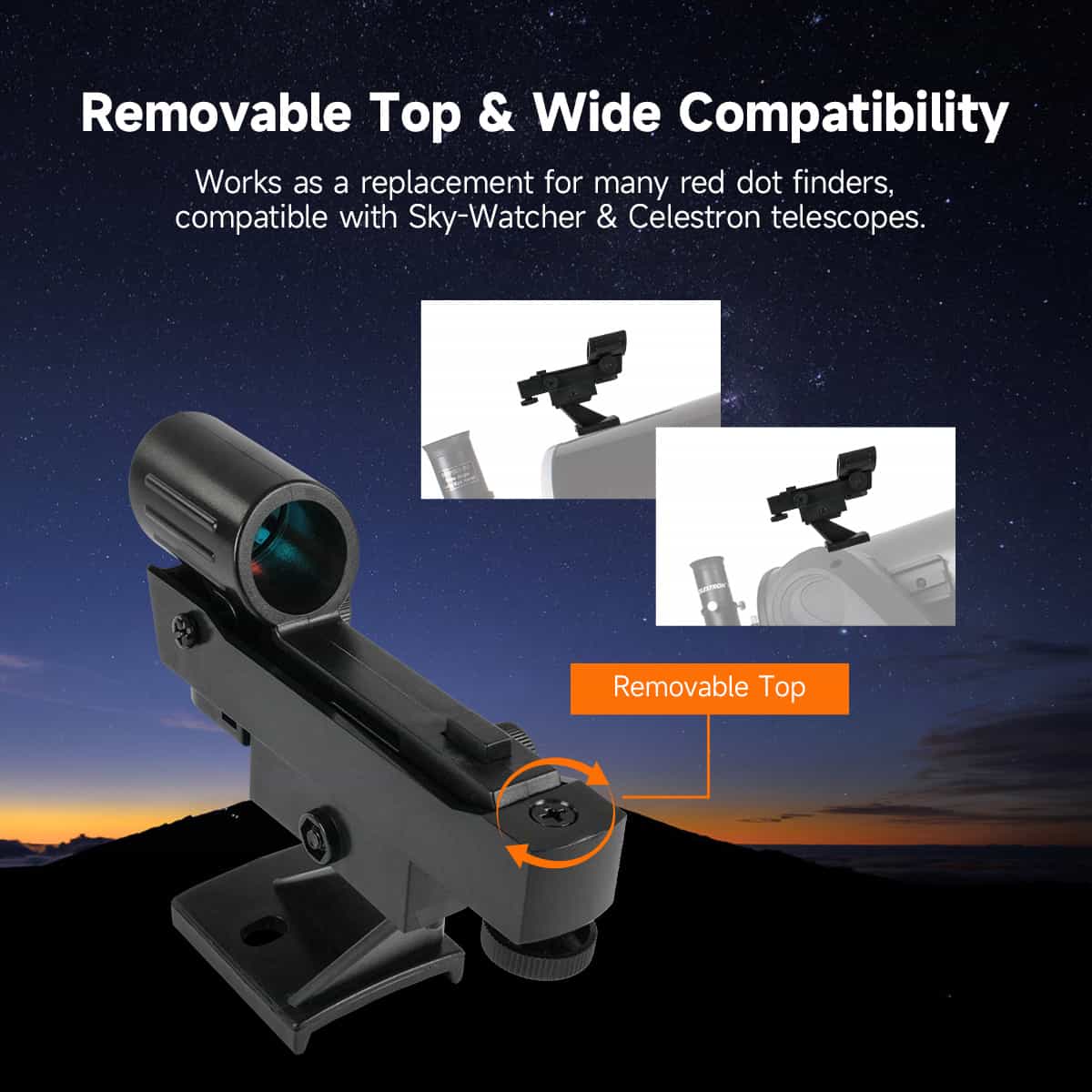
- Removable top: SVBONY notes the upper sight can replace the head of many other red dot finders found on Sky-Watcher and Celestron telescopes.


Recommended Uses
- Target acquisition for planets, the Moon and bright stars.
- Star-hopping starts and quick alignment star selection for computerised mounts.
- Terrestrial aiming for daytime spotting.

Compatibility and Accessory Notes
- Fits: SVBONY lists Celestron 80EQ, SE, SLT and PS series and Meade Infinity and Polaris series telescopes, among others.
- Not for: SVBONY notes the Meade Infinity 80AZ, 90AZ and 102AZ and Polaris 80EQ and 90EQ are not compatible with this base.
- Dovetail version: for telescopes with a finder dovetail shoe, SVBONY makes the SV179 with a dovetail base as a separate item.


Good to Know Before You Order
- First use: pull out the clear plastic sheet at the front and bottom so the battery makes contact.
- Base type: check that your telescope uses a two-hole finder mount; if you are unsure, send us the model and we will confirm which SV179 fits.
Frequently Asked Questions
Is it difficult to set up?
No. Bolt the base to the two holes on the tube, then in daylight centre a distant object in the telescope and turn the adjusters until the red dot sits on it.
How do I turn it on?
Turn the small rotary control on the side; the same control sets the brightness.
Does it magnify?
No. It is a 1x reflex sight that shows the sky with a red aiming dot.
Bottom Line
In short: a 72 g red dot finder with variable brightness and a two-hole base that drops straight onto many Celestron, Meade and Polaris telescopes for quick aiming.
| Model | SV179 (W9139A) |
|---|---|
| Type | Two-hole fixing base |
| Mounting holes | 10 x 7 mm (L x W) |
| Material | Plastic |
| Colour | Black |
| Brightness | Variable, set by side rotary control (also on/off) |
| Adjustment | Up/down and left/right |
| Net weight | 72 g / 2.52 oz |
| Fits | Celestron 80EQ, SE, SLT, PS series, Meade Infinity, Polaris series and others (not Meade Infinity 80AZ/90AZ/102AZ or Polaris 80EQ/90EQ) |
You may also like
Recently viewed
Recent Blog Posts
View all
Your Guide Graph Is Lying to You
Read More

D-Size vs V-Size: A Complete Guide to Telescope Dovetail Systems
Read More

What Is Back Focus in Astrophotography? Telescope Reducers, Flatteners, and Spacing Explained
Read More