


- Description
- Specifications

Product Overview
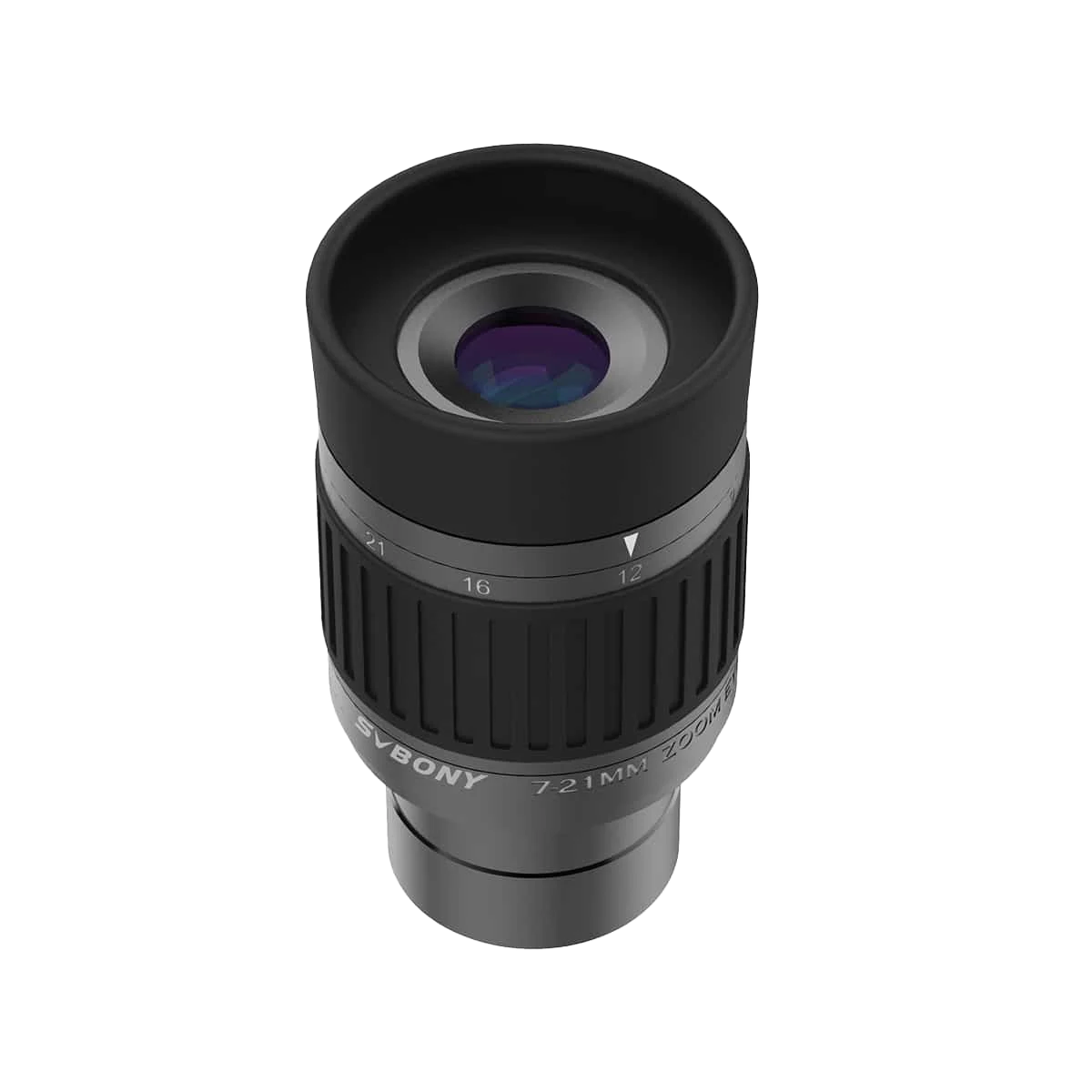
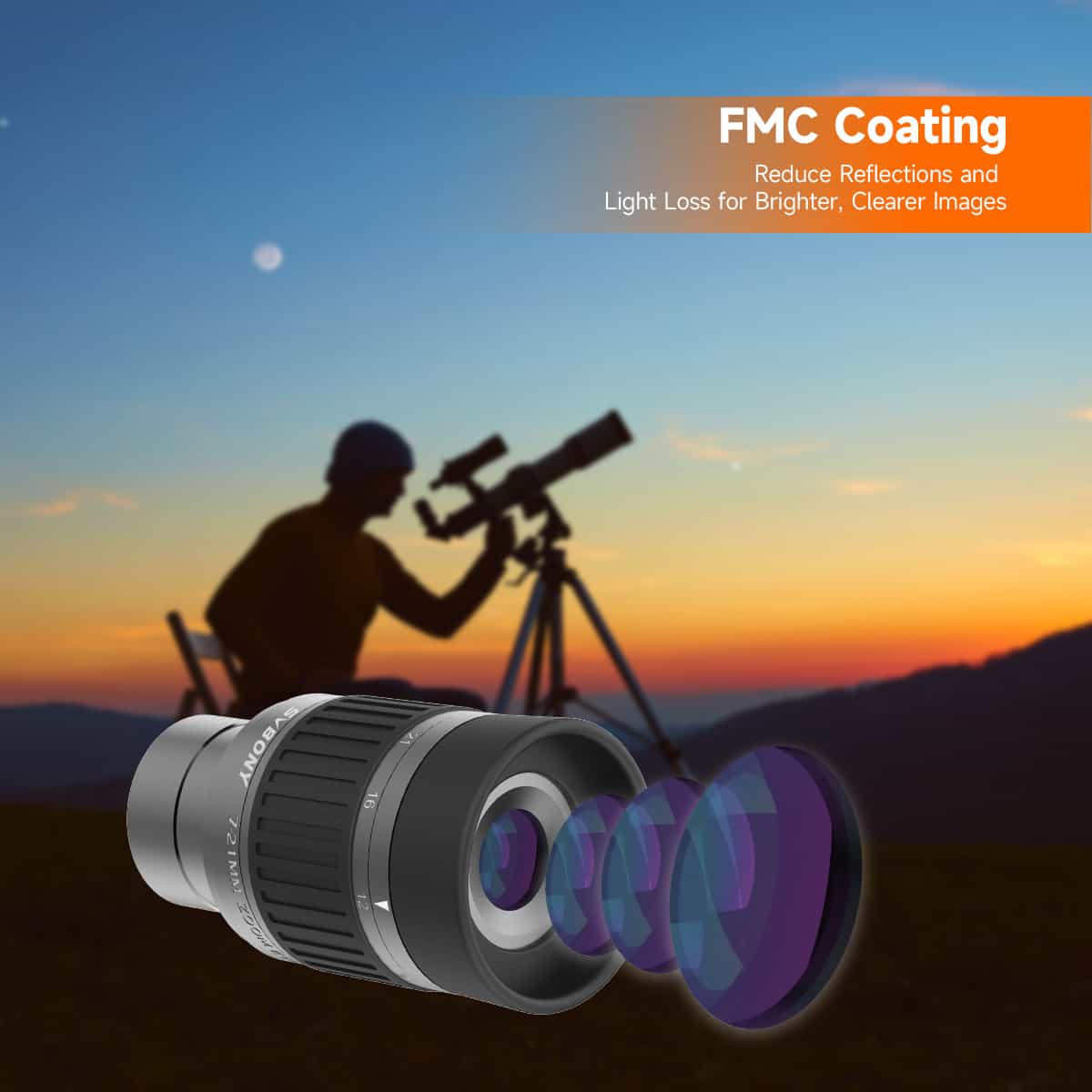
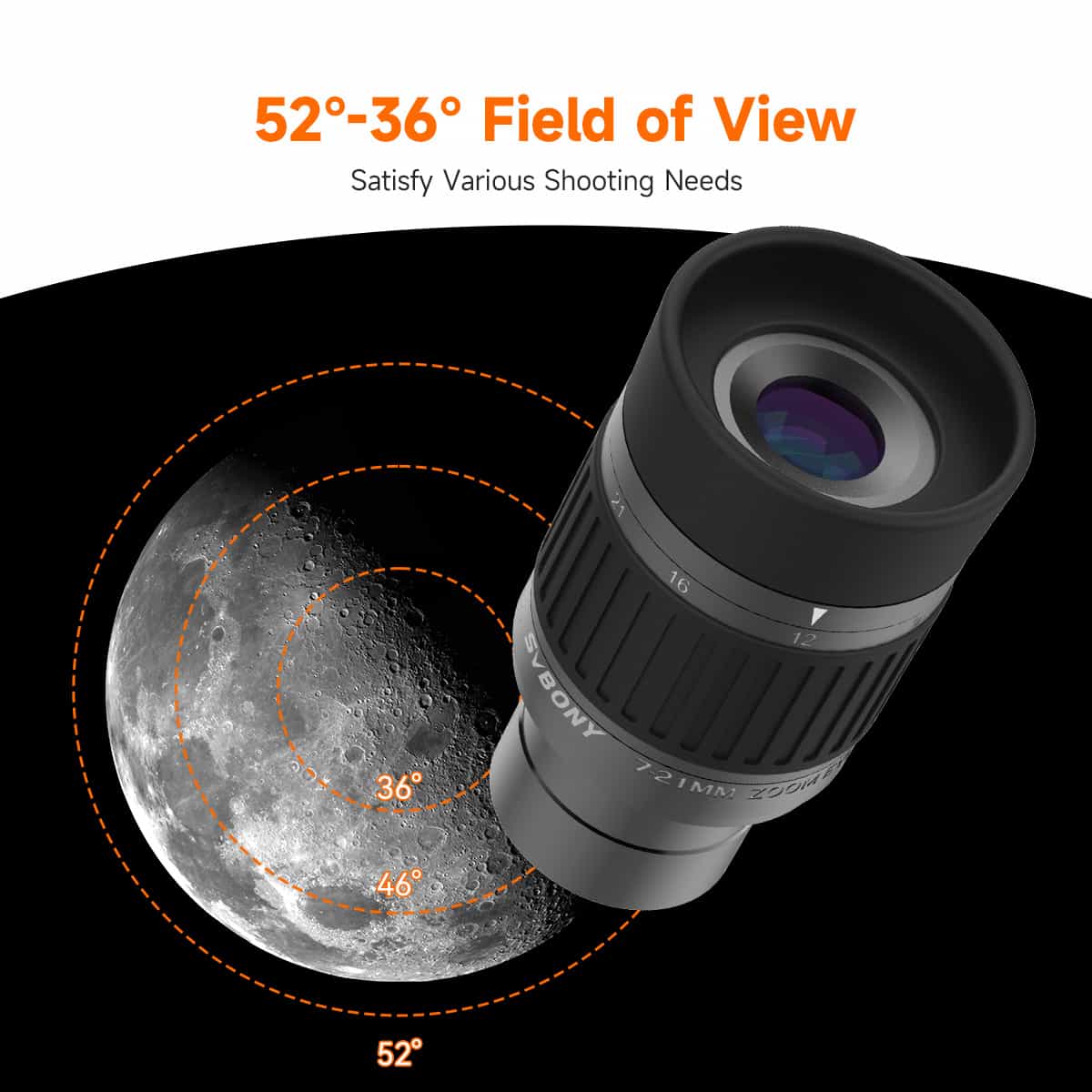
The SVBONY SV135 52°–36° is a 1.25″ zoom eyepiece that changes focal length from 7 mm to 21 mm with a twist of the barrel, so one eyepiece covers the range of several fixed ones. It uses five elements in three groups of high-index glass, fully multi-coated, with an apparent field of 52° at 7 mm narrowing to 36° at 21 mm and 13–14 mm of eye relief. It weighs 95 g and has an M28.5 × 0.6 filter thread.
Who It's For
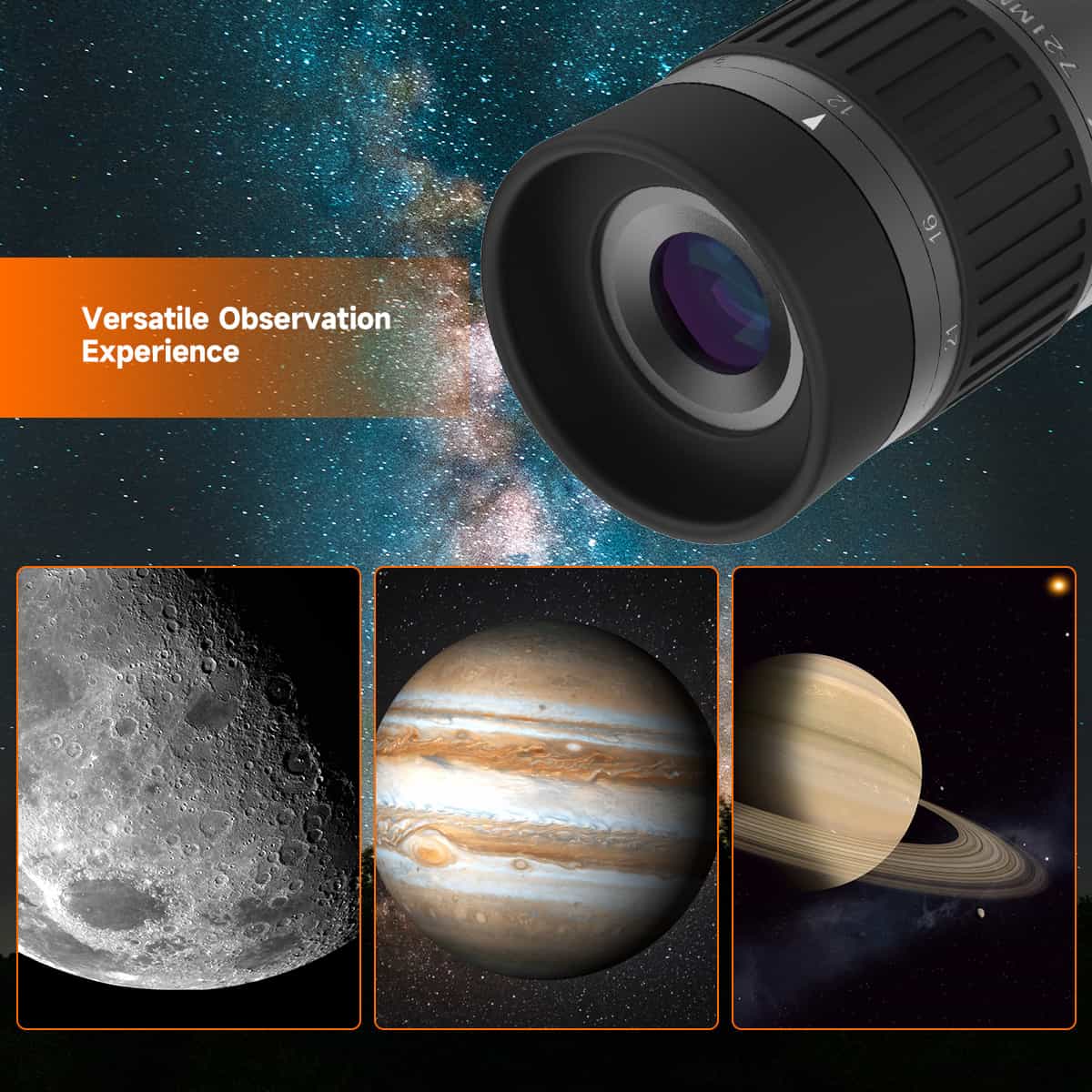
This is a good match if you want one light eyepiece to move between magnifications on the Moon, Jupiter and Saturn, matching the power to the seeing without stopping to swap eyepieces.

Key Features & Design
- 7–21 mm linear zoom: continuous magnification change.
- 52°–36° apparent field.
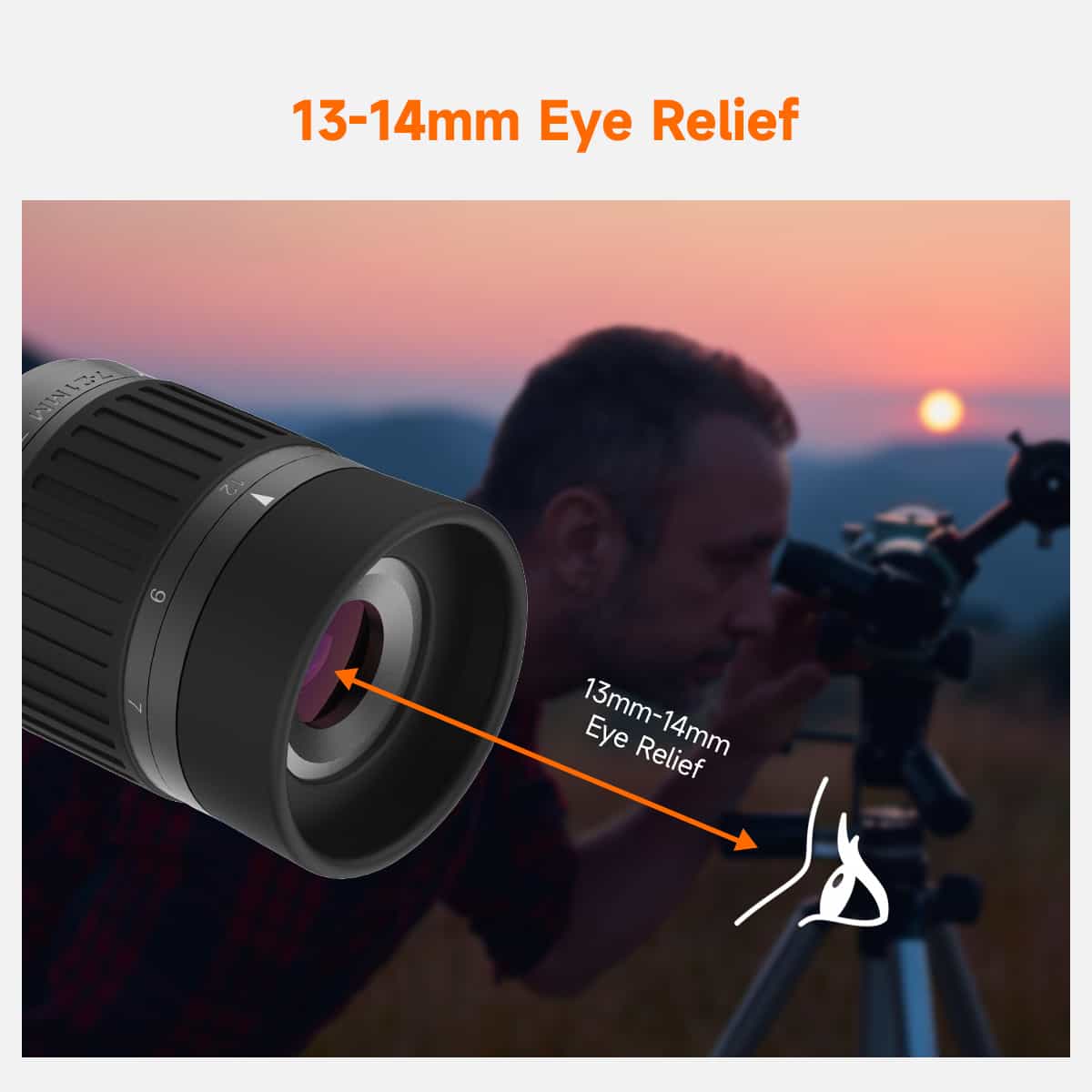
- 13–14 mm eye relief: with a rubber eyecup for use with or without glasses.
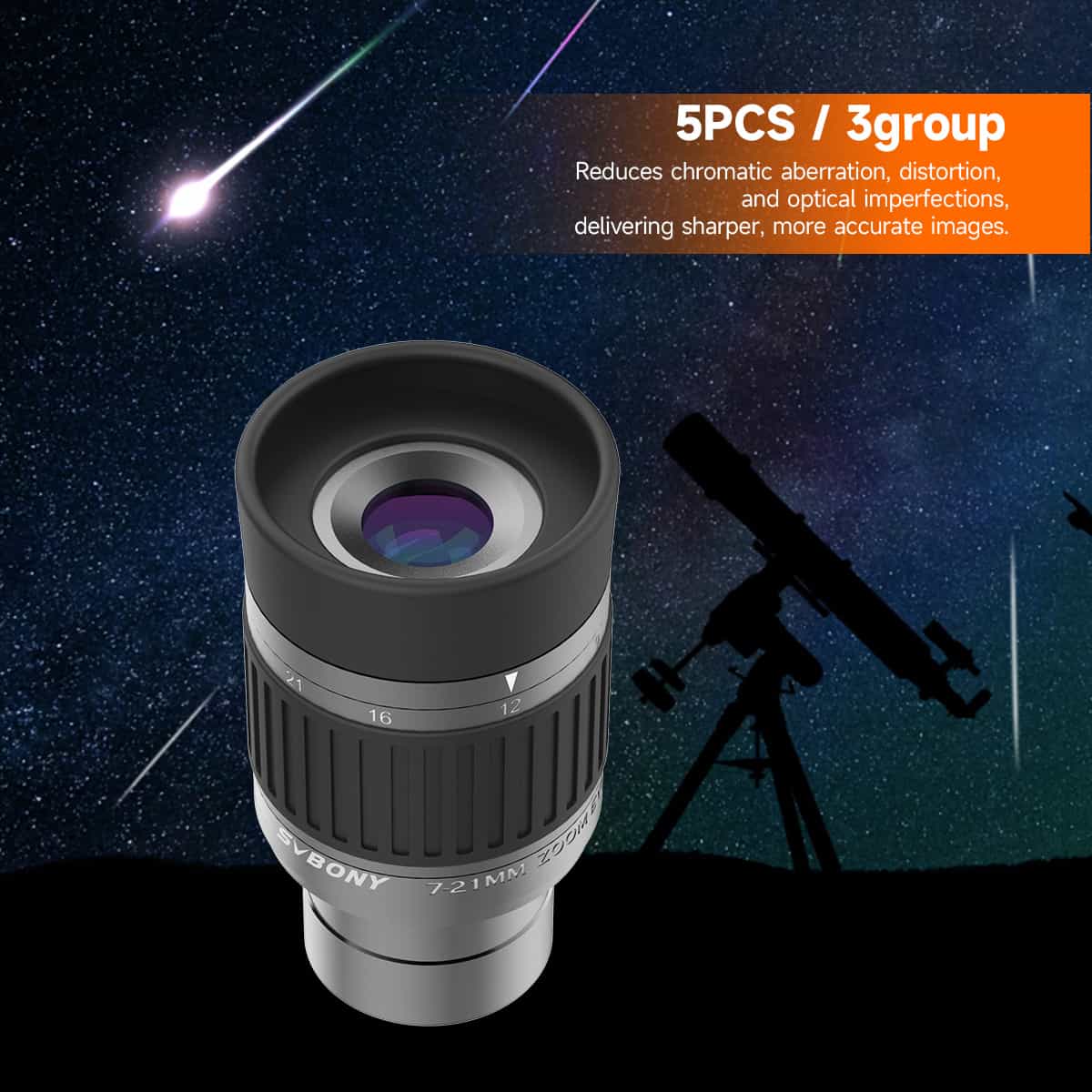
- Fully multi-coated, 3 groups / 5 elements of high-index glass.
- Safety undercut on the barrel: helps keep it from slipping out of the focuser or diagonal.
- Blackened lens edges and anti-reflection threads: for contrast.

Optical Design
As a linear zoom, the SV135 changes focal length in proportion to barrel rotation. Its five elements in three groups give a 52° field at 7 mm and 36° at 21 mm — the narrowing field at longer focal lengths is typical of zoom designs. On a 1000 mm telescope the range works out to roughly 48× to 143×.

Recommended Uses
- Planets: Jupiter, Saturn and Mars, zooming to match the seeing.
- Moon: whole-disc to close-up crater views.
- Star clusters and nebulae at the lower-power end.
- Planetary photography: SVBONY also lists it for simple planetary imaging through the eyepiece.
Compatibility and Accessory Notes
- Barrel: 1.25″, for standard 1.25″ focusers and diagonals.
- Filters: M28.5 × 0.6 thread.
- Other SV135 versions: SVBONY also makes 57°–40° and 60°–40° versions with wider fields.

Good to Know Before You Order
- Field narrows to 36° at 21 mm: narrower than a fixed eyepiece of that focal length.
- Eye relief: 13–14 mm, workable with many glasses but shorter than the 57°–40° SV135.
Frequently Asked Questions
Is it difficult to set up?
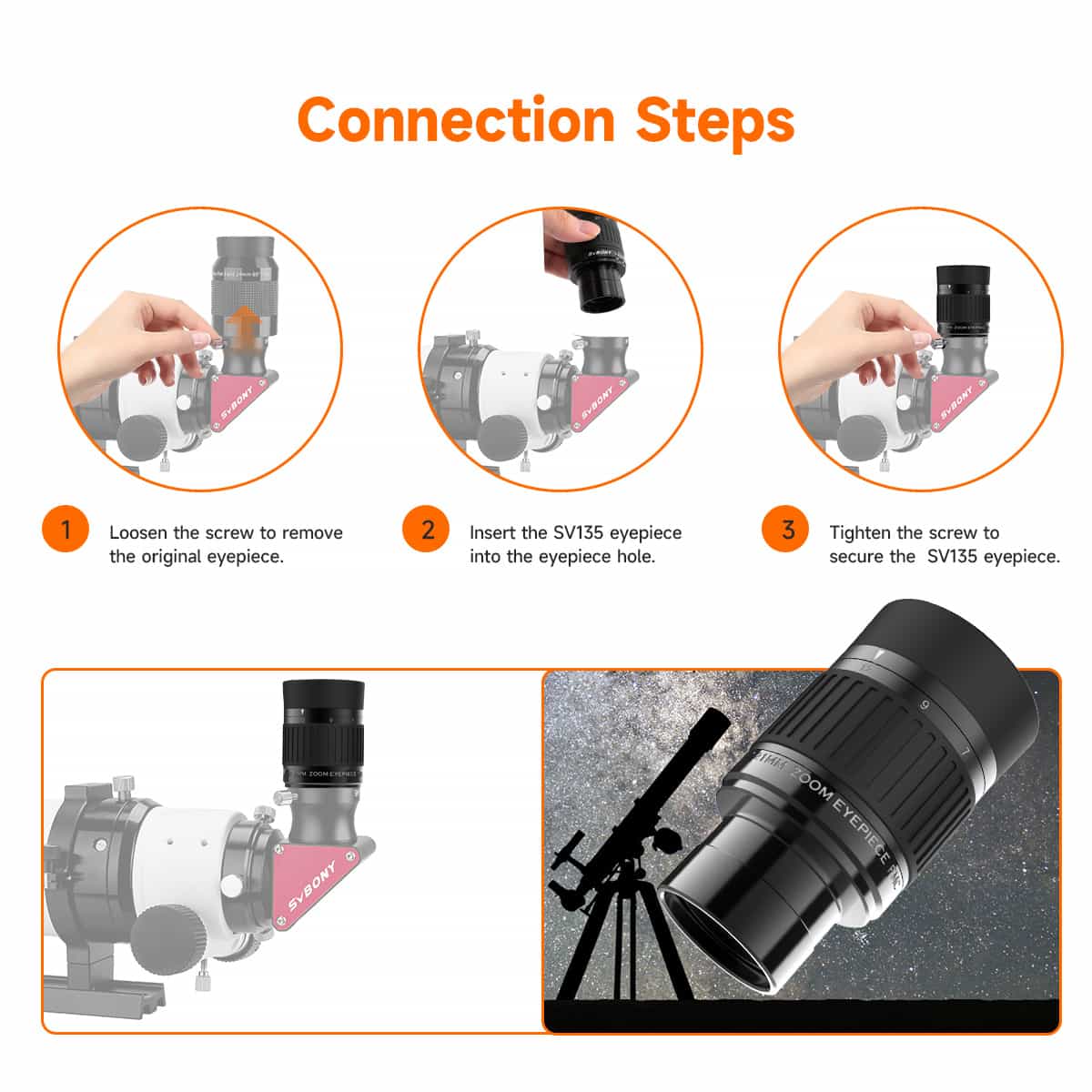
No. It inserts into a 1.25″ focuser or diagonal; twist the barrel to zoom and touch up focus.
What magnification will I get?
Your telescope's focal length divided by 7 and by 21 — about 143× to 48× on a 1000 mm telescope.
How is it different from the other SV135 zooms?
This is the lightest (95 g) with a 3-group, 5-element design and a 52°–36° field; the 57°–40° and 60°–40° versions use more elements for wider fields.
Bottom Line
In short: a 95 g, fully multi-coated 1.25″ 7–21 mm zoom with a 52°–36° field — one eyepiece covering lunar and planetary magnifications.
| Model | SV135 |
|---|---|
| Zoom type | Linear |
| Focal length | 7–21 mm |
| Apparent field of view | 52°–36° |
| Eye relief | 13 mm – 14 mm |
| Lens design | 3 groups / 5 elements |
| Barrel size | 1.25″ |
| Lens coating | Fully multi-coated (green) |
| Rubber eye guard | Yes |
| Material | Metal + optical glass |
| Colour | Black |
| Filter thread | M28.5 × 0.6 |
| Net weight | 95 g |
| Use case | Visual lunar and planetary observing; planetary photography |
You may also like
Recently viewed
Recent Blog Posts
View all
Your Guide Graph Is Lying to You
Read More

D-Size vs V-Size: A Complete Guide to Telescope Dovetail Systems
Read More

What Is Back Focus in Astrophotography? Telescope Reducers, Flatteners, and Spacing Explained
Read More